How Does Netflix Make Money?
By Zorium Daily Business Desk
Introduction
Picture a quiet evening at home. The lights are low. A family sits on the sofa with a bowl of popcorn. Someone picks up the remote and opens Netflix. In a few seconds, a long list of films and shows appears on the screen. There is a funny show, a scary film, a nature show, and a cartoon for the children. The family picks one, presses play, and the evening begins.
It feels simple. It feels cheap. One small payment each month opens a huge library of stories. But behind that simple screen is one of the biggest entertainment businesses in the world. Netflix spends huge sums of money to make shows, buy shows, build apps, and reach people in many countries. So how does it pay for all of that, and still make a profit?
The short answer is that Netflix makes most of its money from monthly payments. People pay a small fee every month to watch as much as they want. That fee, paid by many millions of people around the world, adds up to a very large sum. Netflix also earns money from ads, and from a few smaller streams.
This article explains the whole model in plain words. We will look at where the money comes in, where it goes out, and why the monthly payment is so powerful. All money figures here are typical examples to show how the maths works. Real prices change by country and over time.
SUMMARY OF THIS ARTICLE
- Netflix makes most of its money from monthly subscription payments. People pay a fee every month to watch films and shows.
- There are different plans at different prices. Cheaper plans show ads or have lower picture quality, while dearer plans offer better quality and more screens at the same time.
- Netflix also earns money from ads, from licensing its own shows to others in some cases, and from small extras such as games and merchandise.
- The biggest costs are making and buying shows and films, paying for technology, and marketing the service around the world.
- The business works when enough people keep paying month after month, because steady payments can cover the very high cost of new shows.
The Simple Idea
Every business needs the same basic maths. Money in must be more than money out. If a business takes in more than it spends, it makes a profit. If it spends more than it takes in, it loses money. If it loses money for too long, it closes.
Netflix follows this rule, but its product is unusual. It does not sell one film at a time. It does not sell a ticket for one evening, like a cinema. It sells access. You pay for the right to watch a whole library, as often as you like, for one month.
Think of it like a gym membership. A gym sells the right to use its machines every month, even if a member visits only a few times. Netflix works in a similar way. You pay each month, and you can watch a little or a lot. The payment comes in whether you watch one show or fifty shows.
This model has one big strength. The money is steady and easy to plan. A shop never knows exactly how many people will walk in tomorrow. Netflix knows, in broad terms, how many people are paying this month, because most of them pay by automatic bank or card payment. That steady flow helps it plan how much it can spend on new shows.
It also has one big weakness. If people stop paying, the money stops at once. There is no stock to sell later. So Netflix must keep people happy, month after month, or they will cancel and move to another service.
Where the Money Comes In
Netflix has a few streams of money. A stream is a business word for a different way money comes in. If one stream is slow, another can help. But one stream is far bigger than all the others.
The main stream is subscriptions. In simple terms, this means the monthly fees paid by households around the world. This is the heart of the business. Most of the money Netflix earns comes from these fees.
The second stream is advertising. Some cheaper plans show short ads before and during shows. Companies pay Netflix to show those ads, because many people watch them. This stream is smaller than subscriptions, but it is growing.
The third group is made of smaller streams. These include money from licensing, which means letting another company show a Netflix show or film for a time, and money from games, merchandise, and live events in some places. These streams are useful, but they are small next to the monthly fees.
In short, Netflix is a subscription business first. Everything else supports that main idea. The ads, the shows, the apps, and the extra features all exist to bring in new subscribers and to keep the ones it already has.
The Monthly Subscription
The monthly subscription is simple for the customer. You choose a plan, you pay each month, and you watch. You can cancel at any time. You do not pay per film. You do not pay per hour. You pay for access.
Imagine a simple example. Suppose a service has 100 million paying households, and each household pays about 15 dollars a month on average. That would be about 1.5 billion dollars in one month, and about 18 billion dollars in one year, from subscriptions alone. Real numbers are higher and change over time, and prices are different in each country, but this example shows why the model is so powerful. A small payment from each person becomes a huge sum when many millions of people pay it.
Netflix uses different prices in different countries. In a rich country, the monthly fee may be higher. In a poorer country, it may be lower, so that more people can afford it. This is sensible. A price that works in one country may be too high in another, and a price that works there may be too low to cover costs elsewhere. So Netflix sets prices country by country.
The Different Plans
Netflix does not offer only one price. It offers a few plans, so that different people can choose what suits them. The names of the plans change over time, and the exact features change too, but the idea stays the same.
The cheapest plan usually costs the least and has the most limits. It may show ads. It may allow watching on only one screen at a time. It may have a lower picture quality, which means the picture is less sharp on a big television. For a single person who watches on a phone or a small screen, this plan can be enough.
The middle plan usually costs more. It may have no ads, or fewer ads. It may allow watching on two screens at the same time. It may have a better picture quality. This plan suits a couple, or a small family who watch at the same time in different rooms.
The dearest plan usually costs the most and gives the most. It may allow watching on four screens at the same time. It may have the best picture quality, with very sharp images and better sound. It may also allow downloads on more devices, so that people can watch without the internet when they travel. This plan suits a larger family, or a household where several people watch at once.
This range of plans is smart for two reasons. First, it lets Netflix earn more from people who want more. A person who wants the best picture and four screens pays more than a person who is happy with one screen and a basic picture. Second, it keeps a cheap option for people who might otherwise cancel. A cheap plan with ads is better for Netflix than no plan at all, because it still brings in money each month. Prices rise from time to time, and some customers accept the rise, some move to a cheaper plan, and some cancel.
The Ads Plan
For many years, Netflix had no ads at all. You paid, and you watched without a break. Then Netflix added a cheaper plan that includes ads. This was a big change, and it is now an important part of the business.
Here is how the ads plan works. A customer pays less each month than on a plan without ads. In return, they watch short ads before and during shows, much like on normal television. The ads are usually short, often less than a minute, and there are only a few per hour.
Netflix earns money twice from this plan. First, it earns the monthly fee, even though it is lower. Second, it earns money from the companies that pay to show their ads. A company that sells cars, phones, food, or clothes may pay Netflix to reach its viewers.
Original Shows and Films
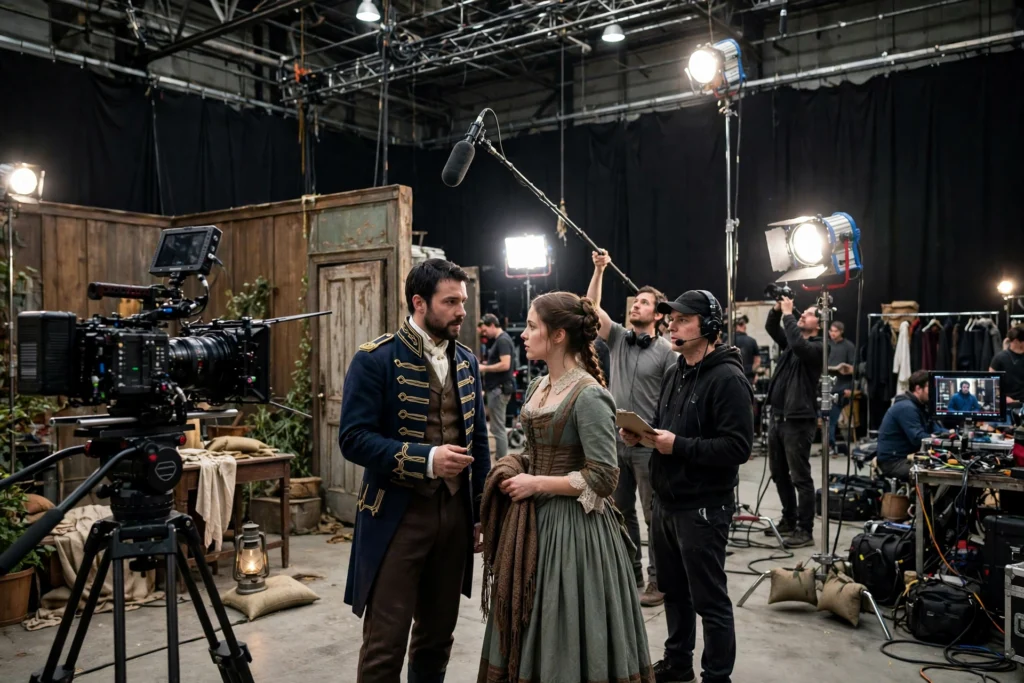
One of the biggest reasons people join Netflix is its own shows and films. These are called originals. An original is a show or film that Netflix paid to make, or paid to show first. It is not available, at least at first, on any other service. That makes it special.
Think of a popular drama, a funny comedy, a nature show, or a true crime series that everyone talks about at work or at school. If you want to join the talk, you need to watch it. If it is only on Netflix, you need Netflix. That is the power of an original.
Originals are costly to make. A big drama may cost many millions of dollars for one series. Actors, writers, directors, cameras, sets, costumes, and computers all cost money. A big film can cost even more. Netflix spends huge sums each year on new originals, because new shows are the main reason people join and stay.
But originals also have a long life. Once a show is made, it can be watched again and again, by people in many countries, for many years. A show made this year can still bring in new subscribers next year, when new people discover it. It can also be dubbed, which means the voices are re-recorded in another language, or given subtitles, so that people in other countries can enjoy it.
Shows From Other Companies
Not everything on Netflix is an original. Netflix also buys the right to show films and shows made by other companies. This is called licensing. Licensing means paying for permission to show something for a set time.
For example, a film studio may have made a popular film ten years ago. Netflix may pay that studio to show the film on its service for one year. During that year, Netflix customers can watch it. When the year ends, the film may leave Netflix, or Netflix may pay again to keep it.
Licensing is useful because it fills the library with well-known titles. People like to rewatch old favourites. A classic comedy, an old action film, or a much-loved cartoon can bring people to the service, even if it is not new.
Licensing also has a risk. The company that owns the show may decide to keep it for its own service. Many film studios now have their own streaming services, so they may not want to lend their best shows to Netflix. That is why Netflix has spent more and more on its own originals. It wants shows that no one else can take away.
Follow One Monthly Payment
Let us follow one monthly payment and see where it goes. Suppose a household pays 15 dollars a month for a plan without ads. Does Netflix keep all 15 dollars? No. Here is one simple way that 15 dollars might be divided, using typical examples.
First, a large share goes to content. This is the cost of making and buying shows and films. In a typical example, this may take about 7 to 8 dollars of the 15 dollars. That is the biggest cost by far. The shows must be paid for, even before anyone watches them.
Second, a share goes to technology. This is the cost of running the apps, the servers, and the systems that send video to millions of homes at the same time. It also pays for improving the app and making sure the video plays smoothly. In a typical example, this may take about 1 to 2 dollars.
Third, a share goes to marketing. This is the cost of telling people about new shows, running ads, and working with partners in different countries. In a typical example, this may take about 1 to 2 dollars.
Fourth, a share goes to other running costs. This includes staff pay, offices, legal costs, and taxes. In a typical example, this may take about 2 to 3 dollars.
Add those costs up, and the 15 dollars may leave only a small profit, perhaps 1 to 2 dollars, in a typical example. That profit is small per person, but it becomes large when many millions of people pay each month. It also changes a lot from year to year, because Netflix sometimes spends more on new shows to grow, and sometimes spends less to make more profit.
The Biggest Costs
Making and buying shows is the biggest cost. Netflix spends more on content than on almost anything else. It must pay writers, actors, directors, and crews. It must pay for sets, costumes, travel, and editing. It must pay for the rights to show films made by others. These costs come before any money comes in. A show may take a year or more to make, and Netflix pays for it long before viewers pay to watch it.
Technology is the next big cost. Netflix must send video to people in many countries, on many kinds of devices, at the same time. It needs fast, reliable systems. It needs to store thousands of hours of video. It needs to make sure the video starts quickly, does not stop in the middle, and looks good on a phone, a tablet, a laptop, or a big television. That takes a lot of computers, a lot of skilled staff, and a lot of money.
Why People Stay, and Why They Leave
A subscription business lives or dies by one word: churn. Churn means the rate at which customers cancel. If many people cancel each month, Netflix must find many new people just to stay the same size. If few people cancel, it can grow slowly and steadily.
People stay for a few clear reasons. First, they stay because there is always something new to watch. A new series, a new film, or a new season of a favourite show gives them a reason to keep paying. Second, they stay because it is easy. The app is on their television, their phone, and their laptop. They can start a show at home and finish it on a train. Third, they stay because of habit. Watching in the evening becomes part of the daily routine, like a cup of tea after dinner.
People leave for clear reasons too. The most common reason is price. If the price rises, and the person does not feel they get enough value, they may cancel. Another reason is choice. There are now many streaming services, and a person may leave Netflix for a time to try another service, then come back later. A third reason is a quiet period. If no new show interests them for a few months, they may cancel and return when a big new show arrives.

Competition and Risks
Netflix was one of the first big streaming services, but it is no longer alone. Today, there are many rivals. Some are run by big film studios. Some are run by big technology companies. This competition is good for viewers, because it pushes every service to make better shows and to keep prices fair. It is hard for Netflix, because viewers now have a choice. A person may pay for two or three services, or they may switch from one to another each month.
A movie theatre faces a similar choice. People can watch a film at home on Netflix, or they can go out to a cinema for a big screen and loud sound. The theatre must offer something special to win them back. Netflix must do the same against its rivals. It must offer shows that people cannot find anywhere else, and it must make watching easy and pleasant.
Every business has risks, and Netflix has a few clear ones. The first risk is cost. Making shows is expensive, and costs can rise fast. If Netflix spends too much, its profit can fall, even if many people pay. The second risk is churn. If a big show ends, or if prices rise, many people may cancel at the same time. The third risk is debt. In its early years of fast growth, Netflix borrowed a lot of money to pay for new shows. Borrowing can help a business grow, but it must be paid back, with interest. The fourth risk is rules and laws. Different countries have different rules about what shows can be shown and how much tax must be paid. The fifth risk is taste. People change what they like, and Netflix must watch what people enjoy, and make new kinds of shows, or it may lose viewers to a rival.
Conclusion
Netflix makes money in a simple way, but on a very large scale. It charges many millions of people a small fee each month. It offers different plans, so that people can pay more for better quality and more screens, or pay less and watch ads. It earns extra money from ads, from licensing, and from small extras such as games and merchandise.
It spends that money on the shows and films people want to watch, on the technology that delivers them, and on telling the world about them. The business works when enough people stay, month after month, and when the money coming in is more than the money going out.
The lesson is the same as for a small shop. A bakery must sell enough loaves each day to pay for flour, rent, and staff. A coffee shop must sell enough cups to cover its costs. Netflix must keep enough subscribers to pay for its shows. The scale is different. The maths is the same.
So the next time you press play on a quiet evening, remember what is behind the screen. A small monthly payment, paid by many millions of people, pays for the story you are about to watch, and for the next story too.
FAQ
1. How does Netflix make most of its money?
Netflix makes most of its money from monthly subscription payments. People pay a fee every month to watch films and shows. This stream is far bigger than ads, licensing, games, or merchandise.
2. Does Netflix make money from ads?
Yes. Netflix has cheaper plans that show short ads. It earns money from the lower monthly fee and from the companies that pay to show their ads. Ads are a growing stream, but they are still smaller than subscriptions.
3. Why does Netflix charge different prices in different countries?
Netflix sets prices by country because incomes, costs, and local competition are different. A price that is fair in one country may be too high or too low in another. Prices also change over time as costs and shows change.
4. Why does Netflix spend so much money on shows?
Netflix spends a lot on shows because new and popular shows are the main reason people join and stay. Original shows that are only on Netflix give people a reason to pay each month, and they can be watched in many countries for many years.
5. Can I cancel Netflix at any time?
Yes. You can cancel your monthly plan at any time, and you can join again later. This freedom is part of the model, and it is why Netflix must keep offering new shows and good value, so that people choose to stay.
6. Is Netflix profitable?
Netflix can be profitable when the money from subscriptions and ads is more than the cost of shows, technology, marketing, and staff. Profit changes from year to year, because the company sometimes spends more to grow, and sometimes spends less to keep more profit.