
How Does a Laundry Shop Make Money?
By Zorium Daily Business Desk
SUMMARY OF THIS ARTICLE
- A laundry shop makes money by charging people to wash, dry, fold, and sometimes iron their clothes.
- The two main ways to sell laundry are wash-and-fold, where staff do the work, and self-service, where customers use the machines themselves.
- Prices are usually set per kilo or per load, and extra services such as ironing, dry cleaning, and pickup and delivery add more income.
- The biggest costs are water, electricity, detergent, rent, machines, and staff pay, and most of these must be paid even on quiet days.
- A laundry shop profits only when enough customers come regularly and the price of each wash is higher than the cost of doing it.
Introduction
Picture a Saturday morning in a small laundry shop. A woman walks in with a big bag of clothes — shirts, socks, towels, a bed sheet. She drops the bag on the counter, smiles at the worker, and says, “Same as usual, please.” The worker weighs the bag, writes a small ticket, and hands her one half. She will come back on Monday, pay, and take home a neat pile of clean, folded clothes that smell fresh.
It looks like a simple business: dirty clothes go in, clean clothes come out, and someone pays for the work. But behind that counter are real costs — water, electricity, soap, machines, rent, and staff — and the shop must find enough customers, week after week, to cover them all.
So how does a laundry shop make money, and what does it cost to run one? This article follows the money from a bag of dirty clothes to the profit at the end of the month. All money figures here are typical examples, not real shop accounts.
The Simple Idea
Every business needs the same basic maths: money in must be more than money out. If a shop takes in more than it spends, it makes a profit. If it spends more than it takes in, it loses money, and if it loses money for too long, it closes.
A laundry shop follows this rule, but what it sells is a chore that most people do not enjoy. Washing clothes takes time: sorting, loading, waiting, drying, folding, and putting away. For a busy family, that can take hours every week. A laundry shop sells those hours back to people.
Think of it like this. A bakery sells bread that people could bake at home, but most would rather buy it ready-made. A laundry shop works the same way: people could wash their own clothes, but many would rather pay someone else and get their time back.
The simple idea has three parts: bring in enough bags every day, charge a fair price for each bag or load, and keep the costs of water, power, soap, and staff lower than the money coming in. That sounds easy. In practice, it takes care, because the costs never stop, even on a day when few customers come.
Wash-and-Fold vs Self-Service
Most laundry shops earn money in one of two ways, and many shops do both: wash-and-fold, and self-service. They look similar from the outside, but the money works differently.
In wash-and-fold, the customer drops off a bag of dirty clothes and leaves. The staff weigh it, wash the clothes, dry them, fold them neatly, and bag them. The customer comes back later, often the next day, and pays. It suits busy workers, students, families with small children, and older people who find laundry hard work.
Wash-and-fold is charged by weight, usually per kilo or per pound. In a typical example, a shop might charge about 2 to 4 dollars per kilo, so a bag of 5 kilos might cost 10 to 20 dollars. The customer pays for the wash, the drying, the folding, and the staff’s time.
Self-service is different. The customer stays in the shop and uses the machines themselves: they load a washer, pay by coin or card, wait, then move the clothes to a dryer. This is often called a laundromat, and it suits people with no washing machine at home, students in shared flats, and travellers.
Self-service is usually charged per machine load, not per kilo. In a typical example, one wash in a medium machine might cost 4 to 8 dollars, and drying might cost 1 to 2 dollars more. The shop earns less per customer, because the customer does the work, but it also spends less on staff.
Which way earns more? It depends. Wash-and-fold brings in more money per bag, but it needs more staff. Self-service brings in less per customer, but it can run with very few staff. A shop with both services can serve two kinds of customers at once.
How Prices Are Set
Prices in a laundry shop are not picked at random. The owner must think about costs, rivals, and what customers are willing to pay. If the price is too high, customers will wash at home. If it is too low, the shop will be busy but make no profit.
Most wash-and-fold shops charge by weight, and the price per kilo often depends on the area: higher in a big city, lower in a small town. Some shops have a minimum charge, so a very small bag still costs a set amount, such as 8 or 10 dollars, because washing one shirt still uses water, power, and staff time.
Some shops charge by the bag instead of by weight. A standard bag might hold about 5 kilos, and the shop charges one flat price for it, so customers know the cost before they drop it off.
Self-service prices are set per machine. Bigger machines cost more, because they wash more clothes and use more water and power, and a large machine for bedding costs more than a small one for a light load. Dryers are often charged by time, or a flat price for a full cycle.
Many shops also offer a fast service. Normal wash-and-fold might take a day, while a same-day service might cost 50 percent more. Customers who need a shirt for tomorrow evening will often pay it gladly, and that extra charge costs the shop almost nothing.
Prices also shift with the season: heavy winter coats and blankets cost more to wash than light summer clothes.
Extra Services That Add Money
Washing and drying are the heart of the business, but smart shops earn extra money from other services too. Each one is small on its own, but together they can add a real sum each month.
Ironing is one of the best extras. Many customers hate ironing shirts, so a shop can charge extra to iron shirts, trousers, and dresses so they come back smooth and ready to wear. In a typical example, ironing one shirt might add 1 to 3 dollars to the bill, and the cost is mostly staff time, so the profit can be good.
Dry cleaning is another extra: a special way of cleaning clothes that cannot be washed with water, such as suits, coats, and silk dresses. Many small shops send those clothes to a bigger plant and take a share of the price.
Pickup and delivery is a growing service. The shop collects bags from the customer’s home or office and brings the clean clothes back a day or two later. This is popular with busy workers, hotels, and small businesses. The shop usually charges extra for the trip, or asks for a minimum order. Running a van and paying a driver costs money, but it can bring in regular customers who would never walk into the shop.
Some shops also wash for businesses. A small hotel needs clean sheets and towels every day — you can read how a hotel earns its money here: How Does a Hotel Make Money?. A restaurant needs clean tablecloths and uniforms. A gym needs clean towels. These business customers bring in large, regular orders and pay weekly or monthly, so a shop serving a few hotels or restaurants can have a steadier income than one depending only on walk-in customers.
Other small extras include selling detergent and laundry bags, mending a torn shirt, or washing shoes and curtains. None of these makes the shop rich alone, but each one gives customers one more reason to choose this shop instead of another.
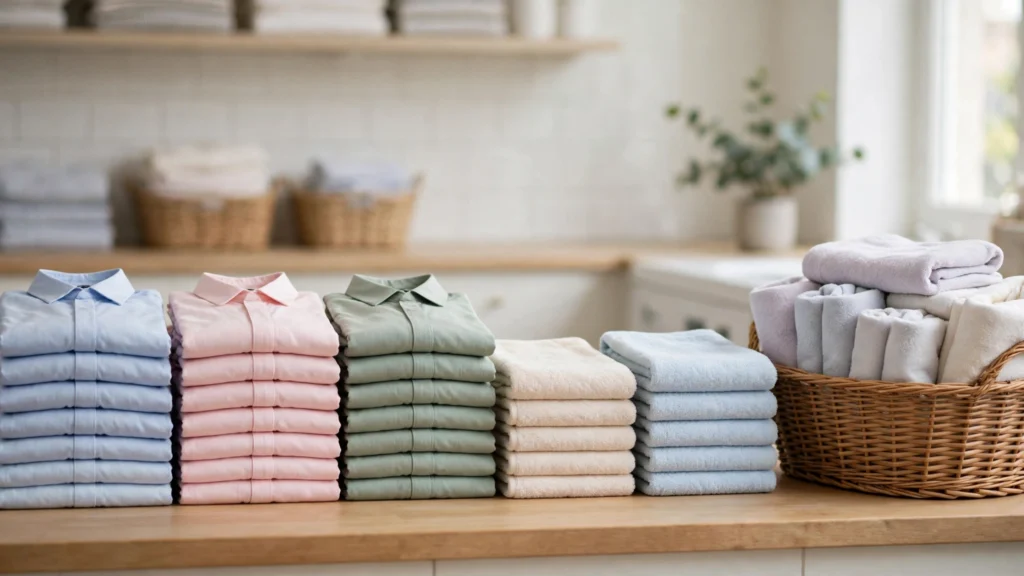
Follow One Bag of Laundry: Where Does 15 Dollars Go?
Let us follow one bag of laundry and see where the money goes. Suppose a customer drops off a bag of 5 kilos and pays 15 dollars for wash-and-fold. Does the shop keep all 15 dollars? No. Here is one simple way it might be divided, using typical examples.
First, water. Washing machines use a lot of water, and hot water costs more, because it must be heated. In a typical example, water may take about 1 to 2 dollars of the 15 dollars.
Second, electricity and gas. The machines must run, the dryers must heat up, and the lights must stay on. In a typical example, power may take about 2 to 3 dollars.
Third, detergent and other supplies: soap, fabric softener, stain remover, and plastic bags. In a typical example, these may take about 1 to 2 dollars.
Fourth, staff pay. A worker weighed the bag, loaded the machine, moved the clothes to the dryer, folded them, and bagged them. In a typical example, that may take about 3 to 4 dollars of the 15.
Fifth, rent and other fixed costs: rent, insurance, and the cost of the machines, which must be paid even on a day when few bags come in. In a typical example, these may take about 3 to 4 dollars per bag.
Add those costs up, and one 15-dollar bag may cost about 10 to 13 dollars to wash, dry, and fold, leaving about 2 to 5 dollars of profit per bag, before tax. That is not a lot, but 100 bags a day turns that small profit into real money, while 20 bags a day leaves the same fixed costs shared across far fewer bags.
This is why volume matters so much in laundry. No single bag makes the owner rich. The profit comes from doing the same job well, again and again, for many customers, every day.
The Biggest Costs
Making money is only half the story. If the costs are too high, even a busy shop can lose money. Let us look at the biggest costs one by one.
Water is a cost people often forget, but for a laundry shop it is huge: a washing machine can use 50 litres of water or more for one load, and a busy shop may run hundreds of loads a week.
Electricity and gas come next. Dryers use a lot of energy to heat the air, and hot water needs gas or electricity to heat. In a typical example, a medium shop may pay 1,000 to 3,000 dollars a month for electricity, gas, and water together.
Detergent and supplies are a steady cost: soap, softener, stain remover, bags, and hangers must be bought again and again. Buying in bulk helps keep this cost down, but cheap detergent can damage clothes, so a good shop buys soap that cleans well without harming fabrics.
Machines are the biggest starting cost. A commercial washer can cost several thousand dollars, and a large shop may need ten or more washers and dryers — tens of thousands of dollars before it even opens. A broken washer on a Saturday can cost a whole day of sales, so machines need regular servicing, and a wise owner sets aside money each year for new ones.
Rent is often a large fixed cost. A laundry shop needs space for machines, a counter, and a place for customers to wait, plus good water pipes and strong power. In a typical example, rent may take about 10 to 20 percent of a shop’s total income.
Staff pay is another big cost. A wash-and-fold shop needs workers to sort, wash, dry, fold, and serve customers. In a typical example, staff pay may take about 25 to 35 percent of the shop’s total income. Too many staff means paying for idle time; too few means long waits, and customers leave.
Finally, smaller costs add up: card fees, marketing, insurance, licences, repairs, and cleaning. None is huge alone, but together they take a real share each month. All in all, a well-run laundry shop keeps about 10 to 20 percent of its income as profit in a typical example.
Busy Days, Quiet Days
Not every day is the same in a laundry shop. Saturdays are often the busiest day, as families bring in the week’s laundry, and Mondays are busy with bags dropped off over the weekend. Midweek can be quieter, and the owner must plan for that.
Rainy weeks can bring more work: wet clothes, muddy trousers, and soaked jackets. Hot summers can bring more work too, as people change clothes more often and wash bedding and towels. A smart owner watches the calendar and keeps enough staff and supplies for the busy times.
On quiet days, the shop still pays rent, power, and staff, so the owner uses that time well: cleaning machines, fixing small problems, and sorting the next day’s work. A good owner also uses quiet days to offer deals, such as a midweek discount, to bring in more customers and keep the machines running.
Busy days are good for income, but they bring a risk: if the shop takes in too many bags and cannot finish them on time, customers wait, and some may not come back. Good shops promise only what they can do, and they keep a little extra capacity for the busiest days.
Seasonal work helps too. In winter, the shop washes heavy coats, blankets, and duvets. In summer, it washes light clothes and curtains. Each season brings different work, and a shop that plans ahead can earn money all year round.
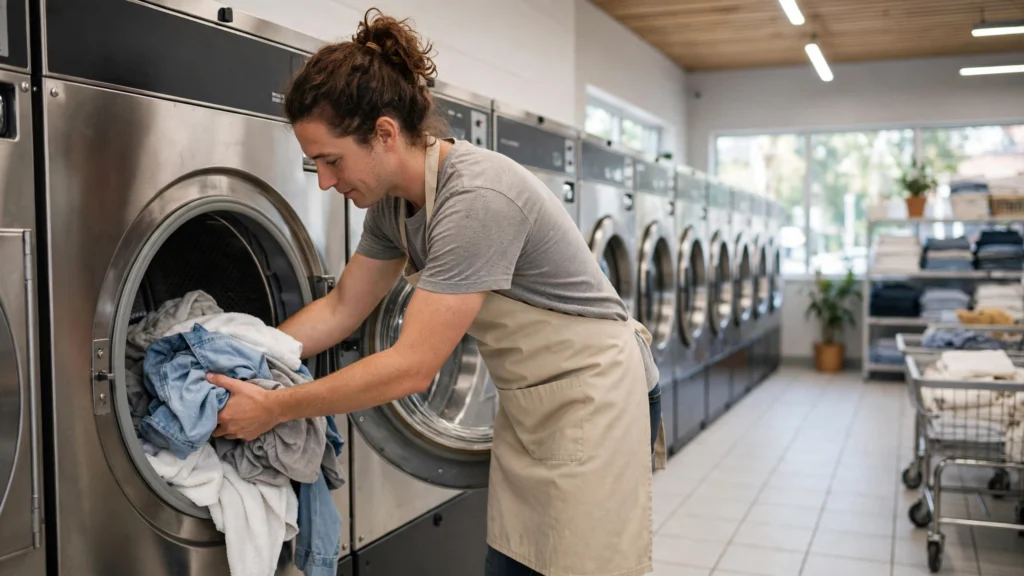
A Simple Monthly Example
Let us put the numbers together in one simple monthly example. Suppose a medium wash-and-fold shop takes in 10,000 dollars in a month. It is a busy shop in a good area, and 10,000 dollars is a fair example for such a shop.
From that 10,000 dollars, it must pay about 1,500 dollars for rent, about 2,000 dollars for water, electricity, and gas, about 800 dollars for detergent and supplies, and about 3,000 dollars for staff pay. That is 7,300 dollars in main costs.
Then come the smaller costs: about 300 dollars for card fees, 200 dollars for marketing, 300 dollars for insurance and licences, and 400 dollars for repairs and machine care. That is another 1,200 dollars.
Total costs: about 8,500 dollars. Income: 10,000 dollars. Profit before tax: about 1,500 dollars. That is about 15 percent of the income, and it fits the typical example of a well-run shop.
If the same shop takes in only 7,000 dollars in a slow month, the costs do not fall as fast: rent stays the same, and staff and power fall only a little. The shop might then make almost no profit, or even lose money. That is why the owner must save money in busy months to cover the slow ones.
Regular Customers and Location
Regular customers are the most valuable thing a laundry shop has. A customer who brings a bag every week is worth far more than a stranger who comes once. Good shops remember regulars, learn how they like their clothes folded, and make them feel welcome.
A shop can also keep regulars with small offers: every tenth wash free, a discount for a monthly plan, or a free pickup for a large order. These offers cost the shop a little, but they keep customers coming back instead of trying another shop.
Location is just as important as service. A laundry shop near flats, hostels, student housing, or a busy market will see more customers than one on a quiet street. The best spots are near homes where people have no washing machine, near offices where workers need a quick service, or near hotels that need clean sheets and towels every day.
A laundry shop next to a coffee shop can do well too — you can read how a coffee shop earns its money here: How Does a Coffee Shop Make Money?. People drop off their washing, then have a coffee while they wait, and the two shops bring each other customers.
Why Some Laundry Shops Close
Not every laundry shop survives. The reasons are usually simple, and they are worth learning from, so a new shop can avoid them.
One common reason is a bad location. A shop on a quiet street with few homes nearby will not get enough bags, no matter how good its service is, because customers will not walk far with a heavy bag of washing.
Another reason is low prices. A shop that charges too little will be busy, but it will not cover its costs, and it will slowly lose money until it closes. A fair price, charged with confidence, is better than a low price that cannot pay the bills.
Poor service is another reason. Clothes returned late, clothes that smell of smoke, or clothes that are lost or damaged will drive customers away fast. A laundry shop sells trust, and trust takes a long time to build and a short time to lose.
Broken machines can also close a shop. A shop with machines that break down every week will spend money on repairs, lose customers to rivals, and earn a bad name. A wise owner services machines on time and keeps one spare machine ready if a shop can afford it.
Finally, the owner must watch the money. If the shop does not keep clear records, it may not notice that costs are rising until it is too late. A simple record of money in and money out each week can warn the owner early, before a small problem becomes a big one.
Frequently Asked Questions
How much money does a laundry shop make?
It depends on the size of the shop, the area, and how many customers come each week. A small shop might take in 20,000 to 40,000 dollars a month in a typical example, and keep about 10 to 20 percent of that as profit.
Is a laundry shop a good business to start?
It can be, because people always need clean clothes. But it needs a lot of money to start, because machines are costly, and a good location with enough customers nearby. A new shop may take a year or more to build enough regular customers to become steadily profitable.
What is the most profitable part of a laundry shop?
Wash-and-fold is often the most profitable service per bag, because the shop charges for the work of its staff as well as the wash itself. Ironing also has a good profit, because it costs mostly staff time. Self-service brings in less per customer, but it needs very few staff.
How do laundry shops charge customers?
Most wash-and-fold shops charge by weight, usually per kilo or per pound. Self-service shops charge per machine load, and drying is often charged by time. Extra services such as ironing, dry cleaning, and pickup and delivery cost extra.
Why do laundry shops use so much water and electricity?
Because washing and drying clothes is thirsty work. Each wash uses tens of litres of water, and dryers use a lot of energy to heat the air. A busy shop may run hundreds of loads a week, so the bills are large.
What makes a laundry shop fail?
The most common reasons are high rent, prices set too low, broken machines with no money saved for repairs, poor quality that drives customers away, and costs that are not checked often enough.
More from Zorium Daily
- How Does a Coffee Shop Make Money?
- How Does a Hotel Make Money?
- How Does a Bakery Make Money?
- How Does a Gym Make Money?
A laundry shop is not a glamorous business. There are no bright lights or famous names. But it is a steady business, built on a simple human need: every week, people need clean clothes, and busy families, students, and workers hand over their bags and trust the shop to do the job well.
The shops that last are the ones that understand this. They keep their machines clean and working, charge a fair price, fold clothes neatly, return them on time, and remember their customers. They watch their water and power bills, fix small problems early, and save money in good months to get through bad ones.
So the next time you walk past a laundry shop and hear the hum of the machines, you will know what is happening inside. Dirty clothes go in, clean clothes come out, and if the shop does its job well, a little money stays behind with each bag, enough to pay the bills and stay open for another week.