What Is a Receipt and Why Do Shops Give You One?
By Zorium Daily Money Desk
SUMMARY OF THIS ARTICLE
- A receipt is a small paper or digital note a shop gives you after you pay. It proves what you bought, when you bought it, and how much you paid.
- A normal receipt shows the shop’s name, the date and time, each item and its price, any tax or discount, and the total you paid.
- Shops give receipts because the law often asks them to, because it protects both sides, and because it makes returns, refunds, and warranties possible.
- A receipt is not the same as an invoice: a receipt shows a payment already made, while an invoice is a bill asking you to pay.
- Keeping your receipts, even for a short time, makes returns easier, helps you track spending, and can save you money when something goes wrong.
The Little Slip of Paper You Almost Throw Away
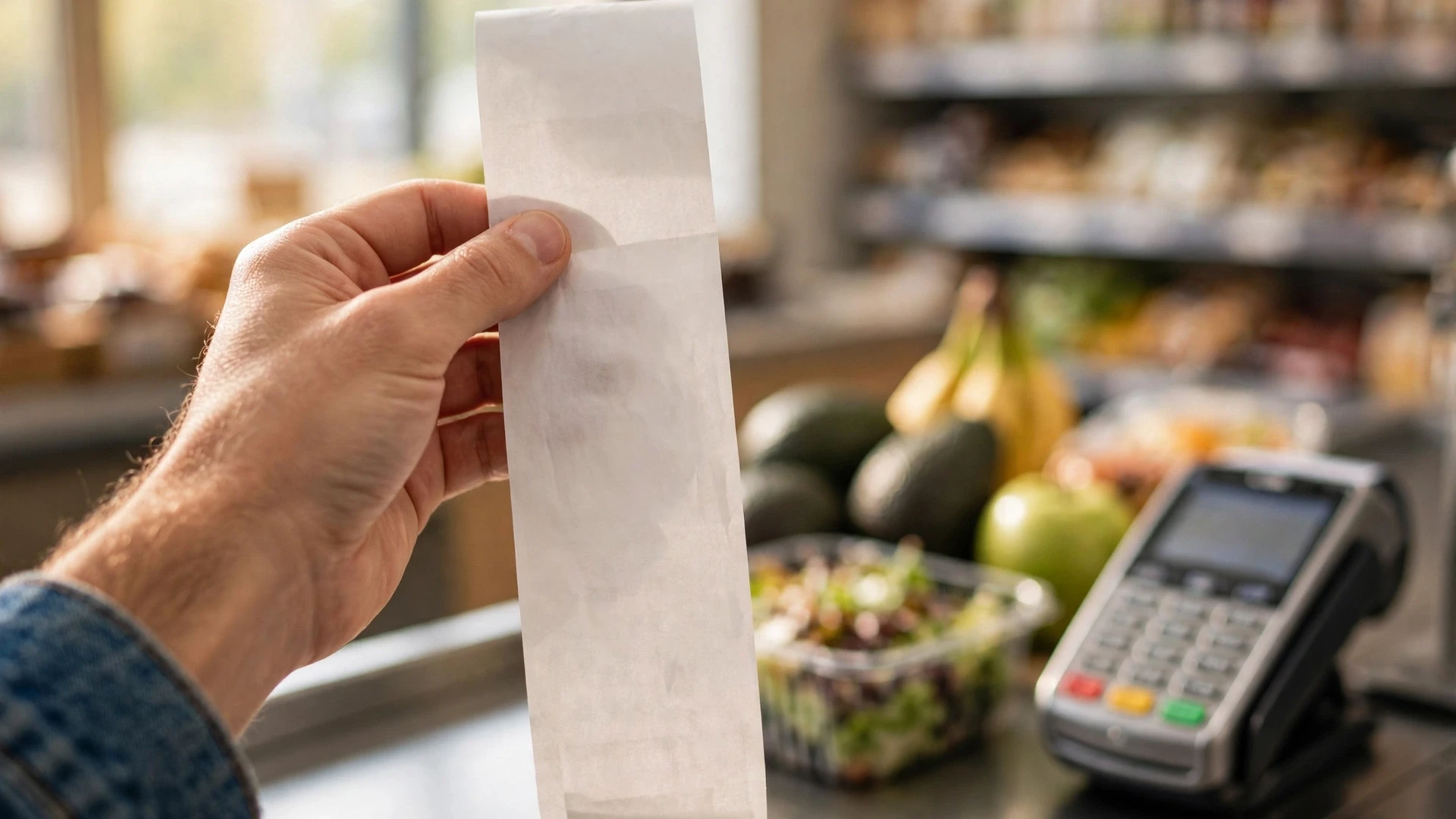
You buy a loaf of bread and a bottle of milk. The cashier hands you a thin slip of paper, and without thinking you fold it into your pocket. Later that evening you find it again, crumpled, and you are about to drop it in the bin. Wait. That little slip is worth more than it looks.
That slip is a receipt. Almost every time you pay for something, in a shop, a café, or online, you get one. Sometimes it is paper. Sometimes it lands in your email. Either way, it is a small record of a deal between you and the seller. You gave them money. They gave you something in return. The receipt is the proof that the deal happened.
Most of us ignore receipts. We take them out of habit, stuff them in a bag, and forget them. Then one day the toaster stops working after three weeks, or the shirt you bought is the wrong size, and suddenly that little slip matters a lot. The shop asks, “Do you have the receipt?” If you do, the return takes two minutes. If you do not, the shop may say no altogether.
So what exactly is a receipt? What is written on it? Why do shops bother giving you one at all? And how long should you keep it? This article answers all of that, in plain words.
What Is a Receipt, in Simple Words?
A receipt is a note that says: this person paid this amount, for these things, on this day, at this shop. That is the whole idea. It is proof of a purchase.
Think of it like a train ticket. A ticket proves you paid for the ride. A receipt proves you paid for the shopping. If anyone asks, “Did you really buy this here?” the receipt answers the question for you.
Receipts have been around for a very long time. Long before computers, shopkeepers wrote them out by hand in little books. Today a till prints one in two seconds, or an online shop sends one to your inbox. The tool changed. The job stayed the same.
A receipt always comes after the payment. You pay first, and then the receipt is made. It is a record of something that already happened. It does not ask you to pay. It tells you that you already paid. Keep that in mind, because it is the main difference between a receipt and an invoice, and we will come back to that later.
You get receipts for almost everything: groceries, clothes, a haircut, a meal at a restaurant, a phone bought online. Some are long, like a weekly food shop. Some are short, like a single coffee. The length changes. The purpose does not.
What Is Printed on a Receipt?
Pick up any receipt and look at it closely. It may look like a jumble of small print, but every part has a job. Let us walk through a typical grocery receipt, line by line.
At the top, you will see the name of the shop, and often its address and phone number. This tells you where the purchase happened. If you need to go back to the shop, you know exactly which branch it was.
Under that comes the date and time of the purchase. This matters more than people think. A return window, like “within 30 days”, is counted from this date.
Then comes the list of items. Each thing you bought gets its own line, with a short name and a price. For example, a receipt might show “Whole Milk 1L — $2.40” and “White Bread — $1.80”. If you bought three of the same item, the receipt shows the quantity, like “3 x $4.00 = $12.00”.
After the items, you will often see a subtotal: the total of all the items before tax or discounts. Then comes the tax, if your country or state charges tax on shopping. Then any discount is shown, for example “Loyalty discount — $3.00 off”. Finally, at the bottom, in bigger print, is the total amount you paid. That is the number that matters most.
The last lines tell you how you paid: cash, card, or phone payment. If you paid by card, the receipt usually shows only the last four digits of the card number, like “Card ending 4821”. It never shows the full number, and that is for your safety.
Many receipts also carry a receipt number and a till number, which shops use to find your purchase in their system. At the very bottom you may see the returns policy, which is worth a quick read before you leave the shop.

Why Do Shops Give You a Receipt?
If receipts are so useful, why do shops hand them out at all? It is not only kindness. There are several real reasons, and they help the shop just as much as they help you.
The first reason is the law. In many countries, shops are required by law to give a receipt, at least for certain kinds of sales. Tax rules sit behind this. A shop has to keep a record of what it sold and how much money came in, so that it pays the right amount of tax. The receipt you take home is your copy of that same record. Rules differ from country to country, but the basic idea is the same everywhere: a sale should leave a paper trail.
The second reason is proof, and it works both ways. For you, the receipt proves you bought the item and paid for it. For the shop, the receipt proves it sold the item and took the money honestly. If there is ever a disagreement — you say you paid, the shop says you did not — the receipt settles it in seconds.
The third reason is returns and refunds. Shops want happy customers who come back, and a clear returns process is part of that. But a shop cannot take back every item anyone brings in, or people could return things they bought elsewhere, or never bought at all. The receipt is the shop’s simple check. It shows the item came from that shop, on that date, at that price. That is why the first thing a shop assistant asks when you return something is usually, “Do you have the receipt?”
The fourth reason is your protection. Say you buy a kettle, and it stops working after a month. The shop might offer a repair or a replacement, but only if you can show when you bought it. The receipt has the date. Say a shop charges you twice by mistake, or the till charges $15 when the shelf said $12. The receipt shows what you were charged, and you can walk straight back and point at it.
Receipt vs Invoice: What Is the Difference?
People mix up receipts and invoices all the time, and it is easy to see why. Both are pieces of paper about money. Both list items and prices. But they do opposite jobs, and knowing the difference saves confusion.
A receipt says: you already paid. It is written after the money changes hands. It looks back at a finished deal. An invoice says: please pay. It is written before the money changes hands. It looks forward to a payment that still has to happen.
Here is a simple example. You go to a shop, buy a pair of shoes, and pay at the till. You get a receipt. The deal is done. Now imagine a plumber fixes a leak in your kitchen. She does the work, then hands you a paper that says, “Labour and parts: $120. Please pay within 14 days.” That paper is an invoice. You have not paid yet. The invoice is asking you to pay.
The two documents also look a little different. An invoice usually has a due date, a payment deadline, and bank details or instructions for how to pay. A receipt usually shows the payment method and the time of payment, because the seller needs to show the money already arrived.
In everyday shopping, you will mostly meet receipts. Invoices show up more when you pay for services, when a business buys from another business, or when you buy something and pay later. A freelancer, for example, sends an invoice to a client and then, once the client pays, may send a receipt to confirm the money arrived.
Sometimes one document does both jobs. An online shop might send you an email called an invoice that also acts as your receipt, because you already paid when you ordered. What matters is not the word at the top, but the simple question: has the money been paid yet?
Paper Receipts vs Digital Receipts
Not long ago, every receipt was paper. Now, many are digital. Both kinds do the same job, but each has its own strengths and weaknesses.
A paper receipt is the classic one: a thin strip printed by the till, handed to you on the spot. Its biggest strength is that you have it right away, in your hand, with no phone, no email, and no account needed. Its biggest weakness is that it fades. The print on many paper receipts is made with heat, not ink, and after a few months in a warm pocket or a sunny car, the words can turn pale and hard to read. Paper receipts also tear, get wet, and get lost in the bottom of a bag.
A digital receipt is sent to your email, your phone, or a shop’s app. Its biggest strength is that it does not fade or tear. You can search for it later — type the shop’s name into your inbox, and there it is. It is also better for the planet, because no paper is printed. Its biggest weakness is that it can be hard to find. It may land in a spam folder, or sit under a pile of marketing emails from the same shop. If you change your email address, old receipts can be hard to reach.
So which one should you pick? For small everyday buys, like a sandwich or a bus ticket, either is fine, and many people simply skip the receipt. For bigger buys, like a phone, a washing machine, or a winter coat, a digital copy has a real advantage: it lasts. But do not rely on memory to find it later. Save it in a folder in your email, or take a photo of a paper receipt the same day you get it. A photo of a receipt is not always accepted as proof by every shop, but it is far better than nothing.
Why You Should Keep Your Receipts
Keeping receipts sounds dull, and most of us do not do it well. But there are five good reasons to keep them, at least for a while, and none of them needs a filing cabinet. A shoebox, an envelope, or a folder on your phone will do.
The first reason is returns and refunds. You buy a jacket, get home, and find a loose seam. You buy a lamp, plug it in, and it does not light up. With the receipt, the shop can see the date and the price, and the return is usually quick. Without it, the shop may offer only an exchange, or a lower price, or nothing at all. Store policies differ, but a receipt makes your case strong.
The second reason is warranties. Many products come with a warranty, which is a promise to repair or replace the item if it breaks within a set time, often one or two years. A warranty usually starts on the day you bought the item, and the only easy way to prove that day is the receipt. Imagine you buy a washing machine and it breaks down near the end of its two-year warranty. The receipt shows the exact date of purchase, and that date decides whether the repair is free. Keep receipts for anything with a warranty — appliances, electronics, furniture, and tools — until the warranty ends, and keep the receipt with the warranty paper, or a photo of both together.
The third reason is your budget. A receipt is a tiny diary of your spending. If you keep a week’s worth of receipts, you can see at a glance what you spent on food, travel, and small treats. Many people are surprised. The daily coffee, the snacks, the small top-ups — they add up. For example, $4 on coffee each weekday is about $20 a week, or about $80 a month, just on coffee. A simple monthly budget is much easier to build when you can see your real spending instead of guessing. Receipts give you the real numbers. And if the receipts show a little money left over at the end of the month, that money can go into your savings account.
The fourth reason is spotting mistakes. Shops make errors. A till can scan an item twice. A shelf price can differ from the till price. A card payment can be taken twice. If you check your receipt before you leave the shop, or at home that evening, you can catch these mistakes while they are fresh. One quick look is enough: are all the items yours, are the prices right, is the total what you expected? If something looks wrong, go back to the till or call the shop the same day. The longer you wait, the harder it is to fix.
The fifth reason is tax and expenses. If you are self-employed, or if you buy things for work, receipts are the records that back up your expenses. A freelancer who buys a notebook for work, or a small business owner who buys supplies, needs receipts to show what was spent and why. Tax rules differ by country, so check the rules where you live, but in general, no receipt means no proof, and no proof means the expense may not count. Even if you are not self-employed, keep receipts for large purchases, home repairs, and medical costs — a tax form, an insurance claim, or a dispute may ask for them one day.
What to Do If You Lose a Receipt
It happens to everyone. You need to return a faulty kettle, you reach for the receipt, and it is gone. Maybe it went through the wash. Maybe it was in a bag you threw away. Do not panic. A lost receipt is a problem, but it is not always the end of the story.
First, check your other records. Did you pay by card? Your bank statement or your banking app will show the shop’s name, the date, and the amount. That is not a full receipt, but it is strong proof that you bought something there on that day. Some shops can use your card details to look up the purchase and print a copy of the receipt. It is always worth asking.
Second, check your email. If you shopped online, or chose a digital receipt, a copy is probably sitting in your inbox. Search for the shop’s name and the word ‘receipt’ or ‘order’. Many online shops also keep your orders in your account on their website, so you can log in and find the order there.
Third, bring what you have. If you have the item, its box, the price tag, or a photo of the receipt, take those with you. Some shops will accept a return or an exchange without a receipt, especially if the item is clearly faulty and clearly from their shop. Others may offer store credit instead of a refund. Ask what they can do rather than assuming the answer is no.
And for the future, build one small habit: when you buy something expensive, take a photo of the receipt before you leave the shop. It takes five seconds, and it means a lost paper receipt no longer matters.
Simple Tips for Handling Receipts
You do not need a system. You need a few habits that take almost no time and save you trouble later. Here are the ones that work best.
Check the receipt before you leave the shop. This takes less than a minute. Scan the items and the total. If you bought four things, are there four lines? Is the total close to what you expected? If something is wrong, the till is right there, and the fix is fast. Once you are home, the trip back takes far longer.
Keep a receipt spot at home. Pick one place — a small box, a drawer, or an envelope stuck to the fridge — and put all your receipts there. When you need one, you will know where to look. At the end of each month, throw away the ones you no longer need. A tidy pile is useful. A mountain of old paper is not.
Photograph the important ones. For anything with a warranty or a high price, take a photo of the receipt the day you buy it. Paper receipts fade, but a photo does not. Keep the photos in a folder on your phone called ‘Receipts’.

Frequently Asked Questions
What is a receipt in simple words?
A receipt is a note a shop gives you after you pay. It shows what you bought, how much you paid, and when you bought it — proof that the purchase happened. For example, bread for $2 and milk for $3 gives a receipt showing both items and a total of $5.
Do I have to take a receipt every time I shop?
No, you do not have to. For a small everyday purchase, like a coffee or a bus ticket, skipping the receipt is fine. But for anything you might return, anything with a warranty, or anything expensive, take the receipt. It is free, it takes a second, and it can save you a lot of trouble later.
What is the difference between a receipt and an invoice?
A receipt shows a payment that has already been made. An invoice is a bill asking you to pay. You get a receipt after you pay at a shop. You get an invoice before you pay, for example when a plumber finishes a job and asks you to pay within 14 days. The money has been paid in one case, and is still owed in the other.
Can I return something without a receipt?
Sometimes, yes, but it depends on the shop. Some will accept a bank statement, a card record, or a loyalty card record as proof instead. Others may offer an exchange or store credit rather than a refund. If the item is faulty, consumer law in many countries may still protect you, as long as you can prove where and when you bought it. Ask the shop what they can do, and check your local rules.
Are digital receipts as good as paper ones?
Yes, for most purposes. A digital receipt has the same information as a paper one, and it never fades or tears. The only risk is losing it in a crowded inbox, so save it in a folder. For a big purchase, keeping both a paper copy and a digital copy is the safest choice.
How long should I keep my receipts?
It depends on the item. Keep food and small everyday receipts for a week or two. Keep clothes receipts until the return window ends, and electronics or appliance receipts until the warranty ends. Keep receipts for tax, work expenses, and big purchases for a few years, or as long as your local tax rules suggest.
More from Zorium Daily
- What Is a Loan and How Does It Work?
- What Is a Savings Account and How Does It Work?
- How Does Credit Card Interest Work?
- How to Make a Simple Monthly Budget That Actually Works
The next time a cashier hands you that thin slip of paper, do not just fold it away without a look. Give it a quick glance. Check the total. Check the items. Then tuck it somewhere safe, or take a photo of it, especially if you bought something that cost real money. It takes only a few seconds, but it turns a broken toaster into a free replacement, a wrong price into a quick refund, and a forgotten month of spending into a clear picture of where your money goes. A receipt is not just paper. It is your proof, your record, and your safety net, all in one small slip.