
How Does a Bookshop Make Money?
SUMMARY OF THIS ARTICLE
- A bookshop makes money when the price a customer pays is higher than the cost of buying, stocking, and selling the book.
- Most money comes from new books, but used books, gifts, stationery, coffee, and events can add useful extra income.
- Rent, staff, and unsold stock are the biggest costs, so a good bookshop must sell enough each month to cover them.
- Choosing the right books, building a loyal local crowd, and running events help a shop stay open and grow.
- Opening a bookshop can work, but it is a slow, careful business, not a quick way to get rich.
Introduction
Picture a small bookshop on a quiet street. The shelves are full. A child picks up a picture book and smiles. An older man asks the shopkeeper for a novel he read about in the paper. A student buys a notebook and a pen. The bell above the door rings softly every time someone walks in.
It looks peaceful. It looks simple. But behind that calm scene is a real business, with bills to pay, stock to order, and customers to keep happy. A bookshop is not just a room full of books. It is a shop that must make enough money to pay its rent, pay its staff, and buy new books, month after month.
So how does a bookshop make money? Where does the money come from? What does it cost to run a shop like this? And can a small bookshop really survive when big online stores sell books so cheaply?
This guide will answer those questions in plain words. We will follow one book from the publisher to the shelf, look at the main ways a shop earns money, and work through a simple monthly example. By the end, you will understand the bookshop business, even if you have never run a shop yourself.
The Simple Idea
At its heart, a bookshop makes money in the same way as any shop. It buys something for one price and sells it for a higher price. The gap between the two prices must be big enough to pay for everything else.
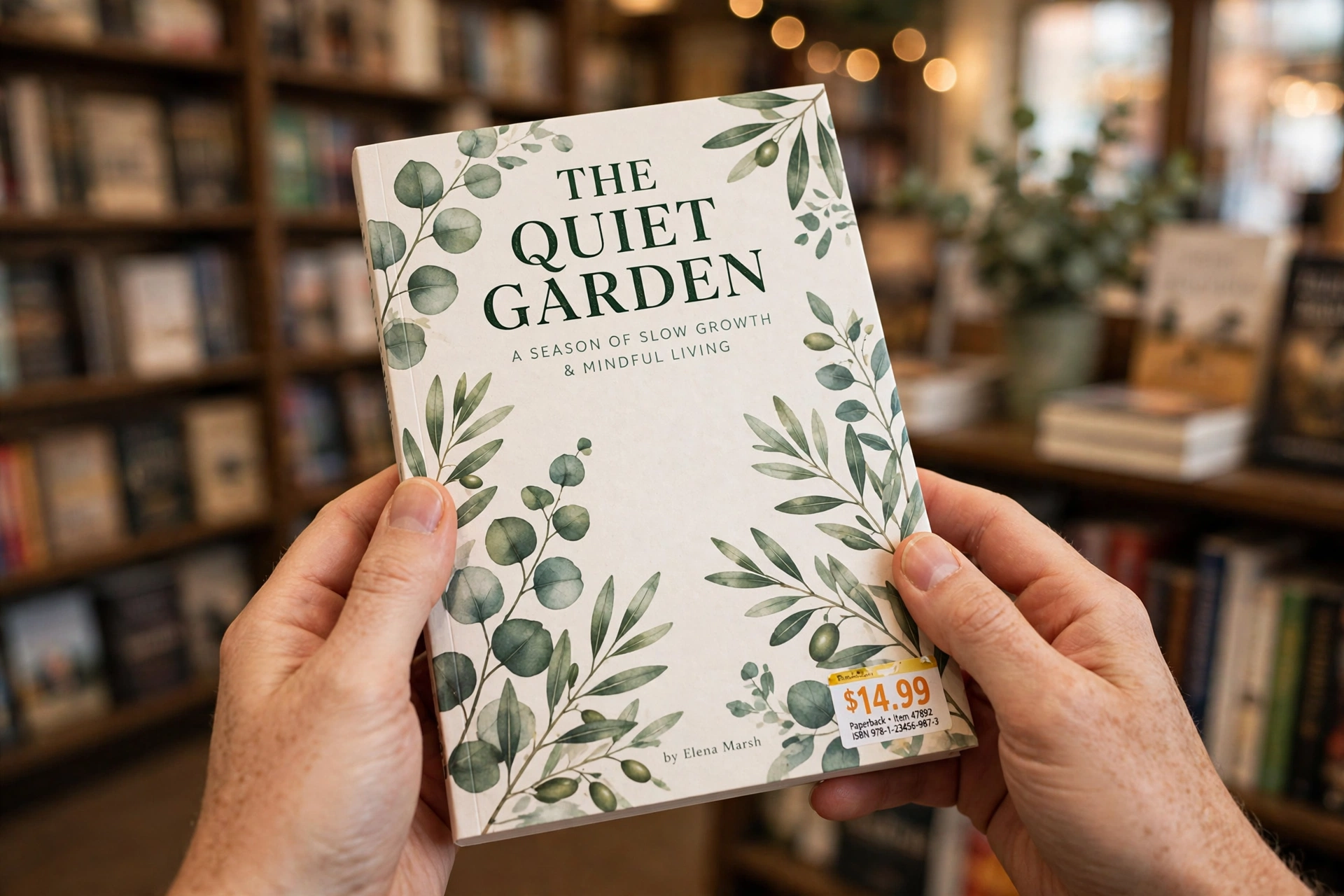
Here is the simple version. A publisher prints a book. The bookshop buys that book from the publisher, or from a wholesaler, at a lower price, called the trade price. The shop then puts the book on its shelf with a cover price, which is the price the customer pays. The difference between the trade price and the cover price is the shop’s gross margin.
Let us use easy numbers. Suppose a paperback has a cover price of $20. The shop might buy it for $12. That leaves $8. That $8 is not pure profit. From that $8, the shop must pay rent, staff wages, heating, lights, bags, and many other costs. What is left after all those costs is the real profit, and it is often much smaller than people expect.
The usual discount a bookshop gets is around 40% off the cover price for a new book, though it can vary. For a $20 book, a 40% discount means the shop pays $12 and keeps $8 before costs. For a $30 hardcover, the shop might pay $18 and keep $12 before costs. These are rough examples, not fixed rules. Big chains can sometimes get a better deal. Small shops often get a little less.
This simple idea explains why volume matters. If a shop sells only a few books a day, the $8 gaps add up slowly. If it sells many books a day, they add up faster. That is why location, loyal customers, and good book choices matter so much.
Where the Money Comes In
A bookshop rarely earns money from only one thing. Most shops have several streams, which is a business word for different ways money comes in. If one stream is slow, another can help.
New books
New books are the core. Bestsellers, new novels, children’s books, and popular non-fiction bring people into the shop. A new release by a famous author can sell many copies in one week. Children’s books are also very important, because parents and grandparents buy them as gifts all year round.
Used and second-hand books
Some shops buy used books from customers for a small price, or take them on trade, and sell them again at a higher price. The margin on a used book can be good, because the shop bought it cheaply. Second-hand books also bring in bargain hunters who may then buy a new book too.
Gifts, stationery, and toys
Many bookshops sell more than books. Bookmarks, greeting cards, notebooks, pens, puzzles, board games, and soft toys often sit near the till. These items can have a higher margin than books. They are also easy impulse buys. A customer who came for a novel may leave with a card and a bookmark as well.
Coffee and snacks
Some bookshops have a small cafe corner. A cup of coffee and a cake can make a customer stay longer, browse more, and come back more often. The cafe itself can make money, but it also helps book sales. A relaxed customer is more likely to pick up another book.
Events, clubs, and services
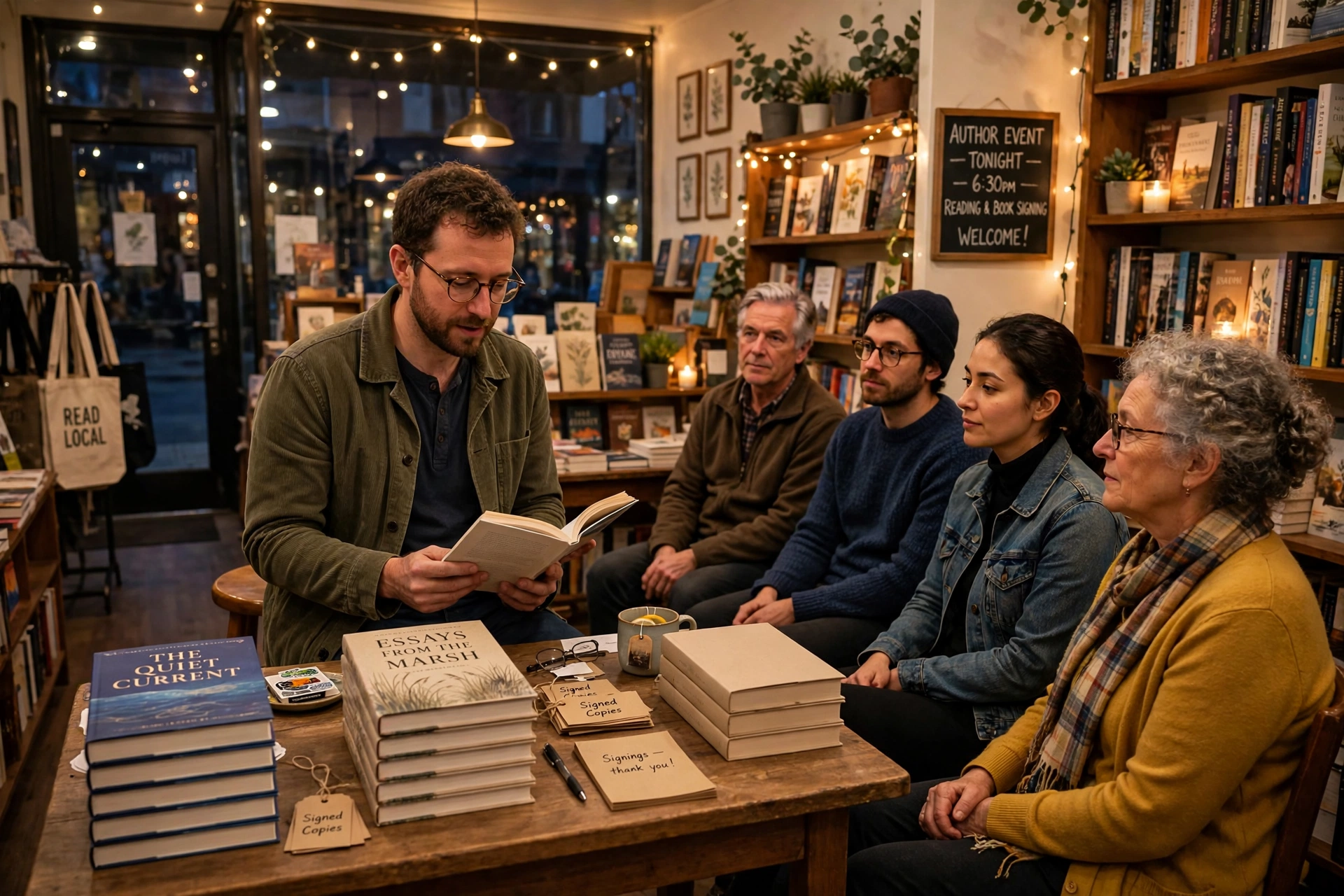
Author talks, book clubs, story time for children, and school visits can bring in money in two ways. Sometimes the shop charges a small ticket price. More often, the event leads to book sales on the night. A signed book by an author who just spoke in the shop is a special purchase many people want.
Some shops also offer special orders. If a customer wants a book that is not on the shelf, the shop orders it. That builds loyalty, because the customer learns that the shop can get almost any book, even if it takes a few days.
Follow One Book From Publisher to Shelf
Let us follow a single book, step by step, so the money path is clear.
First, a publisher prints the book. The publisher spends money on the author, editing, design, printing, and marketing. The publisher sets a cover price, say $20.
Next, the bookshop orders copies. The shop may order directly from the publisher or through a wholesaler, a company that stocks books from many publishers and delivers them to shops. The shop pays the trade price, say $12 per copy.
Then, the book arrives, is unpacked, and is placed on a shelf, face out if it is a new release, or spine out if space is tight. The shopkeeper may put a staff recommendation card beside it, or place it in a window display.
Finally, a customer buys the book for $20. The shop keeps $8 before costs. If the book does not sell, the shop may return it to the publisher, in some cases, or put it on sale at a lower price. Unsold stock is a real risk, because the shop has already paid for books sitting on shelves.
This is why bookshops are careful about how many copies they order. Order too few, and customers are disappointed. Order too many, and money sits in unsold books that could have been used for rent or wages.
The Biggest Costs of Running a Bookshop
Money coming in is only half the story. Money going out decides whether a shop survives.
Rent: Rent is usually the biggest fixed cost. A shop on a busy high street pays more rent than a shop on a quiet side street, but it also gets more passing trade. The shopkeeper must balance rent against footfall, which means the number of people walking past.
Staff: Staff wages are the next big cost. A good bookseller knows books, can recommend titles, and can run events. That skill costs money. Many small shops are run by an owner with one or two part-time helpers, to keep wage costs down.
Stock: Stock is money tied up in books on shelves. A shop may hold thousands of books. Each one cost money to buy. If a book sits unsold for months, that money is stuck. Good stock control, ordering the right books in the right numbers, is a key skill.
Other costs: Other costs include heating, lights, insurance, bags, bookmarks, a card machine, a website, and delivery costs for online orders. None of these is huge alone, but together they add up.
The math: A shop must sell enough books each month so that the total margin, the $8 gaps added together, is bigger than the total costs. If the total costs are $10,000 a month, and the average margin per book is $8, the shop must sell at least 1,250 books a month just to break even, before it makes any profit. That is about 42 books a day, every day. That simple math shows why location and loyal customers matter.
A Simple Monthly Example
Let us build a simple example for a small bookshop. These numbers are made up, to show how the math works. Real shops will differ.
- Money in: The shop sells 1,500 books at an average cover price of $20. That is $30,000 in sales. It also sells gifts and coffee worth $3,000. Total money in is $33,000.
- Cost of books and gifts: The shop paid about $19,800 for those books and gifts. That leaves a gross margin of $13,200.
- Costs: Rent is $4,000. Staff wages are $5,000. Heating, lights, and other costs are $2,000. Total costs are $11,000.
- Profit: Gross margin of $13,200 minus costs of $11,000 leaves $2,200 profit for the month. That is a thin margin. One slow month, or a big unsold order, can wipe it out.
This example shows why bookshops work hard to increase sales and control costs at the same time. A small change, like selling 100 more books, or cutting one cost, can make a big difference to that final profit.
Why People Still Love Bookshops
Online shops are fast and often cheap. So why do people still walk into a bookshop, when they could order from home?
First, a bookshop lets you browse in a way a screen cannot match. You can pick up a book, feel its weight, read the first page, and look at the pictures. You may find a book you never planned to buy, simply because it caught your eye on a shelf. That happy accident is called browsing, and it is a big part of the joy.
Second, a bookshop gives advice. A good bookseller asks what you liked before and suggests something similar. That personal recommendation is hard for a computer to copy well, because it is based on a real conversation.
Third, a bookshop is a place, not just a store. People meet friends there, bring children to story time, or sit quietly and read. It becomes part of a town or neighbourhood. Many customers shop there because they want the shop to stay, not just because they want a book.
Fourth, books are gifts. A book chosen in a shop, wrapped in paper, with a personal note, feels different from a parcel that arrives in a box. Bookshops sell that feeling, as well as the book itself.
Good books are also a way to learn about history and the world, which is one reason families keep coming back to a local shop they trust.
How Does a Bookshop Choose Which Books to Stock?
Choosing books is one of the hardest jobs in a bookshop. The shop cannot stock every book ever printed. It must choose a mix that will sell in its area.
First, the shop looks at bestseller lists and new releases. Those are safe bets, because many people want them. Next, it looks at its own customers. A shop near a school will stock more children’s books. A shop near a university may stock more study books. A shop in a tourist area may stock more local guides and maps.
Then, the shopkeeper uses personal knowledge. If a certain author sells well in that shop, the shop will order more of that author’s books. If a type of book never sells, the shop will order fewer of them next time.
Season also matters. In December, gift books and children’s books sell well. In summer, light novels and travel books sell well. Before school starts, study books and stationery sell well.
Finally, the shop may take a chance on a lesser-known book, because the shopkeeper loved it and wants to share it. Sometimes that book becomes a surprise hit, sold by word of mouth from one happy customer to the next.
Busy Days and Quiet Days
Not every day is the same in a bookshop. Saturdays are often busy, because people have free time to browse. Weekday mornings can be quiet, with a few regular customers. Rainy days can be good, because people duck inside to browse. Sunny days in a seaside town can be bad, because everyone is at the beach.
Bookshops plan for this pattern. They may run events on quiet days, to bring people in. They may use quiet days to unpack new stock, tidy shelves, and plan displays. They may order more staff for busy Saturdays and for the Christmas rush.
Understanding this rhythm is part of making money. A shop that only does well on Saturdays must make enough on Saturday to cover the quiet days too.
How Good Owners Make It Work
Good bookshop owners do a few things well, again and again.
- Choose a good place, where people already walk, shop, and meet.
- Know their customers, by name if possible, and remember what they like.
- Keep the shop tidy, bright, and welcoming, with clear displays and easy-to-find sections.
- Run events that bring people in and turn visitors into buyers.
- Control stock carefully, so money is not stuck in books that will not sell.
A good bookshop owner also knows about money. They watch sales each week, check which books sell and which do not, and adjust orders. They keep costs low where they can, without making the shop feel cheap or unwelcoming.
Many owners also build a community. They start a book club. They invite local authors. They work with schools and libraries. They post on social media about new arrivals. All of this builds a crowd of loyal customers who choose the local shop, even when an online store is a little cheaper.
Different Types of Bookshops
Not all bookshops are the same. Each type makes money in a slightly different way.
- Independent bookshops: Small, often run by one owner, with a personal touch and a local focus.
- Big chain bookshops: Larger shops, often in malls or city centres, with more stock and more staff, but less personal choice.
- Second-hand bookshops: Shops that buy and sell used books, often at lower prices, with a treasure-hunt feel.
- Specialist bookshops: Shops that focus on one area, like children’s books, comics, cookbooks, or rare books. They attract experts and collectors.
- Online bookshops: Shops with no physical store, or with a store plus a website. They save on rent, but pay more for delivery and marketing.
Each type has its own strengths and risks. An independent shop can be warm and personal, but it has less buying power. A chain can get better discounts, but it must pay higher rents and wages. A specialist shop can charge more for rare books, but its customer base is smaller.
What About Big Online Shops?
Big online shops sell huge numbers of books. They can offer discounts because they buy in very large amounts and have lower costs per book in some areas. That makes life hard for small shops.
But small shops have advantages online shops cannot copy easily. They offer a personal welcome. They host events. They support local schools. They let customers hold a book before buying. Many customers are willing to pay full price for that experience, and for the chance to keep a local shop alive.
Some small shops also sell online themselves. They may have a website, or sell through a shared online platform for independent shops. That way, they can reach customers beyond their town, while still keeping their physical shop as their home base.
Is Opening a Bookshop a Good Idea?
Opening a bookshop can be a good idea, if you go in with open eyes. It is not a quick way to get rich. Profit margins are thin. The work is hard, with long hours, heavy boxes, and constant ordering.
It can be a good idea if you love books, love people, and are happy to run a small, steady business. It can be a good idea if you find a good location, with enough passing trade and a community that wants a bookshop. It can be a good idea if you plan carefully, keep costs low at the start, and build a loyal crowd over time.
It is a bad idea if you expect instant profit, or if you think loving books alone is enough. A bookshop is a business first. Loving books helps, but knowing your numbers, your customers, and your costs is what keeps the doors open.
Many successful owners start small, perhaps with a market stall, a pop-up shop, or a small room, and grow slowly. That way, they learn the business without taking on huge rent from day one.
Frequently Asked Questions
How does a bookshop make money?
A bookshop buys books at a trade price, lower than the cover price, and sells them at the cover price. The gap between the two prices, minus rent, staff, and other costs, is the profit. Extra income from gifts, coffee, and events also helps.
Do bookshops make a lot of money?
Most small bookshops make a modest profit, not a large one. Margins are thin, and costs are high. A well-run shop can be steady and sustainable, but it is rarely a fast way to get rich.
How much discount does a bookshop get on a book?
A typical discount is around 40% off the cover price for a new book, though it varies by publisher, shop size, and type of book. For a $20 book, that means the shop pays about $12 and keeps $8 before costs.
Why are books cheaper online?
Large online shops buy in huge amounts, which can give them better terms. They also save on shop rent in some cases, though they pay more for warehouses and delivery. Small shops cannot always match those prices, so they compete on service, advice, and experience instead.
Can a bookshop survive without selling coffee or gifts?
Yes, some bookshops survive on books alone, especially specialist shops with loyal customers. But gifts, stationery, and coffee can add useful extra income and bring people in, so many shops include them.
What is the biggest cost for a bookshop?
Rent and staff wages are usually the two biggest costs, followed by stock, the money tied up in books on shelves. Controlling these three costs is key to staying open.
Is it hard to open a bookshop?
It takes planning, money for initial stock and rent, and knowledge of books and customers. Starting small, learning the business, and building a community over time gives a new shop the best chance.
More from Zorium Daily
- How to Make a Simple Monthly Budget That Actually Works — Zorium Daily
- Why Do We Have 12 Months in a Year? — Zorium Daily
- Why Can We Sometimes See the Moon During the Day? — Zorium Daily
- How Do Noise-Cancelling Earbuds Work? — Zorium Daily