How Do Noise-Cancelling Earbuds Work?
Introduction
Put on a pair of noise-cancelling earbuds on a busy bus, press play, and something surprising happens. The engine noise fades, the chatter softens, and your music sounds clear, even at a low volume. It feels like magic, but it is actually clever science and smart engineering working together.
Noise-cancelling earbuds do not just block sound like earplugs. They listen to the noise around you, and then create a special opposite sound that cancels it out. At the same time, they use soft tips and a snug fit to block some sound physically. Together, these two methods make the world quieter, so you can hear what you want to hear.
In this article, we will explain, in simple words, how noise-cancelling earbuds work, what happens inside them, and why they are better for some sounds than for others.
SUMMARY OF THIS ARTICLE
- Noise-cancelling earbuds use two methods: passive isolation, which blocks sound with a snug fit, and active noise cancellation, which cancels sound with anti-noise.
- Active noise cancellation works by using tiny microphones to listen to outside noise, then creating an opposite sound wave that cancels the noise out.
- When the original noise and the anti-noise meet, they cancel each other out, making the sound quieter or almost silent.
- Noise cancellation works best for steady, low sounds, like engine hum or air-conditioning noise, and less well for sudden, sharp sounds.
- Good earbuds also use smart chips, fast processing, and a good seal in the ear to make cancellation as effective as possible.
The Simple Idea
Imagine you are in a noisy room. Someone is talking loudly. Now imagine someone else speaks at exactly the same volume, but in the exact opposite way, so the two voices cancel each other out. That is, in simple terms, how noise cancellation works.
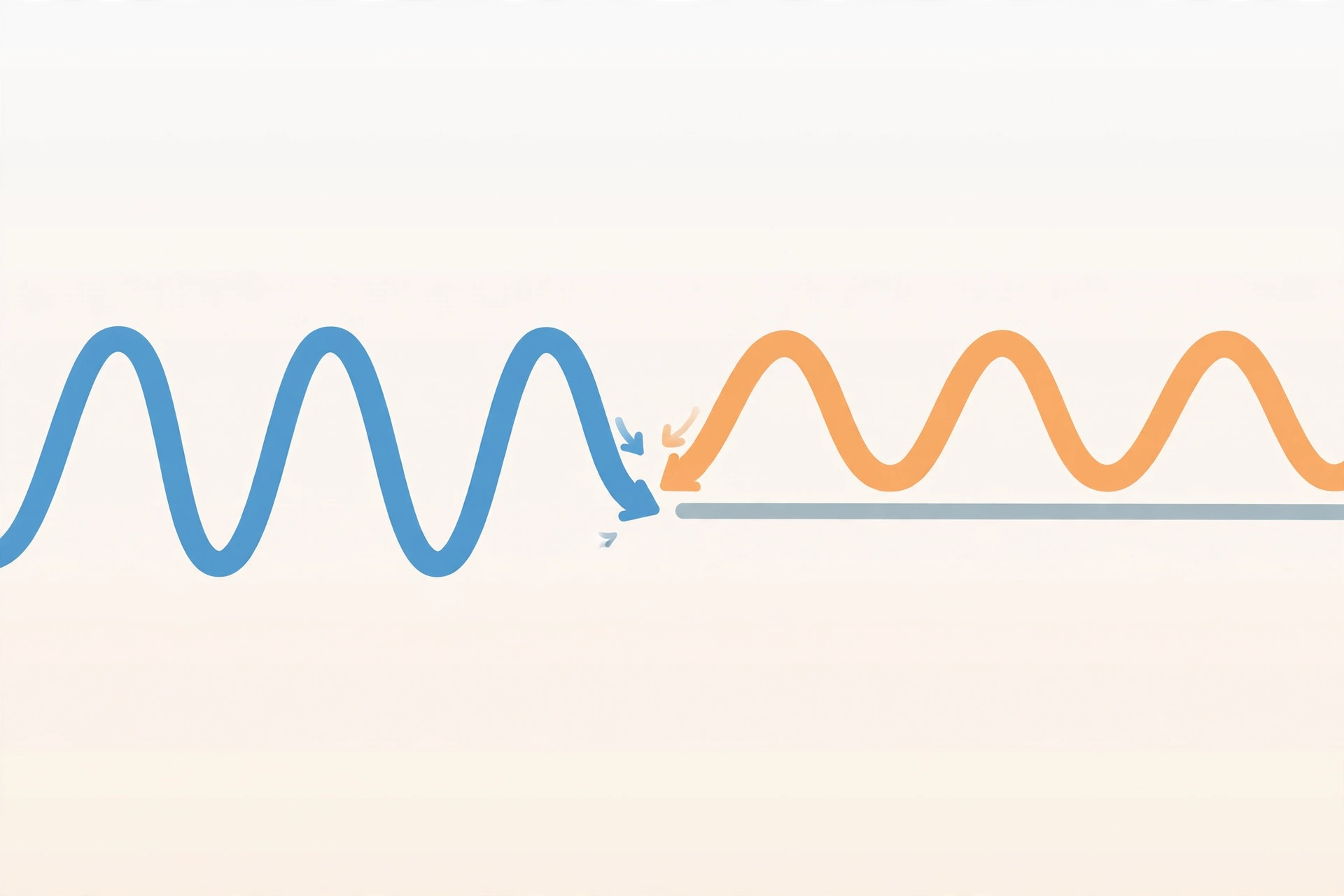
Sound travels in waves. When two waves meet, they can add together, making sound louder, or they can cancel each other out, making sound quieter. If a peak of one wave meets a trough of another wave, they cancel. This is called destructive interference, a scientific name for a simple idea: opposite waves cancel.
Noise-cancelling earbuds use this idea in real time. They listen to the noise, create an opposite wave, and play it into your ear at the same time as the noise arrives. The result is quiet, or at least much quieter, so your music or podcast stands out.
The Core Science: How Anti-Noise Works
Active noise cancellation, often shortened to ANC, follows four steps, all happening in less than a blink of an eye.
Step 1: Listen. Tiny microphones on the outside of the earbuds listen to the sounds around you. These are called feedforward microphones, because they hear the noise before it reaches your ear.
Step 2: Analyse. A small computer chip inside the earbuds analyses the noise. It measures the shape, pitch, and volume of the sound wave, and works out what opposite wave is needed to cancel it.
Step 3: Create anti-noise. The chip creates anti-noise, a sound wave that is the exact opposite of the original noise. If the original wave goes up, the anti-noise goes down, and vice versa.
Step 4: Play and cancel. The earbuds play the anti-noise into your ear at the same time as the original noise arrives. The two waves meet and cancel each other out, so you hear much less noise, or almost none.
Some earbuds also have microphones inside the ear, near your eardrum. These are called feedback microphones, because they listen to what is actually reaching your ear, and help the chip correct any leftover noise. Earbuds with both outside and inside microphones are called hybrid ANC earbuds, and they are usually the most effective.
Passive Isolation: The First Line of Defence
Before active cancellation even starts, earbuds block sound passively. Passive isolation means blocking sound simply by covering the ear and sealing it well.
Noise-cancelling earbuds come with soft silicone or foam tips in different sizes. When you choose the right size, the tip seals your ear canal, like a plug. That seal blocks high-pitched sounds, like voices and clinking glasses, quite well, even without any electronics.
A good seal is essential. If the tip is too small, sound leaks in around the edges, and cancellation is less effective. If the tip is too large, it can feel uncomfortable. That is why most earbuds come with small, medium, and large tips, and some have a fit test in their app to help you choose.
Passive isolation and active cancellation work together. Passive isolation is good for high sounds. Active cancellation is good for low, steady sounds. Together, they cover a wide range of noise.
Why Some Sounds Are Harder to Cancel
Noise cancellation is not perfect, and it works better for some sounds than for others.
- Steady, low sounds: Engine hum, aeroplane cabin noise, air-conditioning, and fan noise are steady and predictable. The chip can easily work out the opposite wave, so cancellation is very effective.
- Sudden, sharp sounds: A door slamming, a dog barking, or someone shouting is sudden and unpredictable. By the time the chip hears it and creates anti-noise, the sound has already reached your ear. Cancellation is less effective for these sounds, though passive isolation still helps.
- Voices: Human voices are complex, with many pitches changing quickly. Noise cancellation can soften voices, but it rarely removes them completely. That is actually a good thing in some cases, because you may want to hear an announcement or a conversation.
This is why noise-cancelling earbuds are excellent on a plane or a bus, where the main noise is a steady engine hum, but less effective in a busy cafe, where voices and clinking cups change constantly.
What Is Inside a Noise-Cancelling Earbud?
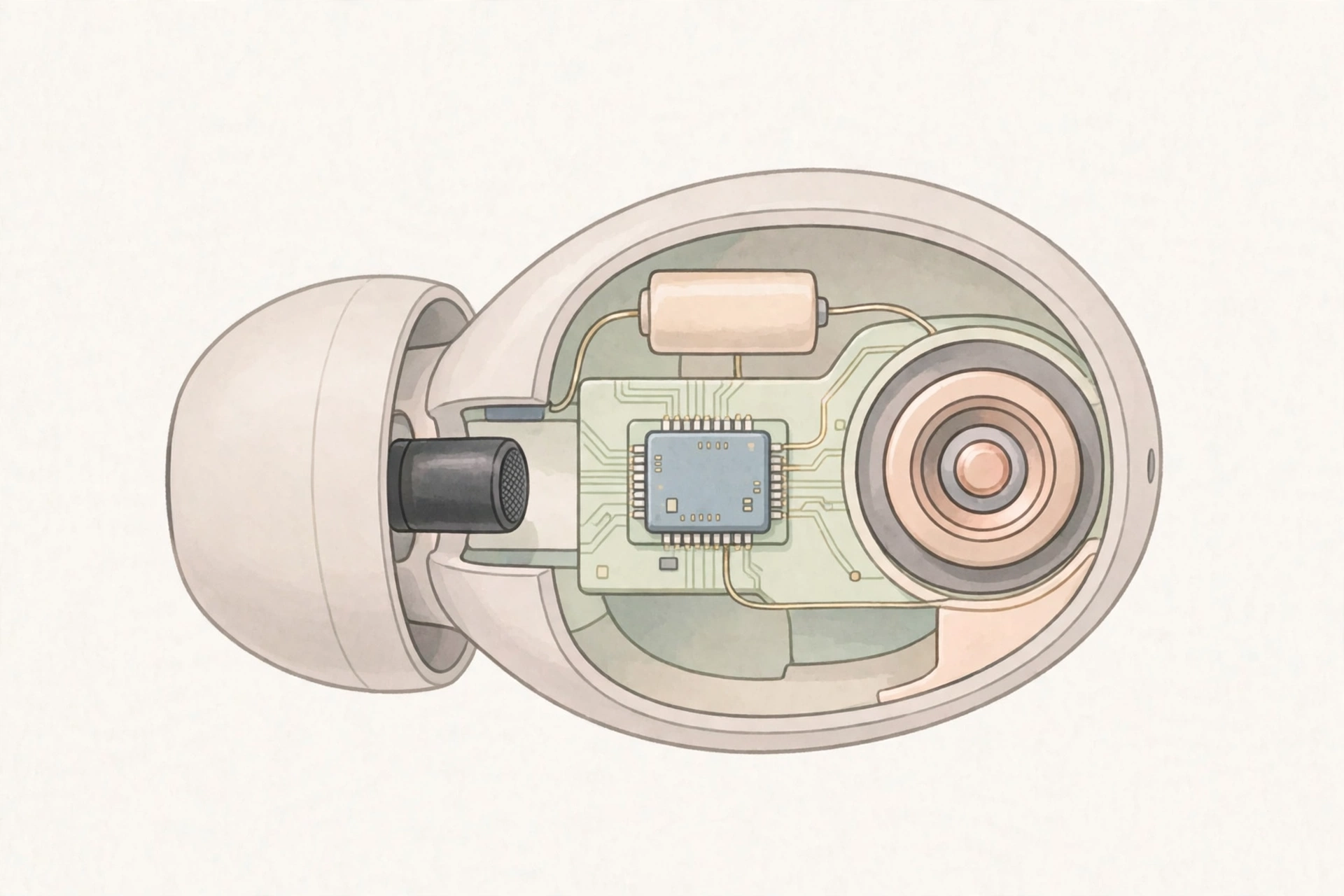
Inside each tiny earbud, there is a lot of technology packed into a very small space.
- Microphones: Small microphones on the outside, and sometimes inside, listen to noise and to what you hear.
- Speaker driver: A tiny speaker plays your music, your podcast, and the anti-noise.
- Chip: A fast computer chip analyses noise and creates anti-noise in real time.
- Battery: A small rechargeable battery powers the chip, microphones, and speaker. Noise cancellation uses extra power, so battery life is shorter when ANC is on.
- Bluetooth: A Bluetooth chip connects the earbuds to your phone, tablet, or computer, without wires.
All of this must work together, very fast. If the anti-noise arrives even a fraction of a second late, it will not cancel the noise properly. That is why the chip and the software are so important. They must be fast, accurate, and efficient.
What Do the Smart Chips Do?
Modern noise-cancelling earbuds use smart chips that do more than just create anti-noise. They can adapt to your surroundings.
For example, some earbuds have different modes. In full noise-cancelling mode, they block as much noise as possible. In transparency mode, they let outside sounds in, so you can hear traffic, announcements, or a conversation, without taking the earbuds out. Some earbuds switch between modes automatically, depending on where you are.
Some earbuds also learn your ear shape. They play a test sound and listen to how it echoes in your ear, then adjust the cancellation to fit you better. This personalisation makes cancellation more effective, because every ear is slightly different.
Other earbuds use artificial intelligence to recognise types of noise, like wind, and adjust to reduce wind noise specifically. Wind can be a problem for microphones, because it creates a rushing sound. Smart wind reduction helps keep calls and music clear, even on a windy day.
How to Choose the Right Noise-Cancelling Earbuds
Not all noise-cancelling earbuds are the same. Here are some things to think about when choosing a pair.
- Fit: A good seal is essential. Try different tip sizes, and use a fit test if the app offers one.
- Cancellation strength: Some earbuds cancel more noise than others. Read reviews, and look for hybrid ANC with both outside and inside microphones, if you want the strongest cancellation.
- Battery life: Noise cancellation uses power. Check how long the earbuds last with ANC on, not just with ANC off.
- Comfort: You may wear earbuds for hours. They should feel light and comfortable, not tight or heavy.
- Transparency mode: If you need to hear traffic or announcements, a good transparency mode is useful.
- Price: More expensive earbuds are not always better for you. Think about what you need: strong cancellation for travel, or light cancellation for home use.
Noise-Cancelling Earbuds in Everyday Life
Noise-cancelling earbuds are useful in many everyday situations.
- Travel: On planes, trains, and buses, they reduce engine noise and make travel more relaxing.
- Work: In an open office, they help you focus, by softening chatter and office noise.
- Study: Students use them to focus on reading or revision, even in a noisy library or dorm.
- Exercise: Some people use them while walking or at the gym, though it is important to stay aware of traffic and surroundings when outside.
- Relaxation: Listening to music, podcasts, or audiobooks with less background noise can be more enjoyable and less tiring.
However, it is important to use them safely. Do not use full noise cancellation when you need to hear traffic, alarms, or announcements, for example when cycling on a road or crossing a busy street. Use transparency mode in those situations, or take one earbud out.
Frequently Asked Questions
Do noise-cancelling earbuds block all sound?
No, they do not block all sound. They greatly reduce steady, low sounds, like engine noise, and soften many other sounds, but they do not make the world completely silent. Sudden, sharp sounds and some voices may still be heard, though more quietly.
Can I use noise-cancelling earbuds without music?
Yes, many people use noise-cancelling earbuds with no music playing, simply to reduce background noise while working, studying, or travelling. The cancellation still works, even when you are not listening to anything.
Why do some noise-cancelling earbuds cost more than others?
Price differences often come from the quality of the microphones, chips, and software, as well as from features like hybrid ANC, transparency mode, and personalised sound. More expensive earbuds may cancel noise more effectively, but a cheaper pair can still be good for everyday use.
Is noise cancellation the same as noise isolation?
No, they are different. Noise isolation, also called passive isolation, blocks sound physically, with a snug fit that seals the ear. Noise cancellation, or active noise cancellation, uses electronics to create anti-noise that cancels sound waves. Good earbuds use both methods together.
Do noise-cancelling earbuds work for sleeping?
Some people use them to reduce night-time noise, like traffic or a snoring partner, but they are not designed as sleep aids. They can be uncomfortable to wear while lying down, and they may still let some sounds through. If you need quiet for sleep, earplugs designed for sleeping may be more comfortable.
How long does the battery last with noise cancellation on?
Battery life varies by model, but many earbuds last about 5 to 8 hours with noise cancellation on, and the charging case provides extra charges, often for a total of 20 to 30 hours. Using noise cancellation uses more power, so battery life is shorter than with ANC off.
Do noise-cancelling earbuds work in wind?
Wind can be a challenge, because it creates noise at the microphones. Many modern earbuds have wind reduction, which helps, but strong wind may still be heard. In very windy conditions, cancellation may be less effective, and you may hear a rushing sound.
Can I use noise-cancelling earbuds for phone calls?
Yes, most noise-cancelling earbuds have microphones for calls, and many use noise reduction to make your voice clearer to the other person. However, in very noisy or windy places, the other person may still hear some background noise.
More from Zorium Daily
- How to Make a Simple Monthly Budget That Actually Works — learn more about money and budgeting.
- How Does a Bookshop Make Money? — learn more about business and shops.
- Why Do We Have 12 Months in a Year? — learn more about history and calendars.
- Why Can We Sometimes See the Moon During the Day? — learn more about science and the Moon.