US Strikes Iran’s Qeshm Island as Talks Continue: What Is Happening in the Strait of Hormuz?
As of the morning of 3 November 2026 (Dhaka time) — this is a fast-moving story and details may change during the day.
Note on sourcing: The limited, defensive strikes on 2 November 2026 were reported by outlets citing US officials, including Reuters and the Wall Street Journal; Iranian state media IRNA reported explosions on Qeshm Island. Specific targets, damage and casualty figures are not independently confirmed, and US Central Command has not commented publicly. The strikes did not mark the resumption of a major wider war, and Qatar-mediated communication between the United States and Iran is ongoing, with no progress reported.
SUMMARY OF THIS ARTICLE
- On Monday 2 November, US forces carried out limited strikes against Iranian targets in the Strait of Hormuz area and on Qeshm Island, according to US officials reported by Reuters and the Wall Street Journal.
- Iranian state media reported explosions on Qeshm Island, and US officials described the strikes as defensive, aimed at stopping attacks on commercial shipping.
- At the same time, Iranian negotiators were in Doha for a third day of talks, with Qatar, Turkey and Pakistan acting as mediators.
- Oil prices fell by more than 7 to 8 percent on Monday, as traders hoped a deal might reduce the risk of a wider war.
- The situation is changing quickly, and many details are still disputed or unconfirmed, so this article reports what each side has said, not a final version of events.
Where Are the Strait of Hormuz and Qeshm Island?
To understand this story, it helps to start with a map in your mind.
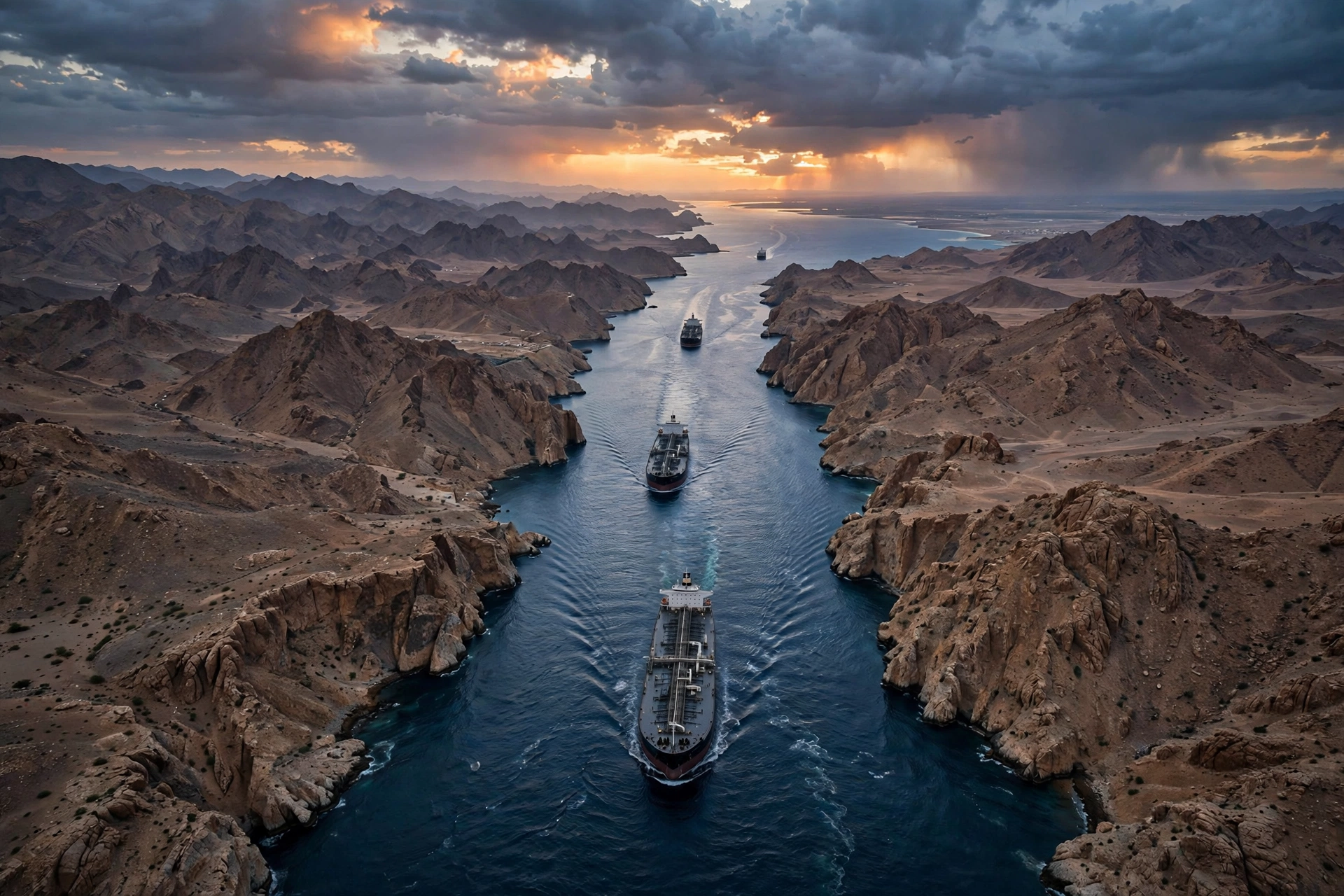
The Strait of Hormuz is a narrow stretch of sea between Iran on one side and Oman and the United Arab Emirates on the other. It connects the Persian Gulf, a large sea area in the Middle East, to the Gulf of Oman and then to the open ocean.
At its narrowest point, the strait is only about 33 kilometres wide, and the shipping lanes used by large ships are even narrower — only about 3 kilometres wide in each direction. Imagine a busy two-lane road, but for giant oil tankers, with very little room to turn around.
Qeshm Island is a large Iranian island in the strait area, close to the Iranian mainland. It is the largest island in the Persian Gulf. Because it sits right by the shipping lanes, it is strategically important. That is a military word that means its location gives it power over who can pass through and what happens in the area.
Iran controls the northern side of the strait. Oman controls the southern side. Ships from all over the world pass through these waters every day, carrying oil and gas from countries such as Saudi Arabia, Iraq, Kuwait, and the United Arab Emirates to buyers in Asia, Europe, and elsewhere.
Why Does This Narrow Strait Matter So Much?
About a fifth of the world’s oil supply — roughly 20 percent — passes through the Strait of Hormuz. That is a huge share for one narrow waterway.
If ships cannot pass safely, oil becomes harder to get, and prices can rise quickly around the world. Higher oil prices can mean higher petrol prices for drivers, higher heating costs in winter, and higher transport costs for food and other goods. That is why governments, traders, and ordinary people all watch the strait closely.
The strait also matters for security. Countries that depend on oil from the Gulf need the waterway to stay open. Countries in the region need it to export their oil and earn money. Any fighting near the strait therefore worries many countries at once, not just the two sides directly involved.
This is not a new concern. The strait has been a source of tension for many years, because Iran has at times threatened to close it during disputes, and the United States and its allies have said they will keep it open. Each side says it is acting to protect itself and international shipping, while accusing the other side of causing danger.
What Happened on Monday 2 November?
According to US officials reported by Reuters and the Wall Street Journal, US forces carried out limited “defensive” strikes on Monday 2 November against Iranian targets in the Strait of Hormuz area and on Qeshm Island.
The word “defensive” is important here, because it is how US officials described the purpose of the strikes. They said the strikes were not meant to start a new, larger war, but to respond to threats against shipping and American forces.
Iranian state media, including IRNA, reported explosions on Qeshm Island. Iranian state media is run by the Iranian government, so its reports reflect the Iranian government’s view of events. It did not, in the reports cited, give a full account of damage or casualties, and those details remain unclear.
Two incidents were described in reports of the day’s events. In one, an Iranian surface-to-air missile — a missile fired from the ground at an aircraft — was said to have been fired at a US jet, which then fired back in self-defence. In another, a US force was said to have intercepted a missile fired from Qeshm that was targeting commercial shipping.
It is important to be careful here. These descriptions come from US officials and from news reports based on their accounts. Independent confirmation of every detail is difficult in a fast-moving military situation, especially in an area where journalists cannot easily travel freely. Different sources may describe the same event in different ways, and some details may change as more information becomes available.
US officials also said, according to reports, that the United States has carried out smaller secret strikes for several weeks before Monday. These strikes were not publicly announced at the time, according to the reports. Their reported aim was to stop Iran from targeting commercial shipping in the strait. Secret military actions are hard to verify independently, because governments do not usually publish full details of them while they are happening.
A War That Began in February
To make sense of Monday’s strikes, we need a short history.
According to news reports, the current war began with US strikes on Iran on 28 February 2026. Since then, the United States and Iran have been in a state of armed conflict, even though the fighting has not been constant every day. There have been periods of intense fighting, periods of quiet, and periods of talks.
Wars between countries are rarely simple. They usually involve a mix of fighting, threats, sanctions, and negotiations, all happening at the same time. Sanctions are economic punishments, such as bans on trade or on banking, designed to pressure a government to change its behaviour without using military force.
In this case, Iran says it wants sanctions lifted and a naval blockade ended. A blockade is when one side uses warships to stop ships from entering or leaving an area. Iran says a blockade is harming its economy and its people. The United States and its allies say their actions are aimed at stopping Iran from developing nuclear weapons and from attacking shipping and neighbouring countries.
Iran has repeatedly said its nuclear programme is for peaceful purposes, such as generating electricity. The United States and some other countries have said they do not trust that claim and want strict limits and inspections. This disagreement over nuclear weapons is one of the deepest causes of tension between the two countries, and it goes back many years.
What Did President Trump Say?
On Monday, President Donald Trump spoke about the situation in comments reported by news outlets. He said, “We had a war with Iran. We won,” and he played down the idea of a renewed, larger war.
He also said a deal “could happen,” suggesting that he still saw a chance for an agreement. When asked whether he would strike Iran after the US midterm elections, which are being held on 3 November, he replied “no,” according to reports.
At the same time, US officials said that military options remain open. That phrase means the government has not ruled out further military action if it believes it is necessary. Leaders often keep their options open in public statements, even while they are negotiating, because they want the other side to take the talks seriously.
These two messages — talk of a possible deal, and talk of keeping military options open — may seem contradictory, but they are common in diplomacy. A leader may want to show that peace is possible, while also showing that they are prepared to use force if talks fail.
It is also worth noting that the timing matters. The strikes happened the day before the US midterm elections. Some commentators have asked whether the timing is linked to American politics. Others say military decisions are made for security reasons, not election reasons. There is no public proof that the timing was chosen for political purposes, and the US government has described the strikes as defensive responses to immediate threats.
Talks in Doha: What Are They Trying to Solve?
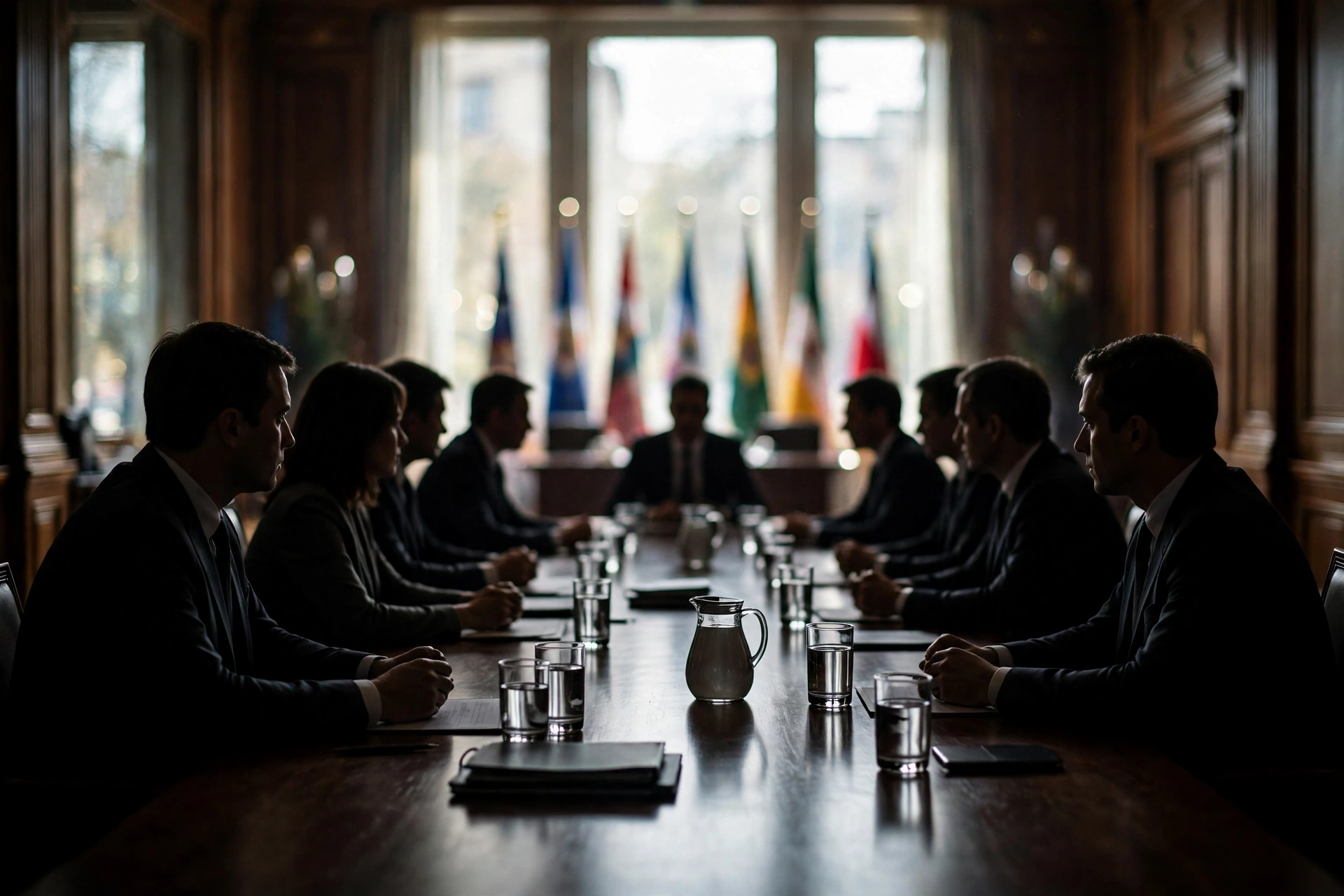
While the strikes were happening, talks were also continuing. Iranian negotiators were in Doha, the capital of Qatar, for a third day of talks with Qatari mediators, according to reports. Qatar, Turkey, and Pakistan are acting as mediators.
A mediator is a neutral party that helps two sides talk to each other when they do not want to talk directly, or when direct talks are too difficult. Mediators can carry messages, suggest compromises, and help both sides save face — that is, reach an agreement without looking weak to their own people.
What are the talks trying to solve? In simple terms, each side wants something from the other.
Iran, according to reports, insists on the lifting of sanctions and the ending of the naval blockade, and on meeting its other demands. It also says it is ready to reopen the Strait of Hormuz under strict conditions. “Reopen” here means to guarantee safe passage for ships, but with conditions that Iran sets, such as security guarantees or economic relief.
The United States, according to its public positions, wants Iran to stop attacking commercial shipping, to limit its nuclear programme, and to accept inspections that prove it is not building nuclear weapons. It also wants guarantees that Iran will not threaten its neighbours or American forces in the region.
A deal, if one is reached, would likely involve both sides giving something up. Iran might accept limits and inspections in return for sanctions relief. The United States might ease sanctions and reduce military pressure in return for those limits. Reaching such a deal is difficult, because neither side trusts the other fully, and because each side faces pressure from people at home who do not want any compromise.
Talks can also break down at any moment. A new strike, a new threat, or a disagreement over a single word in a draft agreement can cause negotiators to walk away. That is why observers say the situation remains fragile, even when talks are happening.
Who Are the Mediators, and Why Do They Matter?
Qatar, Turkey, and Pakistan are named in reports as mediators in the Doha talks. Why these three countries, and what can a mediator actually do?
Qatar is a small but wealthy Gulf state. It hosts the talks in its capital, Doha, and it has working relationships with many different sides in the Middle East, including the United States and Iran. A host country provides a safe, neutral place to meet, and its diplomats can carry messages back and forth when the main sides do not want to sit in the same room.
Turkey is a large country that sits between Europe and Asia, with its own interests in the Middle East. It has trade and diplomatic links with both Western countries and Iran, and it often tries to present itself as a bridge between different sides. A bridge country can sometimes say things to each side that the other side would not accept directly.
Pakistan shares a border with Iran and has its own complex relationships in the region. It also has close ties with Gulf states and with the United States. Its role as a mediator may reflect its position as a neighbour that wants stability, because war and disruption in the Gulf can affect Pakistan’s own economy, energy supplies, and security.
Mediators do not decide the outcome. They cannot force the United States or Iran to accept a deal. What they can do is listen to each side, point out where the two sides actually agree, suggest wording that both sides might accept, and keep talks going when tempers rise. Good mediators are trusted to keep private conversations private, so that leaders can explore compromises without immediately facing criticism at home.
Mediation is slow work. A single phrase in an agreement — for example, whether sanctions are lifted “immediately” or “in stages” — can take hours or days to negotiate, because each word can affect how the deal works in practice. That is one reason talks can last for days, with long breaks, and why reports often say only that talks are “continuing,” without giving full details.
Why Did Oil Prices Fall?
On Monday, oil prices fell by more than 7 to 8 percent, according to market reports. That may seem surprising. After all, strikes in an oil shipping area might be expected to push prices up, not down.
The reason, according to market analysts quoted in news reports, was optimism about a possible deal. Traders — people who buy and sell oil on financial markets — saw two pieces of news together: the strikes were described as limited, and talks were still going on. They also heard President Trump say a deal “could happen” and that he would not strike Iran after the midterms.
Traders reacted by betting that a wider war was less likely, at least for now. When the risk of a supply disruption falls, oil prices often fall too, because buyers are less worried about running out.
Oil prices move for many reasons, not only war. They also move because of how much oil countries produce, how much people use, and what traders expect about the future economy. A single day’s fall does not mean prices will stay low. If talks fail, or if there are new strikes, prices could rise again just as quickly.
For ordinary people, oil prices matter because they affect petrol prices, heating bills, and the cost of transporting goods. A fall in oil prices, if it lasts, can help keep those costs down. A sharp rise can do the opposite, especially for poorer families who spend a larger share of their income on fuel and food.
What Does a Blockade Mean in Everyday Terms?
The word “blockade” appears often in this story, so let us explain it simply.
Imagine a road leading into a town. If soldiers block that road and stop lorries from entering or leaving, the town cannot easily get food, medicine, or fuel, and it cannot sell its own goods to outsiders. A naval blockade is similar, but at sea. Warships patrol an area and stop or turn back ships trying to enter or leave.
Iran says a naval blockade is hurting its economy. It cannot export oil as freely, and it cannot import goods as easily. Supporters of the blockade say it is a way to pressure Iran without a full invasion. Critics say blockades hurt ordinary people most, because they make food, medicine, and other essentials more expensive or harder to find.
International law has complex rules about blockades. In general, blockades are supposed to allow humanitarian goods, such as food and medicine, to pass, but in practice this is often disputed. Each side accuses the other of breaking the rules.
Iran’s statement that it is ready to reopen Hormuz “under strict conditions” suggests it is linking safe passage for ships to its other demands. In other words, it may be saying: we will guarantee the strait stays open, but only if sanctions are lifted and the blockade ends. That is a bargaining position, not yet a final agreement.
How Should Readers Follow a Fast-Moving Story?
Stories like this change quickly, and early reports are often incomplete. Here are some simple tips for readers.
First, check the date and time of a report. A story from Monday morning may be out of date by Monday evening if new strikes or talks have happened.
Second, notice who is saying what. “According to US officials” is different from “according to Iranian state media,” and both are different from independent journalists on the ground. Each source has its own perspective, and the truth often lies somewhere that needs more than one source to see clearly.
Third, be careful with words like “war,” “victory,” and “deal.” Leaders use these words to shape public opinion. A leader who says “we won” may mean a specific battle or a phase of fighting, not that all problems are solved. A leader who says a deal “could happen” is expressing hope, not announcing an agreement.
Fourth, watch for what is not said. If a report does not mention casualties, damage, or the exact targets of a strike, that usually means those details have not been confirmed yet, not that there were none.
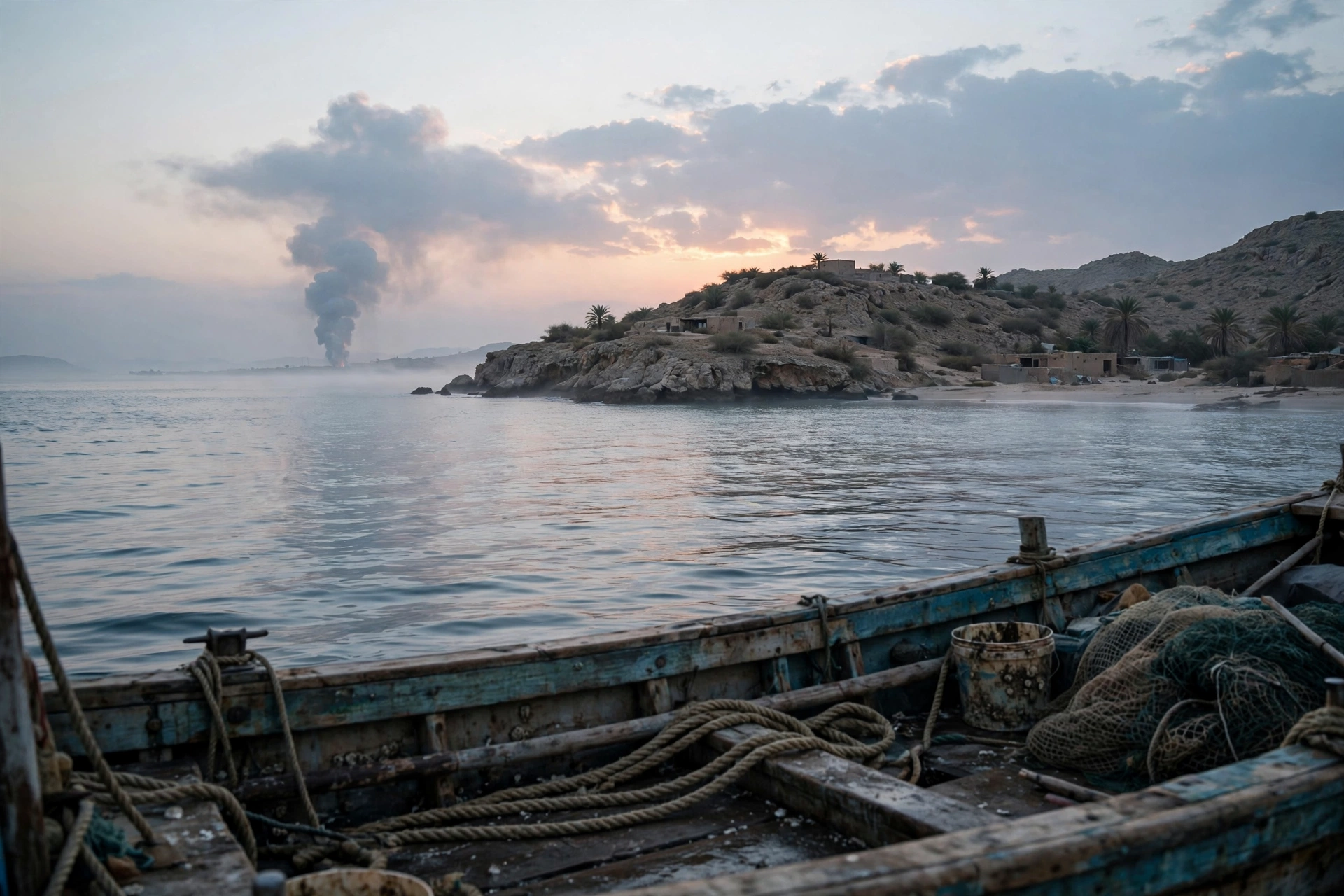
Finally, remember that people live in the areas affected by this conflict. Fishermen near Qeshm, sailors on oil tankers, families in Iran, and soldiers on both sides are all affected by decisions made far away in capitals. News stories often focus on leaders and missiles, but the human cost is an important part of the story too.
Frequently Asked Questions
Where is the Strait of Hormuz?
The Strait of Hormuz is a narrow sea passage between Iran and Oman, connecting the Persian Gulf to the Gulf of Oman and the open ocean. About a fifth of the world’s oil supply passes through it.
What is Qeshm Island?
Qeshm Island is a large Iranian island near the Strait of Hormuz, close to the Iranian mainland. Because it sits beside the shipping lanes, it is strategically important for controlling and monitoring traffic through the strait.
What is a blockade?
A blockade is when warships stop ships from entering or leaving an area. Iran says a naval blockade is harming its economy, while supporters of the blockade say it pressures Iran without a full invasion.
Are the US and Iran negotiating?
Yes, according to reports. Iranian negotiators were in Doha for a third day of talks, with Qatar, Turkey, and Pakistan acting as mediators. The talks are trying to find a deal involving sanctions relief, an end to the blockade, safe shipping, and limits on Iran’s nuclear programme.
Is a wider war likely?
No one can say for certain. President Trump played down renewed war and said a deal “could happen,” but officials also said military options remain open. Oil prices fell on Monday on hopes of a deal, but talks can break down quickly, so the situation remains fragile and fast-changing.
Closing
Monday’s strikes on Qeshm Island and the Strait of Hormuz area, and the talks continuing in Doha at the same time, show both sides of this conflict: fighting and negotiating, happening together. The United States describes its strikes as defensive and limited. Iran reports explosions on its territory and insists on sanctions relief and an end to the blockade before it will guarantee safe passage. Traders hope for a deal, but hope is not the same as an agreement. Readers should follow updates carefully, check who is reporting each claim, and remember that in a fast-moving story, today’s details may change tomorrow.
More from Zorium Daily
For more simple explanations of world geography and history, see why the Dead Sea is so salty and why you can float in it and how Libya built an underground river in the Sahara. The Dead Sea article is genuinely relevant because it explains another famous Middle East waterway, and the Libya article explains another large Middle East project. No other existing Zorium post in the verified list is directly about Iran, Hormuz, or US elections, so no further internal links are forced here.