
How to Stop Impulse Buying Without Feeling Deprived
SUMMARY OF THIS ARTICLE
- Impulse buying is buying something on the spot, without a plan, often because of a feeling, a sale, or a clever ad.
- You do not need more willpower alone. You need small pauses, simple rules, and a plan that leaves room for fun.
- Waiting before you buy, even for one day, helps many people see whether they truly want an item or just wanted a quick lift.
- A small “fun money” pot lets you enjoy treats without guilt, so stopping impulse buys does not feel like a punishment.
- If shopping starts to feel out of control and harms your money or peace of mind, talking to a trusted person or a professional can help.
What Is Impulse Buying?
You walk into a shop for milk. You walk out with milk, a candle, a new mug, and a snack you did not plan to buy. Or you open your phone late at night, just to look, and you order shoes you had not thought about that morning. That is impulse buying.
Impulse buying means buying something without planning it first. You did not write it on a list. You did not think about it for days. You saw it, you wanted it fast, and you bought it.
It is not the same as buying a treat you planned. A planned treat is a choice. You knew you wanted it, and you saved room for it in your money plan. An impulse buy is a quick choice, often driven by a feeling in that moment, not by a calm plan.
Many people impulse buy sometimes. It does not mean you are bad with money, and it does not mean you are weak. Shops and apps are made to make quick buying easy. Sales, bright displays, one-click checkout, and “only a few left” messages all push you to act fast. When buying is easy and thinking is hard, impulse buys happen.
The good news is that you can learn to pause. You can still buy things you love. The goal is not to buy nothing. The goal is to buy on purpose, not by accident. When you buy on purpose, your money goes to things that still make you happy days later, not just for five minutes.
This guide is general information, not personal financial advice. Every home and budget is different. Try the ideas that fit your life, keep the ones that help, and drop the ones that do not.
Why Do We Buy Things We Did Not Plan To Buy?
To stop impulse buying, it helps to know why it happens. It is rarely just about the item. Often, it is about a feeling, a moment, or a trick in the shop.
Feelings often lead the way. Stress is a common trigger. After a hard day, shopping can feel like a reward. Boredom is another trigger. When you have nothing to do, scrolling through shops can fill the time. Sadness, worry, loneliness, and even excitement can also lead to quick buys. A happy moment can make you think, “I deserve this,” even if you had not planned it.
Many guides talk about dopamine, a chemical in the brain linked to pleasure and reward. In simple terms, the excitement often comes before you buy, when you imagine owning the item, and that excitement can fade fast once the parcel arrives. This is a popular, simplified explanation, not a medical fact about your brain, and it does not mean something is wrong with you. It just helps explain why the “want” can feel much stronger than the “need.”
Shops and apps also make it easy. Shops place small treats near the checkout for a reason. By then, you have made many choices and you may be tired, so a small extra item feels easy to add. Online, “you may also like” boxes, free-shipping bars that say “add a little more,” and countdown timers do the same job. Social media adds another push. You see a friend, a creator, or an ad using a product that looks fun or calm, and you may start to feel you need it to feel the same way. That feeling is normal, but it is not proof that the item will change your life.
None of this means you should feel shame. Shame does not help you spend better. It often makes you hide spending, or give up on a plan after one slip.
Step 1: Notice Your Own Triggers
You cannot fix a pattern you cannot see. For one week, try a simple spending diary. You do not need a fancy app. A notebook or a note on your phone is enough.
Each time you buy something you did not plan, write four short things: what you bought, what it cost, where you were, and how you felt. For example: “Candle, late night, in bed, scrolling, felt bored.” Or: “Snack at the till, hungry, after work, felt tired.”
After a week, look for patterns. Do you buy more when you are tired, sad, or scrolling at night? In a certain shop, or after seeing an ad? Most people find one or two clear patterns. That is good news. You do not need to fix everything. You only need a plan for your top one or two triggers.
Ask one honest question for each unplanned buy: “Did this still make me happy a week later?” If the answer is often no, that item was likely an impulse buy, not a real want. Keep that list. It will help you pause next time, because you will remember how fast the thrill faded.
Step 2: Use a Waiting Rule
A waiting rule is a promise to yourself: “I will not buy a non-essential item right away. I will wait, then decide.” This is one of the most popular tips in money guides. It is popular advice, not a proven rule that works the same for everyone, but many people find that time does the hard work for them.
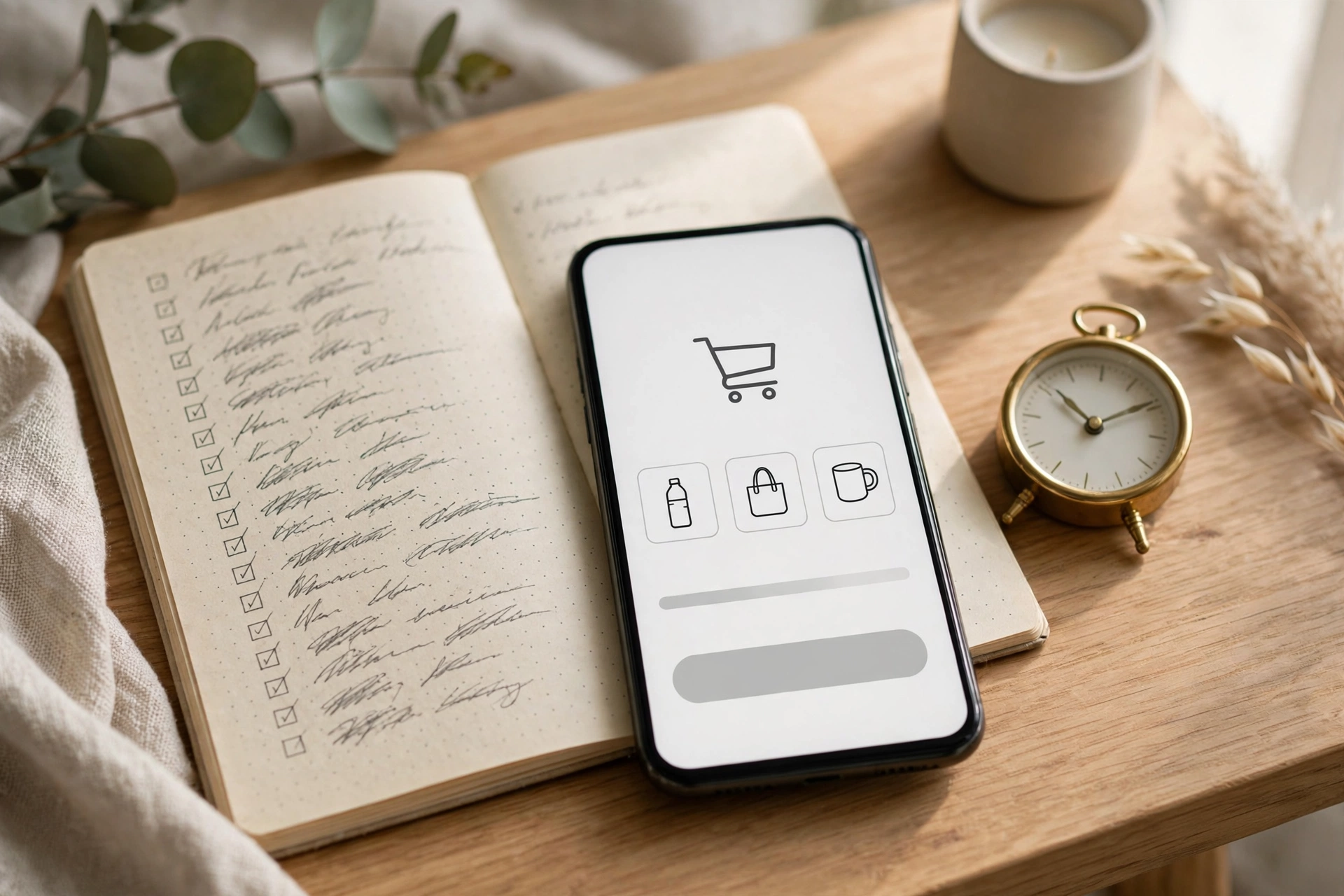
First, make a “want list.” This can be a note on your phone, a page in a notebook, or a wish list in a shopping app. When you want something you did not plan, write it down instead of buying it. Write the name of the item, the price, the shop, and today’s date.
Next, pick a waiting time that fits the price. For a small item, wait 24 hours. For a medium item, wait seven days. For a big item, wait 30 days. You can change these times to fit your life. The point is the pause, not the exact number of days.
During the wait, do nothing. Do not keep looking at photos of the item, or reading reviews just to talk yourself into it. Let the feeling settle. If you forget about the item, that tells you something useful. It was likely a passing want.
When the waiting time ends, ask three questions: “Do I still want this? Can I pay for it without harming my bills or savings? Do I have a place and a use for it?” If the answer to all three is yes, you can buy it with a clear mind. That is not an impulse buy anymore. That is a planned buy, and you can enjoy it without guilt. If the answer is no, delete it from your list. You have not lost anything. You have saved money, space, and the small regret that often follows a quick buy.
Step 3: Ask Five Questions Before You Buy
A waiting rule gives you time. These five questions give you clarity. You do not need to ask all five every time. Pick the two or three that help you most, and use them often.
One, do I need this, or do I just want it right now? A need helps you live, work, stay safe, or stay healthy. A want can still be fine, but it should be planned, not rushed.
Two, do I already own something that does the same job? If you already have three similar items, a fourth one may not add much joy.
Three, where will it live, and when will I use it? If you cannot answer where it will live, it may become clutter. If you cannot say when you will use it in the next two weeks, you may not need it yet.
Four, what will I give up to buy this? Money spent here cannot be spent elsewhere. Will this buy take money from food, bills, a goal, or savings? If yes, is it worth that trade?
Five, will I still be glad I bought this in 30 days? Picture the item in your home a month from now. Does it still feel useful and pleasing, or does it already feel like a thing you must find space for?
Step 4: Make Impulse Buying Harder Online
Online shopping is fast by design. Your job is to add small bits of friction, so a quick urge cannot turn into a quick order.
Start with your inbox and your feed. Unsubscribe from shop emails that tempt you every day. Start with the three shops where you impulse buy most. Mute or unfollow accounts that make you want to buy all the time. You can still follow friends and creators you love. You are just clearing the ads that chase you.
Next, remove saved card details from shopping apps and websites where you often buy on impulse. When you must type your card number by hand, you get a natural pause, and that pause is often enough to make you stop and think.
Turn off shopping app notifications. A “flash sale” alert at night is not urgent news. It is a nudge to spend. You can check sales when you choose to, not when an app tells you to.
Use a wish list, not a cart, for wants. A cart feels like a step toward buying. A wish list feels like a place to wait. Move items you want to a list, add the date, and let your waiting rule do its work.
Be extra careful with “buy now, pay later” plans. They split a price into small parts, so a big buy can feel small. But the full cost is still real, and future payments can pile up. Before you use such a plan, ask: “Could I pay the full price now without harm?” If the answer is no, waiting is often wiser. If you do use it, keep a list of all future payments in one place, so you can see the total.
Step 5: Shop With a Plan In Store
In a shop, your list is your best friend. Write it before you go, and shop from the list. If an item is not on the list, it goes on your want list, not in your basket, unless it is a true need you forgot.
Eat before you shop for food. A hungry shopper buys more snacks. Shop when you feel fresh, if you can. A tired shopper is more likely to grab extras at the till. Try to keep your trip short and focused, and walk past aisles you do not need. Look up and down the shelves, not just at eye level, because cheaper items are often placed lower or higher. Check the price label, not just the bright sale sign. A sign can look like a deal even when the price is not much lower.
Give yourself one planned treat if your budget allows. A planned treat is very different from five unplanned treats. Pick it before you shop, or pick one small treat in the shop and stop there. That way, shopping still feels pleasant, and you leave with a clear limit.
For food shopping in particular, a plan saves money in two ways: you buy less twice, and you waste less food. A simple guide to grocery shopping can help you build that habit, from checking what you already have to sticking to your list in the store.
If you shop with children or friends, talk about the plan before you go. Say, “We are buying what is on the list, plus one treat each.” A clear plan said out loud is easier to keep than a silent hope.
Step 6: Keep Fun Money, So You Do Not Feel Deprived
This step is the heart of this guide. Stopping impulse buying should not mean stopping all joy. A plan with no fun will fail, because life without treats feels like punishment. And when a strict plan breaks, people often buy even more, as if to make up for lost time.
Instead, build fun money into your plan. Fun money is a small, set amount you can spend on treats, with no guilt. The amount will differ for each person. It could be a small sum each week, or a small sum each month. Pick an amount that fits after your must-pay costs, like rent, food, bills, and travel. If money is very tight, fun money can be tiny. Even a tiny amount keeps the idea alive: joy is allowed, and it has a place.
When fun money is gone, it is gone until next week or next month. That limit is kind, not harsh, because it protects your other goals while still letting you choose a treat. Spend fun money on what you truly enjoy, not on what an ad tells you to enjoy. One person loves a good coffee with a friend. Another loves a second-hand book. Another loves a plant for the window. Notice which treats still make you happy days later. Spend more fun money there, and less on treats that fade fast.
If you slip and buy on impulse, do not throw the whole plan away. One slip is not failure. Look at what happened, learn the trigger, and start again the next day. A good plan bends. It does not break after one mistake.
Step 7: Tie Your Money to a Goal You Can See
It is easier to say no to a random item when you can see what you are saying yes to instead. A goal gives your pause a purpose.
Pick one goal that matters to you. It could be a small safety pot for sudden costs, a trip, a course, a gift, or paying off a debt. Write the goal where you can see it: on your phone background, on your fridge, or on the first page of your notebook. When you feel an urge, look at the goal and ask: “Do I want this item more than my goal?” Often, the answer is no.
Moving saved money helps too. Each time you skip an impulse buy, move that amount, or part of it, to your goal. If you skipped a 15-dollar item, move 15 dollars, or even 5 dollars, to savings. Watching a goal grow turns “not buying” into something you can see and feel proud of.
An emergency fund is a good first goal for many people, because it turns worry into calm. It is money kept aside for a sudden cost, like a broken phone or an urgent repair. You do not need a huge sum to start. Small, steady amounts add up, and even a small safety pot can make a sudden bill feel less frightening.
Other goals work too. The key is that the goal feels real to you. A vague goal like “save more” is hard to feel. A clear goal like “save for a train trip in summer” or “save for one month of basic costs” is easier to picture, and easier to protect. Review your goal once a month. How far have you come? What helped? What got in the way? Adjust the plan if life changed. A goal that fits your real life is a goal you can keep.

When Shopping Feels Out of Control
For most people, impulse buying is a habit that can be eased with pauses and plans. For some people, it feels much harder. Shopping may happen often, even when it causes debt, stress, arguments at home, or shame. You may feel you cannot stop, even when you want to.
If that sounds like you, you are not alone, and you do not need to face it in secret. This article cannot diagnose a problem, and it is not medical advice. But it can point you toward support. Talk to a trusted friend or family member, or to a doctor, a counsellor, or a debt advice service in your country, if you can. In the United States, the United Kingdom, Canada, Ireland, and New Zealand, there are free or low-cost debt and mental health support services. Look for a service run by a charity, a health service, or a government body, not a service that charges high fees or promises a quick fix.
You can also make buying harder while you get support. Ask a trusted person to help you review spending once a week, without shame. Remove shopping apps from your phone for a time. Keep your savings in a separate place that takes an extra step to reach. Getting help is not a sign of weakness. It is a sign that you are taking your money and your peace of mind seriously.
A Final Thought: Buy Less by Accident, More on Purpose
Stopping impulse buying is not about becoming a person who never enjoys shopping. It is about becoming a person who shops with a clear mind. Pause before you buy. Plan your trips. Keep room for fun. Tie your money to a goal you care about. Learn the tricks that rush you, so they rush you less.
Frequently Asked Questions
What is impulse buying?
Impulse buying is buying something without planning it first. You see it, you want it fast, and you buy it, often because of a feeling, a sale, or an ad. It is different from a planned treat, which you thought about, saved room for, and chose calmly.
How can I stop impulse buying without feeling deprived?
Keep fun money in your plan. Give yourself a small, set amount for treats, and spend it on things you truly enjoy. When fun has a place, stopping rushed buys does not feel like punishment. Also use pauses, lists, and free joys, so you are not replacing shopping with nothing.
What is the 30-day rule for impulse buying?
The 30-day rule is popular advice, not a proven law. When you want a non-essential item, you write it on a want list with the date and price, and you wait 30 days before buying. If you still want it, can pay for it, and have a use for it, you can buy it calmly. For smaller items, many people use a shorter wait, like 24 hours or seven days.
Does the waiting rule work for online shopping?
Yes, it can help a lot online, because online buying is so fast. Move the item to a wish list instead of a cart. Remove saved card details, turn off sale alerts, and set a rule like no shopping after a certain time at night. The pause breaks the rush that apps are made to create.
Why do I buy more when I am stressed or bored?
Stress and boredom are common triggers. Shopping can give a quick lift, a distraction, or a feeling of control. That lift often fades fast, which is why the same urge can return soon after. Noticing the feeling, and trying a free or cheap joy first, like a walk, a call to a friend, or a book, can help you see whether you wanted the item or just a lift.
What should I do after an impulse buy?
Do not panic, and do not hide it. Look at the cost calmly. Check if you can return the item within the shop’s return time. If not, use it well, give it away, or sell it safely if you can. Write down the trigger, make a small plan for next time, and restart your spending plan the next day. One slip does not erase your progress.
When should I ask for help with shopping?
Ask for help if shopping feels out of control, causes debt you cannot manage, harms your relationships, or leaves you feeling distressed again and again. Talk to a trusted person, a doctor, a counsellor, or a reputable debt advice service in your country. This guide is general information, not medical or financial advice, and support services can offer personal help that a guide cannot.
More from Zorium Daily
- How to Save Money on Groceries Without Eating Less — Plan meals, shop with a list, and waste less food.
- How to Build an Emergency Fund on a Small Income: A Simple Beginner’s Guide — Start small, save steadily, and build a safety pot for sudden costs.
- Money guides — Browse more Money articles from Zorium Daily.