What Is a Discount and How Does It Work?
SUMMARY OF THIS ARTICLE
- A discount is a cut in the normal price, so you pay less than the price shown on the tag.
- Most discounts are a percentage off, like 20 percent off, or a fixed amount off, like 10 dollars off.
- You can work out the new price with one simple sum: take the discount off the old price first, then pay what is left.
- Shops offer discounts to bring in buyers, clear old stock, and reward loyal customers.
- A discount is only a real bargain if you wanted the thing anyway and the old price was honest.
You walk past a shop window and a big sign catches your eye. Twenty percent off. Everything must go. Today only. Your feet slow down before your brain has even decided anything. That is no accident. Shops know how those words feel. A discount feels like a small win, like you got something for less than everyone else paid.
Sometimes that feeling is true. You needed new shoes, the shoes you wanted were on sale, and you paid less than you planned. That is a good day. But sometimes the feeling is the whole trick. You buy a jacket you did not need, in a colour you do not like, because the tag said 50 percent off. You saved money on paper. In real life, you spent money you never meant to spend.
This guide explains what a discount is in plain words, how the maths works, the main types you will meet, why shops offer them, and the traps that turn a good deal into a waste of money. This article is general information only, not personal financial advice. All dollar and pound amounts below are simple examples only, not real offers. Prices, rules, and sale laws change from place to place, so check the rules where you live and always read the small print before you buy.
What Is a Discount?
A discount is a cut in the normal price of something. The shop lowers the price for a while, or for certain buyers, and you pay less than the full price. The full price is often called the original price, the list price, or the marked price. The price you actually pay after the cut is called the sale price, or the discounted price.
Here is the simplest way to think about it. A coat costs 100 dollars. The shop puts a sign on it: 20 percent off. You do not pay 100 dollars. You pay 80 dollars. The 20 dollars you did not pay is the discount. The shop still gets money. You still get the coat. The only change is the price.
A discount is not the same as a free gift. You still pay something. It is also not the same as a lower price for ever. A shop can drop a price for good because the item is old or the model is out of date. That is a price cut, but it is not always called a discount. A discount is usually a cut for a reason, for a short time, or for a certain group of buyers.
How Does a Discount Work? The Simple Maths
The maths behind a discount is much easier than most people fear. You only need two numbers: the old price and the size of the cut. Once you know those, you can work out the new price in a few seconds.
There are two main ways a discount is shown. The first is a percentage off. The second is a fixed amount off. They look different, but they do the same job.
A percentage discount takes a share off the old price. If a shirt costs 50 dollars and the discount is 20 percent off, you save 20 percent of 50 dollars. That is 10 dollars. So you pay 40 dollars. A bigger example makes it clearer. Say a pair of shoes costs 120 dollars, with 25 percent off. A quarter of 120 is 30. So you save 30 dollars and pay 90 dollars. You can work it out another way too. If 25 percent is off, you pay the other 75 percent. Seventy-five percent of 120 is 90. Both roads lead to the same till.
A fixed-amount discount takes the same sum off, no matter the price. A coupon says 10 dollars off any order over 50 dollars. A jacket costs 80 dollars. You hand over the coupon. You pay 70 dollars. If the jacket cost 60 dollars, you would pay 50 dollars. The cut stays at 10 dollars either way. It does not grow with the price, the way a percentage cut does.
That difference matters when you compare two offers. Imagine a shop offers you a choice: 20 percent off, or 15 dollars off. Which is better? It depends on the price. On a 50-dollar item, 20 percent off saves you 10 dollars, so the 15-dollar cut wins. On a 100-dollar item, 20 percent off saves you 20 dollars, so the percentage cut wins. Do not guess. Do the quick maths, and the better deal will show itself.
Some discounts stack, which means two cuts apply one after the other. A shop may offer 20 percent off, then an extra 10 percent off at the till for members. That does not add up to 30 percent off. On a 100-dollar coat, 20 percent off takes the price to 80 dollars, then 10 percent off that 80 dollars takes it to 72 dollars. You saved 28 dollars, not 30, because each cut is taken from the price at that moment.
Your phone has a calculator, so you do not need to be quick at mental maths. Before you buy, work out the sale price, then ask yourself if you would still want the thing at that price. If the answer is yes, and you can afford it, the discount has done its job.
The Main Types of Discounts
Not all discounts work the same way. Once you know the main types, the signs in shop windows stop looking like a puzzle. You will spot the type in a second, and you will know what it really offers.
Percentage Off
This is the most common type. The sign says 10 percent off, 30 percent off, or 50 percent off. The cut is a share of the price, so the saving grows as the price grows. A 20 percent cut on a 10-dollar book saves you 2 dollars. The same 20 percent on a 200-dollar jacket saves you 40 dollars. That is why shops love big percentages on big-ticket items. But watch the starting price. A 30 percent cut on an overpriced item can still leave you paying more than a 10 percent cut on a fairly priced one. Always compare the final price, not just the percentage.
Fixed Amount Off
This type takes a set sum off the price. Ten dollars off. Five pounds off your first order. Twenty dollars off when you spend over 100 dollars. The saving is fixed, so it feels biggest on cheap items. Ten dollars off a 20-dollar T-shirt is half price. Ten dollars off a 500-dollar sofa is barely a dent. Shops often set a minimum spend for this type. You must spend 50 dollars to use the 10-dollar coupon, for example. If that extra spending is on something you needed anyway, fine. If it is a random item you grabbed just to unlock the coupon, you may have spent more than you saved.
Buy One, Get One Free
You have seen this one in supermarkets and clothes shops. Buy one, get one free. Buy two, get the third free. Buy one, get the second half price. These are called BOGO deals, short for buy one, get one, and they can be good value or a gentle trap. Buy one, get one free on a 20-dollar shirt means you pay 20 dollars for two shirts, or 10 dollars each. That is a real saving if you need two shirts. But if you only need one, you have spent 20 dollars instead of buying one shirt somewhere else for 12 dollars. Sometimes the free item must be the cheaper one, so read the sign fully before you fill your basket.
Buy More, Save More
This type rewards you for buying a larger amount. Three packs for the price of two. A bigger size that costs less per gram, per litre, or per piece. In shops, this is often called a volume discount, or a bulk discount. It works best for things you use up and will use again: rice, soap, shampoo, pet food, printer paper. If you buy three months of rice at a lower price per kilo and you have space to store it, you have saved real money. It works badly for things that go off, go out of fashion, or sit in a cupboard for years. Before you bulk buy, ask if you will use all of it before it goes bad, and if you have room to store it. If either answer is no, buy the normal size.
Seasonal Sales and Clearance
Every year has a rhythm of sales. Winter coats go on sale as spring arrives. Summer clothes drop in price as autumn comes. Shops need to clear old stock to make room for the new season, so they cut prices hard. This is called a seasonal discount, or a clearance sale. Clearance is where the biggest cuts live, and also where the oddest stock lives. The 70 percent off rail is often full of the last sizes, the odd colours, and the styles that did not sell. If your size is there and you like the colour, you can find a true bargain. One honest tip: buy next season’s needs in the clearance, like a winter coat in February, and wear it next winter.
Loyalty Discounts and Member Prices
Many shops run a loyalty scheme. You join, often for free, and you get member prices, points, or stamps. Every tenth coffee is free. Members pay 10 percent less on Tuesdays. These are loyalty discounts, and they reward repeat buyers. They can be worth it, if you already shop there often. A supermarket loyalty card that cuts the price of your weekly shop is real money back in your pocket. But do not drive past a cheaper shop just to earn points at your usual one.
Why Do Shops Offer Discounts?
Shops do not offer discounts out of kindness. They offer them because discounts work, for the shop. Understanding why helps you read every sale sign with calmer eyes. First, discounts bring people in. A big red sale sign pulls people through the door, and once they are inside, they often buy more than the sale item. Second, discounts clear stock. Clothes go out of season, phones get a new model, and food nears its sell-by date. A discount moves the old stock out fast, so the shop can bring in fresh stock that sells at full price. Third, discounts beat other shops. If three shops sell the same television, and one cuts its price by 10 percent, buyers will walk to that shop first. Fourth, they reward loyal customers and win new ones. A member price or a first-order code makes you feel looked after, and that feeling brings you back. Fifth, discounts make people buy sooner. You might have waited three months to buy a new jacket. A 30 percent off sale today makes you buy it now, and the shop gets the money now. None of this makes discounts bad. A shop can profit and you can save at the same time.

Discount, Sale, Coupon, and Cashback: What Is the Difference?
People use these words as if they all mean the same thing. They do not, and the difference matters when you compare offers. A discount is the price cut itself. A sale is the event, the time when the shop offers discounts on many items at once. A winter sale is a sale. The 20 percent off on one coat is the discount inside that sale. A coupon or promo code is the tool that gives you the discount: the piece of paper, the app voucher, or the code you type in. Without the coupon, you pay full price. With it, the discount applies. A markdown is a lasting price drop, not a short sale. A shop marks a slow-selling item down from 60 dollars to 45 dollars and leaves it there. Cashback is different again. You pay the full price first, and some money comes back later, often through an app or a card. Buy a 100-dollar item with 5 percent cashback, and you pay 100 dollars now and get 5 dollars back later. Count it only when the money is actually back in your hand.
How to Work Out the Real Price, Step by Step
Here is a small routine you can use every time you see a discount. It takes less than a minute, and it stops most impulse buys before they happen. Step one: find the old price. If the item was never really sold at that price, the discount is not as big as it looks. Step two: work out the sale price. Take the discount off the old price. For a 20 percent cut on an 80-dollar item, the saving is 16 dollars, so the sale price is 64 dollars. Step three: add the extras. Delivery, tax, or a charge for gift wrap can all change the final cost. A 30-dollar item with 10 dollars delivery costs you 40 dollars. A 35-dollar item with free delivery costs you 35 dollars. Step four: compare with another shop. A quick search can tell you if the same item is cheaper elsewhere. Step five: ask the honest question. Would I buy this at the sale price if there was no red sign, no countdown, and no crowd? If the answer is yes, and the money fits in your monthly budget, buy it and enjoy it. If the answer is no, or you feel rushed, walk away. The sale will come again. Another sale always comes again.
When a Discount Is a Real Bargain
Not every discount is a trick. Some are genuine bargains, and it is worth knowing what one looks like. A real bargain starts with a real need. You need new school shoes for your child, and the exact pair you planned to buy is 25 percent off. You need a new winter coat, and the coat you tried on last month is now on clearance. In each case, the item was already on your list. The discount only changed the price, not the plan. A real bargain also has an honest old price. The item really sold at that price before, for a fair length of time, and the new price is clearly lower. A real bargain fits your money. The sale price is inside your budget, and buying it does not mean borrowing, missing a bill, or dipping into money set aside for something else. If you need to put it on a card and pay credit card interest for months, the discount is already gone. Interest eats discounts fast. A real bargain has no nasty strings. You can return it if it does not fit or does not work. The warranty still stands. The quality is the same as the full-price version. You should also feel calm after you buy it, not rushed or guilty.
The Traps: When a Discount Is Not a Deal
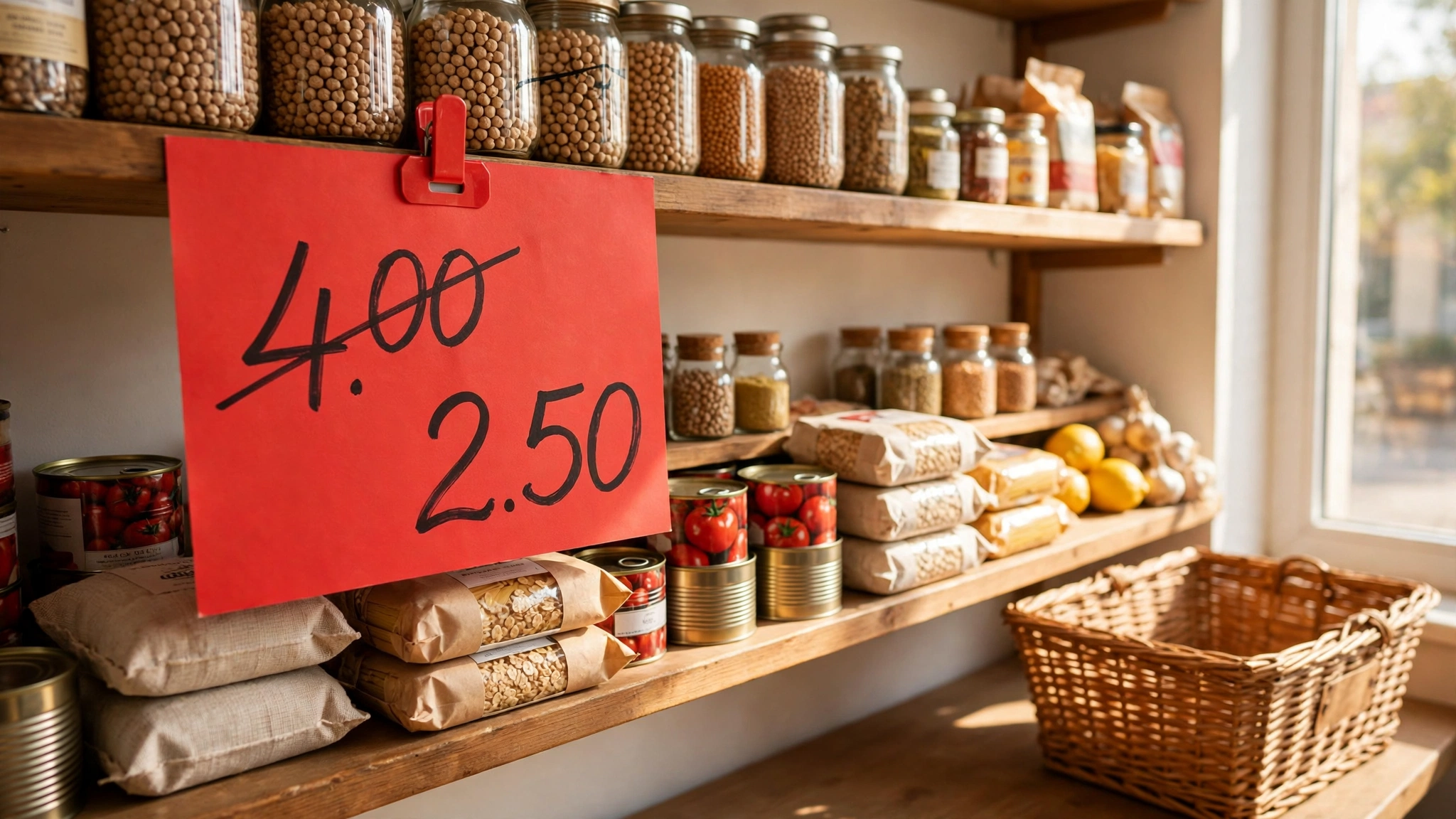
Here is the honest part of this guide, and the part that saves the most money. The first trap is the inflated old price. A shop raises the price for a short time, then cuts it back and calls it a sale. A jacket was 60 dollars for months. The shop raises it to 100 dollars for a week, then cuts it to 60 dollars and calls it 40 percent off. You paid the normal price. You saved nothing. This is why the old price matters so much. If you have never seen the item at the crossed-out price, be careful. The second trap is the minimum spend. You have 40 dollars of things you need. The coupon needs 60 dollars. You add a 20-dollar candle you do not need, to save 10 dollars. You spent 20 dollars to save 10. You lost 10 dollars, and you now own a candle. The third trap is time pressure. Today only. Ends at midnight. Only three left. A countdown clock ticks on the website. Most sales return, so if you need a day to think, take it. The fourth trap is the bundle you did not want. Three for the price of two sounds good, until you look at what the three are. A bundle is only a bargain if you would buy each part on its own. The fifth trap is buying with borrowed money. A sale can tempt you to buy now and pay later, on a card or with a loan. If you cannot pay the card in full by the due date, interest eats the saving, and your credit score can suffer too if payments slip. A discount is never worth a debt you cannot afford.
How to Use Discounts Wisely
You do not need to avoid discounts. You need a few simple habits that let you enjoy them without letting them run your money. Start with a list. Before you go shopping, online or in person, write down what you need. A short list is a shield. If an item is not on the list, it needs a reason to join the basket, not just a red tag. Set a sale budget. Decide how much you can spend on sale items this month, and keep it inside your wider budget. If your budget allows 50 dollars for clothes this month, a 30-dollar sale shirt fits, and a 60-dollar sale coat does not, even at half price. Wait a day on big buys. For anything over a small sum, give yourself 24 hours. Most sale excitement fades overnight. What is left in the morning is your real wish, not the shop’s music. Compare the final price, not the percentage. A 50 percent cut on a 100-dollar item leaves you paying 50 dollars. A 20 percent cut on a 60-dollar item leaves you paying 48 dollars. The second deal has a smaller percentage, but a lower final price. Keep sale money apart from safety money. If you save 20 dollars on shoes, move it into your savings account or your emergency fund.

Frequently Asked Questions
What is a discount in simple words?
A discount is a cut in the price of something. If a coat costs 100 dollars and the shop offers 20 percent off, you pay 80 dollars. The 20 dollars you did not pay is the discount. The full price is the marked price, and the price you pay after the discount is the sale price.
How do I work out 20 percent off a price?
Take 20 percent of the price, then take that amount off the price. For a 50-dollar shirt, 20 percent is 10 dollars. Fifty take away 10 is 40, so you pay 40 dollars. You can also work out what you do pay: 100 take away 20 is 80, so you pay 80 percent of the price. Eighty percent of 50 dollars is 40 dollars. Same answer, either way.
Is a bigger percentage always a better deal?
No, not always. A bigger percentage looks better, but it is the final price that counts. A 50 percent cut on a 100-dollar item leaves you paying 50 dollars. A 20 percent cut on a 60-dollar item leaves you paying 48 dollars. The smaller percentage gave you the lower price. Always work out the sale price before you decide which deal is best.
What is the difference between a discount and cashback?
A discount cuts the price before you pay. A 20 percent discount on an 80-dollar item means you pay 64 dollars at the till. Cashback is money back after you pay. You pay the full price first, and some money returns to you later, often through an app or a card. Buy a 100-dollar item with 5 percent cashback, and you pay 100 dollars now and get 5 dollars back later. A discount saves you money at the till. Cashback gives you money back after.
Can a discount be a bad deal?
Yes, it can, in three common ways. First, the old price was inflated, so the saving was not real. Second, you bought something you did not need, so you spent money you would not have spent at all. Third, you paid with borrowed money, so interest took the saving away. A discount is only good if the old price was honest, you wanted the thing anyway, and you can pay for it without borrowing.
Should I wait for a sale before I buy something I need?
It depends on how soon you need it, and on how big the saving is likely to be. If you can wait, and the item goes on sale often, waiting can save you real money. Buy next season’s coat in the clearance, or wait for a known sale. If you need it now, and the sale price is only a little lower, buy it now. Your time has a cost too.
More from Zorium Daily
- What Is a Loan and How Does It Work?
- What Is a Savings Account and How Does It Work?
- How Does Credit Card Interest Work?
- How to Make a Simple Monthly Budget That Actually Works
A discount is a tool, and like any tool, it can help or it can hurt. Learn the simple maths, know the main types, and read the old price before you trust the red tag. Buy the things you already wanted, at a price you can afford, and walk past the rest without guilt. The next sale will come, and when it does, you will be ready for it, with a list in your hand and a clear eye for the real bargains.