Who Built the First Bridge in the World? Explained Simply
SUMMARY OF THIS ARTICLE
- No single person built the first bridge, because early bridges were made by many people in many places.
- The first bridges were probably fallen trees, flat stones, and simple logs laid across streams.
- Later, people learned to build stronger bridges from wood, rope, and stone.
- The Romans became famous for stone arch bridges that are still standing today.
- Bridges changed history by helping people trade, travel, and build towns on both sides of a river.
You have probably crossed a bridge without even thinking about it. Maybe it was a small bridge over a stream in a park, or a big bridge over a river on the way to school, or a footbridge over a busy road. You walked across, you looked down at the water for a second, and you kept going. Simple. But have you ever wondered who made the very first bridge? Who was the first person to look at a river and think, I need to get to the other side, and I am going to build something to help me?
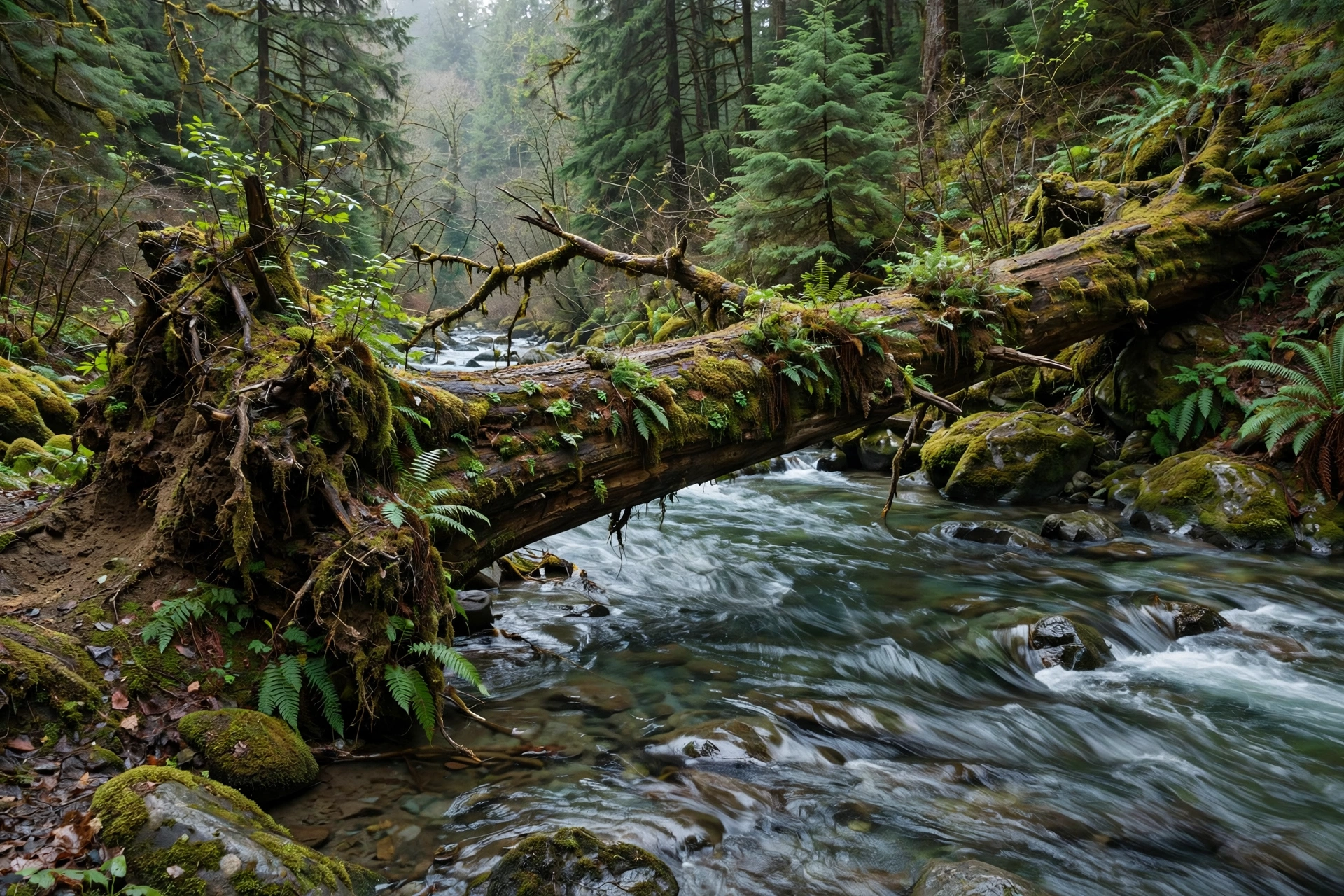
Think of it like this. The first bridge was probably not built at all, in the way we think of building. It was probably found. A tree fell across a river during a storm. It lay there, flat and strong, and someone walked across it. That was a bridge, even if no one built it on purpose. Nature made it, and a clever human used it.
That is the honest answer to the question, and it is also the most interesting one. There was no single inventor, no one name in a history book, no first bridge with a date carved into it. There were many firsts, in many places, by many people who never wrote their names down. They saw a problem — water in the way — and they found a simple answer.
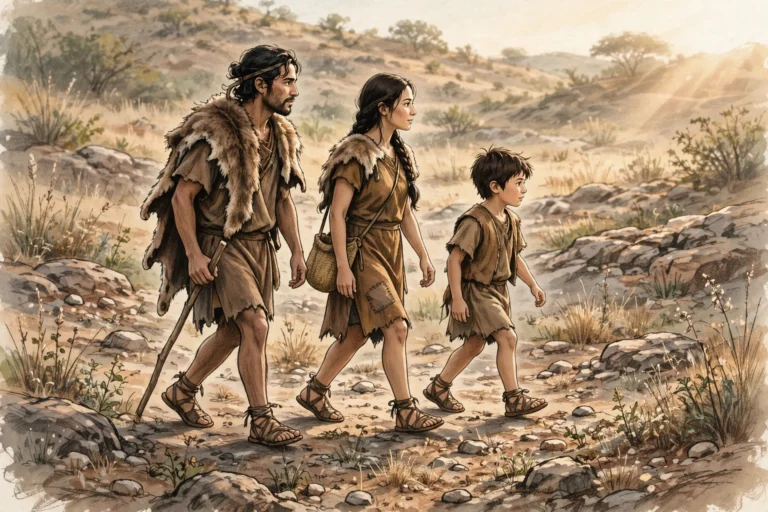
Let us go back, far back, to a time before cars, before towns, before writing. People lived in small groups. They hunted, they fished, they gathered food. A river was both a gift and a problem. It gave them water and fish, but it also blocked their path. To get to food on the other side, or to visit another group, or to escape danger, they had to cross it. Swimming was cold and risky. Wading, which just means walking through shallow water, was slow and wet. A fallen tree was a much better idea.
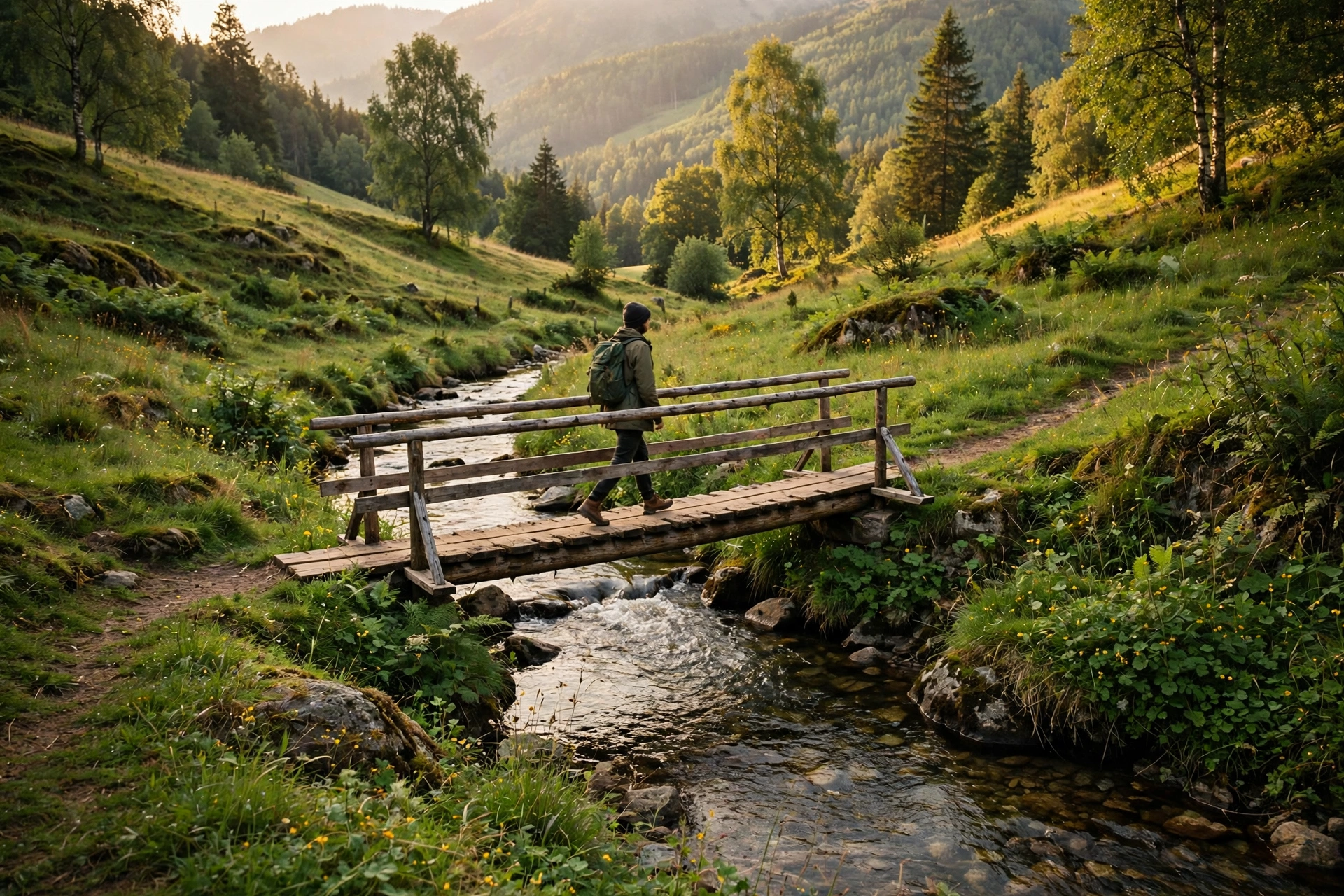
So people started to use those trees on purpose. If a tree had not fallen in the right place, they might push a log across a narrow stream. They might lay a few flat stones in the water, like stepping stones, and hop from one to the next. You have probably done that yourself in a park, jumping from stone to stone, trying not to get your shoes wet. That is a bridge, in its simplest form. It is not fancy, but it works.
Over time, people got better at it. They learned to cut trees and lay them side by side, so the bridge was wider and safer. They learned to tie logs together with rope made from plants, or with strips of animal skin. They learned to put stones under the ends, so the logs did not sink into the mud. Each small improvement made the crossing a little safer, a little easier, a little more reliable.
In some parts of the world, people built bridges from rope and vines. In the mountains of South America, for example, people made bridges from thick ropes woven from grass. They tied the ropes between cliffs, over deep valleys, and they walked across on a wobbly floor of rope and wood. It sounds scary, and it was, but it was the only way to cross. Those rope bridges were rebuilt every year, because the ropes wore out in the rain and sun. It was a lot of work, but it kept villages connected.
In other places, people used stone. Stone is heavy and hard to move, but once it is in place, it lasts a long time. Early stone bridges were simple. People laid flat stones across a stream, supported by piles of rocks in the middle. It was a bit like building a table over water. The top was the path, the piles were the legs. If the stream was not too wide, it worked well.
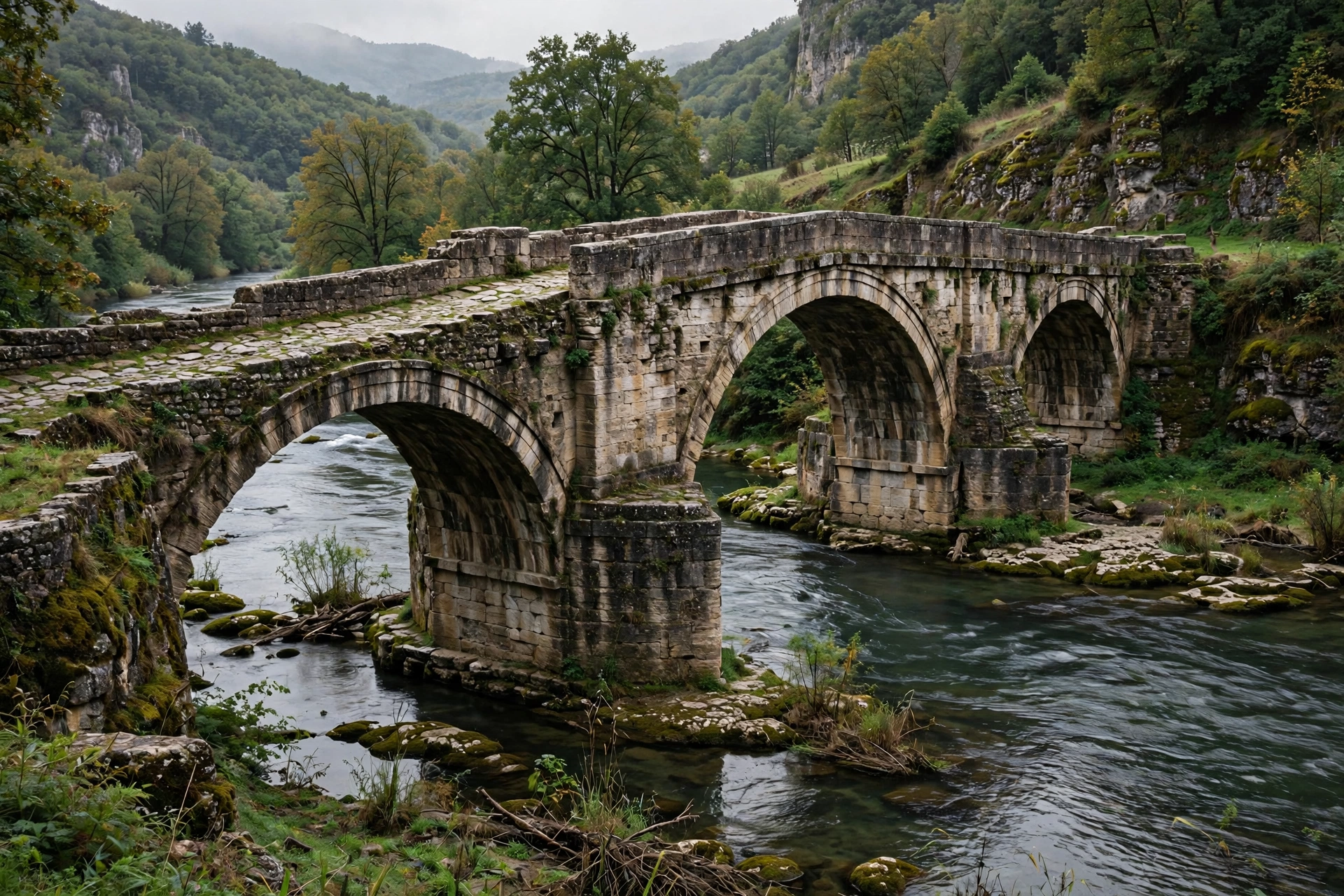
Then came the big change, and it came with a shape we still use today. The arch. An arch is a curved shape, like the top half of a circle, or like a rainbow made of stone. It is strong because it pushes the weight out to the sides, into the ground, instead of straight down into the water. That means an arch bridge can cross a wider river without needing a pile in the middle to hold it up. It is a clever idea, and once people understood it, bridges got much bigger and much stronger.
The Romans, who lived about 2,000 years ago in what is now Italy, became famous for arch bridges. They were not the first to use the arch, but they were very, very good at it. They built bridges from stone, with perfect arches, that carried roads across rivers all over their empire. Some of those bridges are still standing today, and people still walk and drive across them. Think about that for a second. A bridge built 2,000 years ago, by hand, with no cranes, no steel, no computers, is still working. That is amazing.
Why did the Romans build so many bridges? Because they needed roads. Their empire was huge, and they needed to move soldiers, food, and messages quickly. A river in the way slowed everything down. A bridge fixed that. So they built bridges everywhere, as part of their roads. They used stone because it lasted, and they used the arch because it was strong. They also built their bridges to be wide enough for carts and horses, not just for people on foot.
Other ancient peoples built great bridges too. In China, people built bridges from stone and wood, some with beautiful arches, some with flat tops held up by stone pillars. In India, people built bridges over rivers to connect towns and temples. In the Middle East, people built bridges over canals and streams to help farmers and traders. Everywhere people lived near water, they found a way to cross it.
It is worth remembering that we do not know the name of the first bridge builder, and we probably never will. The first bridges were made of wood and rope, which rot away. They leave no trace. Stone bridges last longer, but the early ones were simple and many have crumbled. What we have are clues — old stones, old stories, pictures carved into walls — that tell us people were building bridges a very long time ago, thousands of years before the Romans.
Archaeologists, which is just a fancy word for people who dig up old things to learn about the past, have found signs of very old bridges. In some places, they have found wooden piles in riverbeds that are thousands of years old. In others, they have found stone footings, which are the bases that hold a bridge up, from long ago. These finds do not give us a name, but they do give us a time. People were building simple bridges at least 4,000 years ago, and probably much earlier.
Let us picture a day in the life of an early bridge builder. You are part of a small village. The river is high after rain, and the old log you used to cross is gone, washed away. You need a new one. You and your neighbours cut down a tall tree, trim off the branches, and drag it to the river. It is heavy work. You roll it into place, across the narrowest part of the stream. You wedge stones under each end so it does not roll. You lay a few smaller branches across it to make it wider. Then, carefully, you walk across. It wobbles a little, but it holds. You have built a bridge. It is not pretty, but it works, and your whole village can use it.
That is how it started. Not with a grand plan, not with a famous inventor, but with a group of people solving a problem together, with the tools they had.
Bridges changed history in a big way. Before bridges, a river was a border. People on one side might rarely meet people on the other side. After a bridge, they could trade, visit, marry, share ideas. Towns grew up on both sides of a river, because people could cross easily. Roads could go straight, instead of going a long way around. Armies could move faster. Traders could carry more goods. All of that helped towns and countries grow.
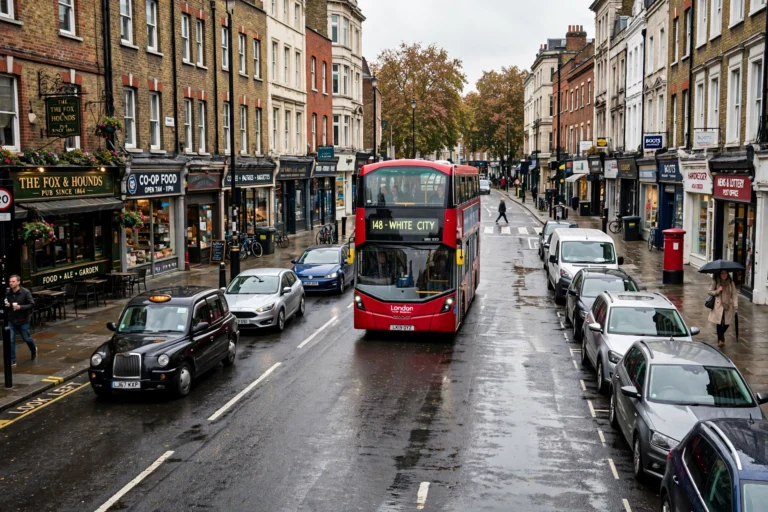
Think about a modern city like London or Paris. Both grew up around rivers, and both are full of bridges. Without those bridges, the city would be split in two. With them, it is one place. The same is true for many cities around the world. Bridges are not just a way to cross water. They are a way to bring people together.
Today, bridges are made from steel and concrete, and they can cross huge distances. Some are so long you cannot see the other end. Some are so high you feel like you are flying. But the idea is the same as that first fallen tree. Find a way across, make it safe, and help people get to the other side.
So, who built the first bridge in the world? The best answer is: many people, in many places, over thousands of years. The first was probably a fallen tree, used by someone whose name we will never know. Then came logs, stones, ropes, and arches. Then came the Romans and others who made bridges that lasted for centuries. Each step built on the one before, and each one helped people live a little better.
Next time you cross a bridge, take a second to look at it. Is it made of wood, stone, steel? Is it flat, or does it arch? Is it old or new? However it looks, it is part of a very old story — the story of people who refused to let a river stop them. You are walking on their idea, and you are part of it too, every time you step across and reach the other side safe and dry, ready for whatever waits there.
Let us look a little closer at how a bridge actually stays up, because it is a clever bit of thinking, and you can see it in a simple way at home. Take a piece of paper and hold it flat between your hands, with a gap in the middle. It flops down. Now fold that same paper into a little arch, like a tiny hill, and put it over the gap. It holds its shape much better. That is the arch at work. It takes the weight from the top and sends it out to the sides, where the ground can hold it. Stone arches do the same thing, only with much heavier stones, and much bigger gaps.
You have probably seen a different kind of bridge too, the kind that hangs from cables. Those are called suspension bridges, which is a fancy way of saying a bridge that hangs. Two tall towers hold up thick cables, and the road hangs from those cables, like a hammock. The famous Golden Gate Bridge in San Francisco is one of those. It looks light and graceful, but it is incredibly strong. It was built long after the Romans, using steel, which is a very strong metal made from iron. Steel let builders make bridges longer and higher than stone ever could.
Before steel, though, people tried many other ideas. In some parts of Asia, builders made bridges from bamboo, which is a light, strong plant that grows fast. They tied bamboo poles together and made a floor that could bend a little in the wind, but not break. In Africa, people made bridges from vines and wood over rivers in forests. In Europe, people built bridges from wood on stone pillars, so the wood was up out of the water and lasted longer. Each place used what it had nearby. That is a good rule for building anything. Use what is close, use what is strong, and use what you know how to fix.
Here is a story that shows how much a bridge can mean to a place. Imagine a small town split by a river. On one side is the market, where people sell bread, fruit, and cloth. On the other side are the farms, where the food is grown. Without a bridge, farmers have to walk miles to a shallow place to cross, or pay someone with a boat to take them over. That takes time, and time costs money. With a bridge, they can walk straight across in five minutes. They can carry more, sell more, and get home before dark. The town grows, because the bridge made life easier. That one bridge, simple as it is, changed the whole town.
Now think about a bridge that is not over a river at all. Some bridges cross valleys, or roads, or railways. A footbridge over a busy road lets children walk to school safely, without dodging cars. A bridge over a railway lets people cross without waiting for a train to pass. The idea is the same. A gap is in the way, and a bridge fills it.
You might wonder how builders put a bridge over a wide, deep river without falling in. It is a good question, and the answer has changed over time. In Roman times, builders would often build a temporary wall in the river, pump the water out, and build the foundations on dry ground. Then they would remove the wall and let the water back in. It was slow, wet, dangerous work, and many people must have been scared doing it. Today, builders use big machines, divers, and concrete that can set under water. It is still hard work, but it is safer and faster.
There is also the question of who paid for these bridges. In ancient times, a king or a rich town might pay for a bridge, because it helped trade and made the town stronger. Sometimes people who used the bridge had to pay a small fee, called a toll, to cross. That toll helped pay for repairs. You can still see toll bridges today, where drivers pay a few dollars to cross. It is the same idea, thousands of years later.
Not all bridges were built for people to walk on. Some were built for water. In Roman times, people built bridges called aqueducts, which carried water from hills to towns. The water flowed along the top of the bridge, in a channel, and people in the town could drink it and wash with it. It was a bridge, but instead of carrying people, it carried water. That shows how flexible the idea is. Once you know how to build a strong arch, you can use it for many things.
What about the bridges that failed? There were many. Wood rotted, ropes snapped, floods washed bridges away, and sometimes a bridge was just built badly and fell down. Those failures taught builders what not to do. They learned to make foundations deeper, to use stronger materials, to test the bridge before letting people cross. Each failure was a lesson, and the next bridge was a little better.
You have probably walked across a bridge that moves a little when you walk on it. A rope bridge, or a small wooden bridge in a park, will bounce and sway. That can feel scary, but a little movement is normal. A bridge that is too stiff can break, because it cannot bend with the wind or with the weight of people. A bridge that can bend a little is often stronger, because it can share the load. It is a bit like a tree in a storm. A tree that bends does not snap. A bridge is the same.
If you ever get the chance, stand in the middle of a bridge and look around. Look at how it is made. Look at the stones, the cables, the pillars. Think about the people who built it, with their hands, their tools, and their ideas. Some of those people are famous. Most are not. They were just workers, builders, and thinkers who saw a river and said, we can get across. That spirit — I will not let this stop me — is what built the first bridge, and it is what still builds bridges today.
Next time you are on a bus or in a car, try counting the bridges you pass. You might be surprised how many there are, and how different they look. One might be a plain concrete slab. The next might be a graceful arch. Another might hang from cables like a giant swing. Each one was built by people who faced the same old problem, a gap in the way, and found their own answer. That is why bridges feel so familiar. They are not just stone and steel. They are a very human idea, repeated again and again, in every country, in every age.
Frequently Asked Questions
Who is known as the inventor of the first bridge?
No single person is known as the inventor. Early bridges were made by many different people in different parts of the world, using fallen trees, logs, and stones. Because wood and rope rot away, we have no name or date for the very first bridge. The first famous bridge builders we know a lot about are the Romans, but they were not the first.
What were the first bridges made from?
The first bridges were probably made from fallen trees, logs, and flat stones. Later, people used rope and vines in mountain areas, and stone in places where it was easy to find. Wood was the most common material because it was light enough to move and strong enough to walk on, even if it did not last as long as stone.
Why were Roman bridges so strong?
Roman bridges were strong because they used stone and the arch shape. An arch pushes weight out to the sides, into the ground, instead of straight down. This lets the bridge cross a wide river without a support in the middle. The Romans also built their bridges carefully, with well-cut stones and strong foundations, which is why some are still standing today.
How old is the oldest bridge still in use?
Some Roman bridges are about 2,000 years old and still in use today. There are also older stone bridges in other parts of the world, but it is hard to give an exact age for the very oldest. The oldest bridges made of wood have rotted away, so we only have clues from stones and old writings.
Did people build bridges before they had metal tools?
Yes. People built simple bridges with stone tools, fire, and their own strength long before they had metal. They could cut trees by burning through them, or by using stone axes, and they could move logs by rolling them. It was slow, hard work, but it was possible, and they did it for thousands of years.
Why are bridges important in history?
Bridges are important because they connect people. Before bridges, rivers split communities apart. After bridges, people could trade, travel, share ideas, and build towns on both sides of a river. Bridges helped roads, trade, and whole countries grow, and they still do that today.