Why Do We Have Seven Days in a Week?
SUMMARY OF THIS ARTICLE
- We have seven days in a week because people long ago watched the Moon and the sky, and they kept the number seven.
- The Moon takes about 29.5 days to go from new Moon to full Moon and back again. That time splits into four parts of about seven days each.
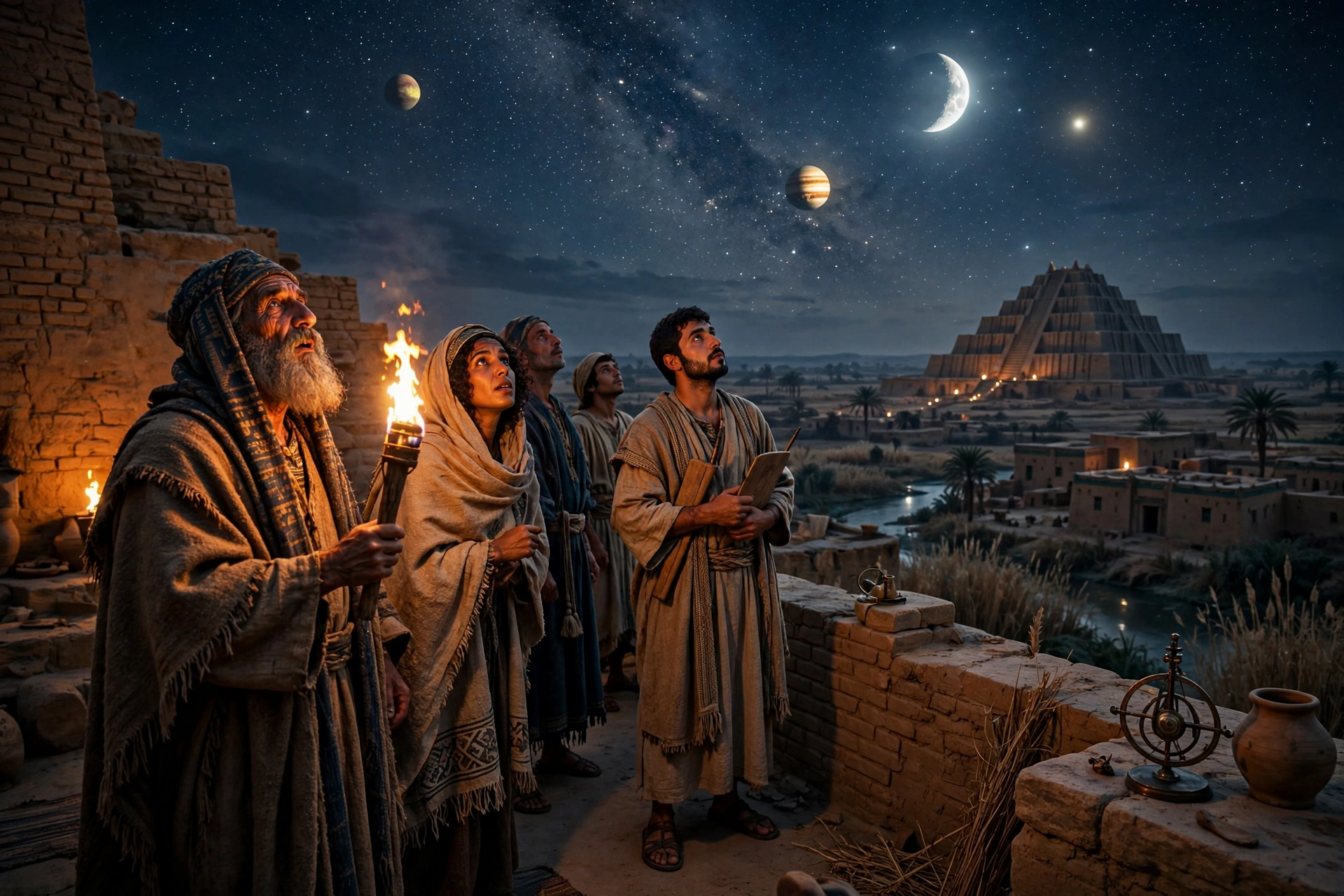
- People in Babylon, a very old city land, saw seven bright sky objects: the Sun, the Moon, Mars, Mercury, Jupiter, Venus, and Saturn.
- The Hebrew people had a rule of six days of work and one day of rest. That also helped the seven-day week grow strong.
- Rome first had an eight-day week. Later, Rome took the seven-day week, and in 321 CE, a ruler named Constantine made Sunday a day of rest.
- The week is not a law of nature. People made it. Other lands tried different weeks, but seven days stayed.
Introduction: A Question We Never Ask
How many days are in a week? Seven. You know that. You learned it when you were small. You go to school for five days. You rest for two days. Then the week starts again.
But have you ever asked why seven? Why not five days? Why not ten days? Why not eight days?
The answer is old. It is more than 4,000 years old. It starts with the Moon. It goes through a land called Babylon. It goes through old holy books. It goes through Rome. And it ends with the names we still use today: Monday, Tuesday, Wednesday, Thursday, Friday, Saturday, and Sunday.
This story is easy to follow. You do not need to know hard words. When a hard word comes up, we will explain it in plain words right away.
So, why do we have seven days in a week? Let us start with the Moon.
What Is a Week?
A week is a group of days. It is not like a day. A day comes from the Earth. The Earth turns once, and we get one day and one night. That is nature. We cannot change it.
A year also comes from nature. The Earth goes around the Sun once, and we get one year. That is nature too.
But a week does not come from nature in the same way. The Earth does not turn seven times and then stop. The Sun does not do something special every seven days. A week is a human idea. People made it up. People chose it. And people kept it because it worked well.
That is the first big idea in this story. A week is not a law of nature. A week is a human tool. It helps us plan work, rest, school, prayer, and market days. Long ago, people needed a small group of days that was easy to count. Seven was a good size. It was not too short. It was not too long.
But why seven, and not six or eight? To answer that, we need to look up at the night sky.
Look at the Moon
Long ago, people did not have clocks or calendars on phones. They looked at the sky to know time. The Sun told them the day. The stars told them the seasons. And the Moon told them the month.
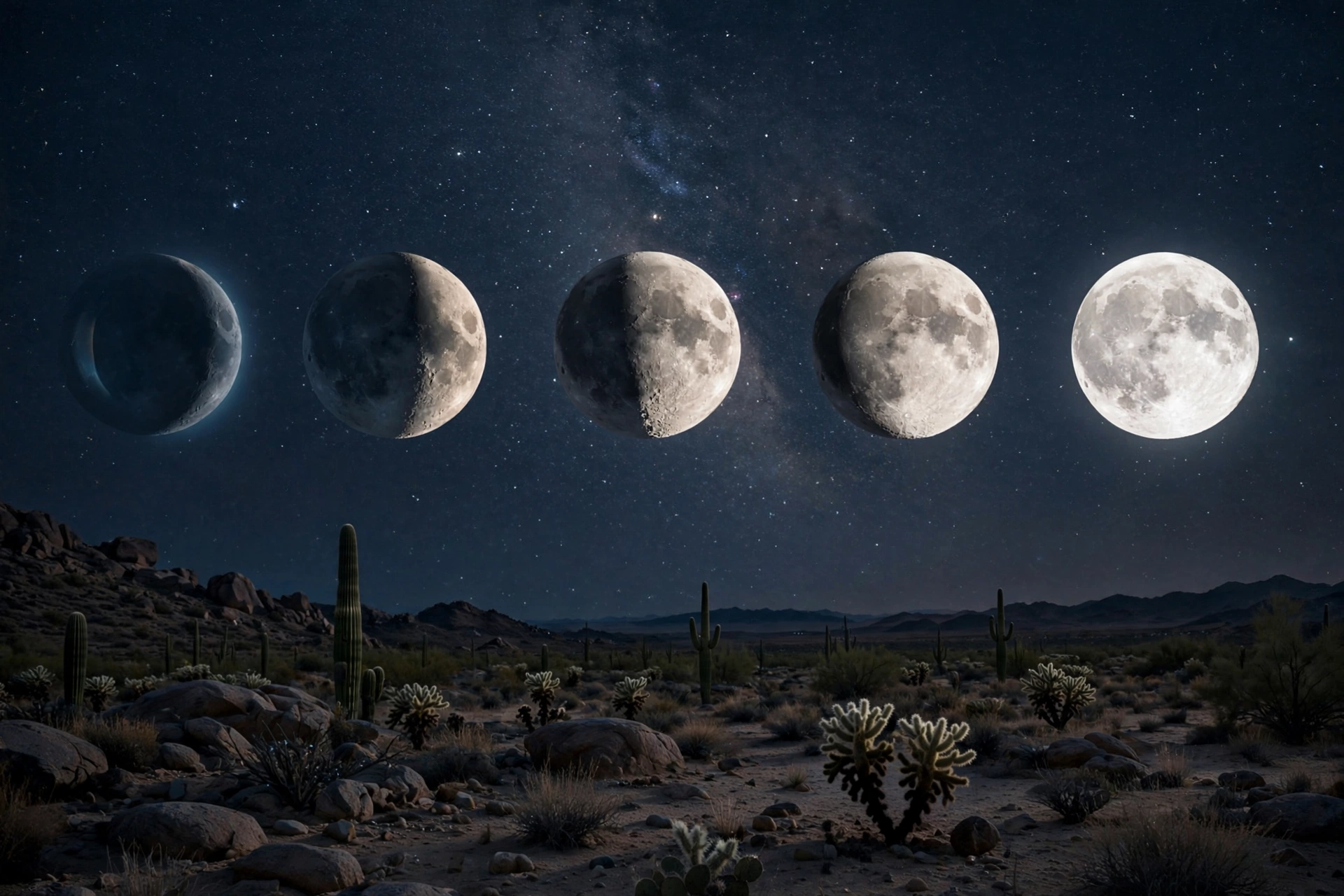
The Moon changes its shape in the sky. We call these shapes “phases.” A phase is just the shape of the Moon that we see on a given night.
First, we see no Moon at all. We call this the new Moon. The Moon is dark. Then a thin light grows on one side. We call this a crescent. A crescent is a thin, curved shape, like a smile. Then the Moon grows half full. Then it grows full and round and bright. We call this the full Moon. Then it starts to shrink. It goes back to half. Then back to a thin crescent. Then back to dark.
How long does this full round take? It takes about 29.5 days. That means about twenty-nine days and a half day. It is close to one month. That is why we call this time a “month.” The word “month” comes from the word “Moon.”
Now, here is the key part. People split this Moon round into four parts. Each part is about seven days long.
Part one: new Moon to half Moon. About seven days.
Part two: half Moon to full Moon. About seven days.
Part three: full Moon to half Moon again. About seven days.
Part four: half Moon back to new Moon. About seven days.
Four times seven is twenty-eight. That is close to 29.5. It is not perfect. But it was good enough for people long ago. It gave them a simple way to count days.
So the Moon gave people the idea of seven. Each Moon shape change took about seven days. People started to count time in groups of seven days. That was the start of the week.
The Babylonians and the Seven Sky Objects
The people who made this idea strong lived in a place called Mesopotamia. Mesopotamia is a hard word. It means “the land between two rivers.” Today, that land is mostly in Iraq. Long ago, it was home to a great city land called Babylon.
The Babylonians watched the sky very well. They were good at math and at star watching. At night, they saw many stars. But they also saw seven bright objects that moved in a special way. These seven objects did not stay fixed like other stars. They moved across the sky over days and weeks.
What were these seven objects? They were:
- The Sun
- The Moon
- Mars
- Mercury
- Jupiter
- Venus
- Saturn
Today, we know the Sun is a star. We know the Moon goes around the Earth. We know Mars, Mercury, Jupiter, Venus, and Saturn are planets. A planet is a big round world that goes around the Sun. Long ago, people did not know that. They just saw seven bright lights that moved. They thought these seven lights were gods, or signs from gods.
Seven was a special number for them. They saw seven moving lights. They saw the Moon change in about seven days. So seven felt right. It felt holy. It felt complete.
The Babylonians gave each of the seven days a name. Each day got the name of one of the seven sky lights. One day was for the Sun. One day was for the Moon. One day was for Mars. And so on. This is the start of our day names. We will come back to the names later in this story.
The Babylonians did not just make a week for fun. They used it to plan. They had market days. They had rest days. They had days for prayer. The seven-day week helped them run their city life.
From Babylon, the idea spread. Traders took it to other lands. Books took it to other lands. And one group of people made the seven-day week even stronger: the Hebrew people.
Six Days of Work and One Day of Rest
The Hebrew people were an old group in the Middle East. Their holy book tells a story about the start of the world. In that story, God made the world in six days. Then, on the seventh day, God rested.
From that story came a rule. People should work for six days. On the seventh day, they should rest. That seventh day is called the Sabbath. The Sabbath is a day of rest and prayer. It is a holy day.
This rule was very strong. It was not just a nice idea. It was a law for the Hebrew people. Every seven days, they stopped work. They rested. They prayed. They spent time with family.
This helped the seven-day week in a big way. Before, seven was a sky number. Now, seven was also a life rule. Work six days. Rest one day. Then start again. This rhythm was easy to remember. It was good for the body. It was good for family life. And it gave every week a clear end and a clear start.
Other groups saw this and liked it. They did not all follow the same holy book. But they saw that a week with a rest day worked well. A week with no rest day was too hard. A week with a rest day gave people time to heal, to meet, and to pray.
So by this time, the seven-day week had two strong roots. One root was the Moon and the seven sky lights. The other root was the rule of six days of work and one day of rest. Together, these two roots made seven very hard to change.
Rome: From Eight Days to Seven Days
Now we move to Rome. Rome was a huge empire long ago. An empire is a big land ruled by one strong power. Rome ruled much of Europe, North Africa, and the Middle East.
At first, Rome did not have a seven-day week. Rome had an eight-day week. Yes, eight days. People called it a “nundinal cycle.” That is a hard phrase. It just means a market cycle of eight days. Every eight days, farmers came to town to sell food. People counted days by market days.
But Rome met other lands. Rome traded with Babylon’s old lands. Rome met the Hebrew people. Rome met people from Egypt and Greece. And slowly, the seven-day week came into Rome too.
Why did Rome change? There are a few reasons. First, the seven-day week was already popular in the East. Traders used it. Soldiers used it. Second, a new faith grew in Rome. That faith was Christianity. Christians also kept a seven-day week, with Sunday as a special day. Third, the seven-day week was simple. It fit well with the Moon idea and the rest-day idea.
The big change came in 321 CE. CE means “Common Era.” It is the way we count years after year 1. In 321 CE, the Roman ruler Constantine made a law. He said Sunday should be a day of rest. People should not work on Sunday in towns. Shops should close. Courts should close.
This law did not make the seven-day week from nothing. The week was already there. But the law made it official. It gave the week the power of Rome behind it. After that, the seven-day week spread all over the Roman Empire. And when Rome fell, the lands that came after Rome kept the seven-day week. They kept it because it was in their books, their churches, and their daily life.
That is how a Babylon Moon idea and a Hebrew rest-day rule became the week for much of the world.
Why Do Days Have These Names?
Now let us look at the names. Why do we say Monday, Tuesday, Wednesday, and so on? The names come from the seven sky lights. But the path is a bit long, and it is fun.
In old Roman times, each day had a Latin name. Latin was the language of Rome. The days were: Day of the Sun, Day of the Moon, Day of Mars, Day of Mercury, Day of Jupiter, Day of Venus, Day of Saturn.
You can still see this in some languages today. In French, Monday is “lundi.” That comes from Moon day. In Spanish, Tuesday is “martes.” That comes from Mars day. The old Roman names stayed in many lands.
But English took a different path. English came from Germanic tribes in the north of Europe. These tribes had their own gods. When they heard the Roman day names, they changed the god names to their own gods. They kept the Sun and Moon days. But they changed the rest.
Let us go day by day in English:
Sunday is Sun day. The Sun is the bright light in the day sky. This name stayed simple. It is the day of the Sun.
Monday is Moon day. The Moon is the bright light in the night sky. “Mon” comes from “Moon.” So Monday means Moon day.
Tuesday is Tiw’s day. Tiw was a Norse god of war. Norse means from the north lands, like Norway and Denmark long ago. Tiw was like Mars, the Roman god of war. So the people swapped Mars for Tiw.
Wednesday is Woden’s day. Woden was a Norse god. He was wise and strong. He was like Mercury, the Roman god of travel and messages. So people swapped Mercury for Woden. “Woden’s day” became “Wednesday” over time. That is why the spelling looks odd. We say “Wenz-day,” but we write “Wednesday.”
Thursday is Thor’s day. Thor was a Norse god of thunder. He had a big hammer. He was like Jupiter, the Roman king of gods who threw thunderbolts. So people swapped Jupiter for Thor.
Friday is Frigg’s day. Frigg was a Norse goddess. A goddess is a female god. Frigg was the wife of Woden. She was linked to love and home. She was like Venus, the Roman goddess of love. So people swapped Venus for Frigg.
Saturday is Saturn’s day. Saturn was a Roman god of farming and time. This one did not change. English kept Saturn. So Saturday is the only English day that still has a Roman planet god name in full.
So when you say the days of the week, you are saying old god names. You are saying Sun, Moon, Tiw, Woden, Thor, Frigg, and Saturn. You are speaking history every week, even if you do not know it.
Other Lands Tried Different Weeks
If seven is so good, did any land try a different number? Yes. Some lands did. And their stories show why seven stayed.
Old Egypt had a ten-day week. Egypt is the land of the pyramids and the Nile River. Egyptians split their month into three parts of ten days each. Ten was easy for them because they counted in tens. They had ten fingers. Ten felt natural.
But ten days with no rest day was long. People got tired. And when Egypt met Rome and other lands, the seven-day week came in. The ten-day week faded away.
Much later, France tried a ten-day week too. This was during the French Revolution, about 200 years ago. The French leaders wanted a new calendar. They wanted to break from old church rules. They made a week of ten days. They called the tenth day a rest day. That means people worked nine days and rested one day. People did not like it. Nine work days were too long. The plan failed. France went back to seven days.
The Soviet Union also tried a different week. The Soviet Union was the old name for Russia and nearby lands under communist rule in the 1900s. In 1929, Soviet leaders tried a five-day week. Workers worked four days and rested one day. But different groups rested on different days. Families could not rest together. Friends could not meet. The plan caused mess. Later, they tried a six-day week. That also failed. In 1940, they went back to seven days.
These tries teach us something. A week is not just math. A week is social. People need a rest day together. Families need to rest on the same day. Friends need to meet on the same day. Markets need to open on the same day. If a new week breaks that shared rhythm, people will not keep it.
Seven worked because it was already shared. It was in books. It was in churches. It was in markets. It was in family life. To change it, a whole world would have to change at the same time. That is very hard.
Why Seven Stayed
So why did seven stay, when other numbers failed? There are four simple reasons.
First, seven fits the Moon. The Moon changes in about seven days. That gave seven a natural feel, even if it was not perfect.
Second, seven fits the sky. People saw seven moving lights. That gave seven a holy feel. People trusted it.
Third, seven fits rest. Six days of work and one day of rest is a good rhythm. It is not too long. It is not too short. It gives the body time to heal. It gives families time together.
Fourth, seven was shared. By the time Rome made it official, millions of people used it. Books used it. Laws used it. Churches used it. Once a system is shared by so many people, it is very hard to change. It is like a language. You could invent a new language, but if no one else speaks it, it will not help you talk to people.
That is why we still have seven days today. We do not use it because nature forces us to. We use it because history gave it to us, and because it works well enough that no one wants to change it.
A Week Is Human-Made
Let us end with the main point. A day is nature. A year is nature. A month is close to nature, because it follows the Moon. But a week is human-made. People made it. People chose seven. People kept seven.
That does not make the week less real. Money is also human-made, but it is real in our lives. Language is human-made, but it is real too. The week is a human tool that helps us live together. It tells us when to work, when to rest, when to learn, and when to meet.
Next time someone asks you what day it is, you can think of the Moon. You can think of Babylon. You can think of six days of work and one day of rest. You can think of Rome and Constantine. And you can think of old gods: Sun, Moon, Tiw, Woden, Thor, Frigg, and Saturn.
You are not just saying a day name. You are saying a very old story. A story that is about 4,000 years old. A story that started by looking up at the night sky.
Frequently Asked Questions
Why do we have seven days in a week?
We have seven days because people long ago split the Moon’s round, about 29.5 days, into four parts of about seven days each. People in Babylon also saw seven moving sky lights: the Sun, the Moon, Mars, Mercury, Jupiter, Venus, and Saturn. Later, the Hebrew rule of six days of work and one day of rest, and Roman law in 321 CE, made the seven-day week official and shared.
Is a week a law of nature?
No. A day comes from the Earth turning. A year comes from the Earth going around the Sun. A week does not come from nature in that way. People made the week. People chose seven days. People kept it because it worked well for work, rest, and shared life.
Why are the days named Monday, Tuesday, and so on?
The names come from the seven sky lights. In English, Sunday is Sun day and Monday is Moon day. Tuesday is Tiw’s day, Wednesday is Woden’s day, Thursday is Thor’s day, Friday is Frigg’s day, and Saturday is Saturn’s day. Tiw, Woden, Thor, and Frigg were Norse gods who took the place of Roman gods Mars, Mercury, Jupiter, and Venus.
Did any land try a different week?
Yes. Old Egypt had a ten-day week. France tried a ten-day week during its revolution, and the Soviet Union tried five-day and six-day weeks in the 1900s. All of these failed. People did not like long work times with no shared rest day, and families could not rest together. They went back to seven days.
Who made Sunday a day of rest?
In Rome, the ruler Constantine made a law in 321 CE that Sunday should be a day of rest in towns. The seven-day week was already in use before that law. The law made it official and helped it spread all over the Roman Empire, and then to the lands that came after Rome.
Closing: Seven Days, One Old Story
So, why do we have seven days in a week? Because the Moon changes in about seven days. Because Babylon saw seven sky lights. Because the Hebrew people worked six days and rested one day. Because Rome took that week and made Sunday a rest day in 321 CE. And because people shared that week for so long that it became part of daily life.
Seven is not perfect math. Four times seven is twenty-eight, not 29.5. But it was good enough. It was simple. It was holy to many people. It gave workers rest. It gave families a shared day off. And it gave the world a common rhythm.
The next time your week starts on Monday, or ends on Sunday, remember this. You are living an old human choice. You are living a story that started with people looking up at the Moon, more than 4,000 years ago, and asking a simple question: how can we count our days?
Their answer was seven. And we still use it today.