Can AI Dream Like Humans?
SUMMARY OF THIS ARTICLE
- No, AI does not dream like humans do.
- Human dreams happen in sleep, in a living brain, with feelings and memories.
- AI has no sleep, no feelings, and no body, so it cannot dream in that way.
- AI can make strange, dream-like pictures, but that is pattern work, not dreaming.
- Scientists still do not fully agree on why humans dream, so the question stays open.
Introduction: A Robot Asleep?
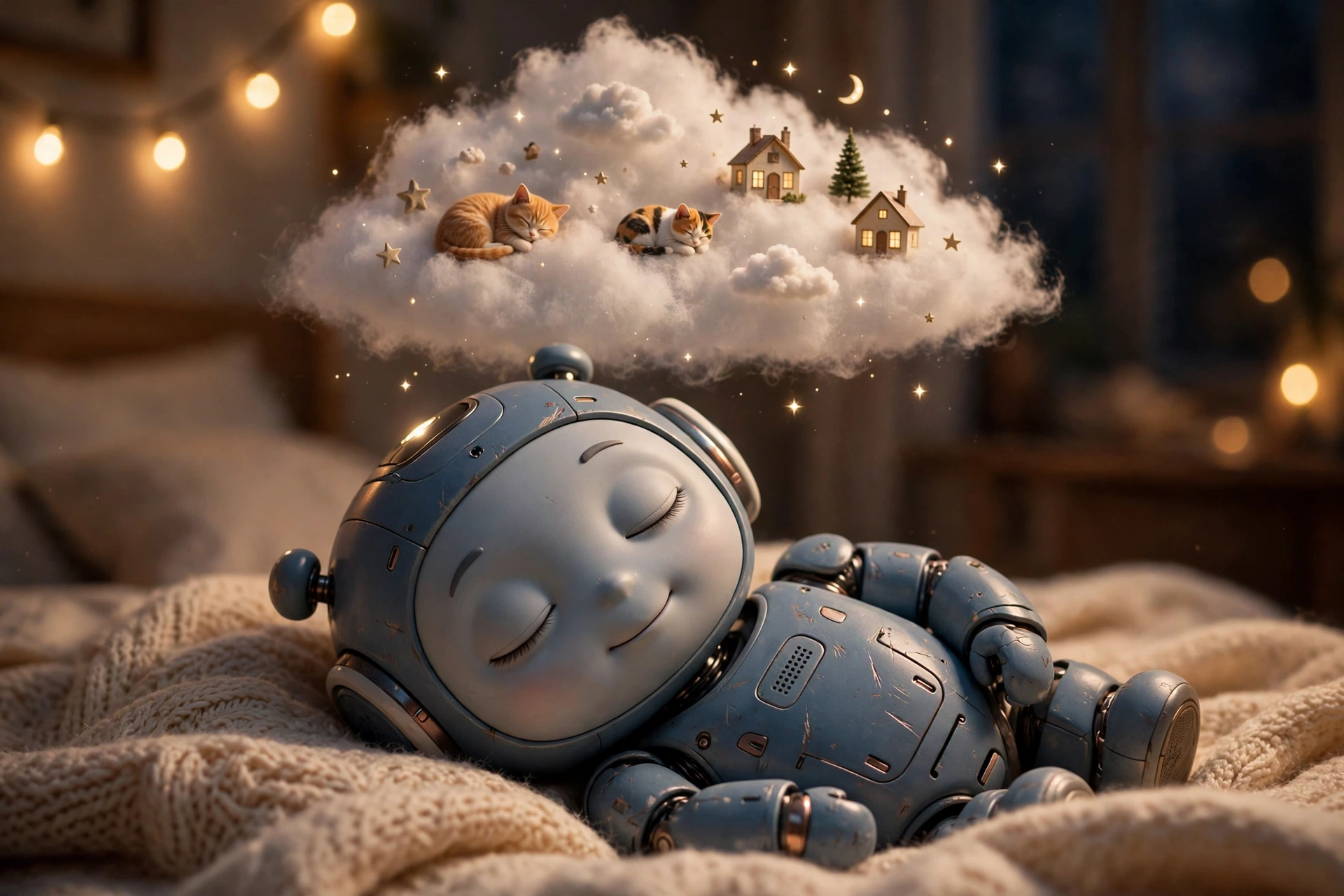
Picture a robot lying in a bed, eyes closed, with little pictures floating above its head. It looks like it is dreaming. You may have seen a picture like this online. It is a fun idea. But it makes us ask a big question: can AI dream like humans?
AI means artificial intelligence. That is a long name for a simple idea. It means computer programs that can learn patterns and do tasks that used to need a human brain. For example, AI can spot a cat in a photo. It can write a short story. It can make a picture from words.
But does that mean AI dreams? The short answer is no. AI does not dream the way you dream. It does not sleep. It does not feel happy, sad, or scared. It does not wake up and say, “That was a strange dream.”
Still, the question is worth asking. AI does things that look a lot like dreaming. It makes wild pictures. It mixes things that do not go together. It can even learn in “imagined worlds” that do not exist. So where does the line sit? What is a real dream, and what only looks like one?
This article will answer that in very simple words. No hard science words without a plain explanation. If you are 10 years old, or if English is not your first language, you should still be able to follow it. Let us start with the human side first.
What Is a Dream for Humans?
A dream is something you see, hear, and feel in your mind while you sleep. You are not awake. Your eyes are closed. But your brain is still busy.
Most dreams happen in a part of sleep called REM sleep. REM is short for “rapid eye movement.” That means your eyes move fast under your closed lids. Your body is mostly still. Your brain, though, is very active. It is almost as active as when you are awake.
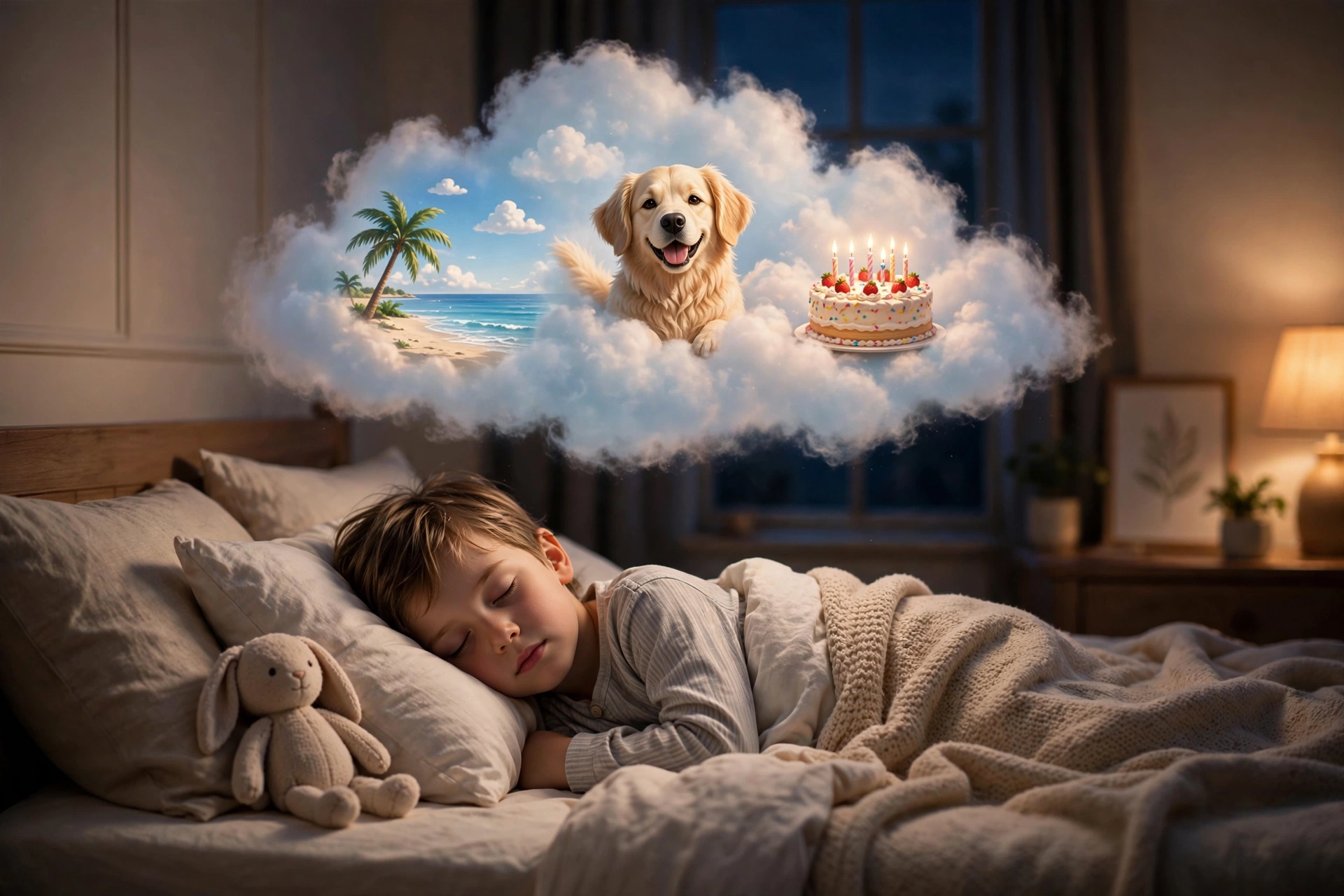
In a dream, you might fly. You might talk to a friend who lives far away. You might be back at school, even though you left school years ago. Things can change fast. One minute you are at home. The next minute you are on a beach. That is normal in dreams. Dreams do not have to make sense.
Why do we dream? Scientists do not fully agree. That is an honest fact. We know a lot, but not all of it. Here are some ideas that many scientists talk about.
One idea is that dreams help the brain sort memories. A memory is something you remember from your life. During the day, you see and learn many things. At night, your brain may replay some of them. Replay means to play again, like watching a video again. This may help you keep what is useful and drop what is not.
Another idea is that dreams help with feelings. Feelings are things like joy, fear, anger, and love. If you had a hard day, a dream might let your brain work through those feelings in a safe way. You are asleep, so nothing real can hurt you.
A third idea is that dreams help you learn and solve problems. Some people wake up with a new idea. They may have thought about a problem in a dream in a new way. This does not happen every night. But it does happen.
It is also true that not all dreams are clear. Some dreams are short. Some are long. Some you remember in the morning. Most you forget fast. If someone wakes you up and asks, “What did you dream?” you may say, “I do not know.” That is normal too.
So a human dream needs a few things. It needs sleep. It needs a living brain. It needs feelings. It needs memories from a real life. And it needs a person who can wake up and know, “I was dreaming.” Keep those points in mind. They will help us test AI.
What Does AI Actually Do?
Now let us look at AI. AI is not a brain. It is a program. A program is a set of steps a computer follows. AI learns from data. Data means a lot of examples. For example, to learn what a cat looks like, AI may look at millions of cat photos. It finds patterns. A pattern is something that repeats. For cats, the pattern might be pointy ears, whiskers, and fur.
AI stores what it learns as numbers. These numbers are called weights. Think of weights as tiny dials inside the program. When AI learns, it turns these dials a little at a time. After a lot of learning, the dials are set in a way that helps AI guess well. If you show it a new photo, it can say, “This looks like a cat.” It is guessing based on patterns, not seeing with eyes or knowing what a cat feels like.
AI also works by predicting. Predict means to guess what comes next. When a chatbot writes a sentence, it is not thinking like you think. It is guessing the next word that fits the pattern best. It does this word by word, very fast. That is why AI writing can sound smooth. It is not because AI understands the story in its heart. It is because it has seen many similar sentences before.
AI does not sleep. It does not get tired in the human way. When you turn a computer off, the program just stops. When you turn it back on, it starts again. It does not wake up from a dream. It does not say, “I had a bad night.” It has no night at all, unless we give it that word.
AI also has no feelings. It can use the word “happy” in a sentence. It can write a sad poem. But it does not feel happy or sad. Feelings need a living body and a living brain. AI has neither. It has code and numbers.
AI has no real life either. It has not gone to school. It has not played with friends. It has not been scared in the dark. Its “memories” are just data it was trained on. Trained means taught with examples. That data came from people, books, photos, and the internet. AI did not live those moments. It only read about them, in pattern form.
So when we ask, “Can AI dream like humans?” we can already see a problem. Human dreaming needs sleep, feelings, a living brain, and a real life. AI has none of those. That does not mean AI is useless. It means AI is a different kind of thing. It can copy some parts of dreaming, like making strange pictures, but it cannot do the whole thing.
So, Can AI Dream Like Humans?
The clear answer is no, not in the human way. AI cannot dream like humans because it does not sleep, feel, or live. It cannot close its eyes at night and see a story in its mind. It cannot wake up and feel confused about a dream. It cannot say, “I dreamed I could fly, and it felt real.”
But this answer needs a little care. People use the word “dream” in more than one way. Sometimes they mean a sleep dream. Sometimes they mean a daydream. A daydream is when you are awake but your mind wanders. You might think about a holiday while you sit in class. Sometimes people mean a goal, like “My dream is to be a singer.” AI does not do any of those in the human sense either. It does not daydream. It does not have goals of its own. It only follows tasks people give it.
There is one more way people use the word. They say AI “dreams” when it makes new pictures or new ideas from what it learned. This is a fun way to talk, but it can mislead us. It makes AI sound more human than it is. When scientists say an AI “dreams up” a picture, they usually mean the AI made a new picture from patterns. They do not mean the AI slept and dreamed it.
So if someone asks you, “Can AI dream like humans?” you can answer, “No, but it can make things that look dream-like.” That short answer is true, and it keeps the two ideas apart. The rest of this article will show you why AI art looks so dream-like, and what is really happening behind it.
Google DeepDream: Pictures That Look Like Dreams
One famous example is called DeepDream. DeepDream is a program made by Google. It came out in 2015. People loved it because its pictures looked very strange and dream-like. Dogs had many eyes. Clouds turned into birds. Trees turned into strange animals.
How did it work? DeepDream did not sleep. It did not dream. It used a trick called pattern amplification. Amplification means making something bigger or stronger. DeepDream was first trained to spot things in photos, like dogs, birds, and buildings. Then people asked it to look at a photo again and again, and each time make the patterns it saw a little stronger.
Think of it like this. If you look at a cloud and think, “That looks a bit like a dog,” DeepDream would make that dog shape stronger. Then it would look again and make it even stronger. After many rounds, the cloud would be full of dogs. The result looks like a dream because our brains also do this. When we are half asleep, we may see faces in clouds or shapes in wallpaper. DeepDream copies that one part: finding a pattern and making it bigger.
But DeepDream did not feel anything while doing this. It did not think, “This is fun.” It did not choose to dream about dogs. People set it up, gave it a photo, and told it to run. The strange pictures came from math, not from sleep.
DeepDream is a good example of why we must be careful with words. We call its pictures “dreams” because they look like dreams. But the process is not dreaming. It is pattern work, done over and over, with no sleep and no feelings.
How AI Makes New Pictures Today
Today, AI picture makers are even better than DeepDream. You can type words like “a cat in space” and get a picture in seconds. This can feel like magic. It can also feel like dreaming, because the picture is new. No one took that exact photo before. So how does it work?
There are two main types of AI picture makers. The first type is called a GAN. GAN is short for “generative adversarial network.” That is a hard name, so let us break it down. “Generative” means making something new. “Network” means a program with many parts joined together. “Adversarial” means two sides working against each other, like in a game.
A GAN has two parts. One part makes pictures. The other part checks pictures. The maker tries to fool the checker. The checker tries to catch fakes. They play this game many times. In the end, the maker gets very good at making pictures that look real. But the maker is not dreaming. It is learning patterns from real photos, then mixing them in new ways.
The second type is called a diffusion model. Diffusion is a word for spreading out. These models learn in a strange but simple way. First, they take a real photo and add noise to it, step by step, until it looks like TV static. Static is the fuzzy dots you see on an old TV with no signal. Then they learn to do the reverse: start with static and clean it up, step by step, until a clear picture appears.
When you ask for a new picture, the model starts with random static and cleans it up, guided by your words. The result can be beautiful, weird, or funny. It can look like a dream because it mixes patterns in new ways. A cat can have wings. A house can float in the sky. But again, there is no sleep, no feeling, and no dreamer. There is only math, patterns, and a lot of examples.
This is why AI art often looks dream-like. Dreams mix memories in strange ways. AI also mixes patterns in strange ways. The outside look is similar. The inside process is very different. In a human dream, a living brain mixes memories and feelings while you sleep. In AI art, a program mixes numbers while it runs a task. Both can make strange pictures. Only one is a real dream.
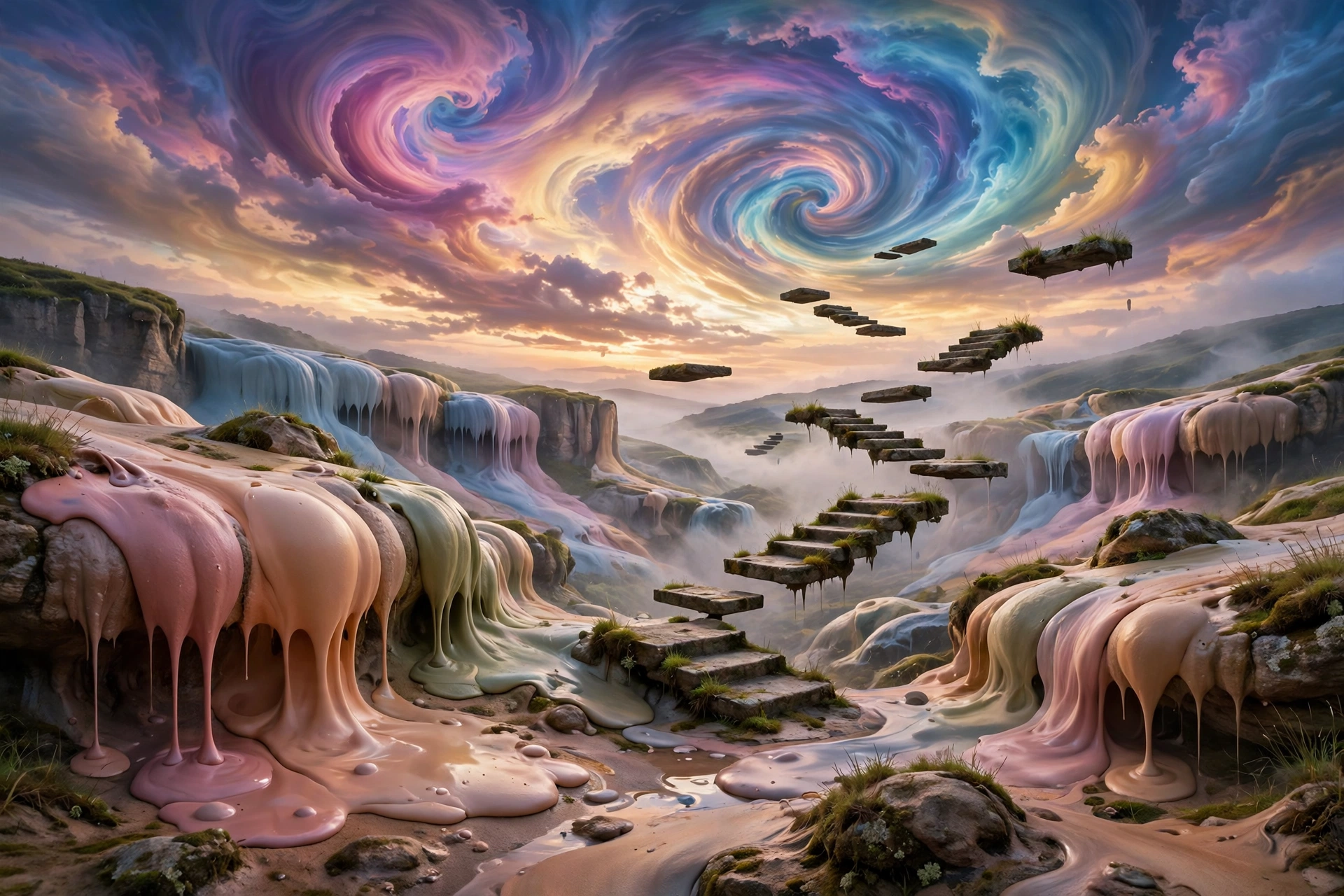
Dreamer Robots: Learning in Imagined Worlds
There is another AI idea with “dream” in its name. It is called Dreamer. Dreamer is a type of AI used for robots and games. It learns by building a small model of the world inside itself, then trying things out in that model before it tries them in real life.
Think of it like practice in your head. If you want to learn to ride a bike, you might first think about balance, pedals, and brakes. You imagine what might happen if you turn too fast. That is a kind of practice without real risk. Dreamer AI does something like that, but in numbers, not in pictures in a mind.
Dreamer builds a simulation. A simulation is a fake version of the real world inside a computer. In that simulation, the AI can try many moves fast. It can learn what works and what fails, without breaking a real robot. Then it uses what it learned in the real world.
People sometimes say this AI “dreams” or “imagines” a world. That is a fun way to talk, but it can confuse us. The AI does not see a world in its mind like you see a dream. It does not feel like it is inside that world. It has no sense of being there. It has no wonder, fear, or joy about the world it is testing.
This kind of AI is very useful. It can help robots learn faster and safer. It can help games feel smarter. But it is still not dreaming. It is planning and testing, using math. A human child who imagines a game is doing something richer. The child feels, pretends, and knows it is pretend. The AI does not know. It just follows steps.
Why AI Art Looks So Dream-Like
If AI does not dream, why does its art look so much like dreams? There are a few clear reasons.
First, both dreams and AI mix things up. In a dream, your brain may mix your school, your dog, and a beach into one scene. AI does the same with patterns. It may mix a cat pattern, a space pattern, and a castle pattern into one picture. The result feels strange in both cases.
Second, both can break rules. In real life, fish do not fly. In a dream, they might. In AI art, they might too. That is because neither a dream nor an AI picture has to follow real-world rules. A dream is free because you are asleep. An AI picture is free because it is just patterns, not a real photo.
Third, both can be hard to explain. If you wake up from a dream, you may struggle to say what happened. “It was about school, but also about the sea, and my grandma was there, but she was also a teacher.” AI pictures can feel the same. You can see a face in a tree, a dog in a cloud, and a house that melts. It is hard to say why it feels that way, but it feels dream-like.
Fourth, our own brains add to the effect. When we see a strange AI picture, our brains try to make sense of it. We look for faces, stories, and meaning. That is what our brains do with dreams too. So part of the “dream” feeling comes from us, the viewers, not just from the AI.
This is important. When we say “AI dreams,” we are often talking about how the result feels to us. We are not talking about what happens inside the AI. The AI has no inner movie. We are the ones who watch the picture and feel that it is dream-like. That feeling is real, but it belongs to us, not to the AI.
What AI Cannot Do
Let us be clear about what AI cannot do, at least as it works today.
AI cannot feel. It cannot feel love, fear, joy, or sadness. It can use those words, but it does not have those feelings inside.
AI cannot want. It does not want to sleep, eat, play, or dream. It only does tasks people give it. If no one asks it to do anything, it does nothing on its own.
AI cannot remember like a person. A person remembers a birthday party, the smell of cake, and the sound of laughter. AI remembers patterns in data. It does not remember a life, because it has no life.
AI cannot know it is dreaming. A human can sometimes know, inside a dream, “This is a dream.” This is called a lucid dream. Lucid means clear. AI cannot do this because it does not have a sense of self. It does not know it exists. It does not know the difference between being awake and being asleep, because it is never either.
AI cannot sleep. It does not need rest. It does not get tired and need to dream to sort its feelings. It just runs or stops, when people tell it to.
These limits matter. They show why “AI dreams” is a metaphor. A metaphor is when we use a word in a fun, picture way, not in a strict, true way. We say a river “runs” but a river has no legs. We say AI “dreams” but AI has no sleep. The word helps us picture something, but it is not the full truth.
Could AI Ever Dream?
This is the hardest part. Could AI ever dream, in the future, in a real way? The honest answer is: we do not know for sure, and scientists do not agree.
Some people think that if AI becomes much more like a human brain, with a body, senses, and a life of its own, it might one day have something like dreams. But that is a big “if.” It would need more than better pictures. It would need sleep, feelings, a sense of self, and a real life to dream about. No AI today has those things, and no one knows how to build them for sure.
Other people think dreaming is tied to being alive. A living brain, a living body, and a life lived in the world may be needed for real dreams. On that view, a program, no matter how good, will never truly dream. It may copy dreams better and better, but copying is not the same as dreaming.
There is also a middle view. Some scientists say we should be careful about the word itself. If we mean “making strange new pictures from patterns,” then AI already does that. If we mean “sleeping, feeling, and seeing a story in your mind,” then AI does not do that, and may never do it. The answer depends on what we mean by “dream.”
For now, the safest answer is this: AI can make dream-like things, but it cannot dream like humans. That may change one day, but we have no proof that it will, and we should not pretend that it already has. It is better to be honest about what we know and what we do not know. That honesty helps us use AI well, without fear and without false hope.
Frequently Asked Questions
Can AI dream like humans?
No. Human dreams happen in sleep, in a living brain, with feelings and memories. AI has no sleep, no feelings, and no body. It can make dream-like pictures, but that is pattern work, not dreaming.
What is DeepDream?
DeepDream is a Google program from 2015. It finds patterns in a photo and makes them stronger, over and over. The result looks strange and dream-like, with dogs, birds, and faces appearing in clouds and trees. It does not sleep or feel. It just repeats pattern work.
Why does AI art look like a dream?
AI art mixes patterns in new ways, breaks real-world rules, and is hard to explain, just like dreams do. Our own brains also add to the effect, because we look for faces and stories in strange pictures. The look is similar, but the process is different.
Do Dreamer robots really dream?
No. Dreamer is a type of AI that learns by testing moves in a fake world inside a computer, called a simulation. People call this “imagining” or “dreaming” in a fun way, but the AI does not see a world in its mind or feel like it is there. It just runs numbers and tests.
Could AI dream in the future?
We do not know. Some people think a future AI with a body, senses, and a sense of self might have something like dreams. Others think real dreaming needs a living brain and a real life, so a program will never truly dream. For now, there is no proof that AI dreams like humans.
Closing: A Dream Is More Than a Picture
So, can AI dream like humans? No, not in the way that matters most. A human dream is more than a strange picture. It is sleep, a living brain, feelings, memories, and a person who wakes up and knows they dreamed. AI has none of those. It has patterns, numbers, and tasks.
That does not make AI boring. AI can make beautiful, funny, and strange pictures. It can help robots learn. It can help us see patterns we might miss. Those are real skills. But they are not dreams.
The next time you see a wild AI picture, enjoy it. Say, “That looks like a dream.” Then remember the difference. You are the dreamer. The AI is a tool that mixes patterns. The dream feeling you get when you look at the picture comes from you, your brain, your memories, and your feelings. That is a very human thing, and no program has it yet.
And that is a good place to end. Keep asking big questions like this one. They help us understand both humans and machines better. A machine can copy the look of a dream. Only a living person can truly dream one.