How Does a Pizza Shop Make Money? Explained Simply
SUMMARY OF THIS ARTICLE
- A pizza shop sells a pizza for far more than its ingredients cost. The flour, cheese and tomato for one pizza cost only a few dollars.
- Most of that money is already spent before the pizza reaches you. Rent, wages, the oven, boxes and delivery costs eat up the difference.
- The real profit comes from selling lots of pizzas at busy times, especially on Friday and Saturday evenings.
- Drinks, sides and extra toppings are where a shop earns its best margin, because they cost very little to add.
- Delivery apps take a big cut of every order, so a shop earns much less on an app order than on a takeaway order picked up at the counter.
The Friday Night Pizza
Every Friday, just after six o’clock, the same thing happens at Mia’s house. She walks in from work, tired, her bag still on her shoulder, and her two children are already asking the same question. “Pizza tonight?” Mia does not even pretend to think about cooking. She picks up her phone, calls the little pizza shop two streets away, and orders two large pizzas, one with pepperoni and one with just cheese. The bill comes to thirty-four dollars. Twenty minutes later, the doorbell rings, and dinner is sorted.
But one Friday, as she handed over the money, a thought popped into her head. A pizza is mostly bread, cheese and tomato sauce, and the flour in the bag at home costs almost nothing. So how does a shop charge fifteen or seventeen dollars for one pizza — and if the ingredients are so cheap, why is the owner of her local shop not rich?
Those are good questions, and the answers are more interesting than most people expect. A pizza shop is one of the simplest businesses to understand, and one of the hardest to run well. The ingredients really are cheap, and the pizza really does sell for many times what it costs to make — yet at the end of the month, the owner is often left with only a small pile of profit. This guide explains why, in plain words.
The Big Surprise: Cheap Ingredients, Dear Pizza
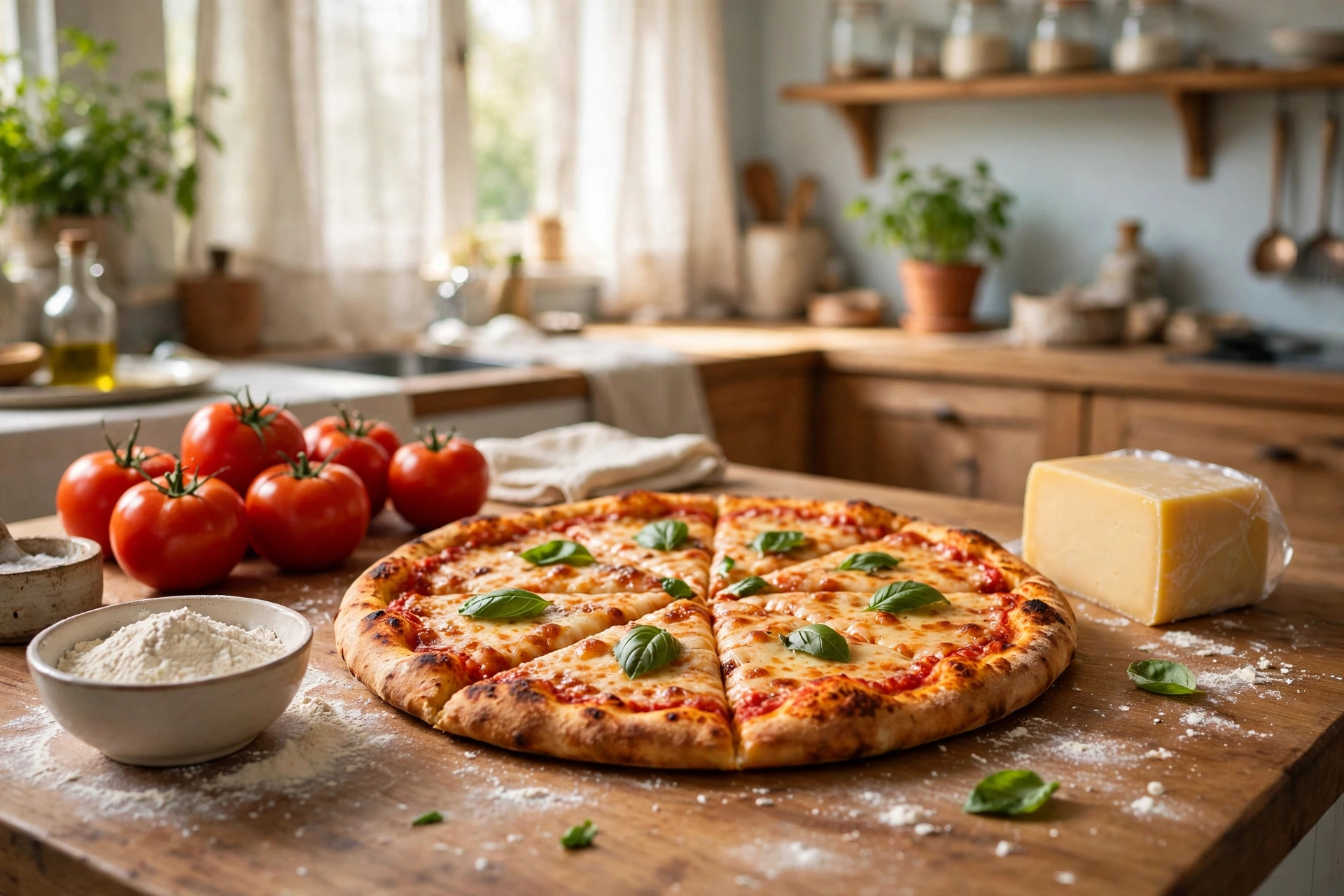
Let us start with the part that surprises everyone. The ingredients in a pizza are cheap. Really cheap. A pizza is made from flour, water, yeast and a pinch of salt for the dough, a spoonful of tomato sauce, a handful of cheese, and whatever topping goes on top. None of these things costs much, and a shop buys them in big amounts, which makes them cheaper still.
Think about a bag of flour. A big bag costs only a few dollars and holds enough flour for dozens of pizzas. A shop buys cheese in huge blocks and slices it thin, and the tomato sauce is the cheapest part of all. When you add it up, the ingredients for a plain cheese pizza cost the shop around two or three dollars. Add pepperoni or mushrooms, and the cost rises a little, maybe to three or four dollars. That is it.
Now look at the price on the menu. That same pizza sells for fifteen dollars, sometimes seventeen or eighteen. The shop takes in fifteen dollars and spends about three dollars on ingredients, which leaves twelve dollars. It looks like easy money. It looks like the owner must be getting rich on every pizza that leaves the oven.
But that twelve dollars is not profit. It is not money the owner gets to keep. It is money that still has to pay for almost everything else in the business, and that list is much longer than most customers ever think about. The gap between three dollars and fifteen dollars is where the whole story of a pizza shop lives. It is not a story about expensive ingredients. It is a story about everything else a shop has to pay for, every single day, whether it sells ten pizzas or a hundred.
That is why a pizza shop can look like a gold mine from the customer’s side of the counter, and feel like a tight squeeze from the owner’s side.
Where Does All the Money Go?
So where does the twelve dollars go? It goes to the shop itself, and to the people in it. The first cost is the shop. A pizza shop needs a place on a busy street, with an oven, a counter, tables, and room for people to wait. That place costs rent every month, and rent on a busy street is high. The owner pays it in January when it is snowing, and pays it again in July when it is hot. The rent never takes a day off.
Then there are the wages. Somebody has to make the dough in the morning, answer the phone, stretch the bases, slide the pizzas into the oven, pack the boxes, and hand them to the driver. On a busy night, a small shop might have five or six people working at once. Each of them needs to be paid, and the shop also pays extra costs on top of their wages, like insurance and tax. Wages are often the biggest cost of all, bigger even than the rent.
Then there is the oven, which is not like the oven in your kitchen. It is a huge, hot machine that runs all day, and it eats electricity or gas like a hungry animal. Add the fridge, the dough mixer, the lights and the water, and the bills are not small.
And then there are the things you never notice: the boxes. Every pizza leaves in a cardboard box, and each box costs money. Add the napkins, the little tubs of sauce and the paper bags, and it adds up. A shop that sells two hundred pizzas in a week also gives away two hundred boxes.
Put all of that together, and the picture changes. Out of that fifteen-dollar pizza, three dollars goes to ingredients, and the rest is already spoken for by rent, wages, bills and boxes before the owner has taken a single dollar of profit. A restaurant faces the same problem, because the same costs — a place, people and power — sit behind every meal it serves. The difference is that a pizza shop’s food is so simple that the gap between cost and price looks bigger — but the costs are just as real.
A Worked Example: One Pizza, One Day
Numbers make this easier to see, so here is one clear example. It is made up, with round numbers, just to show how the maths works. No real shop has exactly these numbers, but the shape of them is true for most small pizza shops.
Imagine a small pizza shop that sells a large pepperoni pizza for $15. The ingredients — the dough, the sauce, the cheese and the pepperoni — cost $3. That leaves $12.
Now the other costs. The shop pays rent, wages, electricity and all the rest, and when you divide those costs across all the pizzas sold in a day, they come to about $9 per pizza. If the shop sells 100 pizzas in a day, and its rent, wages and bills for that day come to $900, then each pizza carries $9 of those costs.
So the maths for one pizza looks like this: $15 from the customer, minus $3 for ingredients, minus $9 for rent, wages and bills, leaves $3. That is the profit on one pizza. Three dollars. Not twelve. And out of that $3, the owner still has to pay for the box, the delivery, and the tax. If the pizza was ordered through a delivery app, the app takes its cut too, and the $3 can shrink to $1 or even less.
Now look at a whole day. If the shop sells 100 pizzas and makes $3 on each one, that is $300. But a slow Tuesday might bring only 40 pizzas, and the rent and wages cost just as much that day. Forty pizzas at $3 is $120, and a very quiet day might barely break even. That is why the owner cares so much about busy days — the profit comes from selling enough pizzas, on enough days, to cover the costs that never stop.
Why Friday Night Is the Shop’s Best Friend
If one pizza only earns a few dollars, the answer is simple: sell a lot of them. That is why Friday and Saturday are the most important nights of the week for a pizza shop, and why the owner smiles when the phone starts ringing at six o’clock.
On a Friday evening, the whole town seems to want pizza at the same time. Families are tired after a long week, nobody wants to cook, friends are coming over, and a pizza is the easiest dinner in the world. The shop that sold forty pizzas on a quiet Tuesday might sell a hundred and fifty on a Friday. The oven never stops. The phone never stops. The drivers run in and out of the door all evening.
Here is why that rush matters. The rent is the same on Friday as on Tuesday, and the oven costs the same to keep hot. But on Friday, those fixed costs are shared across a hundred and fifty pizzas instead of forty, so the cost per pizza falls and the profit per pizza rises. On a quiet day the shop might make almost nothing; on a busy Friday it can make enough to carry it through the slow days that follow.
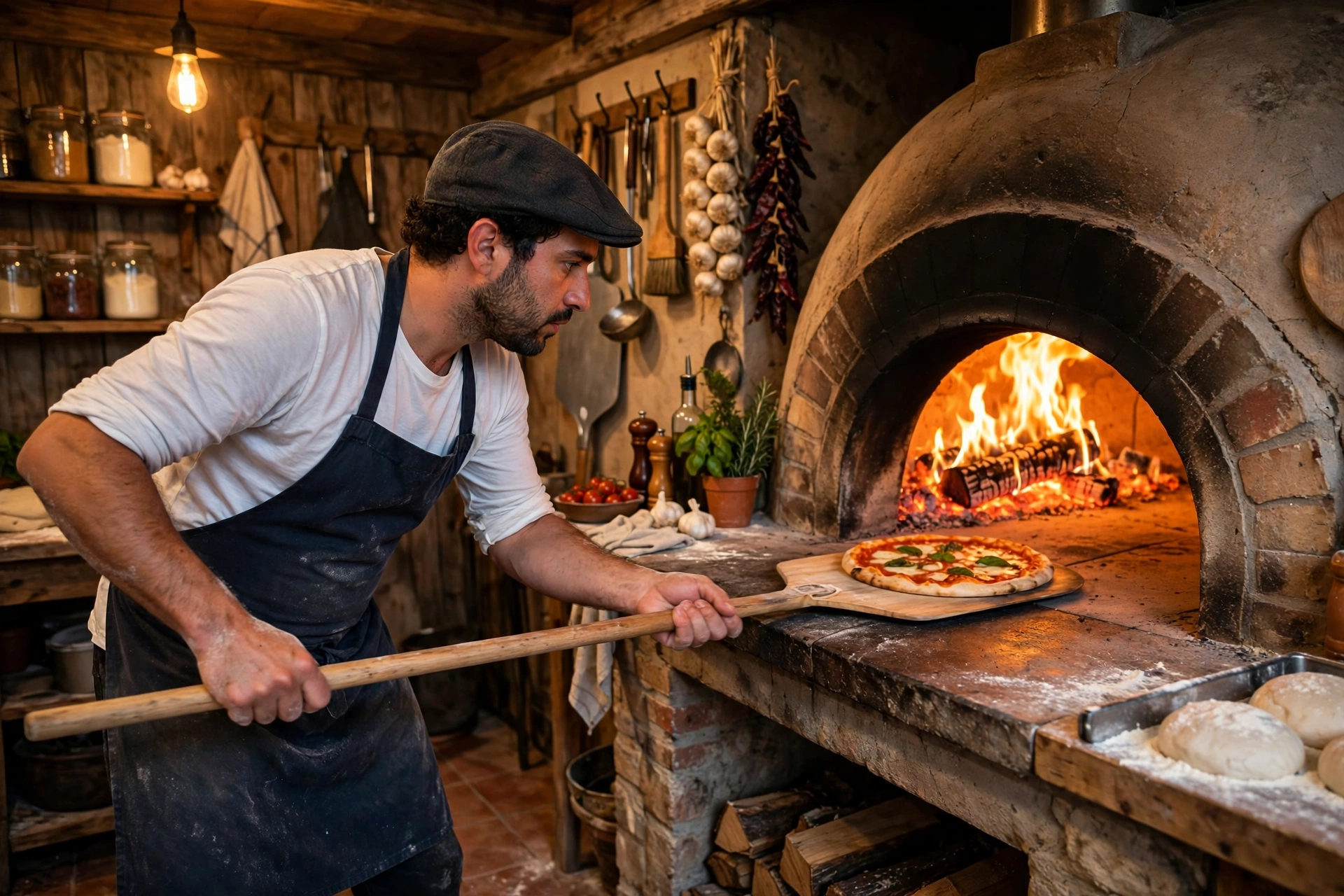
The rush is not easy, though. An oven can only cook so many pizzas at once, so the shop has to plan. The dough is made early in the morning, before the shop even opens. Extra cheese is grated, extra sauce is ready, and the toppings are lined up in trays. When six o’clock comes, the team moves fast, because every minute of delay is a pizza that could have been sold.
That is the real secret of the pizza business. It is not about charging a lot for one pizza. It is about selling many pizzas, quickly, at the moment when everyone wants one. A busy shop can sell a thousand pizzas in a week and still only make a small profit on each one. But a thousand small profits add up to a living, and that is how the shop survives.
The Little Extras That Earn the Most
Now we come to the cleverest part of the pizza shop’s money. The pizza itself is not where the best profit lives. The best profit lives in the little extras that go with it.
Think about the bottle of fizzy drink that comes with your order. The shop buys it for less than a dollar and sells it for three. A side of garlic bread costs pennies to make — a little bread, a little butter, a little garlic — and sells for four or five dollars. A small tub of chicken wings, a salad, a chocolate dessert, a dip for the crust: each of these costs the shop very little, and each one adds a few dollars to the order.
That is why the person on the phone always asks, “Would you like a drink with that? How about some garlic bread?” It is not just friendly service. It is the shop’s best chance to earn real profit. A customer who orders a fifteen-dollar pizza and adds a three-dollar drink and a four-dollar side has spent twenty-two dollars, and the extra seven dollars cost the shop only two dollars to provide. The profit on the extras is often bigger than the profit on the pizza itself.
It works a little like how a sweet shop makes its money: the small, cheap things you add without thinking are the things that carry the profit. A sweet shop earns its living on the little bag of sweets you grab at the till, and a pizza shop earns its living on the drink and the garlic bread you add to the order. The main item brings you in. The extras pay the bills.
The same is true of extra toppings. A customer who asks for extra cheese or double pepperoni pays two or three dollars more, and the extra topping costs the shop less than a dollar. It feels like a small treat, and it is — but it is also one of the best deals in the whole shop, for the shop.
Delivery, Takeaway or Eat-In: Three Very Different Businesses
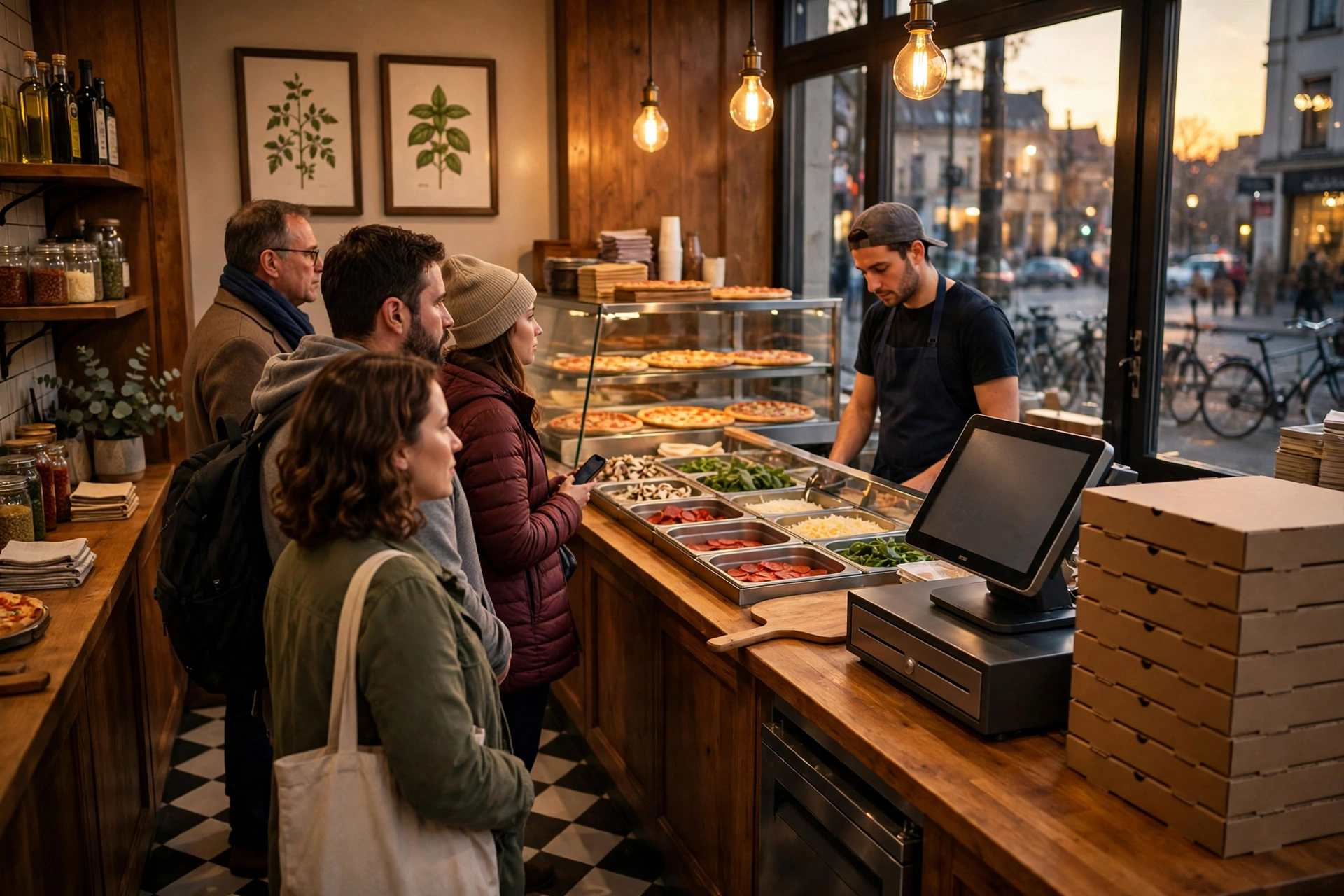
Not every pizza is sold the same way, and the way you buy it changes how much money the shop makes. There are three ways to get a pizza: delivered to your door, picked up at the counter, or eaten inside the shop. They look the same to the customer, but to the owner they are three different businesses.
Takeaway is the best deal for the shop. You walk in, you pick up your pizza, and you leave. The shop does not need to pay a driver, or buy petrol, or worry about a pizza getting cold on a bike. There is no delivery cost at all. The profit on a takeaway pizza is the highest of the three, and that is why many shops offer a discount if you collect your order yourself. They would rather give you two dollars off than pay a driver five dollars to bring it to you.
Delivery is the most popular way to buy a pizza, and the most expensive way to sell one. Somebody has to drive it to your house, and that driver needs to be paid, whether they carry one pizza or three. The car or bike needs petrol, and the pizza needs a special bag to stay hot. Delivery brings in many more orders than takeaway alone ever could, but each delivered pizza earns the shop less.
Eat-in sits in the middle. If the shop has tables, it can charge a little more, and a family that sits down might order drinks and a dessert too. But tables take up space, and that space costs rent. Somebody has to clean the tables, and a table that holds one family for an hour cannot serve anyone else in that hour. So eat-in is good business only if the tables stay full.
A smart shop offers all three, because different customers want different things. But the owner knows the truth: the cheapest pizza to sell is the one you come and collect, and the most expensive is the one that travels to your door in the rain.
The Delivery App Problem
There is one more character in this story, and it is the one the owner likes least: the delivery app. You know the ones. You open the app on your phone, you see a dozen pizza shops, you tap the one you like, and the pizza arrives at your door. It is easy, and customers love it. But for the shop, the app is expensive.
Here is how it works. When you order through an app, the app takes a cut of your order, usually between a fifth and a third of the price. On a fifteen-dollar pizza, the app might take four or five dollars. That is more than the shop’s whole profit on the pizza. Remember our worked example: the shop made three dollars on that pizza. If the app takes four, the shop has lost money on the order.
So why do shops use the apps at all? Because the apps bring customers the shop would never have found on its own. A new shop in a new town has no regulars yet, and the app puts it in front of thousands of hungry people. A quiet shop can fill its empty hours with app orders. The shop earns less on each order, but it sells more orders, and that can still be worth it.
Still, it is a hard bargain. Many owners say the apps are both their best friend and their biggest cost. Some fight back by offering a discount if you order direct, or by putting a little card in every app delivery that says “order direct next time and save money.” They are not being rude — they are trying to keep the few dollars the app would have taken, because in a business where one pizza earns three dollars, four dollars is everything.
When a Pizza Shop Struggles
Not every pizza shop makes it. Some close within a year or two, and the reasons are usually the same. The most common reason is a quiet street. A pizza shop lives or dies on how many people walk past its door or know its number, and a shop on a quiet road with little passing traffic will struggle no matter how good its pizza tastes.
The second reason is waste. Dough does not keep forever, cheese goes off, and fresh toppings spoil. A shop has to guess how many pizzas it will sell each day, and if it guesses too high, the food it prepared goes in the bin. On a slow week, that waste can eat the whole profit.
The third reason is rising prices. Flour, cheese and petrol all get more expensive over time, and the shop has to decide what to do. If it raises the price of a pizza from fifteen dollars to seventeen, some customers will stop ordering. If it keeps the price the same, it earns less on every pizza. There is no easy answer, and many small shops are caught in the middle, trying to keep customers happy while their own costs climb.
And then there are the quiet months. January is hard for pizza shops in cold places, because people stay at home and spend less after the holidays. A shop that made good money in December can lose money in January, so it has to save enough in the good months to survive the bad ones. The shops that last are the ones that plan for the slow times, keep waste low, and take good care of their regulars — families like Mia’s, who order every Friday, rain or shine.
Frequently Asked Questions
How much profit does a pizza shop make on one pizza?
It depends on the shop, but the profit on one pizza is usually small, often only two or three dollars on a pizza that sells for fifteen. The ingredients cost about three dollars, and the rest goes to rent, wages, bills, boxes and delivery. The shop makes its living by selling many pizzas, not by earning a lot on each one.
Why is pizza so expensive if the ingredients are cheap?
Because the price pays for much more than the ingredients. It pays for the shop, the oven, the people who make the pizza, the boxes, the delivery, and the bills that arrive every month. The ingredients are the cheapest part of the whole business, and everything around them costs far more.
Do pizza shops make more money from delivery or takeaway?
Takeaway earns the shop more on each pizza, because there is no driver to pay and no petrol to buy. Delivery brings in more orders and more customers, but each delivered pizza earns less. Many shops offer a discount for collection because they would rather give you two dollars off than pay a driver five dollars.
How do delivery apps affect a pizza shop’s profit?
Delivery apps take a cut of every order, usually between a fifth and a third of the price. On a fifteen-dollar pizza, that can be four or five dollars, which is often more than the shop’s whole profit on that pizza. The apps bring new customers, but they leave the shop with much less money on each order.
What is the most profitable thing a pizza shop sells?
Drinks, sides and extra toppings are the most profitable items, because they cost very little and sell for a few dollars each. A bottle of fizzy drink bought for less than a dollar can sell for three dollars. Garlic bread, chicken wings and desserts work the same way, and they add real profit to every order.
Can a small pizza shop make a good living?
Yes, it can, but it is not easy money. A small shop that sells a lot of pizzas, keeps its waste low, and earns well from drinks and sides can make a steady living for its owner. But the profit on each pizza is thin, so a quiet month, a rise in costs, or a bad spot on a quiet street can quickly turn a good shop into a struggling one.
More from Zorium Daily
- How Does a Restaurant Make Money?
- How Does a Bakery Make Money?
- How Does a Food Truck Make Money?
- How Does an Ice Cream Shop Make Money?
The next time you order a pizza on a Friday night and hear the doorbell ring, you will know what happened behind that box. A few dollars of flour, cheese and tomato, an oven that never stops, a team working fast, and a small pile of profit that only adds up because a hundred other families ordered the same thing on the same night. It is a simple business, and a hard one, and now you know exactly how it works.