How to Build an Emergency Fund on a Small Income: A Simple Beginner’s Guide
SUMMARY OF THIS ARTICLE
- An emergency fund is money you keep aside for sudden costs, like a broken phone or a doctor visit.
- You can start with a very small amount, even if your pay is low.
- A simple plan, a set pay day habit, and a safe place for the money can help you grow it step by step.
- This guide shows you how much to aim for, where to keep the money, and when to use it.
- Small, steady saving is better than waiting for a big amount that may never come.
What Is an Emergency Fund?
An emergency fund is money you save for a sudden cost. It is not for fun shopping. It is not for a holiday. It is for a problem you did not plan for.
Think of a car that stops working. Think of a tooth that starts to hurt. Think of a phone that falls and breaks. These things can cost money fast. If you have no money saved, you may need to borrow. Borrowing can be costly. It can also add stress.
An emergency fund gives you a small safety net. It does not fix the problem. But it helps you pay for it without panic. It gives you time to think. It gives you a calm choice, not a rushed one.
Many people think this kind of fund is only for rich people. That is not true. It is for all people. It is most helpful for people with a small income. When money is tight, one sudden bill can hurt a lot. A small fund can soften that hurt.
You do not need to save a huge sum at once. You need to start. Then you need to keep going, bit by bit. This guide will show you how.
Why It Matters When Money Is Tight
When your income is small, every coin counts. Rent, food, bills, and travel take most of your pay. There may be little left at the end of the month. That is why a sudden cost feels so hard.
Without savings, a broken washing machine can mean a hard choice. Do you pay rent, or do you fix the machine? Do you skip food, or do you pay the doctor? These are painful choices. No one should have to make them if they can avoid it.
A small fund changes the story. It may not pay the whole bill. But it can pay part of it. It can buy you time. It can stop a small problem from turning into a big debt.
Saving also builds calm. When you know you have some money aside, you worry less. You sleep a bit better. You feel more in control. That feeling is worth a lot, even if the amount is small.
Some people wait for a better job or a pay rise before they save. That wait can be long. Life does not wait. Problems can come at any time. So it is better to start now, with what you have, than to wait for a perfect time that may not come soon.
How Much Should You Aim For?
There is no one right number for all people. Your goal will depend on your life, your bills, and your family. But you can start with simple steps.
Step one is a starter goal. Aim for a small sum you can reach in a few months. For many people, this could be enough to pay for one small repair or one urgent bill. Pick a number that feels hard but not hopeless. It could be the cost of one month of food, or one month of travel. Write it down. That is your first target.
Step two is a bigger goal. Once you reach step one, aim for one month of basic costs. Basic costs are rent, food, bills, and travel to work. Add them up. That total is your next target. Do not rush it. It may take many months. That is fine.
Step three, much later, is three to six months of basic costs. This is a strong safety net. It can help if you lose work or face a long illness. Most people on a small income take years to reach this. That is normal. Do not feel bad if you are far from it. The starter goal is already a big win.
The key rule is this: aim for a goal you can reach. A goal that feels too big can make you give up. A small goal gives you a win. Wins keep you going.
Start Small, But Start Today
Many general guides about saving already exist, but they often assume a large pay. This guide is different because it is made for a small pay. Many guides tell you to save a large part of your pay. That advice does not work well on a small income. If you try to save too much, you may run out of money for food. Then you will stop saving. That helps no one.
Start with an amount so small that you will not miss it much. It could be the price of one snack each week. It could be a few coins each day. It could be a small sum each time you get paid. The amount matters less than the habit.
A habit is a thing you do again and again without much thought. Brushing your teeth is a habit. Saving can be one too. When saving becomes a habit, it feels normal. You do not need strong will each time. You just do it, like you do other daily tasks.
Pick a fixed day to save. Pay day is a good day. When money comes in, move your savings first, before you spend on other things. This is called “pay yourself first.” It sounds odd, but it works. If you wait until the end of the month, there may be nothing left. If you save first, the rest of the money is for spending. You learn to live on what is left.
If your pay changes each week, save a small set amount when you can. On a good week, save a bit more. On a weak week, save a bit less, or just a tiny sum. The point is to keep the chain going. Do not break it for long.
Make a Simple Weekly Plan
A plan does not need to be hard. It does not need a fancy app. A notebook and a pen are enough. Here is a simple plan you can follow each week.
First, write down what money comes in. This is your pay. If you have other small income, add that too. Write the total at the top of the page.
Next, write down your must-pay costs. These are rent, food, water, power, phone, and travel. These come first. They keep you safe and fed. Add them up.
Then, look at what is left. This is your free money. Some of it can go to fun. Some of it can go to savings. You do not need to save it all. Save a small part. Spend the rest with care.
Here is a simple split you can try. If you have free money left after must-pay costs, put one part to savings, one part to fun, and keep one part as a buffer for small costs. The exact split can change. The idea is simple: savings gets a share every time.
Review your plan once a week. It takes just ten minutes. Did you save what you planned? Did a cost go up? Did you get extra money? Adjust the plan, but keep saving. A plan that bends is better than a plan that breaks.
Find Small Amounts You Can Save
When money is tight, it can feel like there is nothing to save. But small amounts hide in daily life. Look for them with care, not with guilt. You do not need to cut all joy from your life. You just need a few small swaps.
Check your daily habits. Do you buy a drink each day on the way to work? Could you make it at home three days a week and save the rest? Do you pay for a service you rarely use? Could you pause it for a few months? Do you eat out often? Could you cook one more meal at home each week?
These swaps do not need to be big. A few coins saved each day can add up over a month. Over a year, they can add up to a useful sum. The trick is to move the saved coins to your fund right away. If they stay in your pocket, they will be spent.
Also, look for one-time wins. Sell a thing you no longer use. Return a thing you do not need. If you get a small gift of money, put part of it in your fund before you spend it. These one-time wins can give your fund a fast boost.
Be kind to yourself in this step. Do not cut food, medicine, or safe travel to save. Your health and safety come first. A good fund is built on small, safe choices, not on harm.
Where Should You Keep the Money?
Where you keep your fund matters almost as much as how much you save. The best place is safe, easy to reach in a real emergency, but not too easy to spend on a whim.
A separate bank account is a good choice for many people. Keep it apart from your daily spending account. When the money is in a different place, you are less likely to spend it by mistake. You can still reach it when you truly need it. Ask your bank about a simple savings account with no high fees. Read the terms in plain words, and ask for help if a word is unclear.
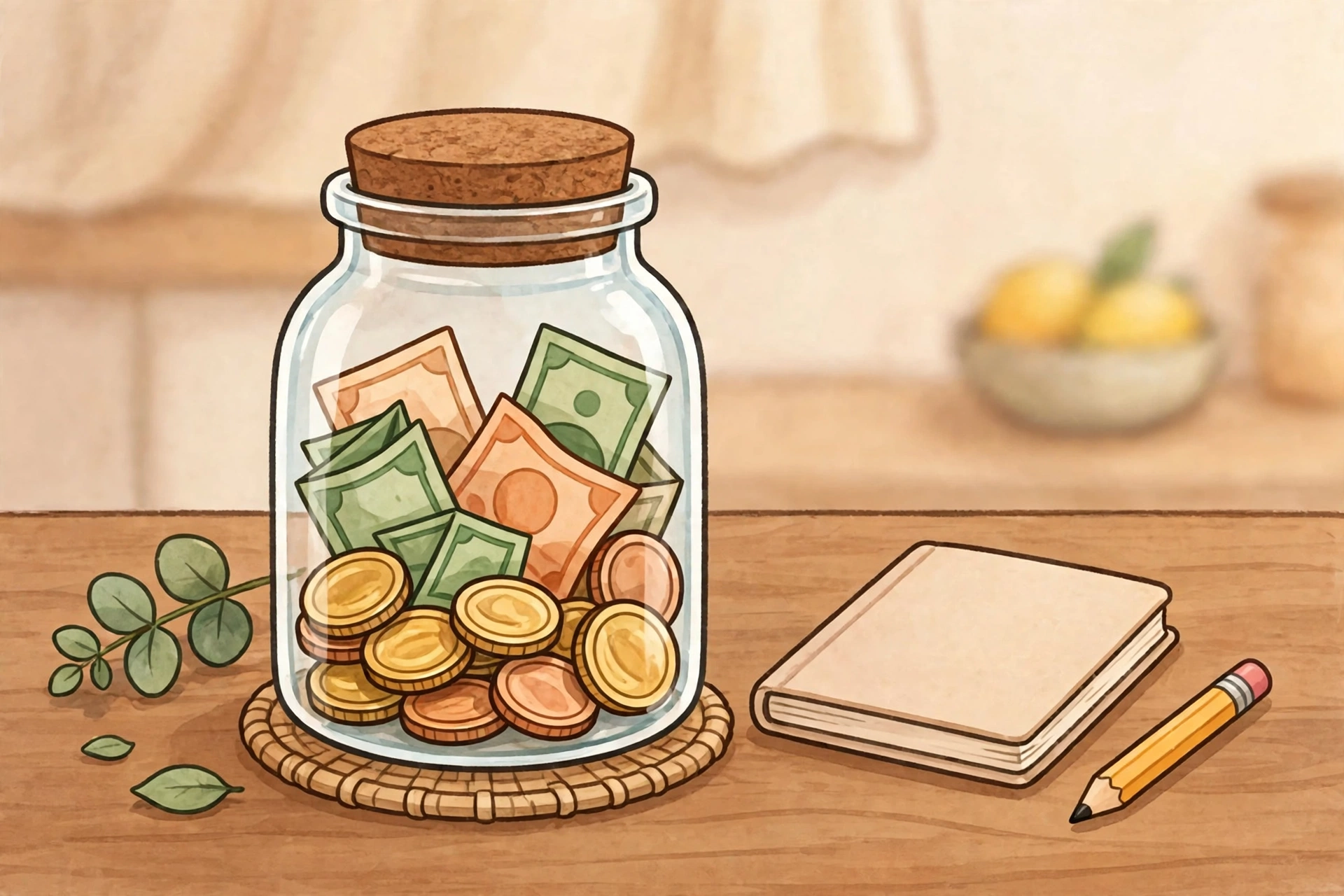
A cash jar at home can work for very small amounts, but it has risks. Cash can be lost, stolen, or spent too fast. If you use a jar, keep only a small sum there. Move larger sums to a bank when you can.
Do not put your emergency fund in risky investments. Do not put it in things that can lose value fast. Do not lock it away for years where you cannot reach it. The fund must be there when trouble comes. Safety and access come first. Growth comes later, and only a little, if at all.
Also, do not mix the fund with other savings. A holiday fund is not an emergency fund. A gift fund is not an emergency fund. Keep the emergency money apart, with its own name or label, so you know its job.
When Should You Use the Fund?
This is a key question. If you use the fund too often, it will never grow. If you never use it, you may suffer when a real problem comes. You need a clear rule.
Use the fund for true sudden costs. These are costs you did not plan, you cannot delay, and you must pay. A broken heater in winter. A tooth that needs urgent care. A car repair you need to get to work. A sudden medical bill. These fit the rule.
Do not use the fund for planned costs. A birthday gift, a sale, a holiday, or a new phone you want but do not need are not emergencies. If you know a cost is coming, like yearly car tax or school fees, plan for it apart from this fund. That keeps the emergency money safe for real shocks.
After you use the fund, do not feel shame. That is what it is for. Then, make a plan to refill it. Go back to your small weekly habit. Start again, even with a tiny sum. Refilling is part of the process. Most people use and refill their fund many times in life.
Write your rule down. Put it near your plan. When you are tempted to use the fund, read the rule. Ask: is this sudden, urgent, and needed? If the answer is yes to all three, use it. If not, wait.
Mistakes That Slow You Down
Many beginners make the same few mistakes. Knowing them can help you avoid them.
The first mistake is waiting to start. People wait for more money, more time, or a better month. Months pass. No fund grows. Start now, even with a tiny sum. A tiny start beats a perfect plan that never starts.
The second mistake is saving too much too fast. You save a big sum, then you run short on food or rent. Then you take the money back. This cycle is tiring. Save a small sum you can keep saving. Steady beats fast and short.
The third mistake is keeping the fund too close to spending money. If it sits in your daily account, it is easy to spend on small wants. Then, when trouble comes, it is gone. Keep it apart. Make it take one extra step to reach.
The fourth mistake is using the fund for wants. A sale is not an emergency. A new gadget is not an emergency. Each small dip makes the fund weaker. Keep the rule clear, and keep wants in a separate pot if you can.
The fifth mistake is giving up after a setback. You may miss a week. You may need to use the fund. You may face a hard month. That does not mean you failed. It means life happened. Just start again the next week. A fund is built over years, not in one perfect month.
Grow Your Fund Over Time
Once your starter goal is met, you can grow the fund slowly. You do not need a new trick. You need the same habit, kept for longer.
When your pay goes up a little, raise your savings a little too. Not all of the rise, just a small part. This way, your life gets a bit better, and your fund grows too. This is a fair split.
When a debt ends, or a bill drops, use part of that freed money for savings. You were already living without that money, so saving part of it feels less hard. This can speed up your fund without pain.
Set a new goal each time you reach one. First, reach your starter sum. Then aim for one month of basic costs. Then aim for two months. Celebrate each win in a small, free way. Tell a friend. Mark it in your notebook. Small wins keep your heart in the task.
Review your fund twice a year. Are your costs higher now? Has your family grown? Has rent gone up? If yes, your goal may need to rise a bit. Adjust it with calm, not fear. A fund is a living plan. It grows with your life.
A Simple Example
Meet Sara. Sara is not a real person. She is an example to make the idea clear. Sara earns a small pay each month. After rent, food, bills, and travel, she has a little left.
Sara picks a starter goal. She wants to save enough for one small repair. She decides to save a small sum on pay day, and a few coins each week. Some weeks she saves more. Some weeks she saves less. She keeps the money in a separate savings account.
In the first month, Sara saves a small sum. It does not feel like much. But she feels proud. She kept her promise to herself. In three months, she reaches her starter goal. She marks it in her notebook with a star.
Later, Sara’s phone breaks. She uses part of her fund to fix it. She does not need to borrow. She feels relief, not panic. Then she starts to refill the fund, bit by bit, just as before.
Sara’s story is simple. But it shows the main point. Small steps, done again and again, can build a real safety net. You can be like Sara. Your numbers will be different. Your life will be different. But the steps are the same.
Stay Motivated When It Feels Slow
Saving on a small income can feel slow. Some months, the fund grows by only a tiny sum. That can feel dull. It can make you want to quit. Here are a few ways to stay on track.
Track your progress where you can see it. A chart on paper, a row of stars, or a note on your phone can help. When you see how far you have come, you feel less stuck.
Keep your goal in sight. Write it on the first page of your notebook. When you feel low, read it again. Remind yourself why you started. Was it to avoid debt? To feel safe? To protect your family? That reason is your fuel.
Find a buddy if you can. A friend who is also saving can cheer you on. You do not need to share numbers. Just share the habit. A short chat once a week can keep you both going.
Be patient with yourself. A fund is not built in a month. It is built in many small months. Each coin counts. Each week counts. You are not behind. You are on your way, as long as you keep going.
Remember: the goal is not to be perfect. The goal is to be a bit safer than you were last month. That is a win worth keeping.
Frequently Asked Questions
How much money do I need to start?
You need only a very small sum to start. Start with what you will not miss much. It could be a few coins, or a small sum on pay day. The habit matters more than the size of the first step. You can raise the amount later, when you feel ready.
Can I build a fund if I live pay cheque to pay cheque?
Yes, but it will be slow, and that is fine. Look for tiny swaps in daily spending. Move the saved coins to your fund at once. Save on pay day, before other spending. Even a tiny weekly sum adds up over a year. Do not cut food, medicine, or safe travel to save.
Where is the safest place to keep my emergency fund?
A separate simple savings account is a good choice for most people. It keeps the money apart from daily spending, but still within reach in a real emergency. Avoid risky investments and long lock-ins for this money. Safety and quick access matter most here.
What counts as a real emergency?
A real emergency is sudden, urgent, and needed. Think of urgent medical care, a vital car repair to get to work, or a broken heater in cold weather. A sale, a holiday, or a want is not an emergency. If you can plan for a cost in advance, save for it apart from this fund.
Should I pay off debt first, or save first?
This is a common worry. In general, a tiny starter fund first is wise, even if you have debt. It stops a small shock from forcing you into more debt. After that starter sum is saved, you can focus more on debt, while still saving a tiny sum. If your debt is very costly, get free, trusted advice in your area for your own case.
How long will it take to build a full fund?
It depends on your pay, your costs, and how much you can save. A starter fund may take a few months. One month of basic costs may take much longer. Three to six months may take years on a small income. That is normal. Focus on the next small goal, not the far final goal.
What if I need to use my fund?
Use it, without shame. That is its job. Then make a refill plan. Go back to your weekly habit, even with a tiny sum. Most people use and refill a fund more than once in life. Using it does not mean you failed. It means the plan worked when you needed it.
More from Zorium Daily
Find more simple money guides in the Money section.