How Does a Small Business Make Money? A Simple Guide
SUMMARY OF THIS ARTICLE
- A small business makes money when people pay more for what it sells than it costs to make or give it.
- The money left after all costs is called profit, and profit is what keeps a shop open.
- Good sales, fair prices, and low waste help a business earn more.
- A business must also pay rent, wages, tax, and bills, so not all sales money is profit.
- With a clear plan, kind service, and steady care, a small shop can grow bit by bit.
How Does a Small Business Make Money? A Simple Guide
Have you ever walked past a small shop and asked, “How does this shop make money?” It is a good question. Many people ask it. The answer is quite simple when we break it down into small parts.
A small shop, a cafe, a bakery, or a repair shop all work in the same basic way. They give people something they want. People pay for it. The shop uses some of that pay to cover its costs. What is left is its profit. That is the short answer. But there is much more to learn, and this guide will walk you through it step by step, in plain words.
What Is a Small Business?
A tiny shop is a business run by one person or a small team. It is not a huge firm with thousands of workers. It may be a food stall, a hair salon, a bookshop, a tailoring shop, or an online store run from home. Most small shops serve people in their own town or area. Some sell goods you can touch, like bread, clothes, or soap. Some sell help, like haircuts, cleaning, or fixing phones.
What makes it “small” is not just size. It is also how close it is to its buyers. The owner often knows the buyers by name. The owner may open the shop, clean it, serve buyers, and close it at night. That close touch can be a big plus. Buyers like to feel known and cared for. They come back when they feel welcome.
The Simple Rule of Making Money
Here is the most key rule in trade: money in must be more than money out. Money in is what buyers pay. Money out is what the shop spends. If money in is more, the shop makes a gain. If money out is more, the shop loses money. That is all there is to it at the core.
Let us use a simple case. Sara bakes cakes. She sells one cake for 20 dollars. The flour, sugar, eggs, and box cost her 8 dollars. She pays 2 dollars for power and gas. So her cost for one cake is 10 dollars. She sells it for 20 dollars. That leaves 10 dollars. That 10 dollars is not all profit yet, as we will see. She still has rent and other costs to pay. But this simple math shows the start of how money is made.
Each sale adds a little. Many small sales can add up to a good sum. That is why shops care about each buyer. One buyer may seem small, but hundreds of buyers over a month make a real sum. A shop that sells a little each day, each week, and each month can stay alive and grow.
Money In: Where Does It Come From?
Money in comes mostly from sales. Sales mean buyers pay for goods or help. A bakery sells bread. A salon sells haircuts. A repair shop sells fixes. Some shops also earn in other ways. They may rent out a room, teach a class, or sell gift cards. But for most small shops, sales are the main source.
There are two ways to get more money in. One way is to sell more items. The other way is to sell at a higher price. Both need care. If you sell more, you need more buyers or more repeat buyers. If you raise the price too high, buyers may go elsewhere. A good shop finds a fair middle point. The price must feel fair to buyers and still leave room for profit.
Buyers pay in cash, by card, or by bank transfer. The shop must track all of it. If it does not track, it will not know if it is truly making money. Good records are a must, even for a tiny shop. A notebook can work at first. Later, a simple app can help.
Money Out: What Does a Business Spend On?
Money out is often more than new owners think. Let us look at the main costs one by one, in plain words.
First, there is stock. Stock is the goods a shop buys to sell. A food shop buys flour and milk. A clothes shop buys shirts. A phone shop buys parts. Stock costs money up front, before any sale. If stock sits unsold, money is stuck on shelves.
Second, there is rent. Rent is the money paid to use a shop space. It is often the biggest fixed cost. Fixed means it stays the same each month, even if sales are low. A shop in a busy street may pay high rent but get more buyers. A shop in a quiet street may pay low rent but get fewer buyers. Owners must weigh this choice with care.
Third, there are wages. Wages are pay for workers. Even a shop with one helper must pay that helper fairly and on time. Good workers help a shop grow, but wages are a real cost each week or month.
Fourth, there are bills. Bills include power, water, gas, phone, and internet. A shop needs light, heat, and a phone to take orders. These bills may look small alone, but they add up.
Fifth, there is tax. Tax is money paid to the state from what a shop earns. Rules change by place, so owners must learn the rules where they live. It is wise to set some money aside for tax from the start, so there is no shock later.
Sixth, there are other costs. These include pack, ads, repairs, and fees for card pay. A card fee may be small per sale, but many sales mean many fees. Repairs can come at bad times. A broken oven or fridge can stop sales for days. Smart owners keep a small fund for such shocks.
Profit: The Money Left After Costs
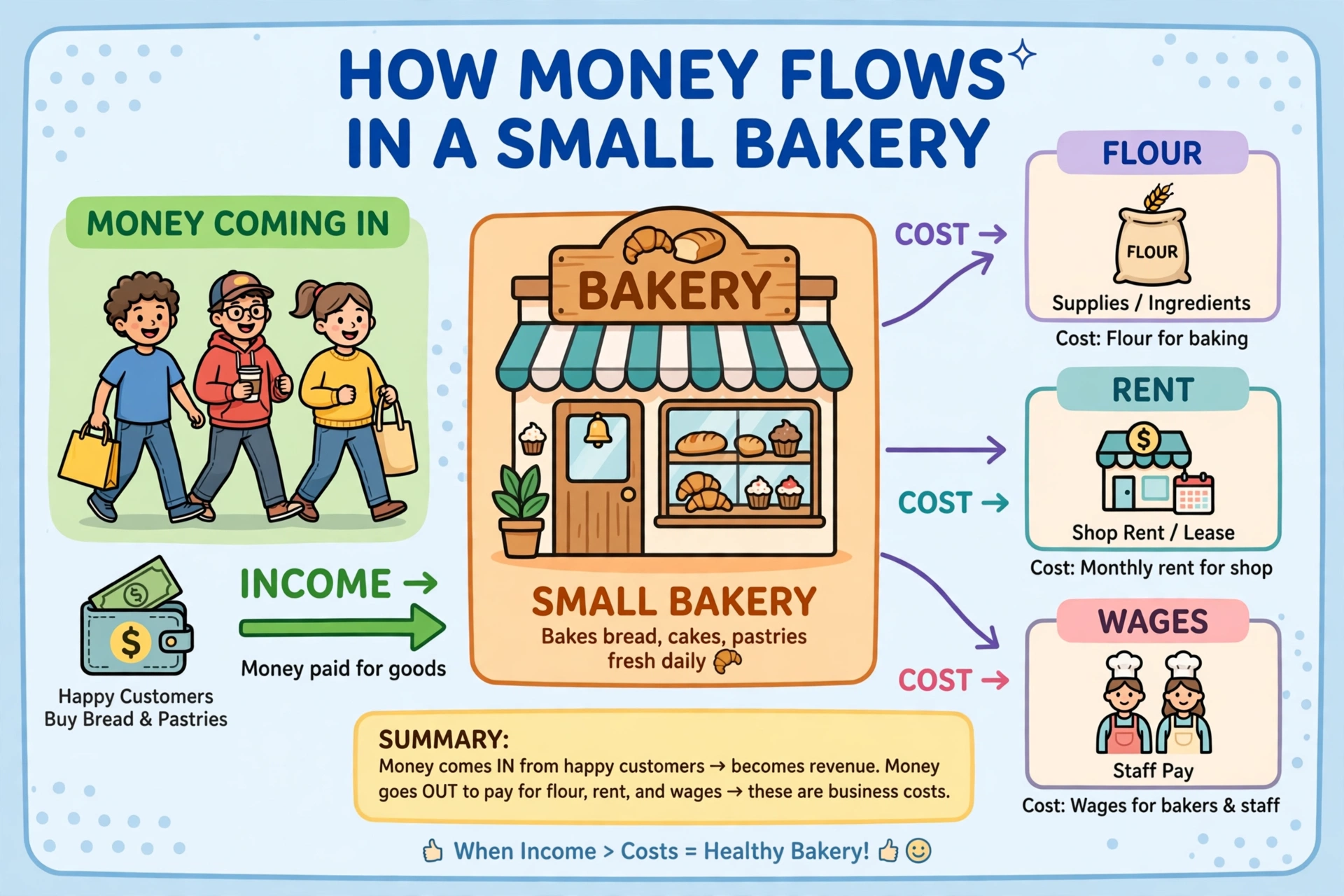
Now we can talk about profit in a clear way. Profit is the money left after a shop pays all its costs for a set time. Take a month as a case. If a shop takes in 10,000 dollars in a month, and spends 8,000 dollars on stock, rent, wages, bills, and tax, then its profit is 2,000 dollars. That 2,000 dollars is what the shop truly made that month.
Profit is not the same as sales. Sales are all the money buyers pay. Profit is what stays after costs. New owners sometimes mix these up. They see big sales and feel rich. But if costs are also big, little may be left. That is why tracking costs is just as key as tracking sales.
There are two kinds of profit that help to know. Gross profit is sales minus the direct cost of goods. In Sara’s cake case, gross profit per cake was 10 dollars. Net profit is what is left after ALL costs, like rent and wages. Net profit is the true test. A shop can have good gross profit but low net profit if rent is too high. Owners should watch both, but net profit tells the real story.
How to Set a Fair Price
Price is one of the hardest choices for a new owner. Set it too low, and there is no profit. Set it too high, and buyers walk away. How do you find the right price? Start with costs. Add up all costs for one item. Then add a fair gain on top. That gives a base price. Then look at what like shops charge. If your price is far above theirs, you must show why yours is worth more. Maybe your goods are fresher, your service is kinder, or your work lasts longer.
Buyers do not just pay for a thing. They pay for trust, ease, and care. A buyer may pay a little more at a shop where staff smile, help, and fix faults fast. A buyer may pay less at a shop that feels cold or messy. Price is not just a number. It is part of how buyers feel about a shop.
Small changes in price can make a big change in profit. If Sara sells 100 cakes a month, and raises the price by 1 dollar with no loss of buyers, she earns 100 dollars more. But if the rise loses 20 buyers, she may earn less. That is why owners test prices with care. They watch sales after each change. They listen to buyers. They adjust bit by bit, not all at once.
Why Customers Come Back

Repeat buyers are gold for a small shop. It costs less to keep an old buyer than to find a new one. An old buyer already trusts you. A new buyer needs ads, time, and proof. So smart shops work hard to make buyers come back.
How? First, be kind and fair. Greet buyers. Learn their names. Ask how they are. Small acts of care build trust fast. Second, be steady. If bread tastes good on Monday, it should taste good on Friday too. Buyers hate shocks. Third, fix faults fast. If a buyer is unhappy, listen, say sorry, and fix it. A buyer who is helped well after a fault may come back more loyal than before.
Word of mouth is still the best ad for a small shop. Word of mouth means buyers tell friends about you. One happy buyer may tell five friends. Those friends may each tell more. That chain can grow a shop for free. But it works both ways. One unhappy buyer may also tell friends. So care in each sale matters a lot.
Keeping Costs Low Without Cutting Quality
A shop can earn more not just by selling more, but by wasting less. Waste is money thrown away. Food shops waste food that goes bad. Clothes shops waste stock that no one buys. All shops waste time on tasks that could be simpler.
Owners can also save on power and water. Turn off lights when not in use. Fix leaks fast. Use tools that last. They can compare prices from sellers before they buy stock. A small saving on each item adds up over a year. But they must not cut quality to save a few cents. Cheap stock that breaks or tastes bad will drive buyers away. The saving will cost far more in lost buyers.
Time is also a cost. If the owner spends hours on tasks that a simple tool could do, that is lost time. For example, a shop that takes photos for its online page should keep those photos safe. When you upload photos to the cloud, they are stored online so you can find them again. That saves time when you need them for a new ad or a new post. A phone used all day for orders can also fill up fast, so it helps to keep key photos safe and clear old files with care, without losing what you need. Small habits like this save time and stress.
Cash Flow: Why a Shop Can Sell Well and Still Struggle
Cash flow is a simple idea with a big effect. It means the flow of cash in and out over time. A shop can sell a lot but still run out of cash. How? If buyers pay late, but bills must be paid now. Or if the shop buys a lot of stock now, but sells it slowly over months. Cash in the bank at the right time matters as much as total sales.
Think of a shop that sells goods on credit. Credit means buyers pay later. The shop has sold goods, but has no cash yet. Meanwhile, rent is due. Wages are due. The shop may look rich on paper but have no cash to pay bills. That is a cash flow problem. Smart shops ask for pay on time, or at least part pay up front for big orders.
To keep cash flow healthy, owners track what is due and when. They keep a simple list: who owes them, how much, and by when. They also track what they owe, and by when. They keep a small cash buffer, a pot of money for slow weeks. That buffer can save a shop when sales dip for a short time.
Season ups and downs also affect cash flow. A beach shop may sell a lot in summer and little in winter. An owner must save summer profit to cover winter costs. A shop that spends all summer profit at once will struggle in winter. Planning for seasons is part of good cash care.
Growth: How a Small Shop Grows Bit by Bit
Growth does not mean getting huge fast. For a small shop, growth means steady, safe steps. First, the shop earns trust. Then it earns more buyers. Then it may add one new item, or open one extra hour, or hire one helper. Each step is tested. If it works, the shop keeps it. If it fails, the shop learns and steps back.
Risks and Common Mistakes
Every venture has risks. Risk means things that can go wrong. A new shop may get fewer buyers than hoped. Costs may rise. A key tool may break. A big seller nearby may open and take buyers. Owners cannot remove all risk, but they can lower it with care.
One common fault is to start too big. A new owner may rent a big space, buy too much stock, and hire too many staff before the first sale. That burns cash fast. It is safer to start small, test the idea, and grow only when sales prove the idea works. Small starts allow small faults. Big starts turn small faults into big losses.
Another fault is to mix shop money with home money. If the owner uses shop cash for home bills without tracking, no one knows if the shop is truly making money. A smart owner keeps shop money in its own pot. The owner takes a set pay from the shop, like a wage. The rest stays for shop costs and growth. Clear pots mean clear facts.
A third fault is to ignore records. Some owners hate paper work. They do not write down sales or costs. At month end, they guess. Guessing leads to bad choices. Records do not need to be fancy. A notebook with date, item, sale, and cost is enough to start. Later, a simple sheet or app can help. But some record is a must from day one.
A fourth fault is to copy others blindly. Just because a shop nearby sells well does not mean the same idea will work for you. Your street, your buyers, and your skills may differ. Learn from others, but fit the idea to your own place and buyers. Your own care and service are what make you stand out.
A Simple Plan to Start
If you want to start a small shop, use this simple plan. Step one: pick a clear idea. What will you sell? Who will buy it? Why will they buy from you and not from others? Write the answers in short lines. If you cannot answer in short lines, the idea needs more thought.
Step two: test small. Sell to a few people first. Ask what they like and what they do not like. Watch if they come back. A small test costs little and teaches a lot. Do not rent a big space before you test.
Step three: work out costs. List all costs for one month. Include stock, rent, wages, bills, and a bit for tax. Then work out how many sales you need to cover those costs. That number is your break-even point. Break-even means sales equal costs, with no profit and no loss. You must pass that point to make money.
Step four: set a fair price. Use your costs, add a fair gain, and check like shops. Step five: open, serve well, and track all sales and costs each day. Step six: review each month. What sold well? What sold badly? What cost too much? What can you change next month? Small monthly reviews lead to big gains over a year.
Tools That Help, in Plain Words
A small shop does not need fancy tools. But a few simple tools help a lot. A cash box or a card reader helps take pay. A notebook or a simple app helps track sales. A phone helps take orders and talk to buyers. A clean sign helps buyers find you. An online page helps new buyers learn about you.
When you use a phone for your shop all day, it can get hot and slow. It helps to learn why a phone gets hot while charging, so you can charge it in a safe way and keep it working for orders. Small tech care like this keeps your shop running without big costs.
Be careful with tools that cost a lot each month. Each tool should save time or bring sales worth more than its cost. If a tool costs more than it saves, drop it. If a tool saves hours each week, it may be worth it. Test tools one at a time. Do not buy five new tools in one week.
Old files and old notes can also pile up. When you no longer need a file, it helps to know what happens when you delete it, so you do not lose a key receipt or tax note by mistake. Keep key papers safe. Delete only what you truly no longer need, and keep a backup of key records.
How Long Does It Take to Make Money?
Many new owners ask, “When will I make money?” The honest answer is: it takes time. Some shops make a small profit in a few months. Some take a year or more. It depends on costs, buyers, and the idea. A shop with low costs may profit fast. A shop with high rent may take longer.
Do not trust claims that promise fast riches. Real shops grow bit by bit. The first months are for learning. You learn what buyers want. You learn true costs. You learn what price works. Those lessons are worth a lot, even if profit is small at first.
A good sign is steady growth. More repeat buyers each month. Costs under control. Cash flow that does not dip too low. If those signs are there, profit will follow. If sales are flat for many months and costs keep rising, it is time to change something. Change price, change items, change hours, or change how you reach buyers. Do not just wait and hope.
Frequently Asked Questions
1. How does a small business make money in simple words?
A small shop makes money when buyers pay more than it costs to give them goods or help. The shop pays for stock, rent, wages, bills, and tax. What is left is profit. That profit is the shop’s true gain.
2. Is sales money the same as profit?
No. Sales money is all the money buyers pay. Profit is what is left after all costs are paid. A shop can have big sales and small profit if its costs are high. Always look at profit, not just sales.
3. How much money do I need to start a small business?
It depends on the idea. A home-based shop may need very little. A shop with rent and staff needs more. Start small if you can. Test the idea first. List all costs for three months, and keep a safety pot for slow times.
4. What is the biggest cost for most small shops?
For many shops, rent or stock is the biggest cost. Rent is fixed each month. Stock costs money up front. Wages can also be big if you hire staff. Owners should watch these three costs with extra care each month.
5. How can a small shop get more customers?
Serve well, be steady, and be kind. Happy buyers tell friends. Keep prices clear and fair. Make buying easy. Use a simple online page or a local sign so new buyers can find you. Do not spend a lot on ads before you know what buyers truly want.
6. Why do some small businesses fail even when they sell a lot?
They may fail due to high costs, late pay from buyers, or poor cash flow. If buyers pay late but bills are due now, the shop can run out of cash. If costs eat all sales money, there is no profit left. Good records and cost control help stop this.
7. Do I need to be good at maths to run a small business?
No. You need only simple maths: add sales, add costs, and take costs away from sales. A notebook or a simple app can help. What matters more is care, steady work, and a will to learn from each month.
More from Zorium Daily
Want to learn more about business? Visit the Business section on Zorium Daily for more simple guides on money, shops, and work.