Why Do People Keep Plants at Home? Explained Simply
SUMMARY OF THIS ARTICLE
- People keep plants at home because they make a room look nicer, feel calmer, and feel more alive.
- Plants clean the air a little, add moisture, and give us a daily link to nature.
- Looking after a plant gives a small sense of purpose and a quiet daily routine.
- Plants mark the seasons, teach patience, and give us something to care for.
- Anyone can start with one easy plant, a sunny spot, and a simple watering habit.
Look Around Your Living Room
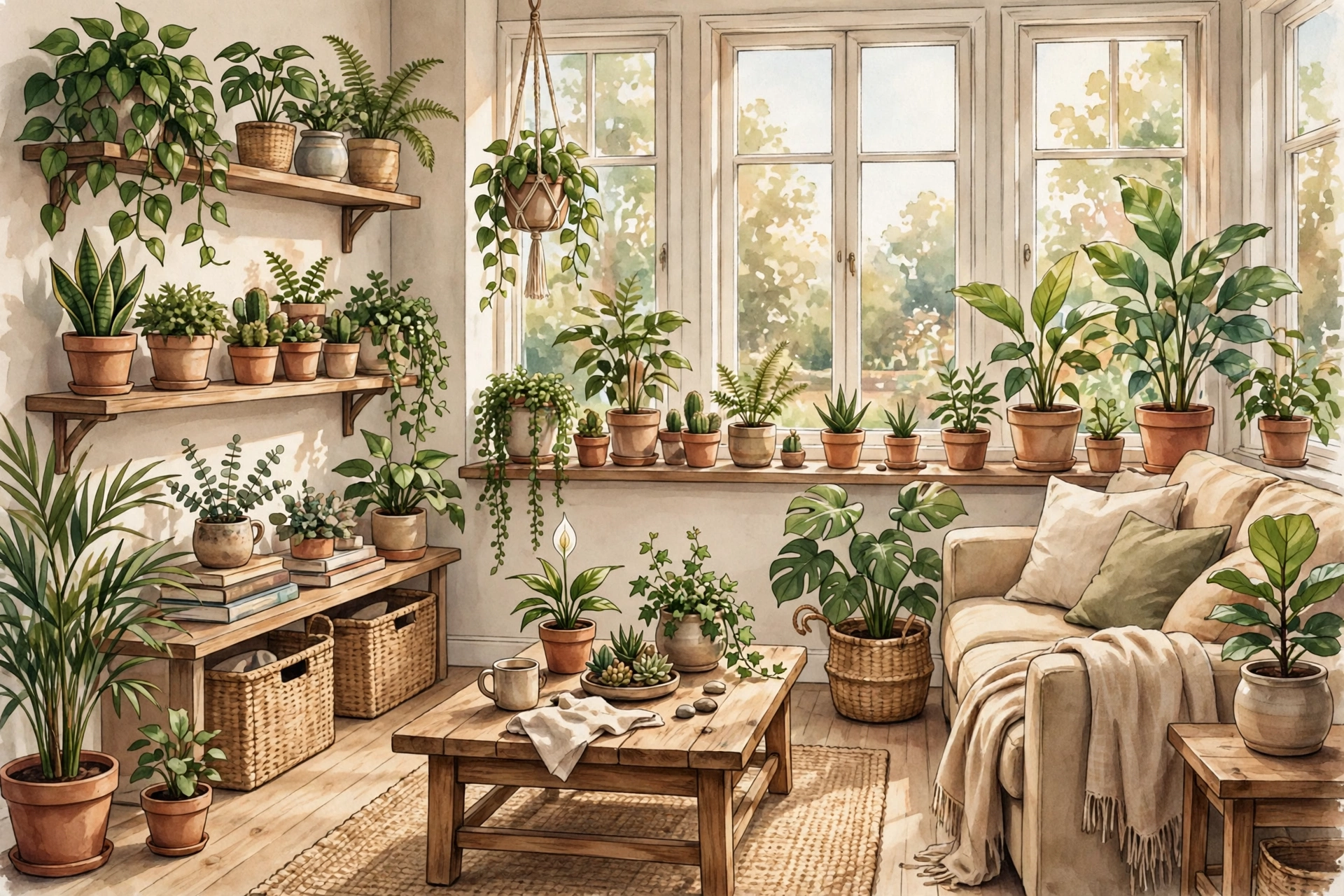
You have probably noticed this. You walk into someone’s home, and there is a plant on the windowsill. Another one on a shelf. A big leafy one in the corner that looks like it owns the room. And the whole place feels different. Warmer. Calmer. More alive.
Or maybe it is your own home. A little cactus on your desk. A trailing plant hanging by the window. A herb pot in the kitchen that you snip when you cook. You did not plan to become a plant person. It just happened, one small green thing at a time.
So why do we do it? Why do millions of people fill their homes with plants, water them, talk to them, and worry about them when they droop? The answer is a mix of simple things: beauty, calm, fresh air, and the quiet joy of looking after something alive. Let us walk through it, one leaf at a time.
Plants Make a Room Feel Alive
First, the obvious one: plants are beautiful. A bare room can feel cold and empty, like a waiting room. Add a plant, and the room changes. The green softens the corners. The leaves catch the light. The room feels lived in, not just furnished.
It is not only about looks. Our brains are wired to like nature. Scientists call this biophilia, a fancy word for the human love of living things. Biophilia means we feel better around plants, trees, and water, because for most of human history we lived outdoors, surrounded by green. A home full of plants is a small echo of that old world. It feels right, in a way that is hard to put into words.
Colour plays a part too. Most homes are full of whites, greys, and browns. Green is a restful colour for the eyes. It is the colour of leaves, grass, and forests. A splash of green in a room can make the whole space feel fresher, the way opening a window lets in a breeze.
And plants fill empty spaces kindly. A bare corner, a lonely shelf, a windowsill with nothing on it — a plant fits there without fuss. It does not need to match the sofa. It does not clash with the curtains. It just grows, quietly, and makes the room feel like a home.
A Little Cleaner Air, a Little More Moisture
Here is the science bit, in plain words. Plants breathe, in their own way. They take in carbon dioxide, a gas we breathe out, and they give out oxygen, the gas we breathe in. That is photosynthesis, the process by which plants use sunlight to make food for themselves. It is one of the most important processes on Earth, and it happens right there on your windowsill.
Does one small plant clean all the air in your home? No. That is a myth, and it is worth being honest about it. A famous study from the 1980s suggested houseplants could clean indoor air, but it was done in tiny sealed rooms, not in real homes with doors and windows opening all day. In a normal home, a few plants help a little, but they do not replace fresh air or an open window.
What plants do add is moisture. Through a process called transpiration, plants release water vapour, tiny bits of water, into the air from their leaves. That can help in a dry home, especially in winter when heating dries the air out. Your skin and your nose may feel a little better with plants around. It is a small effect, but it is real.
Plants also catch a little dust on their leaves. Not much, but some. Wipe a big leaf and you will see the dust come off. It is a gentle reminder that the plant is working quietly, doing its small job while you get on with your day.
Calm in a Pot
Now for the part people talk about most: plants make us feel calmer. And this is not just a feeling. There is real science behind it.
Studies have found that people feel more relaxed and less stressed when there are plants around. Hospital patients with a plant in their room have reported feeling better and needing less pain medicine. Office workers with plants say they feel happier and more focused. Students with plants in their classroom feel calmer before tests.
Why? Part of it is the link to nature we talked about. Part of it is the act of looking after something. Watering a plant, wiping its leaves, watching a new leaf uncurl — these are slow, gentle actions. They pull you out of your busy head and into the present moment. It is a little bit like a tiny meditation, a quiet moment of calm, built into your day.
There is also the simple fact that a plant asks nothing of you except a little water and light. It does not send emails. It does not make noise. It does not judge. In a world that is always buzzing, a plant is a small patch of peace. You can sit beside it with a cup of tea, look at its leaves, and feel your shoulders drop a little. That is worth more than any air-cleaning claim.
A Small Daily Purpose
Here is something people do not say often enough: looking after a plant gives you a purpose, even a tiny one. And tiny purposes matter.
If you live alone, a plant is a small living thing that depends on you. It needs water on Saturday. It needs a turn towards the sun. It needs you to notice when its leaves droop. That is a gentle responsibility, and it gives your day a small shape. It is not a big job. It is just enough to make you feel needed.
For children, a plant is a wonderful first lesson in caring for something. A child who waters a plant every morning learns that living things need regular care, not just attention when you feel like it. If they forget, the plant droops. If they remember, it grows. It is a kind, honest teacher.
For older people, plants are company. Many people who live alone say their plants keep them company in a small way. They talk to them, tend them, and watch them grow through the seasons. It sounds silly until you try it. Then it makes perfect sense.
And for anyone who works from home, a plant on the desk is a small friend in a long day. It is there when you take a break, it is there when you stretch, and it reminds you that there is a world beyond the screen. A little green, a little life, right where you work.
Plants Teach Patience
Plants are slow. That is part of their charm, and part of their lesson.
A new leaf does not appear in an hour. It uncurls over days, a little at a time. A plant you buy today will look almost the same tomorrow, and the day after, and the day after that. Then one morning you notice a new shoot, a fresh green tip, and it feels like a small victory.
That slowness teaches patience. In a world where everything is instant — instant messages, instant food, instant films — a plant reminds you that good things take time. You cannot rush a plant. You can only give it what it needs and wait. And waiting, as any gardener will tell you, is a skill worth learning.
Plants also teach you to pay attention. A drooping leaf says the plant is thirsty. Yellow leaves say it may have too much water, or not enough light. Brown tips say the air is too dry. The plant is talking to you, in its own quiet way, and learning to read it is a small joy. You become a detective of leaves, and you get better at it with every plant you keep.
Seasons show up in your plants, too. In spring, they grow fast. In summer, they drink more. In autumn, they slow down. In winter, they rest. Watching that cycle, year after year, connects you to the seasons in a way that a calendar never can. Your home has its own small spring, right there on the shelf.
Plants You Can Eat
Not all houseplants are just for looking at. Some of them you can eat, and they make cooking a lot more fun.
Herbs are the easiest place to start. Basil, mint, parsley, and coriander grow happily on a sunny kitchen windowsill. Snip a few leaves, and your pasta, soup, or salad tastes fresher at once. There is something deeply satisfying about cooking with a herb you grew yourself, even if it is just a small pot on the sill. It turns an ordinary dinner into a small victory.
Chillies, tomatoes, and strawberries can grow indoors too, if they get enough light. A small tomato plant on a balcony can give you a handful of sweet tomatoes in summer. A chilli plant can keep giving for months. It is not going to feed a family, but it is a lovely taste of growing your own food, and it teaches children where food really comes from — not a shelf, but a plant, a seed, and a bit of patience.
And there is the smell. Fresh mint smells wonderful when you brush past it. Basil fills a kitchen with a warm, sweet scent. Rosemary smells like a forest after rain. A kitchen with herbs is a kitchen that smells alive. It is a small thing, but it changes how cooking feels.
Plants as Gifts and Memories
Plants make wonderful gifts, and they carry meaning in a way that a box of chocolates cannot. A plant says, “I hope this grows with you.” People give plants for new homes, for new babies, for birthdays, for saying sorry, and for saying thank you. A plant is a gift that keeps living, and every time the person waters it, they think of who gave it to them.
Plants also hold memories. That big monstera in the corner might have been a tiny cutting from a friend’s plant, years ago. The orchid on the shelf might be the one your grandmother kept alive for a decade. The little cactus might be the one you bought on your first holiday together. Plants grow alongside our lives, and they become part of the story of a home.
Some people keep a plant to remember someone they have lost. Tending it becomes a quiet way of remembering, a living link to a person who is gone. It is a gentle, green kind of memory, and it can bring comfort on hard days.
Even the act of sharing plants builds friendship. Plant lovers swap cuttings, little pieces of a plant that can grow into a new plant, with each other. A cutting from your plant, given to a friend, becomes a new plant in their home. It is a small, generous act, and it spreads green from home to home, like a slow, leafy chain of kindness.
The Not-So-Perfect Side
It would not be honest to pretend plants are perfect. They have their tricky sides, and it is better to know them before you fill your home with green.
First, allergies. Some people are allergic to pollen, the fine powder plants make, or to mould that can grow in damp soil. Pollen can make eyes itch and noses run, and it can set off sneezing. If you want to understand what is happening inside your nose when that happens, our simple guide to why we sneeze explains it in plain words. Flowering plants are more likely to cause trouble than leafy ones. If you sneeze a lot at home, try leafy plants with no flowers, keep the soil from staying too wet, and wipe the leaves often.
Second, pets and children. Some houseplants are poisonous if eaten, and cats and dogs love to chew leaves. Lilies, for example, are very dangerous for cats, even a small bite. Before you buy a plant, check whether it is safe for your pets and small children. There are plenty of safe plants — spider plants, for example, are safe for cats and dogs — so you do not have to choose between a pet and a plant. You just have to choose wisely.
Third, plants can attract tiny flies. Those little black flies around a plant pot are usually fungus gnats, tiny insects that love damp soil. They are annoying, but they are not dangerous. Letting the soil dry out a little between waterings usually sends them away. It is a reminder that overwatering causes more problems than underwatering, for the plant and for you.
None of this means you should not keep plants. It just means you should pick the right ones for your home, your pets, and your health. A little care at the start saves a lot of trouble later.
How to Start, Even If You Kill Every Plant
If you have ever killed a plant, you are not alone. Almost everyone has. The plant drooped, you watered it more, it drooped more, and one day it was a sad brown stick. It happens. It does not mean you have no green thumb. It usually means you picked a fussy plant, or you loved it a little too much with water.
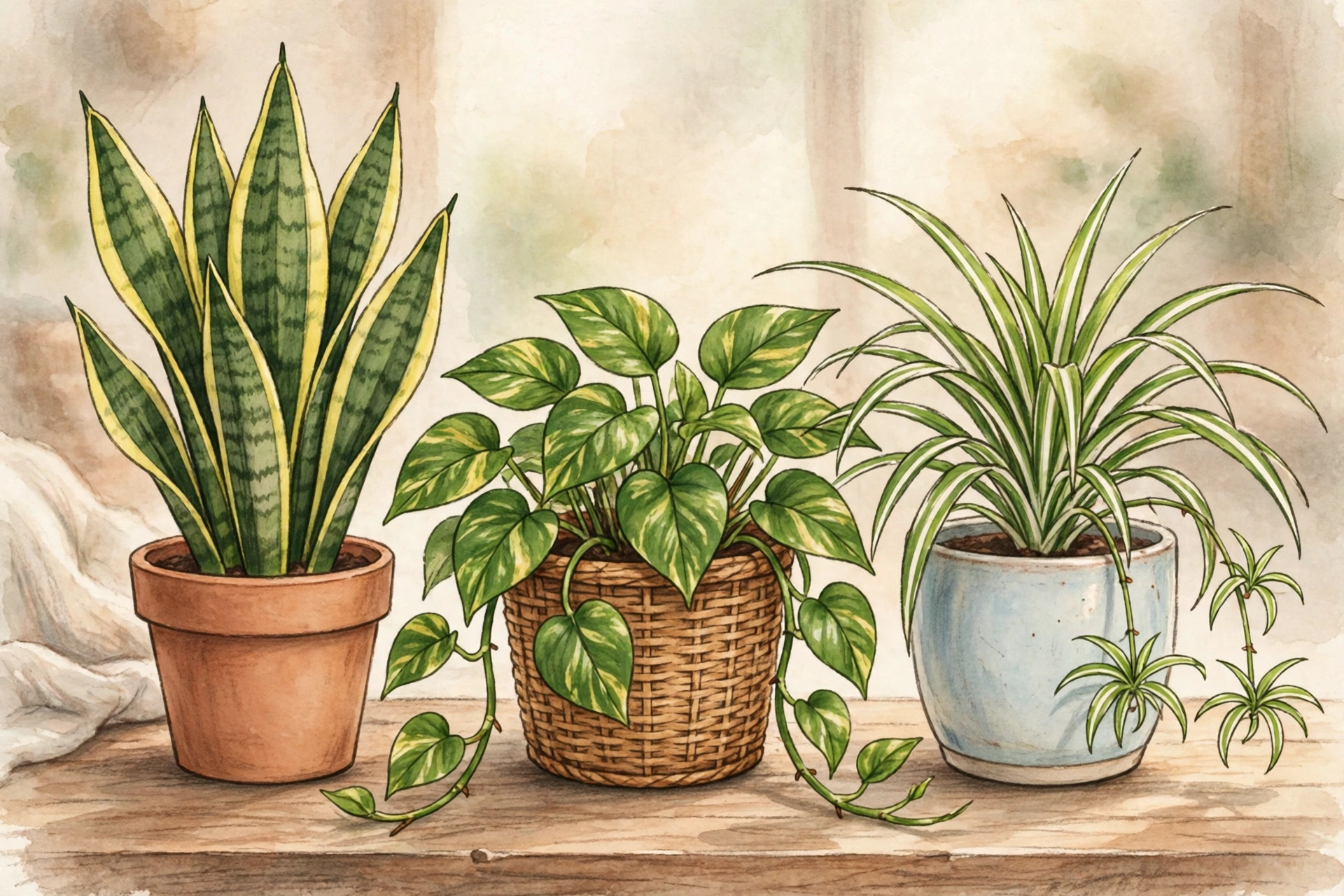
Here is how to start again, simply. Pick one easy plant. A snake plant, also called mother-in-law’s tongue, is almost impossible to kill. It likes light, but it survives in shade. It likes water, but it forgives you if you forget for weeks. A pothos, a trailing plant with heart-shaped leaves, is just as forgiving. A spider plant, with its striped leaves and little baby plants hanging down, is another kind friend.
Give it light. Most houseplants like bright light without direct sun beating on them all day. A spot near a window, but not pressed against the glass in summer, is usually right. If the plant leans towards the window, turn it around once a week so it grows evenly.
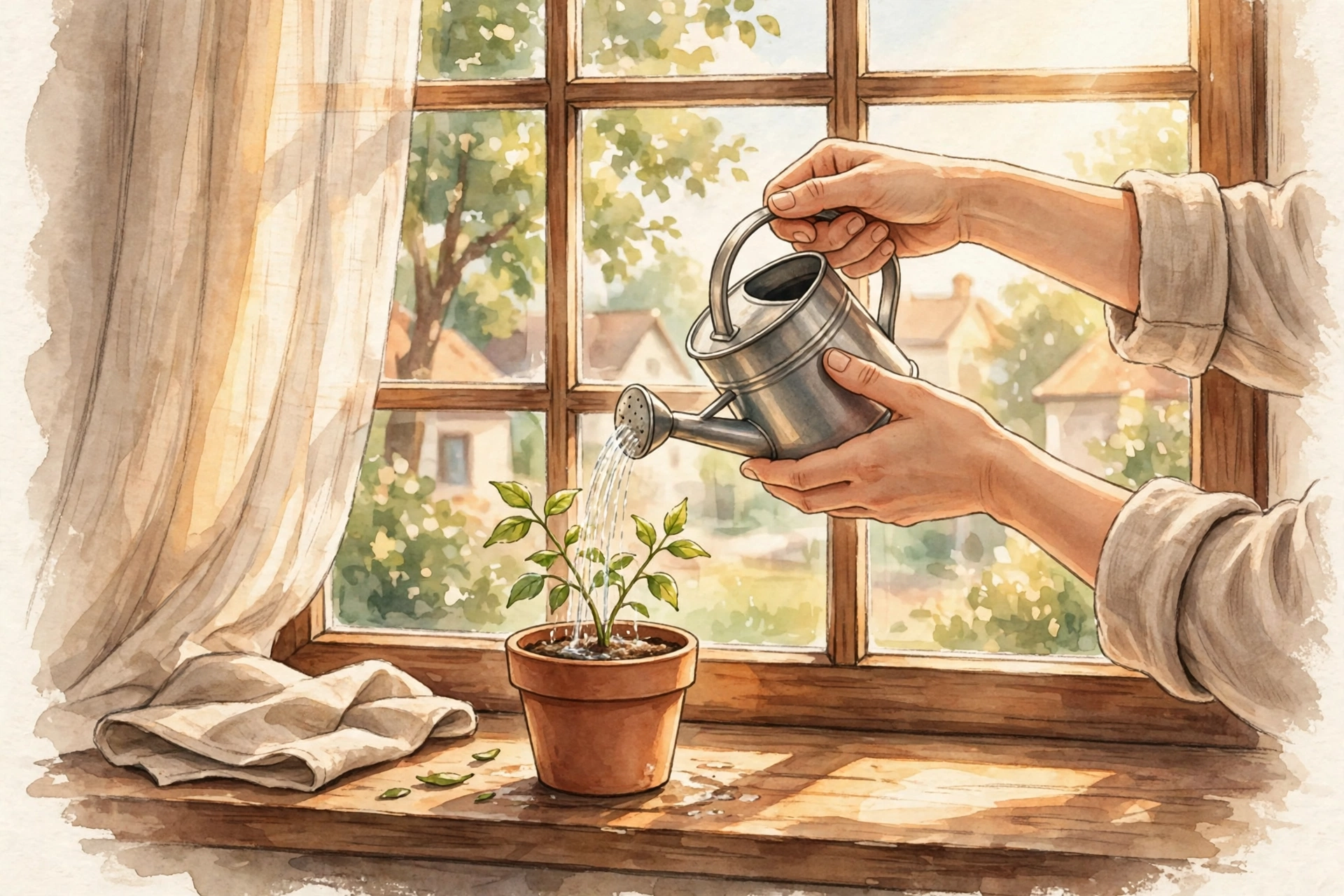
Water it less than you think. Stick your finger into the soil up to your first knuckle. If it feels dry, water it. If it feels damp, wait. Most houseplants die from too much water, not too little. Their roots need air as well as water, and soggy soil drowns them. A little water, less often, is the golden rule.
Feed it a little in spring and summer. Plant food, a liquid you mix with water, gives the plant the nutrients it needs to grow. Nutrients are the tiny bits of food in the soil that plants use to grow strong. A little once a month in the growing season is enough. In winter, most plants rest, and they need less water and no food at all.
And be patient. Your first plant may not look perfect. Its leaves may have a brown tip. It may grow slowly. That is fine. You are learning, and the plant is learning your home. Start with one, get to know it, and when it is happy, add a second. Before you know it, you will be the person with plants on every windowsill, and you will wonder why you ever thought you could not keep one alive.
Frequently Asked Questions
Why do people keep plants at home?
For many reasons at once: they make a room look nicer, they help us feel calmer, they give us a link to nature, and they give us something small and alive to look after. Plants also add a little moisture to the air, mark the seasons, and make a home feel lived in. For most people, it is the feeling that matters most — a home with plants simply feels better.
Do houseplants really clean the air?
A little, but not as much as people often claim. Plants do take in carbon dioxide and give out oxygen, and they can catch a little dust. But in a normal home with doors and windows, a few plants cannot clean all the air on their own. Fresh air from an open window does far more. Think of plants as a small help for the air, and a big help for your mood.
What is the easiest houseplant for a beginner?
A snake plant is one of the easiest. It survives low light, forgetful watering, and most beginner mistakes. A pothos and a spider plant are also very forgiving. Start with one of these, learn how it likes to be watered, and build your confidence before trying fussier plants like orchids or ferns.
How often should I water my houseplants?
It depends on the plant, the pot, and the season, but a good rule is to check the soil first. Push your finger into the soil up to your first knuckle. If it feels dry, water it. If it feels damp, wait a few more days. Most plants like to dry out a little between waterings. In winter, they need even less water, because they grow more slowly.
Are houseplants safe for cats and dogs?
Some are safe, and some are not. Spider plants, for example, are safe for cats and dogs. Lilies, on the other hand, are very dangerous for cats. Always check before you buy a plant if you have pets or small children. Keep any plant you are unsure about out of reach, and ask at the garden centre if you are not certain.
Why do my plants keep dying?
The most common reason is too much water. Soggy soil drowns the roots, and the plant droops and rots. The second most common reason is too little light, or a spot that is too hot or too cold. Try an easy plant, water it only when the soil feels dry, and give it bright light without harsh direct sun. Most plant deaths are not your fault — they are a sign the plant and the spot did not suit each other. Try again with a tougher plant.
A Little Green Goes a Long Way
You do not need a jungle. You do not need fifty plants, or a greenhouse, or a gardening degree. One plant, on one windowsill, is enough to start. Water it. Watch it. Let it teach you to slow down a little.
People keep plants at home for a hundred small reasons, but they all come down to one simple thing: we like having living things near us. It makes a house feel like a home, a room feel calm, and a day feel a little greener. And in a busy, noisy world, that small green calm is worth keeping.
So if you have been thinking about getting a plant, this is your sign. Pick an easy one. Put it where you will see it every morning. Water it when the soil is dry. And watch what happens — not just to the plant, but to how your home feels. You might be surprised how much a little green can do.