Why Do We Get Goosebumps?
SUMMARY OF THIS ARTICLE
- Goosebumps happen when tiny muscles under your skin pull your hairs up.
- Cold air is the most common cause, but strong feelings can cause them too.
- Your brain sends the signal, and you cannot control it on purpose.
- Animals use the same trick to look bigger or to stay warm.
- For most people, goosebumps are normal and harmless, and they go away fast.
What Are Goosebumps?
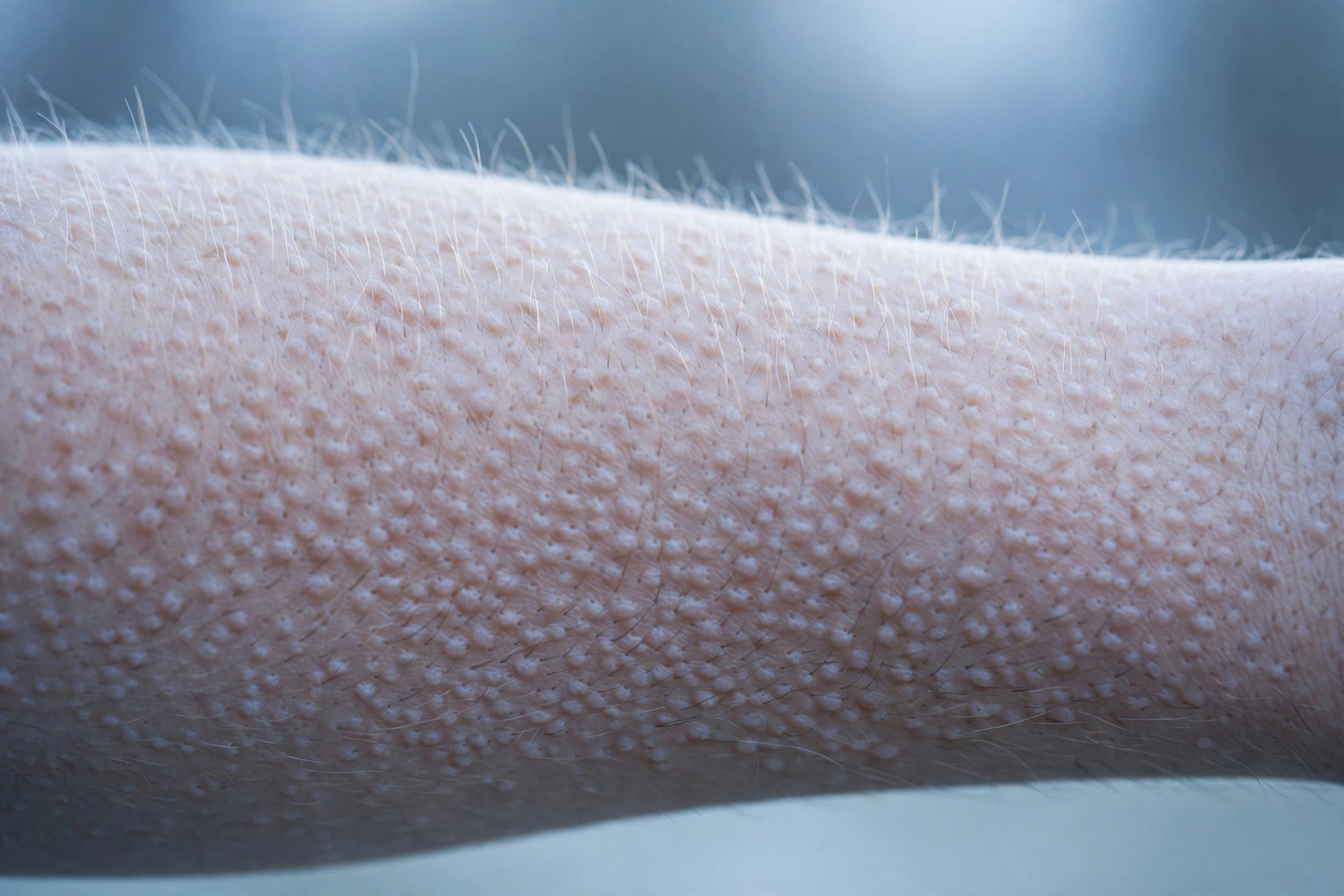
Have you ever stepped out into cold air and felt your skin change? Small bumps rise up on your arms. Your hairs stand up. Your skin looks a little like the skin of a goose after its feathers are gone. That is why we call them goosebumps.
Goosebumps can show up on your arms, your legs, your neck, and your back. They can show up fast. One minute your skin is smooth. The next minute it is bumpy. Then, after a short time, the bumps go away again.
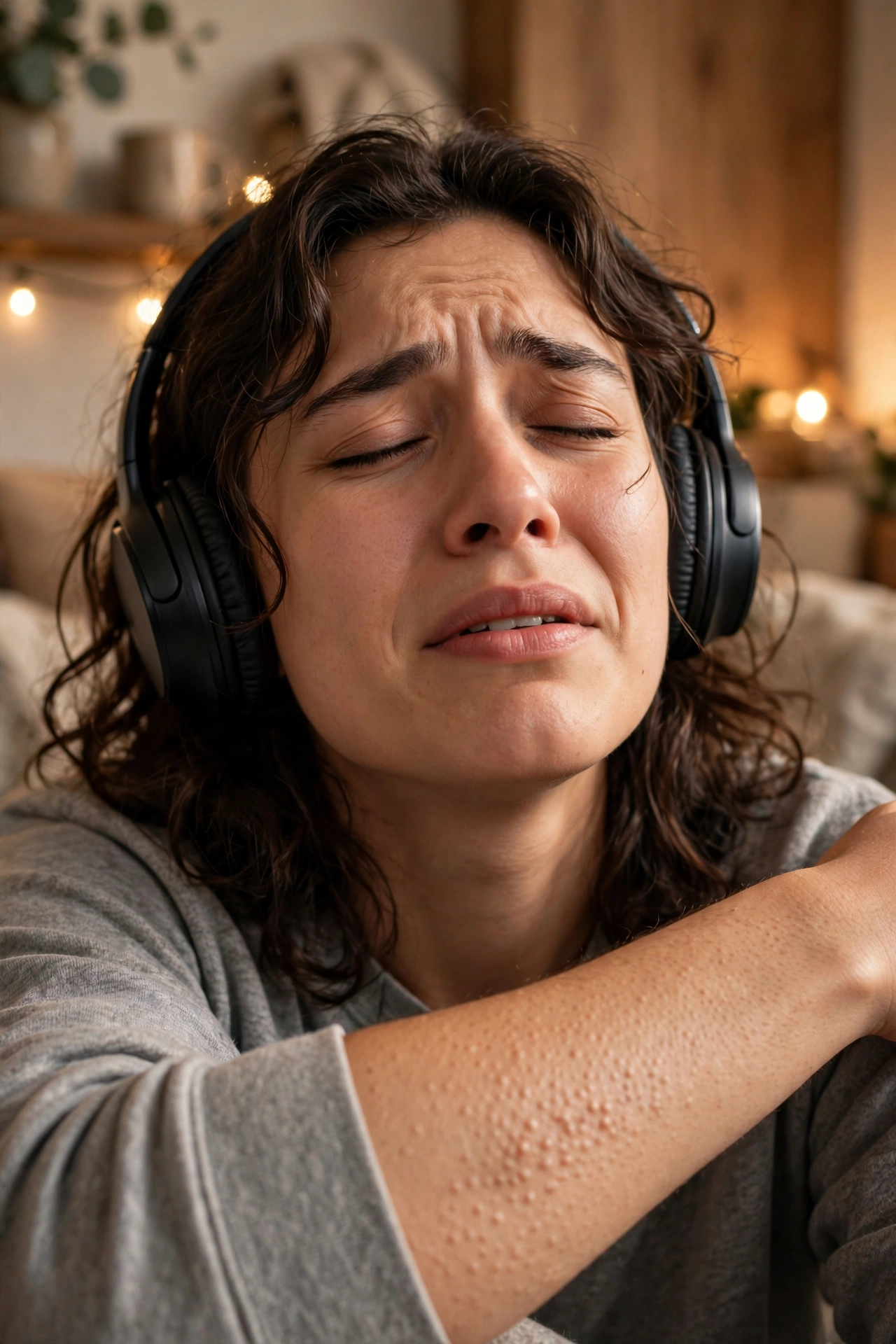
Most of us get goosebumps many times in our lives. We get them in winter. We get them when we hear a great song. We get them when we feel scared or moved. We get them when we watch a sad or brave scene in a film. They feel strange, but they are normal.
So why does the body do this? The answer is old. It comes from a time long ago, when humans had much more hair on their bodies. Our bodies still use the same old system today, even though we do not need it in the same way now.
In this article, we will look at goosebumps in simple words. We will learn what happens under the skin. We will learn why cold makes them happen. We will learn why fear and music can make them happen too. We will also learn when goosebumps are normal and when it is smart to ask a doctor.
The Tiny Muscles Under Your Skin
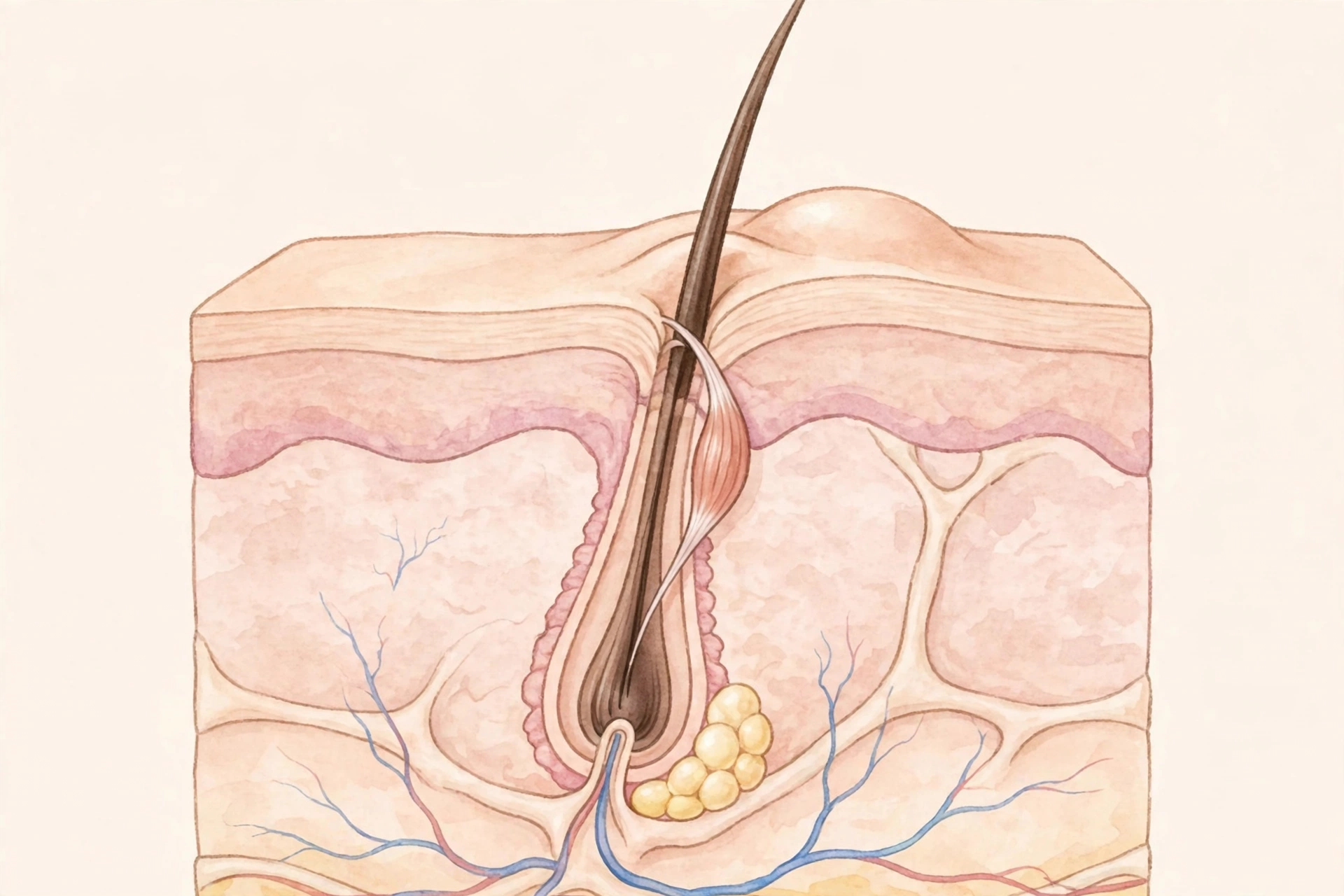
Under your skin, there are very small muscles. They are so small that you cannot see them. Each tiny muscle is joined to a hair. The name for this muscle is hard to say, but the job is simple. When the muscle gets tight, it pulls the hair up. When the hair goes up, the skin around it is pulled up too. That small pull makes a bump.
Think of it like this. Imagine a small string tied to a hair. When someone pulls the string, the hair stands up. The skin lifts a little with it. That is what happens with goosebumps, but the pull comes from inside your own body.
These tiny muscles do not work when you tell them to work. You cannot say, “Make goosebumps now,” and make it happen just by thinking. The signal comes from a deeper part of your brain. That part of the brain works on its own. It works without your plan or your choice.
This is the same kind of system that makes your heart beat and makes you breathe when you sleep. You do not have to think about those jobs. Your body does them for you. Goosebumps work in the same way. They are a reflex. A reflex is a quick body action that happens without thought.
When many tiny muscles pull at the same time, you see many bumps at once. That is why goosebumps often cover a whole arm or a whole leg. The muscles are all getting the same signal at the same time.
Why Cold Air Gives You Goosebumps
Cold is the most common cause of goosebumps. When you feel cold, your brain wants to keep you warm. It sends a signal to the tiny muscles under your skin. The muscles pull the hairs up.
Long ago, when humans had thick hair all over their bodies, this trick helped a lot. When the hairs stood up, they trapped a layer of air close to the skin. That layer of air worked like a warm coat. It kept body heat in and cold air out. It was a smart way to stay warm.
Today, humans do not have thick hair on most of their bodies. Our arm hairs are short and thin. They do not trap much air. So the trick does not warm us up very much now. But the body still tries. The old system is still there, even if it is not as useful as it once was.
Cold can also make you shiver. Shivering is when your muscles shake fast. That shaking makes heat. Goosebumps and shivering often happen together. Both are the body’s way of trying to warm you up.
You may get goosebumps when you step into a cold room. You may get them when a cold wind hits your skin. You may get them when you get out of a warm shower. In all these cases, the cause is the same. Your body feels a drop in heat, and it tries to protect you.
What Animals Do With The Same Trick
Animals have the same tiny muscles. For many animals, the trick still works very well. Think of a cat. When a cat feels scared, its fur stands up. The cat looks much bigger than it really is. A bigger look can scare away another animal. It can help the cat stay safe without a fight.
Dogs do the same thing. When a dog feels unsure or scared, the hair on its back may rise up. People sometimes call this “raised hackles.” It is the same system as goosebumps in humans. The hair stands up, and the animal looks larger.
Birds also fluff up their feathers in cold weather. The fluffed feathers trap warm air. That helps the bird stay warm through a cold night. In the same way, a furry animal in winter can trap warm air in its thick coat when its hairs stand up.
Humans lost most of our thick body hair over a very long time. We started to wear clothes. We started to build warm homes. We started to make fires. So we did not need thick hair to stay warm anymore. But the tiny muscles stayed. That is why we still get goosebumps today, even though the bumps do not warm us up much.
This is a good example of how the body keeps old tools. The body does not throw away a system just because it is less useful now. It keeps the system, and the system still turns on when it gets the right signal.
Why Fear Can Give You Goosebumps
Fear can also give you goosebumps. You may feel them when you watch a scary film. You may feel them when you hear a sudden loud noise in the dark. You may feel them when you think someone is behind you.
This happens because fear and cold use some of the same wires in the body. When you feel scared, your brain thinks you may be in danger. It gets your body ready to act fast. Your heart may beat faster. Your hands may feel cold. Your muscles may get tight. And the tiny muscles under your skin may pull your hairs up.
Long ago, this helped our early human family stay safe. If an animal looked bigger and scarier, other animals might leave it alone. If a human’s hair stood up, that human might look bigger too. Today, we do not need to look bigger to scare away a wild animal in most places. But the old fear signal still turns on the same muscles.
Fear goosebumps are not a sign that you are weak. They are a sign that your body is alert. Your body is doing its job. It is getting ready, just in case you need to run or to act fast.
Why Music And Strong Feelings Can Give You Goosebumps
Music is one of the most common causes of goosebumps that have nothing to do with cold. A beautiful song can give you goosebumps. A strong voice can give you goosebumps. A sad story can give you goosebumps. Even a happy moment, like seeing someone you love after a long time, can give you goosebumps.
Scientists have studied this a lot. They found that music goosebumps are linked to feelings and to reward in the brain. When we hear music we love, the brain can release chemicals that make us feel good. Those chemicals are part of the brain’s reward system. The same system turns on when we eat good food or when we feel loved.
The feeling is sometimes called a “chill” or a “thrill.” It often starts at the back of the neck or on the arms. It can move down the spine. It can last for a few seconds. Some people feel it with tears in their eyes. Some people feel it with a warm rush in the chest.
Why does music do this? One idea is that music touches the same deep brain parts that deal with feelings, memory, and social bonds. Long ago, humans sang and played music together in groups. Music helped people feel close to each other. It helped groups stay together. So the brain may still link music to strong social feelings.
Not all people get music goosebumps. Some people get them often. Some people almost never get them. Studies suggest that people who feel feelings deeply, and people who are open to new experiences, may get them more often. But anyone can get them from time to time, with the right song at the right moment.
A film scene can do the same thing. A brave speech can do it. A kind act can do it. The key is a strong feeling. When a feeling is strong enough, the brain sends the signal, and the tiny muscles pull.
What Happens In The Brain
To understand goosebumps fully, we need to look at the brain. The brain has many parts. Some parts help you think and plan. Other parts work in the background. The background parts control things like heart rate, breathing, and body heat.
When you feel cold, sensors in your skin send a message to the brain. The message says, “It is cold out here.” The brain then sends a message back. That message tells the tiny muscles to pull. It also tells other parts of the body to save heat.
When you feel fear, a part of the brain that deals with danger becomes active. That part sends out a warning. The warning tells the body to get ready. The tiny muscles are part of that ready plan.
When you hear moving music, parts of the brain that deal with sound, feeling, and memory work together. If the music builds up and then hits a strong moment, the brain may react with a rush. That rush can turn on the same muscles.
In all three cases, the end step is the same. A signal travels through nerves to the tiny muscles. The muscles get tight. The hairs stand up. The skin bumps up. The whole chain happens in less than a second.
This is why goosebumps feel so sudden. You do not plan them. You do not see them coming. One second your skin is calm. The next second it is bumpy. That speed is useful. If the body waited for you to think about it, the response would be too slow to help.
Why Do We Still Have Goosebumps?
This is a fair question. If goosebumps do not warm us up much now, and if they do not make us look much bigger now, why has the body kept them?
One answer is that the body keeps systems that are linked to other useful systems. The nerves and brain parts that cause goosebumps also help control body heat, heart rate, and danger responses. Those jobs are still very useful. The body cannot easily remove just the goosebump part without harming the rest.
Another answer is that goosebumps may still help in small ways. They may help us sense cold faster. They may be part of how we share feelings with others. When we see someone else get goosebumps, or when we talk about a song that gave us goosebumps, we share a human experience. That sharing can bring people closer.
Scientists also think goosebumps show us how humans changed over time. They are like a clue from the past. They remind us that we were once much hairier. They remind us that our bodies carry old tools from a different life.
So goosebumps are not a mistake. They are a leftover system that still works. It still turns on. It still tells a story about where humans came from.
Do Babies And Old People Get Goosebumps?
Yes, babies get goosebumps. A baby’s skin is soft and new, but the tiny muscles are already there. A baby may get goosebumps in a cold room or after a bath. Parents often see this and quickly wrap the baby in a warm towel. That is the right thing to do. Babies lose heat faster than adults, so keeping them warm matters a lot.
Old people also get goosebumps. As people get older, their skin gets thinner. Their body may not make heat as well as it once did. They may feel cold more easily. Goosebumps may still happen, but they may not be as strong or as easy to see.
Some people get goosebumps on only one side of the body, or in one spot. That can still be normal, but if it happens a lot and only on one side, it is worth telling a doctor. Most of the time, though, goosebumps are the same on both sides.
Can You Control Goosebumps?
Most people cannot control goosebumps on purpose. You cannot just decide to make them happen. You cannot just decide to stop them once they start, either. They fade on their own when the signal stops.
Some people say they can give themselves goosebumps by thinking hard about a cold place or a scary thought. This may work for a few people, but it is not common. For most of us, goosebumps need a real trigger. Cold air, fear, or a strong feeling must be there first.
If you want goosebumps to go away, the best step is to remove the cause. If you are cold, put on a warm layer or move to a warm place. The bumps will fade as your skin warms up. If you feel scared, take slow breaths and move to a safe place. As your fear fades, the bumps will fade too.
If music gives you goosebumps, you do not need to stop them. They are not harmful. Many people enjoy that feeling. It is a sign that the music moved you. You can just enjoy the song and let the feeling pass.
Are Goosebumps Ever A Problem?
For most people, goosebumps are not a problem at all. They come and go. They do not hurt. They do not leave marks. They are a normal part of how the body works.
But there are a few times when it is smart to ask a doctor. If you get goosebumps very often for no clear reason, tell a doctor. If goosebumps come with a fever, a rash, or pain, tell a doctor. If goosebumps happen on only one part of the body again and again, tell a doctor. If you feel very cold all the time, even in warm rooms, tell a doctor.
These signs do not always mean something is wrong. But a doctor can check and give you peace of mind. It is always better to ask than to worry alone.
Also, if you feel cold all the time, check the simple things first. Are you eating enough? Are you sleeping enough? Are you wearing warm clothes in winter? Are you drinking enough water? Small daily habits can change how warm or cold you feel.
In rare cases, goosebumps can be linked to a health problem with nerves or with body heat control. That is rare. Most goosebumps are just the body doing a normal, old job. Still, if something feels different or new, a quick check with a doctor is a smart step.
Fun Facts About Goosebumps
Here are some fun facts that show how wide and old this system is.
First, the word “goosebumps” comes from geese. After a goose loses its feathers, its skin has small bumps where the feathers were. Human skin with raised hairs looks a little like that. In some places, people also say “goose flesh” or “goose pimples.” All three names mean the same thing.
Second, many animals get a version of goosebumps. Cats, dogs, and other furry animals raise their fur. Birds fluff their feathers. Even some animals with little hair can show a similar skin change.
Third, goosebumps are not only about cold. They are also about feelings. That is why the same bumps can come from a cold wind, a scary film, or a beautiful song. Three very different causes lead to the same small bumps.
Fourth, scientists use goosebumps to study feelings. When they want to know if a song moves people, they can watch for goosebumps. The bumps are a visible sign of an inner feeling. That makes them useful for research, even though they are small.
Fifth, some people can feel goosebumps without seeing them. They feel a tingle or a rush on the skin. That tingle is the same signal at work. The muscles may pull just a little, even if the bumps are hard to see.
These facts remind us that a small thing on the skin can tell a big story. Goosebumps link us to animals, to our past, and to each other.
How To Think About Your Own Goosebumps
Next time you get goosebumps, pause for a second. Ask yourself a simple question. What caused them just now? Was it cold? Was it fear? Was it music or a strong feeling?
If it was cold, your body is trying to keep you warm. Put on a layer if you need one. If it was fear, your body is trying to keep you safe. Take a breath and check your surroundings. If it was music, your body is telling you that you felt something deep. Enjoy that moment.
Goosebumps are a small window into how the body works. They show that the body reacts fast, without waiting for thought. They show that old systems from our past still live inside us. They show that feelings are not just in the mind. Feelings live in the body too.
So the next time your hairs stand up, do not worry. Your body is doing what it has done for a very long time. It is a normal, human, and even beautiful part of being alive.
Frequently Asked Questions
Why do we get goosebumps when we are cold?
When you feel cold, your brain sends a signal to tiny muscles under your skin. Those muscles pull your hairs up. Long ago, this trapped warm air in thick body hair and helped keep humans warm. Today our hair is thinner, so it does not warm us much, but the body still tries.
Why do we get goosebumps when we hear music?
Music can touch deep parts of the brain that deal with feelings and reward. When a song builds up and hits a strong moment, the brain may release feel-good chemicals. That rush can send a signal to the tiny skin muscles, and goosebumps appear. It is a sign that the music moved you.
Are goosebumps a sign of fear?
They can be, but not always. Fear turns on the body’s danger system. That system can pull the tiny skin muscles up, just like cold does. But goosebumps can also come from cold, music, or a strong happy feeling. So goosebumps alone do not always mean fear.
Can you control goosebumps on purpose?
Most people cannot. Goosebumps are a reflex, which means they happen without thought. You cannot easily make them happen or stop them by willpower alone. They fade on their own when the cold, fear, or strong feeling fades.
Do animals get goosebumps too?
Yes, in their own way. Cats and dogs raise their fur when scared, which makes them look bigger. Birds fluff their feathers in cold weather to trap warm air. Humans have the same system, but we lost most of our thick body hair, so our version looks like small bumps.
Are goosebumps harmful?
No, for most people they are harmless. They come and go fast and do not hurt or leave marks. But if they happen very often for no reason, come with fever or pain, or happen on only one side of the body again and again, it is smart to ask a doctor.
Why do some people get goosebumps more than others?
Bodies are different. Some brains send the signal faster. Some skin reacts more strongly. Some people feel feelings more deeply. None of this means something is wrong. It is normal for people to react in different ways to cold, fear, and music.
More from Zorium Daily
If you liked learning about how your body works, read more simple science stories from Zorium Daily. Find out why we yawn and if yawning is really contagious. Learn how fireflies make light without heat. See why onions make eyes water and what happens in your eyes. Read about why we feel cold effects in a different way, and explore more body and nature stories in the Science section.