Why Do Dogs Wag Their Tails? Explained Simply
SUMMARY OF THIS ARTICLE
- Dogs wag their tails to talk. It is a big part of how they show feelings to other dogs and to us.
- A wag does not always mean happy. Speed, height, and stiffness all change the message.
- A loose, wide, sweeping wag usually means a friendly, relaxed dog.
- A high, stiff, fast wag can mean excitement, tension, or a warning.
- Dogs also wag more to the right when they feel good, and more to the left when they feel unsure.
The Happiest Greeting in the World
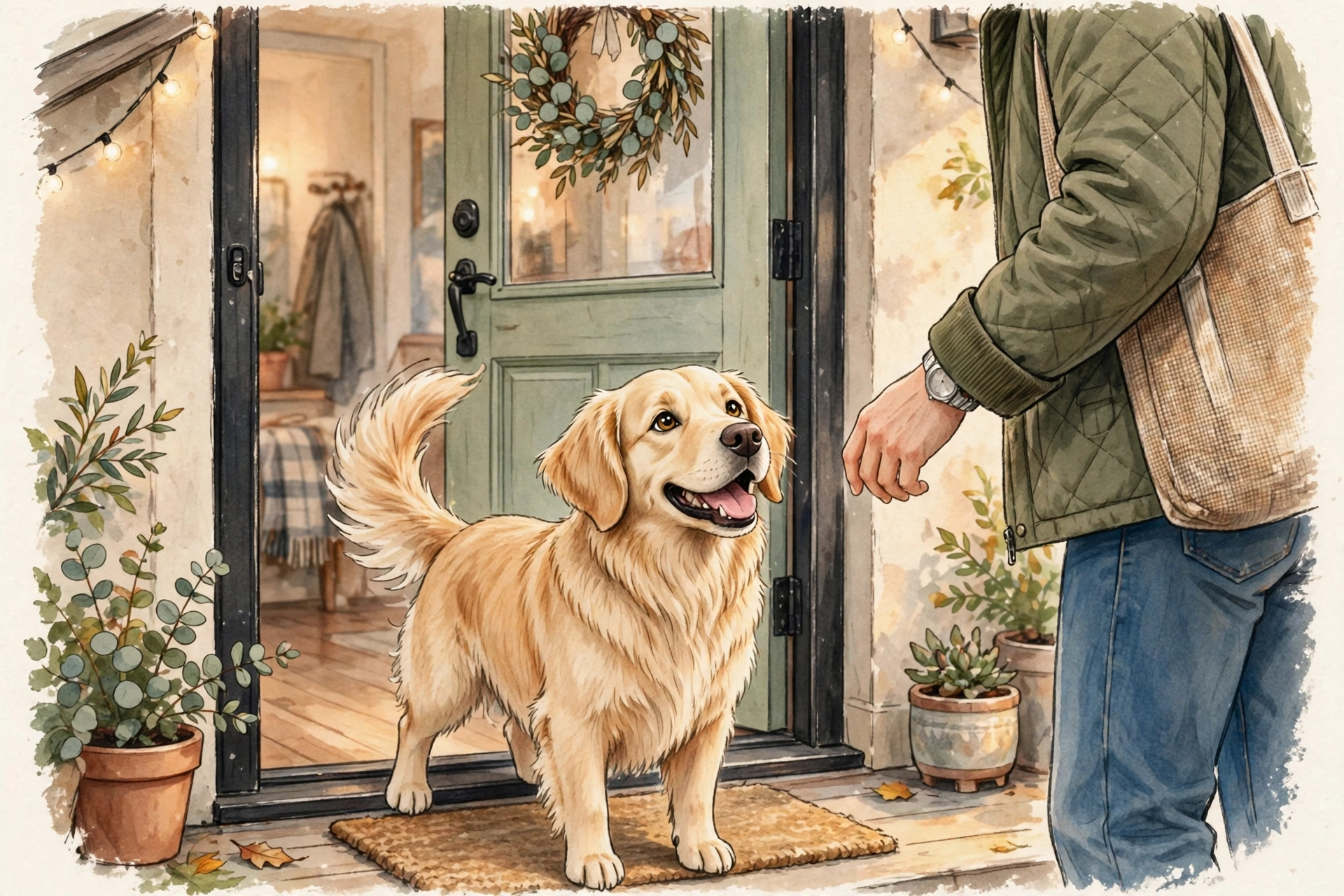
You know the scene. You come home, you open the door, and your dog is there, tail going like a windscreen wiper on fast mode, whole back end wiggling, eyes bright. It is one of the best greetings in the world. And it feels like pure happiness.
Most of the time, it is. But here is something that surprises people: a wagging tail does not always mean a happy dog. It means something a little different, and a little more interesting. A wag means the dog is feeling something strongly and wants to say it. What it wants to say depends on how it wags.
Think of a dog’s tail as a flag. A flag can say welcome, or it can say stay away, or it can say I am not sure. The message is in the speed, the height, and how stiff or loose the wag is. Once you learn to read it, you understand your dog a whole lot better.
This article is a simple guide to that flag. No big words, no lectures. Just what dogs are saying with their tails, and how you can tell the difference between a happy hello and a polite warning.
Talking Without Words
Dogs cannot talk the way we do. They cannot say, “I am happy to see you,” or “Please leave me alone.” So they talk with their bodies instead. Ears, eyes, posture, and tail all send messages. The tail is the loudest of them all, because it is big, it moves, and other dogs can see it from far away.
This makes sense when you think about where dogs came from. Dogs are descended from wolves, and wolves live in groups called packs. In a pack, animals need to tell each other how they feel without fighting all the time. A wolf that can say “I am friendly” with its tail is less likely to get into a fight. A wolf that can say “I am in charge here” with a high, stiff tail can settle an argument without a bite.
Over thousands of years, as wolves became dogs and started living with people, the tail kept its job. It just added a new audience: us. Dogs wag at other dogs, and they wag at people. They wag when they see someone they love, when they are excited about a walk, when they meet a new dog, and sometimes when they are nervous. The wag is a message, and the message changes with the mood.
Our bodies talk without words too, in smaller ways. A smile, a shrug, crossed arms — all of them say something before we open our mouths. Even goosebumps, those little bumps on your skin when you feel cold or thrilled, are a leftover body signal from long ago. You can read about that strange little reaction in our piece on why we get goosebumps. Dogs are simply better at it than we are. Their tail is a whole sentence, and they use it all day long.
A Wag Is Not Always a Smile
This is the most important thing in the whole article, so let us say it clearly: a wagging tail does not always mean a friendly dog.
Many people think wagging equals happy. It does not. It equals excited, or stirred up, or feeling strongly about something. A dog can wag its tail right before it snaps. A dog can wag while it is guarding its food. A dog can wag while it is scared. The wag tells you the dog is aroused — that is, its feelings are switched on and strong — but it does not tell you whether those feelings are friendly.
So how do you tell the difference? Look at the whole dog, not just the tail. A happy, relaxed dog has a loose, wiggly body. Its ears are soft, its mouth is open in a relaxed pant, and its tail sweeps wide and loose, often making the whole back end wiggle. That is the classic happy wag. You have seen it a hundred times.
A tense dog looks different. Its body is stiff. Its ears are forward or flat back. Its mouth is closed, or its lips are pulled back. And its tail is held high and moves in short, fast, stiff wags, like a flag being shaken hard. That dog is not saying hello. It is saying, “I am excited and I am not sure about you.” It is a warning to give the dog space.
A frightened dog tucks its tail low, sometimes right between its legs, and wags it slowly or not at all. A low, slow wag can mean the dog is unsure, or trying to say, “Please do not hurt me.” It is a shy, careful message, and the kindest thing you can do is to be calm, move slowly, and let the dog come to you if it wants to.
The rule is simple: read the tail and the body together. A wag is one word. The body is the rest of the sentence.
High, Low, Fast, Slow: Reading the Flag
Let us break it down, nice and simple, into the three things that change the message: how high the tail is, how fast it moves, and how loose or stiff it is.
Height first. A tail held high usually means confidence, excitement, or a dog that feels in charge. A tail held at a middle height, level with the back, usually means a relaxed, normal mood. A tail held low means the dog is unsure, nervous, or submissive — that is, it is showing it does not want a fight. A tail tucked right under the body is a clear sign of fear. The dog is saying, “I am scared, please leave me alone.”
Speed next. A fast wag usually means strong feelings, but not always happy ones. A very fast wag with a stiff body can mean high excitement or tension. A slow wag can mean the dog is thinking, or unsure, or being careful. A broad, sweeping wag at a medium speed, with a loose body, is the happiest one of all.
Then looseness. A loose, wide wag that moves the whole back end is the friendliest sign there is. Dog lovers sometimes call it the “full-body wag,” and it is hard to mistake. A stiff wag, where only the tail moves in short, tight strokes, is more serious. It is a dog that is focused, alert, and possibly on edge.
Put it together and you get a picture. High, stiff, and fast: excited, tense, possibly warning. Low, slow, and loose: unsure, shy, asking for space. Middle, wide, and wiggly: happy, relaxed, and glad to see you. It is not a perfect code — every dog is a little different — but it is a good start, and it beats guessing.
Left or Right? The Secret Side of Wagging
Here is a strange and wonderful fact that scientists found: dogs do not wag evenly. They wag more to one side than the other, and the side tells you something about how they feel.
When a dog sees something it likes — its owner, a friendly dog, a favourite toy — it tends to wag more to the right. When it sees something it does not like, or feels unsure about — a strange dog, something scary — it tends to wag more to the left. Other dogs seem to notice this, too. In tests, dogs watching a video of a dog wagging to the left became more stressed, with a faster heartbeat, than dogs watching a wag to the right.
Why would this happen? It is linked to the two sides of the brain. The left side of the brain, which handles good feelings and approach, controls the right side of the body. The right side of the brain, which handles fear and withdrawal, controls the left side. So the tail leans towards the side that matches the feeling. It is a tiny detail, and you would need to watch closely to spot it, but it shows how deep the connection is between a dog’s feelings and its tail.
You do not need to stand in the park measuring tail angles. But it is a lovely reminder that dogs are not just wagging at random. Their tails are wired straight into their feelings, and they are telling us more than we ever guessed.
How Puppies Learn to Wag
Puppies are not born knowing how to wag. A newborn puppy is blind, deaf, and wobbly, and its tail barely moves. For the first few weeks, the puppy’s world is its mother, its littermates, and milk. It does not need to talk to anyone yet.
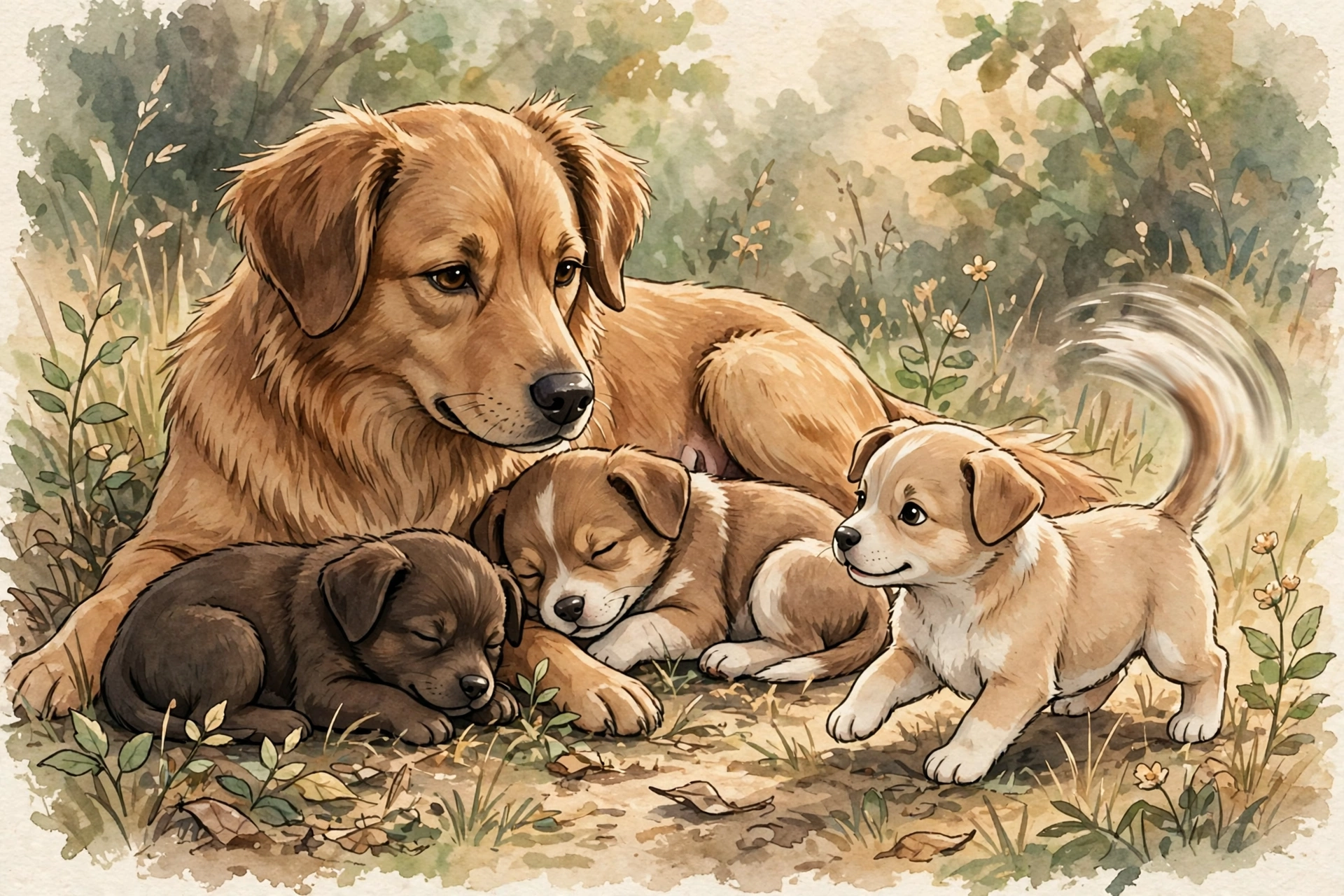
Then, at around three or four weeks old, something changes. The puppy’s eyes open. It starts to play. And the tail starts to wag. At first, the wags are small and random, a bit like a baby waving its arms. But as the puppy plays with its brothers and sisters, it learns. A wag at a littermate brings a friendly response. A wag at its mother brings a lick. The puppy learns that the tail is a tool for talking.
Play is the classroom. Puppies wrestle, chase, and roll around, and all the while they are reading each other’s tails, ears, and bodies. A puppy that plays too rough gets a yelp and a turned back, and learns to be gentler. A puppy that wags and bows — that is, it dips its front legs down with its back end up — is saying, “Let’s play!” It is a language learned by doing, not by being taught.
Mother dogs help too. A mother dog will wag at her puppies, lick them, and nudge them with her nose. She is calm, patient, and clear. Puppies that grow up with their mother and littermates for the first two months usually grow into dogs that are better at reading other dogs. Puppies taken away too early sometimes struggle, because they missed those early lessons in tail talk.
Why Dogs Wag So Much at Us
Here is a lovely thought: dogs wag their tails at people far more than wolves wag at each other. Over thousands of years of living with us, dogs have become experts at talking to humans. They watch our faces, follow our pointing fingers, and learn our routines. And they wag at us because it works. We smile, we talk to them, we give them a treat or a pat. The wag gets a reward, so the dog wags more.
It is a little loop of friendship. You come home, the dog wags, you smile and say hello, the dog wags harder. You both feel good. Nobody taught the dog to do this in a classroom. It learned it by living with people who love it.
Dogs also wag when they are excited about something they cannot have yet. The lead comes out, and the tail starts. The food bowl is picked up, and the tail starts. The word “walk” is said, and the whole dog lights up. That wag is pure excitement, the dog saying, “Yes! That thing! Let’s do it!”
And dogs wag in their sleep sometimes, too. If you have ever watched a sleeping dog twitch its tail and paddle its legs, you have probably smiled and wondered what it was dreaming about. We cannot know for sure, but it looks very much like a happy dream — running through a field, chasing a ball, greeting someone they love.
A Tail Also Spreads Smell
There is a hidden job of the tail that most people never hear about: it helps spread a dog’s smell.
Dogs have scent glands, little spots that make their personal smell, near the base of the tail. When a dog wags, the moving tail helps waft that smell into the air, like waving a fan. Other dogs can smell it and learn something about the dog: who it is, whether it is male or female, and how it feels.
That is why dogs sniff each other’s back ends when they meet. It looks rude to us, but to a dog it is like shaking hands and reading a name badge at the same time. The wag helps the introduction along, spreading the smell so the other dog can read it.
It is also why a dog that is scared tucks its tail in tight. Tucking the tail covers those scent glands and hides the smell. The dog is trying to make itself small and unnoticed, like a person hiding behind a door. A confident dog, on the other hand, holds its tail high and wags freely, sharing its smell with the world. It is a quiet, smelly language, and it has been going on for thousands of years.
Dogs Wag, Cats Purr: Two Different Languages
If you have both a dog and a cat, you have seen two very different animals talking in two very different ways. A dog wags its tail to say hello. A cat swishes its tail when it is annoyed, and purrs with its throat when it is content. Same house, opposite signals. No wonder people get confused.
Cats purr for many reasons: when they are happy, when they are hurt, when they want comfort. It is a soft, vibrating sound, made in the throat, and it is one of the most soothing sounds in the world. Dogs do not purr. They wag. It is a good reminder that every animal has its own language, and we should learn each one on its own terms. If you want to know more about the cat side of the story, our piece on why cats purr explains it in simple words.
The lesson is simple: do not read a cat like a dog, and do not read a dog like a cat. A wagging dog is usually saying something friendly or excited. A swishing cat tail is often saying the opposite. Learn each animal’s language, and you will get along with both far better.
Not Every Dog Can Wag the Same Way
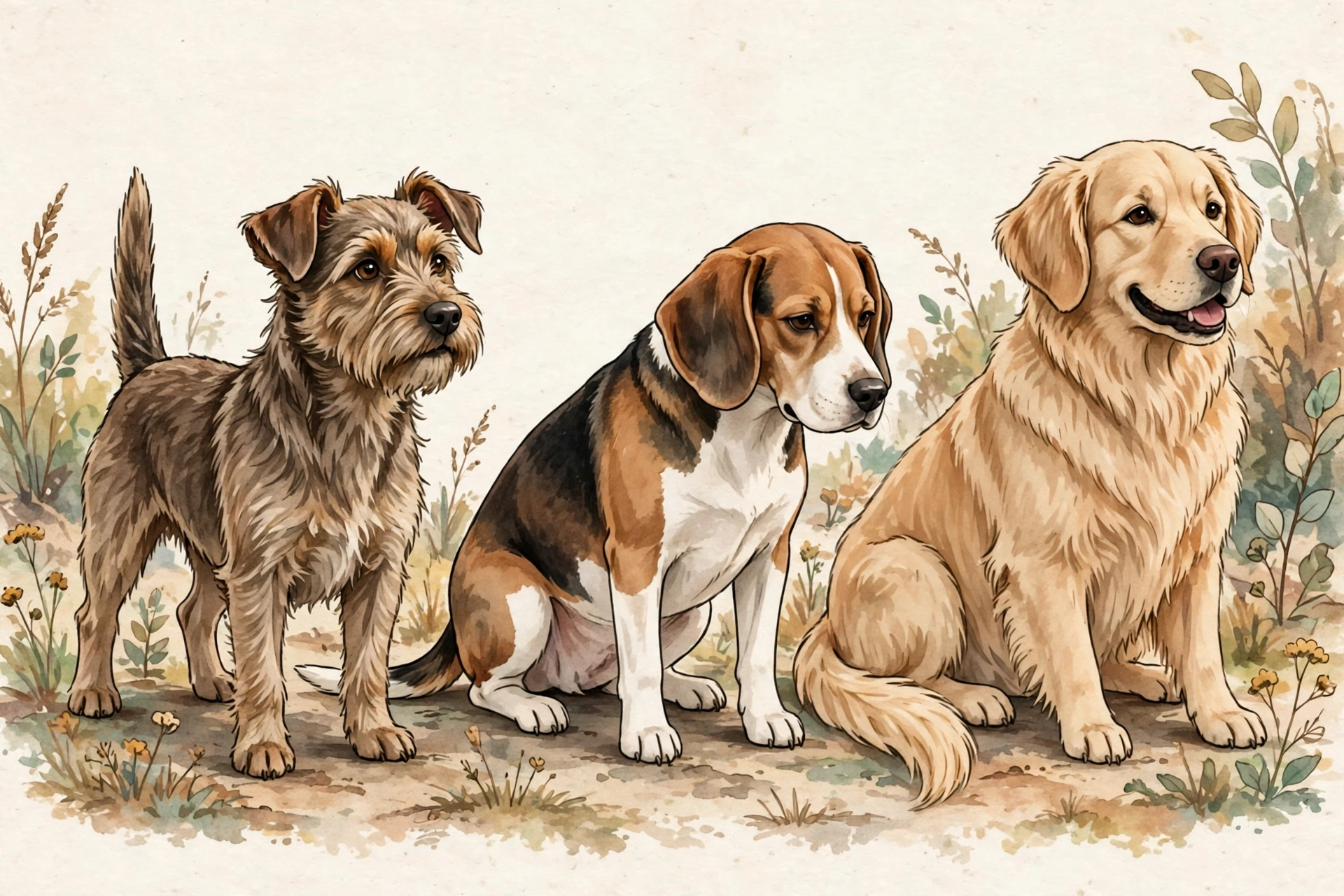
Here is something people forget: not all tails are equal. A Labrador has a long, thick tail that sweeps wide and knocks things off coffee tables. A Greyhound has a long, thin tail that wags in graceful curves. A Pug has a tiny curled tail that wiggles more than it sweeps. A Corgi has almost no tail at all, and it wiggles its whole back end instead, which is just as charming.
Some dogs have their tails docked, which means the tail is cut short when they are puppies, usually for old working reasons. A docked dog can still wag, but the signal is smaller and harder to read, for us and for other dogs. Other dogs lose part of their tail to injury. They adapt, and they still communicate with their ears, eyes, and body. The tail is a big part of the message, but it is not the only part.
Breed matters a little, too. Some breeds are naturally more excitable and wag more. Some are calmer and wag less. A shy rescue dog may wag rarely at first, then wag more and more as it learns to trust its new home. That growing wag is one of the sweetest signs that a dog is settling in. It is the dog saying, slowly, “I think I am safe here. I think I am home.”
What to Do When You Meet a Wagging Dog
So, you meet a dog in the park, and its tail is going. What should you do? Here is a simple, safe way to handle it.
First, slow down. Do not rush at the dog with your hand out. Let the dog come to you. A dog that wants to say hello will come close, sniff, and wag. A dog that is unsure will hang back, and that is fine. Give it space.
Second, look at the whole dog. Is the body loose and wiggly? Are the ears soft? Is the mouth open and relaxed? That is a friendly dog. Is the body stiff, the tail high and shaking fast, the mouth closed? That dog is excited or tense. Give it space, stay calm, and do not reach over its head. A hand over the head can feel threatening to a dog. Let the dog sniff your closed hand, held low, if it wants to.
Third, ask the owner. “Is your dog friendly? Can I say hello?” Owners know their dogs best, and most are happy to tell you. It takes five seconds, and it keeps everyone safe, especially children.
Fourth, teach children the same rules. Children love dogs, and dogs usually love children, but a child running straight at a dog, arms out, can scare it. Teach children to stand still, let the dog sniff, and stroke the dog’s side gently, not its head. And never, ever pull a dog’s tail. It hurts, and it breaks the trust.
Dogs are generous with their feelings. They tell us, with their whole bodies, how they feel. The least we can do is learn to listen, and to answer with kindness and a little patience.
Frequently Asked Questions
Why do dogs wag their tails?
Dogs wag their tails to communicate. It is a way of showing feelings to other dogs and to people. A wag can mean happy, excited, nervous, or unsure, depending on how fast, how high, and how stiff or loose the wag is. It is a bit like a flag that changes its message with the way it moves.
Does a wagging tail always mean a dog is happy?
No, and this is the most important thing to remember. A wag means the dog is feeling strongly, not that it is friendly. A loose, wide, wiggly wag with a relaxed body usually means happy. A high, stiff, fast wag with a tense body can mean excitement, tension, or a warning. Always read the tail together with the rest of the body.
Why do dogs wag their tails when they see their owner?
Because they are excited and happy, and because it works. Over thousands of years, dogs have learned that wagging at people gets a smile, a greeting, a treat, or a walk. The wag is part of the bond between a dog and its person. It is one of the ways a dog says, “I am glad you are home.”
Do dogs wag more to the left or the right?
It depends on how they feel. Studies have found that dogs tend to wag more to the right when they see something they like, and more to the left when they see something they do not like or feel unsure about. Other dogs seem to notice the difference, too. You would need to watch closely to spot it, but it shows how closely the tail is linked to the dog’s feelings.
Why do some dogs wag their whole body?
Because they are very happy and very relaxed. A full-body wag, where the back end wiggles from side to side, is one of the friendliest signals a dog can give. It usually happens when a dog greets someone it loves, or when it is about to do something exciting, like going for a walk. Short-tailed dogs and Corgis often wag their whole back end, because they have less tail to wag with.
Can a dog wag its tail in its sleep?
Yes, and it is very sweet to watch. A sleeping dog may twitch its tail, paddle its legs, and even make little sounds. Scientists think dogs dream, just like people do, and the tail twitch may be part of a dream about running, playing, or greeting someone. There is no need to wake the dog. Let it enjoy the dream.
The Flag That Says It All
A dog’s tail is a small thing, but it carries a big message. It says hello, it says I am excited, it says I am not sure, it says please be gentle. It has been saying these things for thousands of years, to wolves, to other dogs, and now to us.
So the next time your dog greets you at the door, tail going like a windscreen wiper, take a second to really look. Is the body loose? Is the wag wide? Is the whole back end wiggling? That is a dog saying, in the clearest way it knows how, “You are my favourite person, and I am so glad you are home.”
Answer it the way dogs hope we will: with a smile, a kind word, and a gentle pat. They have been talking to us with their tails for a very long time. The least we can do is listen.