Why Do We Laugh? Explained Simply
SUMMARY OF THIS ARTICLE
- We laugh because our brain finds something funny, surprising, or a relief after stress.
- Laughter is also a social signal, a way to say I am friendly, I feel safe, and I am with you.
- When we laugh, our body breathes fast, our belly moves, and our brain releases feel-good chemicals.
- Babies laugh long before they can talk, which shows laughter is a natural part of being human.
- Laughing with others can lower stress, lift mood, and help people feel closer together.
You have probably had one of those moments. Someone says something silly, or a friend trips over nothing at all, or a cat does something so strange you cannot help yourself. First you smile. Then a small sound escapes. Then you are laughing so hard your belly hurts and tears are running down your face. You are not sure why it is so funny. You just know you cannot stop.
Think of it like this. Laughter is your body’s way of saying, that was a surprise, and it was a safe surprise. Your brain expected one thing, got something else, and instead of feeling scared, it felt happy. That little jolt of surprise, mixed with safety, often turns into a laugh.
It is a strange sound, when you think about it. Ha, ha, ha. He, he, he. It is not a word. It is not quite a cry. It is a burst of air, again and again, from your chest. And almost every human on Earth does it, in every country, in every language. Babies do it before they can say a single word. That tells us laughter is not something we learn from a book. It is built into us, like crying or sneezing.
So why do we do it? Let us start with the simplest reason, the one we all know. We laugh because something is funny.
A joke is the classic example. Someone tells a story, and you think you know how it will end. Then the ending is completely different. Your brain loves that twist. It is like a small puzzle that clicks into place, and the click feels good. The laugh is the sound of that click. It is your brain saying, oh, I did not see that coming, and I like it.
But jokes are only part of it. We also laugh at things that are not jokes at all. A baby in a silly hat. A dog chasing its own tail. A friend trying to be serious and failing badly. None of those are jokes with a punchline, which is just the funny ending of a joke. They are funny because they are unexpected, or a little bit silly, or they break a normal rule in a harmless way. A cat wearing a tiny hat breaks the normal rule that cats do not wear hats. It is wrong, but it is safe, so we laugh.
Surprise matters a lot here. If you know exactly what is coming, it is much less funny. That is why the same joke is rarely as funny the second time. Your brain already knows the ending, so there is no surprise left. The first time, though, the surprise is fresh, and the laugh comes easy.
There is another kind of laughter, though, and it is just as common. We laugh when we feel relief. You know that feeling after a scary moment is over. You almost drop your phone, but you catch it just in time. You trip, but you do not fall. Your heart is beating fast, and then you laugh. That laugh is your body letting go of the tension. It is saying, phew, that was close, but I am okay.
This relief laugh is close to nervous laughter. Have you ever laughed at a moment that was not funny at all, like when you are nervous before a test, or when someone is telling you sad news and you do not know what to say? That happens to a lot of people, and it can feel awkward. You are not laughing because you think it is funny. You are laughing because your body does not know what else to do with all that nervous energy. It is a bit like a pressure valve letting off steam.
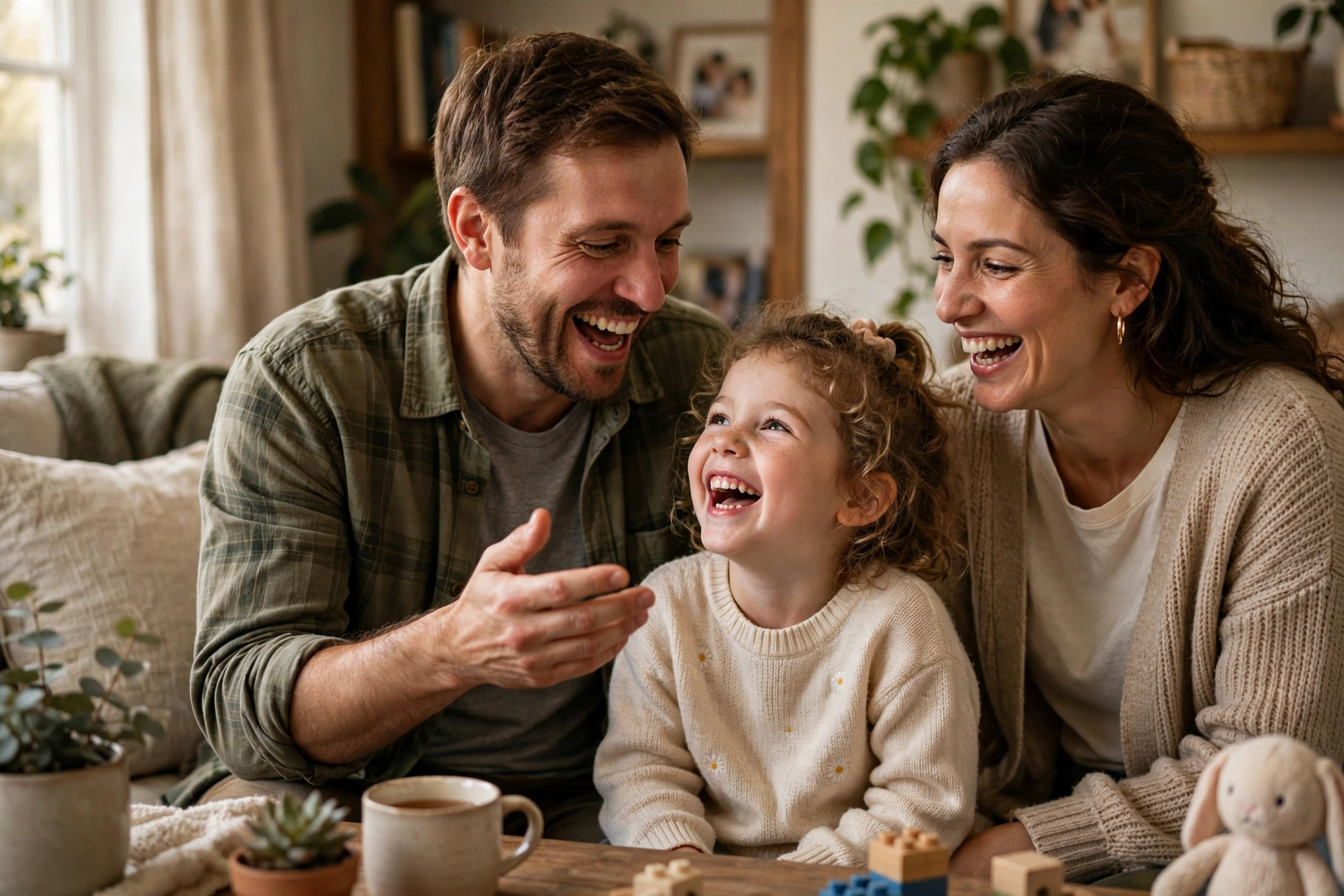
Laughter is also, and maybe mostly, about other people. We laugh far more with other people than we do alone. Think about it. You might smile at a funny video on your own, but you will laugh much harder if your best friend is sitting next to you, laughing too. Laughter is catching, a bit like a yawn. When one person starts, others often follow, even if they did not hear the joke.
Scientists who study laughter have found something interesting. We laugh about thirty times more often when we are with other people than when we are alone. That is a huge difference. It suggests laughter is not just about jokes. It is about connection. It is a signal, a way of saying without words, I like you, I feel safe with you, I am part of this group.
Think of a group of friends at lunch. One person tells a story, and everyone laughs. That laughter is doing two jobs at once. It is showing that the story was funny, and it is also showing that the group is close. The laugh is a glue. It holds people together, just for a moment, in a shared feeling.

Babies show this very early. A baby will laugh when a parent plays peekaboo, or makes a funny face, or tickles them gently. The baby does not understand a joke. The baby understands the game, the surprise, and the happy face of the parent. That laugh is a way of saying, I love this, do it again. It is one of the first ways babies talk to us, before they have words.
Tickling is a funny one, because it only works with other people. You cannot tickle yourself and laugh the same way. Your brain knows it is you, so there is no surprise. But when someone else tickles you, your brain cannot predict exactly where their fingers will go next. That little bit of unpredictability, mixed with the safe feeling that the person will not hurt you, often turns into giggles. It is surprise and safety again, in a very simple form.
Now, what actually happens inside your body when you laugh? It is a lot more than just a sound. When you laugh, your chest and your belly move in quick bursts. You breathe out in short puffs, again and again. Your face muscles pull up into a smile. Your eyes crinkle. Sometimes tears come, because the muscles around your eyes squeeze so hard.
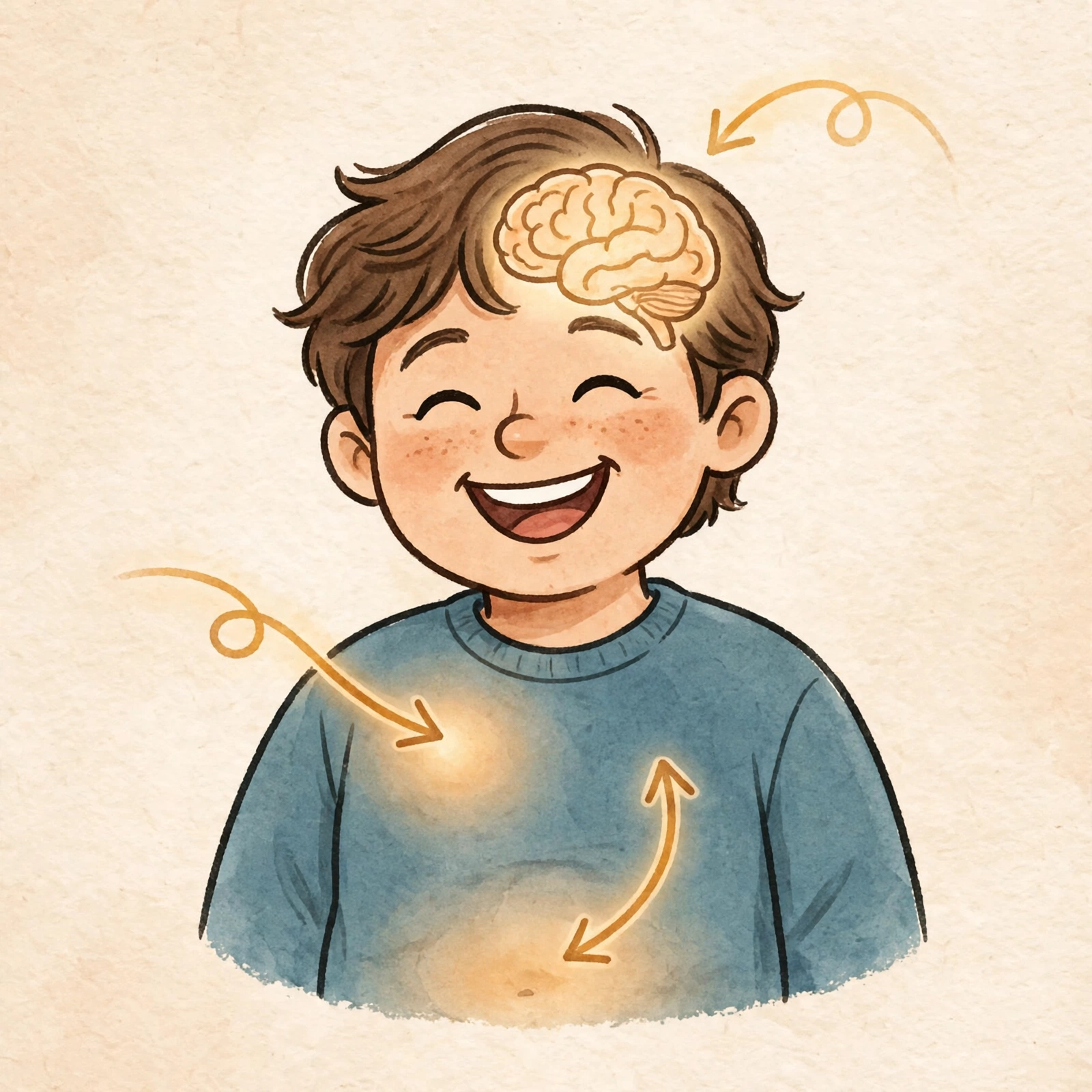
Your brain is busy too. It sends signals to the parts that control breathing, the parts that control your face, and the parts that deal with feelings. It also releases chemicals that make you feel good. One of them is called endorphins, which is just a fancy word for the body’s own feel-good chemicals. They are a bit like a natural happy pill, made inside you. That is why you often feel lighter and calmer after a good laugh. The laugh itself helped your body relax.
A big laugh can even be a little bit of exercise. Your belly muscles work, your chest works, and your heart beats a bit faster. You will not get fit just by laughing, of course, but a long, hard laugh does make your body work. After it ends, your muscles relax, and you might feel a little tired, in a good way, like after a short walk.
Laughter also helps with stress. When you are stressed, your body is tense, your shoulders are tight, and your mind is racing. A good laugh can break that pattern for a moment. It forces you to breathe differently. It pulls your attention away from the worry. It does not solve the problem, but it can make the problem feel a little smaller for a while. That is why people often say laughter is good medicine. It is not real medicine, it does not cure illness, but it can help you feel better, and feeling better helps you cope.
There is a dark side to be honest about too. Laughter is not always kind. People sometimes laugh at others to be mean, or to make someone feel small. That kind of laughter hurts, and it is very different from the warm laughter of friends sharing a joke. The sound might be similar, but the feeling behind it is not. One brings people together. The other pushes them apart. Learning to tell the difference matters, especially when you are young. If someone is laughing and another person is crying, that is not a shared joke. That is a moment to be kind, not to join in.
Culture shapes laughter too. What is funny in one country might not be funny in another. A joke about food, or school, or family, might land perfectly in one place and fall flat in another, because the people there do not share the same background. That is normal. Humour, which just means the things we find funny, grows out of what we know. The more we share with someone, the more likely we are to laugh at the same things.
Animals laugh too, in their own way. Rats make a high chirping sound when they play. Dogs have a special panting sound when they are happy and playing. Chimpanzees laugh when they are tickled or playing. It is not the same as human laughter, but it shows that laughter, or something very much like it, is not just a human trick. It is part of how social animals play and bond. Play is important for learning, and laughter seems to be part of play.
You might wonder why we sometimes laugh at things that are not funny at all, like when we are very tired. If you have ever stayed up too late with friends, you know this. Everything becomes funny. A word said the wrong way, a silly face, a small mistake, and you are all in fits of giggles. When you are tired, your brain is less good at holding back. The little filter that usually says, that is not that funny, gets weaker. So the laugh comes out easier. It is your brain being a bit looser, a bit less careful.
There is also the laugh we do to be polite. You know the one. Someone tells a joke that is not very funny, but you laugh a little anyway, to be kind. That laugh is shorter, quieter, and it does not reach your eyes in the same way. It is a social laugh, a way of saying, I hear you, I am trying to be friendly. It is not fake in a bad way. It is just a small social tool, like saying thank you when someone holds a door open.
So, why do we laugh? There is no single answer, because laughter does many jobs. It is a response to surprise. It is a release of tension. It is a signal to other people. It is a way to play. It is a way to feel better. All of those are true at the same time.
Next time you laugh, pay attention to what is happening around you. Are you with friends? Did something surprise you? Were you stressed just before? You will often find one of those reasons hiding in the laugh. And if you are laughing so hard you cannot breathe, just enjoy it. Your brain and your body are doing something they have done since you were a baby, and something humans have done for a very, very long time. It is simple, it is human, and it is one of the nicest sounds in the world.
Let us talk about how laughter changes as we grow up, because it does change a lot. A small child can laugh at a funny face for ten minutes straight. An adult might smile politely at the same face and move on. It is not that adults lose the ability to laugh. It is that they have seen more, they are more careful about how they look, and they are often thinking about ten other things at once. Children live in the moment. They are not worried about looking silly. That freedom makes laughter easier.
You have probably noticed this at a family party. The kids are in the corner, laughing at a game, falling over, making silly noises. The adults are standing around with cups of tea, talking about work and bills, smiling now and then. Then someone tells a story from the old days, and suddenly the adults are laughing too, loud and real, just like the kids. The laugh was still there, waiting. It just needed the right moment to come out.
School is another place where laughter does a lot of work. A good teacher who can make a class laugh is not just being funny for fun. They are helping the class relax, helping them remember, helping them feel safe enough to try. When you are laughing, you are not scared of getting the answer wrong. That small bit of safety can make learning easier. It is why a joke in a lesson can stick in your mind longer than a dry fact on a board.
But school laughter can also go wrong, and we have all seen it. A joke that is funny to five people can be hurtful to the sixth. A laugh that is meant to be shared can turn into a laugh that leaves someone out. The difference is not always in the sound. It is in the feeling. Shared laughter feels warm, open, and kind. Mean laughter feels cold, sharp, and closed. If you are ever unsure, look at the face of the person who is not laughing. Their face will tell you the truth.
Here is a story that many people will know. You are in a quiet place — a library, a church, a classroom during a test — and someone does something tiny and silly. A pen drops. Someone sneezes in a funny way. A chair squeaks. You try not to laugh, because you know you should be quiet. That trying not to laugh makes it worse. Your shoulders start to shake. Tears come. You bite your lip. And then your friend catches your eye, and that is it. You both have to leave the room, laughing, while everyone else looks at you. Why is it so much funnier when you are not supposed to laugh? Because the rule makes the surprise bigger. Your brain knows you should be quiet, and the laugh is breaking that rule in a safe, harmless way. It is a little bit of rebellion, and it feels great.
There is also the kind of laugh that comes after a long, hard day. You come home tired, you sit down, someone tells you a small, silly story about their day, and you laugh longer than the story deserved. That laugh is not really about the story. It is about the whole day letting go. Your body has been holding tension in your shoulders, in your jaw, in your breath, and the laugh finally lets it out. It is a bit like opening a window after a stuffy room has been closed all day. Fresh air comes in, and you can breathe again.
Some people worry that they laugh too much, or too loudly, or at the wrong times. That worry is common, especially when you are young and you care a lot about what other people think. But a loud laugh is not a bad thing. It is a sign that you feel something strongly, and that you are not hiding it. A quiet laugh is not a bad thing either. People laugh in different ways, just like they talk in different ways. Some people giggle, some people snort, some people laugh so hard they cannot make a sound at all. All of those are normal. They are just your own version of the same human sound.
If you ever find yourself laughing and you cannot stop, there are a few small tricks that can help. Try breathing in slowly through your nose and out through your mouth. Try pressing your tongue to the roof of your mouth. Try thinking about something calm and boring, like counting backwards from twenty. None of these work every time, and sometimes the laugh will win anyway. That is okay. Most of the time, the people around you will understand, because they have been there too.
And what about laughing alone? It does happen, just less often. You might laugh at a funny memory in the shower, or at a video on your phone late at night, trying not to wake anyone up. That laugh is still real, even if no one hears it. It shows that your brain can find joy in a thought, not just in a room full of people. It is a quieter kind of laughter, but it counts just as much.
In the end, laughter is one of the oldest human habits we have. People were laughing long before they were writing, long before they were building cities, long before they had phones to share funny videos on. They laughed around fires, in fields, in small villages, at stories and games and surprises. We are still doing the same thing today, only the jokes have changed. The laugh itself has not. It is still that burst of air, that smile, that feeling of surprise and safety, shared with the people around us.
Frequently Asked Questions
Why do we laugh more with friends than alone?
We laugh more with others because laughter is a social signal as well as a response to humour. It tells the people around us that we feel safe, happy, and connected. When a friend laughs, it is catching, and our brain responds by laughing too. Alone, we might smile at something funny, but the shared feeling that makes a big laugh is missing.
Can babies laugh before they can talk?
Yes. Babies usually start laughing at around three or four months old, long before they can say words. They laugh at games like peekaboo, funny faces, and gentle tickling. This shows laughter is natural and built into us, not something we learn from language. It is one of the first ways babies communicate happiness.
Why do we laugh when we are nervous?
Nervous laughter happens because our body has a lot of tense energy and does not know what to do with it. Laughing can release that tension, a bit like letting air out of a balloon. It does not mean we think the situation is funny. It means our body is trying to cope with stress or awkwardness in the only way it knows how.
Why is the same joke less funny the second time?
A joke is funny partly because of surprise. The first time, your brain does not know the ending, so the twist feels fresh and fun. The second time, you already know what is coming, so there is no surprise left. Your brain has solved the puzzle already, and the laugh is much smaller, or it does not come at all.
Is laughter really good for our health?
Laughter can help in small ways. It can lower stress, relax muscles, and release feel-good chemicals in the brain. It can also help people feel closer to each other, which is good for mood. It is not a cure for illness, and it does not replace real medicine, but a good laugh can make you feel lighter and calmer for a while.
Why can we not tickle ourselves and laugh?
We cannot tickle ourselves the same way because our brain knows what our own hands are going to do. There is no surprise. When someone else tickles us, we cannot predict exactly where they will touch next, and that unpredictability, mixed with the safe feeling that they will not hurt us, often makes us giggle. The surprise is the key part.