How Does a Solar Panel Work? Explained Simply
Summary of This Article
- A solar panel turns sunlight into electricity with no moving parts and no burning. Sunlight hits the panel, and electricity comes out.
- Sunlight is made of tiny packets of energy called photons. When photons hit the silicon cells inside a panel, they knock tiny parts called electrons loose, and that moving flow of electrons is electricity.
- This trick is called the photovoltaic effect. A French scientist named Alexandre Edmond Becquerel first noticed it in 1839, almost 200 years ago.
- The panel makes one kind of electricity, called DC, and a box called an inverter changes it into AC electricity, which is the kind your home can use.
- Panels still work on cloudy days, just with less power, and they stop at night when there is no sun. Extra power can charge a battery or flow back to the electricity grid.
The Blue Roof on Maple Lane
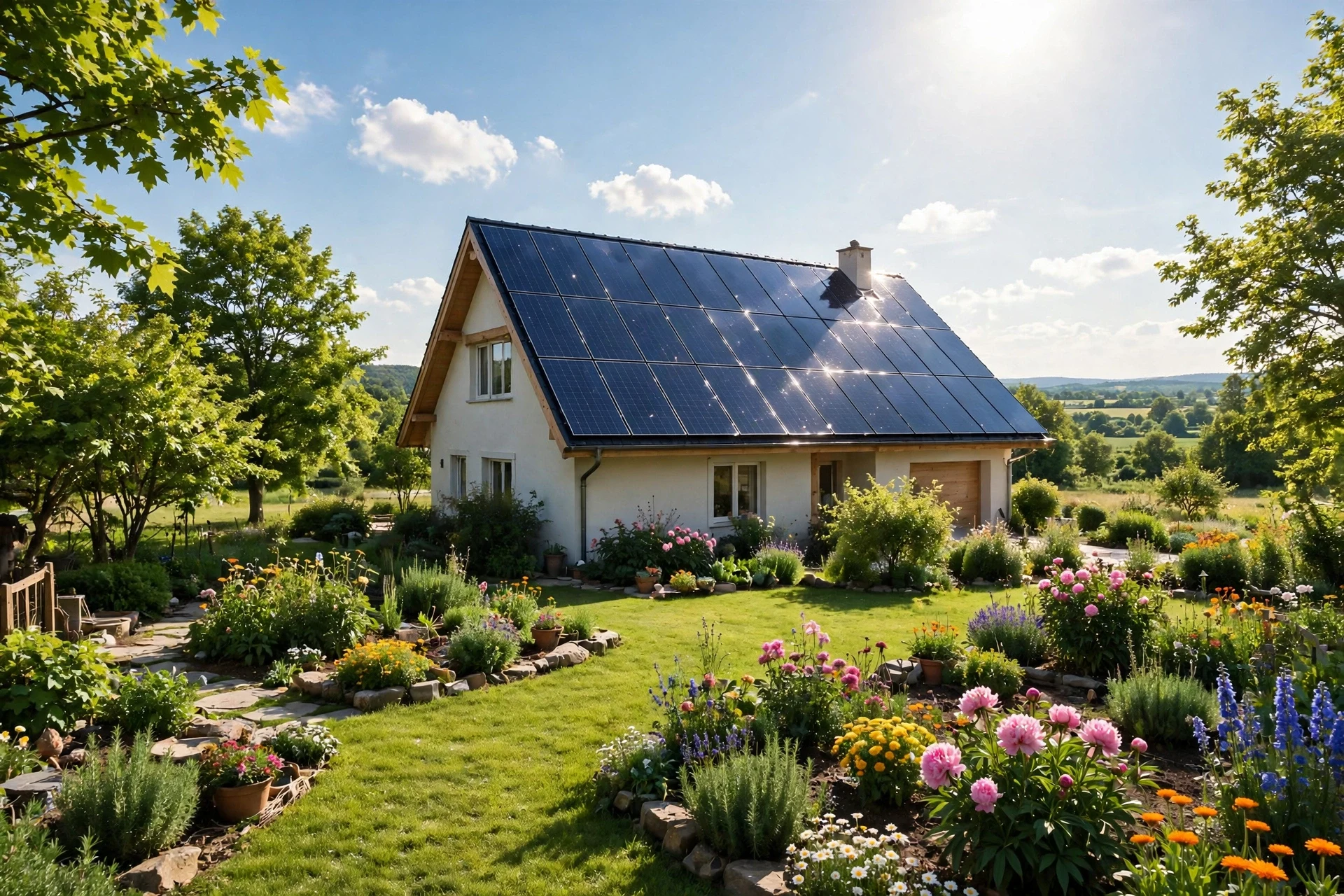
It was a Saturday morning in June, and the sun was already warm on the pavement. Eight-year-old Noah was riding his scooter to the corner shop when something made him stop and stare. The house at the end of his street had changed. Its roof, which used to be plain grey tiles, was now covered in shiny dark-blue rectangles that glittered in the sunshine like a giant sheet of glass.
Noah ran back home, his scooter banging against the garden gate. “Mum, Dad, come and look!” he shouted. “The Patels have put blue mirrors on their roof!”
His mum laughed and followed him outside. His dad was already standing on the pavement, shading his eyes with one hand. “They are not mirrors,” his dad said. “They are solar panels. They catch sunlight and turn it into electricity for the house.”
Noah frowned. “But how?” he asked. “Sunlight is just light. How can light become the electricity that turns on my bedroom lamp?”
His dad smiled. “That is a very good question. And the answer is one of the cleverest tricks in the whole world of science. Would you like to hear it?”
Noah nodded so hard his hair flopped into his eyes. And so, standing on the pavement in the sunshine, his dad began to explain.
So What Is a Solar Panel, Really?
A solar panel is a machine that makes electricity from sunlight. That is the whole job, and it does that job all day long, every sunny day, without making a sound.
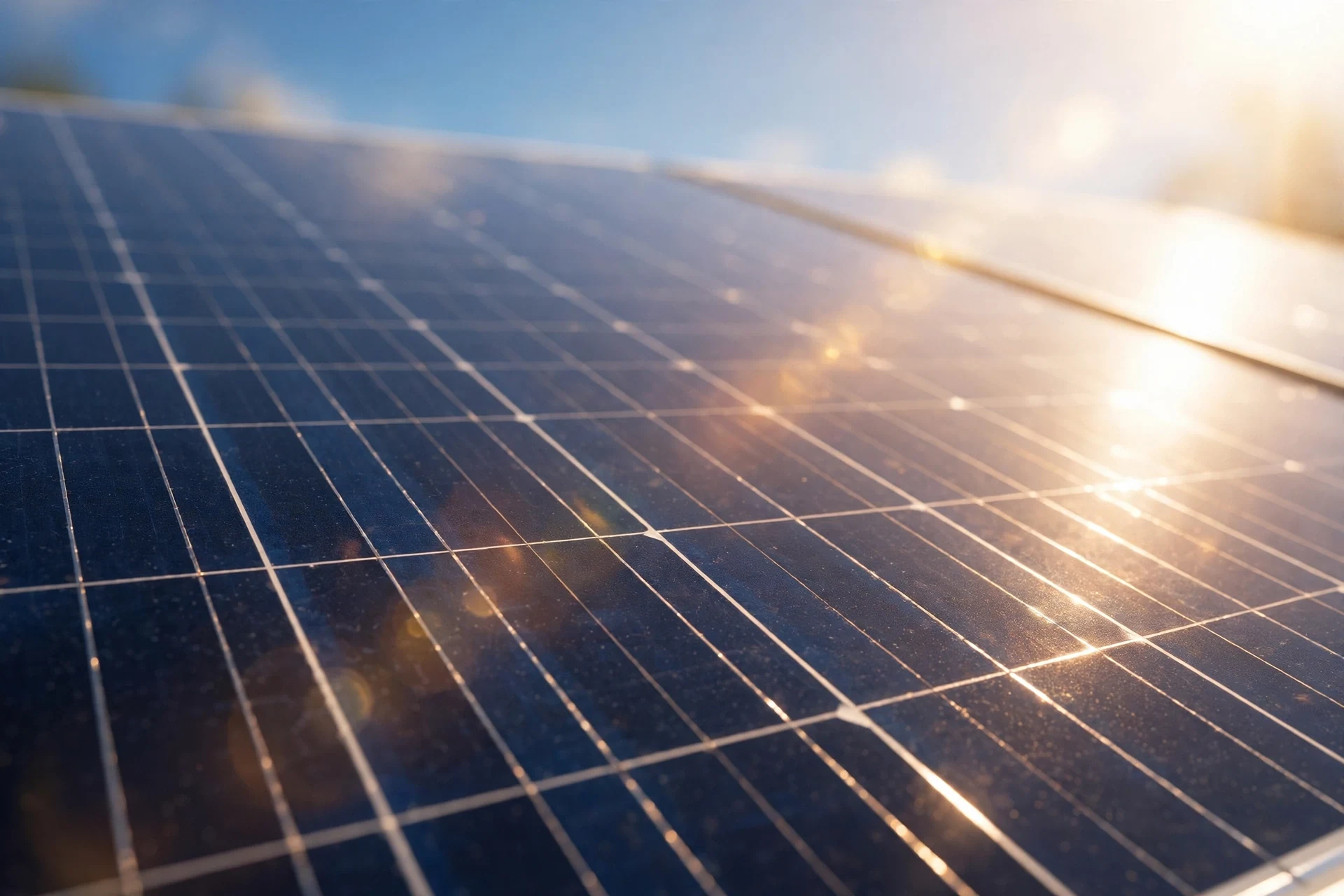
Most of the panels you see on roofs are big flat rectangles, about the size of a door. They are usually dark blue or almost black, and their surface is smooth and shiny, like a window. If you look closely, you can see a grid of thin lines across the surface, and the panel is divided into lots of small squares. Each of those squares is a solar cell, and each cell is a tiny electricity maker.
A normal panel has 60 or 72 of these cells, all joined together like tiles on a floor. The cells are the part that does the real work. The frame around them, the glass on top, and the wires at the back are there to protect the cells and to carry the electricity away. But without the cells, a panel would just be a shiny board doing nothing.
Here is the most surprising part. A solar panel has no moving parts at all. A car engine has pistons that pump up and down. A wind turbine has blades that spin. A solar panel does none of that. It just sits there, quiet as a picture on a wall, while sunlight falls on it and electricity flows out of it. That is why panels can last for such a long time. There is almost nothing inside them to wear out.
Sunlight Is Made of Tiny Packets
To understand how a panel works, you first need to understand what sunlight really is. It looks like one smooth, golden sheet of light, but it is not. Sunlight is made of billions and billions of tiny packets of energy, and scientists call each packet a photon.
You cannot see a single photon. It is far too small. But you can feel what photons do. When you stand in the sunshine and feel warmth on your face, that warmth is photons bumping into your skin and giving you their energy. When sunlight fades a poster in a shop window, that is photons slowly changing the colours. Photons carry energy, and they carry it at an incredible speed, all the way from the Sun to the Earth in about eight minutes.
Most things just soak up photons and turn their energy into warmth. That is why a dark car gets hot in the sun, and why a black T-shirt feels warmer than a white one. But a solar cell is special. It does not just turn photon energy into warmth. It turns it into moving electricity. And that is where the clever part begins.
The Photovoltaic Effect: A Discovery from 1839
The trick a solar panel uses has a long name: the photovoltaic effect. Photo means light, and voltaic means electricity. So the photovoltaic effect simply means making electricity from light.
A French scientist named Alexandre Edmond Becquerel first noticed this effect in 1839. He was only nineteen years old at the time, which is not much older than a school leaver. He was doing an experiment with two metal plates dipped in a liquid, and he noticed something strange. When sunlight fell on the plates, they made a small electric current. When he covered them up, the current stopped. Light in, electricity out.
Becquerel did not know it at the time, but he had found the key to solar power. For a long time, nobody knew what to do with his discovery. The effect was tiny, and the materials he used were not very good at it. It took more than a hundred years, and the work of many other scientists, before anyone could build a panel that made enough electricity to be useful.
The first real solar cell came in 1954, when scientists at Bell Labs in America made a cell from silicon that could power a small radio. It was very expensive, so at first solar cells were only used in places where money did not matter, like on satellites in space. A satellite cannot plug into a wall, so sunlight was the perfect fuel. Over time, the cells got cheaper and better, and now they sit on millions of roofs all over the world.
Inside a Cell: Silicon and Knocked-Loose Electrons
Now let us zoom in, right into one little solar cell, and see what actually happens when a photon arrives. This is the heart of the whole thing, so take it slowly.
A solar cell is made mostly of silicon. Silicon is a grey, shiny material that comes from sand. Yes, ordinary sand, the kind you find on a beach. Scientists purify the sand, melt it, and grow it into a crystal, and then they slice that crystal into thin wafers, almost like slicing a loaf of bread. Each wafer becomes a solar cell.
Silicon is special because of the way its tiny parts are arranged. Inside silicon, there are tiny particles called electrons, and in a normal piece of silicon, those electrons sit still, locked in place, like children sitting quietly in a classroom. They have energy, but they are not going anywhere.
Then a photon arrives. It smashes into the silicon, like a ball thrown into the classroom, and it gives its energy to an electron. The electron suddenly has enough energy to break free from its seat. It jumps up and starts moving. And when lots of electrons start moving in the same direction, that moving flow is exactly what electricity is.
But there is one more clever detail. If the electrons just ran around in circles, they would be useless. The cell needs them to run in one direction, like water flowing down a pipe. So scientists build the cell in two layers, and the place where the two layers meet acts like a one-way door. It pushes the freed electrons in one direction only. They flow out of the cell, along a wire, and away to do useful work.
That is the photovoltaic effect, in plain words. Light knocks electrons loose. The cell pushes them in one direction. The moving electrons are electricity.
The Journey: From Sunlight to Your Lamp
So the panel makes electricity. But the journey is not over yet. The electricity has to travel from the roof to your bedroom lamp, and it changes shape along the way. Let us follow it, step by step, like following a parcel on its way to your door.
Step one: sunlight hits the panel. Photons pour down onto the cells, knock electrons loose, and the cells make electricity. The electricity that comes straight out of a panel is called DC, which stands for direct current. Direct current is electricity that flows in one straight direction, like a river flowing one way down a hill.
Step two: the DC electricity travels down a wire to a box called an inverter. The inverter usually sits on the wall of the house, near the electricity meter, or sometimes in the loft. It is about the size of a small suitcase, and it hums very quietly when it works. Its job is to change the electricity from DC into AC, which stands for alternating current.
Why change it? Because the things in your home run on AC electricity. Your lamps, your fridge, your television, and your phone charger all expect AC. The electricity that comes from the big power stations and travels through the wires in the street is AC too. So the inverter is a translator. It takes the panel’s DC and turns it into AC that your home understands, like changing a sentence from one language into another.
Step three: the AC electricity flows into the fuse box of the house, and from there it spreads out through the wires in the walls to every room. When you switch on a light, some of that solar electricity flows up to the bulb. When you open the fridge, the fridge drinks a little of it. When you plug in a games console, the console runs on it too.
What Happens to the Extra Power?
On a bright sunny day, a roof full of panels can make more electricity than the house needs at that moment. The family might be out at work and school, the fridge is humming quietly, and nothing else is switched on. So where does the extra electricity go? It does not go to waste. It has two useful places to go.
The first place is a battery. Some homes have a big battery, about the size of a suitcase, fitted on the wall of the garage or the utility room. When the panels make more electricity than the house needs, the extra power flows into the battery and is stored there, like saving money in a piggy bank. Later, when the sun goes down and the family comes home, turns on the lights, and starts cooking dinner, the battery gives the stored electricity back. The house can use sunshine after dark, because it saved some earlier.
The second place is the electricity grid. The grid is the huge network of wires that carries electricity all over the country. If a home has no battery, or if the battery is already full, the extra solar electricity flows out of the house and into the grid, where it helps power other homes nearby. In many countries, the electricity company even pays the homeowner a small amount for that extra power. It is a bit like growing more tomatoes than you can eat and selling the spare ones to your neighbours.
Cloudy Days and Dark Nights
Here is a question almost everyone asks about solar panels: what happens when it is cloudy? And what happens at night?
On a cloudy day, panels still work, just not as well. Clouds are like a thin curtain in front of the sun. Some of the sunlight still gets through the curtain, so photons still reach the panel, and electrons still get knocked loose. But fewer photons means less electricity. On a bright but cloudy day, a panel might make about a quarter to a half of what it makes in full sunshine. On a very dark, stormy day, it might make only a tenth. The panel never gives up completely while there is daylight, it just works more slowly, like a runner jogging instead of sprinting.
At night, panels stop completely. There are no photons falling on them, so no electrons get knocked loose, and no electricity flows. The panel just rests, quiet on the roof, waiting for the morning. That is why a battery is so useful, and why most homes stay connected to the grid. At night, the house simply uses electricity from the grid, the same as any other home. In the morning, when the sun rises, the panels wake up and start making power again.
The Calculator and the Torch
You do not need a roof full of panels to see the photovoltaic effect at work. You have probably held it in your hand already.
Think about a small solar calculator, the kind many children have in a school pencil case. On its top edge there is a tiny dark strip, no bigger than a postage stamp. That strip is a tiny solar panel, with just a few little cells inside it. When light falls on the strip, the cells make a small amount of electricity, just enough to run the calculator. No battery, no plug, no charging. You can press the buttons and do sums all day, as long as there is light in the room. Cover the strip with your thumb, and the numbers on the screen fade away. Lift your thumb, and they come straight back.
Now think about a torch. A torch needs a battery, and when the battery runs out, the torch goes dark until you buy a new one. A solar calculator never runs out in that way. As long as there is light, it has power. The calculator strip and the roof panel work in exactly the same way. The only difference is size. The calculator strip makes a tiny trickle of electricity, enough for adding and subtracting. The roof panel makes a strong flow, enough for lights, a fridge, and a television. Same science, different scale.
Where Solar Panels Live
Roofs are the most common home for solar panels, but they are far from the only one. Once you know what to look for, you will start seeing panels everywhere.
Big open fields in the countryside are often covered in rows and rows of panels, all tilted towards the sun like a field of dark blue flowers. These are called solar farms, and they can make enough electricity for thousands of homes. Workers sometimes use a drone to fly over a solar farm and check the panels from the air, because walking around thousands of panels would take all day.
Why Panels Last So Long, and Are They Worth It?
A solar panel has no moving parts, and that might sound like a small detail. It is actually one of the biggest reasons solar power works so well. Think about a bicycle. It has wheels that turn, a chain that moves, and brakes that rub. Every time you ride it, those parts wear down a little. After a few years, the chain needs oil and the tyres need replacing. Moving parts always wear out, because moving means rubbing, and rubbing means damage, slowly, over time.
A solar panel has none of that. Nothing turns, nothing spins, nothing rubs. The panel just sits there while photons do the work. That is why most panels come with a promise, called a warranty, that they will still work well for 25 years or more. Some panels that were put up in the 1980s are still making electricity today, more than 40 years later, with almost no care at all. The inverter usually needs replacing after about 10 to 15 years, but that is a small job, and it costs far less than a new set of panels.
Is solar power worth it? For many families, the answer is yes, and the reasons are simple. First, the electricity a panel makes is free once the panel is paid for. The sun costs nothing. So every bit of electricity the panels make is electricity the family does not have to buy from the grid, and over months and years, those savings add up to a large amount of money. Second, solar power is clean. It makes no smoke, no noise, and no dirty air. A power station that burns coal or gas makes electricity too, but it also makes pollution that warms the planet. A solar panel makes the same electricity with nothing but sunlight.
The Quiet Roof That Powers a Home
Let us go back to Noah on Maple Lane. His dad finished explaining, and Noah stood quietly for a moment, looking up at the blue panels glittering in the sun.
“So the sun is making electricity right now?” Noah asked.
“Right now,” his dad said. “While we are standing here talking, those panels are making power for the Patels’ fridge, and for their lights tonight, if they have a battery.”
The next time you see a house with shiny dark-blue panels, you will know what is happening up there. No noise, no smoke, no moving parts. Just sunlight, silicon, and a very clever trick that a nineteen-year-old French scientist first noticed almost 200 years ago. And every time you switch on a light in a home with panels, a little bit of that light may have come from the sun itself. It is a nice thought, really. The same sun that warms your face on a summer morning can also light your bedroom at night, charge your phone, and run the games console in the living room. All it takes is a panel, some silicon, and a clear sky.

Frequently Asked Questions
How does a solar panel work in simple words?
A solar panel turns sunlight into electricity. Sunlight is made of tiny packets of energy called photons. When photons hit the silicon cells inside the panel, they knock tiny parts called electrons loose, and the flow of those moving electrons is electricity. A box called an inverter then changes that electricity into the kind your home can use.
What is the photovoltaic effect?
The photovoltaic effect is the name for making electricity from light. Photo means light, and voltaic means electricity. A French scientist named Alexandre Edmond Becquerel first noticed it in 1839, when sunlight falling on metal plates made a small electric current. Modern solar cells use the same effect, but with silicon, which works far better than the materials Becquerel had.
Do solar panels work on cloudy days?
Yes, they do, but they make less electricity. Clouds block some of the sunlight, so fewer photons reach the panel, and fewer electrons get knocked loose. On a bright cloudy day, a panel might make about a quarter to a half of its normal power. On a very dark, stormy day, it makes much less, but it does not stop completely while there is daylight.
Why do solar panels not work at night?
Solar panels need light to work. At night there is no sunlight, so no photons fall on the cells, no electrons get knocked loose, and no electricity flows. Homes with panels use electricity from the grid at night, or from a battery that stored extra solar power during the day.
What does an inverter do?
An inverter is a box that changes the kind of electricity a solar panel makes into the kind your home can use. The panel makes DC electricity, which flows in one direction. Your home runs on AC electricity, which flows back and forth. The inverter translates DC into AC, a bit like changing a sentence from one language into another.
How long do solar panels last?
Most solar panels are built to last 25 years or more, and many keep working well for much longer. They last so long because they have no moving parts, so there is almost nothing inside them to wear out. The inverter usually needs replacing after 10 to 15 years, but the panels themselves can keep making electricity for decades.
More from Zorium Daily
- How Does an Electric Car Work?
- How Does an Air Conditioner Work?
- How Does a Microwave Oven Work?
- How Does a Remote Control Work?
The next time you walk past a house with shiny blue panels on its roof, you will know the secret hiding up there. Sunlight falls, photons knock electrons loose, and quiet electricity flows down a wire into a home. No fire, no smoke, no noise, just the sun doing what it has always done, and a clever panel turning it into power.