How Does a Coffee Shop Make Money?
SUMMARY OF THIS ARTICLE
- A coffee shop makes money when the price of its drinks and food is higher than the cost of making and selling them. The money left after all costs is called profit.
- Most of the money comes from drinks, especially coffee. Food, bags of beans, mugs, catering, and delivery add extra money.
- A single cup may look very profitable, but rent, staff pay, ingredients, cups, machines, and waste all take a share before any profit is left.
- Many well-run small coffee shops keep only about 5 to 15 cents of profit from each dollar of sales. The rest goes on costs.
- Location, regular customers, a simple menu, and careful control of waste are often more important than selling the fanciest drink.
How Does a Coffee Shop Make Money?
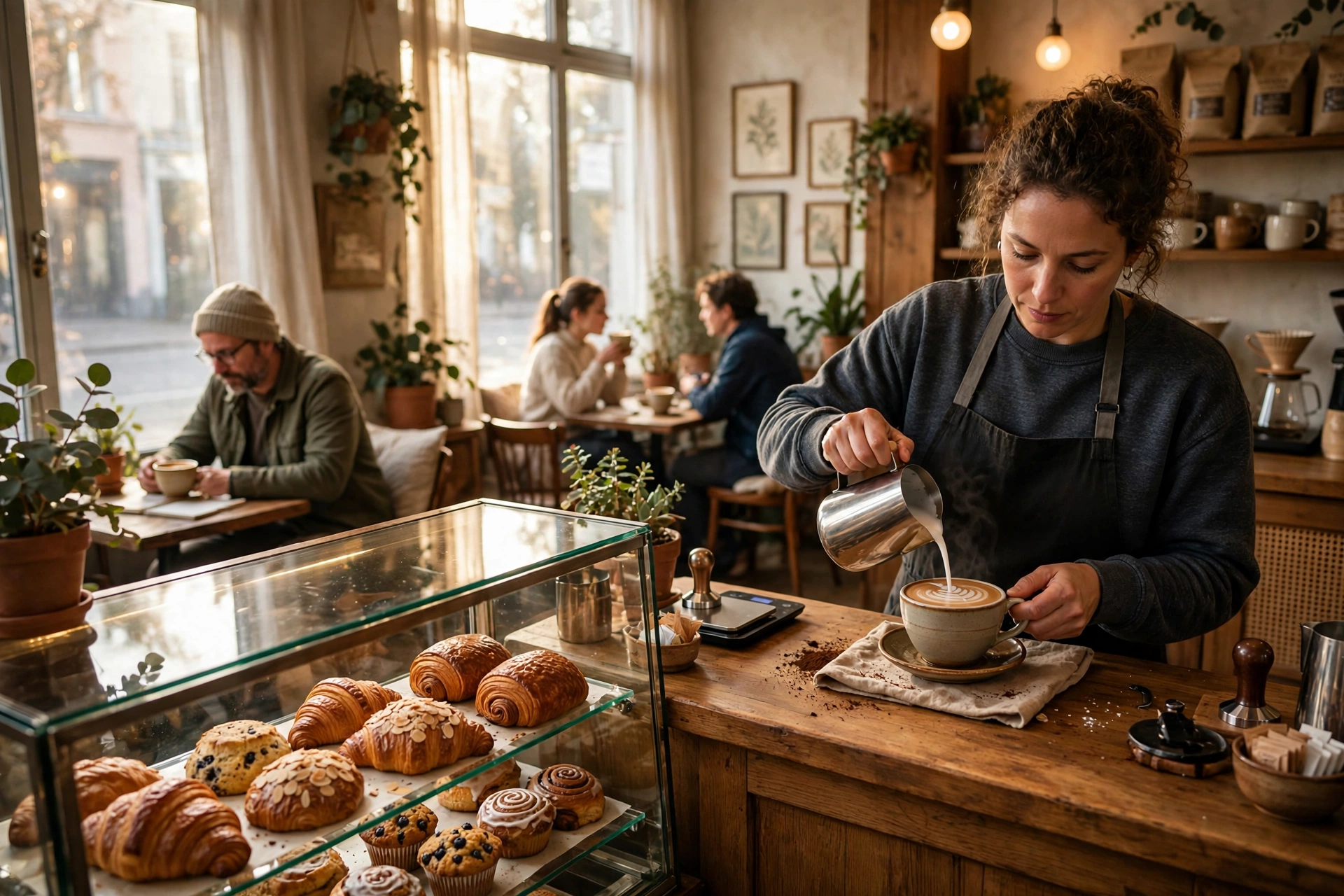
Picture a busy morning in a small coffee shop. The door keeps opening. People order a latte, a flat white, or a simple black coffee. Some add a muffin. Some grab a bag of beans to take home. The till rings again and again.
It is easy to look at that scene and think the owner must be rich. After all, a cup of coffee is mostly hot water and a small amount of ground beans. How can it cost five dollars? Where does all that money go?
The short answer is simple. A coffee shop makes money like almost every other shop. It buys things, turns them into something people want, and sells that thing for more than it cost to make and serve. The difference between money coming in and money going out is profit. Profit keeps the lights on, pays the staff, and lets the shop stay open next month.
But a coffee shop is not just selling coffee. It is selling speed, comfort, habit, and a small moment of pleasure in a busy day. It must also pay for rent, machines, milk, cups, staff, electricity, repairs, and coffee that is never sold at all. This article explains how the money flows in, where it flows out, and why some coffee shops do well while others struggle.
All money figures here are typical examples, not promises or guarantees. Real costs change a lot from city to city. A shop in central London or New York pays far more rent than a shop in a small town.
The Simple Idea Behind Every Coffee Shop
Every business needs the same basic maths. Money in must be more than money out. If a shop sells 200 cups a day at an average price of 4 dollars, it takes in 800 dollars from coffee alone. If it spends 750 dollars that day on beans, milk, cups, staff, rent, and electricity, it has only 50 dollars left. That 50 dollars is the profit for the day. If it spends 850 dollars, it loses 50 dollars that day, even though it was busy.
Being busy is not the same as being profitable. Profit depends on the gap between price and cost, and on how many customers come in, day after day. Revenue is money from sales; profit is what remains after costs.
A shop also thinks about the average spend: how much one customer spends in one visit. If most customers buy only a small black coffee for 3 dollars, the shop needs a lot of customers. If many buy a large latte and a pastry for 8 dollars, it needs fewer customers to reach the same total. That is why staff often ask, “Would you like a pastry with that?”
Where the Money Comes In
In a typical coffee shop, drinks bring in about 60 to 70 percent of all sales. Food brings in about 20 to 30 percent. The rest comes from beans, mugs, catering, and delivery. These shares change from shop to shop, but drinks almost always come first.
Hot drinks
Espresso drinks are the stars. A latte, a cappuccino, a flat white, and a mocha all start with the same base: a shot of espresso made from ground beans and hot water under pressure. Milk, foam, chocolate, or syrup turns that base into different drinks at different prices.
Hot drinks are quick to make, easy to carry, and part of a daily habit for millions of people. Many customers buy the same drink every morning. That habit is gold. A customer who comes five days a week is worth far more than a customer who comes once and never returns. Black coffee is cheaper to make, because it uses no milk, but it also sells for less. Milky drinks cost more to make, but they sell for more too.
Cold drinks
Iced coffee, cold brew, and iced lattes sell well in warm weather and all year round in warmer places. They often cost a little more to make, because they need ice, larger cups, and sometimes extra syrup. But customers happily pay a higher price for a cold drink on a hot day. Cold drinks also help in summer, when hot drink sales fall.
Food
Pastries, muffins, cakes, cookies, and sandwiches add a second reason to visit. Food rarely makes as much money per item as coffee, because ingredients cost more and fresh food goes off quickly. A sandwich not sold by the end of the day may have to be thrown away. That is money lost.
Still, food matters. It raises the average spend, and it brings in customers at lunch time, when coffee sales alone might be slow. Many small shops buy pastries from a local bakery instead of baking them. This saves time and kitchen space, but the bakery takes a share of the price, so the shop must sell each pastry for more than it paid.
Bags of beans and merchandise
Many shops sell bags of their own beans for home brewing. This is smart, because the shop already buys beans in bulk and can sell a bag at a higher retail price. Some shops also sell mugs, reusable cups, brewing equipment, and gift cards. A gift card is especially useful, because the shop gets the money now, even though the customer spends it later. Merchandise also works as advertising when customers use a branded mug at work.
Takeaway, delivery, and subscriptions
Takeaway is now a huge part of coffee shop sales. A customer who grabs a coffee on the way to work is just as valuable as one who sits down, and often more profitable, because the shop needs fewer tables for them and they leave quickly, making room for the next person.
Delivery apps bring extra orders, but they take a large fee. A shop might sell a 5-dollar coffee through an app and keep only about 3.50 dollars after the fee. That is why many shops prefer direct orders, in person or through their own website.
Some shops offer subscriptions: a fixed monthly payment for a set number of coffees, or a discount on every drink. This gives steady, predictable money and encourages repeat visits. The shop must be careful, though. If subscribers drink far more than expected, the deal can lose money.
Catering and events
A shop can also earn money by catering office meetings and local events, selling large jugs of coffee and trays of pastries. These jobs bring in a large sum at once, which helps in a slow week. Coffee-tasting evenings and latte art classes may not make much on their own, but they bring new people through the door.
Follow One Cup: Where Does Five Dollars Go?
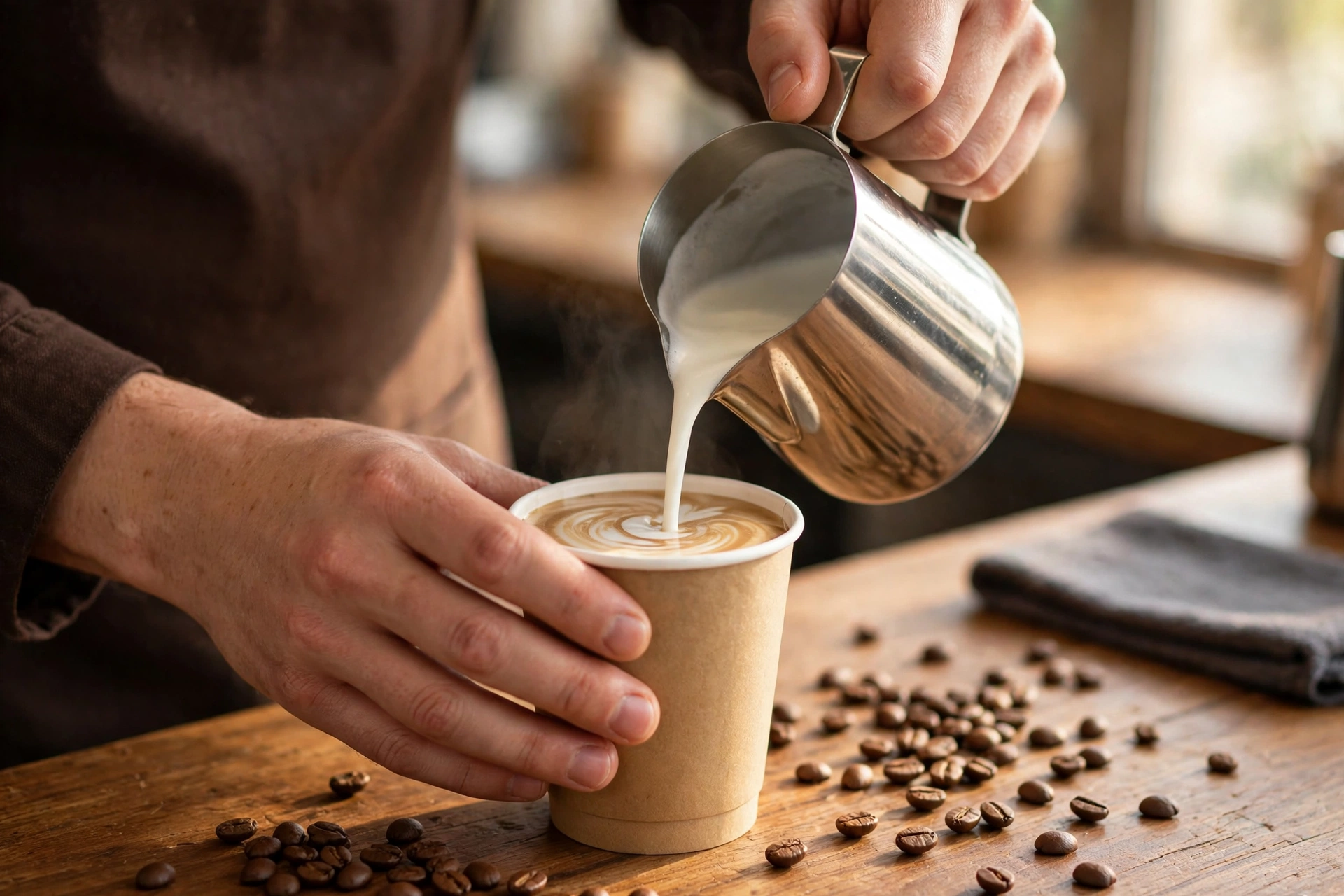
You pay five dollars for a latte. Does the owner keep five dollars? No. Here is one realistic way that 5 dollars might be divided, using example figures:
- Coffee beans: about 50 cents.
- Milk and other ingredients: about 75 cents.
- Cup, lid, and sleeve: about 30 cents.
- Staff time: about 1 dollar to 1.25 dollars, covering the order, the drink, cleaning, and opening and closing.
- Rent, electricity, water, and other fixed costs: about 1 dollar. Rent must be paid whether the shop sells ten cups or five hundred cups that day.
- Card fees, marketing, insurance, and repairs: about 30 to 50 cents.
Added up, one latte costs roughly 3.80 to 4.10 dollars to make and serve. That leaves about 90 cents to 1.20 dollars of profit per cup, before tax, or about 18 to 24 percent of the price.
That profit is only real if the shop sells enough cups. On a slow day, rent and staff costs stay the same, but fewer cups are sold, so each cup must carry a bigger share of those fixed costs and profit shrinks.
The profit on ingredients alone can mislead. Counting only beans, milk, and the cup, a 5-dollar latte seems to make about 3.45 dollars. That is called gross profit. But the owner must still pay staff, rent, and all other bills from that amount. What is left after everything is called net profit, and it is much smaller.
The Biggest Costs, One by One
Ingredients and packaging
Ingredients are called the cost of goods sold: beans, milk, alternative milks such as oat or soya, syrups, sugar, tea, chocolate, and food. Packaging means cups, lids, sleeves, napkins, and bags. For drinks alone, ingredients usually take 25 to 35 percent of the price. Food takes more, because fresh ingredients cost more and some food is wasted. A shop that wastes milk, throws away pastries, or spills coffee often will see this cost rise fast.
Staff pay
Staff pay, or labour cost, is usually the biggest cost after ingredients, often 25 to 40 percent of sales. A shop needs baristas, and larger shops need cooks, cleaners, and a manager. Labour is tricky because it does not rise and fall neatly with sales. A shop needs staff before the morning rush, even if the first hour is quiet, and staff to clean and close afterwards. Too many staff means paying for idle time. Too few means long queues, and customers leave. Good scheduling matches staff numbers to the busiest hours.
Rent and utilities
Rent is the price of the location, and location matters more in coffee than in many other businesses. A shop next to a train station, offices, or a university gets many passing customers, but pays high rent. A shop on a quiet side street pays less rent, but must work harder to attract customers. Rent and utilities together often take 10 to 15 percent of sales, but in an expensive city they can take much more. Utilities include electricity, gas, water, heating, and internet. A rent that looks affordable when the shop is busy can become a heavy burden in a slow month, and this is a common reason small shops close.
Equipment, fees, and tax
A professional espresso machine can cost thousands of dollars. Add grinders, fridges, ovens, a till system, tables, and chairs, and the starting cost is large. The shop must earn enough over time to pay these back. Machines also need cleaning, servicing, and repairs. A broken espresso machine on a Saturday morning can cost a whole day of sales. Card fees take a small slice of every card sale, while delivery app fees take a much bigger slice. Marketing, insurance, licences, and permits also cost money. Tax is another cost: in some places it is included in the menu price, and in others it is added at the till, but either way the shop passes it to the government and does not keep it.
A Monthly Example: How the Numbers Add Up
Here is a made-up example for a small neighbourhood shop. Suppose it sells about 300 cups a day, plus food and a few bags of beans, for total monthly revenue of 30,000 dollars:
- Ingredients and packaging: 9,000 dollars (30 percent)
- Staff pay: 9,000 dollars (30 percent)
- Rent and utilities: 4,500 dollars (15 percent)
- Card fees, marketing, insurance, and repairs: 3,000 dollars (10 percent)
- Other costs, including licences and waste: 1,500 dollars (5 percent)
- Total costs: 27,000 dollars
- Profit left: 3,000 dollars (10 percent)
The shop keeps 10 cents of profit from each dollar of sales, a healthy result for a small independent shop. Many guides say well-run independent shops often keep between 5 and 15 percent of sales as net profit. Some do better, some do worse, and some lose money.
Small changes matter. If rent rises by 1,000 dollars a month, profit falls to 2,000 dollars. If the shop sells 10 percent more coffee with the same staff and rent, profit rises sharply, because extra sales do not bring the same extra fixed costs.
Why Some Coffee Shops Make More Than Others
Location comes first. A shop on a busy street near offices, a station, a hospital, or a school gets free passing trade. But a great location costs more rent. The trick is to find a place where the extra customers are worth the extra rent.
Regular customers are the backbone of a shop. They come often, order quickly, and bring friends. Loyalty cards, friendly service, and remembering a usual order help build regulars. A shop with 200 regulars visiting three times a week has stable sales, even on a rainy day. A shop depending only on tourists has a much shakier income.
Speed matters most in the morning rush, when most sales happen. A shop serving quickly can sell far more cups than a slow shop in the same hours. Speed comes from good layout, enough staff at peak times, a simple menu, and machines that work well.
A simple, well-priced menu helps too. A menu with too many drinks slows service and increases waste, because the shop must stock ingredients that are rarely used. If prices are too low, the shop sells many cups but makes too little on each one. If prices are too high, customers go elsewhere.
Controlling waste is a quiet profit skill. Milk left in a jug, coffee ground but not used, and pastries thrown away at closing time all cost money. Tracking waste shows which items to order less of, or replace with better sellers.
Different Types of Coffee Shops
An independent cafe offers seating and a relaxed atmosphere, but pays more rent and needs more staff. A takeaway kiosk or cart has lower costs, so it can keep a higher share of sales, but it sells fewer items and bad weather hurts it. A large chain gets lower supplier prices through bulk buying, but pays for management and a head office. Each model can work, as long as its costs match its way of selling.
Common Mistakes That Eat Profit
The first mistake is underpricing. An owner may set low prices to attract customers, hoping to raise them later, but customers get used to low prices and may leave when they rise. It is better to set a fair price from the start, based on real costs.
The second is offering too much choice. A menu with thirty drinks slows service, increases waste, and confuses customers, while most people order the same few drinks anyway.
The third is ignoring waste, which can equal hundreds of dollars over a month.
The fourth is signing an expensive lease without checking the numbers. If rent needs 500 cups a day just to break even, but the street only brings 200 people a day, the shop will struggle no matter how good the coffee is.
The fifth is spending too much on the opening, leaving too little money for the first slow months. Guides often say a new shop may take nine months to a year, or longer, to become steadily profitable.
How Coffee Shops Try to Earn More, Fairly
Shops can raise the average spend gently, for example by suggesting a pastry with a coffee, or a larger size for a small extra charge, as long as the extra item is something the customer actually wants. A loyalty card, such as buy nine coffees and get the tenth free, brings customers back nine times for the cost of one free drink. Selling more in quiet hours, negotiating better supplier prices, and adding high-profit items such as bags of beans and gift cards all help. A good till system shows which drinks sell best and which hours are busiest. None of this works if the coffee is bad or the service is rude.
What About Tips?
In most shops, tips go to the staff, not to the business. Tips do not usually count as shop profit, but they help indirectly: good tips help keep good staff, and good staff give better service, which brings in more customers.
Is Owning a Coffee Shop a Good Way to Make Money?
It can be, but it is not easy money. Coffee is popular, the product is relatively cheap to make, and daily habits bring repeat customers. A well-run shop in a good location, with loyal customers and controlled costs, can make a steady profit. But rent and wages keep rising, bean and milk prices change, and a quiet season can cut sales for weeks. Many new shops lose money at first.
For someone thinking of opening a shop, the key step is to do the maths before signing a lease or buying machines: how many cups must be sold each day to cover all costs? Keep enough money aside to survive the first year. For a customer, the lesson is simpler. Your coffee price pays for much more than beans and water: the barista, the rent, the machine, the cup, and the electricity.
The Big Picture in Simple Words
A coffee shop makes money by turning low-cost ingredients into a drink people want, and selling it for more than the total cost of making and serving it. Drinks bring in most of the money, and food, beans, merchandise, delivery, and events add more. Costs take most of the price. What is left is profit, and for many small shops that is only a small share of each dollar. The shops that do best are often the ones in a good spot, with regular customers, fast morning service, a simple menu, fair prices, and careful control of waste.
Frequently Asked Questions
How does a coffee shop make money?
By selling drinks and food for more than the total cost of ingredients, staff, rent, and running the shop. The money left after all costs is profit. Most sales come from coffee drinks, with extra money from food, beans, merchandise, delivery, and events.
How much profit does a coffee shop make on one cup?
It depends on the drink and the shop. In a typical example, a 5-dollar latte might cost about 3.80 to 4.10 dollars to make and serve, once staff, rent, and other costs are included, leaving about 90 cents to 1.20 dollars of profit per cup, before tax. Counting only beans, milk, and the cup makes profit look much bigger, but that ignores the real running costs.
What is a normal profit margin for a coffee shop?
Many guides say a well-run independent shop keeps about 5 to 15 percent of sales as net profit: for every 100 dollars of sales, about 5 to 15 dollars remains after all costs. Some shops do better, and some lose money, especially in their first year. These figures vary by location and size, and are not guarantees.
What is the biggest cost for a coffee shop?
Staff pay and ingredients are usually the two biggest costs, together often taking 55 to 70 percent of sales. Rent is usually next, especially in busy cities. Waste, card fees, and delivery app fees also reduce profit.
Do coffee shops make more money from coffee or food?
Coffee drinks usually bring in more money and more profit. Drinks often account for 60 to 70 percent of sales. Food is still important, because it raises the average spend and brings people in at lunch time, but fresh food costs more and some of it is wasted.
Why is coffee so expensive in a coffee shop?
You are not only paying for beans and water. The price also pays for milk, the cup, the barista’s time, rent, electricity, machines, repairs, insurance, card fees, and waste. Home coffee costs less because you do not pay for a shop, staff, or service.
How long does it take for a new coffee shop to make a profit?
It often takes time. Many guides say a new shop may take around nine months to a year, or longer, to become steadily profitable, while it builds regular customers and covers starting costs.
Is it better to open a coffee shop or a coffee cart?
It depends on location and budget. A cart has lower rent and fewer staff, so it can keep a higher share of sales, but it sells fewer items and is affected by weather. A full cafe sells more and offers seating, but pays more rent and needs more staff.
More from Zorium Daily
- Browse more stories in the Business section, including our Business Desk guides to how small food businesses earn money.
- You may also enjoy our Business Desk posts How Does a Restaurant Make Money? and How Do Small Shops Compete With Big Supermarkets? — both explore the same simple idea from a different angle: a business survives when sales cover costs and leave a fair profit.