US Midterm Elections 2026: Americans Vote Today — What Is at Stake?
As of the morning of 3 November 2026 (Dhaka time) — this is a fast-moving story and details may change during the day.
Note: Voting is still ongoing on Tuesday 3 November 2026, and no results or winners have been declared yet. The House entered the election with Republicans holding 218 seats to the Democrats’ 214, and the Senate with Republicans holding 53 seats to the Democrats’ 47. Control of either chamber may remain undecided for days as counting continues. Any forecast is a forecast only, not a result.
SUMMARY OF THIS ARTICLE
- Americans are voting today, 3 November 2026, in midterm elections that will decide who controls the United States Congress.
- All 435 seats in the House of Representatives and 35 of the 100 seats in the Senate are being contested, along with governors in 36 states.
- Republicans currently control both the House and the Senate, so these elections could change the balance of power in Washington.
- More than 58.6 million people had already voted early by the evening of 2 November, according to the University of Florida Election Lab.
- Results may take hours, or in close races days, because mail-in ballots and different state rules mean counting does not finish at the same speed everywhere.
What Are Midterm Elections?
In the United States, a president serves for four years. In the middle of that four-year term, Americans vote in what are called midterm elections. The word “midterm” simply means “in the middle of the term.”
These elections do not choose a new president. Instead, they choose the people who make laws in Congress, and in many states they also choose governors and other local leaders.
Congress is the part of the American government that writes and passes laws. It has two parts. The House of Representatives has 435 members. Each member represents one small area, called a district, for two years. The Senate has 100 members, two from each of the 50 states, and each senator serves for six years.
Because House members serve only two years, every single House seat is voted on in every midterm election. Senators serve longer, so only some Senate seats are voted on each time. In 2026, 35 of the 100 Senate seats are being contested.
Think of it like this. The president is like the head of a team, but Congress decides many of the rules the team must follow. If the president’s party controls Congress, it is usually easier for the president to pass new laws. If the other party controls Congress, it can block, change, or slow down those laws. That is why midterms matter so much, even though no president is on the ballot.
Midterm elections also matter for everyday life in the states. Governors lead each state government. They make decisions about schools, roads, health services, and state taxes. In 2026, voters in 36 states are choosing a governor. Many cities and counties are also choosing mayors, judges, and other local officials, and voters may be asked to decide on local questions, such as whether to spend money on a new school or change a local rule.
What Is Happening Today?
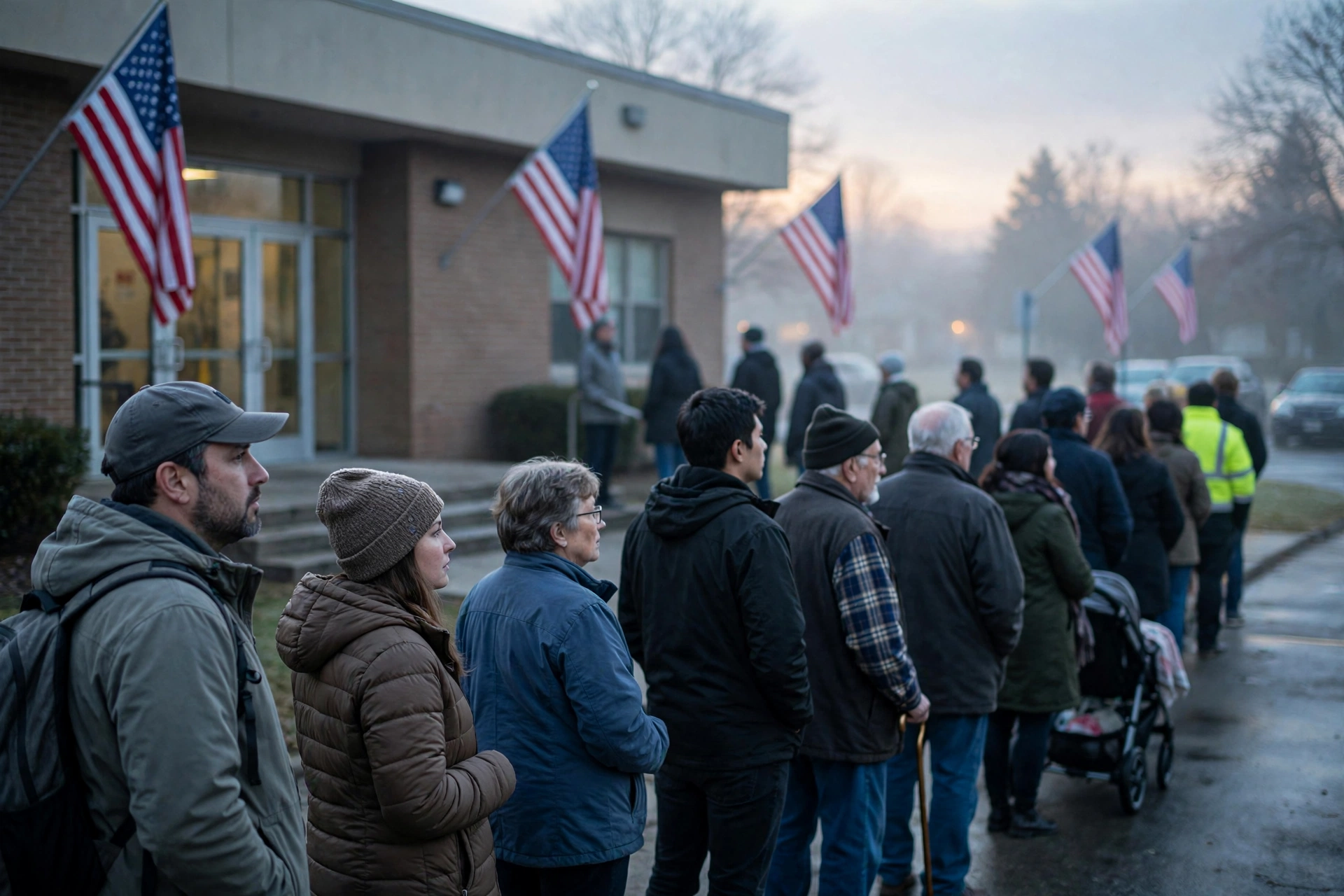
Today, 3 November 2026, is Election Day in the United States. Polling places — the schools, community halls, and other buildings where people go to vote — are open across the country.
Voters are choosing between candidates from the two main political parties, the Republicans and the Democrats, as well as candidates from smaller parties and independent candidates who do not belong to a big party.
The Republicans currently control both the House and the Senate. That means the party of President Donald Trump holds the majority in both parts of Congress. Democrats are trying to win back control of one or both chambers. If they win the House, for example, they would gain the power to set its agenda, lead its committees, and decide which bills get a vote.
The outcome will also be read as a signal about how voters feel about the president’s time in office so far. Midterm elections often work this way. Voters who are happy with the direction of the country may support the president’s party. Voters who are unhappy may vote for the other party as a way to send a message.
It is important to remember that no single election result tells the whole story. The United States is a very large country, with different states, cities, and rural areas that often vote in different ways. A result in one state does not always mean the same thing will happen in another.
Who Is Voting for What?
Let us break down the three big contests in simple terms.
First, the House of Representatives. All 435 seats are up for election. To control the House, a party needs at least 218 seats. Even a small change — a few seats moving from one party to the other — can flip control. House races are often close, because many districts are divided almost evenly between Republican and Democratic voters.
Second, the Senate. Only 35 seats are being contested this year. The other 65 senators are in the middle of their six-year terms and are not up for election now. To control the Senate, a party needs at least 51 seats, or 50 seats plus the vice president’s tie-breaking vote. Because only a third of the Senate is changing, control of the Senate can be harder to flip than control of the House, but it is still possible if enough of the contested seats change hands.
Third, governors. A governor is like the leader of a state. Each state has its own government, with its own budget and laws on many everyday issues. Thirty-six states are choosing a governor in 2026. These races matter because governors can sign or veto state laws, manage state spending, and respond to emergencies such as storms or floods.
Beyond these big races, voters in many places are also choosing state lawmakers, mayors, and judges. Some ballots include questions called referendums or ballot measures. These ask voters directly whether they agree with a proposed change, for example a new tax, a change to voting rules, or funding for public transport. The exact questions differ from state to state.
What Did President Trump Say?
In the final days of the campaign, President Trump made a last appeal to voters. According to news reports, he spoke at the Lincoln Memorial Reflecting Pool in Washington on 2 November, the day before the election.
He called the midterms the most important of his lifetime, according to reports of his remarks. He urged voters to act as if he himself were on the ballot, even though presidents are not candidates in midterm elections. His message, as reported, was that voters who support him should turn out in large numbers to protect his policies.
He also warned, according to reports, that some of his policies could be reversed if Democrats win control of Congress. Among the policies he mentioned were no tax on tips, no tax on overtime pay, and no tax on Social Security benefits. These are tax rules that affect workers who earn tips, workers who are paid extra for working longer hours, and older Americans who receive Social Security payments after retirement.
Supporters of the president say these tax changes help working people keep more of the money they earn. Critics argue about their cost and about who benefits most. The election gives voters a chance to say, through their votes, whether they want these policies to continue.
President Trump has no in-person campaign appearances scheduled on Election Day itself, according to reports. Instead, he is expected to take part in virtual tele-rallies — phone or online events where supporters can listen in — and to host a reception at 7 p.m. Eastern Time on election night.
It is worth noting that presidents from both parties often campaign hard in midterms. They do this because the result shapes what they can achieve in the second half of their term. A friendly Congress can help a president pass laws. An unfriendly Congress can block them, hold hearings, and investigate the government.
Mail-In Ballots and the Supreme Court
One story that made news just before Election Day involved mail-in ballots in California.
Mail-in ballots are votes that people send by post instead of going to a polling place in person. Many Americans use them because they are away from home, because they have health problems, or simply because it is more convenient.
According to news reports, the Supreme Court rejected President Trump’s bid to block the counting of more than 20,000 mail-in ballots in California. The court did not agree to stop those ballots from being counted.
This does not mean the court decided who won any race. It means the ballots in question could be counted under the rules that were already in place. Courts often get involved in election disputes, but they usually decide narrow questions about rules and deadlines, not the overall result.
Mail-in ballots are counted in different ways in different states. Some states start counting them before Election Day. Others wait until Election Day itself. Some states accept mail-in ballots that arrive a few days after Election Day, as long as they were posted by Election Day. These differences are one reason why results in some states come quickly and in others take longer.
Voters are often told to check that their ballot is signed correctly and sent on time. Election officials say that small mistakes, such as a missing signature, can sometimes cause a ballot to be set aside until the voter fixes the problem, if the state allows that.
Early Voting: More Than 58 Million Votes Already Cast
Not everyone votes on Election Day itself. In the United States, many people vote early. They can do this in person at early voting centres, or by mailing in a ballot.
By the evening of 2 November, more than 58.6 million early votes had already been cast, according to the University of Florida Election Lab, which tracks early voting numbers. That total included about 31.89 million in-person early votes and about 26.77 million mail ballots.
These numbers are large, but they do not tell us who is winning. Early voting totals count how many people voted, not how they voted. Election officials do not release results before polls close, and in many states they do not even know the breakdown by party until the votes are counted.
Early voting has become more common in recent years. Supporters say it makes voting easier for people who work long hours, travel, or have caring duties. Critics sometimes worry about security, but election officials in both parties say early votes go through the same checks as Election Day votes, including checks on the voter’s identity and signature where required.
The high early voting number also suggests that interest in this election is strong. When many people vote early, it often means campaigns have succeeded in getting their supporters to act before Election Day, rather than waiting until the last day.
How Counting Works, and When Will We Know the Results?
After polls close, election workers begin counting. First, they usually count votes cast in person on Election Day, because those are the simplest to process. Then they count early in-person votes and mail-in ballots, depending on state rules.
In some states, results are clear on election night. One candidate leads by a large margin, and news organisations can project a winner with confidence. In other states, the race is very close. Then officials must count every valid ballot, including mail-in ballots that arrive after Election Day in states that allow them, before a winner can be called.
This is normal. It does not mean something has gone wrong. Counting millions of paper ballots carefully takes time, especially when the margin is only a few thousand votes.
News organisations use their own methods to call races. They look at counted votes, remaining votes, and where those votes are coming from. They do not declare a winner until they are confident the trailing candidate cannot catch up. Official results, certified by state governments, come later, sometimes days or weeks after Election Day.
Voters should therefore expect a mixed picture on election night. Some races will be called quickly. Others, especially close Senate and governor races, may remain undecided for days. That is especially true in large states with many mail-in ballots.
Why Do Midterms Matter for Everyday Life?
It is easy to think of elections in Washington as distant from daily life, but Congress makes decisions that affect many ordinary things.
Congress decides federal taxes, including income tax rules. It decides how much money goes to roads, bridges, and public transport. It sets rules for health care programmes, student loans, and support for older Americans. It also decides defence spending and foreign aid.
If control of Congress changes, the direction of these policies can change too. For example, a new majority might try to change tax rules, increase or decrease spending in certain areas, or block a president’s plans.
State governors and state lawmakers also affect daily life directly. They decide school funding, local taxes, and rules about housing, health care, and public safety in their states. That is why midterm elections are not only about Washington. They are also about who runs your state, your city, and your county.
For people outside the United States, midterms matter as well. The United States is the world’s largest economy, and its government makes decisions that affect trade, climate policy, and relations with other countries. A change in Congress can affect how the United States deals with allies and rivals, and how it responds to wars, trade disputes, and global health problems.
Approval Ratings: What Do the Polls Say?
Polls are surveys that ask a sample of voters what they think. They are useful, but they are not perfect. Different polls can give different answers, depending on who they ask and how they ask the questions.
According to reports of polling averages around Election Day, President Trump’s approval rating was reported at around 38 percent, with disapproval at around 59 percent. Polling averages vary, so these figures should be read as a rough picture, not an exact count. Averages combine many polls, and each poll has a margin of error, which means the true figure could be a few points higher or lower.
Approval ratings do not decide elections by themselves. Many voters choose candidates based on local issues, the economy, health care, or their personal experience, not only on how they feel about the president. Still, low approval ratings for a president’s party often make midterm elections harder for that party, because unhappy voters are more motivated to vote for change.
It is also important to remember that polls can be wrong. In past elections, polls have sometimes missed the final result, especially in close races. That is why campaigns and news organisations treat polls as a guide, not as a prediction.
What Happens Next?
After the votes are counted and races are called, the winners will prepare to take office. New members of the House will be sworn in in January 2027, when the new Congress begins. New senators and governors will also take office around the same time, depending on state rules.
If Republicans keep control of Congress, President Trump will likely try to push ahead with more of his agenda in the second half of his term. If Democrats win one or both chambers, they will be able to block or reshape that agenda, and they may launch investigations into the government.
Either way, the next two years will involve negotiation between the White House and Congress. Laws usually need support from both the House and the Senate, plus the president’s signature, to become law. If the two sides disagree, very few new laws may pass, and the government may focus on smaller changes that both sides can accept.
The midterm results will also shape the next presidential election, in 2028. Parties will study which messages worked, which states moved, and which voters turned out. Candidates who performed well in 2026 may become important figures in 2028.
For now, the most important step is the vote itself. Election officials across the United States are asking voters to check their polling place, bring any required identification, and vote before polls close in their state.
How Does Voting Actually Work on the Day?
For many readers outside the United States, the voting process itself can seem confusing, so here is a simple step-by-step picture.
First, a voter must be registered. Registration means the voter’s name is on an official list for their area. In most states, people register weeks before Election Day, although some states allow registration on the day itself. Voters are assigned a polling place, usually near their home.
Second, the voter goes to that polling place. A poll worker checks the voter’s name on the list. In some states, the voter must also show a photo ID, such as a driving licence. In other states, a signature or another form of identification is enough. The rules are not the same everywhere, which is why voters are told to check their own state’s rules in advance.
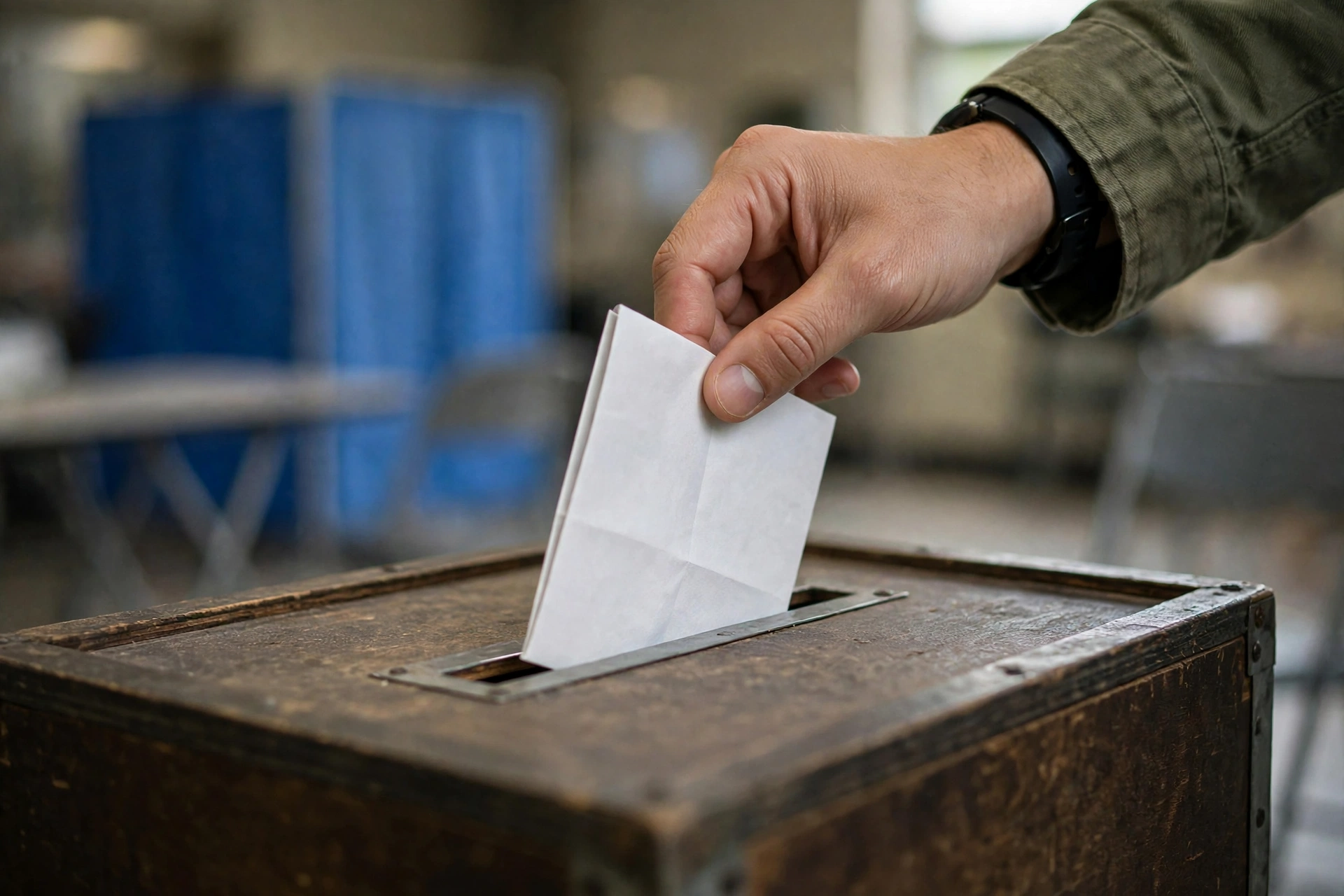
Third, the voter receives a ballot. A ballot is a paper form, or in some places an electronic screen, listing all the races and questions to be decided. The voter marks their choices in private, in a booth or at a screened table. No one else should see how they vote.
Fourth, the voter submits the ballot. Paper ballots are usually fed into a machine that reads them, or placed in a sealed ballot box. Electronic votes are recorded by a machine, and in many places a paper record is also printed so the vote can be checked later.
If there is a problem — for example, if a voter’s name is not on the list, or if they do not have the required ID — they may be offered a provisional ballot. A provisional ballot is a special ballot that is kept separate and counted later, but only after officials confirm that the person was entitled to vote. This system is designed to make sure no eligible voter is turned away without a chance to have their vote checked.
After voting closes, poll workers seal the ballot boxes and machines, and the results are sent to a central counting centre. Observers from different parties are often allowed to watch the counting, to help make sure the process is fair and transparent.
This process, with its many local variations, is one reason American elections can look messy from the outside. There is no single national election office running everything. Instead, thousands of local election offices run elections under state laws, following broad national rules about who can vote and how votes must be counted.
Frequently Asked Questions
What is a midterm election?
A midterm election is an election held in the middle of a president’s four-year term. It chooses members of Congress and many state and local leaders, but it does not choose a new president.
Who can vote in the US midterms?
American citizens who are at least 18 years old and registered to vote can vote. Registration rules, identification rules, and voting hours differ from state to state, so voters are advised to check their local election office for details.
Why are all House seats voted on, but only some Senate seats?
House members serve two-year terms, so all 435 seats are voted on every two years. Senators serve six-year terms, so only about a third of Senate seats are voted on in each election cycle. In 2026, that number is 35.
When will we know who won?
Some races will be clear on election night. Close races, especially where many mail-in ballots must be counted, may take days to decide. Official, certified results come later, after all valid ballots are counted and checked.
Does the president lose power if his party loses Congress?
No, the president remains president until the end of his term. But if the other party controls Congress, it becomes much harder for the president to pass new laws, because Congress must approve them first.
Closing
The 2026 midterm elections are a moment when American voters get to judge the direction of their country halfway through a presidential term. Millions have already voted early, and millions more are voting today. The results will decide who controls Congress, who leads 36 states, and what kind of laws can pass in the next two years. Whatever the outcome, the counting will take time in close races, and the full picture will become clear only when every valid vote has been counted.
More from Zorium Daily
Read more about how the world works in simple words: why the Dead Sea is so salty and why you can float in it and how Libya built an underground river in the Sahara. For a lighter look at how we measure time, see why we have seven days in a week.