Why Do We Get Hiccups?
SUMMARY OF THIS ARTICLE
- A hiccup happens when the diaphragm, the big breathing muscle under your lungs, suddenly tightens, and your vocal cords snap shut, making the “hic” sound.
- Common triggers include eating too much or too fast, drinking fizzy drinks, feeling excited or stressed, and sudden temperature changes.
- Most hiccups are harmless and stop on their own in a few minutes, even when there is no clear reason for that bout.
- Babies get hiccups a lot because their breathing muscles and feeding habits are still developing, and this is usually normal.
- Home remedies are folk tips, not proven cures. See a doctor if hiccups last more than two days or stop you from eating, sleeping, or breathing well.
What Is a Hiccup?
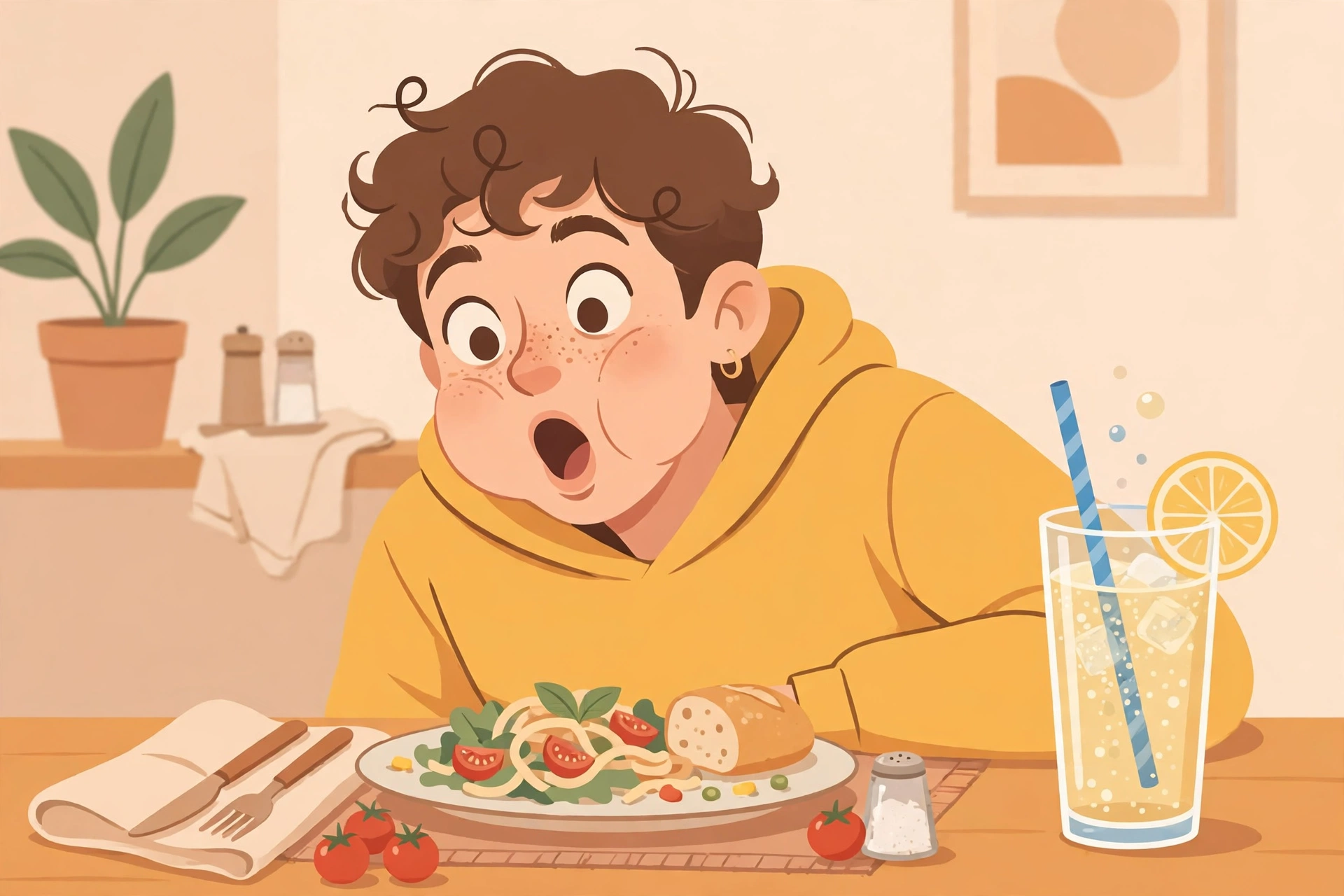
Hic! There it is again. You are eating lunch, laughing with a friend, or sitting quietly in class, and suddenly your body makes a small, funny sound you did not plan. Then it happens again. And again. You have the hiccups.
A hiccup is a quick jerk in your chest and throat, with a short sound. It can be hard to talk while it is happening. Most of the time, it passes in just a few minutes, and life goes back to normal.
A hiccup is a reflex. A reflex is an action your body does on its own, without you thinking about it first. Blinking when something flies toward your eye is a reflex. Pulling your hand back from something hot is a reflex. Sneezing is a reflex too. Once a reflex starts, it is hard to stop it in the middle.
In this article, we will explain that reflex in simple words: the muscle behind it, the nerves that carry its signals, the everyday triggers that can start it, and when it is time to ask a doctor about it. This article gives general health information only. It is not medical advice. If you are worried about your health, talking to a doctor is always the safest step.
Meet Your Diaphragm
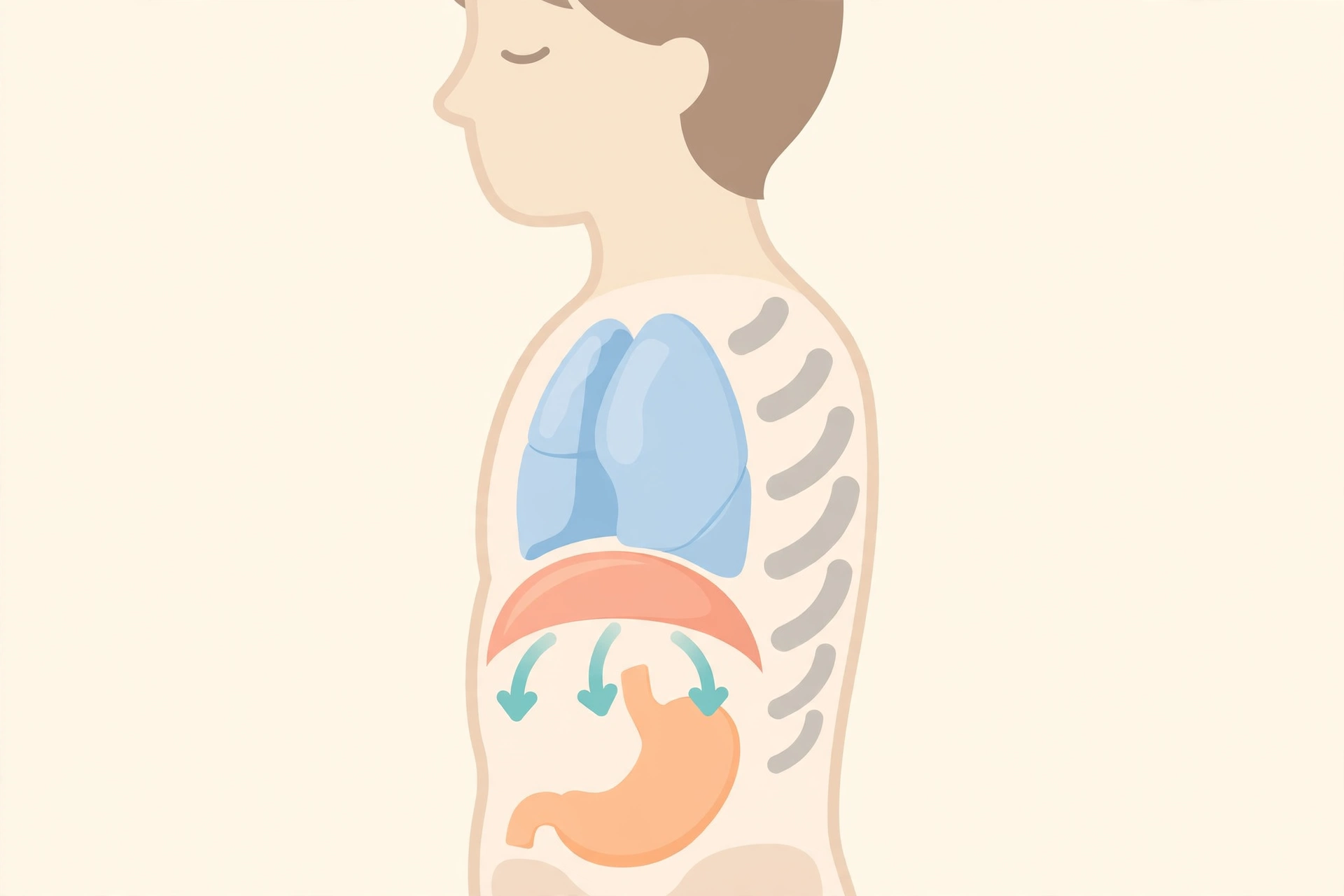
To understand hiccups, meet a muscle called the diaphragm, said DY-uh-fram. It is a large, dome-shaped muscle under your lungs and above your stomach. Think of it as a soft, stretchy floor for your chest.
Your diaphragm helps you breathe. When you breathe in, it pulls down and flattens, making room for air to flow into your lungs. When you breathe out, it relaxes and moves back up into its dome shape, pushing air out of your nose and mouth. Most of the time, this dance is smooth and steady, and you barely notice it.
A hiccup breaks that dance. The diaphragm suddenly tightens in a sharp spasm, a sudden, strong tightening you did not choose. The small muscles between your ribs may tighten too. A quick burst of air rushes into your lungs. At the top of your throat, your vocal cords — two small folds of tissue that help you speak — suddenly close. That closing stops the air for a tiny moment and makes the “hic” sound. So a hiccup is two quick events together: a sudden tightening below, and a sudden closing above.
The medical word for hiccups is singultus, from a Latin word meaning to catch your breath while sobbing. You may also see the older spelling “hiccough.” Doctors use singultus, but in everyday life, everyone just says hiccups.
The Nerves Behind the Hiccup
Muscles move because nerves tell them to move. Nerves are like tiny wires carrying messages between your brain and your body. Two nerves matter most for hiccups.
The first is the phrenic nerve. It runs from your neck into your chest and connects to the diaphragm. Think of it as the direct phone line between the brain and the diaphragm. The second is the vagus nerve, a long, wandering nerve from your brain down through your neck and chest into your belly. It touches many organs, including your heart, lungs, and stomach, and helps control things you do not think about, such as heart rate and digestion, the way your body breaks down food.
When something irritates, or bothers, one of these nerves, the hiccup reflex can start. A full stomach can press upward and bother the diaphragm and nearby nerves. A sudden temperature change can wake the nerves up. Strong feelings, such as excitement or stress, can stir up nerve signals too.
Once the reflex starts, it can repeat. The brain sends the signal, the diaphragm tightens, the vocal cords close, and you hiccup. Then the cycle starts again. That is why hiccups often come in a steady rhythm. Most bouts — a bout is a short run of something — last only a few minutes. Scientists call this loop the hiccup reflex arc: a signal travels from the body to the brain, then back out to the muscles. Once it starts, it needs time to settle, which is why forcing hiccups to stop does not always work.
Step by Step: One Hiccup in Slow Motion
Step one is the trigger. Something bothers the diaphragm or its nerves: a full stomach, a fizzy drink, a sudden laugh, or a cold drink on a hot day. Sometimes there is no clear trigger at all.
Step two is the signal. The bothered nerve sends a message to a low part of the brain, near where the brain meets the spinal cord, the thick bundle of nerves down your back. Think of this brain area as a small control room for breathing reflexes.
Step three is the spasm. The control room sends a fast order down the phrenic nerve. The diaphragm suddenly tightens, and air rushes into your lungs.
Step four is the sound. As air rushes in, your vocal cords snap shut, briefly stopping the air and making the “hic” sound. Scientists sometimes call this glottic closure, where glottic means to do with the space between the vocal cords.
Step five is the repeat, or the rest. After one hiccup, the muscles relax for a moment. If the irritation is still there, the order goes out again. If it has faded, the loop ends, and breathing returns to its normal rhythm. Your belly may jump a little with each one: that is the diaphragm tightening under your ribs.
The Most Common Triggers
Eating too much is a top trigger. A very large meal stretches your stomach, which sits close to the diaphragm and can press on it or bother nearby nerves. Eating too quickly does the same, and makes you swallow extra air. That is why hiccups often appear at big family meals or after a fast lunch.
Fizzy drinks are another common trigger. Soda and sparkling water are full of tiny gas bubbles that can swell the stomach a little. Drinking them very fast makes this more likely, because you swallow more gas and air at once.
Spicy food can irritate the stomach lining and the food pipe, the tube from your mouth to your stomach. Very hot or very cold drinks can do something similar. A cold drink after hot food, for example, is a sudden temperature change inside your body, and that can wake the reflex up.
For adults, drinking too much alcohol is a known trigger, because it irritates the stomach lining and affects the nerves. Smoking can play a part too, partly through swallowed air and partly because smoke irritates the airways. Chewing gum, sucking sweets, and eating while talking or laughing can also add swallowed air.
Feelings matter as well. Excitement, nervousness, stress, and hard laughter change how you breathe. Laughing makes breathing quick and uneven. Nervousness before a test or a speech can make breathing shallow and fast. Both can nudge the diaphragm into a spasm. That is why a child may hiccup before a birthday party, and an adult before a big meeting.
Sudden temperature changes outside the body can also trigger hiccups: stepping from a warm room into cold air, or jumping into cold water. Acid reflux can play a part too. Reflux is when stomach acid moves back up into the food pipe, causing heartburn, and that acid can irritate nearby nerves. Some medicines that affect the nerves or stomach can also trigger hiccups. If hiccups often start after a new medicine, mention the pattern to a doctor rather than stopping the medicine on your own.
All these triggers share one idea: they bother the diaphragm, the stomach, or the nerves linking them to the brain. The bother is usually small and short-lived, so the body runs the reflex a few times and then settles.
Why Do Hiccups Sometimes Come Out of Nowhere?
Doctors say this is very common. Many bouts have no obvious trigger. The irritation may be so small you do not notice it: a tiny bit of swallowed air, a small change in breathing, or a brief nerve signal. Most small signals in the body do nothing, but once in a while one is just strong enough, or timed just right, to start the loop.
Triggers can also stack up. You may have eaten a little too fast, drunk a fizzy drink, and laughed hard, all in one hour. None alone would start hiccups, but together they may push the diaphragm over the edge. By the time hiccups start, you may have forgotten the first trigger.
Your body may also be more sensitive at certain times. Tiredness, a mild stomach upset, or a cold can make nerves a little jumpy, so less is needed to set them off. This is similar to how a sneeze can be set off by a tiny bit of dust when your nose is already sensitive. If you cannot find a reason for your hiccups, you are not missing something obvious. Most short bouts need no explanation and no treatment.
Do Hiccups Have a Purpose?
Scientists do not agree that hiccups have a clear purpose in adults. Unlike sneezing, which clears dust from your nose, or coughing, which clears your airways, hiccups do not seem to fix a problem. They do not clear food or help you breathe better. In most cases, they seem to serve no useful job at all.
There are ideas, but none is settled. One looks to very early life: before birth, babies practise breathing movements in the womb, and hiccups may be a leftover from that practice. Babies hiccup a lot, before and after birth, which fits this idea. Another idea looks to animals with gills, the breathing organs of fish and tadpoles, baby frogs. Some scientists suggest the hiccup reflex may share roots with how tadpoles move water over their gills. This is a theory, not a proven fact.
A third idea is that hiccups help babies learn to time breathing and swallowing. Again, this is being studied, not settled. The honest summary is that hiccups may be a leftover reflex with no modern job, like goosebumps, which once helped furry animals trap warm air but do little for humans today.
Why Do Babies Get Hiccups So Often?
Baby hiccups are common, can last ten minutes or more, and often worry parents far more than the baby. Most of the time, they are normal and harmless.
Babies hiccup often because their diaphragm and nerves are still developing — growing and learning to work smoothly — so the diaphragm spasms more easily. Feeding can also bring air into the stomach: a baby who drinks too fast, cries during a feed, or swallows air from a bottle may end up with a stretched stomach pressing on the diaphragm. Mild reflux, where a little milk comes back up, can irritate the food pipe and nearby nerves.
Most babies do not seem bothered at all. Many keep feeding, playing, or even sleeping through a bout. Doctors reassure parents that frequent hiccups in a healthy baby who feeds well and gains weight are usually normal.
Gentle steps may help, though none is guaranteed. Burping during and after a feed lets out swallowed air. Feeding calmly, upright, with small breaks, can help. A pacifier may help, because sucking changes the breathing pattern. For babies over six months, a few small sips of water may be offered only if a doctor or health visitor says it suits that baby.
Do not try adult remedies on a baby: no sugar, vinegar, or spicy food, no scaring, no breath-holding, and nothing pressed on the soft spot. Those tricks are unsafe for babies and do not help. Talk to the baby’s doctor if hiccups regularly last a very long time, or come with forceful vomiting, feeding refusal, poor weight gain, trouble breathing, or clear distress. As babies grow, hiccups usually become less frequent.

Hiccups That Will Not Stop
Most hiccups stop in minutes. Hiccups lasting more than two days, or 48 hours, are called persistent hiccups. Those lasting more than a month are called intractable hiccups, meaning very hard to stop or control. Both are rare, but both deserve medical attention, partly because they can seriously disrupt eating, drinking, sleeping, talking, and work, and partly because they can signal a deeper problem.
Causes vary. Long-term irritation of the vagus or phrenic nerve can keep the loop firing, for example from reflux, infection, a growth in the neck or chest, or irritation after surgery. Problems in the central nervous system — the brain and spinal cord — such as inflammation of the brain, meningitis, multiple sclerosis, a stroke, or a tumour, can disrupt control of the reflex. These are rare, but doctors take them seriously when long hiccups come with weakness, dizziness, or trouble speaking.
Metabolic problems can also play a part. Metabolism is how your body turns food into energy and keeps its chemistry balanced. Diabetes, kidney failure, and imbalances in salts such as potassium and sodium can affect nerves and muscles. Some medicines, including certain sedatives and steroids, and long-term heavy alcohol use, can trigger long hiccups too.
Keep this in proportion: long hiccups are rare, and serious causes are rarer still. A doctor will usually start by asking how long hiccups have lasted, what else has changed, and what medicines you take, then do a physical examination. Tests are only done if a cause is suspected. Treatment depends on the cause: treating reflux may stop the hiccups, or changing a medicine may help, but only a doctor should make that change. If no cause is found, a doctor may prescribe a medicine that calms the reflex. Nerve blocks and surgery are very rare last resorts.
Folk Remedies: What Is Actually Proven?
Ask ten people how to stop hiccups, and you will get ten answers: drink water upside down, hold your breath, eat sugar, get scared, breathe into a paper bag, swallow peanut butter, gargle ice water, or pull your knees to your chest.
Be honest about this: most home remedies are folk tips, not proven cures. Folk tips are ideas passed from person to person because they seemed to work once. Scientists have not proven that most tricks reliably stop hiccups. Many bouts stop on their own in minutes, so it is easy to credit the last trick tried, when time did the work.
Some remedies make sense against the hiccup loop. Changing your breathing — holding your breath briefly, or breathing slowly and steadily — may raise carbon dioxide, a waste gas you breathe out, for a moment, which may relax the diaphragm. Breathing into a paper bag works on a similar idea. Other remedies try to wake up the vagus nerve: swallowing sugar, sipping cold water slowly, gargling, or tasting something strong may send a new signal that interrupts the loop. Leaning forward with knees to chest may press gently on the diaphragm. Distraction can change breathing without you noticing.
Some remedies need care. Breathing into a paper bag is unsafe if you have asthma, heart problems, or feel dizzy — do not try it. Holding your breath for a long time is unwise, especially for children, older people, or anyone with breathing or heart problems. Scaring someone can be unkind and unsafe with heart problems or anxiety. Pressing on the neck should not be done at home. Drinking water upside down can be a choking risk. If a remedy feels uncomfortable or unsafe, stop and wait instead.
For children, stick to gentle steps: a slow sip of cold water, a calm breath, or quiet rest. No vinegar, breath-holding games, or scares for young children. If hiccups do not end within two days, or they interfere with eating, sleeping, or breathing, talk to a doctor instead. Any site promising a guaranteed hiccup cure is not telling the truth.
Lowering Your Chances, and the Longest Case on Record
You cannot prevent all hiccups, and you should not try. But small changes can mean fewer bouts. Eat more slowly, put your fork down between bites, and chew well. Drink fizzy drinks slowly, in smaller sips, or less often. Notice patterns: if spicy food, very hot or cold drinks, or gum seem linked to your hiccups, adjust gently. Avoid talking with a full mouth, and if you smoke, cutting down or quitting helps many parts of health, including hiccups. When nervous, try slow breathing for a minute or two. Keeping a simple note of when hiccups start can reveal a pattern over a few weeks.
Humans are not the only animals that hiccup. Dogs, especially puppies, cats, and horses hiccup too, because they share a similar diaphragm and nerve system. Puppies often hiccup after eating too fast or getting excited in play, just like human babies.
The most famous case is Charles Osborne, a farmer from Iowa in the United States. According to reports, he started hiccuping in 1922 after a fall and kept hiccuping for about 68 years, until 1990. He learned to live with it and raise a family, though it must have been very hard. His case is an extreme exception, not something to expect: most hiccups last minutes and leave no harm.
A bout of hard laughter can trigger hiccups, and a yawn is another body reflex that spreads between people. Hiccups themselves are not usually contagious that way, though laughing at someone else’s hiccups might set yours off.
When to See a Doctor
See a doctor soon if hiccups last more than two days without stopping, or if they keep coming back and disrupt daily life. Seek help quickly if hiccups come with chest pain, shortness of breath, vomiting, blood in vomit, severe stomach pain, sudden weight loss, weakness, dizziness, confusion, or trouble speaking or swallowing.
For babies and young children, talk to a doctor if hiccups regularly last a very long time, the baby seems distressed, feeding is painful, the baby refuses feeds, gains weight poorly, vomits forcefully, or has trouble breathing. If you are unsure, it is better to ask than to wait and worry. This article is general information only and is not a substitute for medical advice.
In short: a hiccup is a reflex, not a choice — a muscle tightening, a nerve signalling, and vocal cords closing to make a “hic.” Most bouts pass in minutes. Long hiccups are rare but matter, and home remedies are folk tips, not proven cures.
Frequently Asked Questions
Why do we get hiccups?
When the diaphragm suddenly tightens and the vocal cords snap shut, making the “hic” sound. Triggers include a full stomach, fast eating or drinking, fizzy drinks, spicy food, temperature changes, swallowed air, excitement, or stress. Often there is no clear trigger, and the bout stops on its own in minutes.
How long do hiccups normally last?
Most last only a few minutes, and many end within an hour. Hiccups over two days are called persistent hiccups and should be checked by a doctor. Hiccups over a month are called intractable hiccups and are very rare.
What is the fastest way to get rid of hiccups?
There is no proven fastest cure for everyone. Safe steps some people find helpful include sipping cold water slowly, breathing slowly and steadily, holding your breath briefly only, or pulling your knees gently to your chest while leaning forward. These are folk tips, not guaranteed cures, and most hiccups stop on their own.
Why do babies get hiccups so often?
Because their diaphragm and nerves are still developing, and feeding can bring air into the stomach. Fast feeding, crying during feeds, and mild reflux can all play a part. In a healthy baby who feeds well and gains weight, frequent hiccups are usually normal.
Are hiccups dangerous?
Short hiccups are not dangerous for most people. They become a concern when they last more than two days, keep returning and disrupt daily life, or come with chest pain, trouble breathing, vomiting, weight loss, weakness, or confusion. In those cases, see a doctor.
Can hiccups be a sign of something serious?
Rarely, yes. Long-lasting hiccups can sometimes be linked to nerve irritation, reflux, infections, metabolic problems such as diabetes or kidney problems, central nervous system conditions, or certain medicines. This is uncommon, and most short hiccups have no serious cause.
Do hiccups have a purpose?
Scientists do not agree that hiccups have a clear purpose in adults. They may be a leftover reflex from early breathing practice, or from much older animal breathing systems. Unlike sneezing or coughing, they do not seem to clear anything useful from the body.
When should I see a doctor about hiccups?
If hiccups last more than two days, keep returning and disrupt eating, sleeping, or work, or come with chest pain, shortness of breath, vomiting, severe stomach pain, weight loss, dizziness, weakness, or trouble speaking or swallowing. For babies, seek advice for feeding refusal, poor weight gain, forceful vomiting, distress, or breathing trouble.