How Does a Bakery Make Money?
SUMMARY OF THIS ARTICLE
- A bakery makes money when the price of its bread, cakes, and pastries is higher than the cost of making and selling them. The money left after all costs is called profit.
- Most money comes from daily sales at the counter, but wholesale orders, custom cakes, coffee, and catering add important extra money.
- Flour is only a small part of the price of a loaf. Rent, staff pay, ovens, energy, packaging, and waste take most of the rest.
- Fresh bread goes stale fast, so unsold food at the end of the day is one of the biggest threats to a bakery’s profit.
- Location, regular customers, careful pricing, and control of waste often decide whether a small bakery stays open.
Introduction
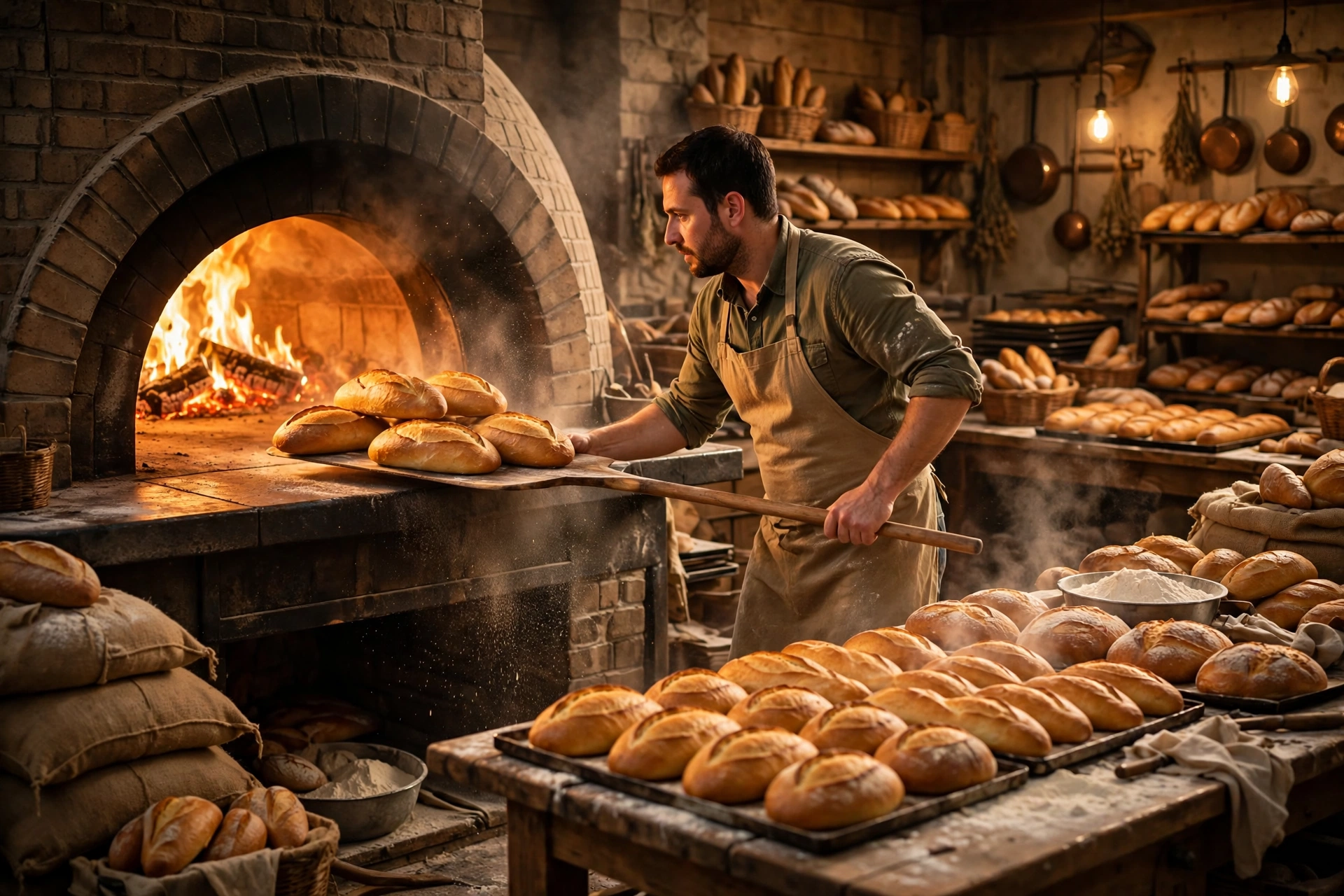
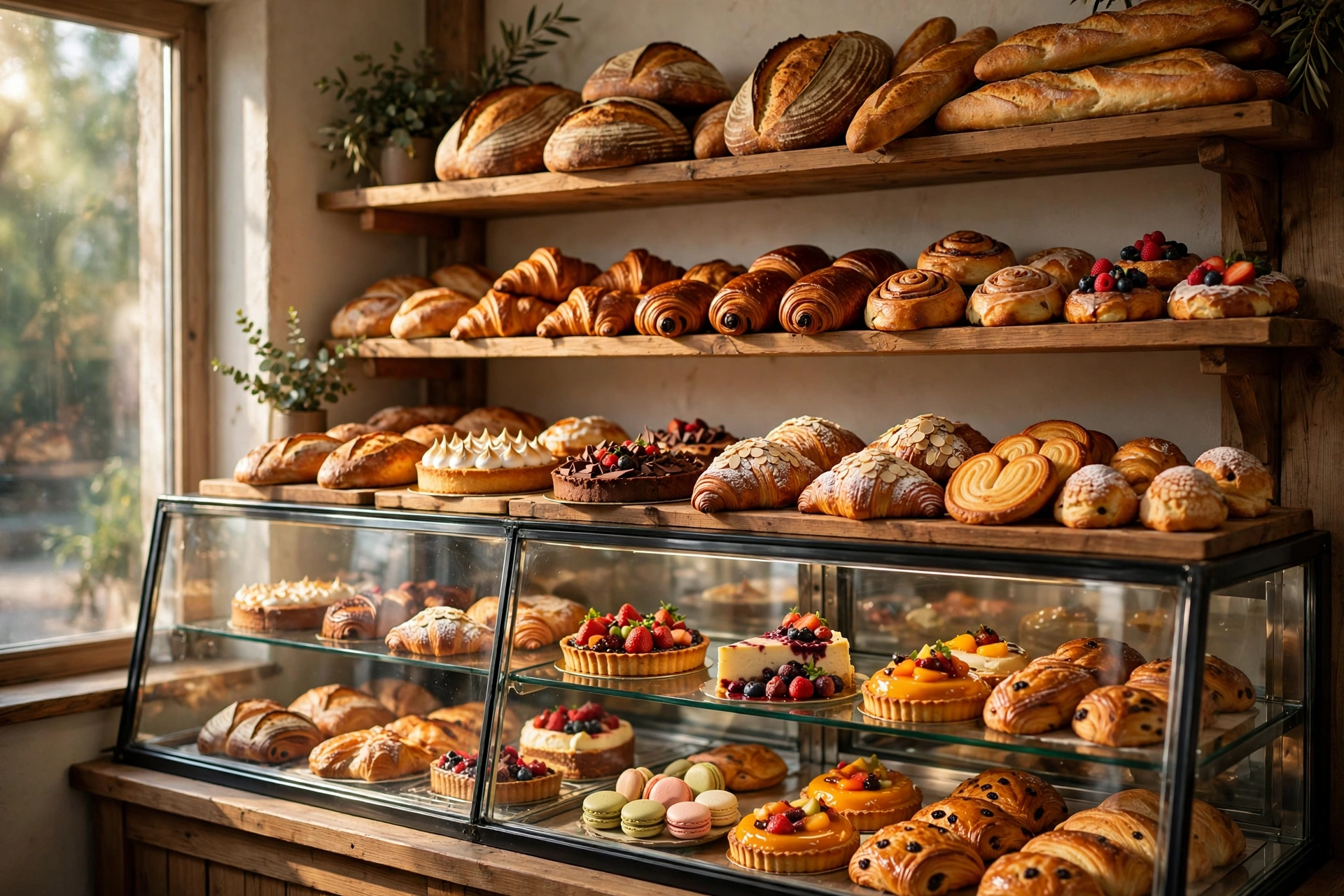
Picture a small bakery early in the morning. The smell of fresh bread fills the street. A baker slides golden loaves out of a hot oven. The shelves are full of croissants, buns, cakes, and cookies. The door opens again and again as people come in for breakfast.
It is easy to look at that scene and think the owner must be rich. After all, bread is made from flour, water, yeast, and salt. Those things cost very little. How can one loaf cost four or five dollars? Where does all that money go?
The short answer is simple. A bakery buys ingredients, turns them into food people want, and sells that food for more than it cost to make and serve. The difference between money coming in and money going out is profit. Profit pays the bills and keeps the shop open next month.
But a bakery is not just selling flour and water. It sells skill, time, warmth, and comfort. It must also pay for rent, staff, ovens, electricity, packaging, and food that is never sold at all. This article explains how the money flows in, where it flows out, and why some bakeries do well while others struggle.
All money figures in this article are typical examples, not real bakery accounts. Real costs change a lot from city to city. A bakery in central London or New York pays far more rent than a bakery in a small town. Prices, wages, and energy bills also change from place to place and from year to year.
What a Bakery Sells
A bakery sells far more than bread. Bread is the heart of most bakeries, but it is only the start. A typical small bakery may sell white bread, wholemeal bread, sourdough, rolls, and baguettes. Some loaves take many hours to make. Sourdough, for example, needs a slow rise that can take a whole day. That slow work is part of what the customer pays for.
Pastries are the next big group. Croissants, pain au chocolat, Danish pastries, cinnamon buns, and muffins sit in the display case each morning. They cost more to make than plain bread, because they use butter, eggs, sugar, and chocolate. They also sell for more. A customer may buy a loaf for the family and a croissant for the walk to work.
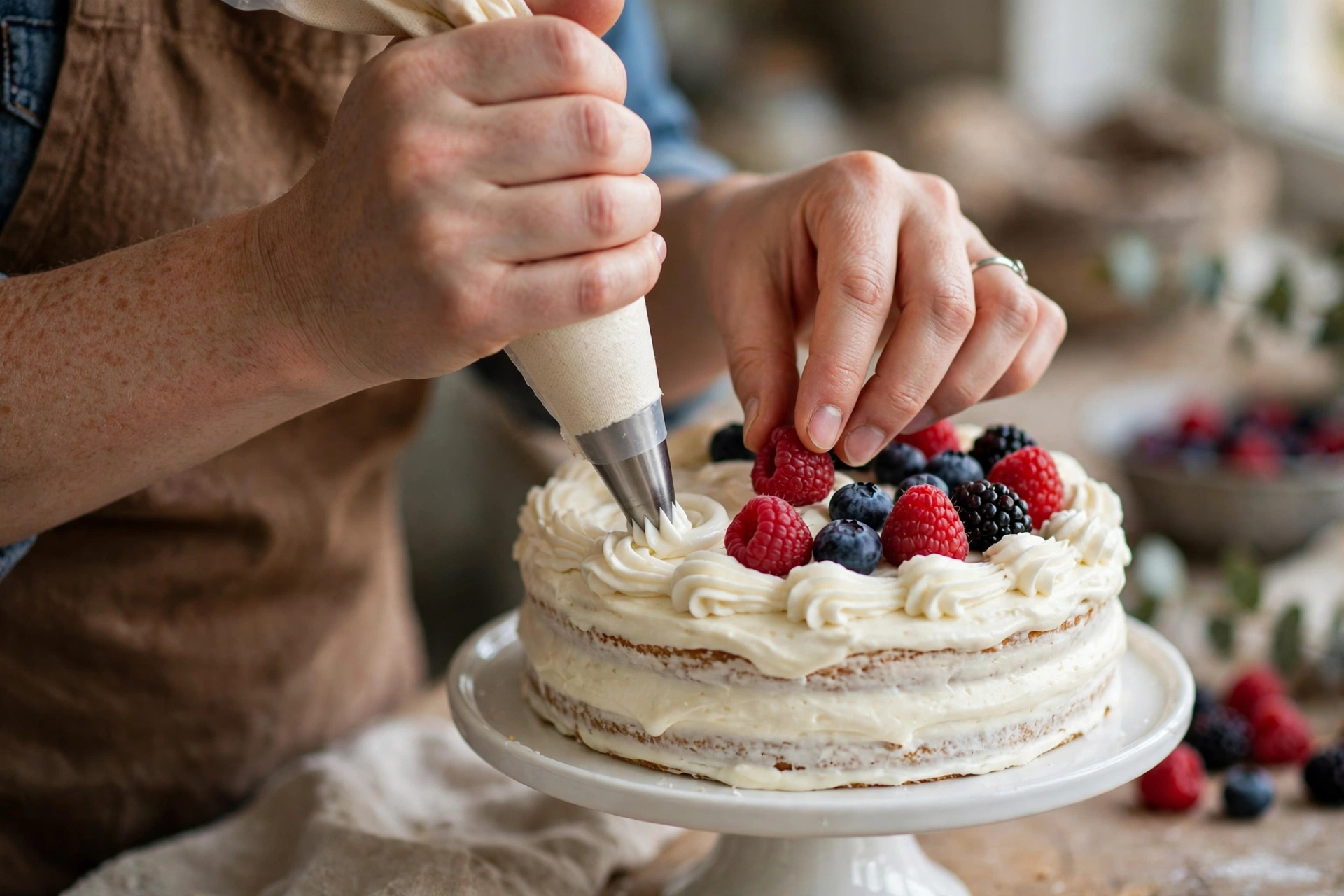
Cakes and cookies form another group. A bakery may sell slices of cake, whole cakes, cupcakes, brownies, and trays of cookies. Some cakes are ready on the shelf. Others are made to order for birthdays and weddings. We will look at custom cakes later, because they are one of the most profitable things a bakery can sell.
Coffee and drinks are a growing part of bakery sales. A bakery that sells coffee gives customers a reason to stay longer and spend more. A cup of coffee costs little to make, but it sells for a good price. A coffee shop earns most of its money from drinks, and a bakery with a coffee machine works in a similar way. Tea, juice, and soft drinks add a little more.
Where the Money Comes From
A bakery rarely earns money from only one thing. Most bakeries have several streams. A stream is a business word for a different way money comes in. If one stream is slow, another can help.
The first stream is retail sales at the counter. Walk-in customers buy bread, pastries, and cakes to take home. The bakery sells at full retail price, so each item brings in the most money per item. But retail sales are hard to predict. The baker must guess how many loaves to bake before the shop opens. Bake too few, and customers leave empty-handed. Bake too many, and food is wasted.
The second stream is wholesale. Wholesale means selling in larger amounts to other businesses at a lower price. A bakery may supply bread to cafes, restaurants, hotels, schools, and food shops. A restaurant that serves breakfast needs fresh bread every day, but it may not have time or space to bake it. So it buys from a bakery. The bakery earns less per loaf in wholesale, but it sells many loaves at once, and it knows the order in advance. That makes planning much easier, and it cuts waste, because the bakery bakes only what was ordered.
The third stream is custom orders. A customer orders a birthday cake, a wedding cake, or a tray of pastries for a party. The customer often pays part of the price in advance. That is good for cash flow. Cash flow means the flow of cash in and out over time. A deposit before the work starts means the bakery is not waiting weeks to be paid. Custom orders also have almost no waste, because the cake is made for one person who has already paid for it.
A healthy bakery uses more than one stream. A shop that depends only on walk-in customers is in danger on a rainy week. A shop with wholesale orders and custom cakes has a steadier income. That mix is the same idea behind any good small business: do not depend on one source of money alone.
The Big Costs
Money coming in is only half the story. Money going out decides whether a bakery survives. Let us look at the biggest costs one by one, in plain words.
Flour and ingredients come first. Flour, yeast, salt, sugar, butter, eggs, milk, chocolate, and fruit are the raw materials of baking. As typical examples, ingredients often take about 28 to 35 percent of a bakery’s sales. That means for every 100 dollars that comes in, about 28 to 35 dollars goes on ingredients and packaging. Butter and eggs can be costly, and their prices can jump fast. When butter prices rise, a bakery that does not change its prices will earn less on every croissant. Good bakeries buy flour and sugar in bulk, which means in large amounts at a lower price per bag.
Rent is the second big cost. Rent is the money paid to use the shop space. It is a fixed cost, which means it stays the same each month even if sales are low. As typical examples, rent often takes about 8 to 15 percent of sales, but in an expensive city it can take much more. A bakery on a busy high street pays high rent but gets many passing customers. A bakery on a quiet side street pays less rent but must work harder to attract customers.
Staff pay is often the biggest cost of all. A bakery needs bakers, and larger bakeries need counter staff, cleaners, drivers, and a manager. Bakers start work very early, often at three or four in the morning, so the bread is fresh when the shop opens. As typical examples, staff pay often takes about 25 to 35 percent of sales. Too many staff means paying for idle time. Too few means long queues, and customers leave. Good scheduling matches staff numbers to the busiest hours.
Ovens and energy are the next big cost. A professional oven can cost thousands of dollars. Add mixers, fridges, freezers, a till system, tables, and shelves, and the starting cost is large. The bakery must earn enough over time to pay these back. Ovens also use a lot of gas and electricity. As typical examples, utilities often take about 5 to 8 percent of sales. Baking early in the morning, keeping ovens hot all day, and running fridges all night all add to the energy bill. A broken oven on a Saturday morning can cost a whole day of sales, so machines also need cleaning, servicing, and repairs.
Why a Loaf Costs More Than Its Flour
Let us follow one loaf of bread and see where its price goes. Suppose a loaf sells for 5 dollars. The flour, water, yeast, and salt in that loaf may cost only about 50 cents. That is a tempting number. It makes the loaf look very profitable. But that 50 cents is only the start.
First, add the other ingredients and the bag. Butter, seeds, or toppings may add a little more. The paper bag may cost about 10 cents. Now the cost is about 60 or 70 cents.
Next, add staff time. A baker mixed the dough, shaped the loaf, watched it rise, baked it, and cleaned up after. Counter staff served the customer and took payment. As typical examples, staff time may add about 1 dollar to 1.50 dollars to each loaf, once the cost of all staff hours is shared across all loaves sold that day.
Then add rent and energy. The oven had to be heated. The lights were on. The shop rent must be paid whether the bakery sells ten loaves or five hundred loaves that day. As typical examples, rent and energy together may add about 1 dollar to each loaf. Then add the small costs: card fees, marketing, insurance, repairs, and licences. As typical examples, these may add about 30 to 50 cents per loaf.
Add it all up, and one 5-dollar loaf may cost about 3.50 to 4.50 dollars to make and sell. That leaves about 50 cents to 1.50 dollars of profit per loaf, before tax. That is about 10 to 30 percent of the price.
This is why gross profit and net profit are different. Gross profit is sales minus the direct cost of ingredients and packaging. Net profit is what is left after all costs, like staff, rent, and energy. Net profit is much smaller, and it is the true test. As typical examples, many guides say a well-run retail bakery keeps about 5 to 15 percent of sales as net profit. Some do better, some do worse, and some lose money. In the first year or two, many bakeries make little or no profit at all while they build customers.
Waste and the End-of-Day Problem
Waste is where bakeries lose money quietly. Fresh bread has a very short life. A croissant baked at dawn is best in the morning. By evening, it is dry and stale. A loaf that is not sold by closing time may have to be thrown away. That is money lost twice over: the ingredients are lost, and the staff time is lost too.
As typical examples, many retail bakeries waste about 8 to 15 percent of what they bake. Think about what that means. If a bakery bakes food worth 500 dollars in a day and throws away 50 dollars of it, that is 50 dollars gone. Over a month, that is about 1,500 dollars. That sum can be the whole monthly profit. A bakery that cuts waste from 15 percent to 5 percent can turn a loss into a profit without selling a single extra loaf.
The end of the day is the hardest moment. The shelves must look full and inviting in the morning, or customers will walk past. But a full shelf at 8 a.m. can become a full bin at 8 p.m. Bakers must guess how many loaves, buns, and cakes to bake before they know how many customers will come. Rain, a holiday, a road closure, or a rival opening nearby can all change the number.
Custom Cakes and Weddings
Custom cakes are the highest-margin product most bakeries sell. Margin is a word owners use for the share of the price left after direct costs. A custom cake has a high margin for three clear reasons.
First, the price is set for one customer and one cake. There is no shelf price to compete with. A wedding cake for 100 guests is not like a loaf on a shelf. The customer pays for design, flavour, size, and delivery, as well as ingredients. As typical examples, a wedding cake may sell for 8 dollars or more per serving, while the ingredients for each serving may cost only about 2 dollars. That gap is much bigger than the gap on a loaf of bread.
Second, the cake is paid for in advance, at least in part. The customer often pays a deposit when they order. That deposit buys the ingredients and pays for some of the work before the cake is even made. There is no waste, because the cake is made for a person who has already agreed to buy it.
Third, a good custom cake brings more orders. Guests at a wedding taste the cake, ask who made it, and order one for their own event. That is free advertising, and it is the best kind. A bakery that makes beautiful wedding cakes can build a full order book weeks ahead.
Regular Customers and Location
Location comes first in a bakery, just as it does in a restaurant or a bookshop. A bakery on a busy street near offices, a train station, a school, or a hospital gets many passing customers. But a great location costs more rent. The trick is to find a place where the extra customers are worth the extra rent. A cheap lease with no foot traffic can cost more in lost sales than it saves in rent. A smart owner checks the numbers before signing a lease, not after.
Regular customers are the backbone of a bakery. They come often, order quickly, and bring friends. A customer who buys bread five days a week is worth far more than a customer who comes once and never returns. A bakery with 200 regulars visiting three times a week has stable sales, even on a rainy day. A bakery that depends only on tourists or passing trade has a much shakier income.
How does a bakery build regulars? First, by being steady. If bread tastes good on Monday, it should taste good on Friday too. Customers hate surprises. Second, by being kind and fast. Staff who remember a usual order, smile, and serve quickly make people feel welcome. Third, by offering small extras: a loyalty card, a free cookie for a child, or a taste of a new cake. These small acts cost little and build trust fast.
Can a Small Bakery Survive Supermarkets?
Supermarkets sell bread very cheaply. They buy flour in huge amounts, bake in large factories, and use bread as a way to bring shoppers into the store. A small bakery cannot beat a supermarket on price alone. A loaf that costs 1 dollar in a supermarket may cost 4 dollars in a small bakery. So how can a small bakery survive at all?
The answer is that a small bakery does not sell the same thing. A supermarket sells bread. A small bakery sells fresh bread, baked that morning, with real skill and real flavour. The crust is crisp. The inside is soft and warm. The bread was made by a person the customer can see and talk to. That difference is worth paying more for, to many people.
Small bakeries also win on choice and care. They can make sourdough, rye bread, gluten-free loaves, and cakes for people with allergies. They can take a special order for a birthday. They can remember that one customer likes their loaf sliced thick and another likes it unsliced. A supermarket cannot do that. A small bakery can also change its menu fast. If customers ask for a new flavour, the baker can try it the next day.
But survival is not guaranteed. A small bakery must be honest about its costs. It must control waste, price fairly, and use more than one way to sell. A bakery that adds wholesale orders, custom cakes, and coffee is much stronger than one that depends only on the counter. A bakery that ignores its numbers, over-orders, or signs a lease it cannot afford will struggle, no matter how good its bread tastes.
A Simple Monthly Example
Let us build a simple example for a small neighbourhood bakery. These numbers are made up, to show how the maths works. They are typical examples, not real bakery accounts. Real bakeries will differ.
Suppose the bakery sells bread, pastries, cakes, and coffee worth 30,000 dollars in one month. That is the total money in, or revenue. Now take away the costs. Ingredients and packaging may cost 9,000 dollars, which is 30 percent of sales. Staff pay may cost 9,000 dollars, which is also 30 percent. Rent and utilities may cost 4,500 dollars, which is 15 percent. Card fees, marketing, insurance, and repairs may cost 3,000 dollars, which is 10 percent. Other costs, including waste and licences, may cost 1,500 dollars, which is 5 percent.
Add the costs up: 9,000 plus 9,000 plus 4,500 plus 3,000 plus 1,500 equals 27,000 dollars. So 30,000 dollars came in, and 27,000 dollars went out. That leaves 3,000 dollars of profit for the month. That is 10 percent of sales, a healthy result for a small independent bakery, as a typical example.
Frequently Asked Questions
How does a bakery make money in simple terms?
A bakery buys ingredients, turns them into bread, cakes, and pastries, and sells them for more than they cost to make and serve. The gap, minus rent, staff pay, energy, and other costs, is profit. Extra money comes from wholesale orders, custom cakes, coffee, markets, and catering.
How much profit does a bakery make on one loaf of bread?
As typical examples, a loaf that sells for 5 dollars may cost about 3.50 to 4.50 dollars to make and sell, once staff, rent, energy, packaging, and other costs are shared across all loaves. That leaves about 50 cents to 1.50 dollars of profit per loaf, before tax. These figures are not guarantees, and real costs change by place, recipe, and bakery.
Why does a loaf cost so much more than its flour?
Flour is only a small part of the price. The price must also pay for butter, eggs, and other ingredients, staff time, rent, ovens, gas and electricity, packaging, card fees, insurance, and food that is baked but never sold. A loaf also pays for the baker’s skill and the hours it takes to mix, rise, shape, and bake the bread.
What is the biggest cost for a bakery?
As typical examples, ingredients and staff pay are usually the two biggest costs, each taking about 28 to 35 percent of sales. Rent and energy come next. Waste is a hidden cost that can wipe out profit if it is not controlled. The exact order changes from bakery to bakery, but these four costs decide most of the profit.
Do bakeries make more money from bread or from cakes?
Bread brings in steady daily sales and keeps customers coming back, but its margin is thin. Custom cakes and wedding cakes have a much higher margin per item, as typical examples, because they are priced for one customer, paid for in advance, and have almost no waste. The best bakeries earn from both: bread brings people in every day, and cakes bring the bigger profit.
Can a small bakery survive against supermarkets?
Yes, many do, but not by copying supermarkets on price. Small bakeries survive on fresh bread baked that morning, special loaves and cakes, custom orders, friendly service, and local trust. A bakery that controls waste, prices fairly, and sells through more than one channel, like wholesale, markets, and custom cakes, has a real chance to stay open and earn a living.
More from Zorium Daily
If you enjoyed learning how a bakery earns its money, you may also like our other guides to how small food businesses work. Read how a coffee shop makes money from drinks, food, and regular customers, and how a restaurant balances food, staff, and rent to stay open. See how a bookshop makes money in a very different kind of shop, and explore more stories and guides in our Business section, where we explain everyday businesses in simple words.