How Does a Car Wash Make Money? Explained Simply
Summary of This Article
- A car wash charges ten or fifteen dollars for a wash, but the water, soap and electricity for one car cost only a dollar or two.
- The wash itself is very expensive to build, with land, big tunnel machines and loan payments that must be paid every month.
- The real money comes from washing lots of cars every day, because the same machines and the same rent serve every car in the queue.
- Monthly memberships are the cleverest part of the business, because members pay every month whether they wash their car or not.
- Extras like wax, tyre shine, vacuuming and detailing cost the wash very little and add real profit to every visit.
The Saturday Morning Queue
It had rained hard all week, and every road was muddy. By Saturday morning, Dad’s blue car looked like it had been driven through a chocolate puddle.
“Right,” Dad said, picking up the car keys. “We are going to the car wash.”
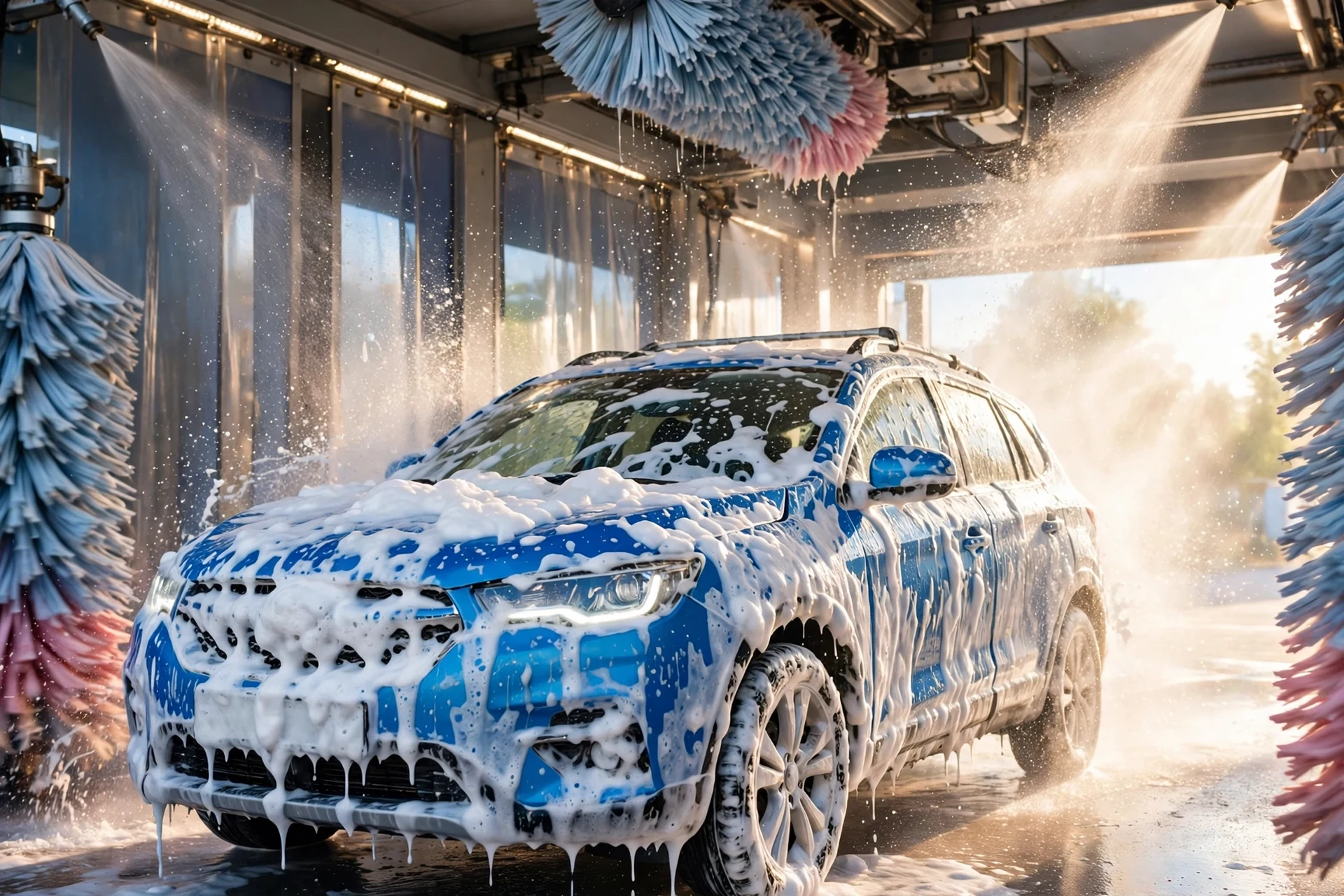
The car wash sat on the corner of the main road, and it was already busy. Three cars waited in front of us, and two more pulled in behind us while we sat there. White foam covered the first car like snow, big soft brushes turned, and two minutes later it came out shining like new.
Ten dollars a car, I thought. Fifteen if you pick the fancy wash with the wax. The queue never seemed to stop. Cars in, cars out, all morning long. If each car pays ten dollars, and the wash does that all day, the owner must be rich.
But is it true? A car wash looks like a money machine. Cars roll in, water sprays, and money rolls out. Yet most car wash owners will tell you it is not that simple at all. The wash is cheap to run for one car, and very expensive to build in the first place. The owner pays for the machines long before the first car ever drives in, and pays the loan every month whether it rains or shines. This guide explains how it all works, in plain words, so the next time you sit in that queue, you will know exactly where your ten dollars goes.
The Big Surprise: A Wash Costs Almost Nothing to Run
Let us start with the part that surprises everyone. Washing one car costs almost nothing.
Think about what a car wash actually uses for one car. It uses water, and it uses a lot of it, but water is cheap. It uses soap, and the soap is mixed with water, so a small bottle goes a long way. It uses electricity to turn the brushes and run the pumps, and the brushes themselves wear out slowly over thousands of washes. When you add it all up, the water, soap and power for one basic wash cost the wash about one or two dollars. That is all.
Now look at the price on the board. A basic wash costs ten dollars, sometimes twelve. A better wash with wax and tyre shine costs fifteen or eighteen, and the top wash with everything on it can cost twenty or more. The customer pays ten dollars, the wash spends one or two dollars on water, soap and power, and eight or nine dollars are left over.
But that eight or nine dollars is not profit. It is not money the owner gets to keep. It is money that still has to pay for everything else in the business, and that list is much longer than most people ever think about. The gap between two dollars and ten dollars is where the whole story of a car wash lives, and it is not a story about expensive soap. It is a story about everything the wash had to pay for before it ever opened its doors.
Where Does All the Money Go?
So where do those eight or nine dollars go? They go to the wash itself, and to the people who run it. The first cost is the land. A car wash needs a big piece of land on a busy road, with room for cars to queue, room for the tunnel, and room for the drying area at the end. Land on a busy road is expensive, and the owner either pays a lot to buy it or pays high rent every month. The rent never takes a day off.
Then there are the machines, and this is the big one. A car wash tunnel is not a garden hose and a bucket. It is a long line of huge machines: a conveyor belt that pulls the car along, big spinning brushes, high-pressure water jets, soap sprayers, wax sprayers, and giant blowers at the end that blast the water off the car. One tunnel can cost hundreds of thousands of dollars to buy and install. Most owners do not have that kind of money sitting in the bank, so they borrow it, and then they pay the loan back every month, month after month, for years. That loan payment is often the biggest bill the wash has.
Then there are the workers. Somebody has to stand at the entrance and wave the cars in. Somebody has to help at the pay machine when it eats a banknote. Somebody has to wipe down the cars at the end and keep the whole place clean. On a busy Saturday, a wash might have five or six people working at once, and each of them needs to be paid.
Put it together, and the picture changes. Out of that ten-dollar wash, two dollars go to water, soap and power, and the rest is already spoken for by rent, loan payments, wages and repairs before the owner has taken a single dollar of profit. A laundry shop faces the same problem, because it also pays for big machines and a place on a busy street before it ever earns a penny. The machines look simple from the outside, but they are the reason the owner cannot relax.
A Worked Example: One Car Wash, One Day
Numbers make this easier to see, so here is one clear example. It is made up, with round numbers, just to show how the maths works. No real car wash has exactly these numbers, but the shape of them is true for most washes.
Imagine a car wash on a busy road. It charges $12 for its most popular wash, the one in the middle of the board. The water, soap and electricity for one car cost $2. That leaves $10.
Now the other costs. The wash pays rent, loan payments, wages and all the rest, and when you divide those costs across all the cars washed in a day, they come to about $7 per car. If the wash washes 200 cars in a day, and its rent, loan, wages and bills for that day come to $1,400, then each car carries $7 of those costs.
So the maths for one car looks like this: $12 from the customer, minus $2 for water, soap and power, minus $7 for rent, loan, wages and bills, leaves $3. That is the profit on one car. Three dollars. Not ten. And out of that $3, the owner still has to pay for repairs, insurance and tax.
Now look at a whole day. If the wash washes 200 cars and makes $3 on each one, that is $600. But a rainy Tuesday might bring only 80 cars, and the rent and loan cost just as much that day. Eighty cars at $3 is $240, and a very wet week might barely break even. That is why the owner cares so much about busy days. The profit comes from washing enough cars, on enough days, to cover the costs that never stop.
Three Kinds of Car Wash
Not every car wash is the same, and the kind of wash changes how much money it makes. There are three main kinds, and you have probably seen all three.
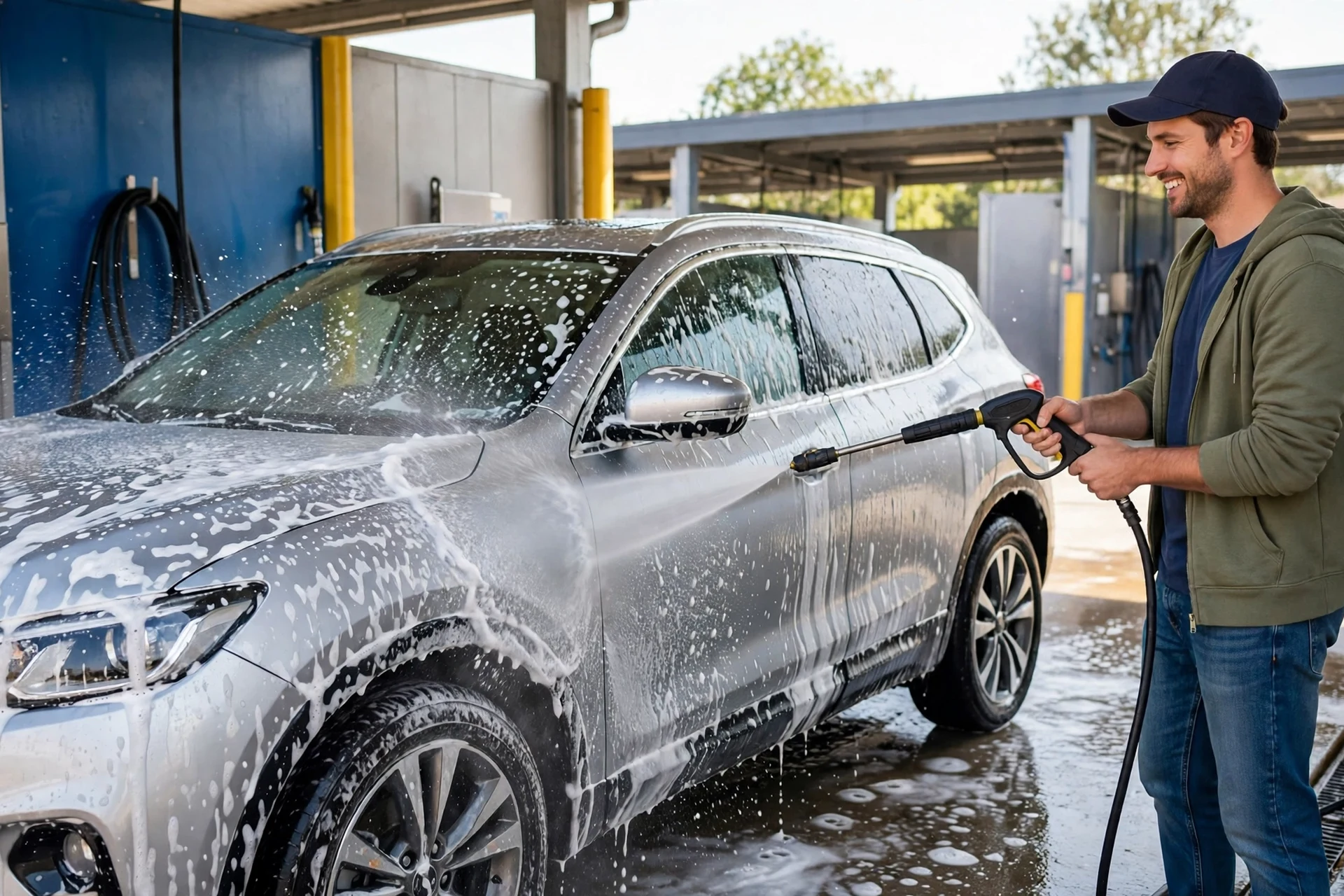
The first kind is the self-service bay. This is a small open bay with a hose, a brush on a stick, and a machine on the wall where you feed in coins or tap your card. You wash the car yourself, and you pay for the minutes you use. A self-service bay is cheap to build, because there is no big tunnel, and it needs almost no workers, because the customers do the work themselves. But it earns less money, because each customer pays only a few dollars.
The second kind is the automatic tunnel, the one most people picture when they hear the words car wash. You drive in, the machine pulls your car along, the brushes spin, the soap sprays, and you come out clean two or three minutes later. A tunnel is very expensive to build, but it can wash a car every few minutes, all day long, so it can serve hundreds of cars in a single day. The tunnel earns its money from volume, from car after car after car.
The third kind is the hand wash. Here, people wash your car by hand, with sponges, buckets and towels. A hand wash is slow, and it needs more workers than the other two kinds, so the owner pays more in wages. But it can charge more, because customers pay extra for the care and the detail.
The Membership Trick: Money Every Month
Now we come to the cleverest part of the car wash business, and it is the part that changed the whole industry in recent years. It is the monthly membership.
Here is how it works. Instead of paying ten or twelve dollars each time you wash your car, you pay one fixed amount every month, often around twenty or thirty dollars, and you can wash your car as many times as you like. The wash calls it the unlimited plan, and the sign at the entrance usually shouts about it in big letters.
Why would the owner offer this? It sounds like a bad deal for the wash. A customer who washes their car ten times in a month pays thirty dollars for washes that would have cost a hundred and twenty.
But the owner knows something that the customer does not think about. Most members do not wash their car ten times a month. Most members wash it two or three times, and some months they do not wash it at all. They go on holiday, or the weather is fine, or they simply forget. But the money leaves their bank account every month, rain or shine, washed or not. The wash gets paid even on the days when the member’s car sits in the garage.
That steady money changes everything for the owner. Before memberships, a car wash lived or died by the weather. A rainy month meant empty queues and empty pockets, while the rent and the loan still had to be paid. Now, with hundreds of members paying every month, the owner knows how much money is coming in before the month even starts. That money pays the rent and the loan even in the worst week of the year, and that is worth more than the few extra washes the keenest members use.
It works a little like a gym. A gym sells a hundred memberships knowing that only fifty people will turn up in a given week. The people who do not turn up still pay, and their money keeps the lights on. A car wash membership works the same way, and that is why almost every tunnel wash pushes the monthly plan so hard. The wash is not just selling clean cars. It is selling a promise that most people will only half use.
There is another clever part. A member is a regular, and a regular is easy to sell extras to. A member who comes in twice a week is far more likely to try the wax, or the tyre shine, or the inside clean, than a stranger who stops once on a road trip. And a member who has already paid for the month feels like the wash is free, so spending five more dollars on an extra feels like nothing at all.
The Little Extras That Earn the Most
The wash itself is not where the best profit lives. The best profit lives in the little extras that go with it.
Think about the wax. When you pick the middle wash instead of the basic wash, you pay three or four dollars more, and the machine sprays a thin layer of wax on your car. That wax costs the wash only a few cents. The tyre shine is the same. A quick spray on the tyres costs almost nothing, and the customer pays two or three dollars for it. The underbody wash, the one that sprays the bottom of the car, costs a little water and a little soap, and adds another few dollars to the price.
That is why the board at the entrance always shows three washes, not one. The basic wash is the cheap one, the one that gets you in the door. The middle wash is the one the owner wants you to pick, because the wax and the tyre shine cost almost nothing and add real profit. The top wash is the fancy one, the one with everything on it, and it is there to make the middle wash look like good value. It works the same way in an ice cream shop, where the plain cone brings you in and the sprinkles and the sauce and the extra scoop are where the shop earns its best money. The main item brings you in. The extras pay the bills.
Detailing is the biggest extra of all. Detailing means cleaning the car properly, inside and out, by hand, with polish and care. It can cost fifty dollars, or a hundred, or even more, and it takes an hour or two of work. But the soap and polish cost very little, and the rest is the worker’s time, which the owner can plan around quiet hours. A wash that sells two or three details a week adds a tidy pile of profit that the tunnel alone could never earn. The vacuum cleaners at the end work the same way. You clean the inside of your car yourself, it costs the wash a few cents of electricity, and you pay a dollar or two for the privilege.
Location and Weather Decide Everything
If the maths is the same for every car wash, why do some washes do well and others close? The answer is usually the same two things: where the wash sits, and what the sky is doing.
Location is first. A car wash needs a busy road, the kind of road where thousands of cars drive past every day, on their way to work, to the shops, or to school. If the wash sits on that road, with a big clear sign and an easy entrance, cars will turn in without even planning to. If the wash sits on a quiet side street, nobody will find it, no matter how good its brushes are. A wash on a busy road can wash two hundred cars on a Saturday. A wash on a quiet road might wash forty, and forty cars cannot pay the loan.
The best spots are near supermarkets, petrol stations and busy junctions, places where cars already stop. A driver who has just filled the tank is already thinking about the car, and a wash next door is an easy yes. A driver on a long, straight road with nothing around is not going to turn around and come back. The entrance matters too. If turning in is easy, with a wide opening and a clear sign, more drivers will try it. If the entrance is tight or hidden behind a hedge, half the passing cars will simply drive on.
Weather is second, and it is the part the owner cannot control. Rain is strange for a car wash. A little rain makes cars dirty, and dirty cars need washing, so a dry week after rain is often the busiest time of all. But rain while you are washing is useless, because nobody pays to wash a car that will be dirty again in five minutes. A long rainy week can empty the queue completely, and a long hot summer can fill it every day. The owner cannot change the weather, but a good owner plans for it, saving money in the busy months to survive the quiet ones, and using the membership money to keep the bills paid when the sky will not cooperate.
When a Car Wash Struggles
Not every car wash makes it. Some close within a year or two, and the reasons are usually the same. The most common reason is a quiet spot. A wash lives or dies on how many cars drive past its door, and a wash on a quiet road with little passing traffic will struggle no matter how shiny its machines are.
The second reason is a broken machine. A tunnel is a long line of machines, and if one of them breaks, the whole tunnel stops. The brushes stop, the queue grows, and the cars drive away to the next wash down the road. A broken machine can cost thousands of dollars to fix, and every day it stays broken is a day with no money coming in. A good owner keeps spare parts and a repair person on call, because a tunnel that does not move earns nothing.
And then there are the quiet months. A wash that makes good money in the summer can lose money in the dark, wet weeks of winter, so it has to save enough in the good months to survive the bad ones. The washes that last are the ones with a good spot on a busy road, machines that are looked after, members who pay every month, and an owner who keeps the costs low and the queue moving. The rest learn the hard way that a car wash is not a money machine. It is a machine that only makes money when the cars keep coming.
Frequently Asked Questions
How much profit does a car wash make on one car?
It depends on the wash, but the profit on one car is usually small, often only two or three dollars on a wash that costs twelve. The water, soap and power cost about two dollars, and the rest goes to rent, loan payments, wages and repairs.
Why is a car wash so expensive to build?
Because it needs land on a busy road, and a long line of big machines like a conveyor belt, spinning brushes, water jets and blowers. One tunnel can cost hundreds of thousands of dollars to buy and install, and most owners borrow that money and pay it back every month for years.
Are car wash memberships worth it for the owner?
Yes, they are the steadiest money a wash can earn. Members pay every month whether they wash their car or not, so the owner knows how much money is coming in before the month starts. That steady money pays the rent and the loan even in a bad, rainy week.
What is the most profitable thing a car wash sells?
Wax, tyre shine, vacuuming and detailing are the most profitable things, because they cost very little and sell for a few dollars each, or much more for a full detail. A wax spray costs the wash only a few cents and adds three or four dollars to the price.
Do car washes make money when it rains?
A little rain helps, because dirty cars need washing once the rain stops, and a dry week after rain is often very busy. But heavy rain while the wash is open keeps customers away, because nobody pays to wash a car that will be dirty again in five minutes.
Can a small car wash make a good living?
Yes, it can, but it is not easy money. A small wash with a good spot on a busy road, machines that are looked after, and members who pay every month can make a steady living for its owner. But the profit on each car is thin, so a quiet road or a broken machine can quickly turn a good wash into a struggling one.
More from Zorium Daily
- How Does a Restaurant Make Money?
- How Does a Bakery Make Money?
- How Does a Petrol Station Make Money?
- How Does a Food Truck Make Money?
The next time you sit in the queue on a Saturday morning, with the foam on the windscreen and the brushes turning, you will know what happened behind that ten-dollar wash. A dollar or two of water, soap and power, a tunnel that cost a small fortune to build, a loan that must be paid every month, and a small pile of profit that only adds up because a hundred other cars queued up on the same day. It is a simple business, and a hard one, and now you know exactly how it works.