Why Do We Put Candles on a Birthday Cake?
The Question
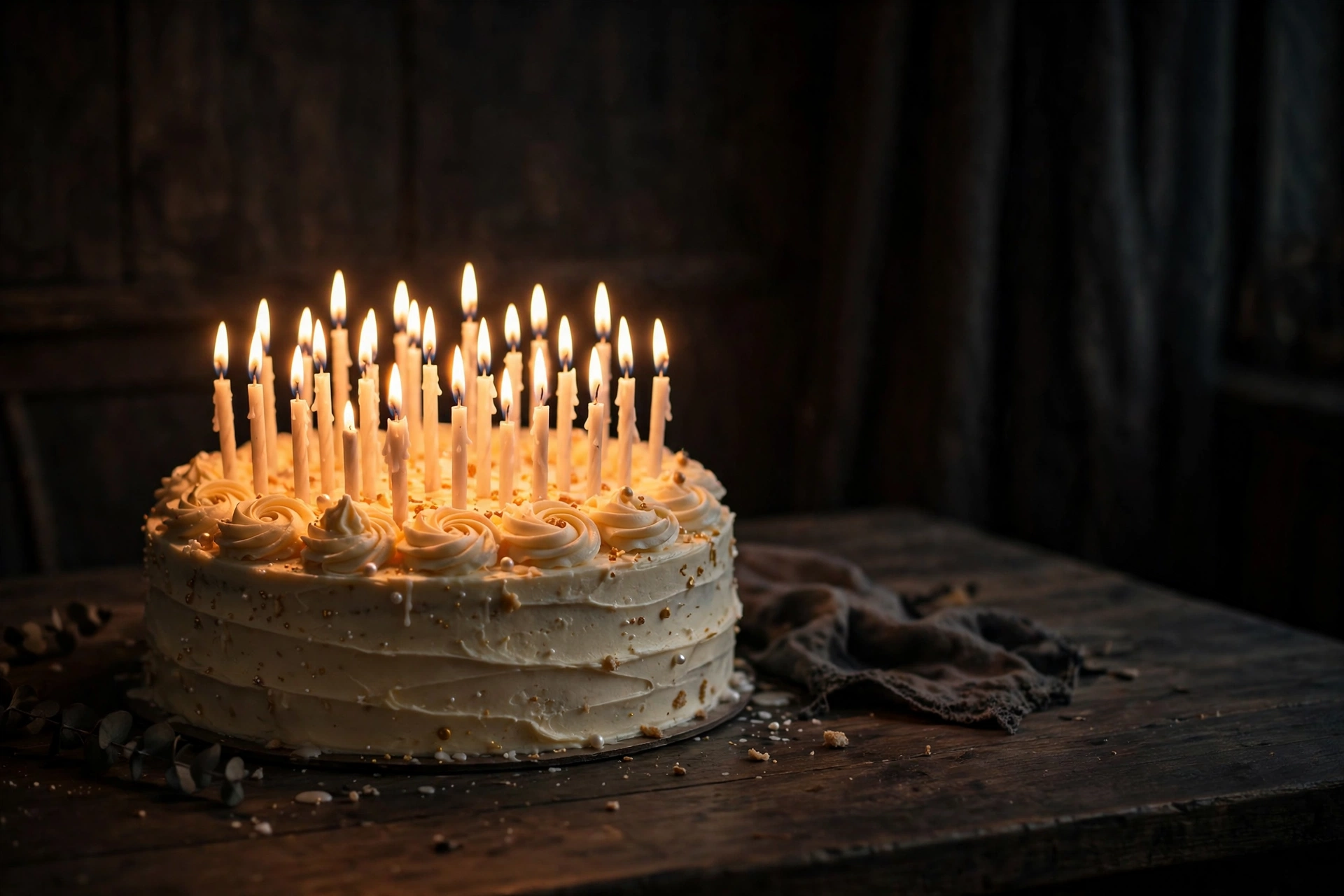
Picture a birthday party. The lights go low. A cake comes out of the kitchen. Small flames dance on top of it. Everyone sings. The birthday person closes their eyes, makes a wish, and blows. The flames go out. Everyone cheers. Then the cake is cut and shared.
Why do we do this? Why candles? Why on a cake? Why do we blow them out? And why do we keep the wish secret?
The answer is a long story. It starts thousands of years ago. It moves through Egypt, Greece, and Rome. It takes shape in Germany in the 1700s. Then it travels to America and around the world. Along the way, the meaning changes. First, candles were about gods and the moon. Then they were about protection for children. Then they became about years of life, hope, and a secret wish.
Some parts of this story are clear. We have old books and records that prove them. Some parts are less clear. People tell a famous story about ancient Greece and the moon goddess Artemis. That story may be true in spirit, but historians say there is no direct proof that Greeks put candles on birthday cakes. We will be honest about that in this article. Where a fact is certain, we will say so. Where it is a story or a guess, we will say that too.
A birthday is a mark in time. It marks one more trip around the Sun. A year is a long time, and how we count it has its own long story. You can read about it in our story about why we have 12 months in a year. The candles on the cake are a small part of that bigger story of time.
SUMMARY OF THIS ARTICLE
- People put candles on a birthday cake to mark a birthday, count the years of a life, and make a secret wish before blowing them out.
- The idea of round cakes with light goes back to ancient Greece, where round cakes were linked to Artemis, the goddess of the moon, but there is no direct proof that Greeks put candles on birthday cakes.
- The modern custom comes mainly from Germany in the 1700s, from a children’s festival called Kinderfest, where a cake had one candle for each year of life, plus one extra candle for the light of life.
- In the German custom, the candles burned all day, and the child blew them out in the evening while making a silent wish. People believed the smoke carried the wish up to heaven.
- Today, the custom is found around the world because sugar and flour became cheap, cakes became common, and German families who moved to America carried the custom with them.
Ancient Greece and the Moon-Cake Story
Now we come to the most famous story about birthday candles. It is a lovely story. But we must be careful with it. This is a story and a tradition, not a proven fact. Historians do not all agree on it, and there is no direct proof for its main claim.
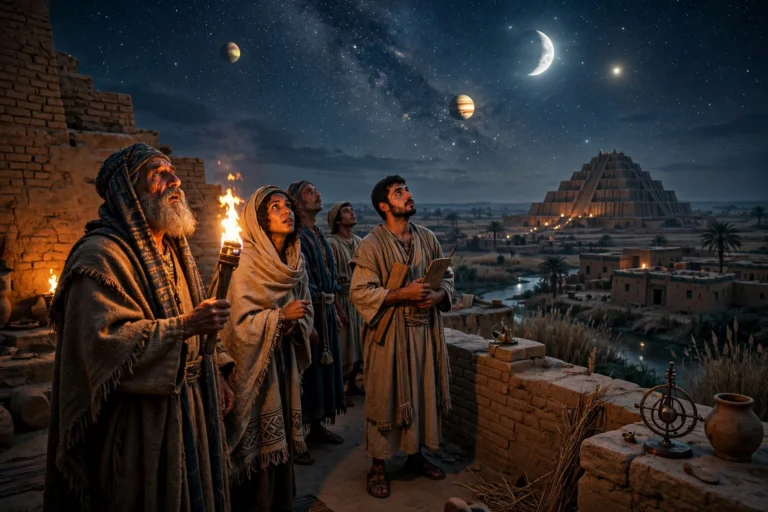
The story goes like this. In ancient Greece, people honored Artemis, the goddess of the moon and the hunt. She was the daughter of Zeus, the king of the gods. She was linked to the moon. The moon is round and bright in the night sky.
To honor Artemis, the Greeks baked round cakes. The round shape stood for the full moon. They placed lit candles on the cakes. The flames stood for the light of the moon. The cakes glowed like the moon. People brought these cakes to the temple of Artemis as offerings.
The story also says that the Greeks believed smoke could carry prayers to the gods. When they blew out the candles, the smoke rose up to the sky, where the gods lived. If you blew out all the candles in one breath, your wish would come true.
It is a beautiful story. It links cake, candles, the moon, and wishes in one neat package. That is why it is told so often. You will find it in many books and on many websites.
But is it true? Here is the honest answer: we do not know for sure, and many historians say there is no direct proof.
What do we know for sure? Archaeologists have found round cakes at the temple of Artemis at Ephesus, in what is now Turkey. These cakes were used as offerings. They were round. They were offerings to the goddess. We also know that the Greeks offered honey cakes to Artemis. Cakes made with honey, flour, and cheese were common offerings.
But do we have a clear record that says, “The Greeks put lit candles on a round cake for Artemis, and then blew them out to make a wish”? No. We do not have that record. National Geographic, in a recent article on this topic, notes that there is no direct historical record of candles being placed on cakes to honor the gods. A historian named Kwasi Konadu, a professor at Colgate University in the United States, says the popular idea that the custom began in ancient Greece or Rome has no support in the historical record, and so it remains folklore. Folklore means a story that people tell, but which is not proven by records.
Another historian, Marie Nicola, who studies the history of birthdays and parties, says the idea likely comes from rituals for Artemis, but she also says the link is not direct. It is a guess based on what we know about Greek offerings.
The Moon also shapes how we count time in other ways. People long ago watched the Moon change shape, and that watching gave us the week. You can read about that in our story about why we have seven days in a week.
Romans and Birthdays
The Romans took many ideas from the Greeks. They also had round cakes and birthday feasts. But they did not, as far as we know, put candles on birthday cakes in the modern way.
In ancient Rome, birthdays became more personal. Rich Romans celebrated their own birthdays, and the birthdays of their friends. They had feasts. They gave gifts. They ate cakes. The emperor Hadrian, who ruled from 117 to 138 CE, is said to have sent birthday cakes to guests who could not come to his party. That shows that cake was already part of a birthday.
Roman birthday cakes were sweet. They were made with honey and nuts. They were served at parties for rich people. They were a sign of wealth and friendship. A host would serve cake to guests. Guests would eat, drink, and talk. It was a social event.
The Romans also used candles in many parts of life. Candles lit homes at night. Candles were used in temples. Candles were used in ceremonies. But there is no clear record that Romans put candles on a birthday cake and blew them out.
What the Romans did give us is the idea of a personal birthday. In Rome, a birthday was for a person, not just for a god or a king. That was a big change. It meant that an ordinary rich person could have a birthday party. It meant that birthdays could be about a life, not just about a god.
Later, early Christians did not celebrate birthdays at all. They thought birthdays were a pagan custom, a custom from non-Christian religions. They celebrated the day a saint died, or the day Jesus was born, but not their own birthdays. That is why birthday parties faded in Europe for a time. It took many centuries for the birthday party to come back. When it did, it came back in a new form, in Germany.
The Romans also shaped our calendar, and that calendar still needs small fixes today. Julius Caesar made a leap day rule in 45 BC, and Pope Gregory XIII fixed it again in 1582. You can read about that fix in our story about why we add an extra day in February.
Germany’s Kinderfest in the 1700s
The strongest evidence for the modern birthday candle points to Germany in the 1700s. The custom is called Kinderfest. Kinder means children in German. Fest means festival or party. So Kinderfest means children’s festival.
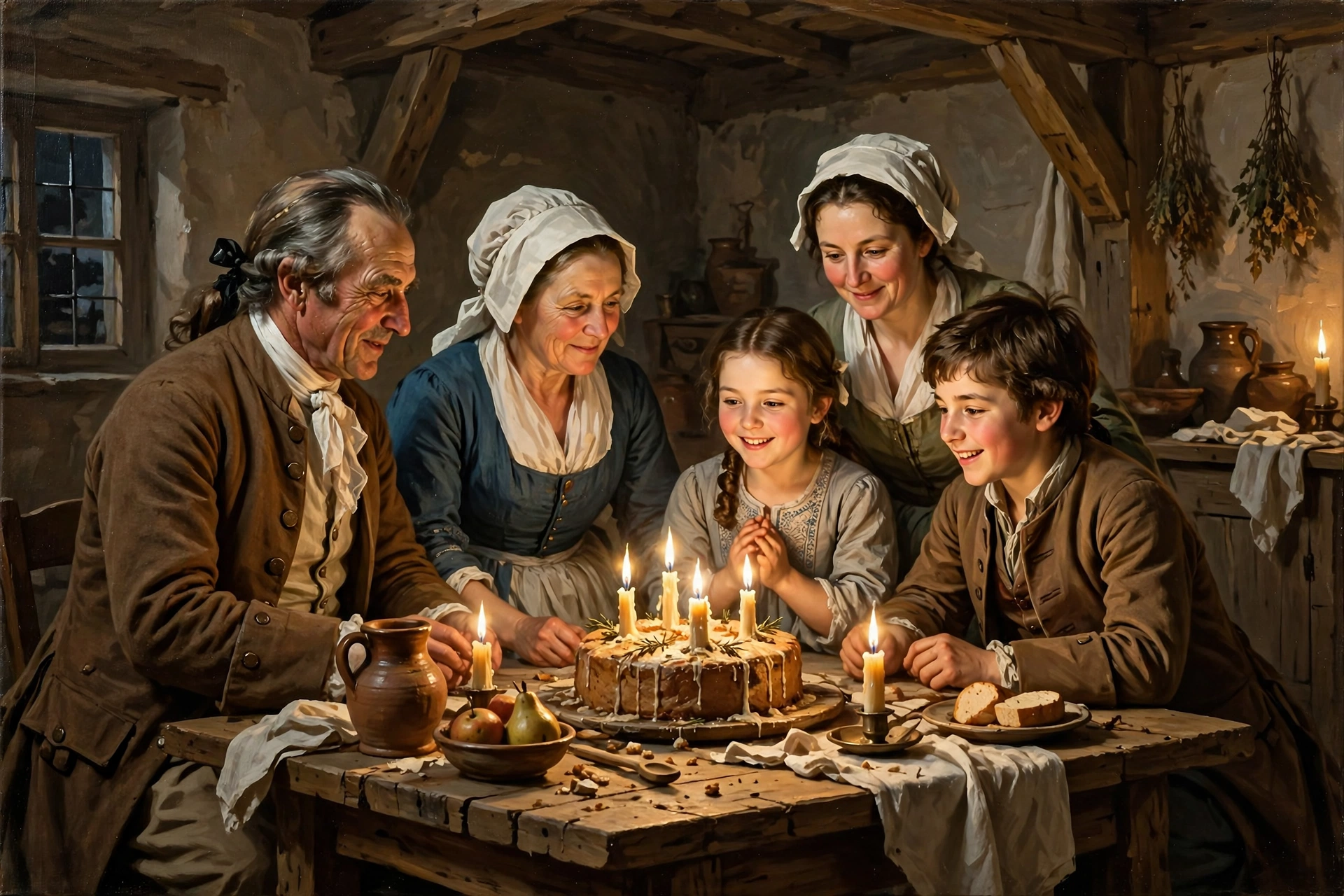
In a Kinderfest, a child woke up on their birthday morning to find a cake with candles. The cake was placed in the child’s room, or on the table. The candles were lit. They were kept burning all day. If a candle burned down, it was replaced with a new one. The flame was never allowed to go out during the day.
At dinner time, in the evening, the family gathered around the cake. The child made a wish in silence. Then the child blew out all the candles in one breath. If the child succeeded, the wish would come true. If the child told anyone the wish, it would not come true. So the wish had to stay secret. After the candles were blown out, the cake was cut and shared. The family ate together. It was a happy end to the day.
We have good records for Kinderfest. One of the earliest records comes from 1691. A German scholar named Johann Christoph Wagenseil wrote about children’s birthday cakes in the city of Nuremberg. He described cakes with candles. That is one of the first written records of the custom.
Later, the famous German writer Johann Wolfgang von Goethe wrote about his 52nd birthday. He was a guest of a prince in Gotha, in Germany. He described a large cake with many candles. That was in the early 1800s. His account shows that the custom was known among adults too, not just children.
So, if you want a short answer to the question, “Where did birthday candles come from?” the best short answer is: “The idea of light and cake is very old, and may go back to Greece, but the custom we know today, with one candle for each year and a secret wish, comes from Germany in the 1700s.” That answer is honest. It gives credit to the old ideas, but it does not claim more than the records prove.
The Wish and Blowing Out the Candles
Blowing out the candles is the most fun part for many people. But why do we blow them out? Why make a wish? The wish is the heart of the custom.
In the German Kinderfest, the child made a silent wish before blowing out the candles. The wish was secret. If you told the wish, it would not come true. If you blew out all the candles in one breath, it would come true.
Where did this idea come from? It likely comes from the old belief that smoke carries prayers to heaven. In many old cultures, people believed that smoke rises to the gods. If you put a wish into the smoke, the gods would hear it. Blowing out the candles made smoke. That smoke carried the wish up.
This idea is very old. It appears in Greek stories about Artemis. It appears in other cultures too. Fire and smoke were seen as a bridge between earth and heaven. When you blow out a candle, you send a small puff of smoke into the air. That puff is thought to carry your hope with it.
Today, most people do not believe that smoke carries wishes to gods. But we still make a wish. Why? Because a wish is a hope. It is a quiet moment to think about what you want. Do you want good health? Do you want a new job? Do you want to pass an exam? Do you want to see a friend again? A birthday is a good time to name that hope, even if only in your own mind.
Keeping the wish secret also matters. If you say your wish out loud, other people can judge it. They might laugh. They might say it is silly. Keeping it secret protects it. It keeps it yours. It also adds a little magic. A secret feels special.
Blowing out all the candles in one breath is a challenge. It takes a deep breath and a strong blow. Children love the challenge. Adults find it funny when they cannot do it. If one candle stays lit, people laugh and say, “Try again!” That laughter is part of the fun.

How the Tradition Spread Around the World
For a long time, birthday cakes with candles were only for rich people. Why? Because sugar was costly. In the 1700s, sugar came from far away. It was a luxury. Only rich people could afford a sweet cake with many candles. A cake is made from flour, sugar, eggs, and butter or oil. It is often round, and often covered with icing, a sweet layer on top. A round cake is easy to cut into equal pieces, and easy to place candles on. One old idea is that the round shape stands for the sun, or the moon, or the cycle of the year. A circle has no start and no end.
In the 1800s, sugar became cheaper. New ways of making sugar were found. Sugar beet, a root vegetable, could be grown in Europe. That meant sugar did not have to come from far away. Flour also became cheaper. New mills made flour faster. Better ovens made baking easier. Baking powder, a powder that helps cake rise, was invented in the 1840s. A British chemist named Alfred Bird made one of the first baking powders in 1843.
When sugar and flour became cheap, more families could bake a birthday cake. They did not need to be rich. They could bake at home. They could buy candles in a shop. The custom spread from rich homes to all homes. German families who moved to America also helped spread the custom. In the 1800s, many Germans moved to the United States. They brought their Kinderfest with them. They baked cakes. They lit candles. Their American neighbors saw the custom and liked it. They copied it. Soon, the custom was American too. By the early 1900s, birthday cakes with candles were common in the United States, Britain, and other English-speaking countries. Shops sold birthday candles. Cookbooks gave recipes for birthday cakes.
Trade and travel spread many ideas, not just cakes. People moved, traded goods, and shared customs. Money itself traveled the same way, and it has its own long story. You can read about it in our story about who invented paper money.
Today, the custom is global. You can find birthday cakes with candles in Asia, Africa, South America, and Australia. The cake may be different. The flavor may be different. The song may be different. But the candles are the same.
Not every country does birthdays in exactly the same way. In Germany, the custom is still close to Kinderfest. Some families still add one extra candle for the light of life. Even where the cake is different, the candles often stay. Why? Because a candle is simple. It needs no language. It needs no special food. It is light in the dark. Anyone can understand it. That is why it travels so well.
Why the Number of Candles Matters
In the German custom, how many candles were on the cake? The rule was simple. One candle for each year of the child’s life, plus one extra candle.
A child turning seven would have eight candles. Seven for the seven years lived, and one extra. That extra candle was called the “light of life.” In German, it was called Lebenslicht. Lebens means life. Licht means light. So it was the light of life.
Why add one more? One reason was hope. The extra candle stood for the year ahead. It was a wish for one more year of life. It was a hope that the child would live to see the next birthday. Another reason was luck. The extra candle was a “one to grow on.” It was for good luck in the coming year. Another reason was protection. The extra candle was taller than the others. It stood in the middle of the cake. It was thought to protect the child.
But a practical problem appears when a person gets older. A cake for a five-year-old has five candles. That is easy. A cake for a fifty-year-old would have fifty candles. That is a lot. The candles would crowd the cake. The wax would drip. The smoke would be thick. The birthday person would need a very big breath to blow them all out.
So people found solutions. The most common is number candles. Instead of fifty small candles, you use two candles shaped like the numbers 5 and 0. That is neat and clear. Everyone can see the age at once. Another solution is to use one candle for each decade. A person turning 60 might have six candles. Each candle stands for ten years. Another solution is to use a single candle. One candle stands for the light of life. It does not count the years. It just marks the day. Some adults prefer this. They do not want to show their exact age.
Safety also matters. Candles are fire. Fire can burn. Never leave lit candles alone. Keep them away from curtains, paper, and hair. Keep them away from small children who might touch the flame. An adult should light the candles and watch them. When the candles are blown out, check that they are fully out.
Birthdays Today
After all this history, why do we still put candles on a birthday cake? The answer is not about Greece or Germany alone. It is about what the candles mean to us today.
First, candles mark time. Life moves fast. A year passes. A birthday is a pause. The candles say, “Look back. Look forward. You are one year older.” That pause is valuable. In a busy life, we need pauses.
Second, candles bring people together. A birthday cake is not eaten alone. It is shared. The moment of the candles is a shared moment. Everyone sings together. Everyone watches together. Everyone cheers together. That shared joy makes a family or a group of friends feel closer.
Third, candles give us hope. A wish is a hope. Even if we do not believe in magic, we still hope. We hope for health. We hope for happiness. We hope for a better year. The candle gives that hope a small, visible form. A flame is a hope you can see.
The next time you see a birthday cake with candles, take a second to notice it. Notice the small flames. Notice the face of the birthday person. Notice the smiles around the table. That small moment has traveled thousands of years to reach you. It has passed through temples, through German homes, through ships to America, and through shops and kitchens around the world. And now it is here, in front of you, on a simple cake.
Light the candles. Sing the song. Make a wish. Blow them out. And enjoy the cake.
Frequently Asked Questions
Why do we put candles on a birthday cake?
We put candles on a birthday cake to mark the day, to count the years of a life, and to make a wish. Each candle can stand for one year. The flames also make the moment feel special and bring people together around one person.
Where did birthday candles come from?
The idea of round cakes with light may go back to ancient Greece, but there is no direct proof of that link. The modern custom, with one candle for each year and a secret wish, comes mainly from Germany in the 1700s, from a children’s festival called Kinderfest.
What is Kinderfest?
Kinderfest is a German word for a children’s festival. In the 1700s, German families celebrated a child’s birthday with a cake and candles. The candles burned all day. In the evening, the child made a silent wish and blew out the candles. If all the candles went out in one breath, the wish was thought to come true.
Why is there often one extra candle?
The extra candle is called the light of life. It stands for the year ahead, or for good luck. People also call it “one to grow on.” It is a hope that the person will live one more year and have a good year.
Did the ancient Greeks really invent birthday candles?
Not exactly. The Greeks did offer round cakes to Artemis, the goddess of the moon, and they linked light with prayer. But historians say there is no direct record that Greeks put candles on birthday cakes. The Greek story is a tradition and a likely inspiration, not a proven starting point. The clearest records point to Germany.
Why are most birthday cakes round?
Most birthday cakes are round because a round cake is easy to cut into equal pieces, easy to place candles on, and looks good on a table. An old idea also links the round shape to the moon or the sun, or to the cycle of the year, which has no start and no end.
More from Zorium Daily
- Why Do We Have 12 Months in a Year? — How the Moon, the Romans, and a pope gave us 12 months.
- Why Do We Have Seven Days in a Week? — Why the Moon gave us a week of seven days.
- Why Do We Add an Extra Day in February? — Leap years explained in simple words.
- History — Zorium Daily — More simple history stories from Zorium Daily.