How Does a Smartwatch Know Your Heart Rate?
SUMMARY OF THIS ARTICLE
- A smartwatch measures your heart rate with light. It shines a green light into your wrist and watches how much light comes back.
- The method is called photoplethysmography, or PPG for short. Each heartbeat sends a small wave of blood through the tiny vessels under your skin, and that changes how much light the blood absorbs.
- Green light is used because the red parts of your blood absorb green light very well, which makes the pulse easy to see.
- A small motion sensor helps the watch tell the difference between a real heartbeat and the shake of your arm when you move. Some watches also have an ECG sensor, which reads the tiny electric signals of your heart, but most day-to-day readings come from the light sensor.
- The reading is a helpful guide, not a medical device. It can be less accurate when the watch is loose, when you move a lot, or when your skin is cold.
Your heart beats about 100,000 times every day, while you work, sleep, eat, and play. For most of human history, the only way to count those beats was to press two fingers against your wrist and count for a minute. Today, a small watch on your wrist does the counting for you, all day and all night.
But how does it know? The watch cannot hear your heart. It does not press into your chest. It just sits on your wrist. And yet, when you look at the screen, there is a number: 72 beats per minute, 110 beats per minute, 58 beats per minute. Where does that number come from?
The answer is light. Your smartwatch shines a light into your skin, watches how the light changes as your blood moves, and turns that changing pattern into a heartbeat. In this article, we will explain it step by step, in the simplest words we can.
The Short Answer, in One Paragraph
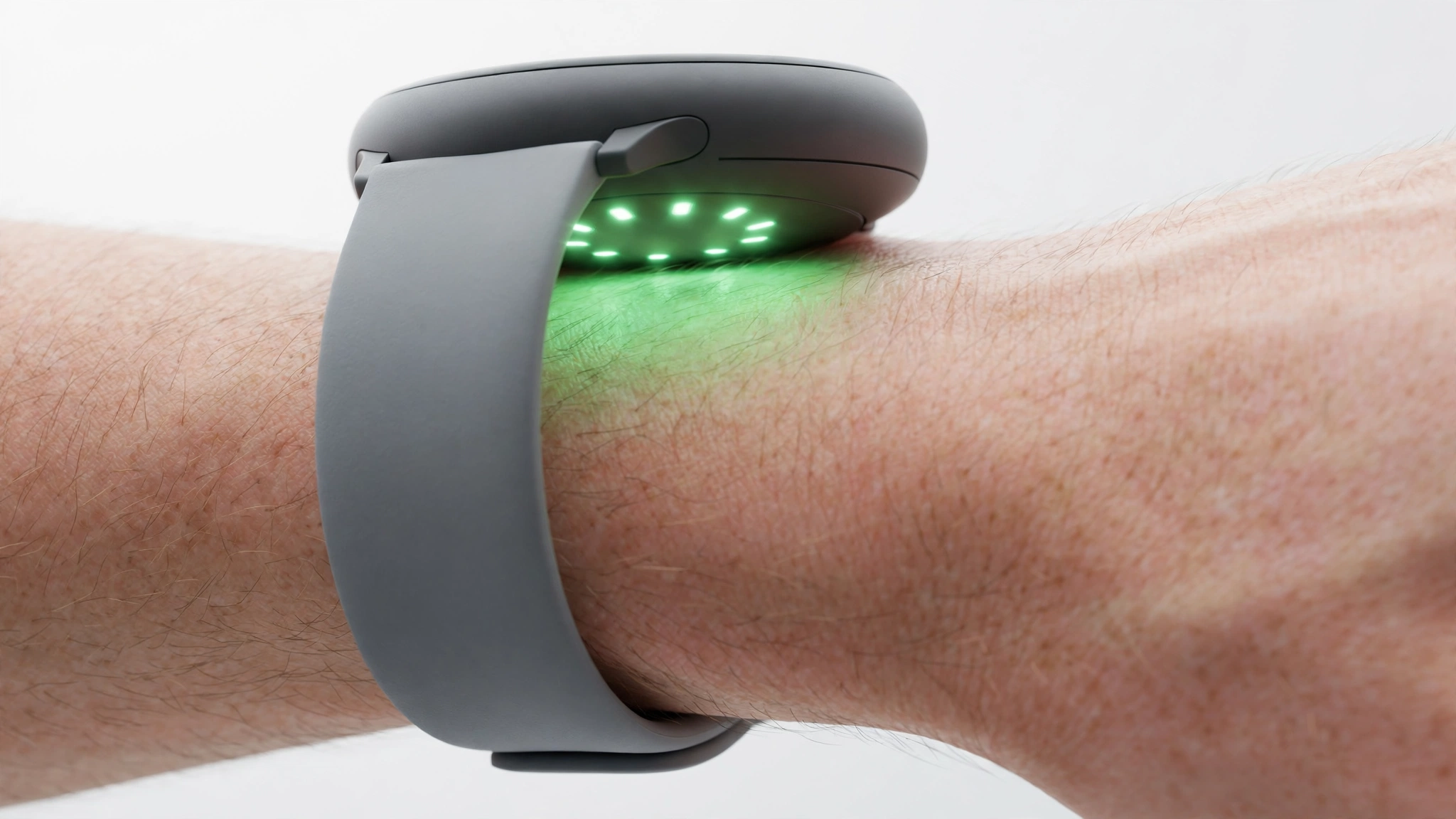
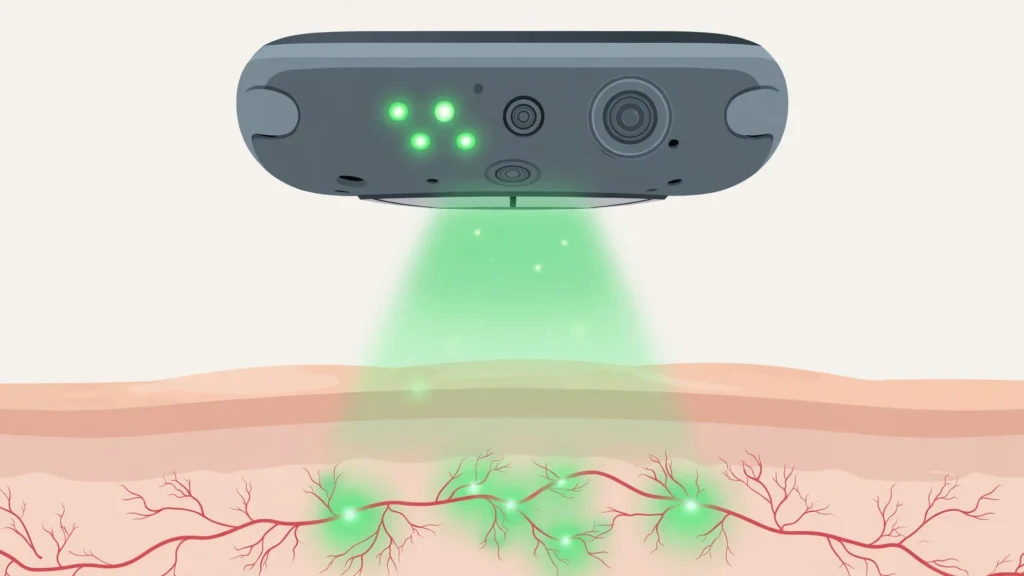
A smartwatch knows your heart rate by watching your blood move. On the back of the watch are small green lights and a light sensor. The green lights shine into the skin on your wrist, and your blood absorbs some of that light. Every time your heart beats, it pushes a small wave of blood through the tiny vessels under your skin. When there is more blood, more light is absorbed, and less comes back to the sensor. When the heart rests between beats, there is less blood, so more light comes back. The watch reads this rise and fall of light, over and over, and counts one beat for each wave. Then it works out how many beats happen in one minute. That is your heart rate.
Your Heart, in the Simplest Words
Your heart is a muscle. It sits in the middle of your chest, a little to the left. Its job is simple: it pumps blood around your body. Blood carries oxygen and food to every part of you, from your brain to your toes.
The heart pumps by squeezing and relaxing. When it squeezes, it pushes blood out into the blood vessels, the tiny pipes that run all through your body. When it relaxes, it fills up again, ready for the next squeeze. Each squeeze is one heartbeat.
You can feel this squeeze in your wrist. Put two fingers on the inside of your other wrist, just below your thumb. Wait quietly. You will feel a small push, then a pause, then a small push again. That push is your pulse. It is the wave of blood moving through the vessel in your wrist, and it happens once per heartbeat.
A normal resting heart rate for an adult is usually between 60 and 100 beats per minute. Children often have faster heart rates. Athletes often have slower resting rates, because their strong hearts push more blood with each squeeze. When you run or feel excited, your heart beats faster, because your muscles need more oxygen. When you sleep, it beats more slowly. A smartwatch does the same job as your two fingers, but with light instead of touch.
What Is PPG? The Light Sensor That Watches Your Blood
The method your smartwatch uses is called photoplethysmography. That is a very long word, so most people just call it PPG. Photo means light. Plethysmo means volume, or how much of something there is. Graphy means recording. Put together, PPG means recording changes in volume with light. In plain words: it uses light to watch how the amount of blood in a small patch of skin goes up and down.
Your skin has tiny blood vessels just below the surface, called capillaries. When your heart beats, it sends a wave of pressure through your vessels. That wave reaches the capillaries in your wrist a tiny moment later, and for a short instant they swell with a little more blood. Then, between beats, the blood drains away a little. So the amount of blood under the sensor goes up and down, in time with your heart.
The watch cannot see the blood directly, but blood changes how light behaves. The red parts of your blood soak up some kinds of light. So if the watch shines a light into the skin and measures how much comes back, it can tell how much blood is there. More blood means more light is soaked up, so less light comes back. Less blood means more light comes back.
The watch does this again and again, many times every second. It draws a wave from the results: down when a heartbeat pushes blood in, up when the blood drains away. Each dip in the wave is one heartbeat. Count the dips over a minute, and you have the heart rate. This is the same basic idea used in the small clip that doctors put on a fingertip in a hospital. That clip is called a pulse oximeter. The smartwatch simply puts a smaller version of the same idea on your wrist.
Why Green Light? The Colour That Blood Loves to Absorb
If you turn your smartwatch over and put it face down on a table in a dark room, you will see it blink. Small green lights flash on the back. Why green? Why not red, blue, or white? The answer is in your blood.
Blood gets its red colour from a protein called haemoglobin, which lives inside your red blood cells and carries oxygen from your lungs to the rest of your body. Haemoglobin absorbs green light very strongly. When green light hits blood, much of it is soaked up. That makes the change in the returning light bigger and easier to read.
Green light has another good point: it does not travel very deep into the skin. It only reaches the small capillaries near the surface, which is exactly where the watch wants to look. Deeper light would pick up signals from bigger vessels and deeper tissue, which would muddy the picture.
Watch makers also like green light because green LEDs are cheap, well tested, and use very little power, which matters when the battery is tiny. Green light also works well in bright daylight, when other colours struggle with sunlight leaking in under the watch.
But green light is not the only light on your watch. Many watches also have red and infrared lights, which travel deeper into the skin. They are used for a different job: measuring blood oxygen. Oxygen-rich and oxygen-poor blood absorb red and infrared light in different amounts, so by comparing the two, the watch can work out an estimate of your blood oxygen level, often shown as SpO2.
What Is Inside the Heart Rate Sensor?
Turn your smartwatch over. The flat back that touches your wrist is where the work happens. Under that smooth cover, there is a small set of parts, each with a clear job.
The first part is the light source: several small LEDs, which are tiny lights. There are usually two or more green LEDs, plus one red LED and one infrared LED for blood oxygen. The LEDs flash many times every second. You can sometimes see the green ones blink when the watch is off your wrist.
The second part is the photodetector, sometimes called a photodiode. It measures light, and it sits next to the LEDs on the flat back of the watch. It does not make light. It only catches the light that bounces back out of your skin. More light means a stronger signal. Less light means a weaker signal.
The third part is a small window or lens. The LEDs and the detector sit behind a clear cover, often made of glass or hard plastic. It protects the parts from sweat and water, and it helps the light pass through cleanly.
The fourth part is the chip, the small computer inside the watch. It tells the LEDs when to flash, reads the detector many times every second, and turns the wave of light into a heart rate number. All of this fits into a space smaller than a coin, and it runs on a tiny battery, all day long.
How the Watch Turns Light into a Number, Step by Step
Now let us follow one heartbeat, from your chest to the number on the screen, step by step.
Step 1: Your heart squeezes. Blood is pushed into the arteries, the larger vessels that carry blood away from the heart. The squeeze sends a wave of pressure through the blood, like a wave moving along a rope when you flick one end.
Step 2: The wave reaches your wrist. A fraction of a second after the squeeze, the wave arrives in the tiny capillaries under the watch. For a brief moment, those tiny vessels hold more blood than they did a moment before.
Step 3: The LEDs flash. The green LEDs shine light into your skin. The light travels a short way in, hits the blood in the capillaries, and some of it is absorbed by the haemoglobin. The rest scatters back out.
Step 4: The detector measures the returning light. There is more blood in the vessels now, so more green light is absorbed and less comes back. The detector records a low point. This marks the arrival of the pulse wave.
Step 5: The heart relaxes. Between beats, the blood drains away a little, so less green light is absorbed and more comes back. The detector records a high point, which marks the quiet gap between beats.
Step 6: The wave repeats. Beat after beat, the signal rises and falls. The chip finds each dip, and each dip is one heartbeat. It measures the time between dips. If the dips are one second apart, the heart beats 60 times per minute. If they are half a second apart, it beats 120 times per minute. That gives you beats per minute, or BPM.
Step 7: The watch smooths the number. It looks at several beats together and shows an average, so the number changes smoothly. During exercise it updates more often. At rest it checks less often, to save battery.
The Other Sensors That Help: Motion, Oxygen, and More
The light sensor does not work alone. The most important helper is the accelerometer, a motion sensor. It can tell when your wrist moves, which way it moves, and how hard it moves. It is the same kind of sensor that counts your steps.
Movement is a problem for the light sensor. When you run, the watch bounces on your wrist. Each bounce shakes the sensor, lets a little daylight leak in under the edge, and changes how the light hits your skin. That shaking makes wavy noise in the signal, and that noise can look like extra heartbeats. Without help, the watch might count your running steps as heartbeats, and the number would be wrong.
The accelerometer fixes this. It tells the chip exactly how your arm is moving, moment by moment. The chip then subtracts the movement pattern from the light signal, a bit like removing the sound of a drum from a song so you can hear the singing. What is left is the cleaner pulse wave. Many watches also use the step rhythm to double-check: if the light signal pulses at exactly the same rate as your running steps, the watch knows that part is probably movement, not your heart.
The watch also uses its other lights for extra health clues. The red and infrared LEDs measure blood oxygen, and some watches add a skin temperature sensor. None of these replace the green light sensor for heart rate. They are neighbours on the same team, each measuring a different piece of the picture.
There is one more link in the chain. Once the watch has your heart rate, it usually sends the data to your phone over Bluetooth, the short-range wireless link that connects your watch to your phone. If you want to know how that link works, read our simple guide to what Bluetooth is and how it works. Your phone app then draws the charts and stores the history.
Optical Heart Rate vs ECG: Light vs Electricity
Some smartwatches offer a second way to read the heart, called ECG. ECG is short for electrocardiogram. It works in a very different way from the light sensor. An ECG does not watch your blood. It listens to the tiny electric signals that make your heart beat. Every heartbeat starts as a small electric signal in the heart. That signal spreads through your body, and it is strong enough to be picked up on the skin.
To take an ECG reading, you hold still and touch the crown with a finger from your other hand for about 30 seconds. Your body forms a loop, and the electric signal of your heart travels around it. The watch draws a line that shows the shape of each heartbeat, and it can spot an uneven rhythm.
The light sensor, PPG, runs all day in the background, without you doing anything. It is good for tracking your heart rate over time, during rest, exercise, and sleep. The ECG is a spot check. You take it on purpose, while you sit still, and it gives a more detailed picture of the shape and rhythm of each beat. The light sensor is like a guard who watches the door all day. The ECG is like a doctor who comes for a careful check-up. Many watches have both, because the two together give a fuller picture than either one alone.

Why Wrist Position and Fit Matter So Much
A smartwatch heart rate reading is only as good as the contact between the sensor and your skin. This is why how you wear the watch matters more than most people think.
The watch needs a snug fit. Not tight enough to hurt, and not so tight that it cuts off the blood flow, but close enough that the sensor stays flat against the skin. If the watch is loose, it slides up and down your wrist as you move. Each slide lets daylight in under the edge, and daylight confuses the detector. The signal becomes noisy, and the reading jumps around or disappears.
Where you wear it matters too. The best spot is just above the wrist bone, where the skin is fairly flat and good blood vessels run underneath. Many watch makers suggest wearing the watch one finger-width above the wrist bone, and moving it a little higher during exercise, where the skin moves less.
Cold skin is another problem. When you are cold, the tiny blood vessels in your skin narrow, so less blood flows near the surface, and the light signal gets smaller and harder to read. That is why a winter run can give a patchy reading for the first few minutes, until your body warms up. Dark tattoo ink can also absorb green light before it reaches the blood. Sweat and sunscreen can change how light passes through the skin too, though a quick wipe of the sensor usually fixes that.
When the Reading Goes Wrong, and How Accurate It Really Is
No smartwatch is perfect. Movement is the biggest cause of error. Fast arm swings, weight lifting, or gripping a handlebar can shake the sensor or change the blood flow in the wrist. During a calm walk, most watches do well. During hard exercise, the reading can drift by a few beats, or freeze briefly while the chip cleans up the signal.
Skin tone can make a small difference too. Skin contains a pigment called melanin, which gives skin its colour and also absorbs green light. On darker skin, a little more green light is absorbed before it reaches the blood, so the signal can be slightly smaller. Watch makers have worked on this with more LEDs and smarter software. Irregular heartbeats can confuse the watch as well, because the gaps between beats are not steady. Some watches will flag an uneven rhythm and suggest an ECG reading, if the watch has one.
For most healthy people, at rest and during gentle activity, a modern smartwatch is usually close to the true heart rate, often within a few beats per minute. During hard exercise, the error can be larger. That is why doctors say a smartwatch is a helpful guide, not a medical diagnosis. It is very good at showing trends, like whether your resting heart rate falls as you get fitter. If a reading looks strange, tighten the strap one notch, wipe the sensor clean, and sit still for a minute. If it stays odd, or you feel unwell, talk to a doctor rather than trusting the watch alone.
Smartwatches in Everyday Life
A runner can glance at her wrist and see whether she is training too hard or too gently. A person starting a new exercise plan can watch their resting heart rate fall slowly over weeks as fitness improves. At night, the same sensor keeps working while you sleep. Many watches will also tell you if your heart rate is unusually high while you sit still. These warnings are not diagnoses, but prompts to pay attention, rest, or speak to a doctor if you feel unwell.
Frequently Asked Questions
Can a smartwatch measure my heart rate all the time?
Yes. Most watches measure it in the background, day and night. They check more often during exercise and less often at rest, to save battery. You can also ask for a reading at any moment in the heart rate app.
Why does my smartwatch use a green light?
Because haemoglobin, the red part of your blood, absorbs green light very strongly. Each heartbeat changes how much green light comes back, which makes a big, clear signal. Green light also stays near the surface of the skin, where the watch wants to look.
Is the heart rate on a smartwatch as accurate as a hospital machine?
No, not exactly. A hospital machine reads the heart with the patient still and sensors on the chest. A smartwatch reads the pulse from the wrist while you move. At rest it is usually close, but during hard exercise it can drift. Think of it as a helpful guide, not a medical test.
Why does my heart rate reading jump around during a workout?
Mostly because of movement. When your arm swings, the watch bounces, daylight leaks in, and the signal gets noisy. A snug fit and a watch worn a little higher on the wrist usually help.
What is the difference between the light sensor and ECG on a watch?
The light sensor, PPG, shines light into your wrist and watches your blood move. It runs all day in the background. The ECG reads the tiny electric signals of your heart through metal contacts, while you sit still and touch the crown for about 30 seconds.
Does a smartwatch measure blood pressure too?
Most smartwatches do not measure blood pressure directly. Some give an estimate, but it needs regular checks with a real blood pressure cuff to stay useful. A smartwatch is not a replacement for a proper blood pressure monitor.
More from Zorium Daily
- What Is Bluetooth and How Does It Work? — learn how your watch sends heart rate data to your phone without wires.
- How Do Noise-Cancelling Earbuds Work? — discover how another small wearable uses tiny sensors and smart chips.
- How Does GPS Know Where You Are? — find out how your watch tracks your run, walk, or ride on a map.
- What Is Wi-Fi and How Does It Reach Your Phone? — understand the wireless waves that carry your health data to the internet.
Your heart beats about 100,000 times a day, and you never have to ask it to. A smartwatch simply watches that quiet work with a small green light, turning each pulse of blood into a number you can see. It is not magic, and it is not perfect, but it is a simple, clever idea: shine a light, watch what comes back, and listen to your own body.