How Does a Supermarket Make Money?
By Zorium Daily Business Desk
SUMMARY OF THIS ARTICLE
- A supermarket makes money by selling food for more than it paid for it, but the profit on most food is very small — often only a few cents on each dollar.
- It earns that small profit on a huge scale — thousands of shoppers every day — so the small amounts add up.
- Buying in huge amounts, selling own-brand products, and placing high-profit items where shoppers see them are its most important tricks.
- Loyalty cards give shoppers small discounts and give the supermarket something far more valuable: a clear picture of what each customer buys.
- Fresh food not sold in time must be thrown away, so controlling waste and sell-by dates decides whether a supermarket makes money or loses it.
The Weekly Shop That Never Ends
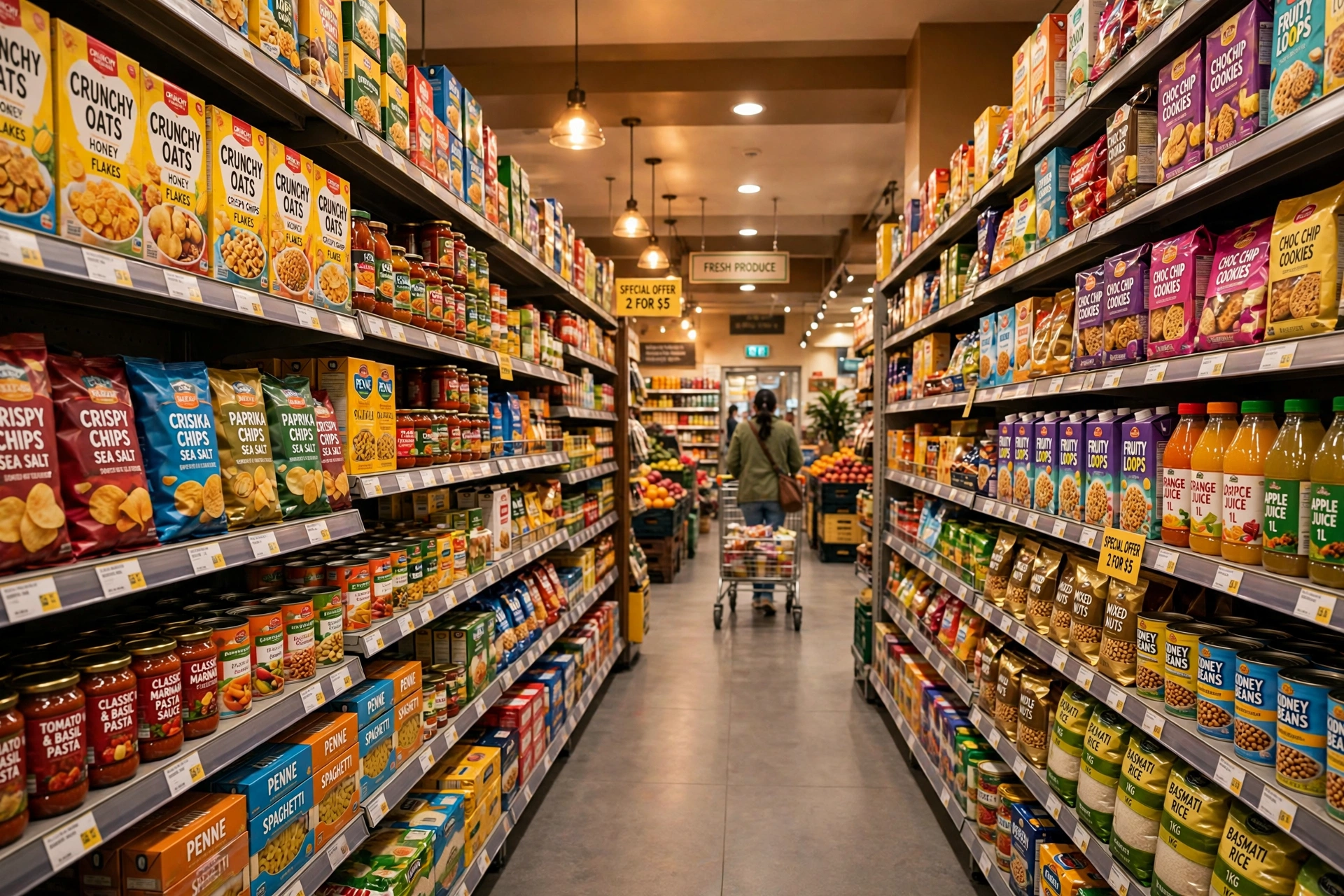
It is Saturday morning. You push a trolley through the sliding doors of a big supermarket, and the smell of fresh bread drifts across the entrance. The shelves stretch away in long, bright rows. Milk, bread, rice, apples, biscuits, soap, washing powder — everything a family needs for a week is here, under one roof.
Your list says twelve things. You come out with twenty. A bag of crisps you had not planned to buy. A bottle of juice that caught your eye. A bunch of bananas because they looked fresh. At the checkout, the total is more than you expected, and you wonder, for a second, how this place can sell so much food so cheaply and still stay in business.
The car park is full, the tills are busy, and hundreds of people walk through those doors every day.
That is the first secret of a supermarket, and it is also the whole secret: it does not need to make a lot of money from you. It needs to make a little money from a lot of people, every day, all year round. This article follows that money — where it comes in, where it goes, and why some of the cheapest things in the shop earn the supermarket the least.
The Simple Idea, and the Thin Slice of Profit
Every business runs on the same simple maths. Money in must be more than money out. A supermarket buys food from farmers and factories, puts it on shelves, and sells it to you for a higher price. The gap between the buying price and the selling price is called the gross profit, and it pays for everything else.
But here is the surprise. On most food, that gap is tiny. A bag of rice that sells for 5 dollars may have cost the supermarket about 4.50 dollars to buy and get to the shelf. A bottle of milk that sells for 2 dollars may have cost about 1.80 dollars. The supermarket keeps only a small slice from each item, and then it still has to pay staff, rent, electricity, fridges, lorries, and bags out of that slice.
Industry guides often say a supermarket keeps only about 1 to 3 cents of profit from each dollar of sales, after every cost is paid. Compare that with a coffee shop, which might keep 10 cents, or a bakery, which might keep 10 or 15. Supermarkets work on some of the thinnest margins in all of retail. Margin is the word owners use for the share of sales left as profit, and a supermarket’s margin is thin like a slice of bread cut too fine.
So why would anyone run a business that keeps so little from each sale? Because of volume. Volume means the sheer number of things sold. A corner shop might sell 500 items in a day. A big supermarket might sell 50,000. If you keep 2 cents on each dollar and you sell a million dollars of food in a week, that is 20,000 dollars of profit. Small slices, cut thousands of times a day, add up to a loaf.
All the money figures here are typical examples, not real supermarket accounts. Real costs change a lot from place to place.
Follow One Hundred Dollars Through the Shop
Let us follow a simple example. Imagine a supermarket takes in 100 dollars at its tills. Where does that 100 dollars go? Here is one realistic way it might be divided, using typical figures.
About 70 to 75 dollars goes straight back to the suppliers — the farmers, factories, and wholesalers who grew or made the food. This is the cost of the goods themselves, and it is the biggest slice by far. A supermarket is, in a sense, a middleman. It does not grow the wheat or milk the cow. It buys the finished food and passes it on to you, keeping a small cut.
About 10 to 12 dollars goes on staff pay. Someone has to stack the shelves, work the tills, drive the lorries, clean the floors, and manage the store. A big supermarket may employ two or three hundred people.
About 5 to 7 dollars goes on rent, electricity, and the building. The shop needs a huge space, and that space costs a lot to rent. The lights stay on for long hours, and the fridges and freezers run all day and all night. In a hot country, the air conditioning runs too. A supermarket’s electricity bill is far bigger than a normal shop’s, because so much of its food must stay cold.
About 3 to 5 dollars goes on everything else: lorries and fuel, bags, cleaning, insurance, advertising, card fees, and repairs.
Add those up, and the 100 dollars is nearly gone. What is left, often only 1 to 3 dollars, is the profit. That is the whole business in one picture: a huge river of money flowing through the shop, and only a thin stream left behind at the end.
Notice what this means. If the supermarket wastes even a little food, that thin stream can dry up completely. And if it sells a little more food without hiring more staff, the profit can jump, because the rent and the lights cost the same. That is why supermarkets care so much about more shoppers through the door, and about keeping every cost under tight control.
Buying in Huge Amounts
The first way a supermarket keeps its costs low is by buying in enormous amounts. This is called buying in bulk, and it is the supermarket’s greatest strength.
Think about it from the supplier’s side. A biscuit factory would rather sell 100,000 packets to one supermarket chain than sell 100 packets each to 1,000 small shops. One big order means one delivery, one invoice, and one customer to deal with. So the factory offers the supermarket a lower price per packet. The supermarket passes some of that saving to you, in a lower shelf price, and keeps some of it as profit.
A small corner shop cannot do this. It buys a few dozen packets at a time, so it pays more per packet, and it must charge you more to make any money at all. That is one reason a loaf of bread or a bottle of shampoo often costs less in a big supermarket than in a small shop round the corner.
Big chains go further still. They sign long contracts with suppliers, promising to buy a set amount every month for a year, and in return they get an even better price. They also buy some goods directly from farms, cutting out the middleman in the middle. A chain that owns its own lorries and warehouses can move food from farm to shelf without paying another company to do the job.
This is also why the biggest chains are so hard to beat. Every new store gives them more buying power, and more buying power means lower prices, which brings in more shoppers. It is a circle that keeps turning.
The Quiet Power of Own-Brand Products
Walk down any aisle and you will see two kinds of products sitting side by side. On one side, the famous brands you know from television adverts. On the other, the supermarket’s own brand — the same kind of food, in plainer packaging, with the supermarket’s own name on it.
Own-brand products, sometimes called private label or store brand, are one of the most profitable things a supermarket sells. Here is why. A famous brand spends a fortune on advertising, on fancy packaging, and on a big sales team. All of that cost is built into the price you pay. An own-brand product skips most of that. The supermarket asks a factory to make the same kind of biscuits or beans, puts its own name on the packet, and sells it for less — yet still keeps more profit per packet than it does on the famous brand.
For you, the shopper, the own-brand tin of tomatoes may cost 80 cents while the famous brand costs 1.20 dollars. For the supermarket, the own-brand tin may have cost 50 cents to buy and the famous brand 95 cents. Do the maths: the supermarket keeps 30 cents on its own tin and only 25 cents on the famous one, even though you paid less. That is a clever deal on both sides, and it is why own-brand shelves keep growing year after year.
Own-brand products also give the supermarket something no rival can copy. You can buy the same famous brand of coffee in any shop in town. But you can only buy this chain’s own-brand coffee in this chain’s shops. If you like it, you have a reason to come back to this supermarket and not the one across the road. That is loyalty you cannot buy with an advert.
Where the Profitable Items Sit in the Store
A supermarket is not just a warehouse with shelves. It is a carefully designed machine for selling, and almost every inch of it has been thought about. Where a product sits can decide whether it sells or not, and the supermarket knows this very well.
Start at the entrance. The first thing you often see is fresh bread, flowers, or a colourful display of fruit. That is no accident. The smell of bread and the sight of fresh fruit make you feel good, and a shopper in a good mood spends more.
Then comes the layout of the aisles. The things every family needs — milk, bread, eggs — are usually placed at the back of the store, or spread far apart. Why? Because to reach them, you must walk past dozens of other shelves, and every shelf you pass is a chance to notice something else. You came for milk and left with a chocolate bar you had not planned to buy. That is the layout doing its job.
Eye level is the most valuable space in the shop. Products placed at eye level sell far better than products placed near the floor or up high. So the supermarket charges suppliers for that space, or reserves it for its own most profitable products. The cheaper own-brand goods often sit lower down, where you have to bend to reach them. The famous brands, and the ones with the fattest profit, sit right where your eyes fall.
And then there is the checkout queue, the last and most famous trap of all. While you wait, sweets, chewing gum, magazines, and small snacks sit within arm’s reach, at exactly the height a child in a trolley can see. Many of those little items earn a far bigger share of profit than the food in your trolley. A chocolate bar that costs 20 cents to make may sell for a dollar. It is small money, but millions of shoppers pass those tills every week.
None of this forces you to buy anything. But the shop is arranged so that the things it earns most from are the things you are most likely to notice. A shopper who sticks to a list is the hardest customer to sell extra things to.
Loyalty Cards and the Data They Collect
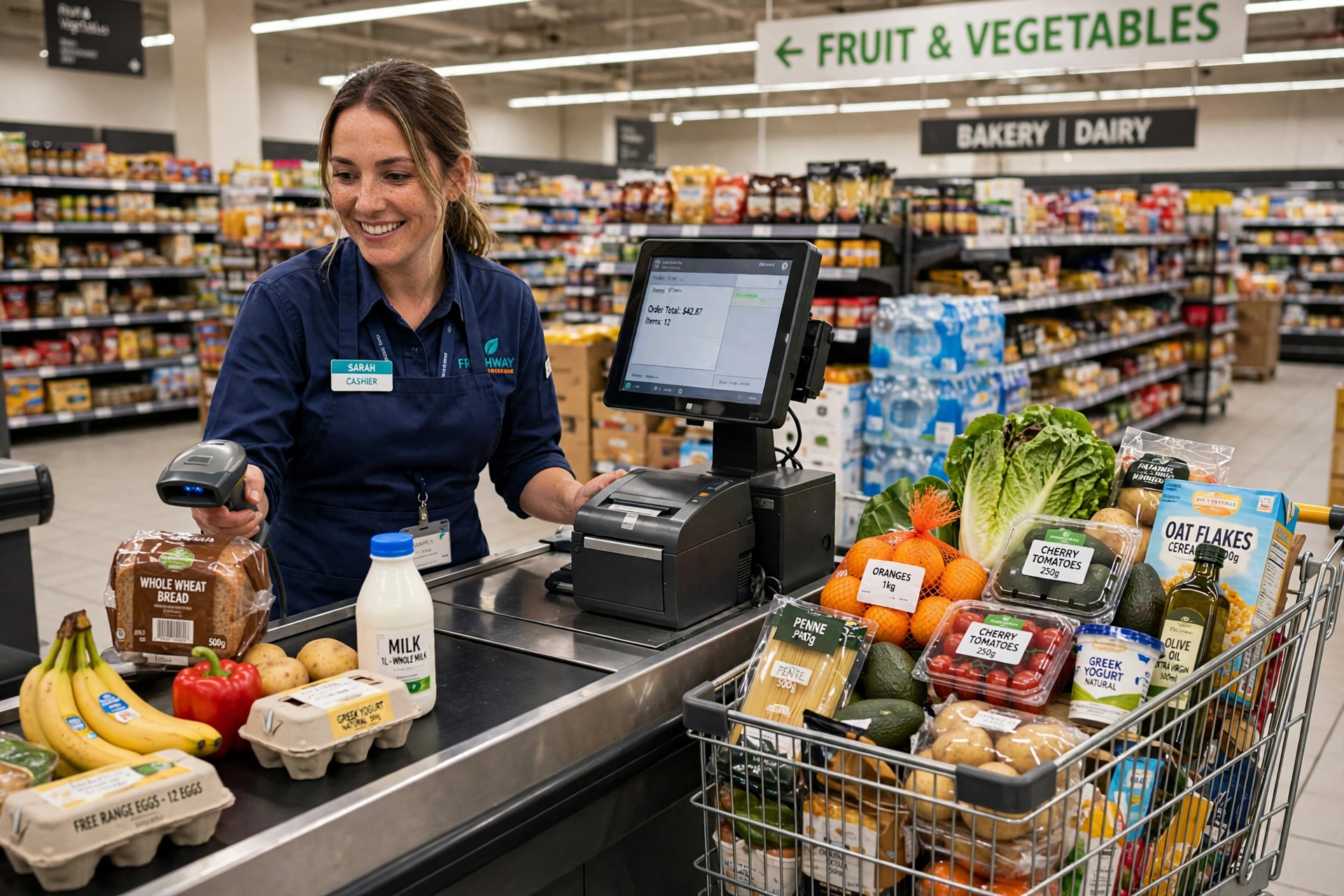
Almost every big supermarket offers a loyalty card, and most regular shoppers carry one. You scan it at the till, and in return you get small discounts, points, or money-off vouchers. It feels like a gift. In a way, it is. But the card gives the supermarket something far more valuable than the few dollars it saves you.
It gives the supermarket data. Data means information, and information about what you buy is gold to a shop that lives on thin margins.
With a loyalty card, the supermarket can see that you buy nappies every week, that you switched from one brand of coffee to another last month, or that you only buy ice cream in summer. Multiply that by millions of shoppers, and the supermarket can predict, with surprising accuracy, how much milk each store will need next Tuesday, or which new product is likely to sell in your town.
That knowledge saves money in two ways. First, it cuts waste, because the shop orders what people actually buy. Second, it makes advertising far cheaper: instead of the same leaflet for everyone, you get a voucher for the cereal you already buy, just as you are about to run out.
Loyalty cards also keep you coming back. If your points live in one supermarket, you think twice before shopping at a rival, because you would lose the points and the discounts. Some shoppers even plan their whole weekly shop around the offers on their card. That steady habit is exactly what a supermarket wants: the same shoppers, every week, year after year.
Is this a fair deal? For most shoppers, yes, as long as they know what they are giving away: a little information about your shopping, in return for a little money off. But the card is not charity. The supermarket would not pay for the discounts and the whole system unless the information was worth more than the cost.
Waste and Sell-by Dates: The Daily Battle
If thin margins are the supermarket’s biggest weakness, waste is its biggest enemy. Fresh food goes off fast. Milk sours. Bread goes stale. Lettuce wilts. Meat spoils. Every item thrown away is money lost twice over: the supermarket paid for it, and then it paid someone to throw it away.
Guides often say supermarkets throw away several percent of the fresh food they buy. On a shop selling a million dollars of food in a week, even 3 percent waste is 30,000 dollars gone — more than the whole weekly profit. That is why waste is watched like a hawk, every single day.
The sell-by date is the heart of this battle. When a product nears its date, the supermarket has three choices: sell it quickly at a lower price, move it to a part of the shop where it will be seen, or throw it away. You have probably seen the yellow discount stickers on sandwiches and meat near the end of the day. That sticker is not kindness. It is the shop trying to earn something, anything, from food that would otherwise earn nothing.
Behind the scenes, a whole system fights waste. Fridges are checked every day. Staff put the oldest stock at the front of the shelf, so it sells first — a habit called rotating stock. Bakers bake in smaller batches through the day. Some shops turn unsold food into something else: ripe bananas become smoothies, day-old bread becomes breadcrumbs. Some give unsold food to charities, or sell it through apps at a deep discount near closing time. These steps help, but they do not remove the problem. A supermarket that guesses wrong about the weather or a holiday can end up with shelves full of food nobody wants. Getting the guess right, day after day, is one of the quiet skills that keeps a supermarket alive.
Other Ways a Supermarket Earns Money
Selling food is the main business, but a big supermarket earns money in several other ways too, and some of them are surprisingly important.
The first is everything that is not food. A large supermarket also sells clothes, toys, kitchen tools, phone chargers, garden chairs, and even televisions. These are called non-food or general merchandise, and they often earn a much bigger share of profit than food. A t-shirt that costs 5 dollars to make may sell for 15 dollars. The supermarket does not sell as many t-shirts as loaves of bread, but each one earns far more.
The second is the services around the edges of the shop: a café, a pharmacy, or a petrol station outside. Some offer home delivery, where a van brings your weekly shop to your door for a small fee. Others let you order online and collect your bags from the car park. Each service earns a little money, and each gives you another reason to shop with that chain.
The third is money earned from suppliers. A supplier may pay to place its product at eye level, or to feature it in a leaflet. A new brand may pay for a tasting stand near the entrance. For a big chain, these payments add up to a large sum each year. Some chains also offer their own credit cards or insurance. None of these extras could replace the food business, but together they thicken that thin slice of profit just enough to matter.
How Small Shops Differ
Now think about the small shop on your street — the corner shop, the local grocer, the market stall. It sells food too, but it plays a very different game.
A small shop cannot buy in bulk, so it pays more for every item. It cannot spread its rent and wages across 50,000 items a day, so each item must carry a bigger share of the costs. Its prices are higher, and shoppers know it. So how does it stay open at all?
The answer is that a small shop does not sell the same thing a supermarket sells. A supermarket sells low prices and endless choice. A small shop sells closeness, speed, and care. It is open late when the supermarket has closed, and two minutes from your door when you have run out of milk at nine in the evening. The owner knows your name, and may let you pay tomorrow if you have forgotten your wallet.
Small shops also win on fresh, local, and special food. A local grocer may sell fruit from a farm ten miles away, picked yesterday. A market stall may sell bread baked that morning. Some small shops focus on one thing and do it very well — a butcher, a fish seller, a spice shop — and give advice a big store never will. So the two kinds of shop are not really fighting over the same customer. The supermarket wins the big weekly shop. The small shop wins the quick top-up, the late-night need, and the special purchase. Both can survive, as long as each one knows what it is good at.
Frequently Asked Questions
How much profit does a supermarket make on each item?
Very little. On most food it keeps only a few cents on each dollar, and only about 1 to 3 cents of profit on each dollar of sales after all costs. It makes money by selling a huge number of items every day.
Why is food cheaper in a supermarket than in a small shop?
A supermarket buys in huge amounts, so suppliers give it a lower price per item. It also spreads rent, wages, and electricity across thousands of items a day. A small shop buys less and pays more per item.
What are own-brand products, and why do supermarkets sell them?
Own-brand products are made for the supermarket and sold under its own name in plainer packaging. They cost less to make and advertise, so the supermarket earns more on each one even though you pay less.
How do loyalty cards help a supermarket make money?
A loyalty card gives you small discounts, but it gives the supermarket a record of what you buy. That helps it order the right food, cut waste, send offers you will use, and keep you shopping with the same chain.
Why do supermarkets put sweets near the checkout?
Because the checkout queue is the last chance to sell you something extra. Sweets and small snacks sit within arm’s reach while you wait, and they earn a far bigger share of profit than most food in your trolley.
Why do supermarkets throw away so much food?
Fresh food goes off quickly, and a supermarket must guess how much to order before it knows how many shoppers will come. If it orders too much, the extra food passes its sell-by date and must be thrown away.
More from Zorium Daily
- How Does a Coffee Shop Make Money?
- How Does a Bakery Make Money?
- How Does a Gym Make Money?
- How Does a Restaurant Make Money?
The next time you push a trolley down a supermarket aisle, look at the shop with new eyes. The fresh bread smell at the door, the milk at the back of the store, the sweets by the till, the yellow stickers on the sandwiches — none of it is there by chance. Behind every shelf sits a simple, hard business: buy a huge amount of food cheaply, sell it for just a little more, and do it so many times a day that the little bits add up.