What Is a Refund and How Does It Work? Explained Simply
Summary of This Article
- A refund is money a shop or seller sends back to you after you have already paid, usually because the thing was faulty, the wrong size, or you changed your mind inside the shop’s return window.
- The money travels back along the same road it came: from the shop to the payment system, then to the card network, then to your bank, which is why it takes 3 to 10 working days and never appears at once.
- A full refund gives you all your money back, while a partial refund gives you back only part of it, for example when you keep one thing from a set and send the rest back.
- Store credit is not the same as money back: store credit can only be spent in that one shop, while a refund to your card puts the money back where it came from.
- A refund is not a chargeback, not cashback, and not a discount, and knowing the difference saves you time and worry at the till.
The Shoes That Did Not Fit
It was a Saturday morning, and ten-year-old Noah was sitting on the edge of his bed, staring at a pair of bright blue trainers. They were beautiful. They had cost forty dollars, and his mum had bought them for him the week before. There was only one problem. They were too small, and after five minutes of walking around the house, his feet hurt.
“I love them, Mum,” Noah said at breakfast, “but they pinch.”
His mum looked at the trainers, then at Noah’s red toes, and smiled. “Then we take them back,” she said. “That is what shops are for.”
An hour later, Noah stood at the counter of the sports shop with the trainers in their box and the receipt in his hand, his heart beating a little too fast. He had never returned anything before. But the shopkeeper just checked the trainers, looked at the receipt, and nodded. “No problem,” he said. “We will send the money back to your mum’s card. It should show up in a few working days.”
Noah walked out feeling lighter, and a little puzzled. The trainers were back on the shelf, but the money was not back in his mum’s account yet. It was somewhere in between, travelling.
So What Is a Refund, Really?
A refund is money that a shop or seller sends back to you after you have already paid for something. You bought a thing, you paid for it, and then, for a good reason, the money comes back to you. The thing goes back to the shop, and the money goes back to you.
Most refunds happen for one of three reasons. The first is that the thing is faulty: a toy that stops working on the second day, or a kettle that never heats up. You paid for something that should work, and it does not, so the shop gives you your money back. The second is that the thing is wrong in some simple way, like the wrong size or the wrong colour. Noah’s trainers were a perfect example. The third reason is that you changed your mind. You bought a jacket, tried it on again at home, and decided it was not really you. Many shops will still take it back, as long as you bring it back quickly and in good condition.
One detail matters. A refund is not a favour or a gift from a kind shopkeeper. It is a normal part of buying and selling, and shops plan for it. When you ask for a refund, you are not being rude or causing trouble. A refund only exists because the money has already left your hands. If you change your mind before you pay, you just walk away. After you pay, the money has to travel back, and that journey takes time.
Why Do Shops Give Your Money Back?
Shops give refunds for a simple, practical reason: it keeps customers coming back. Imagine a shop that never gave money back. You buy a toaster, it breaks on the first morning, and the shop shrugs and keeps your money. Would you ever shop there again? Of course not. You would tell your friends, and they would stay away too. A shop that treats people fairly when something goes wrong earns trust, and trust is worth far more than the price of one toaster.
There is also the law, which in many countries says a shop must give you your money back if the thing you bought is faulty or not as described. The exact rules change from country to country, but the basic idea is the same almost everywhere: you paid for something that works, and if it does not work, you should not be the one who loses out.
Shops do have rules about refunds, and those rules are usually written on the receipt or on a sign near the till. The most common rule is the return window: a number of days, often 14 or 30, inside which you can bring something back. After that window closes, the shop may say no. The thing must also be in good condition, with its tags or packaging, unless it is faulty. Knowing these rules before you buy saves you a surprise later.
Follow the Money on Its Long Road Home
Here is the part most people never think about. When you pay by card, your money does not jump straight from your bank into the shop’s till. It travels through a chain of stops, like a parcel passing through sorting offices. A refund has to travel all the way back through that same chain, in reverse. That is why a refund is never instant.
Let us follow it step by step. You tap your card at the till. Your bank sends the money to the card network, the big system that connects banks and shops. The card network passes the money to the payment system the shop uses. Then the payment system passes the money to the shop’s bank account. Four stops, and your money has arrived, all in a few seconds.
A refund walks the same road backwards. The shop tells its payment system to send the money back. The payment system sends it to the card network. The card network sends it to your bank. Your bank puts it back into your account. Every stop takes a little time, because every stop has to check the details, match the payment, and make sure nothing is wrong. Nobody is being slow on purpose. Each stop just does its job in turn.
This is also why the shopkeeper cannot make the money appear in your account straight away, even if they want to. Once they press the refund button, the money has left their hands. It is in the chain, travelling. It is a bit like posting a letter: once it is in the post box, you cannot make the postman walk faster. If you paid in cash, the road is much shorter. The shopkeeper opens the till and hands you the notes. That is why cash refunds feel instant. But most of us pay by card now, so most refunds take the long road home.
A Full Refund, or Only Part of It?
Not every refund gives you all your money back. Sometimes you get the whole amount, and sometimes you get only part of it. Both are normal, and it helps to know which one you are getting before you leave the shop.
A full refund is the simplest kind. You paid forty dollars, you get forty dollars back. Every penny returns. This usually happens when you send the whole thing back, when the thing is faulty, or when you return it quickly and in perfect condition. Noah’s trainers were a full refund. The box went back, the receipt was shown, and the whole forty dollars was sent back to his mum’s card.
A partial refund is when you get some of your money back, but not all of it. Imagine you buy a set of three books for thirty dollars, and you decide to keep two of them and send one back. The shop will not give you thirty dollars, because you are keeping twenty dollars’ worth of books. You get ten dollars back, the price of the one book you returned. That is a partial refund, and it is fair.
Another common case is the delivery charge. If you ordered online and paid five dollars for delivery, the shop might refund the price of the thing but keep the delivery charge, because the delivery already happened. Some shops refund it too, especially if the thing was faulty, so it is worth asking what exactly is being refunded.
Money Back to Your Card, or Store Credit?
When a shop agrees to a refund, it will often ask you a question that sounds simple but matters a lot: do you want the money back on your card, or would you like store credit instead? Many people nod along without thinking, and then realise later that they chose the wrong one. The two are very different.
Money back to your card is exactly what it sounds like. The money travels back through the chain we just talked about and lands in your bank account. Once it is there, it is yours again, free and clear. You can spend it anywhere, save it, or leave it sitting in your account. This is the best choice for most people, because it gives you your freedom back along with your money.
Store credit is different. Instead of money, the shop gives you a voucher, a gift card, or a credit note that can only be spent in that one shop. The value is the same: forty dollars of store credit is worth forty dollars inside that shop. But outside that shop, it is worth nothing. You cannot use it at the supermarket, and you cannot put it in your savings. It is money with an address, and that address is one shop.
So why would anyone choose store credit? Sometimes the shop offers a little extra if you take credit instead of cash back: forty dollars back on your card, or forty-five dollars in store credit. If you shop there all the time anyway, the extra five dollars is a nice bonus. Before you answer, ask yourself one question: will I definitely spend this in this shop, soon? If the answer is yes, store credit is fine. If the answer is no, or maybe, ask for the money back on your card. It takes a few days longer to arrive, but it arrives as real money, and real money works everywhere.
A Worked Example: The Forty-Dollar Trainers
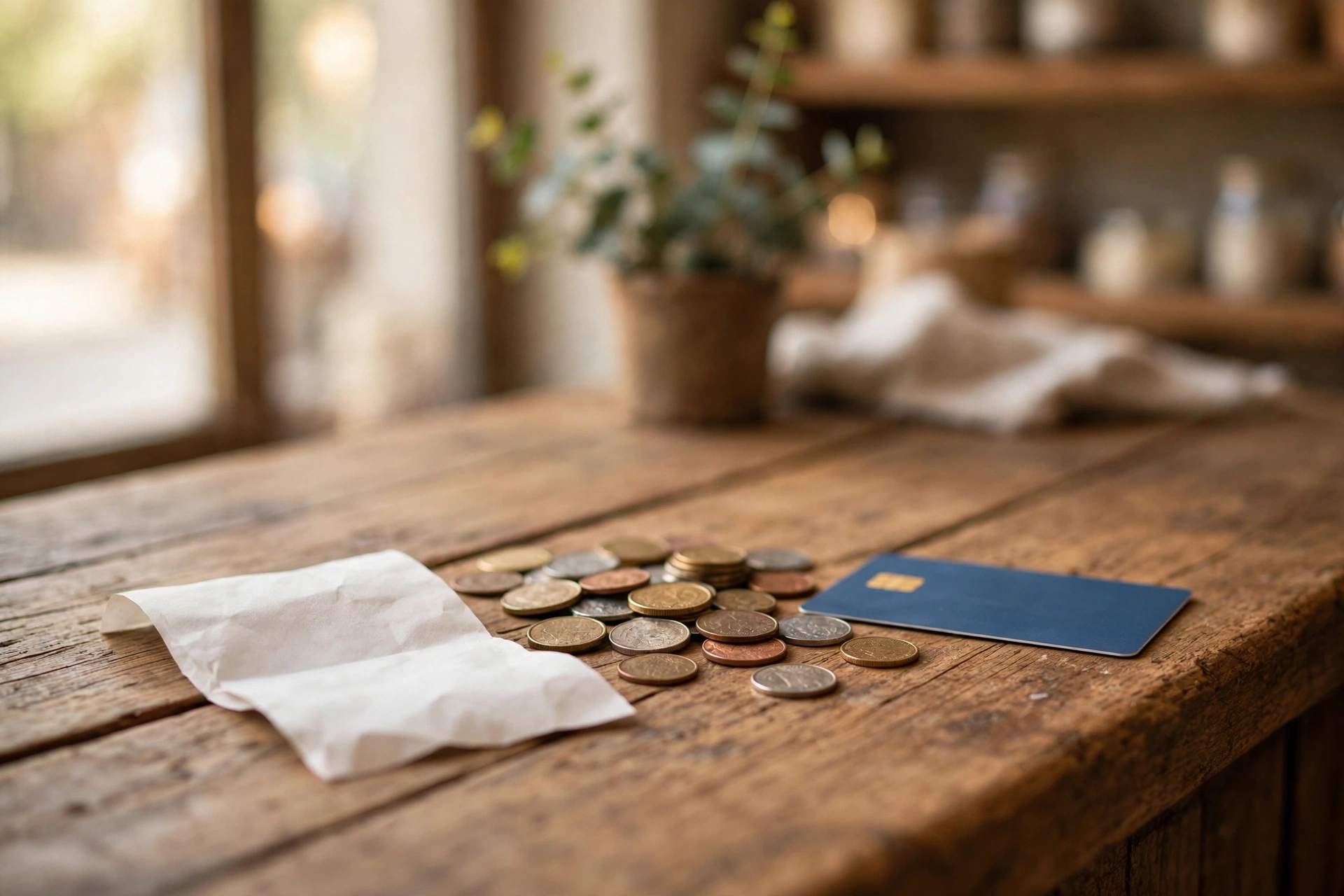
Numbers make refunds much easier to understand, so here is one clear example from start to finish. Imagine a made-up example: a mum buys a pair of trainers for her son for forty dollars, paying with her bank card at a sports shop on a Monday.
On Tuesday, her son tries them on at home and finds they pinch his toes. They are the wrong size, nothing more. On Wednesday morning, Mum takes the trainers back to the shop in their box, with the receipt. The shopkeeper checks them, agrees they are in perfect condition, and presses the refund button. Forty dollars starts its journey home.
Now, here is the important part. The money does not appear in Mum’s bank account on Wednesday. It does not appear on Thursday either. On Thursday evening, Mum checks her banking app and sees nothing. For a moment she worries, but nothing has gone wrong. The money is simply travelling: from the shop to the payment system on Wednesday, from the payment system to the card network on Thursday, and from the card network to her bank on Friday. By Monday, five working days after the refund was pressed, the forty dollars appears in her account.
Let us change one detail. Imagine instead that Mum bought two pairs of trainers, one blue pair for forty dollars and one red pair for thirty dollars, seventy dollars in total. Her son likes the red pair but not the blue pair, so she returns only the blue pair. The shop gives her a partial refund of forty dollars, not seventy, because she is keeping the red pair. Same journey, same waiting time, just a smaller amount travelling home.
Why Does a Refund Take So Long?
The question almost everyone asks after a refund is the same: where is my money? The shop said a few days, but three days have passed and the account still looks the same. The answer is almost always the same too: the money is still travelling, and the clock that matters is not the calendar on your wall, but the working days of banks.
A working day is a day when banks and offices are open, usually Monday to Friday, not counting public holidays. Saturday and Sunday do not count. So if a shop refunds your money on a Friday afternoon, the journey may not really start until Monday morning. By the time five working days have passed, a whole calendar week may have gone by, and it can feel much longer than it is.
Most card refunds take between 3 and 10 working days. That is the normal range. Three working days is quick. Five is common. Ten is slow but still normal, especially if the shop is in another country or the payment passed through extra steps. If the money has not arrived after ten working days, that is the moment to get in touch with the shop, calmly, with your receipt in hand, and ask them to check the refund on their side.
There is one more reason refunds can feel slow: your bank may receive the money before it shows it to you. Banks sometimes hold an incoming refund for a day or two while they check it, and during that time the money is there but invisible, like a parcel sitting in the sorting office before it is delivered to your door. A payment is like a text message, sent and received in a second. A refund is like a letter, passing through several hands. Both arrive. One just takes longer, and knowing why makes the waiting much easier.
A Refund Is Not a Chargeback
A refund and a chargeback sound like cousins, because both end with money coming back to you. But they are not the same thing, and mixing them up can cause real trouble.
A refund is the friendly version. You talk to the shop, the shop agrees, and the shop sends the money back. Everyone is on the same side. A refund is the first thing to try, every time.
A chargeback is what happens when the friendly version fails. If a shop refuses to help, or the shop has disappeared, or you were charged for something you never bought, you can go to your bank and ask the bank to step in. The bank then takes the money back from the shop’s bank.
The big difference is who starts it. A refund is started by the shop. A chargeback is started by your bank, at your request. Shops do not like chargebacks, because they cost the shop extra fees. Always ask the shop first, and only go to your bank if the shop refuses, ignores you, or has vanished.
A Refund Is Not Cashback, and Not a Discount
Two more mix-ups are worth clearing up, because the words sound alike, but the ideas are different.
Cashback is a reward, not a returned payment. When you buy something with a cashback offer, the shop or your bank gives you a small amount of money back as a thank you. You keep the thing you bought, and you also get a little money back on top. A refund is the opposite: you give the thing back, and the money comes back because the sale has been undone. A guide to how cashback works and what it really gives you explains the reward side in more detail.
A discount is different again. A discount is a price cut at the till, before you pay. A jacket marked down from fifty dollars to forty dollars means you pay forty dollars and walk out happy. No money ever comes back, because the money was never paid. A simple guide to how a discount works at the till shows this in plain terms.
A discount makes the price smaller before you pay. Cashback gives you a little back as a reward after you pay and keep the thing. A refund gives you your money back because the thing is going back.
Mistakes That Slow a Refund Down
Most refunds go smoothly, but a few common mistakes can slow them down or stop them altogether.
The first mistake is throwing the receipt away. The receipt is your proof. It shows what you bought, when you bought it, how much you paid, and which card you used. Without it, many shops will say no. Keep the receipt until you are sure you want to keep the thing.
The second mistake is waiting too long. Every shop has a return window, often 14 or 30 days, and once it closes, the shop can legally say no. Check things as soon as you get them home, especially sizes and faults, and return them quickly if something is wrong.
The third mistake is using the thing before you return it. Shoes worn outside on a wet day, or a shirt washed three times, are hard to refund, because the shop cannot sell them again as new. Keep it clean, keep the tags on, and keep the box.
The fourth mistake is returning it to the wrong place. Online orders often need a returns label and a trip to the post office. Read the instructions the shop sent you, and keep the proof of posting.
Good Habits When You Ask for a Refund
Asking for a refund is a normal life skill, and like any skill it gets easier with practice.
Start by being polite and clear. Walk in with the item, the receipt, and one short sentence ready: “Hello, I bought these trainers last week, and they are the wrong size. Could I have a refund, please?” That is all it takes. A calm, friendly request is the easiest kind to help.
Then ask two questions before you leave the counter. How much is being refunded, the full amount or part of it? And how long will it take? Take a photo of the refund receipt the shop gives you. It will have a reference number on it.
Finally, give it time. Check your account after three working days, then again after five, and only worry after ten. Now you know the road your money is taking.

Frequently Asked Questions
What is a refund in simple words?
A refund is money a shop or seller sends back to you after you have already paid for something. It usually happens because the thing was faulty, the wrong size, or you changed your mind inside the shop’s return window.
How long does a refund take to arrive?
Most card refunds take between 3 and 10 working days. The money travels from the shop to the payment system, then to the card network, then to your bank, and each stop takes a little time. Working days are usually Monday to Friday.
Will I get a full refund or only part of my money back?
It depends on what you return. If you send the whole thing back because it is faulty or the wrong size, you usually get a full refund. If you keep part of an order, you get a partial refund for the part you returned.
What is the difference between a refund and store credit?
A refund puts the money back on your card, so it lands in your bank account and you can spend it anywhere. Store credit is a voucher that can only be spent in that one shop.
What is a chargeback, and when should I ask for one?
A chargeback is when your bank takes the money back from the shop after a dispute. Only ask your bank for one if the shop refuses to help, ignores you, or has disappeared. Always ask the shop for a refund first.
What should I do if my refund has not arrived after 10 working days?
First, check your bank account carefully, because a refund can arrive under a name you do not recognise. Then contact the shop with your receipt and the refund reference number, and ask them to check it on their side.
More from Zorium Daily
- What Is a Savings Account and How Does It Work?
- How to Make a Simple Monthly Budget That Actually Works
- How to Build an Emergency Fund on a Small Income: A Simple Beginners Guide
- How Does Credit Card Interest Work?
Noah still remembers that Saturday morning at the sports shop, not because the trainers were returned, but because of what he learned: asking for your money back is simply part of shopping, and the money is on its way home.