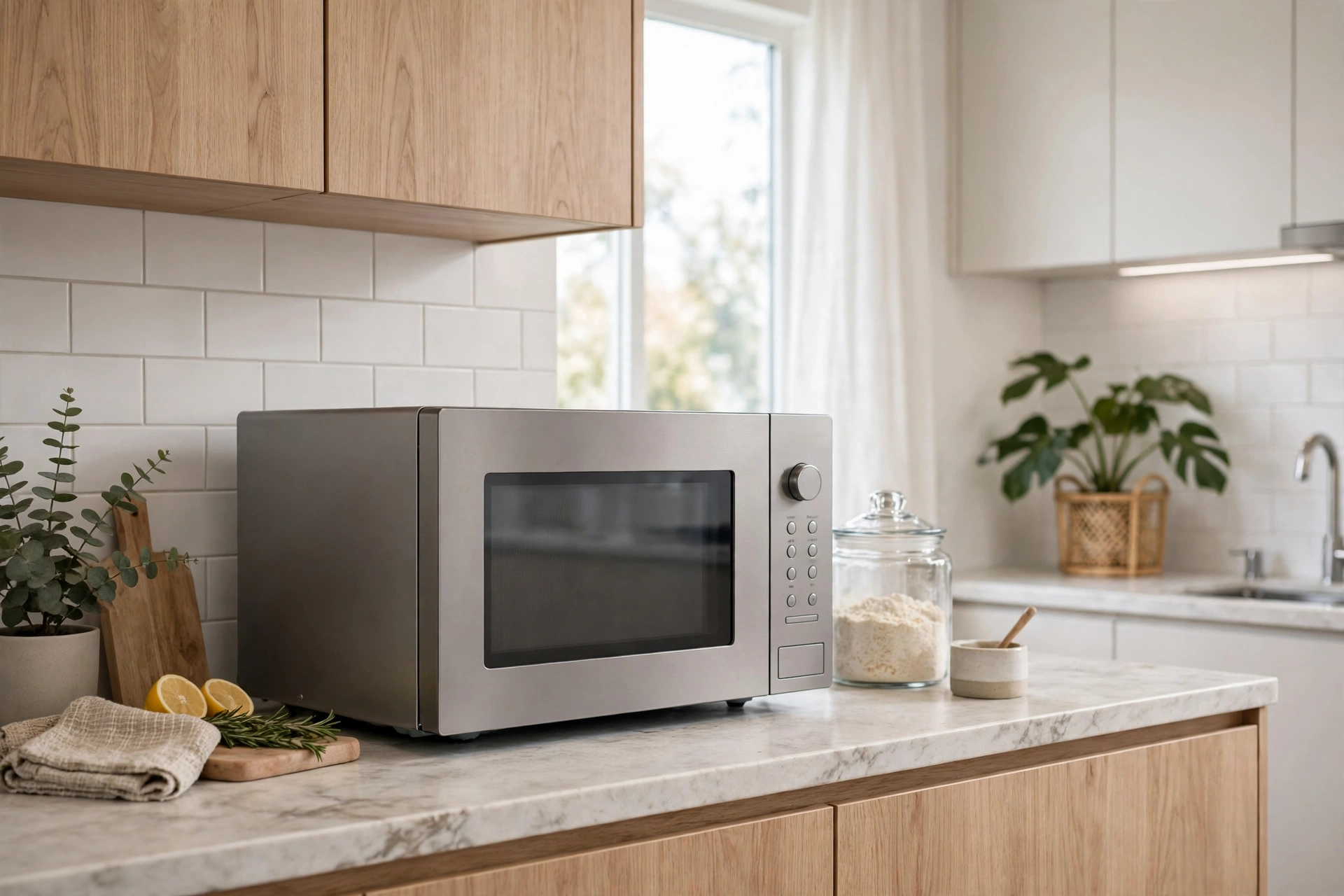
How Does a Microwave Oven Work?
By Zorium Daily News Desk
Introduction
You put a cold bowl of rice in a box. You close the door. You press a button. You wait for two minutes. Then you open the door, and the rice is hot and steaming. The bowl is warm. The box itself is not very hot at all. How did that happen?
There is no fire inside the box. There is no hot metal plate under the food. There is no flame, like on a gas stove. There is no red-hot coil, like in a normal oven. So where does the heat come from?
The answer is waves. Waves you cannot see. Waves you cannot hear. Waves that move through the air inside the box and shake tiny parts of your food. When those tiny parts shake fast enough, they make heat. That heat warms your food.
A microwave oven is one of the most common machines in a modern kitchen. Many homes have one. Many offices have one. Many small cafes have one. It can warm leftovers, cook a simple meal, melt butter, heat milk, and defrost frozen food. It does all of this in minutes, not hours.
SUMMARY OF THIS ARTICLE
- A microwave oven heats food with invisible waves called microwaves, not with fire or a hot plate.
- The waves make water, fat, and sugar molecules in food vibrate, and that movement creates heat.
- A part called a magnetron makes the microwaves, and a metal box with a special door keeps the waves inside the oven.
- Food can heat unevenly because the waves form hot and cold spots, so a turntable and a short rest after cooking help the heat spread.
- Metal, sealed containers, and an empty oven can cause sparks or damage, so always follow the manual and use microwave-safe dishes.
What Is a Microwave Oven, in the Simplest Words?
A microwave oven is a kitchen machine that cooks or warms food with waves. The idea is simple. The oven makes a special kind of wave. The wave goes into the food. The food gets hot.
Think of the sun on a cold day. You stand in sunlight, and you feel warm. The sun does not touch you with a hot hand. It sends light and heat through the air. A microwave oven works a little like that, but with a different kind of wave, and inside a closed box.
A normal oven heats the air around the food. The hot air slowly warms the outside of the food. Then the heat moves slowly to the middle. That takes time. A stove heats a pan. The pan heats the food that touches it. That also takes time, and you need to stir the food.
A microwave oven is different. It does not heat the air first. It does not heat a pan first. It sends waves straight into the food. The waves heat the food itself, in many places at once. That is why it is so fast.
The oven has a door with a window. You can see the food inside. The oven has a flat glass plate that turns. That plate is called a turntable. The oven has buttons or a dial to set the time and the power. When you press start, a light comes on, the plate turns, and you can hear a soft hum. That hum is the sound of the machine at work.
When the time ends, the oven beeps. You open the door. The food is hot. The air inside is warm, but not as hot as in a normal oven. The glass plate is warm. The walls of the oven are not very hot. This is your first clue. The heat is in the food, not in the box.
A Short History: From a Melted Chocolate Bar to Every Kitchen
The microwave oven was not invented by a chef. It was found by accident, by an engineer who worked with radar.
During the Second World War, scientists and engineers worked on radar. Radar is a system that uses radio waves to find planes and ships. It sends out waves and listens for the echo. To make radar work, they needed a strong source of microwaves. A scientist named Percy Spencer worked on this problem in the United States.
One day, Spencer was standing near a machine that made microwaves. He had a chocolate bar in his pocket. The chocolate bar started to melt. It was not a hot day. The machine was not hot to the touch. But the waves from the machine had warmed the chocolate.
Spencer was curious. He tried the same idea with other foods. He put popcorn kernels near the machine, and they popped. He put an egg near the machine, and it got hot very fast. He saw that microwaves could cook food.
After the war, Spencer and his team built the first microwave oven. It was very big. It was almost as tall as a person. It was very heavy. It was very expensive. Only large kitchens, like the kitchens in trains and ships, could use it. It was not a machine for a normal home.
Over the next years, engineers made the oven smaller, lighter, and cheaper. They made it safer, with a better door and better controls. They added a turntable so food would heat more evenly. They added buttons for common jobs, like warming a drink or defrosting meat. By the 1970s and 1980s, the price had fallen enough for many families to buy one. By the 1990s, the microwave oven was in kitchens all over the world. Today, it is one of the most common kitchen machines.
The Big Idea: Invisible Waves Carry Energy
To understand a microwave oven, you need to understand waves. Waves are all around us, even when we cannot see them. Light is a wave. Sound is a wave. Radio waves are waves. The waves that carry Wi-Fi to your phone are waves. The waves that carry music to your earbuds are waves. They are all part of the same family. Scientists call this family the electromagnetic spectrum. That is a long name for a simple idea: there are many kinds of waves, and they are different in size and energy.
Think of waves in the sea. Some waves are long and slow. Some are short and fast. Light waves are very short. Radio waves are much longer. Microwaves sit in the middle. They are shorter than radio waves, but longer than light waves. You cannot see microwaves. You cannot hear them. You cannot feel them in the air. But they carry energy. When they hit the right kind of material, they give that energy to the material, and the material gets hot.
A microwave oven uses this idea on purpose. It makes microwaves inside a closed box. It sends them into food. The food takes in the energy and turns it into heat. It helps to think of energy as a delivery. The microwave is the delivery van. The wave is the road. The food is the house that receives the delivery. The oven does not cook the food with a hot hand. It sends energy to the food, and the food makes its own heat.
Other devices in your home also use invisible waves. Wi-Fi uses radio waves to carry the internet from a router to your phone. If you want a simple guide to that, read our article on what Wi-Fi is and how it reaches your phone. Bluetooth uses radio waves to connect your phone to earbuds and speakers over a short distance. To learn more, read our article on what Bluetooth is and how it works. A microwave oven uses a stronger form of the same kind of wave, but its job is not to carry a message. Its job is to carry energy and make heat.
What Is Inside a Microwave Oven?
A microwave oven looks simple from the outside. It is a box with a door and some buttons. Inside, there are a few key parts. Each part has a clear job. Together, they make the oven work safely and well.
The first part is the magnetron. This is the heart of the oven. It makes the microwaves. It uses electricity from the wall socket. It turns that electricity into waves. Without the magnetron, there is no heat. It is a small tube with magnets inside it. When electricity flows through it, it sends out microwaves at the right size and speed.
The second part is the waveguide. This is a short metal tunnel. It carries the microwaves from the magnetron to the cooking space. Think of it as a small road for the waves. It guides them to the right place.
The third part is the cooking cavity. This is the space where you put the food. Its walls are made of metal. Metal reflects microwaves. That means the waves bounce off the walls instead of passing through them. The waves bounce around the box and pass through the food many times. That helps the food heat more evenly.
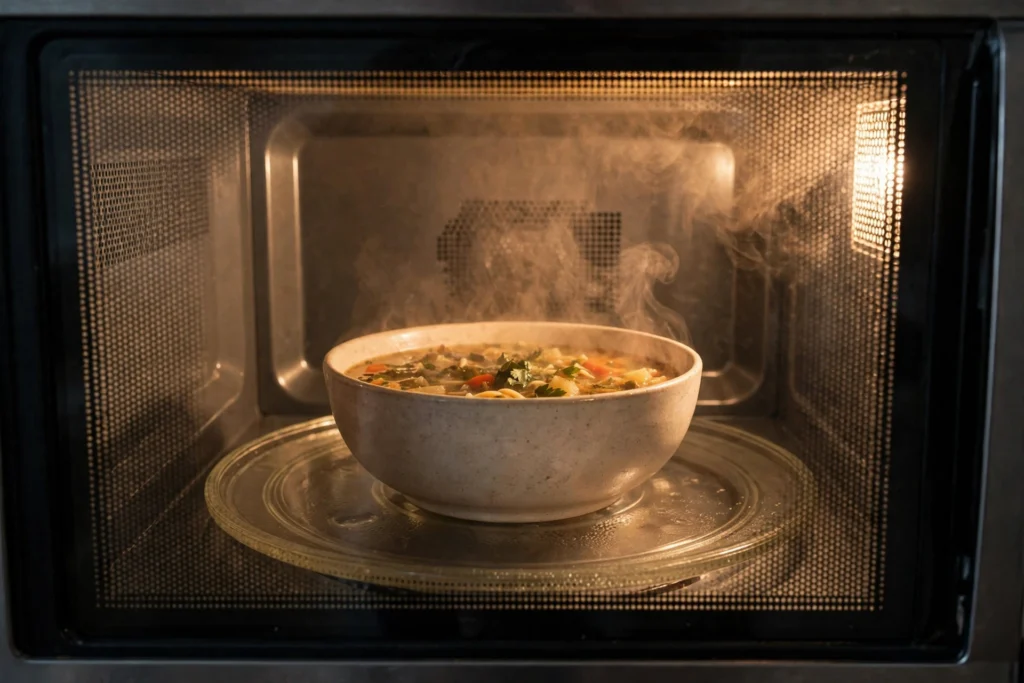
The fourth part is the door. The door has a special design. It has a metal screen with tiny holes in it. You can see through the holes, but the microwaves cannot get out through them. The holes are smaller than the waves, so the waves are blocked. The door also has a seal around the edge. When the door is closed, the seal keeps the waves inside. When you open the door, the oven stops making microwaves at once. There is a safety switch that cuts the power when the door opens.
The fifth part is the turntable. This is the round glass plate at the bottom of the cooking space. It turns slowly while the oven is on. It moves the food through the waves, so that all parts of the food get a fair share. Without the turntable, one side of the food might get very hot while the other side stays cold.
How a Microwave Oven Heats Food, Step by Step
Now let us follow one simple job: warming a bowl of rice. What happens, step by step, from the moment you press start?
Step 1: You press start. The control panel sends a signal. The power supply gives power to the magnetron. The light inside the oven comes on. The turntable starts to turn.
Step 2: The magnetron makes microwaves. It sends them through the waveguide and into the cooking space. The waves move at the speed of light. They fill the box in a tiny fraction of a second.
Step 3: The waves reach the food. They pass through the bowl and into the rice. Some waves are taken in by the food. Some waves bounce off the metal walls and pass through the food again. The waves keep moving until their energy is used up.
Step 4: The waves shake water molecules. Food is full of water. Rice has water in it. Soup has a lot of water. Even bread has some water. A water molecule is a tiny part of water. It has a shape that makes it respond to microwaves. When a microwave passes by, the water molecule turns and shakes. It turns one way, then the other way, very fast, billions of times a second.
Step 5: The shaking makes heat. When the water molecules shake, they bump into the molecules next to them. Those bumps pass energy along. The energy becomes heat. The food gets warmer and warmer. This is the main way a microwave oven cooks.
Step 6: The heat spreads. The hot parts of the food pass heat to the cooler parts next to them. This takes a little time. That is why the instructions often say to stir the food halfway through, and to let it stand for a minute after cooking. Stirring and standing help the heat spread evenly.
Step 7: The timer ends. The magnetron stops. The waves stop. The light goes off. The oven beeps. You open the door. The safety switch has already cut the power, so no new waves are made. The food is hot because its molecules are still moving fast. As you eat it, it slowly cools down.
Why Food Sometimes Heats Unevenly
If you have used a microwave oven, you have seen this problem. One bite of food is very hot. The next bite is cold. Why does this happen?
The waves inside the oven do not spread in a perfectly even way. They form a pattern of hot spots and cold spots. In a hot spot, the waves add together and make a lot of heat. In a cold spot, the waves cancel each other out and make little heat. The food sits still in one place, so one part sits in a hot spot and another part sits in a cold spot.
The turntable helps with this. As the plate turns, the food moves through hot and cold spots. Each part of the food gets some time in a hot spot and some time in a cold spot. Over two minutes, the heat evens out a lot. But it does not fix the problem completely.
The shape of the food also matters. A round bowl heats more evenly than a square dish, because a square dish has corners that can catch more waves. A flat, thin layer of food heats more evenly than a tall, thick pile. A large piece of food heats less evenly than a small piece, because the waves cannot reach deep inside it as well.
There are simple ways to fix this. Stir the food halfway through cooking. Turn the dish around if your oven has no turntable. Cut food into smaller, even pieces. Spread food in a thin, even layer. Let the food stand for a minute or two after the oven beeps. That standing time is not wasted time. It is when the heat spreads from the hot spots to the cold spots, and the food becomes evenly warm.
Why Metal Is a Problem
Most people know the rule: do not put metal in a microwave oven. But why is metal a problem, when the oven itself is made of metal?
The answer is about shape and edges. The metal walls of the oven are smooth and flat. They reflect the waves in a safe, even way. A metal fork, a piece of foil, or a metal tray has sharp edges and thin points. Those edges can catch the waves and build up a strong electric charge. That charge can jump through the air as a spark. The spark is called arcing. It can damage the oven, burn the food, or even start a fire.
Thin metal is the worst. Foil, a gold rim on a plate, or a twist tie can spark very easily. A smooth metal spoon in a large bowl of soup is less likely to spark, but it is still not safe to leave it in the oven. The spoon can reflect waves away from the food and make heating uneven. It can also get very hot.
Some metal is safe in small amounts, if the manual says so. Some ovens allow a small piece of foil to shield a thin part of food, like the wing of a chicken, so that it does not overcook. But you should only do this if your manual clearly says it is safe, and you should follow the instructions exactly. If you are not sure, do not put metal in the oven at all.
Sealed containers are also a problem. A closed jar, a sealed bottle, or a container with a tight lid can build up steam inside. The pressure can make the container burst. Always open a lid a little, or use a vented cover. The same goes for eggs in their shells. An egg can explode in a microwave oven because steam builds up inside the shell. Do not cook a whole egg in its shell in a microwave oven.
Is a Microwave Oven Safe?
Many people ask if a microwave oven is safe. It is a fair question. The oven uses strong waves, and it sits in the kitchen where children and families eat. The short answer is yes, it is safe when you use it in the right way and the oven is in good condition.
The oven is built to keep the waves inside. The metal box, the door, and the seal all work together. The door has a screen with tiny holes. You can see through the holes, but the waves cannot pass through them. When you open the door, the oven stops making waves at once. That is a safety rule built into every oven.
Regulators in many countries set strict limits for how much wave energy can leak from an oven. A new oven that is not damaged should leak far less than the limit. If the door is bent, the seal is broken, or the screen is damaged, the oven may leak more. In that case, stop using it and get it checked or replaced. Do not try to fix the door yourself.
The waves do not make food unsafe. As we saw earlier, the waves do not stay in the food. They do not make food radioactive. They do not change food into something harmful. The food is heated in a normal way, just faster. The main risk is the same as with any hot food: it can burn you. Soup, sauce, and drinks can get very hot, and they can have hot spots. Stir drinks before you sip them. Let food stand for a moment before you eat it.
There is one more safety note. Do not run a microwave oven when it is empty. With no food inside, there is nothing to take in the waves. The waves bounce around the box and can go back into the magnetron. That can damage the oven. Always put food or a cup of water inside before you press start.
Frequently Asked Questions
Does a microwave oven cook food from the inside out?
Not quite. A microwave oven heats food in many places at once, both near the surface and a short way inside. The waves can only reach a few centimetres into food. The deep middle is heated by heat spreading from the outer parts. That is why stirring and standing time matter so much.
Can microwaves leak out of the oven and harm me?
A well-made oven in good condition keeps the waves inside. The metal box, the door screen, and the seal block them. When you open the door, the oven stops making waves at once. If the door is damaged or does not close well, stop using the oven and get it checked.
Why does my food have hot and cold spots?
The waves form a pattern of hot and cold spots inside the oven. The turntable moves the food through those spots, but it does not remove them completely. Stirring, cutting food into even pieces, and letting it stand after cooking help the heat spread evenly.
Is it safe to stand in front of a microwave oven while it is on?
Yes, if the oven is in good condition and the door closes properly. The door screen blocks the waves. You can watch the food through the window without worry. If you feel unsure, step back a little, but there is no need to leave the room.
Why can I not put metal in a microwave oven?
Metal reflects microwaves. Sharp edges and thin pieces, like foil, can build up a charge and cause sparks. Sparks can damage the oven or start a fire. Smooth, flat metal walls inside the oven are safe because they are made to reflect the waves evenly. A fork or a foil tray is not made for that job.
Does a microwave oven change food or make it less healthy?
No. A microwave oven heats food, just as a stove or a normal oven does. It does not make food radioactive, and it does not leave waves in the food. In fact, short cooking times can help keep some vitamins in vegetables, because the food spends less time in heat and water. The health of a meal depends on what food you cook, not on the oven you use.
More from Zorium Daily
- What Is Bluetooth and How Does It Work? — learn how your phone talks to earbuds and speakers with invisible radio waves.
- How Do Noise-Cancelling Earbuds Work? — learn how tiny earbuds listen to noise and cancel it out.
- What Is Wi-Fi and How Does It Reach Your Phone? — learn how a router sends the internet through the air to your phone.
- What Is a QR Code and How Does It Work? — learn how a square pattern of black and white squares can open a web page in a second.