Why Do We Shake Hands When We Meet?
SUMMARY OF THIS ARTICLE
- A handshake is a short greeting. Two people hold hands, move them up and down, and let go.
- People have shaken hands for a very long time. Old art and old stories show this greeting.
- One old idea says a handshake showed that a person held no weapon. It was a sign of peace.
- The handshake later became a sign of trust at work, in sport, and in daily life.
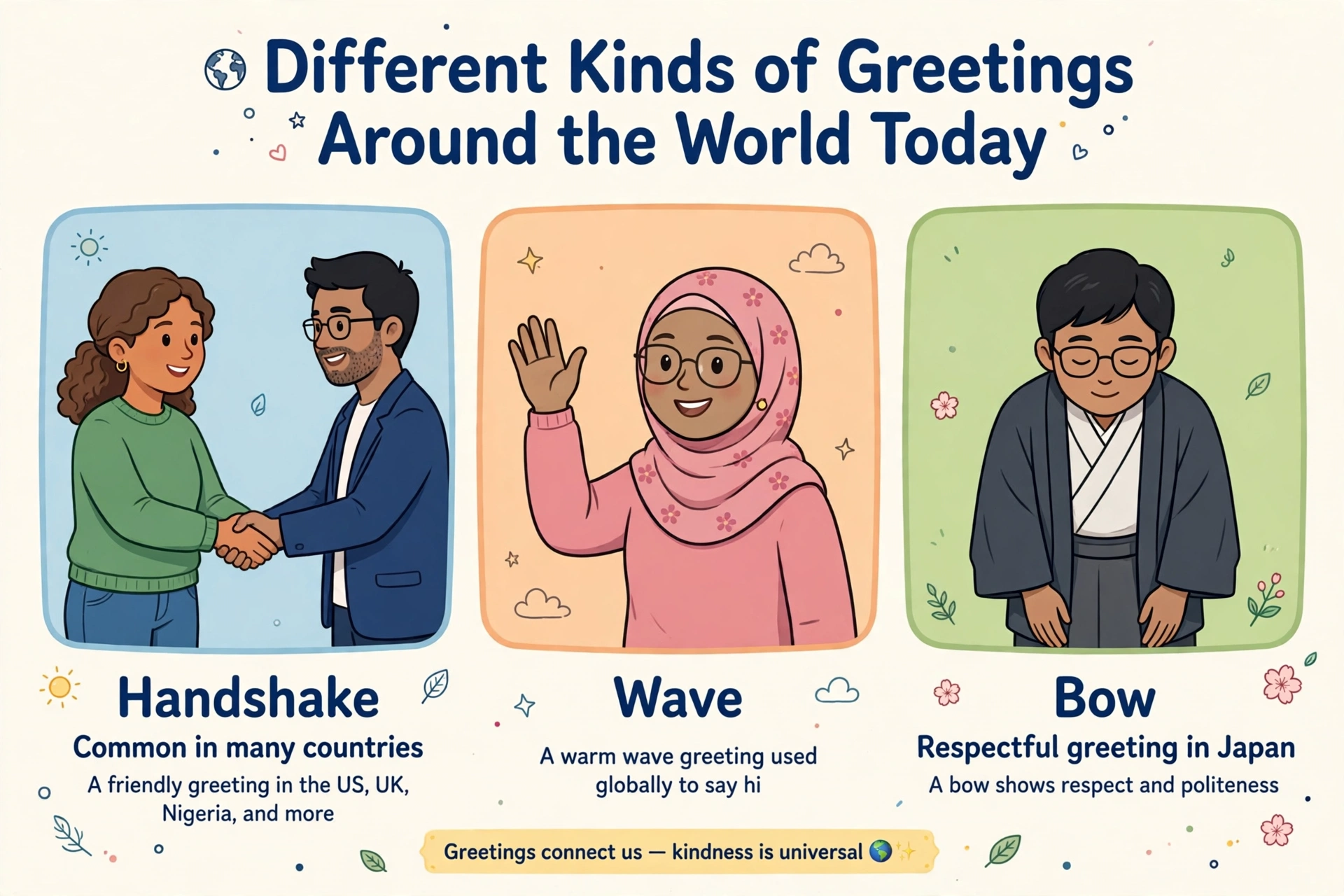
- Today, people still shake hands, but they also use other greetings. A wave, a nod, or a bow can also show respect.
What Is a Handshake?
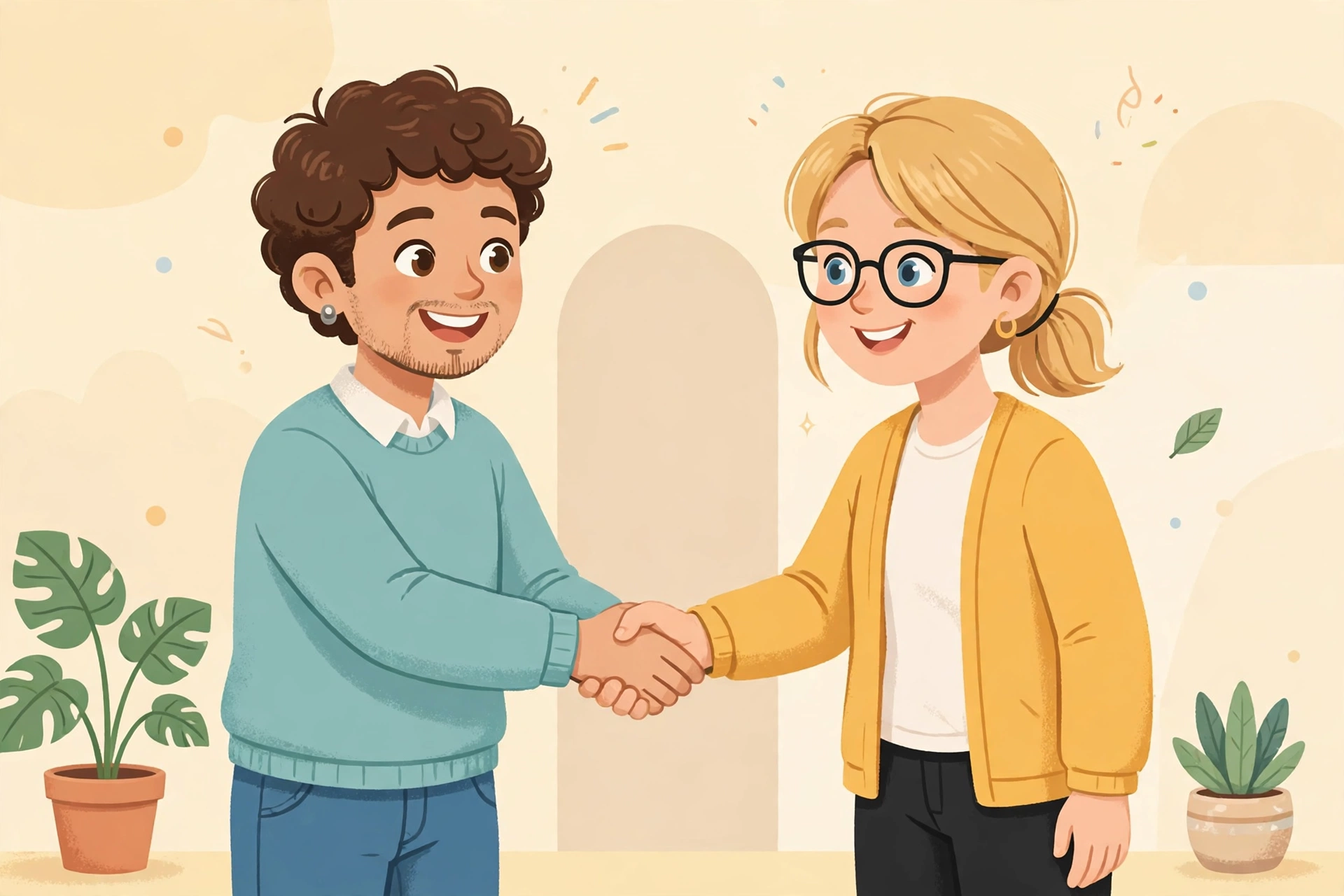
You meet a new person. You smile. You hold out your right hand. The other person holds out their right hand too. You hold hands for a short time. You move your hands up and down two or three times. Then you let go. That is a handshake.
It sounds very simple. But it is a big part of how people meet. A handshake can say hello. It can say goodbye. It can say thank you. It can say, “I agree.” It can say, “Good job.” It can say, “Nice to meet you.” All of that happens in just a few seconds.
A handshake is not just about hands. It is also about eyes, face, and body. Most people look at each other when they shake hands. They smile. They stand up straight. They speak in a kind voice. All these small acts work together. They help two people feel safe with each other.
Children learn this greeting early. They watch adults shake hands. Then they try it too. At school, at work, and at home, a handshake is a normal part of life in many places. But why do we do it? Why hands? Why not just a wave or a smile? To find the answer, we need to look back in time.
A Greeting With a Very Long Past
The handshake is old. Very old. People did not start it last year, or one hundred years ago. Signs of it go back thousands of years. Old art shows people holding hands in greeting. Old books tell stories about it too. It was not a new idea in modern times. It was already part of life long ago.
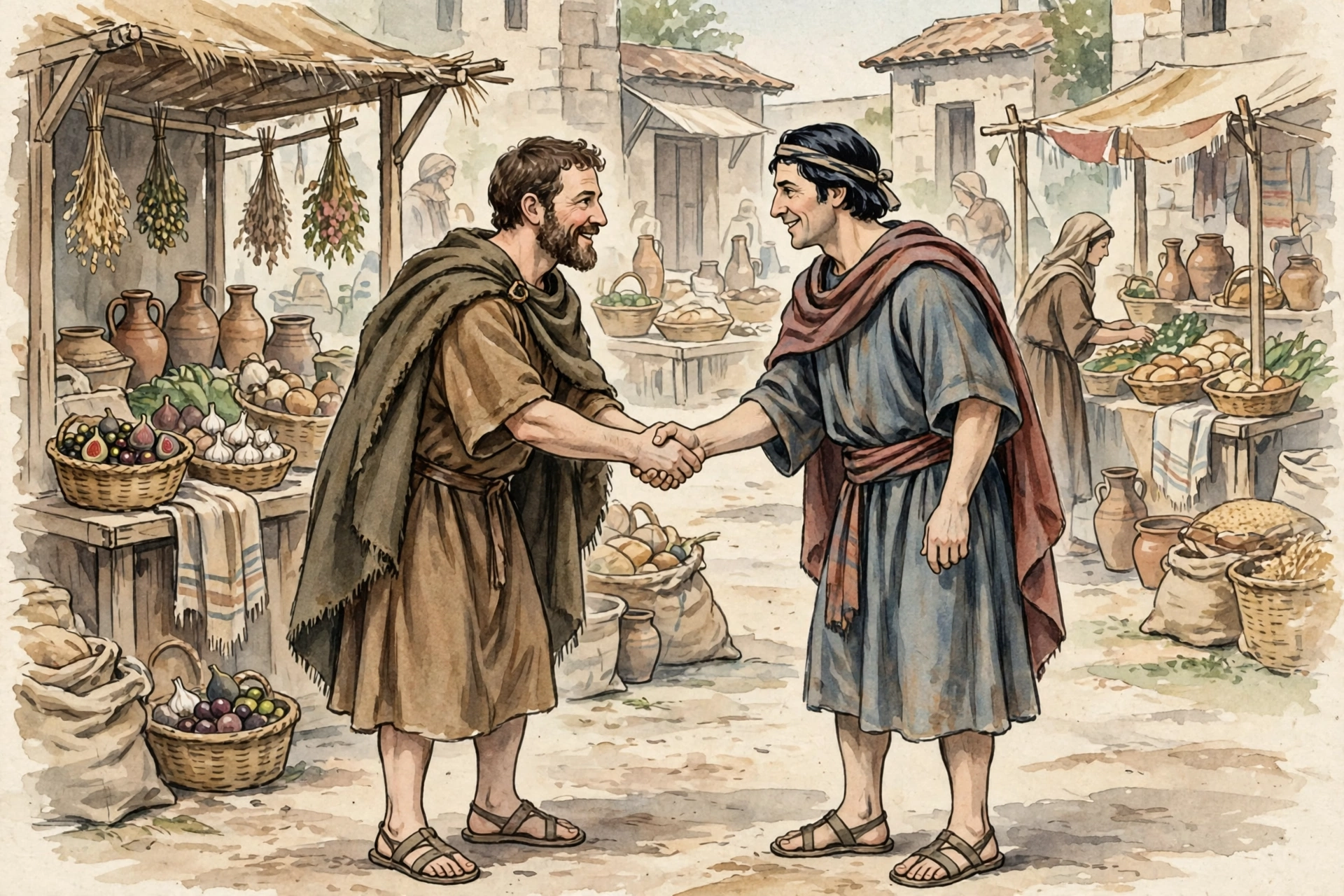
In old Greece, art shows two people shaking hands. The art is on stone and on pots. The people in the art look calm. They look like friends, or like people making a deal. This tells us that the handshake was not just a quick hello. It was also a sign of a deal, a promise, or a bond.
In old Rome, people also shook hands. Soldiers, traders, and leaders used it. When two people shook hands, it could mean, “We are at peace.” It could also mean, “I trust you.” That idea of trust is still with us today. When we shake hands now, we still mean trust, in a quiet way.
Historians study old art, old coins, and old books to learn about the past. They do not all agree on every small point. Some say the handshake began in one place. Others say it began in many places at the same time. But most agree on one main point. The handshake is one of the oldest greetings we still use today.
Did a Handshake Show That You Had No Weapon?
One of the most famous ideas about the handshake is about weapons. Long ago, many men carried a sword or a knife. Most people were right-handed. That means they held a weapon in their right hand. So, when two men met, they could show their open right hand. An open hand showed no weapon. It said, “I will not hurt you.”
Then they would hold hands. This made it hard to pull out a weapon fast. It was a sign of peace. It was also a test. If you held the other person’s hand, you could feel if they tried to move to a weapon. In this way, a handshake was a smart and safe act.
This idea is simple, and it makes sense. But is it fully true? We do not know for sure. Old art does not come with a note that says, “This is why we did it.” Historians must guess from what they see. Some think the weapon idea is true, at least in part. Others think it is only a small part of the story. They say the handshake was also about friendship, respect, and deals.
It is also true that not all old greetings were about weapons. Some greetings were about touch and closeness. A handshake is a touch, but it is a safe touch. It is not too close. It is not too far. It keeps a small space between two people. That space matters. It shows respect for the other person.
Think about how rules differ from place to place. In some places, people drive on the left side of the road. In other places, they drive on the right. Small rules like this shape daily life. You can read more about one such rule in our story about left-side driving. Just like road rules, greeting rules grew from old habits, safety needs, and local custom.
Knights, Kings, and Handshakes
In the Middle Ages, knights in Europe wore armor. They also carried swords. When two knights met, they might lift the front of their helmets. This showed their face. It showed they were not hiding. Some people think the handshake grew in this world too. A knight could show his open hand. He could shake hands to show peace.
Kings and leaders also used handshakes. A handshake between two leaders could seal a deal. It could end a fight. It could start a friendship between two groups. In a world with no phones and no signed papers for every small deal, a handshake was a strong sign. It was a promise you made with your body, in front of other people.
Traders used handshakes too. A trader from one town would meet a trader from another town. They would talk about goods, prices, and trade. A handshake at the end of the talk meant, “We agree.” If a trader broke that deal, other traders would hear about it. Trust was key to trade. A handshake helped build that trust.
Over time, the handshake moved from kings and knights to common people. Farmers, workers, and shopkeepers used it too. It became a greeting for all people, not just for leaders. That change is key. It shows how a custom can start at the top and then spread to all parts of life.
How Time and Calendars Shaped Greetings
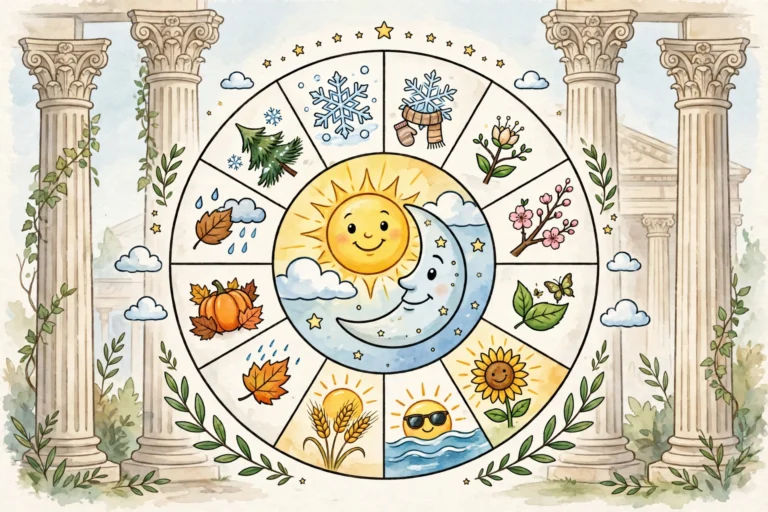
Old customs do not live alone. They live with other customs. Time is one of them. Long ago, people had to agree on days, weeks, and months to meet, trade, and farm. A week has seven days in many places today. But why seven? Our story about seven days looks at that old question in simple words.
People also had to measure hours in a day. Before clocks, this was hard. They used the sun, shadows, and water. Our story about ancient people shows how they did it. When people could agree on a time to meet, greetings like the handshake became more useful. You meet at the same time. You greet in the same way. Life becomes more smooth.
Calendars also changed over time. Some years need an extra day. That extra day keeps the calendar in line with the sun. You can read about it in our story on leap years. Small changes like this show a big point. Old customs are not fixed. They change as people learn more and as life changes.
The handshake changed in the same way. It did not stay the same for thousands of years. It grew, it spread, and it took on new meanings. In some times, it meant peace. In other times, it meant a deal. Today, it can mean many things at once. That is why it is still alive. It can fit many kinds of meetings.
The Handshake in Daily Life
Today, the handshake is part of work life. When you start a new job, you may shake hands with your boss. When you meet a client, you may shake hands at the start and at the end. It shows that you are polite. It shows that you take the meeting seriously. It shows that you respect the other person.
In sport, handshakes are also common. Players shake hands before a game. They shake hands after a game. This is true even when one team loses. The handshake says, “Good game.” It says, “I respect you, even if I lost.” Coaches and referees also shake hands. It is a sign of fair play.
In politics, leaders shake hands in front of cameras. A photo of two leaders shaking hands can be news around the world. It can mean that two countries want peace. It can mean that they have made a deal. Sometimes, the handshake is short and stiff. Sometimes, it is warm and long. People watch these small signs and try to read them.
In daily life, friends may shake hands too. But friends often use other greetings. They may hug, wave, or pat each other on the back. A handshake is more formal than a hug. It is a good choice when you meet someone for the first time. It is also a good choice when you want to be polite but not too close.
What Does a Handshake Say Without Words?
A handshake speaks without words. A firm handshake can show confidence. A weak handshake can show shyness or tiredness. A very hard handshake can feel rude. A very soft handshake can feel unsure. Most people like a handshake that is firm but not hard. It should feel steady and calm.
Eye contact matters too. When you look at the other person, you show interest. When you look away, you may seem shy or rude. A smile helps a lot. A smile says, “I am glad to meet you.” A frown says the opposite. So a good handshake is not just about hands. It is about the whole body.
Culture also shapes handshakes. In some places, a handshake is short and quick. In other places, it is longer and warmer. In some places, men shake hands with men, but not always with women. In other places, all people shake hands with each other. These rules are not the same everywhere. It is wise to watch and learn the local rule when you visit a new place.
Greetings Around the World
Not all people shake hands. In Japan, many people bow. A bow is a bend of the upper body. It shows respect. A deep bow shows more respect. A small bow shows less. Bowing does not need touch. It is a quiet and polite greeting.
In India, many people say “Namaste” and press their palms together. They may also bow their head slightly. This greeting shows respect and peace. It also needs no touch. It is warm and kind.
In France, some people greet with a kiss on the cheek. The number of kisses can differ by region. In some places, it is one kiss. In other places, it is two or three. This greeting is common among friends and family. It is less common in formal work meetings.
In the Middle East, some people place their hand on their heart after a handshake. This adds warmth. It says, “I greet you from my heart.” In some African cultures, people use special handshakes with snaps or grips. These handshakes can show friendship and group identity.
In Tibet, some people stick out their tongue as a greeting. That may sound strange, but it has an old meaning. It was a way to show that you were not a bad spirit. Each greeting has its own story. Each one grew from local history, faith, and daily life.
Why the Right Hand?
Most handshakes use the right hand. Why? One reason is that most people are right-handed. They write, eat, and work with their right hand. So it feels natural to greet with the right hand too. It is the hand they use most.
Another reason links back to weapons. In old times, the right hand held the sword. So showing the right hand was a sign of peace. The left hand was less tied to weapons. This old idea may still shape our habit today, even though most people no longer carry swords.
But not all cultures use the right hand in the same way. In some cultures, the left hand is seen as unclean. It is used for other tasks. So people greet with the right hand to show respect. In other cultures, the left hand is fine. Still, the right-hand handshake is the most common form in the world today.
If a person cannot use their right hand, that is fine. They can offer their left hand, wave, or nod. A good greeting is about respect, not about a strict rule.
Handshakes, Trust, and the Brain
Why does a handshake feel so strong? Part of the answer is in the brain. Touch sends signals to the brain. A warm, firm touch can make people feel safe. It can lower stress. It can help two strangers feel a little closer. This is why a handshake can help at the start of a meeting.
Studies show that a handshake can change how people see each other. People who shake hands may trust each other more. They may work together better. They may feel more ready to make a deal. This does not mean a handshake can fix a bad deal. But it can set a good tone for a talk.
A handshake also gives information. You can feel if the other person’s hand is warm or cold, firm or soft. You can sense if they are nervous or calm. We have read each other this way for a very long time.
Germs, Health, and New Greetings
A handshake involves touch. Touch can spread germs. This became a big topic in recent years. When many people got sick, health experts asked people to avoid handshakes for a time. They suggested waves, nods, or elbow bumps instead. An elbow bump is when two people touch elbows. It needs less skin contact.
Some people still avoid handshakes when they are sick. That is wise. If you have a cold, it is kind to say, “I will wave today, so I do not spread germs.” Most people will understand. They will respect your care for their health. A good greeting should not make others sick.
Washing hands is also key. After you shake hands with many people, wash your hands with soap and water. This is a simple habit. It keeps you and others safe. It does not take long. It is a small act with a big effect.
New greetings have also grown. A fist bump is a quick touch of fists. It is common among friends and young people. It is less formal than a handshake. A wave is even simpler. You just lift your hand and move it. A nod is a small move of the head. All of these can show respect without a full handshake.
Even so, the handshake has not gone away. After times of sickness pass, many people return to it. It feels normal and warm. It can pause, but it does not die easily.
The Handshake in Stories and Films
Handshakes appear in stories, films, and photos. A hero shakes hands with a friend. A villain refuses to shake hands. A leader shakes hands to end a war. These scenes are simple, but they carry meaning. The viewer knows at once what the handshake means.
In old photos, leaders shake hands after a deal. These photos are kept in books and museums, and one image can tell a whole story.
When Not to Shake Hands
There are times when a handshake is not the best choice. If you are sick, do not shake hands. If the other person is sick, do not insist on a handshake. If someone offers a wave or a nod, accept it with a smile. Respect their choice.
If you meet someone from a culture with a different greeting, follow their lead. If they bow, you can bow back. If they press their palms together, you can do the same. This shows that you respect their custom. It also helps you avoid an awkward moment.
If someone does not want to be touched, respect that too. Some people do not like touch. Some people have pain in their hands. Some people have other reasons. A kind greeting does not force touch. It offers warmth in a way the other person can accept.
The Future of the Handshake
Will people still shake hands in fifty years? Most likely, yes. Customs that last thousands of years do not vanish fast. They change, but they stay. The handshake may become less common in some places. It may become more common in others. But it will likely remain a key greeting.
Technology has changed greetings too. People now meet on video calls. They cannot shake hands through a screen. They wave, nod, or smile at the camera. Photos from such meetings are often saved online, as our story about cloud photos explains in simple words. Long video calls can also make a phone warm, a topic covered in our story about a phone heating while charging. The wave on screen is not the same as a handshake, but it serves the same purpose. It says, “Hello, I see you.”
Young people may use fist bumps more, while older people keep the handshake. Both can live side by side. The best greeting fits the moment and respects the other person.
Other Old Customs Also Changed
The handshake is not the only old custom that changed over time. People long ago watched the sky to mark time. The moon helped them mark months. You can read why the moon can look orange near the horizon in our story about the orange moon. Old trade routes also passed near famous old places, such as the Dead Sea, where people could float in very salty water. Big old projects also show how people worked together, like the great water project in our story about the Libya river. In each case, an old idea grew, spread, and changed as life changed. The handshake did the same.
Lessons From an Old Greeting
The handshake teaches us a few simple lessons. First, small acts matter. A short touch of hands can build trust. Second, customs have roots in safety, trade, and daily life. Third, customs change and adapt to new times.
It also teaches us about respect. A good greeting does not force or rush. It gives space and shows care. Whether you shake hands, bow, wave, or nod, the core idea is the same. You see the other person, and you honor them.
The next time you shake hands, pause for a second. People thousands of years ago did the same thing. You are part of that long chain, linked to people across time and across the world.
Frequently Asked Questions
When did people start shaking hands?
People started shaking hands thousands of years ago. Old art from Greece and Rome shows it. We do not know the exact first day. But we know it is one of the oldest greetings still in use today.
Did handshakes really start to show no weapon?
That is one famous idea. It says an open right hand showed no sword. It makes sense, and it may be part of the story. But historians are not fully sure. The handshake may also have grown from friendship, trust, and trade.
Why do we use the right hand for a handshake?
Most people are right-handed. They use their right hand for most tasks. In old times, the right hand also held a weapon. So showing the right hand was a sign of peace. Today, the right hand is simply the common habit in most places.
Is it rude not to shake hands?
No, not always. If you are sick, it is kind not to shake hands. If someone offers a wave or a bow, accept it with a smile. Respect is more important than the exact form of the greeting. A kind wave can be just as polite as a handshake.
What can I do instead of a handshake?
You can wave, nod, bow, or press your palms together. You can also do a fist bump or an elbow bump with friends. Choose the greeting that fits the moment and the other person. A smile and kind words help in all cases.
Do all cultures shake hands?
No. Many cultures have their own greetings. Some bow, some press palms together, and some kiss on the cheek. The handshake is common in many Western countries and in business around the world. But it is not the only polite greeting.
More from Zorium Daily
- Seven Days — why our week has seven days.
- Ancient People — how people measured an hour without clocks.
- Leap Years — why February sometimes gets an extra day.
- Left-Side Driving — why some countries drive on the left.
- History — more stories from the History category.
- Libya River — how Libya built a river under the Sahara.