What Is a Gift Card and How Does It Work? Explained Simply
SUMMARY OF THIS ARTICLE
- A gift card is money you pay for in advance, stored on a small plastic card or in a digital code, and the person who receives it can spend that amount at the shop or shops printed on the card.
- There are two main kinds: store cards that work at one shop or one family of shops, and anywhere cards that carry a Visa or Mastercard logo and work almost anywhere.
- A gift card is not a debit card and not a credit card. The money is already paid, there is no bank account behind it, and there is no borrowing and no interest to pay.
- You can check the balance online, by phone, or at the till, and when the money runs out most store cards simply stop working — though some can be topped up again.
- Gift cards are a favourite tool of scammers, so never pay for taxes, bills, or a stranger’s urgent request with a gift card, and never share the code on the back with anyone you do not trust.
The Gift That Always Fits — Almost
It is your best friend’s birthday tomorrow, and you have no idea what to buy her. She likes books, but you do not know which ones she has already read. She likes coffee, but you are not sure which flavour she prefers. You stand in the shop, staring at the shelves, and the clock is ticking.
Then you spot them by the till: a rack of gift cards. You pick the one for her favourite bookshop, load it with $25, and slip it into a birthday card. Done.
A gift card is one of the most common gifts in the world today. Yet for something so ordinary, gift cards confuse a surprising number of people. Where exactly can you spend one? What happens when the money runs out? Can it expire? And why do the police keep warning us never to pay a stranger with one? This guide answers all of that in plain words.
The Short Answer: Money Paid in Advance
A gift card is a small amount of money that someone has already paid for, stored on a card or in a code, and the person holding it can spend it later.
Think of it like a cinema ticket. When you buy a cinema ticket, you pay first and watch the film later. The ticket itself is not money — it is proof that you already paid. A gift card works the same way: the buyer pays at the counter, the shop loads that amount onto the card, and the card becomes a promise that this much money is waiting to be spent.
Here is a simple example. Your uncle buys a $50 gift card from a toy shop and gives it to you. When you pick a game that costs $40, you hand over the card instead of cash. The shop takes $40 from the balance, and you still have $10 left for your next visit.
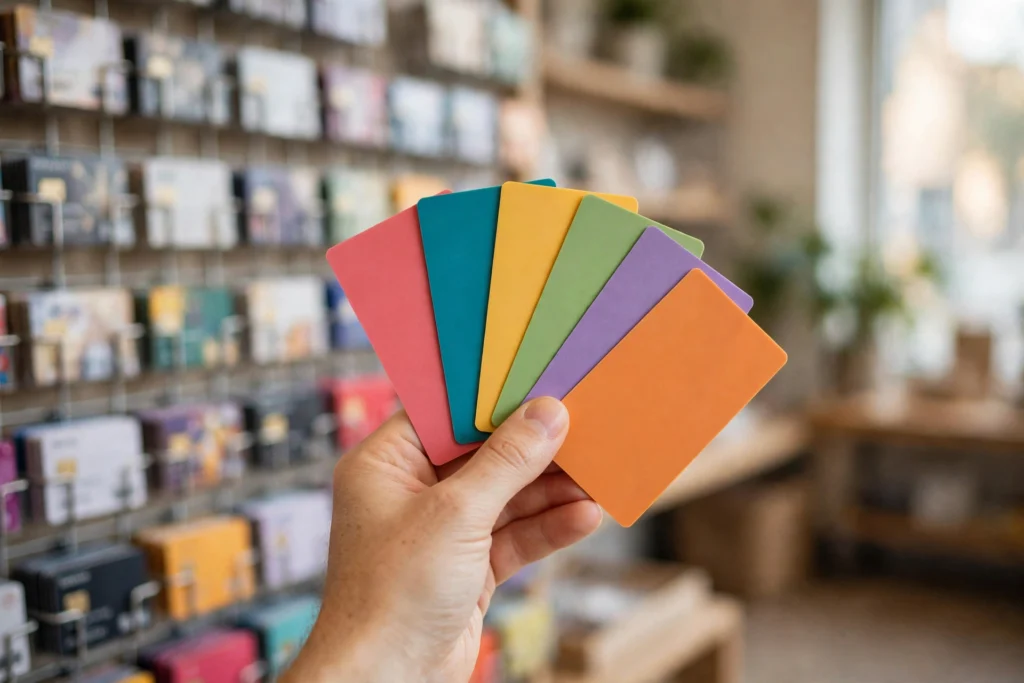
Gift cards come in two forms: a piece of plastic about the size of a bank card, often printed with a cheerful picture, or a digital e-gift card that arrives by email or text message with a code you type in at the checkout. Both work the same way underneath.
The Two Kinds of Gift Card: Store Cards and Anywhere Cards
Not all gift cards are the same, and the difference matters more than anything else in this guide. Before you buy or spend one, you need to know which kind you are holding.
The first kind is the store card, sometimes called a closed-loop card. It works at one shop, or at one family of shops owned by the same company. A card from a coffee chain works at that chain’s cafés and nowhere else. The “loop” is closed: the money can only travel inside that one business.
Store cards are the most common kind, and they are usually free to buy. If you want a $25 card, you pay $25 and nothing more. The shop is happy to give you the card for free, because you have already handed it your money before buying anything.
The second kind is the anywhere card, sometimes called an open-loop card. You can spot it at once: it carries the logo of a big payment network, usually Visa or Mastercard. It works almost anywhere that network is accepted — at shops, restaurants, and online stores — much like a debit card. The money is not tied to one shop, so the receiver can spend it wherever they like.
That freedom comes at a price. Anywhere cards almost always charge an activation fee when you buy them. As a rough example, a $50 Visa gift card might cost about $55 at the till: $50 of spending money plus around $5 for the fee.
If you know your friend’s favourite shop, a store card is the better gift: no fee, and it shows you thought about what she likes. If you have no idea where she shops, an anywhere card is the safer bet, even with the fee.
How Buying a Gift Card Works
Buying a gift card is one of the simplest money tasks there is, and it only takes a minute.
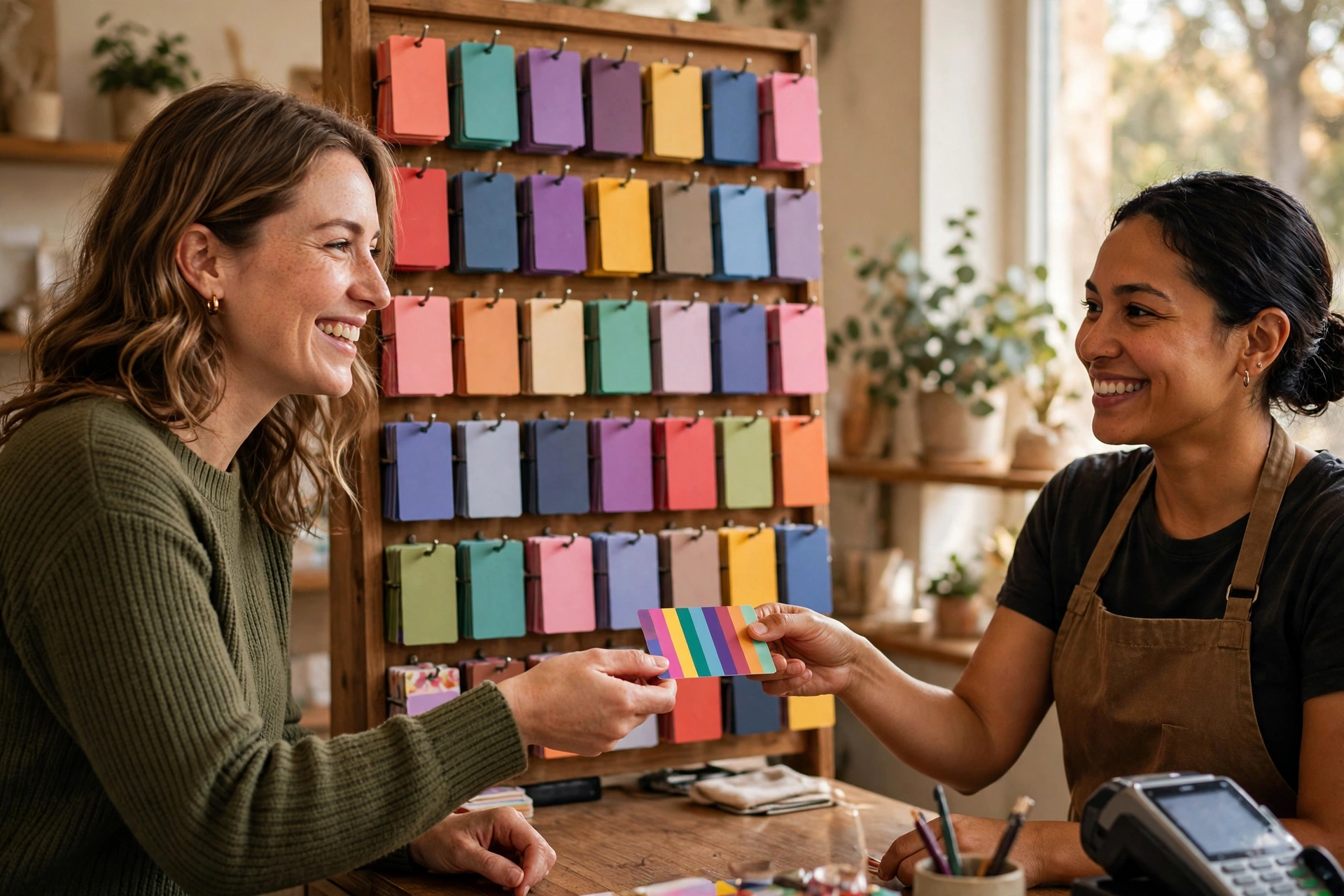
First, pick the card. In a shop, you will find them on a rack near the tills, sorted by brand. Some cards have a fixed amount printed on them — $10, $25, $50, and so on. Others are blank, and you choose the amount at the till. Online, you pick the shop and choose an amount.
Second, pay for it. At a shop till, you hand over cash or pay by card, just like any other purchase. The cashier loads the amount onto the card and activates it. Until that moment, the card is just an empty piece of plastic. Activation is the step that matters: it tells the shop’s computer that this card now holds real money. A card that was never activated will not work, so keep the receipt until the card has been used.
Third, give it away — or keep it for yourself. Some people buy gift cards for their own shopping, for example to stick to a budget. Most people give them as presents, often tucked inside a birthday card or sent by email with a short message.
Before you buy, glance at the small print on the back or on the packaging. It tells you where the card works, whether there is an expiry date, and whether any fees apply.
How Spending a Gift Card Works
Spending a gift card feels much like paying with any other card, with a few small differences.
In a shop, you hand the card to the cashier or tap it on the card reader, just as you would with a bank card. The reader checks the balance, takes the price of your shopping, and shows what is left. If your shopping costs less than the card’s balance, the rest stays on the card for next time. If your shopping costs more, you pay the difference with cash or another card. Shops call this a split payment. For example, if your card holds $20 and your shopping comes to $25, the till takes $20 from the card and you pay the remaining $5 another way.
Online, the process is almost the same. At the checkout page, you look for a box that says “gift card” and type in the long number printed on the card, along with the security code on the back. The website checks the balance and takes the price from it. If the card does not cover the full order, the site will usually ask you to pay the rest with another method.
One thing to know: you cannot take cash out of a store gift card at a cash machine. A gift card is for buying things, not for withdrawing money.
Another surprise is what happens with returns. If you buy something with a gift card and later take it back to the shop, the shop will usually put the refund back onto the same gift card, not hand you cash. So keep the card even after you have spent it, at least until you are sure you will not return anything you bought with it.
Checking Your Balance
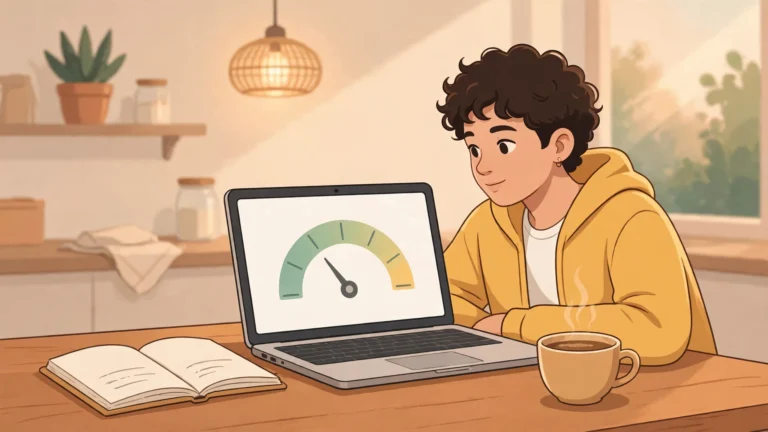
The most useful habit with a gift card is also the simplest: know how much is left on it before you go shopping. Nothing is more annoying than standing at a till, holding up a queue, while the cashier tells you the card only has $2.37 left on it.
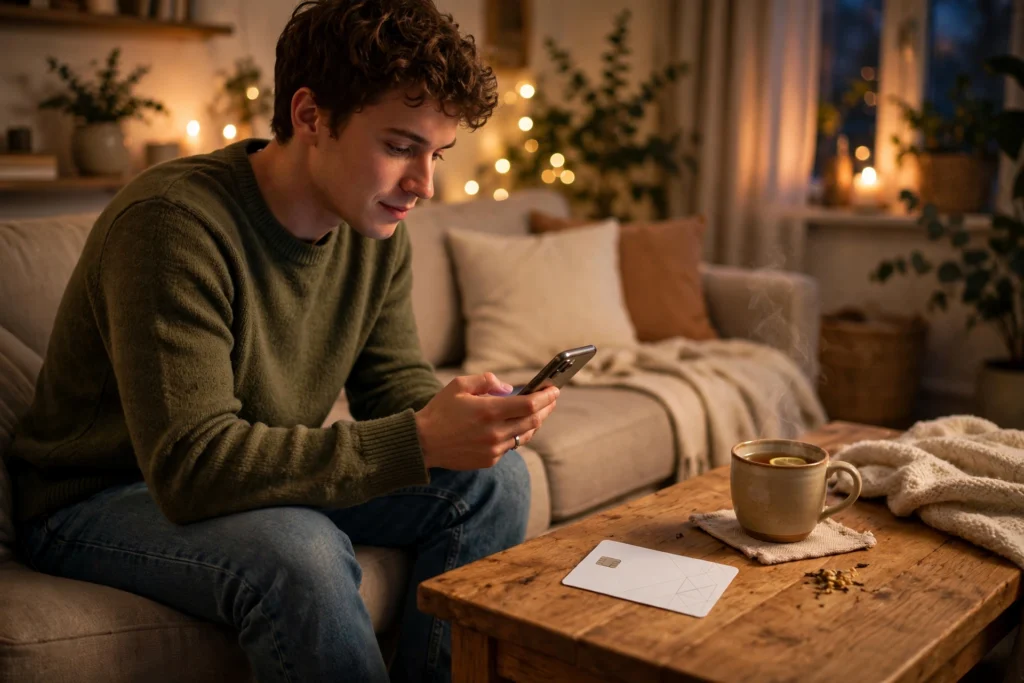
There are three easy ways to check. The first is online: most shops print a website address on the back of the card, where you type in the card number and the security code and the balance appears on the screen. The second is by phone: many cards print a free phone number on the back, and an automated voice will read your balance to you. The third is in the shop itself: just ask at the till or at the customer service desk. Some shops also let you check the balance in their app.
A good habit is to write the balance on the card itself with a pen, or on a small sticky note kept with it, every time you use it. That way you always know what you have.
People forget about gift cards all the time, and a surprising share of gift card money goes unspent — sometimes for months, sometimes forever. So if you find an old gift card while cleaning out a drawer, check the balance before you throw it away.
What Happens When the Money Runs Out
A gift card has a simple rule: when the balance reaches zero, the card is finished. You cannot spend more than what is loaded on it, and the shop will not lend you the difference. There is no overdraft, no borrowing, and no bill at the end of the month.
But a card with no money left is not always rubbish. A small leftover amount — say, $1.50 — can still be spent as part of a split payment, putting the last $1.50 toward a bigger purchase and paying the rest another way. It is worth using up, because even small amounts add up.
Some cards can be topped up, which means you can add more money to them. This is common with coffee shop cards and some store loyalty cards: you go to the till or the app, add another $20, and the same card keeps working. Most ordinary gift cards, though, cannot be reloaded. Once the money is gone, the card is done.
Do Gift Cards Expire? What About Fees?
This is the question that worries people most, and the honest answer is: it depends on where you live and which card you hold.
In the United States, a federal law called the CARD Act of 2009 gives gift card holders strong protection. Under that law, the money on a gift card cannot expire for at least five years from the date the card was bought, or from the last time money was added to it. Dormancy fees — charges for not using the card — cannot be taken until the card has sat unused for at least 12 months, and even then only one such fee per month is allowed.
Other countries have their own rules, and they are not all the same. Some give similar protection, some give less, and some leave it mostly to the shop’s own terms. That is why the small print on the back of the card matters. It should tell you the expiry date, if there is one, and any fees that might apply.
The fees to watch for are simple. Store cards usually have no fees at all. Anywhere cards usually charge an activation fee at the time of purchase — as a rough example, often somewhere around $3 to $7 for a typical card, though it varies. Some anywhere cards also charge a small monthly fee if the card sits unused for a long time. Spend the card within a few months of receiving it, and fees never get a chance to bite.
The golden rule is simple: do not leave a gift card sitting in a drawer for a year. A gift card is not a savings account — money left sitting on it does not grow, and in some cases it can slowly shrink.
Physical Cards and E-Gift Cards
These days you can receive a gift card in two ways, and each has its own small advantages.
The physical card is the one you can hold. It comes in a little cardboard sleeve, often with a picture on the front and a scratch-off panel on the back hiding a security code. It feels like a real present: you can wrap it, put it in an envelope, or hand it over with a handshake. The downside is that it can be lost or left at home on the day you wanted to use it, and getting the money back is hard unless you kept the receipt and registered the card with the shop, which most people never do.
The e-gift card is the digital version. It arrives by email or text message, usually within minutes of someone buying it. It carries a code, sometimes with a barcode you can show on your phone screen at the till. It cannot be lost in the same way — it sits in your inbox until you need it — and it is perfect for sending a gift to someone far away at the last minute. The downside is that it can get buried under other emails, or end up in a spam folder.
Whichever kind you receive, treat the code like cash. If someone sees the number and the security code, they can spend the money before you do. That is why you should never post a photo of a gift card online — not even to show off a generous present. A photo of the front and back is all a stranger needs.
A Gift Card Is Not a Debit Card or a Credit Card
This is a mix-up that causes a lot of confusion, so let us clear it up once and for all.
A debit card is connected to your bank account. When you pay with it, the money comes straight out of your account. If your account is empty, the payment fails. A gift card has no bank account behind it. It holds only the fixed amount that was loaded onto it, and nothing more. You can learn more about how bank accounts work in our simple guide to how banks make money and the everyday accounts they offer.
A credit card is different again. When you pay with a credit card, you are borrowing money from the bank, and you have to pay it back later, often with interest added on top if you are late. That borrowing is a kind of loan, and it comes with rules, limits, and bills. A gift card involves no borrowing at all. The money was already paid by the person who bought the card. There is no bill, no interest, no credit check, and no debt.
That is also why children and teenagers can use gift cards freely. There is no age limit, no bank account to open, and no signature needed.
The Scams You Must Know About
Now we come to the serious part, and it is the part that could save you real money.
Gift cards are a favourite tool of scammers, and the reason is simple: once the money is spent from a gift card, it is almost impossible to get back. There is no bank to call and no name attached to the person who spent it. Scammers know this, and they use it.
Here is how the most common trick works. You get a phone call, a text, or an email from someone claiming to be from the tax office, the police, your bank, or a big computer company. They sound urgent and official. They say you owe money, or your account has been hacked. Then comes the hook: they tell you to pay the amount using gift cards — go to a shop, buy gift cards, scratch off the back, and read the code to them over the phone.
Stop right there. That is a scam, every single time. No real tax office, police force, bank, or government department will ever ask you to pay with a gift card. If anyone asks you to pay with a gift card for taxes, a bill, a fine, or an emergency, hang up.
The trick works because it plays on fear. The caller makes you feel that something terrible will happen in the next hour unless you pay now. That pressure is the warning sign. Real officials never rush you like that.
The same trick comes in other shapes: a fake boss emailing you to buy gift cards for clients, a fake online romance asking for gift cards to pay for a flight, or a “discounted” card sold online that turns out to be empty because the seller already spent the money.
The rules that protect you are short. Never pay for taxes, bills, fines, or emergencies with a gift card. Never read a gift card code to anyone over the phone or in a message. Never buy a gift card because a stranger told you to. Buy gift cards only from real shops, their own websites, or their apps. And if a card on a shop rack looks tampered with, with the scratch-off panel already scratched or the packaging opened, pick a different one and tell a member of staff.
If you think you have already been caught by a gift card scam, act fast. Contact the shop that issued the card and ask whether the money can be frozen, and report it to your local police and your country’s fraud reporting service.
Frequently Asked Questions
What is a gift card?
A gift card is a prepaid card or digital code loaded with a fixed amount of money. Someone pays for that amount in advance, and the person who holds the card can spend it at the shop or shops named on it. It is not a bank card and not a credit card: the money is already paid, and there is no borrowing or interest.
Where can I use a gift card?
It depends on the kind of card. A store card works only at the shop or family of shops that issued it — for example, a coffee chain’s card works at that chain’s cafés and nowhere else. An anywhere card carries a Visa or Mastercard logo and works almost anywhere those networks are accepted, in shops and online.
Do gift cards expire?
It depends on where you live and which card you hold. In the United States, federal law says the money on a gift card cannot expire for at least five years from the date it was bought or last topped up, and dormancy fees cannot be charged until the card has sat unused for at least 12 months. Other countries have their own rules, so always check the small print.
How do I check my gift card balance?
Visit the website printed on the back of the card and enter the card number and security code. Or call the phone number printed on the back. Or ask at the till or customer service desk in the shop. Some shops also show the balance in their app.
What happens if my purchase costs more than the gift card balance?
You pay the difference with another method. Most shops allow a split payment: the till takes everything left on the gift card and you pay the rest with cash or another card. For example, if your card holds $20 and your shopping costs $25, the till takes $20 from the card and you pay $5 another way.
Can I get cash back from a gift card?
Usually not. Most gift cards cannot be exchanged for cash, and you cannot use a store gift card at a cash machine. A few places let you claim cash for a very small leftover balance, but this depends on local law and the shop’s own policy. The simplest way to use up a small balance is to spend it as part of a bigger purchase.
More from Zorium Daily
- What Is a Savings Account and How Does It Work?
- How Do Banks Make Money?
- What Is Interest and Why Do Banks Pay It?
- What Is a Loan and How Does It Work?
The next time someone hands you a gift card, you will know exactly what you are holding. It is a small promise, already paid for, waiting for you to spend it on something you will enjoy. Check the balance, use it soon, spend every last bit of it, and never hand the code to a stranger. A gift card is one of the simplest ideas in money — and once you understand it, it is one of the easiest gifts there is.