How Do Shops Decide Prices?
By Zorium Daily Money Desk
SUMMARY OF THIS ARTICLE
- A shop price is not a random number. It has to cover what the item cost, plus rent, wages, transport, tax, and a little profit so the shop can stay open.
- The same item can cost different amounts in different shops because each shop pays different rent, buys in different amounts, and serves different customers.
- Shops watch their rivals closely and often match or beat a nearby price, especially for everyday items like milk and bread.
- Sales and discounts are tools shops use to bring people in and clear old stock, and a cut price is only a bargain if you wanted the item anyway.
- Prices go up when costs rise, when too many buyers chase too few goods, or when money itself buys less, and a shopper who compares prices and waits a day often spends less.
The Same Biscuits, Two Different Prices
Last Saturday, my neighbour Sara popped into the little corner shop near her house for a packet of biscuits. It cost her $3.50. Later that same day, she found the very same biscuits in the big supermarket on the high street for $2.80. Seventy cents less, for the exact same thing. She came home feeling cheated, and I understood why.
Was the corner shop trying to trick her? Was the supermarket selling at a loss? Neither, really. Both shops had good reasons for the number on the tag. A price is not pulled out of thin air. It is the end of a long chain of choices, and once you can see that chain, shopping starts to make a lot more sense.
Why is a bottle of water $1 in one place and $2.50 in another? Why does the same coat cost $80 in October and $45 in February? This article answers those questions in plain words, with no fancy business talk — what goes into a price, why prices differ, why sales happen, why prices rise, and how you can spend a little less.
A Price Is Not Just a Number
When a shop puts a price on something, it is trying to do three things at once: cover its costs, make a little money on top, and pick a number people are actually willing to pay. If the price is too high, nobody buys. If it is too low, the shop loses money on every sale. The price on the tag is the shop’s best guess at the sweet spot in the middle.
Take a jar of jam. Say the shop buys it from a supplier for $3. That is the first cost, and the one most people think of. But the shop does not just pay $3 and sell it for $3.10. A whole trail of other costs follows the jar from the factory to your kitchen. The jam travelled in a lorry, sat in a warehouse, and was unloaded and stacked by people who need wages. The shop pays rent, keeps the lights on, runs a fridge, and pays for the till, the bags, the cleaning, and the insurance. A tiny slice of every one of those costs lands on that one jar of jam.
Then there is tax: in many places the government takes a share of what a shop sells, and that share has to be built into the price. So the shop buys the jam for $3, adds a share of its running costs, adds tax, and adds a little profit on top — money for new stock or a broken fridge. That is how $3 becomes $5 on the shelf. It is not greed. Most of the time, it is just the maths of keeping a shop alive.
The Hidden Costs Behind the Shelf
Here is a part most shoppers never see. The price you pay is not only for the thing in your hand. You are also paying, in a small way, for everything that keeps the shop running around it.
Rent is often the biggest hidden cost. A shop on a busy high street pays far more than a shop down a quiet side road, and that rent shows up in the prices. A sandwich in a city centre café costs more than the same sandwich in a small town. The bread is the same. The filling is the same. The rent is not.
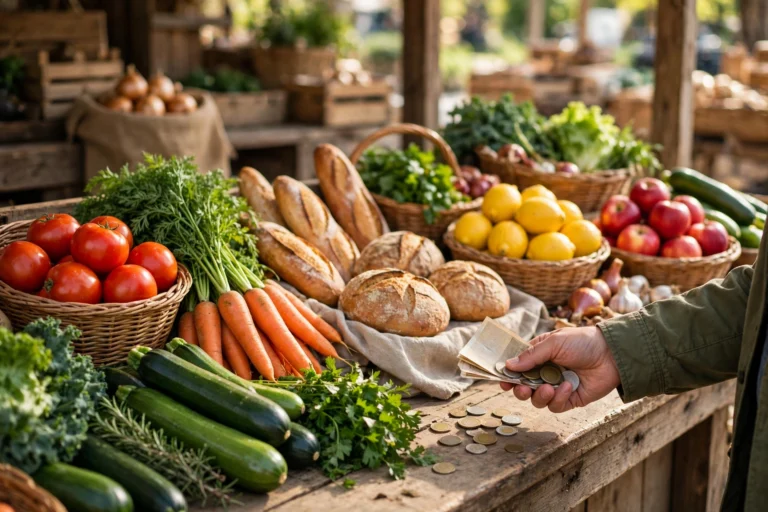
Wages are the next big one. A shop that stays open late, or opens on Sundays, pays staff for more hours. Transport is another cost that hides inside prices. A mango grown in another country has to be picked, packed, flown or shipped, kept cool, and driven to the shop. Every step adds a little to the price. A bag of potatoes grown nearby travels a short way and costs less to move. That is why local, in-season food is often cheaper.
Waste is a cost people forget completely. Shops throw away food that goes out of date, and clothes that never sell. The cost of a tray of yoghurts that passed its date does not just vanish. It gets spread across the yoghurts that did sell. When you look at a price tag, you are looking at the total of all of that, squeezed into one small number.
Why the Same Item Costs Different Amounts in Different Shops
Now back to Sara and her biscuits. Why did the corner shop charge $3.50 while the supermarket charged $2.80? The two shops live in very different worlds, even though they sell the same biscuits.
The supermarket buys in bulk. It might order ten thousand packets at a time, straight from the maker, and get a lower price per packet. The corner shop might order fifty packets from a wholesaler, and pay more per packet because it buys so few. That difference alone can explain a good part of the gap.
The supermarket also spreads its costs over thousands of items. Its rent is high, but it sells so much each day that each item only carries a tiny slice of that rent. The corner shop sells far less each day, so each packet of biscuits has to carry a bigger slice.
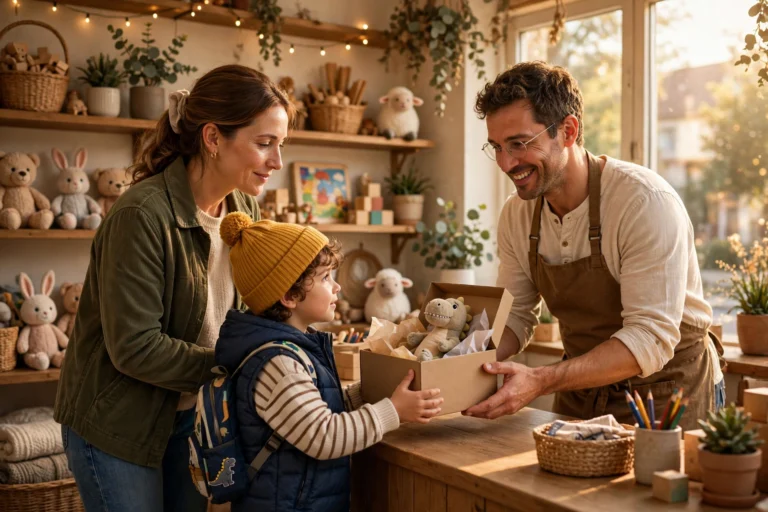
Then there is convenience. The corner shop is open late, two minutes from Sara’s door, and she can pop in for one thing without queuing for half an hour. She paid a little extra for that. The supermarket is cheaper, but it costs her a bus fare and an hour of her Saturday. A small shop near your home can charge a bit more because it saves you time, and many people are happy to pay for that.
Location matters too. A shop in a tourist spot or inside an airport can charge more because its customers have no other choice. A bottle of water at an airport can cost three times what it costs in a supermarket, not because the water is better, but because you cannot walk to another shop once you are past security. And the kind of shop matters. A discount shop keeps its costs low on purpose — plain shelves, few staff — and passes the savings on to you. A luxury shop does the opposite, and you pay for the experience around the item. Neither way is wrong. They are just aimed at different shoppers.
How Shops Watch Each Other
Shops do not set prices alone. They watch each other all the time. A supermarket manager will walk around rival shops, or send staff to check their prices, sometimes every single week. They look at milk, bread, eggs, and rice — the prices shoppers remember. If the shop across the road sells milk for $2 and you sell it for $2.50, shoppers will notice, and they will start doing their weekly shop across the road instead.
That is why everyday basics often cost almost the same in every big supermarket in a town. The shops are not copying each other out of laziness. They are competing. If one shop drops the price of bread, the others often follow within days, because none of them wants to look expensive on the items people buy most.
For other items, shops try to stand out instead of matching. A shop might keep its milk cheap to pull people in, and charge a little more for fancy cheese or ready meals, hoping you will buy those too once you are inside. This is called a loss leader: the shop sells one popular item very cheaply, sometimes at a loss, to get you through the door. The cheap milk is the bait. The rest of your basket is where the shop makes its money.
Online shops watch each other too, only faster. Their prices can change several times a day, because a computer can check a rival’s website in seconds and drop a price by a few cents to stay the cheapest. That is why a pair of headphones can cost one thing in the morning and another in the evening.
Small shops play the game differently. A market stall holder cannot beat a supermarket on price, so she competes on something else: fresher vegetables, a friendly chat, or letting you pick your own tomatoes. Her price is a little higher, but what you get for it is a little different too.
Sales and Discounts: Why Prices Drop
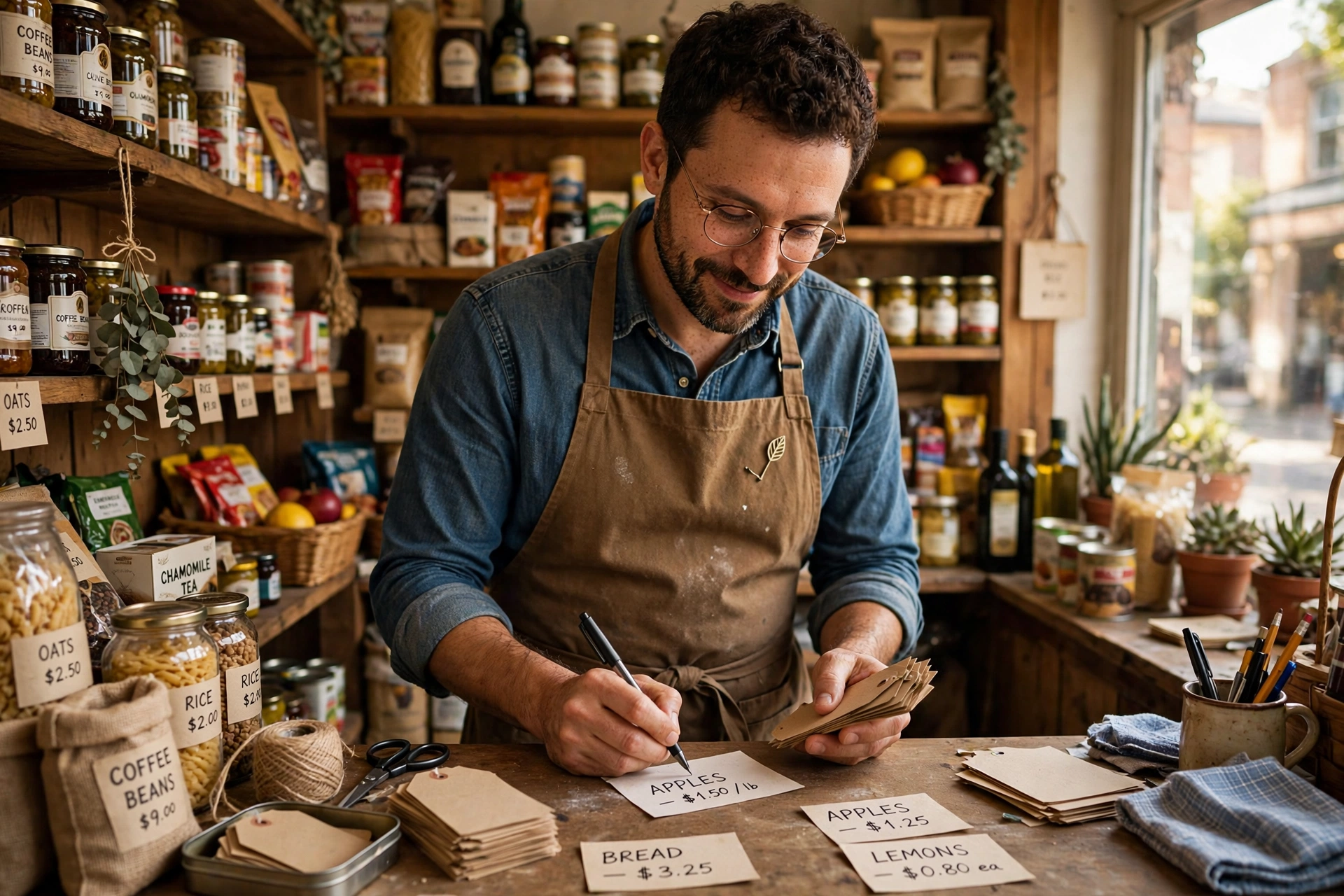
If shops work so hard to set the right price, why do they keep cutting it? Walk down any high street in January and half the windows shout sale, half price, clearance. It looks like shops are giving money away, but there is always a reason behind the red sign.
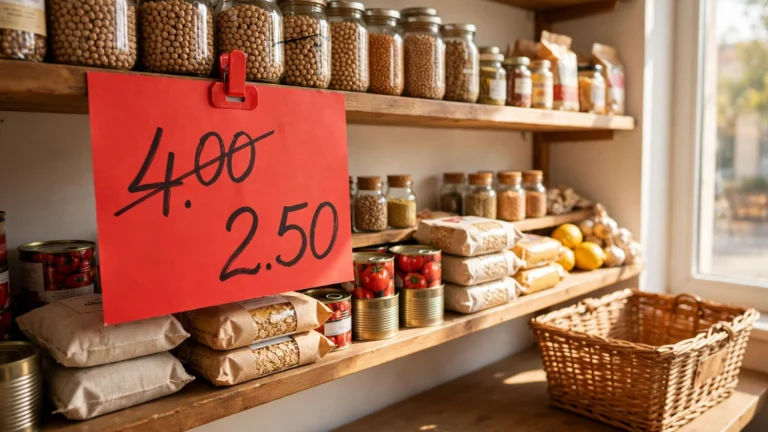
The most common reason is clearing old stock. Clothes go out of season, phones get a new model, and food nears its sell-by date. A shop cannot leave winter coats on the rail in April, because it needs the space for summer clothes. So it cuts the price, sometimes hard, to move the old stock out fast. A coat sold at half price is still better than one that never sells at all. A supermarket would rather sell yoghurt at half price today than throw it away tomorrow.
The second reason is bringing people in. A big sale sign pulls people through the door, and once they are inside, they often buy more than the sale item. You go in for a discounted kettle and come out with a kettle, a toaster, and a new set of towels. The shop may make little money on the kettle, but it makes money on the towels.
The third reason is beating other shops: if three shops sell the same television and one cuts its price by ten percent, buyers walk to that shop first. The fourth is rewarding loyal customers. A member price makes you feel looked after, and that feeling brings you back. A customer who returns ten times is worth far more than one who comes once for a bargain and never returns.
But here is the honest part. Not every discount is a real bargain. Sometimes a shop raises the price for a short time, then cuts it back and calls it a sale. A jacket was $60 for months. The shop raises it to $100 for a week, then cuts it to $60 and calls it 40 percent off. You paid the normal price. You saved nothing. A discount is only a real saving if the old price was honest and you wanted the item anyway.
Why Prices Go Up
Prices do not only fall. Most of the time, slowly and quietly, they rise. You might not notice a few cents here and there, but over a year or two, the same weekly shop costs clearly more.
The first reason is costs. When it costs more to make or move something, the shop often has to raise its price to stay in business. If fuel becomes more expensive, the lorry that brings food to the shop costs more to run. If workers need higher pay to live, the shop’s wage bill rises. If the wheat farmer pays more for seed and fuel, the flour costs more, the bakery pays more, and your bread costs more. One rise moves along the whole chain, like a wave, until it reaches your basket.
The second reason is demand. When many people want the same thing and there is not enough to go around, sellers can charge more. Think of a small town with one bakery making a hundred loaves each morning. One day a festival comes to town and two hundred people want bread. There are not enough loaves, so the price goes up. On a bigger scale, when jobs are plentiful and people have more money, they buy more and prices rise.
The third reason is supply getting smaller. A drought can ruin a harvest, so there is less food and the food that is left costs more. A storm can close a port, so goods cannot reach the shops on time. When stock is low, prices rise, even if demand stays the same. Supply problems are often short-lived — rain returns, roads reopen — but prices do not always fall back to where they started.
The fourth reason is the one with the big name: inflation. Over time, money itself slowly buys less. If prices across a whole country rise by a few percent each year, then almost everything creeps up, including the things in your local shop. You can read more about why prices go up in our simple guide to inflation. And there is one more quiet reason: a shop that gets a new lease with higher rent has to find that money somewhere, and sometimes it finds it by raising prices a little across the whole shop.
The Little Tricks on the Shelf
Not everything about a price is about costs and rivals. Some of it is about how our brains work, and shops know our brains very well.
The oldest trick is the price that ends in 99. A toy priced at $9.99 feels much cheaper than one priced at $10, even though the difference is one cent. Our brains read the first number, the 9, and feel like we are still in the single digits. Shops have used this trick for a hundred years, and it still works on all of us, even when we know about it.
Placement is another quiet trick. The items a shop most wants you to buy sit at eye level, right where your gaze lands first. Cheaper items may sit on a low or high shelf, where you have to bend or stretch to see them. Next time you shop, look up and look down. You may find the same kind of rice, or the same kind of soap, for less money just above or below the one you first saw.
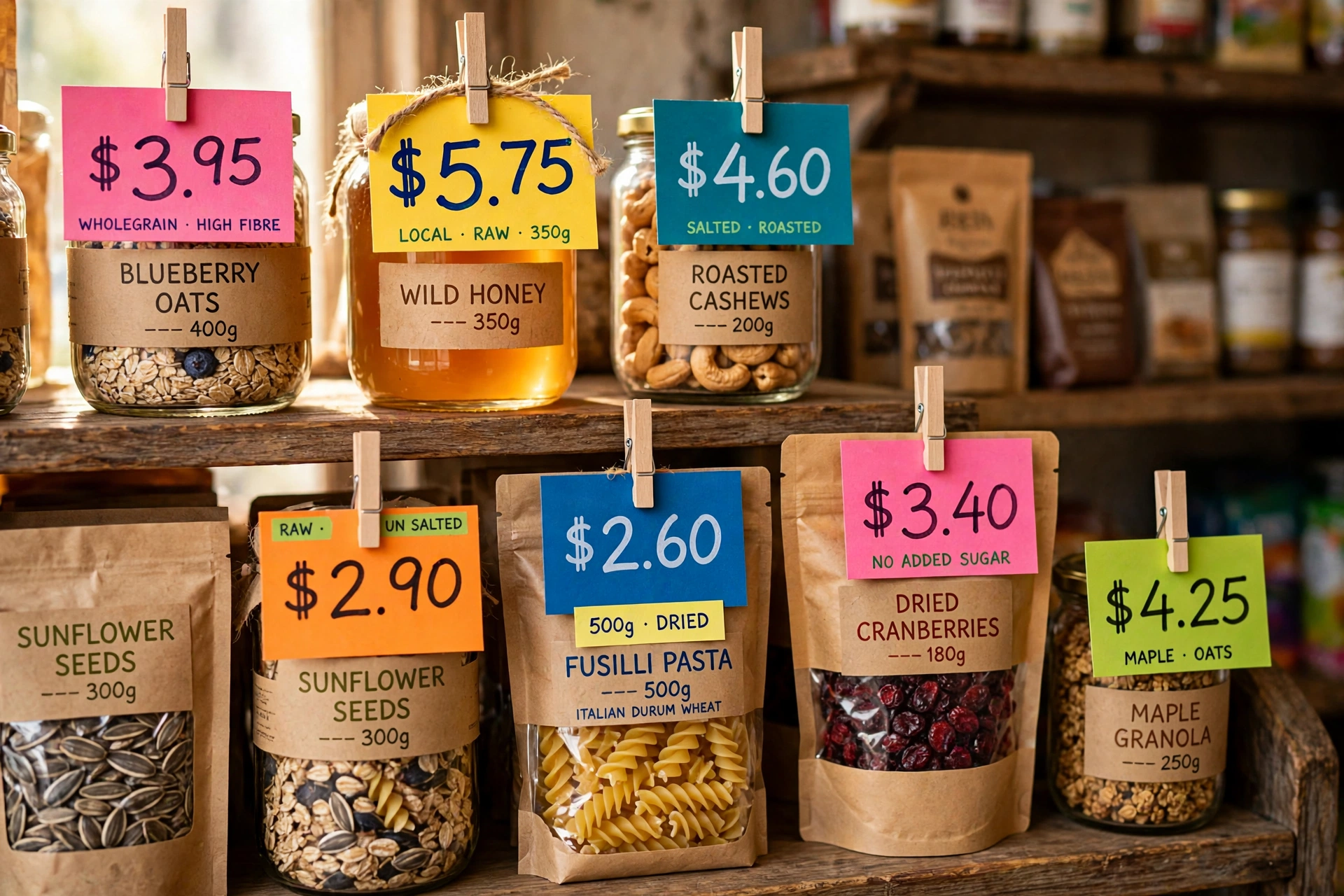
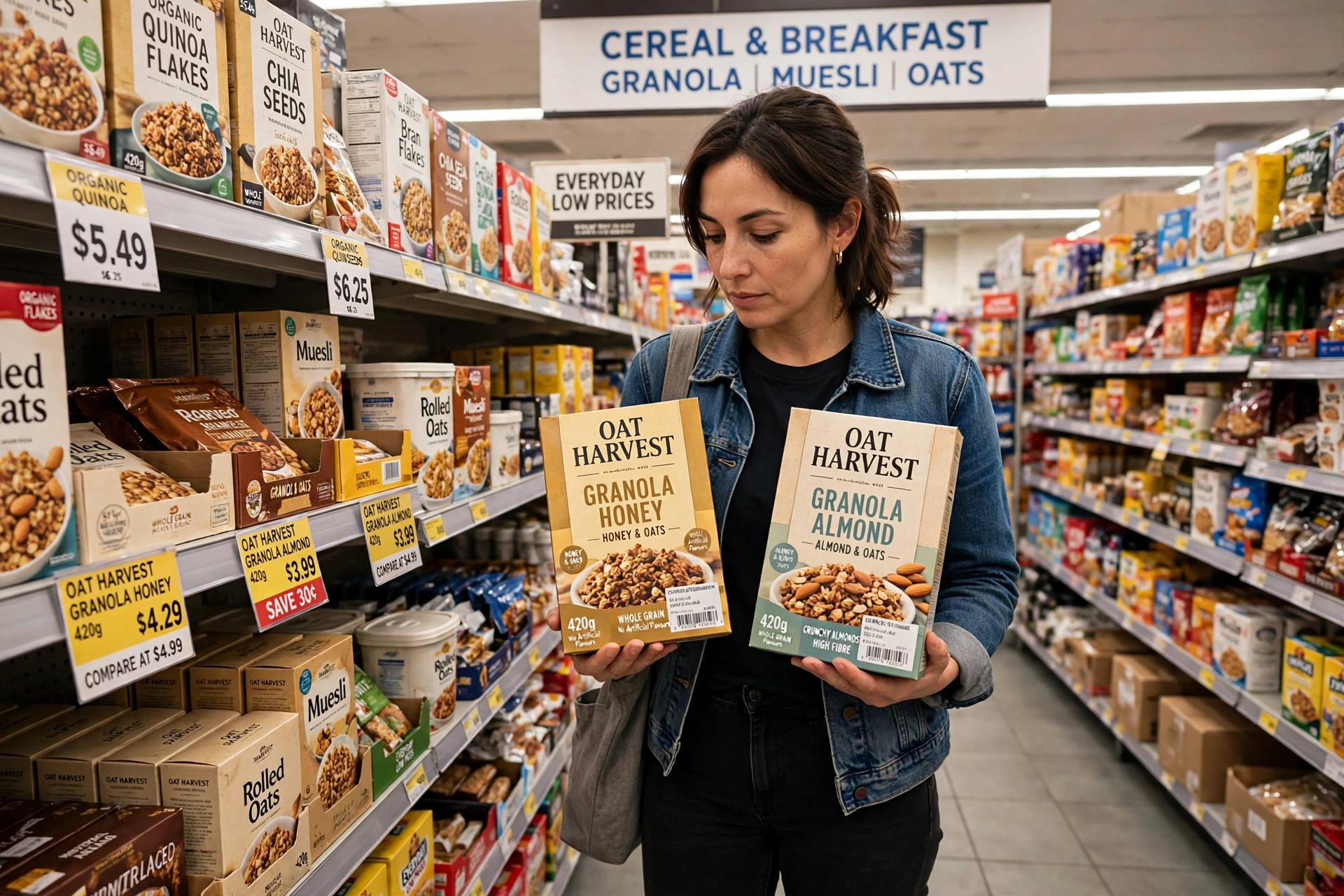
Size can trick you too. A big pack is not always better value than a small one. Sometimes the big pack costs more per gram, or per litre, than the small pack, and the shop is counting on you assuming bigger means cheaper. The little shelf label often shows the price per 100 grams or per kilogram. That small number is your best friend — compare it, not the big price on the front. None of these tricks makes a shop dishonest. They are simply ways of guiding your eye and your hand. But once you know them, they lose much of their power.
Simple Tips for Shoppers
Now for the useful part. You cannot set the prices, but you can shop around them. Here are a few habits that really help.
First, learn the price of the things you buy most: milk, bread, eggs, rice, coffee, soap. When you know the normal price, you can spot a real bargain in a second, and a fake one just as fast. You do not need to memorise a hundred prices. Ten or twelve items are enough.
Second, compare before you buy, especially for big items. A quick search on your phone can tell you if the same television or shoes are cheaper in another shop. For a weekly food shop, compare the total, not one item. Learn which shop is best for your main shop. A simple guide to saving money on groceries can help you build this habit step by step.
Third, wait a day before buying anything you did not plan to buy. This is the single best tip in this whole article. Put the item back, or leave it in your online basket, and sleep on it. If you still want it tomorrow, and you can afford it, buy it with a clear mind. If you forgot about it, it was never a real want.
Fourth, buy out of season when you can. Winter coats are cheapest in late winter, when shops need the space for spring clothes. If you can buy next winter’s coat in February and keep it until next winter, you can save real money.
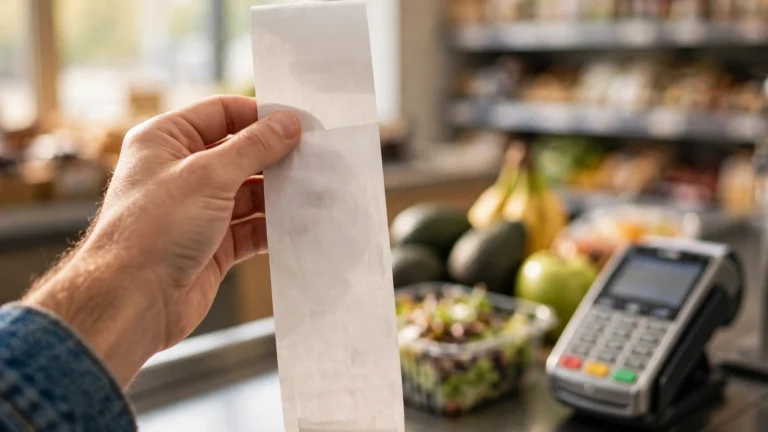
Fifth, check the price at the till. Shops make mistakes. A shelf price can differ from the till price, or a till can scan an item twice. A quick look at the screen before you pay takes ten seconds. If something looks wrong, say so there and then.
Sixth, do not pay for convenience every time. The corner shop is wonderful for one forgotten item, but if you buy your whole weekly shop there, you will pay much more than at a bigger shop. Use the small shop for small, urgent buys, and the big shop for the big weekly shop. And seventh, keep a little fun money in your plan. A plan with no treats will fail. Set aside a small amount each week for something you enjoy, and spend it without guilt. The point is not to buy nothing. The point is to buy on purpose, not by accident.
Frequently Asked Questions
Why does the same item cost more in a small shop than in a supermarket?
A small shop buys fewer items at a time, so it pays more per item, and it sells less each day, so each item carries a bigger share of the rent and wages. It also sells you closeness and speed: near your home, open late. You pay a little extra for that convenience.
Do shops really lose money on sale items?
Sometimes, yes, on purpose. A shop may sell a popular item very cheaply, or even at a loss, to bring people through the door, hoping they will buy other things too. This is called a loss leader. But most sale items still make a small profit — the shop is simply making less than usual to clear stock or beat a rival.
Why do so many prices end in 99?
Because our brains read the first number first. A price of $9.99 feels much cheaper than $10, even though the difference is only one cent. Shops have used this trick for a very long time, and it still works on most of us. The best defence is to round the price up in your head before you decide.
Why do prices go up a little at a time instead of all at once?
A big sudden rise would shock shoppers and push them to a rival. A few cents at a time is less likely to be noticed, and it lets the shop cover rising costs slowly. Over a year, those few cents add up. That is why it helps to check the price of your everyday items now and then.
Is the cheapest shop always the best shop to use?
Not always. The cheapest shop may be far away, so you spend money and time getting there. A nearer shop may cost a little more but save you an hour and a bus fare. Quality matters too: a cheap item that breaks in a month can cost you more than a dearer one that lasts for years.
How can I tell if a sale price is a real bargain?
Ask three questions. Did I want this item before I saw the sale? Was the old price honest — did the item really sell at that price for a fair while? And can I afford it without borrowing or missing a bill? If the answer to all three is yes, it is a real bargain. If the sale changed your plan rather than your price, walk away.
More from Zorium Daily
- What Is a Discount and How Does It Work?
- Why Do Prices Go Up? Inflation Explained in Simple Words
- How to Save Money on Groceries Without Eating Less
- How to Stop Impulse Buying Without Feeling Deprived
The next time you pick up a packet of biscuits and look at the price, you will know what you are really looking at. It is not just a number. It is the cost of the item, the rent on the building, the wages of the people who work there, the fuel in the lorry that brought it, the tax, and a little profit so the shop can open again tomorrow. It is also a guess about what you will pay, and a glance at the shop across the road. Shops set prices with care, but you do not have to accept them without thinking. Learn your everyday prices, compare before you buy, and wait a day on unplanned buys. A price tag is not a mystery. Once you can read it, your money goes a little further.