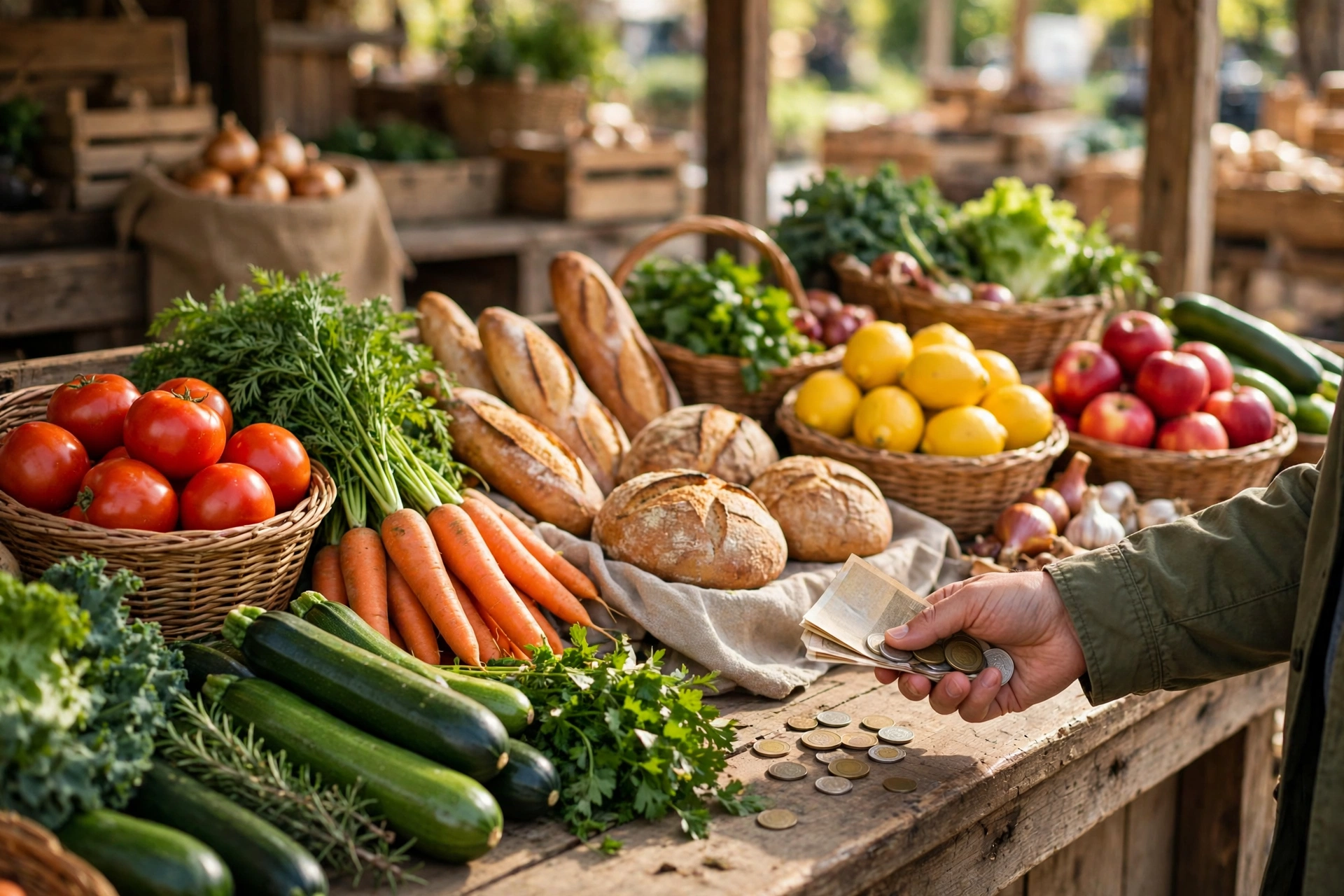
Why Do We Use Money Instead of Trading Things? Explained Simply
SUMMARY OF THIS ARTICLE
- Long ago, people traded things directly, swapping one good for another. This is called barter, and it works only when both people want what the other one has.
- Barter has three big problems: finding the right trading partner, agreeing on a fair value, and keeping goods that go bad or cannot be split into small pieces.
- Money fixes those problems because it works as a middle step: you sell what you have for money, then use the money to buy what you need, from anyone, at any time.
- Money does three jobs at once: it is a medium of exchange, a store of value, and a unit of account — a shared way to measure what things are worth.
- From shells and salt to coins, paper notes, and now cards and phones, money keeps changing shape, but the idea behind it has stayed the same for thousands of years.
The Basket of Apples Problem
Imagine you grow apples. Your trees had a wonderful year, and now you have ten baskets of apples sitting in your kitchen. You are tired of apples. What you really want is a pair of shoes, because your old ones have a hole in the sole and winter is coming.
So you walk to the market with a basket of apples and look for a shoemaker. You find one. He looks at your apples and shakes his head. He does not want apples. He already has apples at home, and what he really needs is firewood for his stove. Your apples are no good to him.
You walk on. You find a man selling firewood. He would love your apples, but he does not have any shoes. He has firewood, and you do not need firewood. You have apples, he has firewood, and neither of you has shoes. The market is full of people, full of goods, and yet you still walk home in your old shoes.
This little story is the whole reason money exists. Trading things directly sounds simple, and in a small village where everyone knows each other, it can work. But as soon as life gets a little bigger, a little busier, a little more complicated, direct trading starts to creak.
This article answers that question in plain words. What is barter, and where does it break down? What three jobs does money do? How did money grow from shells and salt into the notes and numbers we use today? And why, after thousands of years, do we still use it?
What Is Barter, in Simple Words?
Barter means trading one thing directly for another thing, with no money in between. You give something you have, and you get something you need. A farmer gives a sack of wheat to a fisher and takes home a basket of fish. A baker gives bread to a tailor and takes home a mended coat. Nobody counts coins. Nobody hands over notes. The goods themselves are the payment.
For a very long time, this was how most people lived. In small groups, where everyone knew what everyone else could make, barter worked well enough. If your neighbour kept goats and you kept chickens, you could agree that one goat was worth a certain number of chickens, and trade whenever you needed to. There were no banks, no coins, no prices written on tags. There was just a deal between two people, sealed with a handshake.
So if barter works, why did the whole world move away from it? The answer is that barter works well for simple trades between two people who happen to want each other’s goods. It starts to fail the moment you add more people, more goods, and more distance. Three problems show up again and again, in every place and every time, and money was the answer to all three.
Problem One: Finding the Right Person
The first problem with barter has a long name: the double coincidence of wants. That sounds like something from a textbook, but the idea is simple. For a barter trade to work, two people must want what the other one has, at the same time, in the same place. You want shoes. The shoemaker wants firewood. You have apples. Those wants do not match, so no trade happens.
Think about your own week. You earn your living by doing one job, but you need dozens of things: food, clothes, a bus ticket, a haircut, phone credit, medicine when you are ill. Under barter, you would have to find a person who both sells what you need and wants what you can offer. Your teacher wants your apples? Maybe. Your bus driver wants your apples? Perhaps not — he might want a new tyre for his bus, and you have no tyres to give him.
Money breaks this knot with one neat trick. You do not need to find a person who wants your apples and has shoes. You sell your apples to anyone who wants apples, and you take money. Then you take that money to the shoemaker, who is happy to take it, because he knows he can use it to buy firewood, or bread, or anything else he needs. Money turns one hard trade into two easy ones. The buyer of your apples does not need to be the seller of your shoes. Everyone can trade with everyone, and nobody has to match wants perfectly.
Problem Two: How Much Is It Worth?
The second problem is value. In a barter world, how do you know if a trade is fair? How many apples is a pair of shoes worth? How many chickens is a goat worth? How many loaves of bread is a haircut worth? Every pair of goods needs its own price, worked out fresh each time, and people will often disagree.
Imagine you want a coat, and you have eggs to trade. The tailor says the coat is worth two hundred eggs. You think it is worth one hundred. Who is right? There is no easy way to tell, because eggs and coats are such different things. Maybe the tailor had a bad week and needs eggs badly, so he accepts one hundred. Maybe you are in a hurry and agree to two hundred, then feel cheated all the way home. Without a shared measure, every trade becomes a long argument.
Money solves this by giving everything one shared measure. We call it a price. A pair of shoes costs forty dollars. A basket of apples costs five dollars. A loaf of bread costs two dollars. Now you can compare anything with anything, in seconds, because everything is measured in the same thing. You know at a glance that the shoes cost eight baskets of apples, and you can decide if that feels fair. Shops can write prices on tags. You can plan your week because you know roughly what things cost. That shared measure — economists call it a unit of account — is one of money’s quiet superpowers, and we barely notice it because it feels so natural.
Problem Three: Things Go Bad and Cannot Be Split
The third problem is about storing and splitting. Many of the things people trade do not keep well. Apples soften. Fish goes bad in a day. Milk sours. Bread goes stale. If your wealth is a pile of fish, you are rich in the morning and poor by the evening, because the fish will rot. You cannot save fish for next winter. You cannot put a basket of bread in a safe and take it out in five years. Barter wealth melts away.
Money does not rot. A coin in a jar today is still a coin in a jar next year. A note folded into a wallet keeps its value from one week to the next, as long as prices stay fairly steady. That is why people can save. A farmer can sell a good harvest, keep the money, and spend it slowly through the winter when there is nothing to sell. A young person can save a little each month for a bicycle, a course, or a first home. Saving is only possible because money holds its value over time. We call this job a store of value, and it is what turns a good week into security for a bad one.
Splitting is the other half of the problem. Some goods cannot be cut into small pieces. A goat is a whole goat. You cannot pay for a loaf of bread with half a goat — well, you could try, but the goat would not survive, and the baker would not thank you. A cow is worth far more than a haircut, so how do you pay the barber with a cow? You would have to find several friends who also want haircuts, or accept change in chickens and hope the numbers work out.
Money splits neatly. A dollar divides into a hundred cents. You can pay exactly the right amount, down to the last cent, for a sweet, a bus fare, or a house. You never have to overpay because your only coin is too big, and you never have to chop anything in half. That simple fact — that money comes in small, exact pieces — makes everyday shopping possible.

The Three Jobs Money Does
Put those three fixes together and you get the three jobs money does. They are worth naming clearly, because once you see them, you will spot them everywhere.
The first job is being a medium of exchange. That is a fancy way of saying money is the thing in the middle. You give your goods or your work, you get money, and you hand the money to someone else for what you need. Money is accepted by almost everyone, so it moves easily from hand to hand. It is the bridge between the person who has what you want and the person who wants what you have.
The second job is being a store of value. Money keeps its worth over time, so you can earn today and spend tomorrow, next month, or next year. You do not have to spend everything the moment you get it. You can wait, save, and choose. Without this job, every payday would be a rush to swap your pay for goods before it spoiled.
The third job is being a unit of account. Money gives everything a price in the same units, so you can compare, plan, and keep records. A shop can add up its sales. A family can write a budget. A country can measure its economy. None of that works without a shared measure.
A Short History: Shells, Salt, and Paper
Money did not appear in one day, in one place. It grew slowly, in many parts of the world, as people tried one thing after another and kept whatever worked. The story is a long one, but the shape of it is simple: people kept choosing things that were easy to carry, hard to fake, and easy to split.
In some places, the first money was shells. Cowrie shells were small, pretty, hard to copy, and easy to count, and they were used as money in parts of Africa, Asia, and the Pacific for hundreds of years. In other places, people used salt. Salt was precious because it kept food from going bad before fridges existed, and workers in some parts of the world were even paid in salt — which is where our word “salary” comes from, from the Latin word for salt. Beads, cloth, tea bricks, and animal skins all had their turn too. Each one worked for a while, in its own place, until something better came along.
Coins, though, were heavy. A trader carrying enough coins to buy a horse or a cart of rice needed a bag, a guard, and strong shoulders. That weight problem, in China, led to one of the cleverest steps in the whole story: paper money. Merchants left their heavy coins with a trusted agent and carried a paper receipt instead, and over time those receipts became money in their own right, backed by trust and by law. You can read the full story in our guide to who invented paper money — it is a tale of heavy copper, brave merchants, and a promise written on paper.
Paper notes spread slowly around the world, then faster and faster. A note was light, easy to carry, and easy to count. It worked because people trusted it: they trusted that others would accept it tomorrow, and that the government behind it would not print so many notes that each one became worthless. That trust is the real heart of paper money. The paper itself is worth almost nothing. The promise behind it is worth everything.
Why We Still Use Money Today
Money has changed shape many times, but we still use it for the same reasons our ancestors did. The world is far bigger now, and that makes money more useful, not less. You buy food grown in another country, clothes sewn on another continent, and a phone assembled from parts made in a dozen places. Try doing that with barter. What would you offer a phone maker in exchange for a phone? Your apples will not get you far.
Money also lets people specialise. In a barter world, everyone has to make a bit of everything, because you can only trade what you can make. With money, a person can spend years learning one skill — fixing teeth, writing software, baking bread — and earn money from that one skill, then use the money to buy everything else. The dentist does not need to grow wheat. The wheat farmer does not need to fix teeth. Money lets each person do what they are best at, and everyone ends up with more.
When Money Goes Wrong
It would not be honest to say money is perfect. Money works well when people trust it and its value stays fairly steady. When those things break down, life gets hard fast, and history is full of warnings.
The biggest danger is printing too much of it. If a government prints notes far faster than goods grow, each note buys less and less, and prices shoot up. This is inflation, and you can read more about why prices go up in our simple guide. In the worst cases, people have needed a wheelbarrow of notes to buy a loaf of bread. The money still existed, but its job as a store of value had failed, and people went back to trading goods directly, or to using another country’s money, until trust returned.
Money can also be unfair. It helps those who have it and leaves behind those who do not. A person with no money still needs food and shelter, and money alone does not solve that. That is why countries have safety nets — help for people who are ill, out of work, or struggling — and why kindness, sharing, and community still matter alongside money. Money is a tool, not a judge. It measures what things cost, but it cannot measure what they are worth to a human life.
Money Today: Cards, Phones, and Numbers
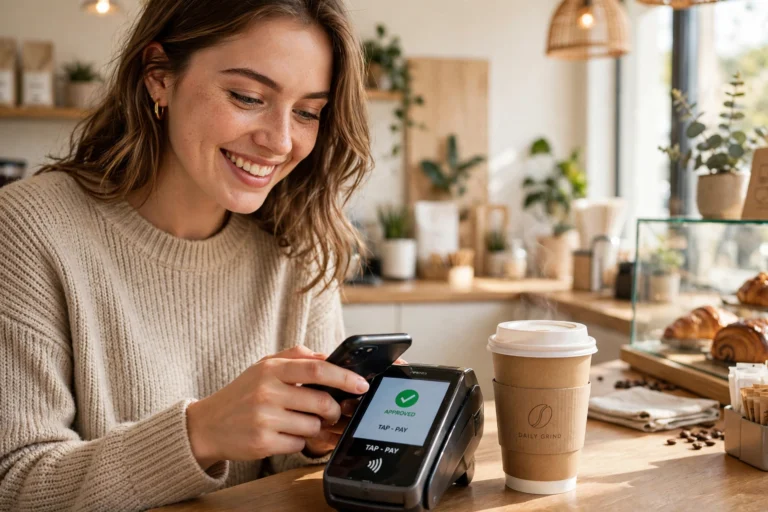
Look in your pocket. You may carry less paper money than your parents did, and your children may carry almost none. Most money today is not paper at all. It is numbers in bank accounts, moving from one account to another when you tap a card or scan a phone. The coins and notes are still there, but they are a small part of the whole.
Does that mean money has changed? The shape has changed, but the jobs have not. A card payment is still a medium of exchange — it sits in the middle of a trade, just like a coin did. Numbers in a bank account still store value, so you can save for later. Prices are still written in the same units, so you can compare and plan. The tool looks different, but it passes the same three tests: trade, save, measure.
Simple Habits for Using Money Well
Understanding why we use money is useful, but using it well is a skill of its own. A few small habits go a long way, and none of them needs a finance degree.
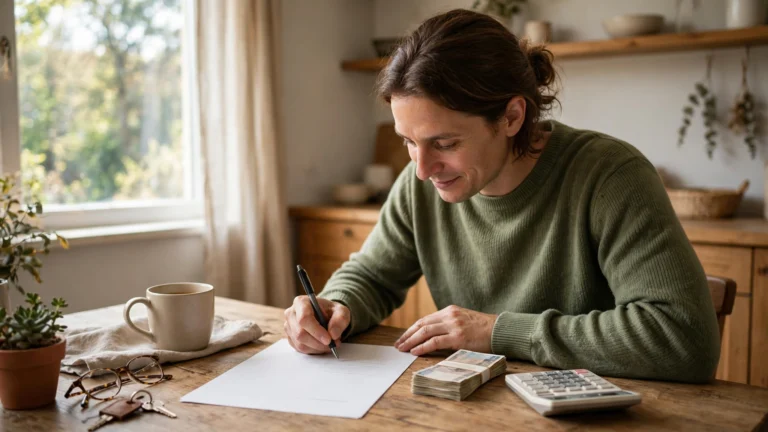
First, know what comes in and what goes out. A short look at your spending once a week tells you more than any lecture. Our guide to how to make a simple monthly budget walks through this step by step, and the first step is simply writing down the real numbers.
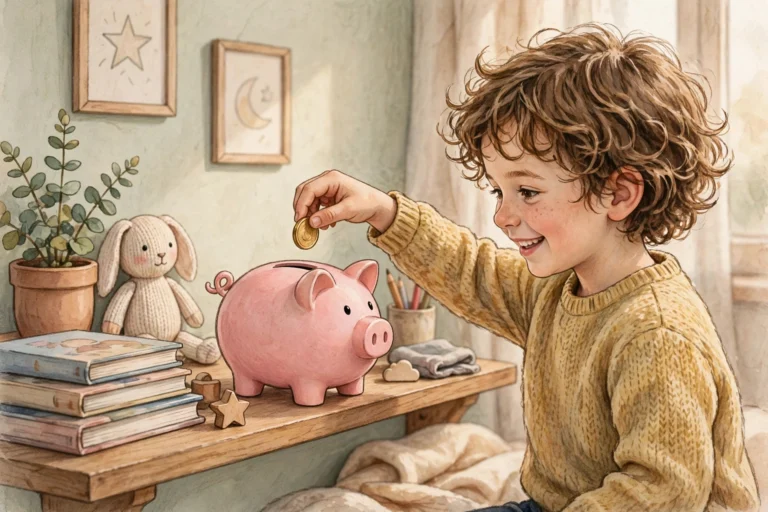
Second, pay yourself first, even a tiny amount. When money arrives, move a little into savings before the week eats it all. A coin jar on the shelf works. A separate savings account works better. The amount matters less than the habit.
Third, wait a day before buying something you did not plan to buy. Money makes buying so easy that the hardest part is often not buying. A night’s sleep is the cheapest filter there is. If you still want it tomorrow, buy it with a clear mind.
Fourth, keep your receipts for a little while, at least for bigger buys. A receipt is the proof of what you paid, and it makes returns and warranties far easier. It also shows you, in black and white, where your money actually went.
Fifth, compare before you buy, especially for bigger things. A discount feels good, but it is only a real saving if you wanted the item anyway and the old price was honest. Check the price in one more shop, or wait for a real sale, and your money will stretch further.
Frequently Asked Questions
What is barter, in simple words?
Barter is trading one thing directly for another thing, with no money in between. You give something you have, like apples or eggs, and you get something you need, like bread or shoes. It works best when both people want what the other one has, at the same time.
Why did people stop using barter for most things?
Because barter has three big problems. First, you must find a person who wants your goods and has what you need. Second, it is hard to agree on a fair value when two goods are very different. Third, many goods go bad, and some cannot be split into small pieces. Money fixes all three problems at once.
What are the three jobs of money?
Money works as a medium of exchange, which means it sits in the middle of trades; a store of value, which means it keeps its worth over time so you can save; and a unit of account, which means it gives everything a price in the same units, so you can compare and plan.
What was used as money before coins and paper notes?
Many things: cowrie shells, salt, beads, cloth, tea bricks, and animal skins were all used as money in different parts of the world. People chose things that were easy to carry, hard to fake, and easy to count or split. Metal coins came later, because metal lasts and can be weighed and stamped.
Is money today mostly paper?
No. Most money today is numbers in bank accounts, moved by cards and phones. Paper notes and coins are still used, but they are a small part of all the money in the world. The shape has changed, but the three jobs — trade, save, measure — have stayed the same.
Could we ever go back to barter?
For small, friendly swaps, barter never went away — children swap snacks, neighbours swap favours, and people swap clothes and books. But for a whole town or country, barter would be far too slow and complicated. With millions of people and millions of goods, we need a shared tool, and money is the tool that works.
More from Zorium Daily
- Who Invented Paper Money?
- What Is a Receipt and Why Do Shops Give You One?
- What Is a Discount and How Does It Work?
- Why Do Prices Go Up? Inflation Explained in Simple Words
The next time you hand over a note, tap a card, or check your balance on your phone, remember what is really happening. You are using a tool that thousands of years of trial and error polished into shape — a tool that lets a farmer sell apples to a stranger, lets a shoemaker buy firewood from someone he has never met, and lets you save a little today for a need tomorrow. Barter asked two strangers to want exactly what each other had. Money asks only that we agree on one shared measure, and then it gets out of the way. That is why we use it instead of trading things: not because trading is wrong, but because money lets far more people trade far more easily, and that simple change built the world we shop in today.