Why Can We Sometimes See the Moon During the Day?
Introduction
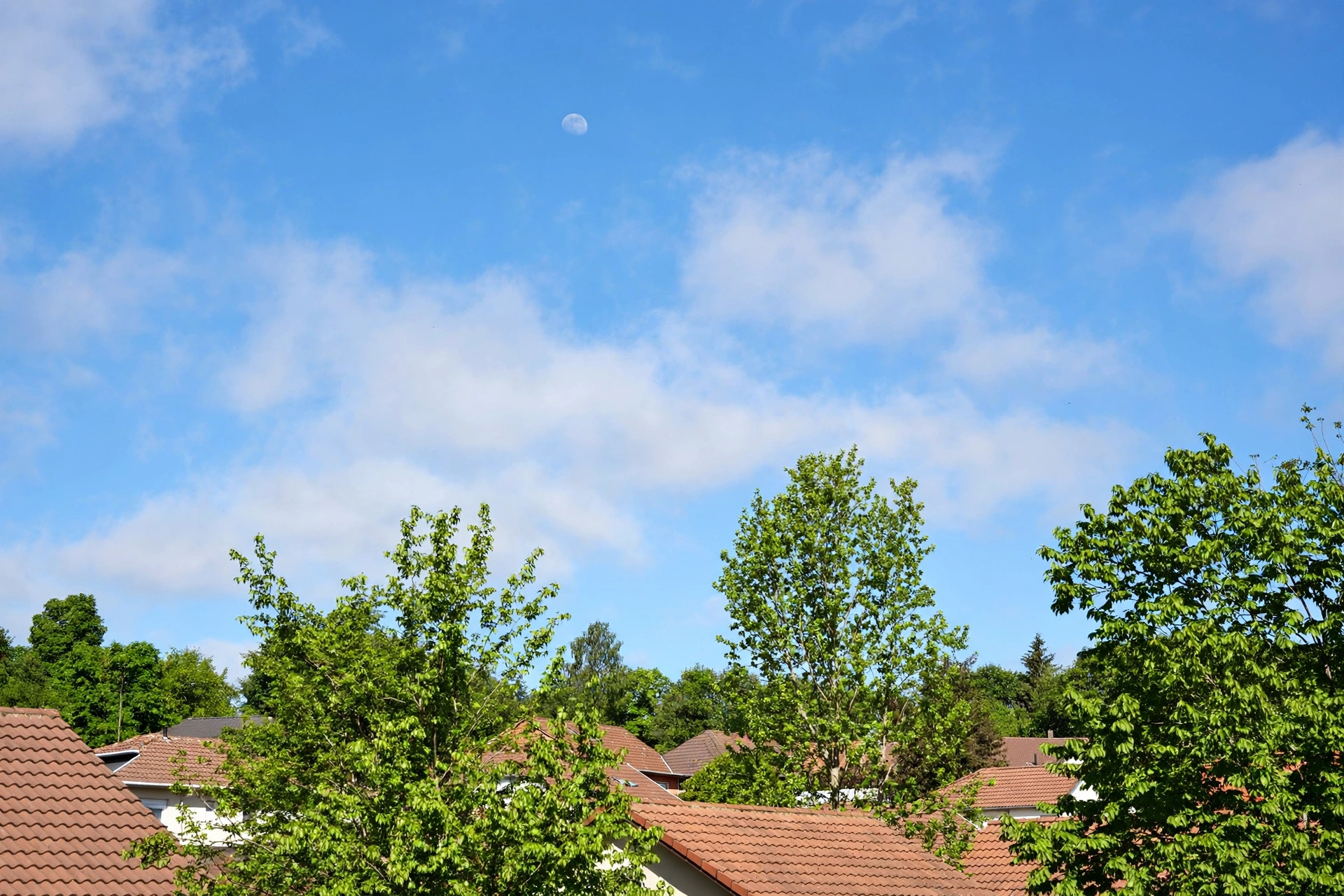
Look up at the sky on a clear afternoon. You expect to see the Sun, clouds, and maybe a bird. But sometimes, you also see the Moon. It looks pale, almost like a ghost, hanging in the blue sky. It can feel strange. Isn’t the Moon supposed to come out at night?
The Moon is not only a night-time object. It is in the sky during the day, too, on many days of the month. We just do not always notice it, because the Sun is so bright. On some days, the Moon is high, bright, and easy to see. On other days, it is close to the Sun, or below the horizon, and we cannot see it at all.
In this article, we will explain, in simple words, why we can sometimes see the Moon during the day, what makes it visible or invisible, and when is the best time to look for it.
SUMMARY OF THIS ARTICLE
- The Moon orbits Earth, and it is in the sky during the day on many days, not only at night.
- We can see the Moon in daylight when it is above the horizon, away from the Sun’s glare, and bright enough to stand out against the blue sky.
- The Moon’s phases change how bright and how visible it is. A full Moon is bright and easy to see, while a new Moon is invisible.
- Sunlight, clouds, and air pollution affect daytime Moon visibility. Clear, dry days are best for spotting it.
- The best times to see the Moon during the day are often in the morning or late afternoon, when the Sun is lower and the sky is less bright.
The Short Answer
Yes, you can see the Moon during the day. In fact, the Moon is in the daytime sky on many days each month.
The Moon orbits Earth, and as Earth turns, the Moon moves across the sky, just like the Sun. Sometimes the Moon is above the horizon while the Sun is also up. When that happens, and when the Moon is bright enough, we can see it, even though the sky is blue and bright.
Think of it this way: the Moon does not switch off during the day. It is always there, reflecting sunlight. We just need the right conditions to notice it. If the Moon is high, bright, and far from the Sun in the sky, it stands out. If it is close to the Sun, or if the sky is hazy, it can be hard to spot.
The Moon Is Always in the Sky, Not Only at Night
Many people think the Moon only comes out at night, like stars. That is not true. The Moon is in the sky for about 12 hours a day, on average, just like the Sun. Sometimes those 12 hours are mostly at night. Sometimes they are mostly during the day. Sometimes they are split between day and night.
The Moon’s position depends on its phase, which is the shape we see, and on the time of month. Around full Moon, the Moon rises in the evening and sets in the morning, so it is mostly a night-time Moon. Around new Moon, the Moon rises in the morning and sets in the evening, so it is mostly a daytime Moon, but it is also close to the Sun and hard to see.
In between, the Moon is up for part of the day and part of the night. That is why you often see the Moon in the late afternoon, or in the morning, when it is in its first quarter or last quarter phase.
Why the Moon Shines at All
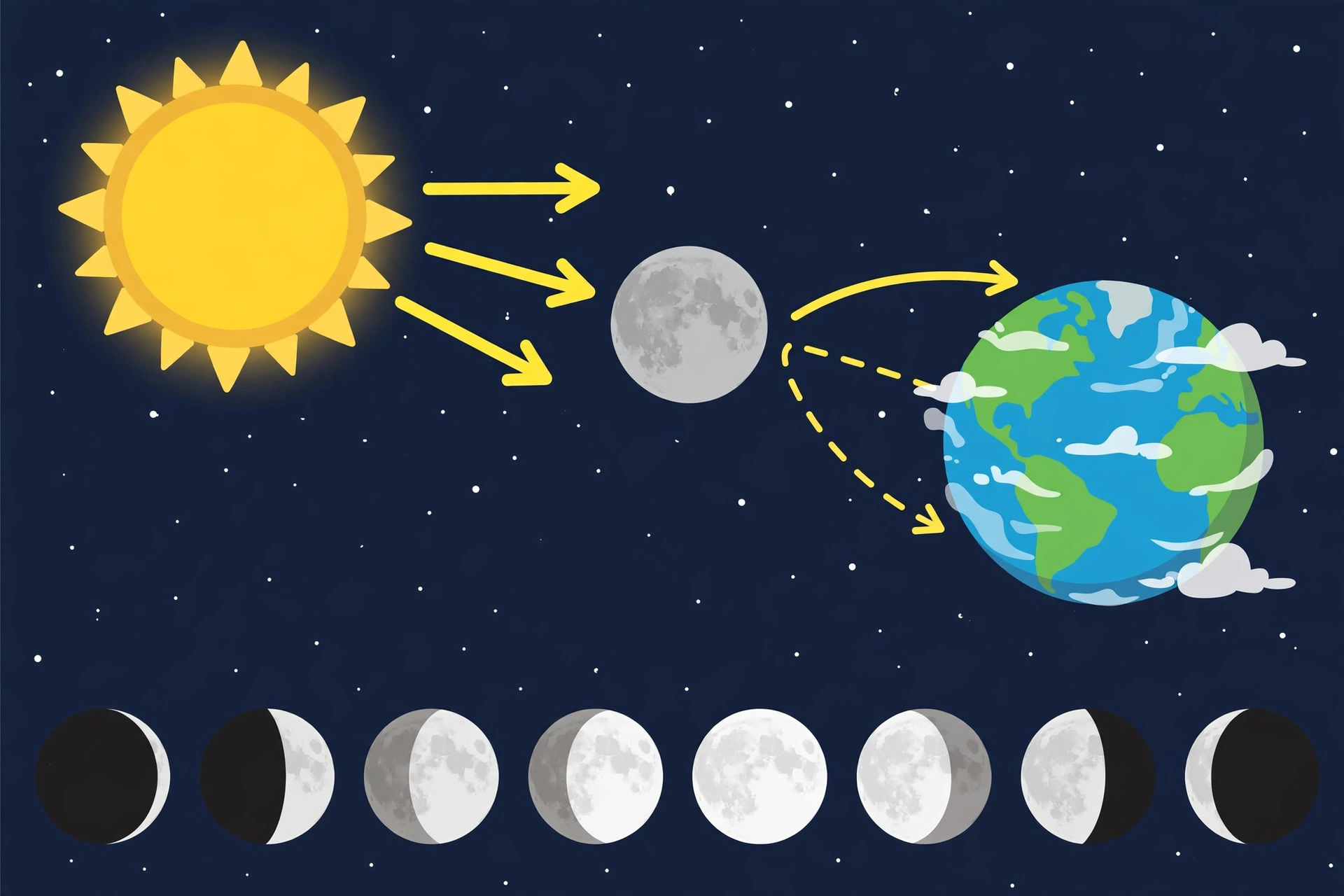
The Moon does not make its own light. It shines because it reflects sunlight. The Sun lights up the Moon, and the Moon bounces some of that light back to Earth. That is why we can see the Moon, day or night, as long as the Sun is lighting it and it is above our horizon.
During the day, the sky is bright because sunlight scatters in Earth’s atmosphere, making the sky look blue. The Moon must be bright enough to stand out against that blue. On a clear day, the Moon can be bright enough. On a hazy day, it can fade into the background.
At night, the sky is dark, so even a faint Moon stands out easily. During the day, the Moon competes with the bright sky. That is why daytime Moons often look pale or white, rather than bright silver. They are still reflecting sunlight, but the contrast with the sky is lower.
The Role of the Moon’s Phases
The Moon’s phases are the key to when you can see it during the day.
- New Moon: The Moon is between Earth and the Sun. The side facing Earth is dark, and the Moon is close to the Sun in the sky. It is almost impossible to see, day or night.
- First Quarter: Half the Moon is lit. The Moon rises around midday and sets around midnight. It is easy to see in the afternoon and early evening.
- Full Moon: The whole face of the Moon is lit. The Moon rises at sunset and sets at sunrise. It is mostly visible at night, but you can sometimes see it just before sunrise or just after sunset, low on the horizon.
- Last Quarter: Half the Moon is lit again, but the other half. The Moon rises around midnight and sets around midday. It is easy to see in the morning.
So, if you want to see the Moon during the day, look for it around first quarter in the afternoon, or around last quarter in the morning. Those are the best times, because the Moon is high, bright, and away from the Sun’s glare.
Why the Moon Is Sometimes Hard to See During the Day
Even though the Moon is often in the daytime sky, we do not always see it. Several factors make it harder to spot.
Sunlight and glare: If the Moon is close to the Sun in the sky, the Sun’s glare can wash it out. The Moon is still there, but the bright light around the Sun makes it hard to see.
Clouds: Clouds can hide the Moon, just like they hide the Sun. On a cloudy day, you may not see the Moon at all, even if it is above the horizon.
Air pollution and haze: Dust, smoke, and pollution in the air scatter sunlight and make the sky whiter and hazier. That reduces contrast and makes a pale Moon harder to see.
Low brightness: Around new Moon, the Moon is dark and close to the Sun, so it is almost invisible. Around full Moon, the Moon is bright, but it is mostly up at night, so you are less likely to see it during the day.
We are not looking: Sometimes, we simply do not look up. The Moon can be in the sky, pale and quiet, and we walk past without noticing it, because we are focused on the ground, on our phones, or on other things.
The Best Times to See the Moon During the Day
If you want to try spotting the daytime Moon, here are some tips.
- Look in the morning, around last quarter, when the Moon is high in the west.
- Look in the afternoon, around first quarter, when the Moon is high in the south or east.
- Choose a clear, dry day, with little haze or pollution.
- Look away from the Sun, so glare does not hide the Moon.
- Use a Moon phase app or calendar to know when the Moon will be up during the day.
Once you start looking, you may be surprised how often you see the Moon during the day. It becomes a fun habit, like spotting a familiar friend in an unexpected place.
Why Does the Moon Sometimes Look Orange or Pink?
When the Moon is low on the horizon, just after rising or just before setting, it can look orange, pink, or even red. This happens for the same reason sunsets look orange. Light from the Moon travels through more of Earth’s atmosphere when the Moon is low, and the atmosphere scatters blue light, leaving warmer colours.
During the day, the Moon is usually higher and looks white or pale, because the light travels through less atmosphere. But near sunrise or sunset, a daytime Moon can also take on a warm colour, which makes it even more striking against a blue or pink sky.
Does the Moon Affect Daytime?
The Moon’s presence during the day does not make the day brighter in a noticeable way. The Sun is far brighter than the Moon, so the Moon adds only a tiny amount of light. You would not notice the difference if the Moon were not there.
However, the Moon does affect Earth in other ways, even during the day. Its gravity pulls on Earth’s oceans, causing tides. Tides happen whether it is day or night, and they are caused by the Moon’s pull, along with the Sun’s pull. So, even when you cannot see the Moon during the day, it is still affecting the sea.
How the Moon Affects Earth, Even in Daylight
The Moon’s gravity is the main cause of tides. As the Moon orbits Earth, it pulls water towards it, creating a bulge. Earth turns under that bulge, so most coastal places experience two high tides and two low tides each day.
The Sun also affects tides, but its effect is smaller, because the Sun is much farther away, even though it is much bigger. When the Sun, Moon, and Earth line up, around new Moon and full Moon, tides are higher, called spring tides. When they are at right angles, around first and last quarter, tides are lower, called neap tides.
So, the next time you see the Moon during the day, remember that it is not just a pretty sight. It is also pulling on the oceans, even while the Sun is shining.
Why Seeing the Moon During the Day Matters
Seeing the Moon during the day is more than a curiosity. It helps us understand how Earth, Moon, and Sun work together. It shows that the Moon is not a night light that switches on and off. It is a real world, orbiting Earth, reflecting sunlight, all the time.
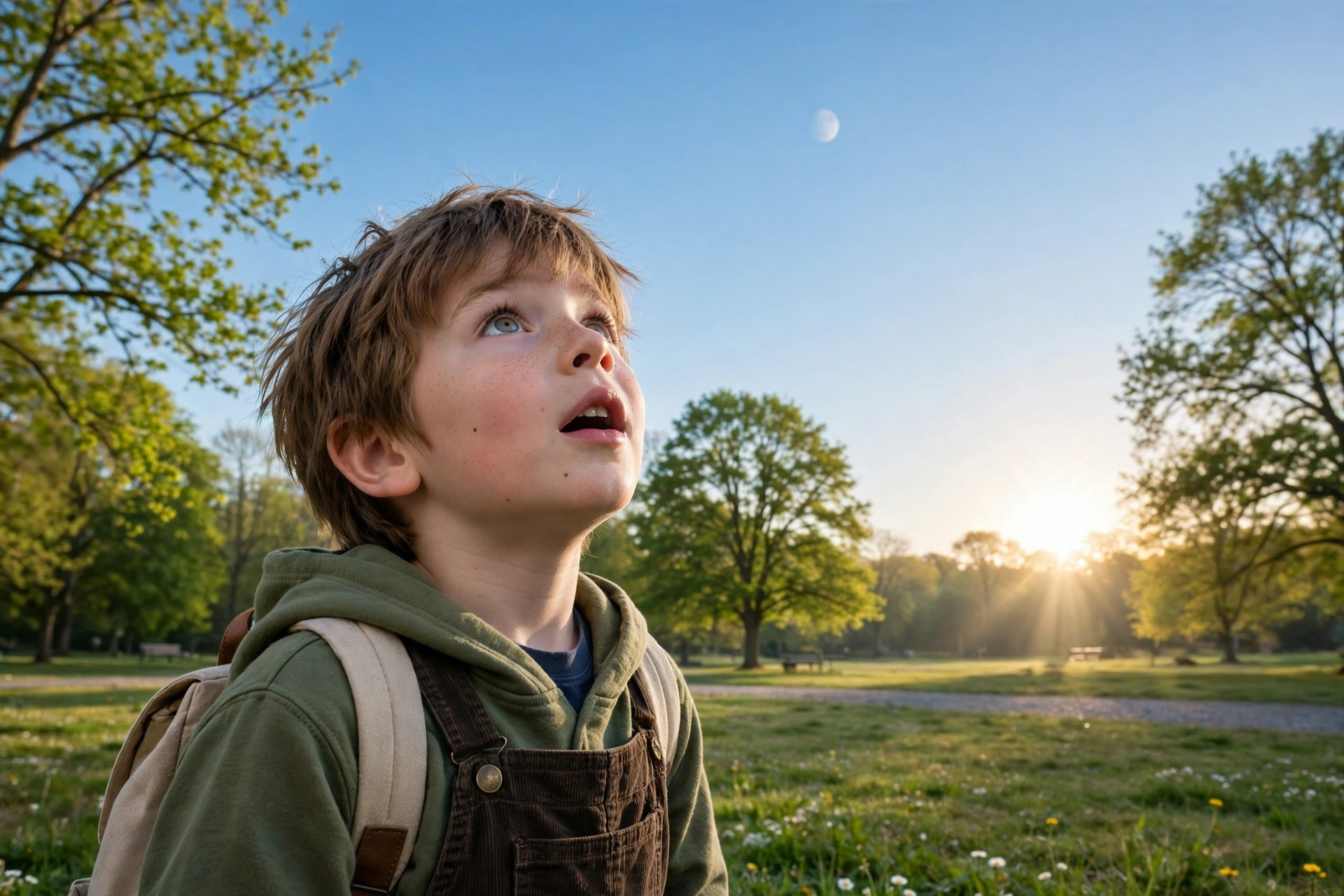
For children, spotting the daytime Moon can be a first step into astronomy. It raises questions: Why is the Moon there? Why does it change shape? Why is it sometimes bright and sometimes faint? Those questions lead to learning about orbits, phases, and tides.
For adults, it is a reminder to look up. In a busy day, we often forget the sky. A pale Moon in a blue sky can stop us for a moment, and remind us that we live on a planet in space, with a Moon that has been with us for billions of years.
Frequently Asked Questions
Can I see the Moon during the day every day?
No, not every day. The Moon is above the horizon during the day on many days, but it is not always bright enough or far enough from the Sun to see easily. Around new Moon, it is almost invisible. Around first and last quarter, it is easiest to see during the day.
Is it normal to see the Moon during the day?
Yes, it is completely normal. The Moon orbits Earth, and it is in the sky for about half of each day, on average. Sometimes that half is mostly at night, sometimes mostly during the day. Seeing it during the day is a normal part of its orbit.
Why does the daytime Moon look white and faint?
The daytime sky is bright blue, because sunlight scatters in the atmosphere. The Moon must compete with that brightness. It looks white and faint because the contrast between the Moon and the sky is lower than at night, when the sky is dark.
Can I see the Moon during the day with my eyes only?
Yes, you do not need a telescope or binoculars. On a clear day, the Moon is easy to see with your eyes only, especially around first and last quarter. Binoculars can help you see details, like craters, but they are not necessary.
Does the Moon look different during the day than at night?
The Moon itself does not change, but it can look different because of the background. At night, it looks bright silver against a dark sky. During the day, it looks pale white against a blue sky. Near the horizon, it can also look orange or pink, for the same reason sunsets look orange.
Why do I sometimes see the Moon in the morning and sometimes in the afternoon?
It depends on the Moon’s phase. Around last quarter, the Moon is up in the morning. Around first quarter, it is up in the afternoon. Around full Moon, it is up mostly at night. The Moon moves across the sky as the month goes on, so the best time to see it changes.
Is the daytime Moon visible in winter?
Yes, the daytime Moon is visible in all seasons, including winter. In winter, the Sun is lower and the days are shorter, but the Moon still follows its orbit. Clear, cold winter days, with dry air, can actually be very good for spotting the Moon, because the air is clearer and the sky is less hazy.
More from Zorium Daily
Read more on related topics: Why Do We Have 12 Months in a Year?, How Do Noise-Cancelling Earbuds Work?, and How to Make a Simple Monthly Budget That Actually Works.