Why Did People Start Wearing Shoes? Explained Simply
SUMMARY OF THIS ARTICLE
- People first covered their feet to stop sharp stones, hot sand, and cold snow from hurting them.
- The oldest shoes we still have are about 5,500 years old, but toe bones hint people wore foot coverings much earlier.
- Early shoes were simple things made from leather, grass, bark, and animal fur.
- Over time shoes also became a sign of wealth, work, and style.
- Today shoes still do the same first job: they protect our feet and help us walk far.
Look Down at Your Feet for a Second
You have probably noticed this without thinking about it. You put your shoes on in the morning, and you forget about them until they pinch, or get wet, or you kick them off at home. They feel that normal. But think of it like this: for most of human history, there were no shoe shops, no laces in bright colours, no sizes on a box. There were just bare feet on rough ground.
And bare feet hurt. Step on a small sharp stone with no shoes on, and you know it right away. Ouch. Now picture doing that all day, every day, while you also had to find food and water. That was life long ago.
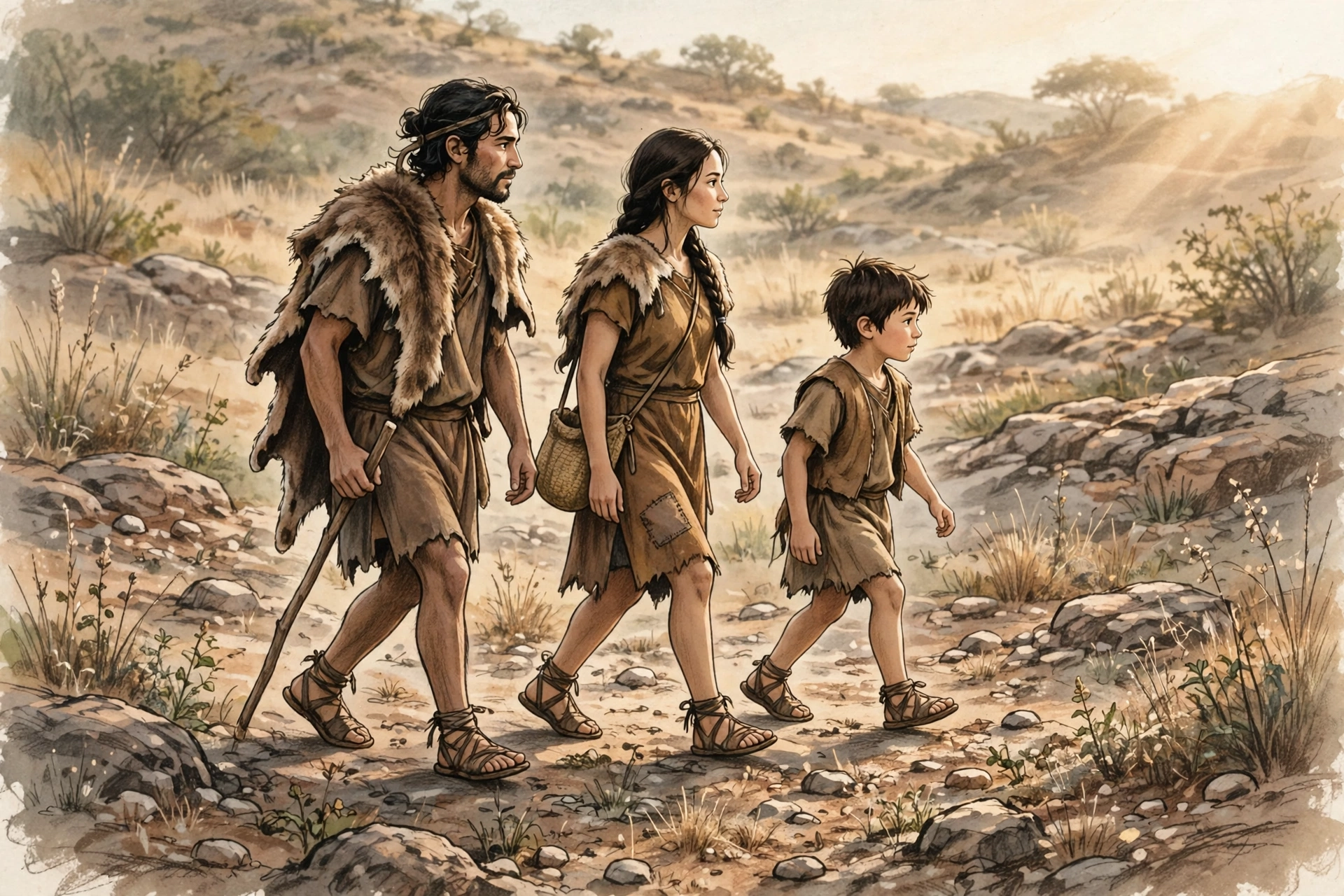
So people did something clever. They wrapped their feet up. A flat piece of animal skin. A mat of woven grass. A strip of bark. Tie it on, walk on it, and the ground hurts a lot less. That was the first shoe. Not pretty. Not fancy. Just useful.
This is the story of how that simple idea grew into the shoes we wear today.
Sharp Stones, Hot Sand, and Cold Snow
Here is the plain truth: the ground is not kind to feet.
A sharp stone can cut you. A thorn, that is a small sharp point on a plant, can poke right into your skin. And a little cut was a big deal long ago. There were no chemists on every corner, no clean bandages in a box. If dirt got into a cut, it could go red and swollen and sore. That is what an infection is — germs, tiny living things you cannot see, making a cut worse. A sore foot meant you could not walk. And if you could not walk, you could not hunt or gather food. So a shoe was not about comfort. It was about staying alive and fed.
Heat was just as bad. Have you ever stepped onto hot sand at a beach and hopped straight back? Now think of a desert at midday. The sand there can burn bare skin in seconds. A thick piece of leather between your foot and that sand made all the difference.
Cold was the other way round. In snowy places, bare toes go numb fast. Numb means you cannot feel them at all. And numb toes can get damaged by frost, which is freezing cold that harms skin. Wrapping a foot in fur, with the soft warm side in, kept the cold out. Simple, but it worked.
Wet ground caused trouble too. Walk in mud all day and your skin goes soft and sore. Small cuts open up more easily. A shoe kept the foot a bit drier and a bit cleaner. And here is something people forget: shoes let you walk farther. With your feet covered, you could walk for hours over rough land, follow animals, and carry food home from far away. A shoe was a travel tool, a bit like a bag or a walking stick.
The Oldest Shoes Anyone Has Found
So how do we know any of this? Two kinds of clues. The shoes themselves, and the bones of the people who wore them.
The oldest shoes that still exist were found in a cave in Armenia, a country in western Asia. They are around 5,500 years old. One piece of leather, shaped around the foot, tied with leather laces. Grass stuffed inside, most likely to keep the foot warm and to make the shoe fit better. When scientists found them, they were surprised. The leather was soft. The shape was careful. Whoever made those shoes knew what they were doing.
But people almost certainly wore shoes long before that. Grass and thin leather rot away — they break down and vanish over time — so most very old shoes are gone for good. That is where bones come in.
Here is a neat little fact. When you wear shoes for years, the small bones in your toes change shape a little. They get thinner and weaker than the toes of someone who always walks barefoot, because the shoe does some of the work the toes used to do. Scientists looked at very old skeletons, the bones of people who died long ago, and saw this change in toe bones from about 40,000 years ago. That hints people were covering their feet that far back. It is not hard proof, but it is a strong hint.
Old footprints help too. A footprint is a mark left by a foot in soft ground that later turned hard. Some very old footprints show a foot shape with no toe marks, which may mean the person had something on their feet. Put the clues together and you get a clear picture: shoes are far older than writing, farming, or cities. They are one of the oldest things humans ever made.
Made From Whatever Was Close By
The first shoes were made from what was lying around. No factories. No shops. Just animal skins, plant fibres, wood, and bark.
Leather was a favourite. Leather is animal skin that has been cleaned and dried so it turns strong and lasts a long time. A hunter who killed an animal for food could use its skin for shoes as well. Cut it to shape, wrap it round the foot, tie it with thin strips. Tough stuff, and it could be made soft by working it with your hands and a bit of fat.
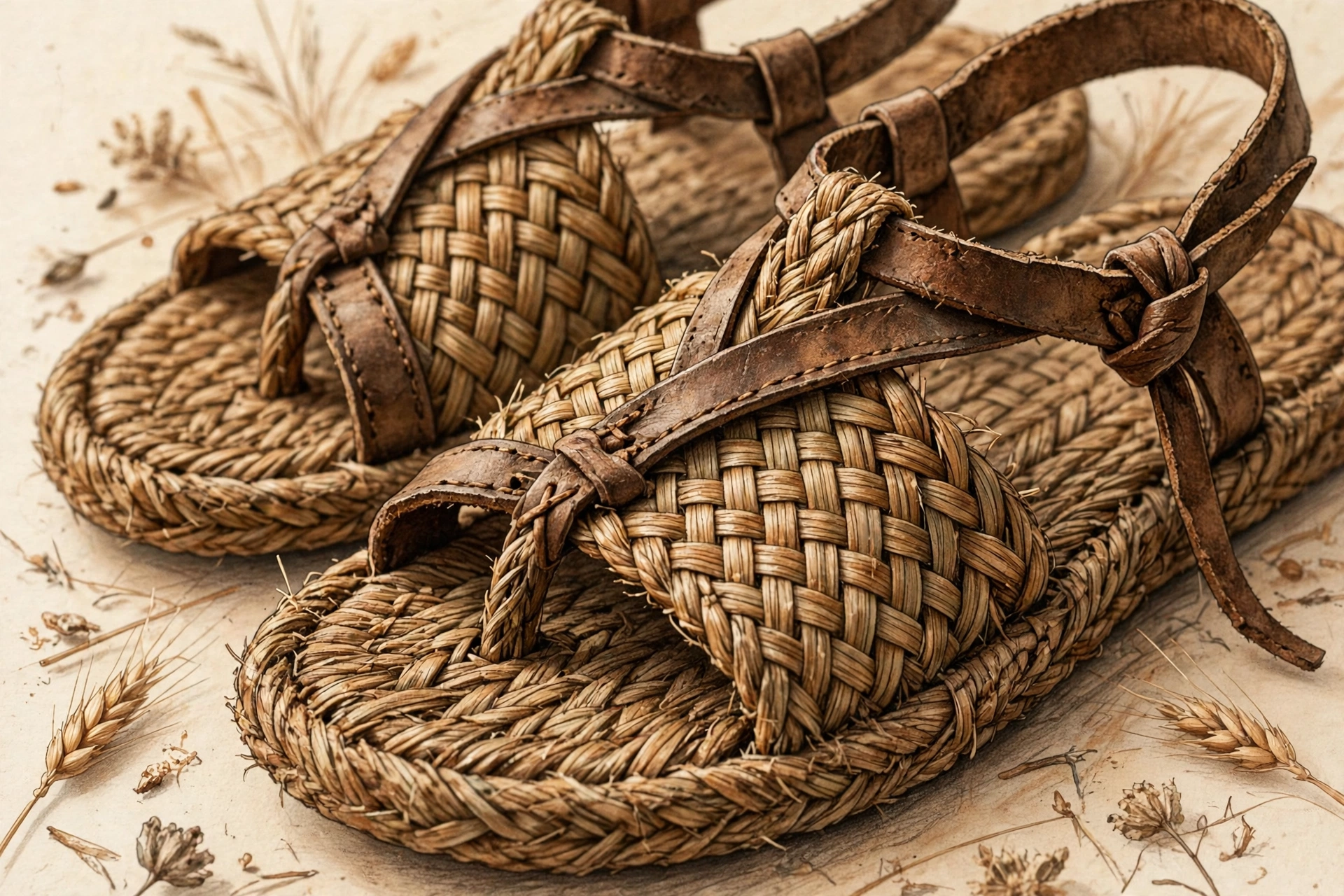
Where grass and reeds grew thick, people wove sandals. Weaving means crossing thin strips over and under each other to make a flat sheet. Grass sandals were light and cool, just right for hot weather. In Egypt, people made sandals from papyrus, a plant that grows near the Nile River, and from palm leaves. In parts of Asia, straw and rice plants did the same job.
Bark helped too. Bark is the outer cover of a tree. Peel it into flat pieces, tie it under your foot, and you have a sole — the bottom part of a shoe that touches the ground. Wood was used in later times for clogs, and even early people sometimes used a flat piece of wood as a sole.
And fur? In cold places, fur was gold. A shoe lined with fur kept a foot warm the way a blanket keeps you warm at night. In the far north, people made boots from reindeer skin with the fur still on the inside.
What I love about this is how smart it all was. No fancy tools, just sharp stones to cut leather, bone needles to sew, and clever hands. Yet the shoes worked. Each one was shaped by the place where its owner lived. Early humans were not simple or silly. They looked at their world, saw a problem, and fixed it with what they had.
Same Problem, Different Shoes
People did not invent shoes once, in one place. Different groups in different places most likely came up with foot coverings on their own, because they all faced the same sore feet. But the weather and land were different, so the shoes came out different too.
In Egypt, where it is hot and dry, people wore sandals. A sandal covers the bottom of the foot and leaves the top open, held on by straps. Cool feet, safe from hot sand. Rich Egyptians wore sandals of fine leather and even gold. Poor people wore papyrus sandals, or went barefoot.
Up in the cold north of Europe and Asia, people wore boots. A boot covers the foot and part of the leg. Boots made from animal skin kept snow and cold water out. In Siberia and Scandinavia, boots were lined with fur or stuffed with grass for warmth.
In China, early shoes were made from cloth and straw. Straw shoes were light and cheap, and farmers wore them in the fields. Later, cloth shoes with thick soles became common. In Japan, people wore wooden sandals called geta, with two little blocks underneath to lift the foot above mud and rain. Clever, right? Like little stilts for puddles.
Over in the Americas, Native peoples made moccasins. A moccasin is a soft shoe made from one piece of leather, sewn so the sole and the top are one part. They were light and quiet, which helped hunters move without making a sound. Different tribes decorated them with beads and patterns that said something about who they were.
In India, people wore sandals of wood and leather. In Africa, sandals were made from leather and grass. The idea was always the same — protect the foot — but the shape changed with the place. Honestly, old shoes are like little history books. Look at one closely and you learn about the weather, the animals, and the daily life of the people who made it.
When Shoes Became More Than Protection
At some point, shoes stopped being only about sore feet. They started to say something about the person wearing them.
Think about it. If you saw someone in soft, clean leather shoes with pretty patterns, you could guess they had money, or at least a good shoemaker. If you saw someone in rough straw shoes, caked in mud, you could guess they worked in the fields. Shoes became a kind of silent message. You did not have to say “I am rich” or “I am a farmer.” Your feet said it for you.
In ancient Rome, soldiers wore heavy sandals with thick soles and hobnails — little metal studs, like tiny nails, pushed into the sole so the shoe gripped the ground and lasted longer. Those sandals helped Roman soldiers march for miles, day after day, on roads their people built. Speaking of roads, people have always needed good paths to walk on, and the story of who built the first roads in the world goes hand in hand with the story of shoes. Roads and shoes grew up together: better roads meant longer walks, and longer walks meant people needed better shoes.
In China long ago, tiny shoes were a sign of high status for some women, which is a sad part of the story — beauty rules that hurt feet. In Europe, rich people in the Middle Ages wore shoes with long pointed toes, sometimes so long they had to tie the tips up with string. Silly? Maybe. But it showed they could afford shoes that were useless for work. That was the point. The shoe said, “I do not need to work in a field.”
Colour mattered too. Red shoes, purple shoes, shoes dyed bright blue — dyes, which are colours you soak into cloth or leather, were costly. A bright pair of shoes was like wearing a jewel on your feet. Ordinary people wore brown, black, or undyed leather, the natural colour of the skin or plant.
And jobs shaped shoes. A blacksmith, someone who makes things from hot metal, needed thick shoes that sparks could not burn through. A sailor needed shoes that gripped a wet deck. A dancer needed soft, light shoes. Little by little, one kind of shoe split into many kinds, each made for a different life.
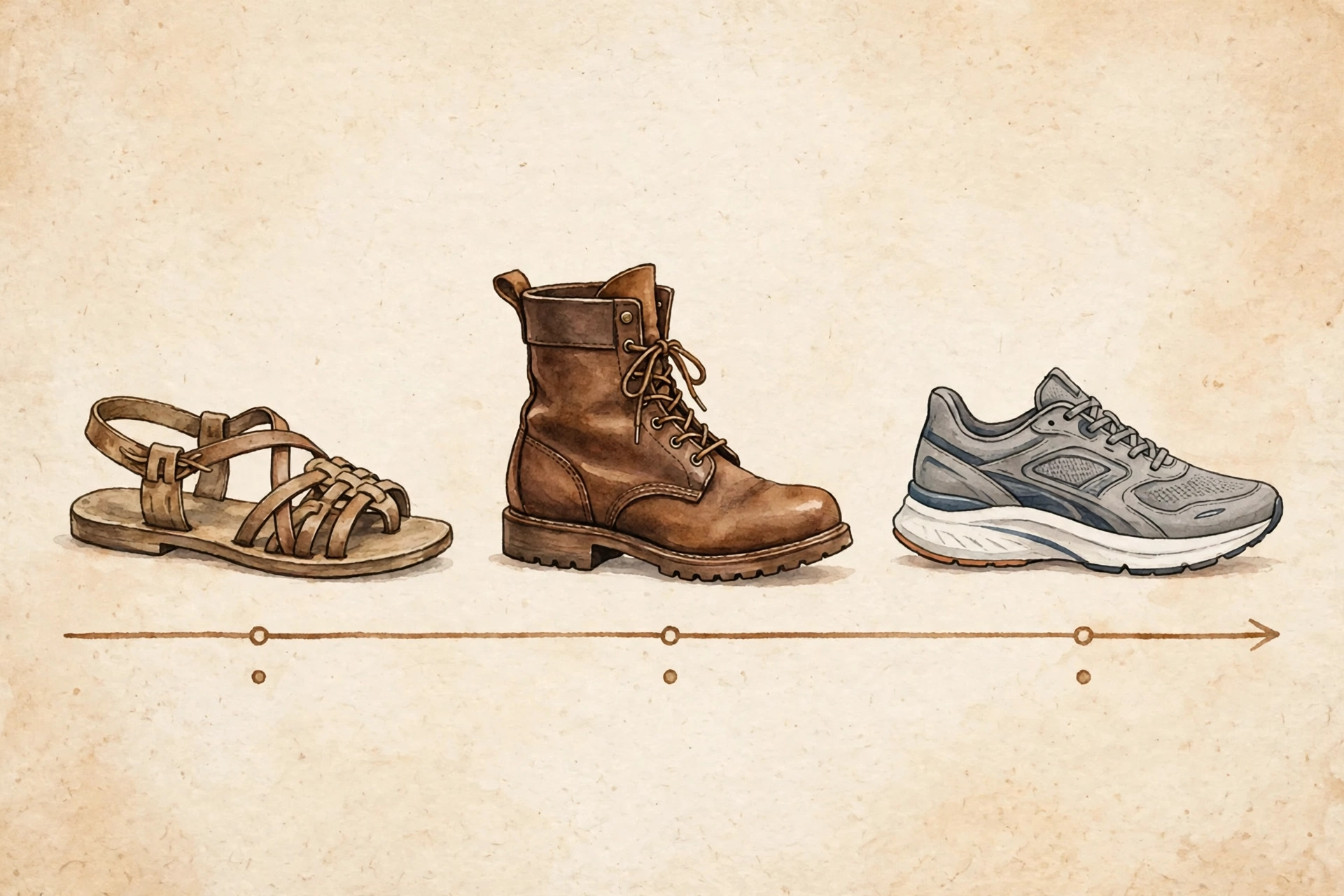
How Shoes Slowly Changed
Shoes did not change overnight. For thousands of years, they changed the way a river wears down a stone — slowly, bit by bit.
First, people got better at making them. A shoemaker, called a cobbler, became a real job in towns. Instead of every family making its own rough shoes, you could go to a cobbler who had the tools, the leather, and the skill. He would measure your foot — often by drawing round it on a piece of leather — and cut a shoe that fit just you. That was a big step up from wrapping a flat skin around your foot and hoping for the best.
Then came the heel. A heel is the raised part under the back of a shoe. It sounds small, but it changed how people walked and rode horses. Riders liked heels because they stopped the foot slipping through the stirrup, the metal loop you put your foot in when riding. Later, heels became fashion, and they have gone up and down in style ever since.
Laces, buckles, and buttons came and went like seasons. One century loved buckles. The next loved laces. Soles got thicker, then thinner. Toes got pointy, then round, then square. If you lined up shoes from each century, you would see a funny parade of shapes, a bit like looking at old photos of hairstyles.
The biggest change came with machines. In the 1800s, factories began making shoes with machines that could cut leather fast and sew soles on quickly. Shoes got cheaper. More people could own more than one pair. And sizes became standard — that is, a size 7 in one shop meant the same as a size 7 in another. Before that, every shoe was a one-off, made for one foot.
Rubber changed things again. A rubber sole grips the ground and bends with your foot. Suddenly you had trainers for running, boots for hiking, and soft shoes for playing. Today, scientists design shoes in labs, testing how they bend, how they bounce, and how they cushion your steps. A long way from a piece of bark tied with string, right?
Shoes for Work, Sport, and Play
Walk into a sports shop today and your head spins. Running shoes. Football boots. Hiking boots. Dance shoes. Work boots with steel toes. Each one is a tool, shaped for a job, just like those first leather wraps were.
A builder wears thick boots with a steel cap at the front, so a dropped brick does not crush their toes. A nurse wears soft, quiet shoes for long shifts walking hospital floors. A firefighter wears boots that can stand heat and water. It is the same old idea — protect the foot for the work you do — only the materials are new.
Sport is where shoes get really clever. A runner needs a light shoe that bounces a little with each step. A basketball player needs a shoe that grips the floor when they twist and jump. A footballer needs studs, little spikes under the sole, to grip wet grass. Take the studs away and the player slips all over the place. Give a hiker the wrong shoes and their feet will be covered in blisters, painful bubbles of skin caused by rubbing, by lunchtime.
And then there is play. You have probably noticed how kids pick shoes by colour and light-up soles before they care about anything else. That is fine. Shoes have always had a fun side. Even thousands of years ago, people decorated their shoes with beads, paint, and patterns. A shoe can protect you and make you smile at the same time.
Here is a small thought to carry with you. The next time you tie your laces, you are doing something people have done for thousands of years, in one form or another. Long walks, hard work, games in the park — shoes quietly make all of it possible. We rarely thank them. We should, at least a little.
Why We Still Wear Shoes Every Day
So why do we still wear them, when most of us walk on smooth floors and pavements? Because the old reasons never went away. They just changed shape.
Stones are still there, on paths and trails. Hot pavement in summer can still burn. Cold, wet mornings still chill your toes. Glass, nails, and sharp bits still hide on streets. Germs still love a small cut. Shoes still stand between your soft skin and all of that.
There is a health side too. Good shoes support your feet, which is a fancy way of saying they hold your foot in a healthy shape while you walk. Bad shoes can give you sore knees, sore backs, and blisters. That is why doctors and shoe fitters talk about arch support — the arch is the curved part under the middle of your foot — and about shoes that fit properly, not too tight and not too loose.
And there is the simple human side. Shoes are part of how we show who we are. A tidy pair for a wedding. Comfy trainers for a long day out. Muddy boots that say you love the outdoors. We pick shoes the way we pick a favourite jacket. They are useful and personal at the same time.
Some people today like walking barefoot on grass or sand, and that can feel lovely and natural for a short while. Your feet get to breathe and feel the ground. But even those people put shoes on for a long walk, a building site, or a cold day. The old lesson holds: bare feet are wonderful, and shoes are wise.
Think of shoes as one of humanity’s oldest good ideas. Not the wheel. Not fire. Just a simple cover for the foot. It let our ancestors walk farther, live in colder and hotter places, work harder, and explore more of the world. Every step you take in your shoes today is part of that very long walk.
Frequently Asked Questions
When did people first start wearing shoes?
Nobody knows the exact year. The oldest shoes we still have are about 5,500 years old, from a cave in Armenia. But toe bones suggest people may have covered their feet as far back as 40,000 years ago. The truth is probably somewhere in between, and different groups likely started at different times. What we can say is that shoes are far older than cities, farming, or writing.
What were the first shoes made of?
Whatever was close by. Leather from animal skins was common, because it is strong and can be made soft. Grass, straw, reeds, and palm leaves were woven into sandals in warm places. Bark from trees and flat pieces of wood were used as soles. In cold places, fur lined the shoe to keep feet warm. No two places made exactly the same shoe.
Did everyone wear shoes in the ancient world?
No. Many poor people went barefoot, because shoes cost time and materials to make. In warm places, going barefoot was normal for everyday life, and shoes were saved for rough ground or special days. In cold or rocky places, shoes were more of a must-have. Rich people, on the other hand, often had several pairs, sometimes decorated with colour and gold.
Why did shoes become a sign of wealth?
Because good shoes took skill, time, and costly materials. Fine leather, bright dyes, gold thread, and careful stitching all cost money. A person in beautiful shoes was showing they could afford a skilled shoemaker. Pointy toes and high heels that were useless for farm work sent the same message: this person does not need to work in a field. Shoes talked without words.
How did shoes change when factories arrived?
Factories in the 1800s made shoes faster and cheaper with machines. Before that, a cobbler made each pair by hand for one person. After machines, shoes were made in standard sizes, so a size in one shop matched the same size in another. More people could afford shoes, and most people could own more than one pair. Rubber soles later made trainers and sports shoes possible.
Do we still need shoes today?
Yes, for most of daily life. Pavements, roads, building sites, and trails still have sharp and dirty things that can cut feet. Hot and cold weather still hurt bare skin. Good shoes also support your feet and help you walk, run, and work without pain. Short barefoot walks on clean grass or sand can feel nice, but shoes are still the smart choice for most of the day.
A Last Little Thought
Next time you slip your shoes on, give them a second of thought. Somebody, tens of thousands of years ago, tied a piece of skin around their foot and thought, “This is better.” That small idea helped humans walk out of Africa, cross deserts, climb cold mountains, and build the world we live in now. Your shoes carry that whole story — and they carry you, too. Look after them, and they will look after your feet.