How Does a Washing Machine Work? Explained Simply
SUMMARY OF THIS ARTICLE
- A washing machine cleans clothes by mixing water, soap, and movement in a spinning drum.
- The drum turns slowly to wash, then spins very fast to squeeze water out of the clothes.
- Soap lifts dirt and grease off the fabric so the water can carry it away.
- A pump drains the dirty water out, and fresh water rinses the clothes clean.
- Using the right amount of soap, a full load, and cold water when you can saves money and energy.
The Machine That Does Your Hardest Chore
Think about life without a washing machine for a moment. Every shirt, every sock, every towel, washed by hand. Down by a river, or in a tub, scrubbing, wringing, rinsing, again and again. It took hours. It hurt your hands. It was one of the hardest chores in the house, and it was done mostly by women, week after week, year after year.
Then came the washing machine, and it quietly changed everything. You put dirty clothes in, you press a button, you walk away. An hour later, the clothes come out clean and nearly dry. It is so normal now that we barely think about it. But inside that white box is a clever little system, doing four jobs at once: water, soap, movement, and spinning.
This article opens up the box and looks inside, in simple words. No engineering degree needed. Just water, a drum, a motor, and a bit of clever timing.
A Short History of Washing Clothes
People have washed clothes for thousands of years, and for most of that time, it was hard, wet, thankless work.
In ancient times, people washed clothes in rivers and streams, beating them against rocks to knock the dirt out. The word “laundry” comes from an old word for washing. Later, people used washboards, ridged boards you rubbed clothes against, and big tubs of hot water and soap. It was slow, and it wore clothes out fast. A washboard could scrub a shirt clean, but it could also scrub a hole in it.
The first washing machines appeared in the 1800s. They were hand-powered: a wooden tub with a handle you turned, or a lever you pumped, to move the clothes around. They helped, but they still needed a lot of effort. Electric washing machines arrived in the early 1900s, and they were a wonder. A motor did the turning. A person just had to load the clothes and watch.
Early electric machines had a wringer, two rollers you fed wet clothes through to squeeze the water out. It worked, but it was dangerous. Fingers, sleeves, and hair could get caught in the rollers. By the middle of the 1900s, the automatic washing machine arrived: one machine that filled, washed, rinsed, and spun, all by itself, with no wringer in sight. You pressed a button, and the machine did the rest.
Today, washing machines are quieter, smarter, and kinder to clothes and the planet. They use less water, they sense how big the load is, and some can even be started from a phone. But the heart of the machine is the same as it was a hundred years ago: a drum, water, soap, and a spin.
The Drum: Where the Washing Happens
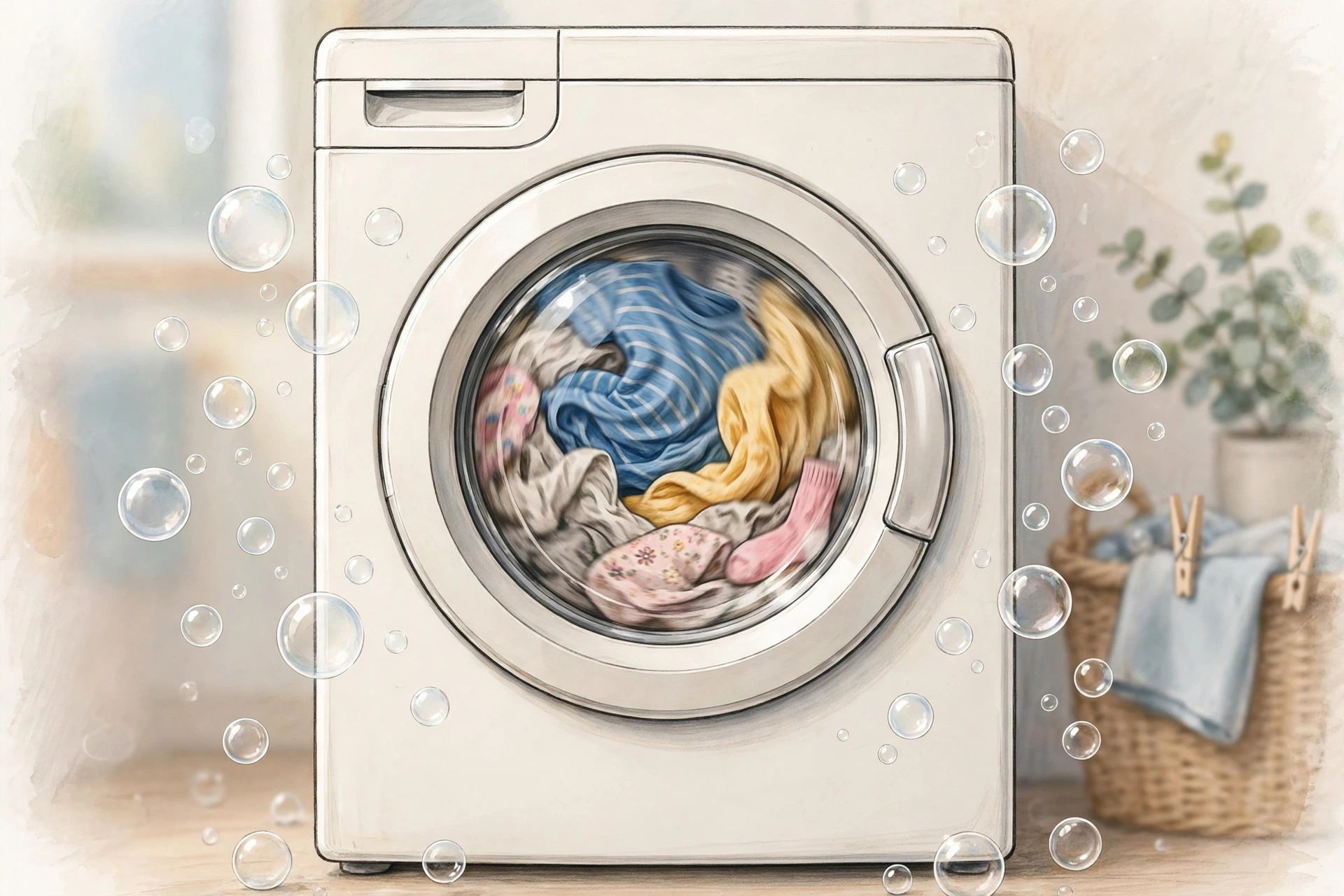
Open the door of a front-loading washing machine and you will see a big round drum with little holes in it. That drum is where the magic happens. It is the heart of the machine.
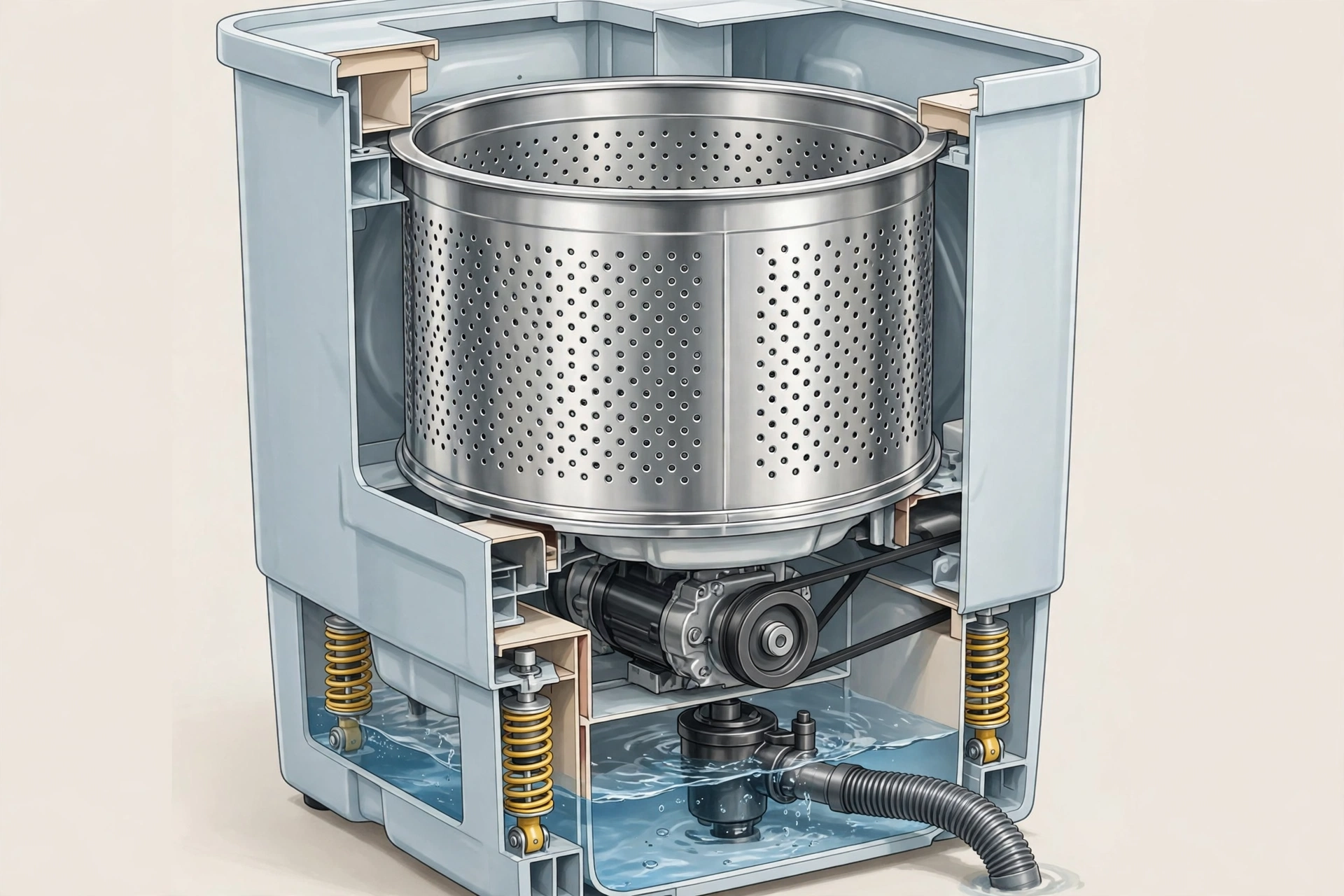
The drum is made from stainless steel, a strong metal that does not rust. The holes let water flow in and out. Inside the drum are small ridges, called lifters or paddles, that catch the clothes and lift them up as the drum turns. When the clothes reach the top, they fall back down with a soft thud. Lift, drop, lift, drop, over and over. That gentle tumbling is what rubs the dirt loose, without scrubbing the clothes to pieces.
Around the drum is a second, outer tub, which holds the water. The drum spins inside the tub, like a wheel inside a bigger wheel. Water flows into the tub, soaks through the holes into the drum, and wets the clothes. When the machine drains, the water flows out of the tub through a pipe.
A top-loading machine works a little differently. Instead of a drum on its side, it has a drum standing up, with a tall fin in the middle called an agitator. The agitator twists back and forth, swishing the clothes around in the water. It is a different kind of movement, but the idea is the same: move the clothes through soapy water, so the dirt comes off.
The drum is also where the spin happens. At the end of the wash, the drum spins very fast — sometimes more than a thousand times a minute. That fast spin pushes the water out of the clothes and through the holes, like a spin dryer. The faster the spin, the drier the clothes come out. That is why a fast spin saves drying time, and why your clothes feel almost dry when you take them out, even though they are still a little damp.
Water In, Dirt Out
Water is the first ingredient of a wash, and the machine is careful with it. Too little water and the clothes do not get clean. Too much and you waste water and energy.
When you start a wash, a valve opens — a valve is a kind of tap that lets water in — and water flows into the machine from your home’s water supply. The machine measures how much water it needs, based on the size of the load and the programme you chose. A modern machine uses far less water than an old one, sometimes half as much, because it is smarter about filling only what it needs.
The water is usually cold when it comes in, and the machine heats it if the programme asks for warm or hot water. A heating element, a bit like the element in a kettle, warms the water to the right temperature. Hot water cleans better, because it helps soap work and loosens grease. But it also uses more electricity, and it can shrink some clothes. That is why many modern detergents are made to work well in cold water. Cold washes save energy, and they are kinder to your clothes.
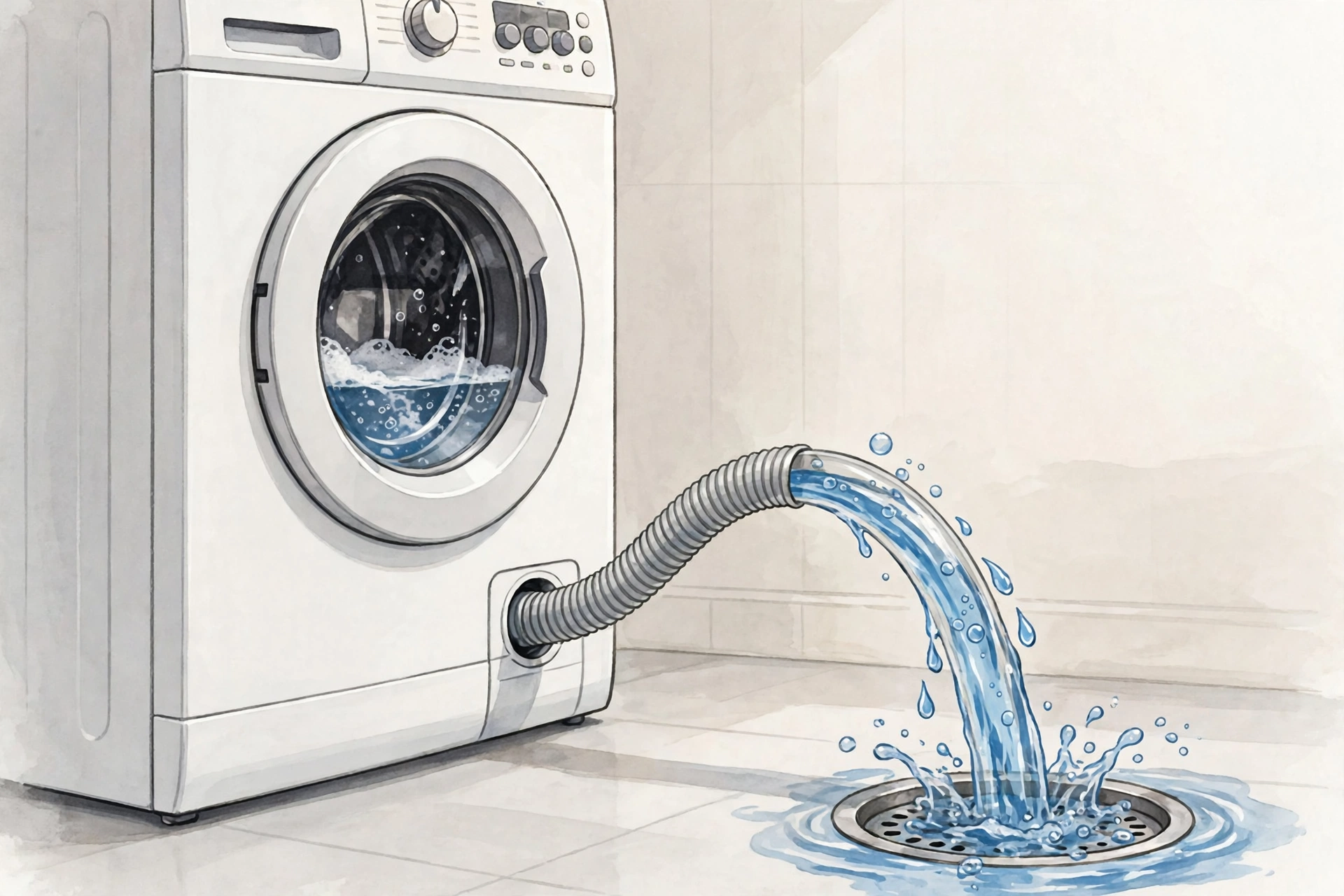
Once the clothes are wet and soapy, the drum turns, the clothes tumble, and the dirt loosens. Then the machine drains the dirty water out through a pump and a hose. A pump is a small motor that pushes water out. The dirty water flows away down the drain, taking the dirt with it. Then fresh water comes in for the rinse, to wash the soap out. Most washes rinse twice, to make sure no soap is left behind. Soap left in clothes can make skin itch, so the rinse matters.
Water is a remarkable thing. It can carry dirt, dissolve soap, and float things away, all at once. It is so good at holding things up and carrying them that in some places, like the Dead Sea, the water is so salty that people float in it without even trying. You can read about that strange water in our piece on why the Dead Sea is so salty and why you float in it. Your washing machine uses the same everyday magic of water, just in a smaller, soapy way: water lifts the dirt, the soap holds it, and the drain carries it away.
Soap: The Tiny Helper That Lifts Dirt
Water alone does not clean clothes very well. Dirt and grease cling to fabric, and plain water slides off them. That is where soap — or detergent, the modern name for washing soap — comes in.
Detergent is made of tiny molecules with two ends: one end loves water, and the other end loves grease. When you add detergent to water, those molecules surround specks of dirt and grease, with the grease-loving end grabbing the dirt and the water-loving end facing outwards. The dirt is lifted off the fabric and held in the water, so it can be rinsed away. It is like giving each speck of dirt a little life jacket, so the water can carry it off.
Detergent also lowers the surface tension of water. Surface tension is the skin-like pull that makes water bead up on a surface instead of spreading out. Lower surface tension means the water can soak into the fabric more easily, reaching the dirt hidden in the fibres. That is why soapy water wets clothes better than plain water.
Too much detergent is not better. Extra soap does not make clothes extra clean. It leaves a residue, a sticky film, on the clothes, and it can make the machine produce too many bubbles, which can confuse the sensors and even leak. A little soap, measured properly, does the job. If your clothes feel stiff or smell soapy after a wash, you are probably using too much.
There are different kinds of detergent: powder, liquid, and pods. Pods are small packets that dissolve in water. They are handy because they are pre-measured, but they must be kept away from children, who can mistake them for sweets. Powder is good for very dirty clothes. Liquid is good for cold washes. The best one is the one that suits your machine, your water, and your clothes. And a gentle detergent is kinder to sensitive skin, especially for babies and children.
The Motor and the Brain
A washing machine has a motor, and it has a brain. The motor does the heavy work. The brain decides when to do it.
The motor is an electric motor, a machine that turns electricity into movement. It is connected to the drum by a belt, or directly, and it turns the drum slowly for washing and very fast for spinning. The motor is strong, but it is also careful. It speeds up gently, so the clothes do not get thrown around violently, and it slows down gently, so the machine does not shake itself apart.
The brain is a small computer, called the control board, that runs the wash programme. A programme is a set of steps: fill, wash, drain, rinse, spin. You choose the programme — cotton, wool, quick wash, delicate — and the brain follows the recipe. It opens valves, turns the motor on and off, heats the water, and runs the pump, all in the right order, at the right time. It is like a conductor leading an orchestra, except the orchestra is water, soap, and a spinning drum.
Modern machines have sensors, too. A sensor is a small device that measures something and reports it to the brain. A load sensor weighs the clothes and works out how much water to use. A water level sensor checks the tub is full enough. A balance sensor checks whether the load is even. If the clothes are all bunched on one side, the drum wobbles, and the machine may try to redistribute them — that is, spread them out evenly — before it spins. That is why your machine sometimes pauses, turns slowly, pauses again, and then spins. It is not broken. It is balancing the load.
Some machines even sense how dirty the water is, and add an extra rinse if the water is still cloudy. It is a long way from a wooden tub and a washboard. The machine is watching, measuring, and adjusting, all while you are doing something else entirely.
The Spin: A Little Physics in Your Laundry Room
The spin cycle is the most dramatic part of the wash, and it is pure physics. When the drum spins very fast, the clothes are pressed against the drum wall by centrifugal force. Centrifugal force is the push that throws things outwards when they spin round, the same force that pushes you to the side of a car when it turns a corner fast.
As the drum spins, the water in the clothes is pushed out through the holes in the drum, while the clothes stay pressed against the wall. The water drains away, and the clothes come out much drier. A faster spin removes more water. A drum spinning at 1,400 times a minute can remove far more water than one spinning at 800 times a minute. That is why a fast spin means less time on the washing line or in the dryer.
But a fast spin is also harder on clothes. Delicate fabrics, like silk and wool, need a slow spin, or no spin at all, because the force can stretch and damage them. That is why the delicate programme spins gently. It is a trade-off: faster means drier, but slower means kinder.
The spin is also the noisiest part. A machine that shakes, bangs, or walks across the floor during the spin usually has an unbalanced load, or it is standing on an uneven floor. Most machines have little feet you can twist to level them. A level machine spins quietly. A wobbly machine dances. If your machine keeps dancing, check the feet, and check that the load is balanced. And never overload the drum. A drum stuffed tight cannot tumble properly, and it cannot spin evenly. Leave a little space at the top, about a hand’s width, so the clothes can move.
When the Machine Starts Acting Strange
Even a good washing machine can have a bad day. Here are a few common problems, and what they usually mean.
If the machine smells bad, it is usually because of damp and leftover soap. A washing machine is a warm, wet place, and mould can grow in the rubber seal around the door, or in the detergent drawer. Mould is a tiny fungus that likes damp, dark places. Wipe the seal after a wash, leave the door open a little so the drum can dry, and run a hot empty wash with a cup of vinegar once a month. It keeps the machine fresh and stops the smell coming back.
If the machine does not drain, the filter may be blocked. The filter is a small trap that catches coins, buttons, and bits of fluff before they reach the pump. It is usually behind a small flap at the bottom of the machine. Put a towel down, open it slowly, and clean out whatever is inside. You will be surprised what you find: coins, hair grips, a small sock that went missing weeks ago.
If the machine shakes a lot, check the load and the feet, as we said. If it leaks, check the door seal for a tear, and check the hoses at the back. A hose that is loose or cracked can drip. If the machine will not start, check the door is shut properly — most machines will not run with the door open — and check the power. It sounds obvious, but it is the most common fix of all.
If the machine makes a loud grinding noise, stop it and call a repair person. The motor and the pump are sealed parts, and they need a trained person to fix them safely. Do not take the back off yourself. Water and electricity are a dangerous mix, and a washing machine has both.
How to Wash Well and Waste Less
A washing machine is a wonderful tool, but how you use it makes a big difference — to your clothes, your bills, and the planet.
Wash full loads. A half-empty drum wastes water and electricity, because the machine still fills, heats, and spins. Wait until you have a full load, and wash less often. Your clothes will thank you, and so will your bills.
Wash cold when you can. Most everyday clothes come clean in cold water with modern detergent. Hot water is needed for very dirty things, like muddy sports kits, or for bedding when someone is ill. For the rest, cold is fine, and it saves a lot of energy, because heating water is the most expensive part of a wash.
Use less detergent. Most people use far more than they need. Follow the dose on the packet, and use less if your clothes are only lightly dirty. Less soap means fewer residues, less waste, and a happier machine.
Sort your clothes. Wash whites with whites, colours with colours, and delicates separately. It sounds fussy, but it stops a red sock turning a white shirt pink, and it stops a heavy pair of jeans damaging a silk blouse. Turn jeans inside out to protect the colour, and zip up zips so they do not snag other clothes.
And clean the machine itself. A clean machine washes better. Wipe the seal, clean the drawer, run a hot empty wash now and then. It is a small chore, once a month, and it keeps the machine working well for years.
A washing machine that is looked after can last ten years or more. That is a decade of clean clothes, from a machine you barely notice. It is worth a little care.
Frequently Asked Questions
How does a washing machine work?
It cleans clothes with water, soap, and movement. Water fills the drum, detergent lifts dirt and grease off the fabric, and the drum turns slowly so the clothes tumble through the soapy water. Then the dirty water drains out, fresh water rinses the soap away, and the drum spins very fast to squeeze the water out. A small computer controls the whole cycle, opening valves, running the motor, and draining the water in the right order.
Why does a washing machine spin so fast?
To remove water from the clothes. When the drum spins fast, the force pushes water out through the holes in the drum, while the clothes stay pressed against the wall. A faster spin removes more water, so the clothes come out drier and take less time to dry. Delicate clothes use a slower spin, because a fast spin can damage them.
Why do my clothes smell bad after washing?
Usually because of too much detergent, a dirty machine, or clothes left sitting wet in the drum. Use less detergent, wipe the rubber seal, leave the door open to dry, and run a hot empty wash with vinegar once a month. Take clothes out promptly when the wash finishes, so they do not sit damp and grow mould.
Should I wash clothes in hot or cold water?
Cold water is fine for most everyday clothes, and it saves energy and is kinder to colours. Hot water is better for very dirty clothes, bedding, and towels, and when someone in the house is ill. Always check the label on your clothes first. The label tells you the highest temperature the fabric can handle safely.
How much detergent should I use?
Follow the dose on the packet, and use less if the clothes are only lightly dirty. Most people use too much. Extra soap does not make clothes cleaner. It leaves a sticky film on the fabric, makes the machine produce too many bubbles, and can make skin itch. A little soap, measured properly, does the job.
How long does a washing machine last?
A well-looked-after washing machine usually lasts around ten years, sometimes longer. Keeping the seal clean, not overloading the drum, using the right amount of detergent, and fixing small problems early all help it last longer. If a machine is very old, noisy, and uses a lot of water and power, a newer, more efficient one may save money over time.
The Quiet Machine That Changed Everything
A washing machine does not ask for praise. It sits in a corner, hums, and gives you clean clothes. But think about what it replaced: hours of scrubbing, wringing, and hauling water, week after week. It gave people — mostly women, for most of history — hours of their lives back. Hours to work, to rest, to play with children, to do anything else. It is one of the most important inventions in the home, and one of the least celebrated.
The next time you load the machine, listen to it for a moment. The fill, the gentle turn, the drain, the rinse, the rising whirr of the spin. That is water, soap, and physics, working together, so you do not have to. Press the button, walk away, and let the machine do its quiet, clever work. It has been doing it for a hundred years, and it is very good at it by now.