How Did People Travel Before Cars Were Invented?
SUMMARY OF THIS ARTICLE
- Before cars, most people travelled on foot. Walking was slow, but it was free and it worked everywhere.
- Horses, donkeys, oxen, and camels carried people and pulled carts, carriages, and coaches.
- Boats and sailing ships carried people across rivers, lakes, and oceans, and they moved heavy goods far better than land travel.
- Trains, which came in the 1800s, were the first fast machines on land, and they changed travel for everyone.
- Travel was slow and often hard, but it still joined towns and countries together, and it helped trade, news, and ideas spread around the world.
A World Without Cars
Imagine you want to visit a friend in the next town. Today, you get in a car or a bus, and in one hour you are there. Now imagine there are no cars at all. There are no buses, no trains, no planes, and no bikes. How would you get there?
For most of human history, this was real life. Cars were only invented in the late 1800s. The first car with a petrol engine was made by Karl Benz in 1885. Before that, people had lived for thousands of years without any cars. So how did they travel?
People used their own feet. They used animals. They used boats and ships. Later, they used trains. Each new way made life a little faster and a little easier. But even the fastest way was slow. A trip that takes one hour by car today could take a whole day, or even a whole week, long ago.
Walking: The First Way to Travel
Walking is the oldest way to travel. Long before the wheel, long before horses were tamed, long before boats, people walked. They walked to find food. They walked to find water. They walked to visit other families. They walked because there was no other choice.
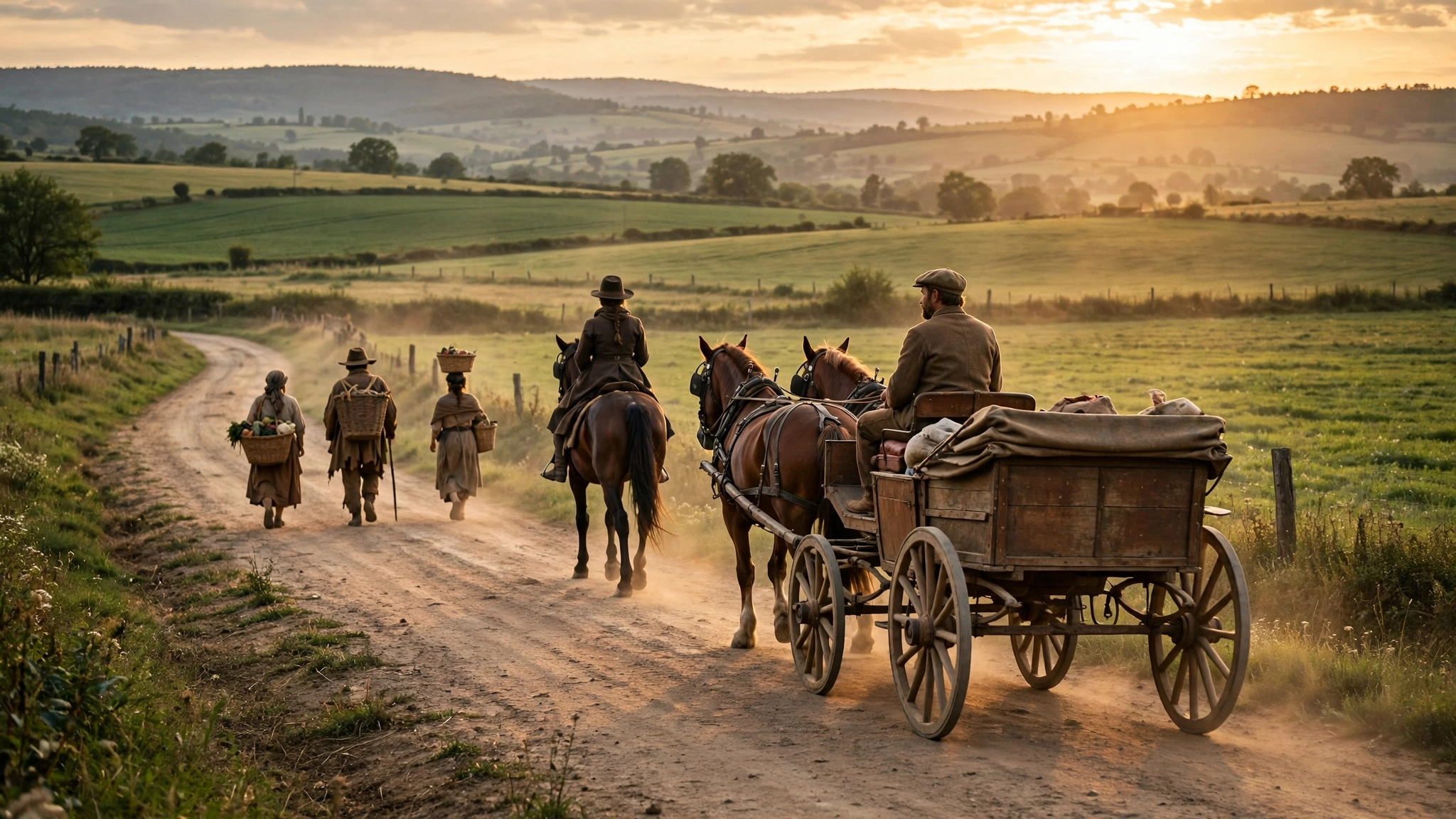
For most people, walking stayed the main way to travel for thousands of years. Even in the 1800s, when rich people rode in carriages, most ordinary people still walked everywhere. They walked to work in the fields. They walked to the market. They walked to church. They walked to visit family in the next village.
How far can a person walk in one day? A healthy person can walk about 20 to 30 kilometres in a day, if the ground is flat and the weather is good. That sounds like a lot, but it is slow. A town 30 kilometres away would take a full day to reach. A city 150 kilometres away would take five or six days, walking every day with no rest day.
People who walked long distances had to plan well. They carried food and water. They carried a bag on their back. At night, they slept in inns, in barns, or under the open sky if the weather was warm. Soldiers walked. Pilgrims walked too. Pilgrims are people who travel to a holy place. In the Middle Ages, thousands of pilgrims walked across Europe to reach holy towns. Some walked for weeks. Some walked for months.
Animals That Carried People
After walking, the next big step was animals. People learned to tame animals, and then they learned to ride them and to use them to carry loads. An animal is stronger than a person. It can walk farther in a day, and it can carry much more.
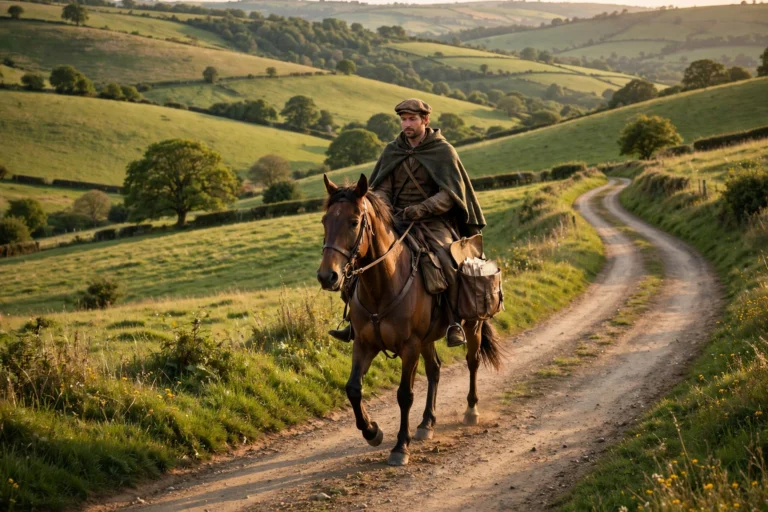
The horse was the most important travel animal in many parts of the world. Horses are fast and strong. A person on a horse can travel about 40 to 60 kilometres in a day, which is about twice as far as walking. Messengers used fast horses to carry news. Soldiers rode horses in battle. Rich people rode horses to show their wealth.
But horses were not for everyone. A horse was costly to buy and costly to keep. It needed food, water, and a stable, which is a building where horses sleep. It needed iron shoes, and care when it was sick. For most poor families, a horse was too costly. They walked instead.
Other animals helped too, and each one was best for a different place. Donkeys are small and strong, and they are good on steep, rocky paths. Mules are a mix of a horse and a donkey, and they can walk for a long time without getting tired. Oxen are slow, but they are very strong, and they pulled heavy carts full of grain and wood. Camels were the kings of the desert. A camel can go for days without water, so traders used camels to cross hot, dry lands where horses would die of thirst. In cold, snowy lands, people used reindeer and dogs to pull sleds across the snow.
Carts, Carriages, and Coaches
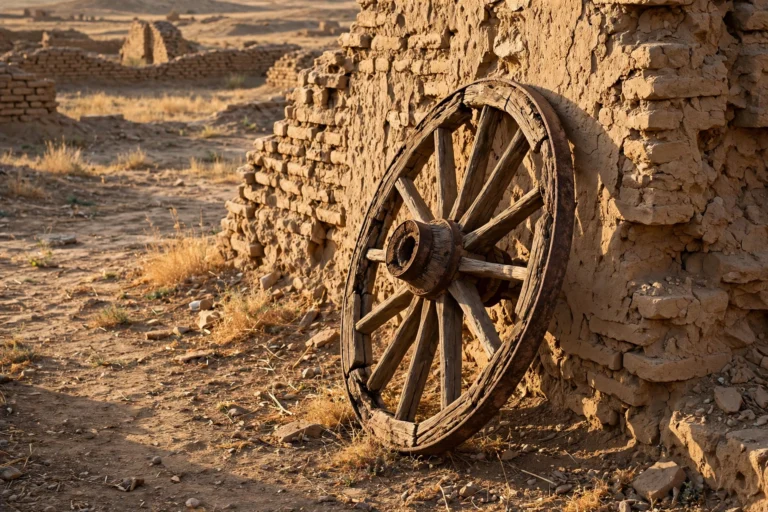
The wheel was one of the greatest inventions in history. People first used wheels about 5,500 years ago, in lands where farming had begun. At first, the wheel was used for carts. A cart is a simple open vehicle with two wheels, pulled by an animal. It can carry far more than a person or a pack animal can carry alone.
The first carts were rough. They had solid wooden wheels, not round wheels with spokes. They moved slowly over rough ground. But they were still a big step forward. A farmer could load a cart with grain and take it to market. A builder could load a cart with stone and take it to a building site. The wheel turned hard work into easier work.
Over time, carts became better. Wheels with spokes were lighter and stronger. People added seats, covers, and springs. A spring is a part that softens the bumps on a rough road. With seats and a cover, a cart became a carriage. A carriage was a vehicle for people, not just for goods. Rich families owned carriages. Inside, the family sat on soft seats, safe from rain and sun. The finest carriages were a sign of wealth, just as a fine car is today.
For ordinary people, the most useful vehicle was the stagecoach. A stagecoach was a large carriage that ran on a fixed route, like a bus today. It stopped at set places, which were called stages, to change horses and let passengers rest. Passengers bought a ticket and shared the coach with strangers. A stagecoach could carry people and mail across a whole country.
But stagecoach travel was not easy. The roads were rough, so the coach shook and bounced. Passengers sat close together, with little room to move. In winter, it was cold. In summer, it was hot and dusty. A long trip by stagecoach could take days, and passengers slept in inns at night. In towns, there were smaller vehicles too. An omnibus was a large horse-drawn bus that ran inside a city, and a cab was a small carriage for hire, like a taxi today.
Roads: The Paths That Made Travel Possible
None of this travel would have worked without roads. A horse, a cart, or a coach needs a clear path. On soft grass or deep mud, wheels sink and animals slip. On a good road, travel is faster, safer, and easier.
The first roads were not built at all. They were made by feet. People walked the same way again and again, and a path appeared. Later, people started to build roads on purpose. They cleared rocks and bushes. They filled holes with stones. They made the ground flat and hard.
Some of the oldest planned roads were made more than 4,000 years ago in Mesopotamia and Egypt. Mesopotamia was a land between two great rivers, in what is now Iraq and nearby lands. People there built towns and cities, and they needed roads to move grain, pots, and cloth. In Egypt, roads helped move huge stones for temples and tombs.
The Romans were the great road builders of the ancient world. They built more than 80,000 kilometres of paved roads across their empire. Their roads were made in layers of stone, gravel, and sand, with large flat stones on top. They were built to last, and many of them are still there today, more than 2,000 years later. If you want to read more about this, you can read our article about who built the first roads in the world.
Good roads changed travel in two big ways. First, they made journeys faster and safer. A coach could move well on a Roman road, and a trader could reach a far market in days instead of weeks. Second, they joined places together. A road from a village to a town meant people could trade, visit family, and share news. But most roads were not Roman roads. Most roads were dirt tracks. In dry weather, they were dusty. In rain, they turned to mud. In winter, they froze and became hard and slippery.
Boats, Rivers, and Canals
So far, we have talked about land travel. But for much of history, water was the best way to travel. A boat can carry far more than a cart. It does not need a road. It floats on the water, and the water does most of the work.
The oldest boats were simple. People made rafts from logs tied together. They made dugout canoes by hollowing out a tree trunk. They used poles to push the boat along a river, or they used paddles to row. These small boats were used on rivers and lakes for fishing, for trade, and for travel between villages.
Rivers were like roads made by nature. They joined towns together. A trader could load a boat with grain, pots, or cloth and float down the river to a market. Going downstream, with the flow of the water, was fast and easy. Going upstream, against the flow, was hard. People had to row, or they had to pull the boat from the river bank with ropes.
Canals made water travel even better. A canal is a waterway made by people, dug by hand. It joins two rivers, or it joins a river to a town that has no river. On a canal, horses walked along a path beside the water and pulled the boat with a rope. This was slow, but a canal boat could carry a huge load. One horse pulling a boat could move as much as many carts pulled by many horses.
Sailing Ships and the Open Sea
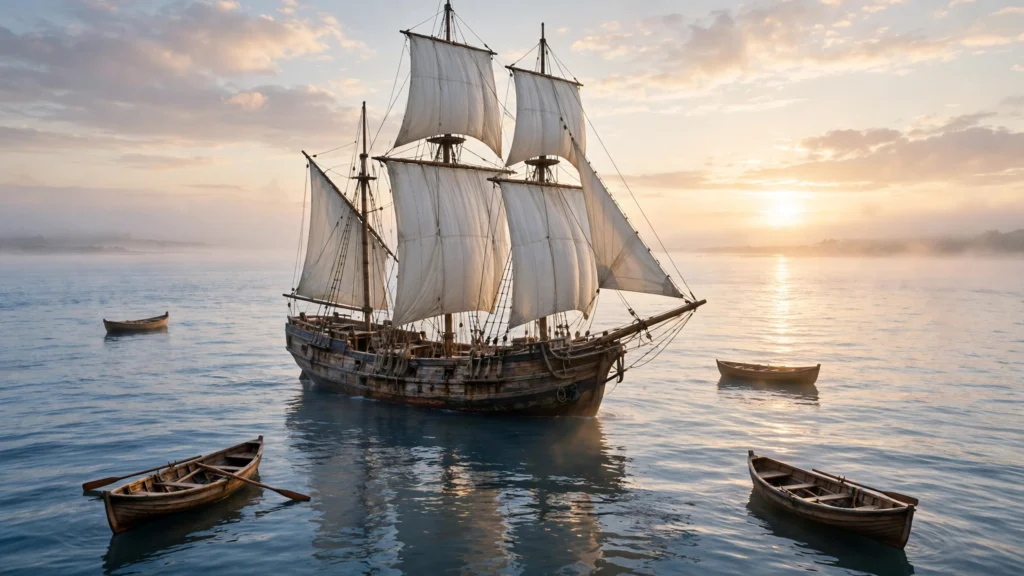
For long journeys across the sea, people used sailing ships. A sailing ship is a large boat with tall masts and sails made of cloth. The wind pushes the sails, and the ship moves across the water. No engine is needed. The wind is free, but it is also wild. A good wind can push a ship fast. No wind means the ship sits still. A storm wind can break a mast or sink a ship.
Sailing ships joined the world together. For hundreds of years, they were the only way to travel between continents. A ship could cross from Europe to the Americas. It could sail from Asia to Africa. It could carry spices, silk, tea, gold, and many other goods across the ocean. Without sailing ships, world trade would not have been possible.
Life on a sailing ship was hard. A voyage could take weeks or months. The ship was small and crowded. Food was simple and often bad. Fresh food ran out after a few days, so sailors ate dry bread, salted meat, and dried beans. Fresh water was kept in barrels, and it often went bad. Passengers had a hard time too. They were seasick when the waves were high, and they had little space.
Explorers used sailing ships to reach new lands, guided by the stars and a compass, and you can read how people read the sky in our article about how people told time before clocks were invented.
Trains: The First Fast Machines on Land
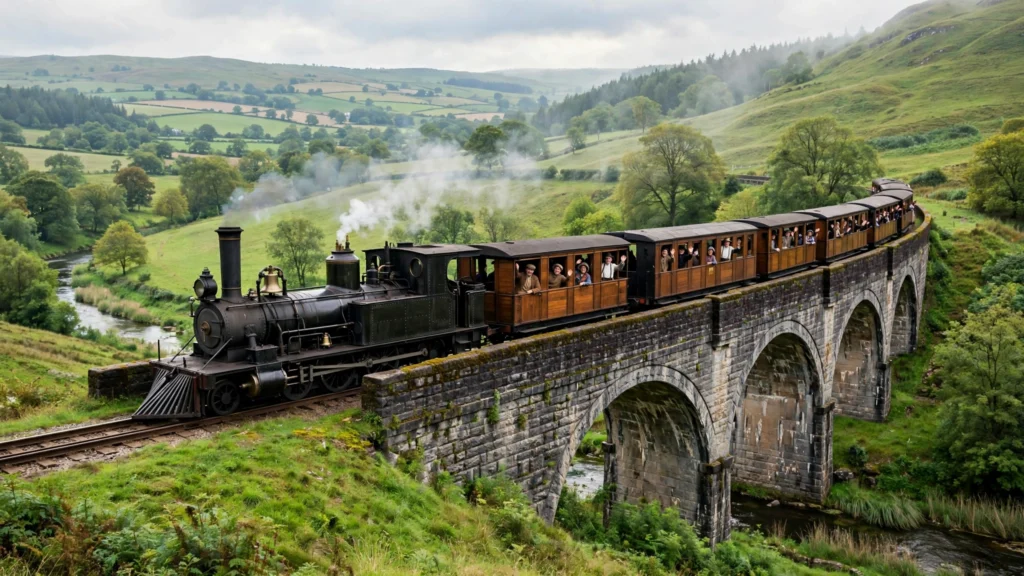
The train was the biggest change in land travel before the car. It was the first time a machine, not an animal, pulled people across the land. It was faster, stronger, and steadier than any horse.
The story starts with steam. In the 1700s, people learned to use steam from boiling water to push machines. Then, in 1804, an English engineer named Richard Trevithick built the first full-size working steam locomotive. A locomotive is the engine that pulls a train. His locomotive ran on rails and pulled wagons along a short track.
The first real railway for passengers came later. In 1825, a train called Locomotion No. 1 ran in England, between Stockton and Darlington. A few years later, in 1830, a railway opened between Liverpool and Manchester. People were amazed. A train could move at 30 miles per hour, which is about 48 kilometres per hour. No horse could keep up with that for long.
Soon, railways spread across the world. In Britain, in the United States, in Europe, in India, and in many other lands, workers laid iron rails and built stations. Towns that had a railway grew fast. Trade grew, because a train could carry tons of goods in one trip. People could travel to a city in hours, not days.
Trains also changed how people thought about time. Before trains, each town had its own local time, set by the Sun. A train that crossed many towns in one day needed one clear time for its timetable. So railway companies chose one standard time for all their trains. This idea later grew into the time zones we use today. You can read that story in our article about why we have time zones.
Bicycles: Travel on Two Wheels
Before the car, there was one more invention that gave ordinary people freedom: the bicycle. It has two wheels, a frame, pedals, and handlebars. You sit on it, push the pedals with your feet, and it moves. No horse is needed. No fuel is needed. Just your own legs.
The first bicycle was made in 1817 by a German named Karl Drais. It was called the Draisine. It had two wheels, but it had no pedals. The rider sat on it and pushed the ground with their feet. Later bicycles got pedals, then a chain, then rubber tyres. By the 1880s and 1890s, the modern bicycle had arrived.
How Long Did Journeys Take?
To understand travel before cars, it helps to think about time. Today, we measure a trip in minutes or hours. Long ago, people measured a trip in days or weeks. A walk to the next village, about 10 kilometres away, took about two hours on foot. A trip to a market town 30 kilometres away took a full day on foot, or half a day on horseback. A trip to a city 150 kilometres away took five or six days on foot, or about three days by horse and carriage.
Longer trips took much longer. A journey of 500 kilometres by stagecoach could take a week or more. The same journey by train in the late 1800s took about one day. A sea voyage from England to America by sailing ship took about six to eight weeks. By steamship, later in the 1800s, it took about ten days.
Why were journeys so slow? There were many reasons. Roads were bad. Animals needed rest. Boats needed wind. People also had to stop at night. Travel at night was dangerous, because there were no street lights and the roads were dark. So most travellers stopped at sunset and slept in an inn. They set off again at dawn. The seasons mattered too: snow blocked roads in winter, and rain turned roads to mud.
How Did People Find Their Way?
Today, we use phones to find our way. A phone shows a map, and it tells us where to turn. Long ago, there were no phones, and there were no road signs like today. So how did people find their way?
The simplest way was to ask. People asked other travellers. They asked innkeepers. They asked farmers working in the fields. A local person knew the road well. They could say, “Go straight, turn left at the big oak tree, then cross the bridge.” Landmarks were the signs of the old world. A big tree, a hill, a church tower, a river, or a stone marker could guide a traveller.
Maps existed, but they were rare and costly, so most people learned the road by walking it many times. Traders knew their routes by heart.
What Travel Felt Like
Travel before cars was not just slow. It was also hard on the body. A day on foot meant sore feet and tired legs. A day on horseback meant a sore back. A day in a stagecoach meant bumps, dust, and noise. A week at sea meant seasickness and bad food. Comfort was for the rich. A rich family in a fine carriage had soft seats and a cover from the rain. Ordinary people sat on hard benches, slept on the floor, and ate what they could carry.
Danger was part of travel too. Roads could be muddy and full of holes. A cart wheel could break. A horse could fall. Rivers could flood. Ships could sink in storms. Robbers waited on lonely roads. But travel was not all pain. Travellers saw new places, met new people, and tasted new foods.
Why Travel Changed the World
Even though travel was slow, it changed the world in big ways. First, it helped trade grow. A farmer could sell grain in a town far away. A trader could bring cloth, spices, and tools from far lands. People could buy things they could not make themselves, and they could try new foods and use new tools.
Second, travel helped news and ideas spread. A story could travel along a road, just as goods could. A new farming method could spread from one village to another. A new faith could spread across a whole country. Without travel, each place would have stayed alone. With travel, people learned from each other.
Third, travel helped towns and cities grow. When a road or a river passed through a place, more people stopped there. Shops opened. Markets grew. Inns were built. A small village on a busy road could grow into a town, and a town on a river could grow into a city.
Fourth, travel helped rulers govern their lands. A king needed to send soldiers quickly, collect taxes, and hear news from far parts of his land. Roads and fast messengers made this possible. The Persian Royal Road and the Roman roads were built for this reason.
Frequently Asked Questions
How did most people travel before cars?
Most people travelled on foot. Walking was free, and it worked everywhere. Rich people rode horses or travelled in carriages, but ordinary people walked to work, to market, and to visit family. A person could walk about 20 to 30 kilometres in a day.
What animals were used for travel before cars?
Horses were the most important travel animals in many lands. Donkeys, mules, and oxen were used too. Camels carried people and goods across deserts. In cold lands, reindeer and dogs pulled sleds. Each animal was best for a different place and a different job.
How long did a long journey take before cars?
A long journey took days, weeks, or even months. A trip of 150 kilometres took five or six days on foot. A stagecoach trip of 500 kilometres could take a week or more. A sailing ship took six to eight weeks to cross from England to America. Trains in the late 1800s made such trips much faster.
Why were boats and ships so important?
Boats and ships could carry far more than carts, and water travel was often easier than land travel. Rivers and canals joined towns together. Sailing ships crossed oceans and carried goods between continents. For hundreds of years, ships were the only way to travel between continents.
When did trains change travel?
The first working steam locomotive was built by Richard Trevithick in 1804. The first passenger railway opened in England in 1825, and a railway between Liverpool and Manchester opened in 1830. Trains could move at about 48 kilometres per hour, which was far faster than any horse. Railways then spread across the world.
What came first, the bicycle or the car?
The bicycle came first. Karl Drais made the first bicycle, called the Draisine, in 1817. It had no pedals. Later bicycles got pedals, chains, and rubber tyres. The first car with a petrol engine was made by Karl Benz in 1885, almost 70 years after the first bicycle.
More from Zorium Daily
- Who Built the First Roads in the World?
- How Did People Tell Time Before Clocks Were Invented?
- Why Do We Have Time Zones?
- Why Do We Have 12 Months in a Year?
The next time you get in a car, or sit on a bus, or ride a train, think about the people who walked for days to reach a market, the riders who crossed deserts on camels, the sailors who crossed oceans with only the wind and the stars, and the workers who built roads stone by stone. They all travelled without cars, and yet they joined the world together. Their slow journeys made our fast journeys possible. The wish to travel is as old as people themselves.