How Ancient People Measured an Hour Without Clocks
SUMMARY OF THIS ARTICLE
- Ancient people did not have clocks, but they still divided the day into parts using the sun, shadows, water, sand, candles, and stars.
- An ancient hour was usually not 60 fixed minutes. Daylight was divided into twelve parts and night into twelve parts, so an hour was longer in summer and shorter in winter.
- Egypt, Greece, and Rome used sundials and water clocks for temples, courts, markets, and farming, while bells later marked time for towns and churches.
- Mechanical clocks in medieval Europe, and the pendulum much later, slowly turned the flexible ancient hour into the fixed 60-minute hour we use today.
- Learning how ancient people measured an hour helps us understand why our modern time feels so exact, and why it once felt so natural and flexible.
Introduction: An Hour Before the Clock
Imagine waking up in a world with no watch, no phone, and no clock on the wall. There is no alarm to tell you that it is seven o’clock, no train timetable that says the train leaves at ten past nine, and no school bell that rings at exactly eight. How would you know when an hour had passed? How would you know when it was time to eat, to pray, to work in the field, or to go to the market?
This is the question behind how ancient people measured an hour. For most of human history, people lived without the kind of clock we take for granted today. They did not need to know that it was 3:47 in the afternoon. They needed to know something simpler and more useful: whether the sun was high, whether the shadow was long, whether the water in a bowl had run out, or whether the stars had moved far enough across the sky for it to be midnight.
The answer was not one invention. It was many small inventions, used in different places, at different times, for different needs. Farmers watched the sun. Priests watched shadows and stars. Judges in courts used water clocks to limit speeches. Monks used bells to mark prayers. Traders used candles and sand to measure a meeting or a journey. Together, these methods created a way of living with time that was practical, visible, and close to nature, even if it was not exact in the modern sense.
This article explains, in simple language, how ancient people measured an hour without clocks. It looks at sun shadows and sundials in Egypt, water clocks in Egypt, Greece, and Rome, sand, candles, and incense for shorter intervals, the moon and stars at night, church bells and town clocks, the first mechanical clocks in medieval Europe, and the pendulum that came much later. It also explains how this shaped farming, prayer, work, and school, and why we now use fixed sixty-minute hours.
The Sun Was the First Clock
For the earliest farmers and herders, the sun itself was enough. Sunrise meant the day had begun. Noon, when the sun was highest and shadows were shortest, meant the middle of the day. Sunset meant work was ending and it was time to return home, eat, and rest. The position of the sun told people roughly where they were in the day, even if they could not name the hour.
People soon learned to read the sun more carefully by watching shadows. A tall stick, a tree, or a stone pillar casts a shadow that moves as the sun moves across the sky. In the morning, the shadow is long and points to the west. At noon, it is short. In the evening, it is long again and points to the east. By marking where the shadow fell at different times, people could divide the day into rough parts. This was not a clock in a box, but it was a clock made from light itself.
In Egypt, this idea was developed into a famous tool called a gnomon. A gnomon is simply a tall, upright object, often a stone pillar or obelisk, whose shadow is watched and measured. Egyptian builders placed obelisks in temple areas, and the shadow of the obelisk moved across marked ground during the day. Priests and officials could look at the shadow and know whether it was morning, midday, or afternoon. The gnomon was simple, but it was also powerful, because it turned the movement of the sun into something visible and shareable. One person could point to a shadow mark and another person could understand the same time.
Sundials: Turning Shadows into Hours
The next step was to make shadow-reading more regular. A sundial is a device with a raised part, also called a gnomon, that casts a shadow onto a marked surface. The surface has lines or numbers, and as the sun moves, the shadow moves from one mark to the next. In this way, a sundial divides the day into hours, or at least into regular parts that people agreed to call hours.
Early sundials were not all the same. Some were flat and placed on the ground. Some were vertical and fixed to a wall. Some were small and portable, so a traveller could carry one and use it on a journey. In Egypt, Greece, and later Rome, sundials became common in public places, temples, gardens, and homes of wealthier people. A person walking through a town could glance at a sundial in a square and know roughly what part of the day it was, in the same way we glance at a clock tower today.
But sundials had clear limits, and ancient people knew them. A sundial only works when the sun shines. On a cloudy day, or at night, it is useless. It also needs to be set correctly for its place. A sundial made for one city will not give the same reading in another city far to the north or south, because the sun’s path across the sky is different. Ancient makers learned to adjust sundials for latitude, which is the distance north or south of the equator, but this was skilled work, not something every village could do easily.
For us, this is a useful reminder. We think of an hour as always sixty minutes, because our clocks are built that way. Ancient people thought of an hour as a part of the day, and the day itself changed. Their time was flexible because their lives were shaped by sunlight, not by a machine.
Water Clocks: Time That Flowed
When the sun was hidden, or when people needed to measure time indoors or at night, they turned to water. A water clock, known in Greek as a clepsydra, which means water thief, measures time by the flow of water from one container to another, or by the slow sinking or rising of a float in a vessel.
The basic idea is easy to understand. Imagine a bowl with a small hole at the bottom. Water drips out at a fairly steady rate. If you mark the inside of the bowl, you can see how far the water level has fallen, and that tells you how much time has passed. Or imagine a vessel that slowly fills with water. As it fills, a float rises and points to marks on a scale. In both cases, time is turned into a visible change in water level.
Egypt used early water clocks more than three thousand years ago. One famous type was a stone or pottery vessel with marks on the inside, used in temples to time rituals at night, when sundials were useless. Priests needed to know when to perform certain prayers or offerings, even in darkness, and a water clock gave them a steady, quiet way to do it. Later, Greek and Roman makers improved water clocks with more complex designs, including gears, floats, and even figures that moved or bells that rang when a certain amount of water had passed.
Water clocks were useful for a very practical reason: they worked without the sun. A court in Greece or Rome could use a water clock to limit how long a speaker could talk. When the water ran out, the speech had to stop. A teacher could use one to time a lesson. A general could use one to time a night watch. A cook could use one to time a process. In each case, the water clock gave a fair, shared measure of time that did not depend on whether the sky was clear.
Sand, Candles, and Incense: Small Times for Daily Life
Not every task needed a large public clock. Sometimes people needed to measure a short interval: the time to cook a meal, the time for a meeting, the time for a journey, or the time for a prayer. For these shorter times, ancient and medieval people used sand, candles, and incense.
A sandglass, often called an hourglass, is two glass bulbs joined by a narrow neck, with sand flowing from the top bulb to the bottom bulb. When all the sand has fallen, a fixed interval has passed. Sandglasses were used on ships, in churches, in schools, and in homes. A sailor could turn a sandglass to time a watch at sea. A preacher could use one to time a sermon. A student could use one to time study. The sandglass was portable, simple, and did not need sunlight or water, but it had to be turned over again and again, and it only measured one fixed interval at a time.
Candles were used in a similar way. A candle marked with lines could show time as it burned down. Each mark meant that a certain amount of time had passed. In monasteries and homes, candle clocks were used at night, when it was too dark to read a sundial and too cold or inconvenient to use a water clock. A candle also gave light, so it served two purposes at once. However, candles burn faster in a draught and slower in still air, so they were rough measures, not exact ones.
In parts of Asia, incense was used in a similar way. A stick of incense, or a trail of incense powder laid out in a pattern, burned slowly and steadily. Marks along the trail showed how much time had passed. Incense clocks were used in temples and homes, and they also filled the air with a pleasant smell, which made them suitable for prayer and meditation. Like candles, they were not exact, but they were good enough for the rhythm of daily life.
Night Time: The Moon, Stars, and Bells
Night was the hardest time to measure, because the sun was gone. Ancient people used the moon and stars for this. They learned which stars rose at which times of year, and how the stars moved across the sky during a single night. By watching a familiar star rise, reach its highest point, and set, a night watchman could estimate how much of the night had passed. The moon, which changes shape over about a month, helped people track longer periods, while the stars helped them track a single night.
Later, in medieval Europe, church bells took over much of this night work. Monasteries rang bells at fixed times for prayers, called matins, lauds, prime, terce, sext, none, vespers, and compline. These prayer times were spread through the day and night, and the bells could be heard across a town or village. Farmers, traders, and workers learned to live by the bells, even if they did not own a clock. When the bell rang for morning prayer, it was time to rise. When it rang for evening prayer, it was time to finish work. The bell was a public clock made of sound, not light.
Town bells later became even more important. As towns grew, town halls and churches installed bells that rang at regular intervals, and later, clocks that struck the hour. A town clock did not need to be exact to the minute to be useful. It needed to be shared. If everyone in a town heard the same bell at the same time, they could meet, trade, work, and worship together. Time became a community agreement, not just a private observation.
Unequal Hours: Why an Ancient Hour Was Not Sixty Minutes
Now we can return to the most surprising idea in this story: the unequal, or seasonal, hour. In many ancient and medieval systems, the day was divided into twelve hours from sunrise to sunset, and the night was divided into twelve hours from sunset to sunrise. This sounds simple, but it has a strange result. In summer, when daylight lasts, for example, about fifteen hours in a temperate region, each daylight hour lasts about seventy-five minutes in modern terms. In winter, when daylight lasts only about nine hours, each daylight hour lasts only about forty-five minutes. Night hours change in the opposite direction, so that a summer night hour is short and a winter night hour is long.
This system made sense for a world that lived by daylight. Work began at sunrise and ended at sunset, so the working day was naturally longer in summer and shorter in winter. A farmer did not need to work the same number of modern minutes in December as in June. A daylight hour that stretched in summer and shrank in winter matched the work itself. Prayer times, market times, and court times were also tied to daylight, so they moved with the seasons in the same way.
It also meant that ancient people did not worry about exact minutes in the way we do. If a meeting was set for the third hour of the day, everyone knew roughly what that meant for that season, but they did not expect it to be at exactly the same modern clock time in June and in December. Time was approximate, social, and seasonal. Being a little early or a little late was normal, because the system itself was flexible.
Mechanical Clocks: The Tower Clock Changes Everything
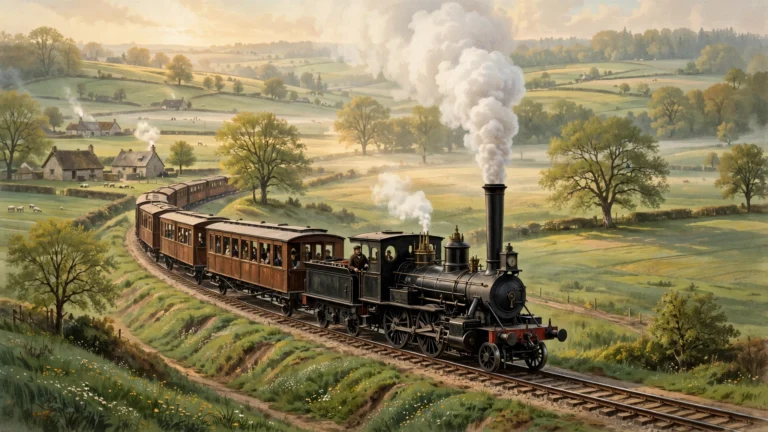
The first mechanical clocks in Europe appeared in the late thirteenth and early fourteenth centuries, in monasteries, churches, and town halls. These early clocks did not have hands and faces like modern clocks. Many of them only struck a bell at each hour. Their purpose was to tell a community when an hour had passed, not to show the exact minute. They were large, heavy, and expensive, and they needed a tower or a large room to house their weights and gears.
These tower clocks were a major change, because they did not depend on the sun, water, or sand. They worked day and night, in cloudy weather and in winter, as long as someone wound them and kept them running. They also gave a regular, repeated signal that everyone in a town could hear. For the first time, time was not only observed in nature. It was produced by a machine, on a regular beat, whether the sun was shining or not.
Early mechanical clocks still used unequal hours in many places. Their gears could be adjusted to strike at seasonal intervals, or they could be set to strike twelve times a day and twelve times a night, with the intervals changing through the year. But the machine itself pushed toward fixed hours. It is much easier to build a clock that strikes at equal intervals than one that changes its intervals with the seasons. Over time, clockmakers began to make clocks that divided the day into twenty-four equal hours, each sixty minutes long, regardless of sunrise and sunset. This was the beginning of the modern system.
The Pendulum and the Fixed Minute
The next great step came much later, in the seventeenth century, with the pendulum clock. A pendulum is a weight on a rod or string that swings back and forth at a regular rate. When Dutch scientist Christiaan Huygens applied the pendulum to clocks in the 1650s, clocks became far more accurate than before. A pendulum clock could keep time to within a few minutes a day, and later, to within seconds a day, which was a huge improvement over early tower clocks that could gain or lose a large amount of time each day.
Pendulum clocks made the minute hand useful. Before this, most clocks only had an hour hand, because they were not accurate enough to show minutes in a meaningful way. With a pendulum, a minute hand made sense, and later, a second hand made sense too. Clocks moved from towers into homes, offices, and schools. People began to live by minutes, not only by hours. A train, a lesson, a meeting, and a factory shift could all be timed to the minute.
But accuracy also had a cost. The flexible, seasonal hour, which had matched human life to daylight for thousands of years, was replaced by a fixed hour that is the same in summer and winter, in the morning and at night. We gained precision, but we lost the direct link between time and sunlight. Today, we work the same sixty minutes in December as in June, even though the sun rises and sets at very different times. Our clocks are better, but our days feel less natural in this one respect.
How Ancient Time Shaped Farming, Prayer, Work, and School
To understand ancient timekeeping fully, it helps to look at daily life. For a farmer, time was the seasons. Planting, watering, harvesting, and storing had to happen at the right time of year, not at a precise hour of the day. The sun, the stars, and the Nile flood told the farmer when to act. A sundial or water clock might help with the day, but the year was the real clock for farming. A farmer who planted too early or too late could lose a crop, so watching nature was a matter of survival, not just curiosity.
For a priest or monk, time was prayer. Temples and monasteries divided the day into prayer times, and bells, water clocks, and star observations helped keep those times. Prayer was not only a personal act. It was a community rhythm that gave the day its shape. When the bell rang, people stopped work, gathered, and prayed together. Time, in this sense, was sacred. It was not something to be saved or wasted. It was something to be marked, honoured, and shared.
What all these examples show is that ancient timekeeping was not primitive or foolish. It was well suited to the lives people actually lived. It used the sun for the day, the stars for the night, water for fairness, sand for short tasks, and bells for community. It was not exact, but it was human. It is only when we judge it by modern standards, with trains, factories, and phones, that it seems inadequate.
Why We Now Have Fixed Sixty-Minute Hours
So why did we move from flexible, seasonal hours to fixed, sixty-minute hours? The answer is a mix of technology, trade, and social change. Mechanical clocks made fixed hours easier to build. Railways made fixed hours necessary, because a train timetable cannot work if an hour in one town is longer than an hour in another town. Factories made fixed hours useful, because workers needed to start and finish at the same time, every day, all year round. Schools, offices, and hospitals followed the same pattern.
The division of the day into twenty-four hours, each sixty minutes, each minute sixty seconds, is itself ancient. It comes from Babylonian and Egyptian systems that used base sixty for counting and astronomy. What changed in modern times was not the numbers, but the idea that each hour should always be the same length. Once clocks could keep fixed time accurately, and once society needed that fixed time for trains, work, and communication, the seasonal hour faded away. It survived in some religious traditions and in poetry, but not in daily life.
It is worth asking whether we have lost something. Modern time is precise, but it can also feel rushed and artificial. Ancient time was rough, but it was close to nature. Many people today try to recover some of that feeling by spending time outdoors, by watching sunrise and sunset, or by taking a break from clocks on holiday. They are, in a small way, returning to the ancient way of feeling time, even if they still use a watch to catch a train home.
Frequently Asked Questions
How did ancient people know when an hour had passed without a clock?
They used visible changes in nature and in simple devices. A shadow moving across a marked surface, water falling or rising in a vessel, sand falling through a narrow neck, a candle burning down to a mark, or stars moving across the sky all showed that time had passed. An hour was a share of daylight or night, not a fixed sixty minutes, so people judged it by these changes rather than by a dial.
What was a sundial, and how did it work?
A sundial is a device with a raised part that casts a shadow onto a marked surface. As the sun moves across the sky, the shadow moves from one mark to the next. People could look at the shadow and know roughly what part of the day it was. Sundials worked well in sunlight, but not on cloudy days or at night, and they needed to be adjusted for their location.
What was a water clock, and why was it useful?
A water clock, called a clepsydra in Greek, measures time by water flowing from one container to another, or by a float rising or falling as water fills or empties. It was useful because it worked without sunlight, indoors, and at night. Courts used water clocks to limit speeches, temples used them for night rituals, and teachers used them for lessons.
Why was an ancient hour not always sixty minutes?
Because many ancient systems divided daylight into twelve parts and night into twelve parts. Daylight is longer in summer and shorter in winter, so a daylight hour was longer in summer and shorter in winter. A night hour changed in the opposite way. The hour was a part of the day or night, not a fixed length. Fixed sixty-minute hours came later, with mechanical clocks, railways, and factory work.
When did mechanical clocks first appear, and how did they change time?
Mechanical clocks appeared in Europe in the late thirteenth and early fourteenth centuries, in monasteries, churches, and town halls. They struck bells at regular intervals, worked day and night, and did not need sunlight. Over time, they made fixed, equal hours normal. The pendulum clock in the seventeenth century made clocks far more accurate, and made minute hands, and later second hands, useful for everyday life.
Closing: Time We Can See, Time We Can Feel
How ancient people measured an hour tells us something important about time itself. Time is not only a number on a dial. It is also a shadow moving across stone, water falling in a bowl, sand slipping through glass, a candle burning down, stars turning overhead, and a bell ringing across a town. Ancient people measured time with their eyes, their ears, and their bodies, not only with machines.
Their system was not perfect, and we should not pretend that it was. It was rough, it changed with the seasons, and it could not time a train to the minute. But it was well suited to a world that lived by sunlight, seasons, and community rhythms. It helped farmers plant, priests pray, judges be fair, traders meet, and students learn, all without a single modern clock.
Today, our clocks are far more accurate, and our lives depend on that accuracy. Yet the ancient way of measuring an hour still has something to teach us. It reminds us that time is not only about being exact. It is also about paying attention to light, to nature, and to each other. The next time you glance at your watch, try also glancing at the sun, or at a shadow, or at the stars. You will be doing, in a small way, what ancient people did every day: measuring an hour not by a machine, but by the world itself.