Why Do We Have Day and Night? Explained Simply
By Zorium Daily Science Desk
SUMMARY OF THIS ARTICLE
- Day and night happen because the Earth spins like a top on its axis. One full turn takes about 24 hours, and that turn is what we call a day.
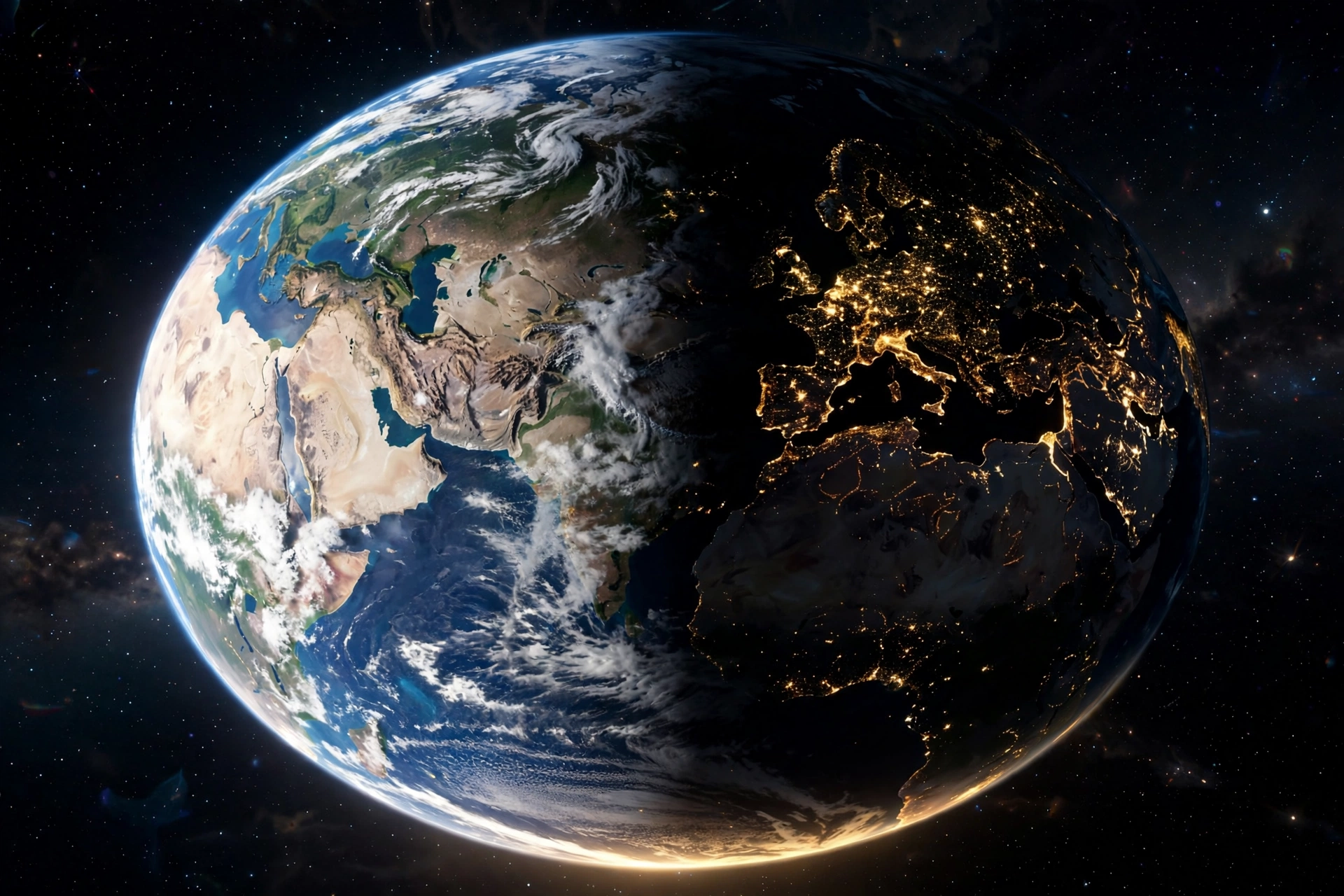
- The side of the Earth facing the Sun has daytime. The side turned away from the Sun has night. The Sun stays where it is — we are the ones turning.
- The Earth spins from west to east, which is why the Sun always seems to rise in the east and set in the west.
- At the equator, the ground beneath your feet moves at about 1,670 kilometres per hour because of the spin, yet you feel nothing at all, just like you feel nothing on a smooth train ride.
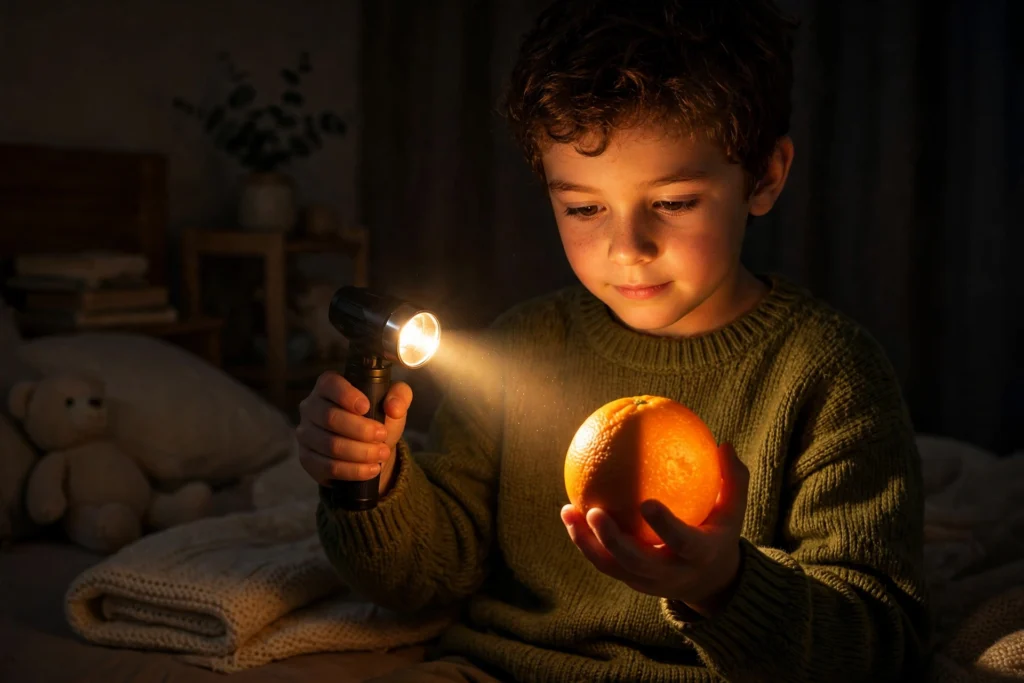
- You can see the whole idea with a torch and an orange in a dark room: the lit side is day, the dark side is night, and a slow turn brings morning, noon, evening, and night.
The Question Every Child Asks at Bedtime
It is eight o’clock in the evening. The sky outside your window has gone dark blue, then black, and the first stars are coming out. An hour ago it was still light enough to play outside. Now your mum is saying it is time for bed, and you are asking the question children have asked for thousands of years: where did the Sun go?
Grown-ups sometimes give a short answer. “The Sun went down.” But that is not really true. The Sun did not go anywhere. It is still out there, shining just as brightly as it was at lunchtime. The thing that moved was you — or rather, the ground under your feet. While you were eating your dinner and brushing your teeth, the Earth was slowly turning, carrying you around to the side that faces away from the Sun.
That is the whole secret of day and night. The Earth spins. One side gets the light, the other side does not. And because the Earth keeps spinning, day follows night and night follows day, again and again.
It sounds simple, and in a way it is. But sit with it for a minute and it is also one of the strangest things in the world. Right now, as you read this, you are spinning through space on a giant ball of rock, and you cannot feel a thing. People on the other side of the world are eating lunch while you are getting ready for bed. And the Sun never moves across the sky at all. We do the moving.
The Short Answer: We Turn, the Sun Stays Put
Here is the whole story in one paragraph. The Earth is a ball, and it spins on an invisible line running through its middle, from the North Pole to the South Pole. Scientists call that line the axis. One full spin takes about 24 hours. While the Earth spins, the Sun shines its light in one direction. The half of the Earth facing the Sun is lit up, and that half has daytime. The other half is in shadow, turned away from the light, and that half has night. As the Earth keeps turning, every place on it takes its turn in the light and then in the dark.
For a very long time, people believed the opposite. They watched the Sun rise in the morning, climb across the sky, and sink in the evening, and it looked obvious that the Sun was the thing moving. The ground under their feet felt still. How could the Earth be moving when nobody felt it move?
Think of sitting on a roundabout in a playground. When the roundabout turns, the trees and the fence seem to glide past you. If you forget you are turning, you could easily believe the whole playground is moving around you. That is what happens with the Sun. We are the ones turning, and the Sun only looks as if it is moving across the sky.
The Earth Spins Like a Top
Take a spinning top and give it a good twist. It stands on its point and whirls around, fast at first, then slower, until it wobbles and falls over. The Earth is like that top, except it never falls over and it never needs another twist. It has been spinning for about four and a half billion years, and it will keep spinning for billions more.
The invisible line the Earth spins around is called its axis. Picture a knitting needle pushed straight through an orange, from the top to the bottom. The orange can spin around the needle, and the needle stays still. The Earth’s axis works the same way. It runs from the North Pole at the top to the South Pole at the bottom, and the whole planet turns around it.
One full turn takes about 24 hours. That is not a coincidence — that is where our day comes from. People long ago noticed that the Sun came back to the same place in the sky after about the same amount of time, and they split that time into 24 hours. The hours came from the spin. Our clocks are really just a way of keeping track of the Earth’s turning.
To be exact, the Earth makes one true turn, measured against the faraway stars, in 23 hours, 56 minutes, and 4 seconds. The Sun takes a tiny bit longer to come back to the same spot in the sky, because while the Earth is spinning it is also creeping along on its trip around the Sun, so it has to turn a little extra to catch up. That extra turn takes about four minutes, giving us the 24-hour day we all live by — the time from one noon to the next noon.
Now here is a number that surprises everyone. At the equator, the widest part of the Earth, the ground moves at about 1,670 kilometres per hour because of the spin. That is faster than any aeroplane you have ever flown in. A point on the equator travels the whole way around the planet — about 40,075 kilometres — in a single day. If you stood on the equator, you would be racing through space at more than a thousand miles an hour, and you would feel nothing at all.
The speed changes depending on where you stand. Near the poles, the circles the ground travels are much smaller, so the speed is much slower. Right at the North Pole or the South Pole, you would hardly be moving at all — just turning slowly on the spot, like the middle of a roundabout.
Why the Sun Looks Like It Moves Across the Sky
Stand outside on a clear morning and watch the Sun come up. First there is a pale glow in the east. Then the edge of the Sun peeks over the horizon. Then the whole round Sun climbs into the sky, higher and higher, until it is overhead around midday. In the afternoon it slides down the other side, and by evening it sinks in the west. It looks exactly like a ball rolling across the sky.
But the Sun is not rolling anywhere. It sits in the middle of our solar system, about 150 million kilometres away, and it stays there. What is really happening is that you are riding around on the turning Earth. In the morning, your part of the world turns toward the Sun, and the Sun seems to rise over the horizon. At midday, your part of the world is facing the Sun squarely. In the evening, your part of the world turns away, and the Sun seems to sink.
Here is a way to picture it. Imagine you are sitting in a chair that slowly turns around in a dark room, and there is one bright lamp on the wall. As your chair turns toward the lamp, the light falls on your face. As it turns further, the lamp slides to your side, then behind you, and your face is in shadow. The lamp never moved. You did. The Sun is the lamp, the Earth is the chair, and you are riding on it.
This also explains why the Sun always rises in the east and sets in the west. The Earth spins from west to east — if you could hover above the North Pole and watch, you would see it turning anticlockwise. Because it turns that way, the eastern edge of your part of the world meets the sunlight first. Morning always comes from the east, and evening always leaves toward the west. It has been that way every day of your life, and it will be that way every day to come.
Shadows tell the same story. In the morning, your shadow stretches out long toward the west. At noon, when the Sun is high, your shadow shrinks to a small puddle under your feet. In the evening, it stretches out long again, toward the east. People used that trick for thousands of years — it is how the first sundials worked.
Try It Yourself: The Torch and the Orange
The best way to understand day and night is to see it happen in your own hands. You need three things: an orange, a torch, and a dark room. A football works too, or any round fruit, but an orange is just the right size, and you can draw on it.
First, draw a tiny dot on one side of the orange and call it your house. That dot is you. Now turn off the lights and close the curtains so the room is as dark as you can make it. Ask someone to hold the torch still, pointing at the orange, or prop it up on a pile of books. The torch is the Sun. It does not move. It just shines.
Hold the orange up in the beam of the torch. The side facing the torch is bright and lit up. The other side is in shadow. Now turn the orange very slowly. Watch your little dot. When the dot turns into the light, it is morning for your house. When it is right in the middle of the lit side, it is noon. As you keep turning, the dot slides toward the edge of the light, and it is evening. Then the dot slips into the dark side, and it is night.
Keep turning, slowly and steadily, and morning comes again. That is exactly what the Earth does, once every 24 hours, except the Earth is the orange and you are the dot. You can even stick a little paper flag into the orange with a pin to mark your town, and watch it travel through day and night as you turn.
Here is something fun to try with the same setup. Put two dots on opposite sides of the orange. When one dot is in bright daylight, the other one is in the middle of the night. That is why your cousin in Australia, or a friend on the other side of the world, can be eating lunch while you are in bed. The Earth is big, and half of it is always in the dark. There is no moment when the whole world is awake at once, and no moment when the whole world is asleep.
You can also try it with a friend. One of you holds the torch and stays still. The other holds the orange and turns it. The person with the torch is the Sun, shining all the time, never switching off. When children try this at school, it clicks for them in a way that reading about it never quite does — the spinning, not the Sun, makes the day.
What Is Night, Really?
Night is not a thing that arrives. Night is what is left when the sunlight is gone. That sounds like a small difference, but it changes how you think about the dark.
During the day, the Sun’s light floods your part of the world. It bounces off the ground, the trees, the buildings, and the clouds, and some of it bounces into your eyes. That bounced light is what lets you see. At night, your part of the Earth has turned away from the Sun, so there is no strong light to bounce around any more. The sky goes dark, and you can only see by the faint light of the Moon and the stars.
That is why the stars come out at night — or rather, why you can finally see them. The stars are shining all day long, every single one of them, but the Sun’s light is so bright that it washes them out, the way a bright lamp in a room makes a candle hard to notice. When the Sun’s light leaves your side of the Earth, the stars are still there, waiting. They were never gone. You just could not see them past the daylight.
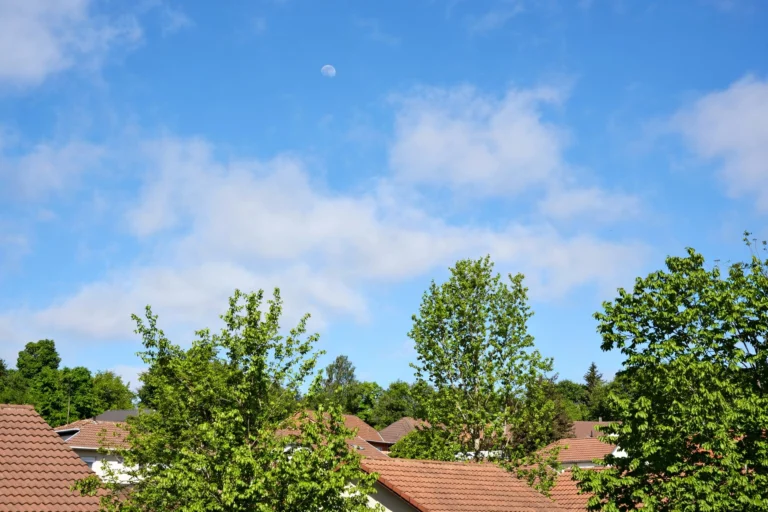
The Moon works the same way. The Moon does not make its own light. It is a cold, grey ball of rock, and it shines only because the Sun’s light bounces off it, the way a white wall shines when a lamp points at it. At night, when your side of the Earth is dark, the Moon can look like the brightest thing in the sky. But you can sometimes see it during the day too, pale and ghostly against the blue sky. If you have ever wondered about that, our guide to the Moon during the day explains it in plain words.
Night is also colder than day, and now you know why. Sunlight does more than light things up: it warms them. The ground soaks up the Sun’s heat all day, like a stone warming in a sunny garden. At night, with no sunlight coming in, the ground slowly gives that heat back to the sky, and the air cools down. That is why the coldest part of the night is usually just before dawn.
Why You Cannot Feel the Earth Spinning
If the ground under your feet is moving at more than a thousand kilometres an hour, why can you not feel it? It is a fair question, and the answer is one you already know from everyday life.
Think about riding in a car on a smooth motorway. When the car is cruising along at a steady speed, you can read a book, sip a drink, and forget you are moving at all. You only feel it when the car speeds up, slows down, or turns a corner. Your body feels changes in speed, not speed itself. The Earth spins at a steady speed, and it has spun at that speed your whole life, so your body has never known anything different. There is nothing to compare it with, so there is nothing to feel.
There is another reason too. Everything around you is moving at the same speed. The ground, the air, the trees, your house, and you are all spinning together, like passengers on the same train. Nothing is rushing past you, because it is all moving with you. The only thing that could give the game away is the sky — and the sky does give it away, every day, as the Sun seems to move across it. That is the clue.
People long ago had the same doubt. They felt the ground still under their feet, so they were sure the Earth was still. It took a French scientist named Léon Foucault, in 1851, to show the spin in a way anyone could watch. He hung a heavy ball on a very long wire from the ceiling of a tall building in Paris and set it swinging, like a giant pendulum. As the hours passed, the direction of the swing slowly turned around, even though nothing was pushing it. The swing was not turning at all — the floor underneath it was turning, carried by the spinning Earth.
So if anyone ever tells you the Earth cannot be spinning because you cannot feel it, you can tell them about the car on the motorway. Steady speed feels like standing still. And you can tell them about the Sun crossing the sky and the shadows moving across the ground. The clues are everywhere, once you know what to look for.
Why Some Days Are Longer Than Others
You may have noticed that summer days feel longer than winter days. In summer, the Sun comes up early and stays up late, and you can play outside until eight or nine in the evening. In winter, it gets dark by four or five, and the days feel short and grey. Does that mean the Earth spins faster in winter? No. The spin never changes. The difference comes from something else: the Earth’s axis is tilted, and as the Earth travels around the Sun over the year, that tilt leans your part of the world toward the Sun in summer and away from it in winter, so the Sun spends more hours above your horizon in summer and fewer in winter. That tilt is the whole story of the seasons, and our guide to four seasons explains it in full, so we will leave it there — day and night come from the spin, and the seasons come from the tilt.
There is one more strange thing the tilt does, far to the north and far to the south. In the middle of summer, places near the North Pole can have days when the Sun never sets at all — the midnight sun. In the middle of winter, the same places can have days when the Sun never rises. It is the same spin, but the tilt leans those places so far that their turn through the sunlight lasts a whole day, or their turn through the dark lasts a whole day.
For most of us, though, the pattern is simpler. Day follows night, night follows day, and the length of each shifts gently with the seasons while the spin underneath stays steady, one turn every 24 hours, every day of the year.
Frequently Asked Questions
Why do we have day and night?
Because the Earth spins on its axis once every 24 hours. The half facing the Sun has day, and the half turned away has night. As the Earth turns, every place takes its turn in the light and then in the dark, so day follows night again and again.
Does the Sun move across the sky?
No. The Sun stays in one place, about 150 million kilometres away. It only looks as if it moves because we are riding on the turning Earth. In the morning our part of the world turns toward the Sun, and in the evening it turns away, so the Sun seems to rise and set.
How long does it take the Earth to spin once?
One full turn takes about 24 hours, which is why a day is 24 hours long. Measured against the faraway stars, one true turn takes 23 hours, 56 minutes, and 4 seconds. The extra four minutes bring the Sun back to the same place in the sky, giving us the familiar 24-hour day.
Why is it dark at night?
Night is simply the absence of sunlight. When your part of the Earth turns away from the Sun, no strong light reaches you, so the sky goes dark. The stars are still shining, and the Moon still reflects sunlight, but without the Sun’s direct light, your side of the world is in shadow.
Why do the days get longer in summer?
The spin never changes, but the Earth’s axis is tilted, and that tilt leans your part of the world toward the Sun in summer, so the Sun stays above the horizon for more hours. In winter the tilt leans you away, so the days are shorter. Day and night come from the spin; the seasons come from the tilt.
Can you see the Moon during the day?
Yes, quite often. The Moon does not make its own light — it shines by reflecting sunlight — and it is often up in the sky while the Sun is up too. It looks pale against the bright blue sky, so many people never notice it, but once you start looking, you will spot it again and again.
More from Zorium Daily
- Why Is the Sky Blue?
- Why Do We Have Four Seasons?
- Why Do Leaves Change Colour in Autumn?
- Why Can We Sometimes See the Moon During the Day?
Tonight, when the sky starts to darken, step outside for a minute and look up. The stars will be coming out, the Moon may be hanging there, and the Sun will be shining on the other side of the world, where children are waking up for school. You are standing on a giant ball of rock, turning steadily through space at more than a thousand kilometres an hour, and you cannot feel a thing. Tomorrow morning, when the light comes back and your shadow stretches out long across the ground, you will know what is really happening. The Sun did not come back. You turned to meet it, just as you do every single day.