Why Do We Have Four Seasons? Explained Simply
SUMMARY OF THIS ARTICLE
- We have seasons because Earth leans about 23.5 degrees as it travels around the Sun, and that lean never straightens up.
- When your half of the world leans toward the Sun, sunlight hits you straight on and the days grow long: summer. When it leans away, the light comes in at a slant and the days shrink: winter.
- Distance from the Sun is not the cause. Earth is actually closest to the Sun in early January, right in the middle of northern winter.
- The year turns on four special days: the June solstice, the December solstice, and the two equinoxes in March and September, when day and night are nearly equal everywhere.
- The two halves of the planet lean in opposite directions, so the seasons are flipped south of the equator: summer in New York means winter in Sydney.
The Question Every Child Asks
Every child asks it sooner or later, usually on a cold morning when the walk to school feels twice as long as it did in June. Why is it warm in summer and cold in winter? Why do the days stretch out in June and then shrink to almost nothing by December? And why do the leaves turn orange and fall, only to come back green again?
Most of us grow up with a ready-made answer in our heads, and the answer is wrong. We think summer comes because Earth moves closer to the Sun, and winter comes because Earth drifts farther away. It sounds sensible. A fire feels warmer when you stand close to it, and cooler when you step back. So the seasons must work the same way, right?
They do not. The real answer is stranger, and once you see it, you cannot unsee it. Summer and winter have almost nothing to do with how far away we are from the Sun. They have everything to do with the way our planet leans.
The Short Answer: It Is the Tilt, Not the Distance
Here is the whole secret in one sentence: Earth spins on an axis that is tilted about 23.5 degrees, and that tilt stays pointing the same way in space all year long as Earth travels around the Sun.
Picture a spinning top. A good top does not stand straight up. It leans a little to one side, and it keeps leaning that same way as it whirls around. Earth is like that top. It spins once a day, which gives us day and night, and it travels once around the Sun in a year. All the while, its axis — the invisible line through the North Pole and the South Pole — leans about 23.5 degrees from straight up.
Because the lean never changes direction, different parts of Earth face the Sun at different times of the year. For half the year, the top half of the planet — the northern hemisphere, where most of us live — leans toward the Sun. For the other half, it leans away. The bottom half — the southern hemisphere — does the exact opposite. That lean, and nothing else, is what gives us spring, summer, autumn, and winter.
The tilt does two things at once. First, it changes the angle of the sunlight. When your half leans toward the Sun, the light falls straight down on you, strong and concentrated. When your half leans away, the same light arrives at a slant, spread thin over a bigger patch of ground, like butter scraped too thinly on toast. Second, the tilt changes how long the Sun stays up. The leaning side gets longer days and shorter nights; the other side gets the reverse. More direct light plus more hours of light adds up to summer. Slanted light plus fewer hours adds up to winter.
If Earth stood up straight, with no tilt at all, we would have no seasons. Every day would feel much the same in any one place: the equator warm, the poles cold, and the middle of the year much like the start of it.
The Strange Truth: We Are Closest to the Sun in January
Now for the fact that surprises almost everyone. Earth is closest to the Sun in early January, in the dead of northern winter. The closest point in our orbit has a name, perihelion, and it falls around January 3 each year, when Earth is about 147.1 million kilometres from the Sun. Six months later, in early July, we reach the farthest point, called aphelion, about 152.1 million kilometres away. The gap between the two is roughly 5 million kilometres.
Five million kilometres sounds enormous, and it is. But against a total distance of about 150 million kilometres, it is only about 3 percent. That small change is not enough to drive the seasons. And the timing proves it. If being closer to the Sun made summer, then January would be the warmest month in London and New York. Instead, January is the coldest. The tilt wins. Distance loses.
This is worth sitting with for a moment, because it overturns the story most of us carry around in our heads. The Sun does not warm us by moving nearer and farther like a person stepping toward a fire and back again. It warms us by shining straight down on us or slanting across us, depending on which way our tilted planet happens to be leaning. The distance wobbles a little. The lean does the real work.
There is one small twist. Being slightly closer to the Sun in January gives the northern winter a tiny boost of extra sunlight, about 7 percent more than in July, so northern winters are a touch milder than they would be otherwise. A gentle nudge, not the engine.
Try It Yourself: The Torch and the Ball
The easiest way to understand the tilt is to try it with your hands. You need a torch and a ball — a football works, an orange works, anything round will do. Darken the room a little and hold the torch steady, shining straight at the ball, and look at the bright circle it makes on the surface.
First, shine the torch straight at the middle of the ball. The light lands in a small, bright, round patch. That is summer light: direct, strong, and concentrated on a small area.
Now keep the torch where it is, but move the beam so it hits the ball near the top edge, at a slant. Watch what happens to the patch of light. It stretches out into a long, pale oval, much bigger and much dimmer than before. The torch is putting out exactly the same amount of light. But because the light arrives at an angle, it has to cover more ground, so each bit of the surface gets less of it. That is winter light: slanted, spread out, and weak.
That is the whole trick of the seasons, sitting on your table. In summer, the Sun is high overhead at midday and its rays hit your town almost straight down, like the torch aimed at the middle of the ball. In winter, the Sun stays low, even at noon, and its rays rake across your town at a shallow angle, like the torch aimed at the edge. The Sun itself has not changed. The angle has.
Summer: Long Days and a High Sun
Let us walk through the year, starting with summer in the northern half of the world. Around June 21 each year comes the June solstice, the longest day of the year for everyone north of the equator. On that day, the North Pole leans as far toward the Sun as it ever does, and the Sun shines straight down on a line of latitude called the Tropic of Cancer, about 23.5 degrees north of the equator.
Two things happen at once, and together they make summer feel like summer. First, the Sun climbs high in the sky. At noon in June, it sits almost overhead in the middle latitudes, and its rays hit the ground nearly straight down. That direct light carries more warmth per square metre than the slanted light of winter. Stand in a garden at noon in June and you can feel it on the back of your neck.
Second, the days get long. Because the northern hemisphere is leaning toward the Sun, a place like London or New York spends more of each 24-hour spin in daylight than in darkness. London gets about 16 and a half hours of daylight around the June solstice, and the evenings stretch so far that children can still be playing outside at nine o’clock. More hours of sun plus stronger sun is a double win, and the ground, the air, and the sea all warm up.
Summer is also the season when the living world goes into overdrive. Trees are in full leaf, gardens are heavy with fruit, and animals are busy raising their young. If you have ever wondered why the sky is blue on those long, clear summer days, the answer is in the way sunlight scatters through the air — and a blue summer sky is one of the prettiest sights the tilt gives us.
Winter: Short Days and a Low Sun
Six months later, the picture flips. Around December 21 comes the December solstice, the shortest day of the year in the north. The North Pole now leans as far away from the Sun as it ever does, and the Sun shines straight down on the Tropic of Capricorn, about 23.5 degrees south of the equator, deep in the southern hemisphere.
Now the northern hemisphere gets the weak end of the deal. The Sun stays low in the sky all day, even at noon, and its rays arrive at a shallow angle, spread thin. The light has to travel through more air to reach you, which scatters and weakens it further. And the days are short. London gets fewer than eight hours of daylight around the December solstice. The Sun comes up late, goes down early, and the afternoons turn dark before the school day is even over.
That is why winter feels the way it does. It is not that the Sun has gone away or grown weaker. It is that your part of the planet is leaning away from it, so you get fewer hours of light and the light you do get comes in sideways.
The Two Days When Day and Night Are Equal
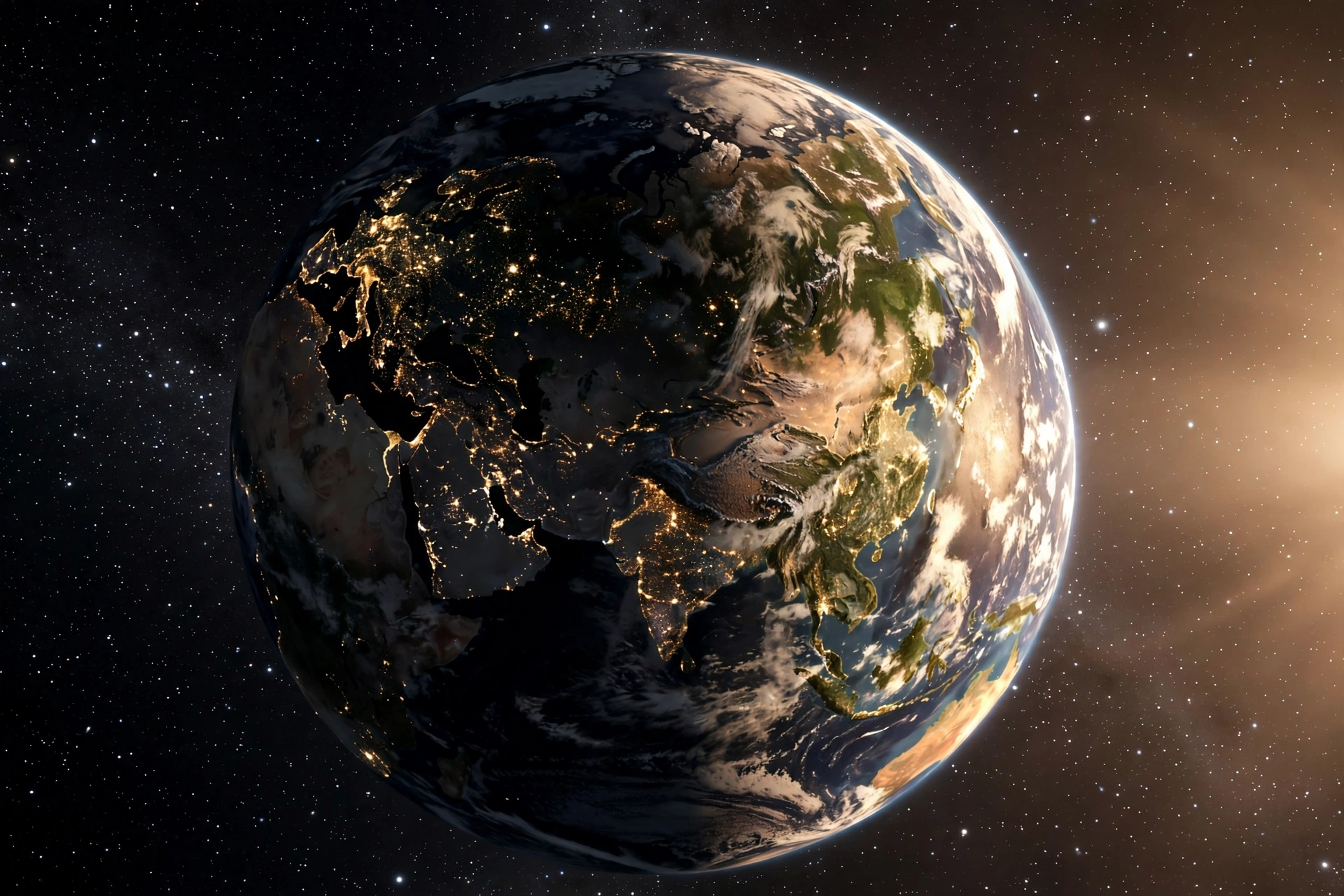
Between the two solstices sit two more turning points, and they have a lovely name: the equinoxes. The word comes from Latin and means “equal night”, and that is exactly what happens. On an equinox, day and night are nearly equal in length everywhere on Earth, about 12 hours each.
The spring equinox falls around March 21, and the autumn equinox falls around September 22 or 23. On those days, neither hemisphere is leaning toward the Sun or away from it. The Sun shines straight down on the equator, and the line between day and night runs neatly from pole to pole. For one day, the whole planet shares the light equally.
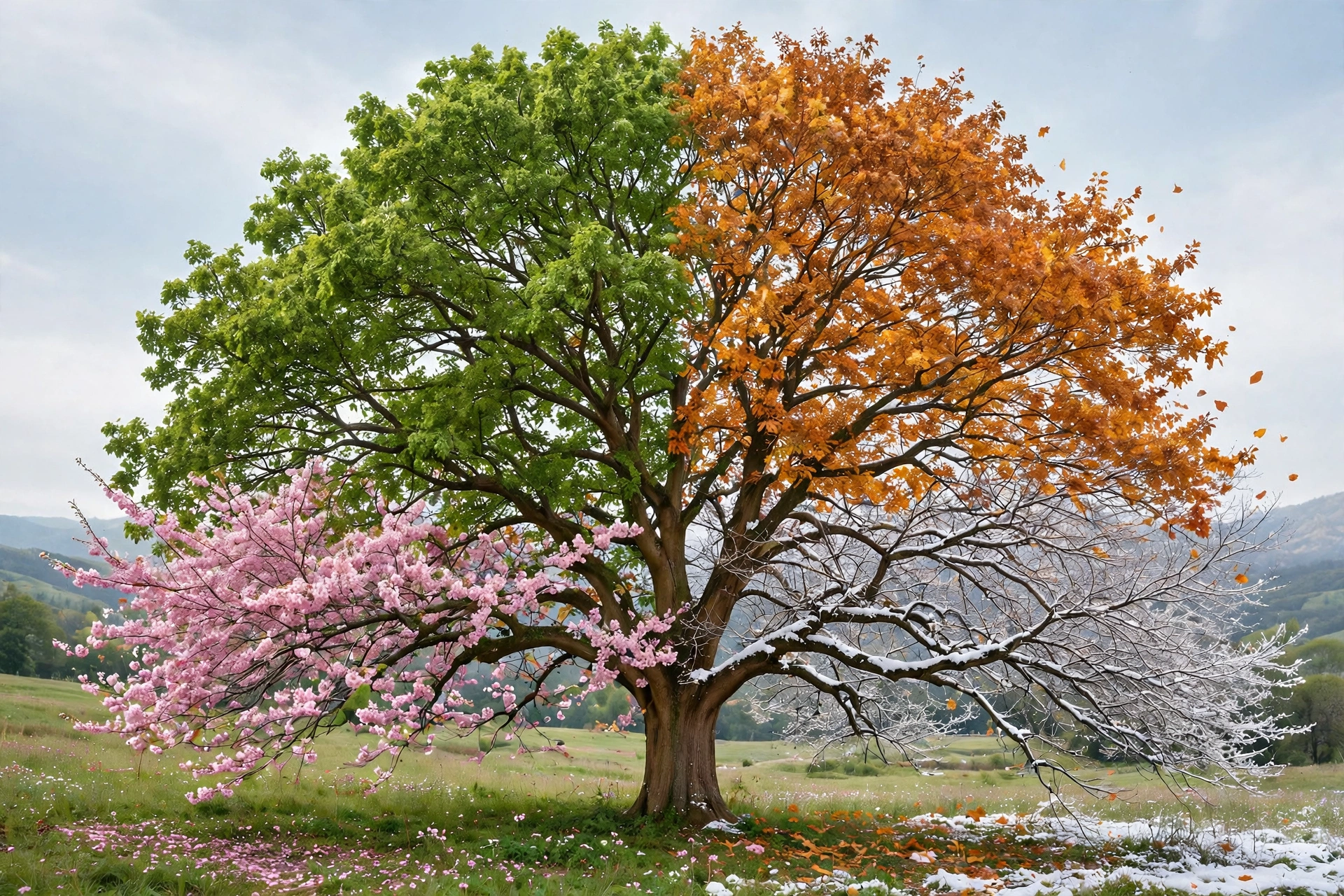
Equinoxes are the hinges of the year. After the March equinox, the northern hemisphere starts leaning toward the Sun, the days grow longer than the nights, and spring opens up. After the September equinox, the lean reverses, the nights grow longer than the days, and autumn settles in. If you have ever watched why leaves change colour in autumn, you have seen the September equinox at work: as the days shorten and the light weakens, trees pull back and put on their autumn colours.
You can think of the four turning points as the four corners of the year. June solstice: longest day, start of northern summer. September equinox: equal day and night, start of autumn. December solstice: shortest day, start of winter. March equinox: equal day and night again, start of spring.
Why Christmas Is Hot in Sydney
Here is where the story gets really fun. Everything we have said about the northern hemisphere is backwards in the southern hemisphere, because the two halves of Earth always lean in opposite directions.
When the North Pole leans toward the Sun in June, the South Pole leans away. So while London is enjoying its longest day, Sydney is having its shortest. While New Yorkers are eating ice cream in July, people in Sydney are wearing coats and lighting heaters, because it is winter there. And when December arrives and the North Pole leans away, the South Pole leans toward the Sun, so Sydney gets its longest days and its hottest weather while New York shivers.
That is why Christmas looks so different in Australia. In Sydney, Christmas Day often means a barbecue on the beach, a swim in the sea, and Santa in shorts on a surfboard. It is summer there, not because Australia is closer to the Sun in December — remember, the whole planet is near its closest point to the Sun in January — but because the southern hemisphere is leaning toward the Sun at that time of year.
The flip is not just a curiosity for travellers. It shapes farming, school holidays, and festivals across the southern hemisphere, where the school year, the harvest, and the holidays all run on a calendar six months out of step with the north. Same planet, same Sun, opposite lean.
The Equator Barely Notices, and the Poles Go Wild
Not every place feels the seasons the same way. How much the seasons change where you live depends on how far you are from the equator.
Near the equator — in places like Singapore, Quito, or Nairobi — the seasons barely show up at all. The Sun is high overhead all year, the days stay close to 12 hours long, and the temperature hardly moves from month to month. People there do not talk about four seasons. They talk about wet seasons and dry seasons instead, because rain, not temperature, is what changes. The tilt still exists, but near the equator its effect on sunlight is so small that the year feels like one long, warm stretch.
Travel away from the equator and the seasons sharpen. In London, New York, or Tokyo, the four seasons are clear and distinct, with hot summers, cold winters, and springs and autumns in between. Travel further still, toward the Arctic Circle, and the seasons turn extreme. In the far north, summer brings the midnight sun — weeks when the Sun never sets at all, because the North Pole is leaning so far toward it that the spin of the Earth never carries you into darkness. And winter brings the polar night — weeks when the Sun never rises, because the lean has tipped you permanently away from it.
Those extremes are the tilt showing off. The same 23.5-degree lean that gives London a pleasant summer and a chilly winter gives the far north a summer of endless daylight and a winter of endless night.
How the Seasons Change the Living World
The seasons are not just about weather. They run the calendar of the living world. Plants, animals, and people all live by them.
In spring, the lengthening days and warming light wake everything up. Seeds that slept through the winter push out shoots. Trees open their buds. Birds that flew south for the winter come back and start building nests. Farmers plant their fields. The whole world seems to stretch and yawn after the long dark months.
In summer, life grows at full speed. Plants soak up the long days and make food from sunlight. Insects buzz, flowers bloom, and animals raise their young while food is easy to find. People spend more time outside, eat outdoors, and take holidays, because the evenings are long and the air is warm.
In autumn, the shortening days tell living things to get ready. Trees pull the green colour back from their leaves and let them fall, so they do not lose water through the winter. Animals eat as much as they can and grow thick coats. Birds gather in flocks and fly south to warmer places. People harvest crops, store food, and pull out jumpers and coats.
In winter, life slows down and waits. Some animals sleep right through it, curled up in burrows in a deep sleep called hibernation. Others stay awake but move slowly, saving energy. Trees stand bare, their buds tucked tight against the cold.
How to Watch the Seasons Change Yourself
You do not need a telescope or a textbook to see the seasons at work. You need a window, a notebook, and a little patience.
Pick a spot in your home where you can see the Sun, or at least its light, at the same time every day. Mark where the light falls on the floor or the wall. Come back a month later, at the same time, and look again. The patch of light will have moved. In the months toward June, the midday Sun climbs higher and the shadows shrink. In the months toward December, the Sun sinks lower and the shadows stretch. You are watching the tilt in action, one shadow at a time.
And if the night sky catches your eye, look up. On a clear winter night the stars come out early, which is a fine time to wonder why the sky is dark at night when the Sun is on the other side of the world. You can sometimes spot the Moon in the daytime sky too, and if that puzzles you, our simple guide to why we can sometimes see the Moon during the day explains it in plain words.

Frequently Asked Questions
What causes the seasons?
The seasons are caused by the tilt of Earth’s axis, about 23.5 degrees, as Earth travels around the Sun. Because the tilt always points the same way in space, one hemisphere leans toward the Sun for half the year and away from it for the other half. The leaning side gets stronger, more direct light and longer days: summer. The other side gets weaker, slanted light and shorter days: winter. Distance from the Sun is not the cause.
Is Earth closer to the Sun in summer?
No, and this is the fact that surprises most people. Earth is actually closest to the Sun in early January, around January 3, when it is about 147.1 million kilometres away — the middle of winter in the northern hemisphere. Earth is farthest from the Sun in early July, around 152.1 million kilometres away, when it is summer in the north. The difference is only about 3 percent, far too small to cause the seasons.
Why are days longer in summer?
Days are longer in summer because your hemisphere is leaning toward the Sun. As Earth spins once a day, a place on the leaning side spends more hours in sunlight before the spin carries it around into darkness. Around the June solstice, London gets about 16 and a half hours of daylight; around the December solstice, when the northern hemisphere leans away, it gets fewer than eight hours.
Why is it winter in Australia when it is summer in England?
Because the two hemispheres always lean in opposite directions. When the North Pole leans toward the Sun in June, the South Pole leans away, so England has summer while Australia has winter. Six months later the lean reverses, so Australia has summer while England has winter. That is why Christmas in Sydney is often a hot beach day, while Christmas in London means coats, scarves, and early darkness.
What is the difference between a solstice and an equinox?
A solstice is the day when one hemisphere is leaning most toward or most away from the Sun, giving the longest or shortest day of the year. There are two each year: the June solstice, around June 21, and the December solstice, around December 21. An equinox is the day when neither hemisphere leans toward the Sun, so day and night are nearly equal everywhere: the spring equinox, around March 21, and the autumn equinox, around September 22 or 23. Together, the four days mark the start of the four seasons.
Do places near the equator have seasons?
Barely. Near the equator, the Sun stays high overhead all year and the days stay close to 12 hours long, so the temperature hardly changes from month to month. Instead of four seasons, people near the equator usually talk about wet and dry seasons, because rain is what changes most. The further you travel from the equator, the stronger the seasons become.
More from Zorium Daily
- Why Is the Sky Blue?
- Why Is the Sky Dark at Night?
- Why Do Leaves Change Colour in Autumn?
- Why Can We Sometimes See the Moon During the Day?
The next time you step outside and feel the Sun on your face, take a second to notice where it is in the sky. Is it high overhead, throwing short shadows at your feet? Or is it low down, stretching your shadow long across the ground? That little detail tells you everything about the season you are standing in. Our planet is leaning, as it always has, and as it travels around the Sun that lean turns summer into autumn, autumn into winter, winter into spring, and spring back into summer again.