Why Do Volcanoes Erupt? Explained Simply
SUMMARY OF THIS ARTICLE
- A volcano erupts when hot melted rock called magma pushes its way up from deep inside the Earth and bursts out at the surface.
- Magma is full of trapped gas, a bit like a shaken bottle of fizzy drink with the cap still on. When the pressure drops, the gas makes bubbles, and the mixture forces its way out.
- Most volcanoes sit where giant rocky plates under the Earth’s surface meet, pull apart, or push together.
- Runny magma lets its gas escape easily, so the eruption is gentle and the lava flows like a river. Thick, sticky magma traps the gas, and the pressure builds until it blows apart in a huge explosion.
- Scientists watch volcanoes with sensors, cameras, and satellites, and they can often warn people before an eruption, though they cannot stop one.
The Fizzy Drink That Exploded All Over the Kitchen
Mia was ten, and she was thirsty. It was a hot Saturday afternoon, and her mum had just come home from the shops with a big bottle of cola. Mia grabbed it from the bag, gave it a good shake the way you shake a bottle of juice, and twisted the cap.
She did not even get the cap all the way off. The cola shot up in a brown fountain, fizzed all over her hands, ran down the front of her t-shirt, and puddled across the kitchen floor. Her older brother Tom doubled over laughing. “You shook it first,” he said. “What did you think was going to happen?”
Mia wiped her face with the back of her hand and laughed too, because it was funny once the shock wore off. But later that evening, while she was helping her mum mop the floor, she asked the question that had been sitting in the back of her mind all afternoon. “Why did it do that? It was just sitting there in the bottle.”
Her mum smiled. “Because the gas had nowhere to go. Inside that bottle, the gas was squeezed tight. When you shook it, you made thousands of tiny bubbles, and when you opened the cap, all that gas wanted out at once. So it pushed the cola out with it.”
Mia nodded. She did not know it yet, but she had just learned the secret of how a volcano erupts. A volcano is a mountain with a shaken bottle of fizzy drink hiding inside it, only the bottle is made of rock, the drink is melted stone hotter than any oven, and the explosion can be seen for miles around. This guide explains it all in plain words: what magma is, where it comes from, why some volcanoes flow like a river and others blow apart, and what three famous volcanoes can teach us about it.
So What Is a Volcano, Really?
A volcano is a place where hot melted rock from deep inside the Earth can escape to the surface. It is usually a mountain, but it does not have to be. Some volcanoes are gentle hills. Some are wide, flat mounds that barely look like mountains at all. What makes a volcano a volcano is not its shape. It is the opening in the ground, called a vent, where the melted rock comes out.
Deep underground, rock is so hot that it melts. That melted rock is called magma. When magma reaches the surface, we give it a new name: lava. So magma and lava are the same thing in two different places. Magma is the name for it while it is still underground, and lava is the name for it once it has come out.
Think of the Earth like a chocolate egg with a hard shell. The shell we live on is called the crust, and it is thin compared with the rest of the planet. Under the crust is a layer called the mantle, where the rock is so hot it can melt and flow very slowly, like thick honey. Deeper still is the core, the hottest part of all. Magma forms in the mantle, where the heat is strong enough to turn solid rock into liquid.
A volcano is like a crack or a weak spot in the chocolate shell. When magma finds that weak spot, it rises through it. If it reaches the surface, the volcano erupts. The lava pours out, cools down, and turns back into solid rock. Over many eruptions, layer after layer of cooled lava piles up, and that is how a volcanic mountain grows, one eruption at a time.
Where Does Magma Come From?
Magma does not just appear anywhere. It forms in a few special places, and most of them have something to do with the giant plates that make up the Earth’s crust.
The crust is not one solid piece. It is broken into huge slabs called tectonic plates, and they fit together like the pieces of a giant jigsaw puzzle. These plates are always moving, very, very slowly. They creep along at about the speed your fingernails grow, which sounds like nothing at all, but over millions of years it is enough to move whole continents.
Our planet is a busy place. It spins once a day, which is why we have day and night, and deep below our feet, those rocky plates are always creeping along. Where two plates meet, strange and powerful things happen. Sometimes one plate slides under another and sinks down into the hot mantle. As it sinks, it melts, and that melted rock becomes magma. Sometimes two plates pull apart, and the gap lets hot rock from the mantle rise up and melt. And sometimes a plate drifts over a very hot spot deep in the mantle, and the heat melts the rock from below.
That is why most of the world’s volcanoes sit in the same places. They line the edges of plates, like beads on a string. The most famous line of volcanoes on Earth is called the Ring of Fire. It runs all the way around the Pacific Ocean, past Japan, Indonesia, and the west coasts of the Americas, and it holds most of the planet’s active volcanoes. Hawaii is different. It sits in the middle of a plate, far from any edge, right over a hot spot in the mantle. The heat there has been melting rock for millions of years, and it is still going today.
When plates push against each other, the ground can shake, and that shaking is what causes an earthquake. That is why volcanoes and earthquakes often happen in the same places. They are two different results of the same slow, powerful movement happening deep underground.
The Fizzy Drink Inside the Mountain
Now we come to the heart of it, the part that explains why a volcano erupts at all. It all comes down to gas.
Magma is not just melted rock. It is melted rock with gas trapped inside it, mostly water vapour and a gas called carbon dioxide. Deep underground, the weight of all the rock above squeezes the magma very hard. That pressure keeps the gas dissolved in the magma, the way the sealed cap on a bottle of fizzy drink keeps the bubbles dissolved in the drink. As long as the cap stays on, nothing happens. The gas is there, but you cannot see it.
But magma is lighter than the solid rock around it, so it slowly rises. As it rises, the weight pressing down on it gets less and less. The pressure drops. And when the pressure drops, the gas can no longer stay dissolved. It starts to form bubbles, just like the bubbles that appear when you open a bottle of cola.
At first the bubbles are tiny. Then they grow. More and more gas comes out of the magma and into the bubbles, and the bubbles take up more and more space. The mixture of magma and bubbles swells up like a sponge soaking up water. It pushes against the rock around it. It needs somewhere to go.
This is exactly what happened to Mia’s bottle of cola. The shaking made thousands of bubbles, and when the cap came off, the pressure dropped all at once, and the gas pushed the drink out in a fountain. In a volcano, the rising magma is the drink, and the opening at the top of the mountain is the cap coming off. Once the gas starts to bubble, there is no stopping it. The only question is how fast it comes out, and that depends on how thick the magma is.

Why Some Eruptions Flow and Some Explode
Not all volcanoes erupt in the same way. Some pour out lava in a slow, glowing river that people can walk away from. Others blow the top off a mountain in a single terrible blast. The difference is not how hot the magma is. It is how thick it is, and how easily the gas can escape.
Think of two drinks. One is a glass of water. The other is a thick milkshake. If you blow through a straw into the water, the bubbles rise up and pop at the surface straight away. The gas escapes easily, and nothing much happens. But if you blow through a straw into a thick milkshake, the bubbles get stuck. They grow bigger and bigger under the surface, pushing the milkshake up and up, until it spills over the sides of the glass in a sticky mess.
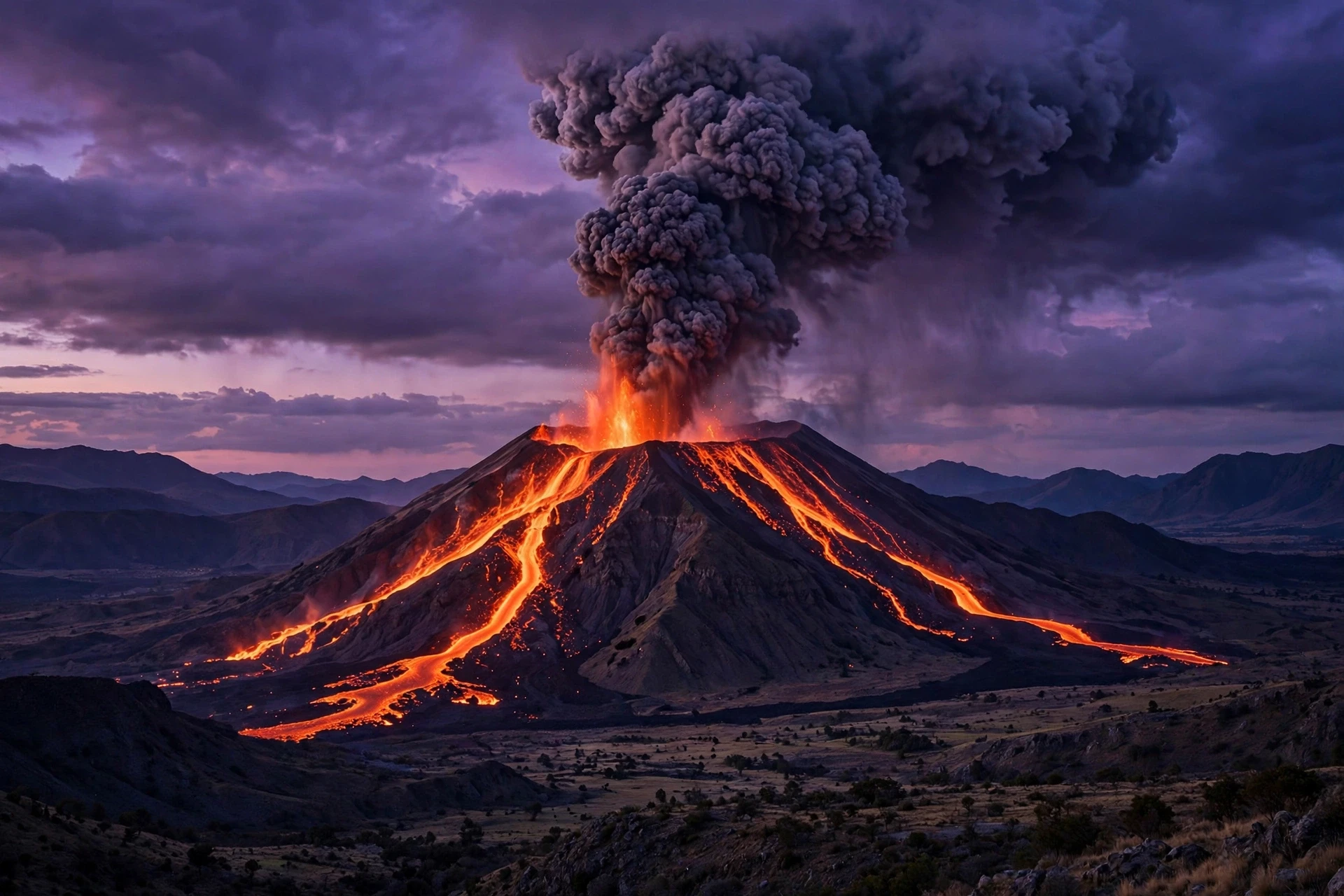
Runny magma works like the water. It is hot and thin, and the gas bubbles can rise through it and pop at the surface without any trouble. The eruption is gentle. Lava pours out of the vent and flows downhill like a slow river of glowing orange. It moves slowly enough that people can usually walk away from it, though it burns everything it touches, and it can still destroy houses and roads.
Thick magma works like the milkshake. It is sticky and slow, and the gas bubbles cannot escape. They grow and grow, and the pressure builds and builds, until the rock above can no longer hold it back. Then the whole thing blows apart. The top of the volcano can be blasted off. Hot ash and rock are thrown high into the sky. A cloud of burning gas and ash can race down the side of the mountain faster than a car on a motorway. This kind of eruption is rare, but when it happens, it is one of the most powerful events on Earth.
So the next time you hear about a volcano on the news, ask yourself one question: was the magma runny or sticky? The answer tells you almost everything about what happened. Runny magma means a flowing river of lava. Sticky magma means an explosion. And in between, there is every shade of eruption you can imagine.
Three Famous Volcanoes, Three Different Stories
The best way to understand volcanoes is to look at real ones. Three volcanoes tell the story better than any list of facts. Each one erupted in a different way, and each one teaches us something different.
The first is Mount Vesuvius, in Italy. Long ago, in the year 79, Vesuvius erupted with terrible force. The towns of Pompeii and Herculaneum sat at the foot of the mountain, and the people who lived there had no idea what was coming. The volcano had been quiet for so long that nobody thought of it as dangerous. Then, one day, it exploded. A huge column of ash and rock shot into the sky, and hot ash rained down on the towns below. Pompeii was buried under metres of ash, and it stayed hidden for centuries, until people digging in the ground found it again. The eruption was so powerful because the magma under Vesuvius was thick and sticky, and the gas had been trapped inside it for a very long time. Today, Vesuvius is watched day and night by scientists, and millions of people live near it, in one of the most crowded places in Europe.
The second is Mount St. Helens, in the United States. In the spring of 1980, the mountain began to wake up. Small earthquakes shook the ground. Steam puffed from the top. A strange bulge grew on one side of the mountain, like a swelling on the side of a balloon. Scientists watched it closely and warned people to stay away. Then, on the morning of 18 May 1980, a strong earthquake shook the mountain, and the whole bulging side slid away in the largest landslide ever seen. With the weight of that rock suddenly gone, the gas inside the volcano burst out in a sideways blast. The top of the mountain was blown away. Trees were flattened for miles around, as if a giant hand had swept them flat. Fifty-seven people lost their lives. It was a disaster, but it taught scientists a huge amount. Mount St. Helens showed the world what a sideways blast looks like, and it showed why warning people early and keeping them away from a restless volcano matters so much.
The third is Kilauea, in Hawaii. Kilauea is one of the most active volcanoes on Earth, and it behaves differently from the other two. Its magma is runny, so its gas escapes easily, and its eruptions are usually gentle. Lava bubbles up from cracks in the ground and flows downhill in glowing rivers. Sometimes it pours into the sea, and where the hot lava meets the cold water, great clouds of steam rise into the air. People have watched Kilauea’s lava for generations, and in Hawaii the volcano is part of everyday life. Kilauea shows us the other side of volcanoes: not every eruption is a disaster. Some are slow, beautiful, and even useful, because the lava they leave behind becomes rich new land.
Three volcanoes, three kinds of eruption. Vesuvius was a sudden explosion from sticky magma. Mount St. Helens was a sideways blast after the side of the mountain gave way. Kilauea is a gentle flow from runny magma. Together, they show us the whole range of what a volcano can do.
What Comes Out of a Volcano?
When a volcano erupts, lava is only part of the story. Three other things come out as well, and each one behaves differently.
The first is ash. Volcanic ash is not like the soft grey ash in a fireplace. It is made of tiny pieces of rock and glass, and it is sharp enough to scratch skin and hurt lungs. A big eruption can throw ash so high into the sky that it drifts for hundreds of miles, and when it falls, it can cover fields, roofs, and roads in a thick grey blanket. It blocks out the sun, and it can make the air hard to breathe. Planes cannot fly through it, because the tiny glassy pieces can damage their engines.
The second is gas. The same gas that was trapped in the magma escapes into the air. Most of it is water vapour, but there is also a gas called sulphur dioxide, which smells like rotten eggs. In very large amounts, volcanic gas can harm people and animals, and it can even cool the whole planet for a year or two, because the tiny particles it leaves high in the sky reflect sunlight back into space.
The third is rock. An explosive eruption can throw chunks of rock the size of footballs, and sometimes the size of cars, out of the vent. These rocks are called volcanic bombs, and they fly through the air while they are still glowing hot.
Together, lava, ash, gas, and rock make up an eruption. Lava is the part you see in films, glowing and beautiful. Ash and gas are the quieter parts, but they often cause more trouble, because they travel further and they are harder to escape.
Can Scientists Tell When a Volcano Will Erupt?
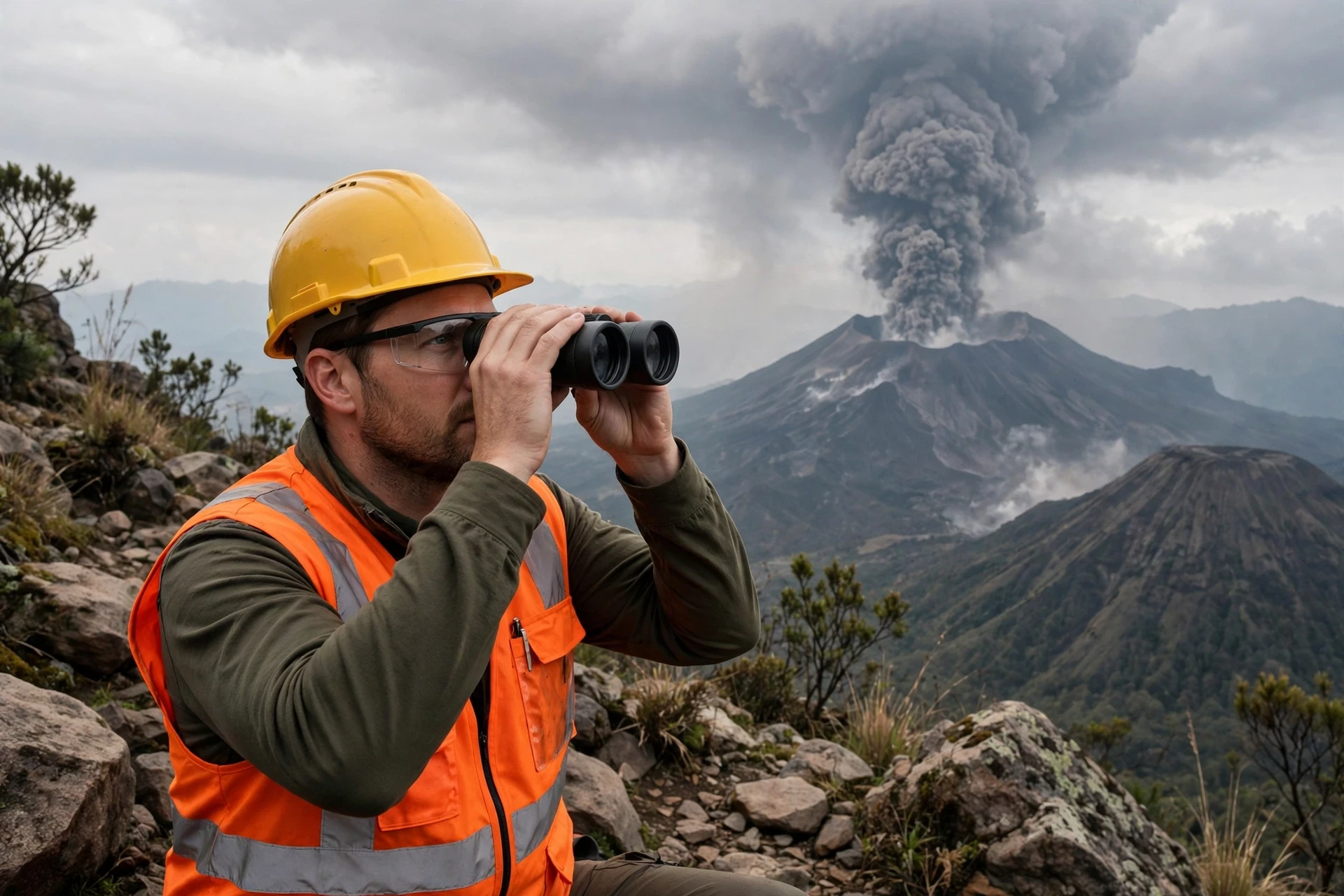
Yes, often they can, though not always, and never exactly. Scientists who study volcanoes are called volcanologists, and their job is to watch restless volcanoes and look for the warning signs.
The first sign is earthquakes. Before an eruption, magma pushing its way up cracks the rock around it, and that cracking makes hundreds of small earthquakes. A single earthquake means nothing on its own. But hundreds of small earthquakes under the same mountain, all happening over a few days, are a strong warning that something is moving below.
The second sign is the ground itself. Magma takes up space, so as it rises, it pushes the ground above it upward. The side of the mountain can swell by a few centimetres, or even a few metres. Scientists measure this with satellite pictures and with instruments fixed to the rock, and a growing bulge is one of the clearest signs that an eruption may be coming.
The third sign is gas. As magma rises, it starts to let go of its gas, and the gas escapes through cracks and vents. Scientists can measure how much gas is coming out of a volcano, and if the amount suddenly rises, it is another warning that the magma is on the move.
When the signs line up, scientists tell the government, and the government tells people to leave. This warning system has saved many lives. It is not perfect. Some volcanoes erupt with almost no warning, and some show all the signs and then go quiet again. But it is far better than it used to be. Today, most of the world’s dangerous volcanoes are watched around the clock.
Why Do People Live Near Volcanoes?
If volcanoes are so dangerous, why do millions of people live near them? It sounds strange, but there are good reasons.
The first reason is the soil. Volcanic ash breaks down into some of the richest soil on Earth. Farmers near volcanoes can grow grapes, coffee, bananas, and vegetables in soil that other farmers would dream of. In Italy, some of the best tomatoes in the world grow on the slopes of Vesuvius. In Indonesia, rice fields cover the land around volcanoes. The danger is real, but so is the harvest.
The second reason is heat. The hot rock below a volcano can be used to make electricity and to heat homes. This is called geothermal energy, and in Iceland, a country full of volcanoes, it heats whole towns. It is clean, it never runs out, and it comes straight from the Earth itself.
The third reason is simpler: people have always lived there. Towns and cities grow up around volcanoes over hundreds of years, and families put down roots. They know the risk, but it is home. They trust the scientists who watch the volcano, and they trust the warning system to give them time to leave if they must.
Volcanoes give and volcanoes take. They destroy, and they create. They bury towns, and they build new land. That is what makes them so fascinating, and so frightening.
Frequently Asked Questions
What is a volcano in simple words?
A volcano is an opening in the Earth’s surface where hot melted rock, gas, and ash can escape from deep underground. The melted rock is called magma while it is still below the ground, and lava once it has come out.
Why do volcanoes erupt?
A volcano erupts because magma full of trapped gas rises toward the surface. As it rises, the pressure on it drops, the gas forms bubbles, and the mixture swells up and forces its way out through the opening at the top, just like a shaken bottle of fizzy drink bursting open.
What is the difference between magma and lava?
Magma and lava are the same hot melted rock in two different places. Magma is the name for it while it is still underground. Once it comes out of the volcano and reaches the surface, it is called lava.
Why do some volcanoes explode and others flow gently?
It depends on how thick the magma is. Runny magma lets its gas escape easily, so the lava flows out gently. Thick, sticky magma traps the gas, and the pressure builds up until it explodes.
Can scientists predict a volcano eruption?
They can often give a warning, but not an exact date. They watch for small earthquakes, swelling ground, and rising gas, and when the signs line up, they warn people to leave the area. The system is not perfect, but it has saved many lives.
Are volcanoes always dangerous?
Not always. Gentle eruptions with runny lava can be watched safely from a distance, and volcanoes bring rich soil, new land, and clean geothermal energy. But explosive eruptions are very dangerous, and nobody should go near a volcano that scientists say is restless.
More from Zorium Daily
- What Causes an Earthquake?
- What Causes Thunder and Lightning?
- What Is Gravity and Why Do Things Fall Down?
- Why Do Tides Go In and Out?
The next time you open a bottle of fizzy drink, watch the bubbles rise and think of Mia in her kitchen. Deep under the ground, the same thing is happening on a much bigger scale, in mountains of rock, with melted stone instead of cola. A volcano is just the Earth letting off pressure, and now you know exactly how it works.