Why Do Tides Go In and Out? Explained Simply
SUMMARY OF THIS ARTICLE
- Tides are the sea rising and falling each day, mostly because of the Moon’s gravity pulling on the water.
- The Moon’s pull is stronger on the side of the Earth facing it, and that uneven pull makes two bulges of water, one on each side of the planet.
- Most beaches get two high tides and two low tides a day, about 12 hours and 25 minutes apart, and high tide comes about 50 minutes later each day.
- The Sun helps too, and when the Sun, Moon and Earth line up we get bigger spring tides, while neap tides are smaller when they sit at right angles.
- The Moon does not lift the water up like a hand; the difference in its pull across the Earth is what makes the sea move, and a tide table tells you when to expect it.
The Sandcastle That Disappeared
Maya was eight years old, and she had spent the whole morning on her sandcastle. It had walls, a tower, a little moat, and a shell for a flag on top. Her dad helped her pat the sides smooth. Her little brother brought buckets of wet sand. By lunch time, the castle looked like something from a storybook, and Maya was so proud that she asked her mum to take a photo of it.
Then the sea came back.
It did not rush in all at once. First the water touched the edge of the moat. Then it lapped at the walls. Then, wave by wave, the castle softened, sagged, and melted back into the flat sand. Maya stared at it. She had not knocked it down. Nobody had stepped on it. The sea had simply come in, the way it does every day, and taken her castle with it.
If you have ever been to the beach, you have probably seen the same thing. In the morning the water is far away, and you can walk out over wet sand that was under the sea only a few hours before. By the afternoon the water is close again, and the place where you were sitting is now under the waves. It can feel strange, as if the sea cannot make up its mind. But the sea is not being random at all. It is following a rhythm, a slow and steady rise and fall. That rhythm has a name. We call it the tide.
What a Tide Actually Is
A tide is the sea rising and falling in a regular pattern. When the water comes in and covers more of the beach, we call that high tide. When it pulls back and leaves more sand showing, we call that low tide. Between the two, the water is either on its way in or on its way out.
Think of the sea as a huge blanket of water wrapped around the Earth. That blanket is not flat and still. It has bumps in it, great slow bulges of water that move around the planet as the Earth turns. When a bulge passes your beach, the water is deeper there, and you get high tide. When the bulge moves on, the water level drops.
Most beaches see this happen twice a day. Two high tides, two low tides, one after the other, like a slow breath in and out. The gap between one high tide and the next is not twelve hours, the way you might expect. It is about twelve hours and twenty-five minutes. That extra twenty-five minutes is a clue, and it tells us who is really in charge of the tides. It is not the Sun, although the Sun plays a part. The main mover is the Moon.
People have watched the tides for thousands of years. Fishermen knew when to push their boats out and when to bring them home. Sailors knew when a harbour would be deep enough for a big ship. They did not always know why it happened, but they knew the pattern, and they planned their lives around it.
The Moon Is Pulling the Sea
Everything with mass pulls on everything else. That pull is called gravity, and you can read more about what gravity is if you want the full story. The Earth pulls you down, which is why you stay on the ground. The Moon also pulls on the Earth, and on the seas that cover most of it.
The Moon is far away, about 384,400 kilometres from us, but it is big enough, and close enough, that its pull matters. Water is not fixed in place like rock. It can flow. So when the Moon pulls on the ocean, the water on the side of the Earth facing the Moon gets tugged toward it. It piles up a little. It forms a bulge, a wide, gentle hill of water, right under the Moon.
Now here is the part that surprises most people. There is not just one bulge. There are two. One sits on the side facing the Moon. The other sits on the exact opposite side of the Earth, the side farthest from the Moon. And the reason for that second bulge is the key to the whole story.
It would be easy to picture the Moon as a giant hand reaching down and lifting the sea. That picture feels natural, but it is wrong. The Moon is not lifting the water. What matters is not how hard the Moon pulls, but how differently it pulls on different parts of the Earth.
Why There Are Two Bulges, Not One
Imagine three friends holding hands in a line, and someone at one end gives a gentle tug. The friend nearest the tug feels it most. The friend in the middle feels it less. The friend at the far end feels it least of all. They are all being pulled, but not by the same amount, and that difference stretches the line out.
The Moon does something like that to the Earth. Its gravity is strongest on the ocean nearest to it, weaker on the solid Earth in the middle, and weakest on the ocean on the far side. On the near side, the water gets pulled toward the Moon more strongly than the Earth itself does, so the water bulges out toward the Moon. On the far side, the Earth gets pulled toward the Moon more strongly than the water there does, so the Earth is pulled away from that water, and the water is left behind as a bulge.
So we end up with two bulges, one on each side of the planet, with the Earth sitting between them. It is the difference in the pull, not the pull on its own, that makes the tides. You can just remember it as a stretch.
Now think about what happens as the Earth turns. Our planet spins once a day, and as it spins, your beach moves through those two bulges. First it passes through one bulge, and the water is high. Then it passes through the flatter water between the bulges, and the water is low. Then it passes through the second bulge, and the water is high again. Then low again. That is why most places get two high tides and two low tides every day.
Why High Tide Comes Later Every Day
If you go to the same beach at the same time two days in a row, the tide will not be in the same place. Yesterday high tide might have been at ten in the morning. Today it might be at almost eleven. Tomorrow it might be closer to midday. The tide keeps slipping later, by about fifty minutes each day.
The Moon does not stay still in the sky. While the Earth spins once in twenty-four hours, the Moon is also moving along its path around the Earth. By the time the Earth has done one full turn, the Moon has moved a little bit further on. So the Earth has to spin a little bit more before your beach is back under the Moon again.
Put together, one full turn plus that little extra gives us a lunar day, a day measured by the Moon instead of the Sun. A lunar day lasts twenty-four hours and fifty minutes. A tide follows the lunar day, not the ordinary day on your clock. That is why high tide is about fifty minutes later each day, and why the gap between two high tides is about twelve hours and twenty-five minutes, which is half of a lunar day.
This is also why a tide table is so useful. A tide table is just a list of the times of high tide and low tide for one place, day by day. Fishermen, sailors, surfers, and beach walkers check it the way you might check the weather. If you want a morning swim, you look at the table. If you want to walk out to the rock pools, you wait for low tide.
The Sun Joins In: Spring Tides and Neap Tides
The Moon is the main cause of the tides, but the Sun has a say too. The Sun is much bigger than the Moon, but it is also much farther away, about 150 million kilometres from us, so its tidal pull is only about half as strong as the Moon’s. Half is still a lot, though, and when the Sun and the Moon work together, or pull against each other, the tides change.
Twice a month, at the new moon and the full moon, the Sun, the Moon and the Earth line up in a straight line. Then the Sun’s pull adds to the Moon’s pull, and the bulges get bigger. High tides get higher, and low tides get lower, so the difference between high and low water is at its largest. These are called spring tides. The name has nothing to do with the season of spring. It comes from an old word meaning to spring up, or to rise quickly.
A week later, when the Moon is at its first quarter or its last quarter, the Sun and the Moon sit at right angles to each other, as seen from Earth. Now the Sun is pulling the water in a different direction from the Moon, and the two pulls partly cancel each other out. The bulges get smaller. High tides are not as high, and low tides are not as low, so the range between them is at its smallest. These are called neap tides.
So the tides have two rhythms at once. There is the daily rhythm, high and low twice a day, and there is a slower rhythm over about two weeks, spring tides growing bigger and neap tides growing smaller, then back again. If you live near the sea and watch it for a month, you can see both rhythms playing out.
Why Some Places Get Only One Tide a Day
Most of the world gets two high tides a day, but not everywhere. Some places, like parts of the Gulf of Mexico and parts of South East Asia, get only one high tide and one low tide each day. A few places get a mix, with one big tide and one small tide. Why the difference, if the Moon makes two bulges for everyone?
The answer is that the shape of the coast gets in the way. The sea is not one open bowl of water. It is broken up by continents, islands, bays, and shallow shelves. The bulges of water have to move around all of that land, and in some places the shape of the bay, or the depth of the water, slows the tide down or makes one of the two daily tides much weaker than the other. In a narrow bay, the water can also slosh back and forth, like water in a bath, and that sloshing can line up with the tide in a way that makes one high tide disappear.
The shape of the sea floor matters too. In very shallow water, the tide moves more slowly. In deep water, it moves faster. And where a coast bends sharply, the timing can shift by hours from one town to the next. Two beaches only a short drive apart can have high tide at quite different times.
This is why tide tables are always local. A table for one town will not work for a town fifty kilometres down the coast. The Moon sets the pattern, but the land shapes it, and every coastline makes the pattern its own.
Reading a Tide Table Before a Beach Day
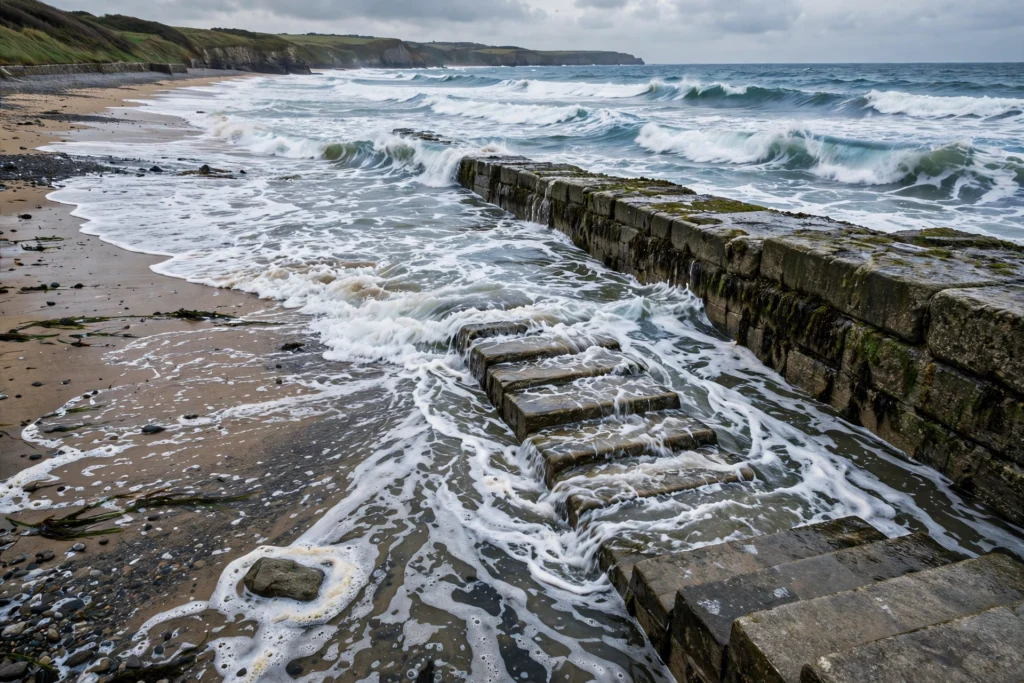
Tom lives near the coast, and every Saturday he checks the tide table before he loads the car. He is not a sailor. He just likes to take his two children to the beach, and he has learned the hard way that the tide decides what kind of day it will be. One Saturday he forgot to check, and they arrived to find the water right up against the sea wall, with no sand to sit on at all. They drove home, and Tom has checked the table every week since.
A tide table looks plain at first. It is a list of dates, times, and heights. But once you know how to read it, it tells you a story. The high tide time tells you when the water will be at its highest. The low tide time tells you when it will be at its lowest. The height tells you how far the water will come in, or how far it will go out.
For a beach day, the table helps you pick your time. If you want a swim, go near high tide, when the water is deep and close. If you want to explore rock pools, or walk far out over the sand, go near low tide. If you are taking a boat out, you need enough water under it to float, and you need to know when the harbour will be deep enough to get back in again. If you are building a sandcastle, you might want to build it above the high tide line, unless you are happy to watch the sea take it, the way Maya did.
What Low Tide Leaves Behind
Low tide is the sea at its most generous to a curious person. When the water pulls back, it leaves behind a whole world that is hidden for most of the day. Rock pools, those small hollows in the rock that hold seawater after the tide has gone out, are full of life. Tiny crabs scuttle sideways. Small fish dart in the clear water. Sea anemones, which look like little flowers, close up into soft blobs until the water returns.
Maya, the sandcastle girl, came back to the same beach a week later, this time at low tide. Her dad had checked the table. The sea was far away, and the rocks were bare. She crouched beside a rock pool and watched a tiny crab walk across the bottom. She found a starfish tucked under a stone. She learned to step gently, and to put stones back where she found them, because the creatures in the pools are waiting for the sea to come back.
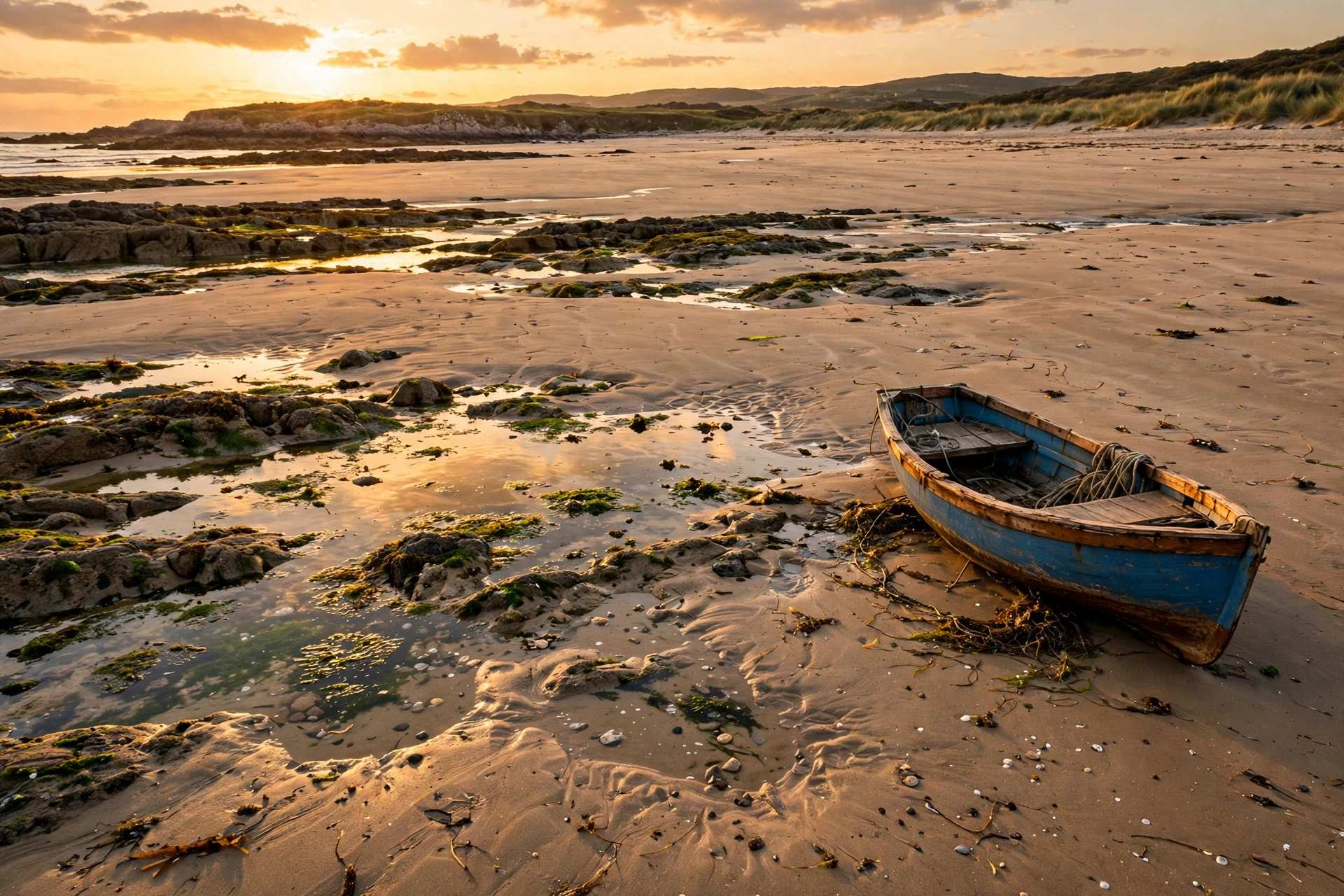
Low tide also leaves behind clues. A line of seaweed marks how far the last high tide reached. Wet sand shows where the water was only an hour ago. A boat resting on the sand shows how far the water has dropped. In some harbours, whole rows of boats sit on the mud at low tide, waiting patiently for the water to lift them again. They look stranded, but they are not.
Boats, Rock Pools, and Living With the Tide
People who live and work by the sea do not fight the tide. They work with it. Fishermen time their trips so they can get out over a shallow bar at high tide and come back before the water gets too low. Harbour masters plan when big ships can enter and leave. People who farm oysters and mussels on the shore use the tide like a clock.
Boats tell the story best. At high tide, a small fishing boat floats free, bobbing on the water, ready to go. At low tide, the same boat may sit on the sand, leaning a little to one side, its keel resting on the ground. The owner is not worried. He knows the water will be back in a few hours, and the boat will float again. In some places, boats are built with flat bottoms so they can sit upright on the sand at low tide.
The tide also shapes the land itself. Twice a day, the water carries sand in and takes sand away. Over years, it can carve a bay, build a sandbank, or wear a cliff down to smooth rock. It leaves shells and seaweed on the beach, then takes them back. It is slow work, but it never stops.
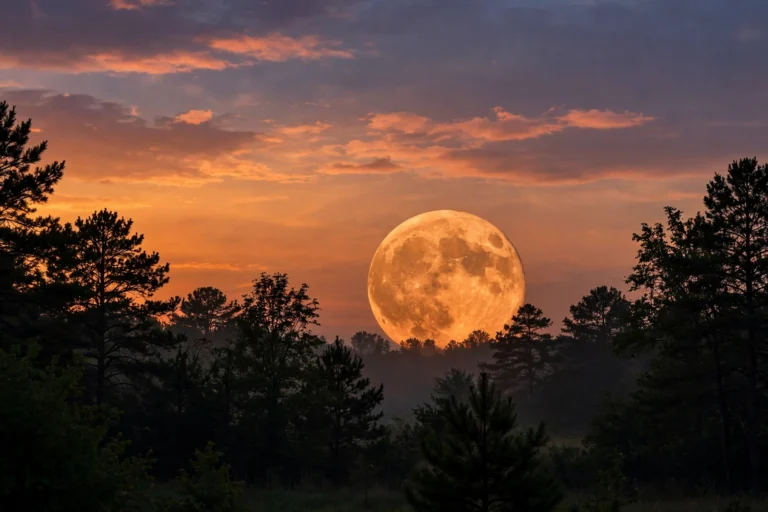
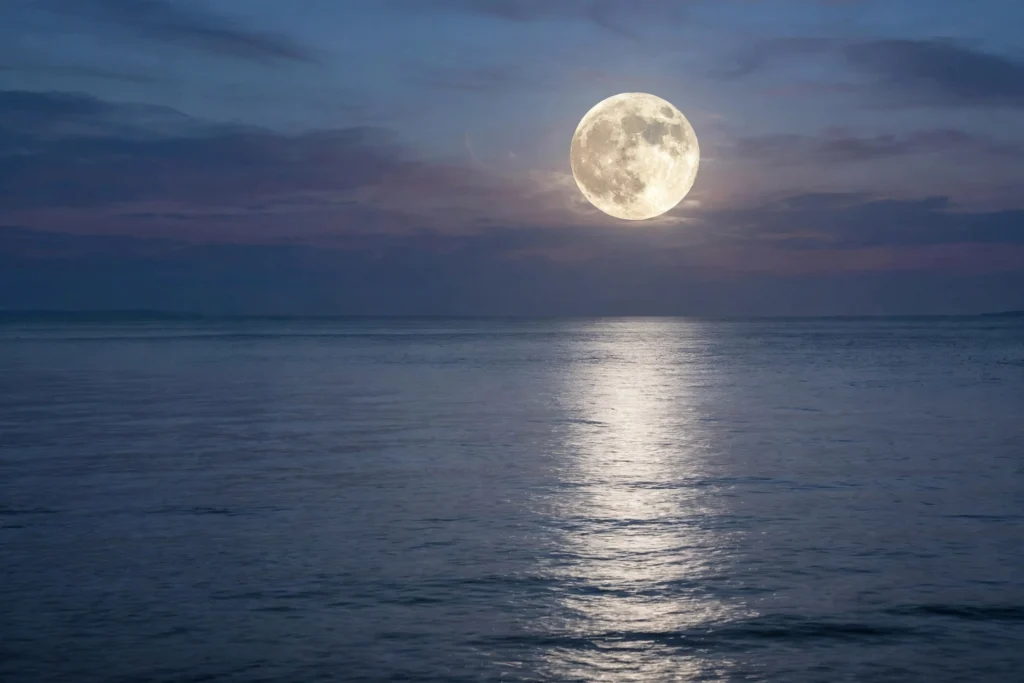
So the next time you stand on a beach, watch the water for a while. Is it coming in, covering the sand a little more with each wave? Or is it going out, leaving wet sand and rock pools behind? Look up at the Moon if it is in the sky, even in the daytime, because sometimes you can see the Moon during the day, pale against the blue, quietly pulling at the sea. The tide is not magic. It is the Moon, the Sun, and the turning Earth, working together, and your beach is caught in the middle of it, rising and falling, twice a day, every day.
Frequently Asked Questions
Why do tides go in and out?
Tides go in and out because the Moon’s gravity pulls on the sea and makes two bulges of water, one on the side facing the Moon and one on the far side. As the Earth turns, your beach moves through those bulges, so the water rises when a bulge arrives and falls when it moves on. The Sun adds its own smaller pull, which changes how big the tides are.
Why are there two high tides a day?
There are two high tides a day because there are two bulges of water on opposite sides of the Earth. The near bulge is made because the Moon pulls the closest water toward it more strongly than it pulls the Earth. The far bulge is made because the Earth is pulled toward the Moon more strongly than the water on the far side, leaving that water behind as a bulge. As the Earth turns, a beach passes through both bulges, so it gets two high tides.
Why does high tide come later each day?
High tide comes about fifty minutes later each day because the Moon moves along its path while the Earth spins. After one full spin, the Moon has moved on a little, so the Earth must turn a bit more before the same beach is under the Moon again. That extra turn takes about fifty minutes, and it makes a lunar day last twenty-four hours and fifty minutes.
What are spring tides and neap tides?
Spring tides are bigger tides that happen when the Sun, Moon and Earth line up, at the new moon and the full moon, so the Sun’s pull adds to the Moon’s pull and makes higher high tides and lower low tides. Neap tides are smaller tides that happen when the Sun and Moon are at right angles, so their pulls partly cancel out and the range between high and low water is smaller. Both kinds happen about twice a month.
Does the Moon lift the water up?
No, the Moon does not lift the water up like a hand picking something up. What matters is the difference in the Moon’s pull across the Earth. The pull is stronger on the near side than in the middle, and stronger in the middle than on the far side, and that uneven pull stretches the oceans into two bulges. If the Moon pulled on everything equally, there would be no tides at all.
Why do some places have only one tide a day?
Some places have only one tide a day because the shape of the coast, the depth of the water, and the shape of bays can slow down or weaken one of the two daily tides. In a narrow bay, the water can slosh back and forth in a way that cancels out one high tide, and in shallow water the tide moves more slowly. The Moon still makes two bulges for the whole planet, but the land shapes how those bulges reach each local beach.
More from Zorium Daily
- What Is Gravity and Why Do Things Fall Down?
- Why Can We Sometimes See the Moon During the Day?
- Why Do We Have Four Seasons?
- Why Is the Sky Blue?
The sea will keep rising and falling long after your sandcastle is gone, and that is part of what makes the beach such a good place to learn about the world. Check the tide table, watch the Moon, and go at low tide if you want rock pools, or near high tide if you want a swim, because once you know the rhythm, the sea stops feeling random.