How Do Small Shops Compete With Big Supermarkets?
SUMMARY OF THIS ARTICLE
- Big supermarkets win on low prices and a huge choice of goods, but small shops can still win in other ways.
- A small shop wins when it knows its customers by name, listens well, and gives fast, friendly, personal help.
- Special local goods, fresh food, and things you cannot find in a big store give a small shop a clear reason to visit.
- Smart prices, careful stock, good service, and simple online tools help a small shop stay open and make money.
- A small shop does not need to beat a big supermarket at its own game — it needs to be the best shop for its own street and its own people.
What Does It Mean to Compete?
To compete means to try to win. In business, it means to try to win customers. A customer is a person who buys something. A big supermarket and a small shop both want the same thing: people who come in, buy goods, and come back again.
A big supermarket is a very large store. It sells food, drinks, soap, clothes, and many other things, all under one big roof. It can buy a huge amount of goods at one time. Because it buys so much, it often gets a lower price from the people who make or sell those goods. Then it can sell goods at a lower price to customers. That is a strong point. It is hard for a small shop to beat.
But a small shop has strong points too. A small shop is close to home. It is run by people who often live in the same area. The shop owner may know your name, your family, and what you like to buy. That kind of care is hard to find in a very big store. This article looks at how small shops use those strong points, step by step, in plain words.
Why Big Supermarkets Seem So Strong
First, let us be fair. Big supermarkets are strong for real reasons. If we know their strong points, we can see where a small shop must be smart.
One strong point is price. A supermarket buys rice, oil, milk, and soap in very large amounts. When you buy a lot, the price for each item is often lower. This is called buying in bulk. Bulk means a very large amount at one time. A small shop buys much less, so each item often costs the shop more. That makes it hard to sell at the same low price.
A second strong point is choice. A supermarket may have ten kinds of jam, twenty kinds of soap, and many kinds of bread. A small shop has less space, so it cannot keep so many kinds. If a customer wants a very rare item, a big store is more likely to have it.
A third strong point is comfort. A supermarket is open for long hours. It has wide paths, trolleys, and parking for cars. A family can do one big shop for the whole week in one place. That saves time.
So, if a small shop tries to fight on price and choice alone, it will often lose. The good news is that a small shop does not have to fight that way. It can fight on care, speed, trust, and special goods. Those are things a big store finds hard to copy.
The Biggest Strength of a Small Shop: Knowing People
The number one strength of a small shop is people. Not just selling to people, but knowing people.
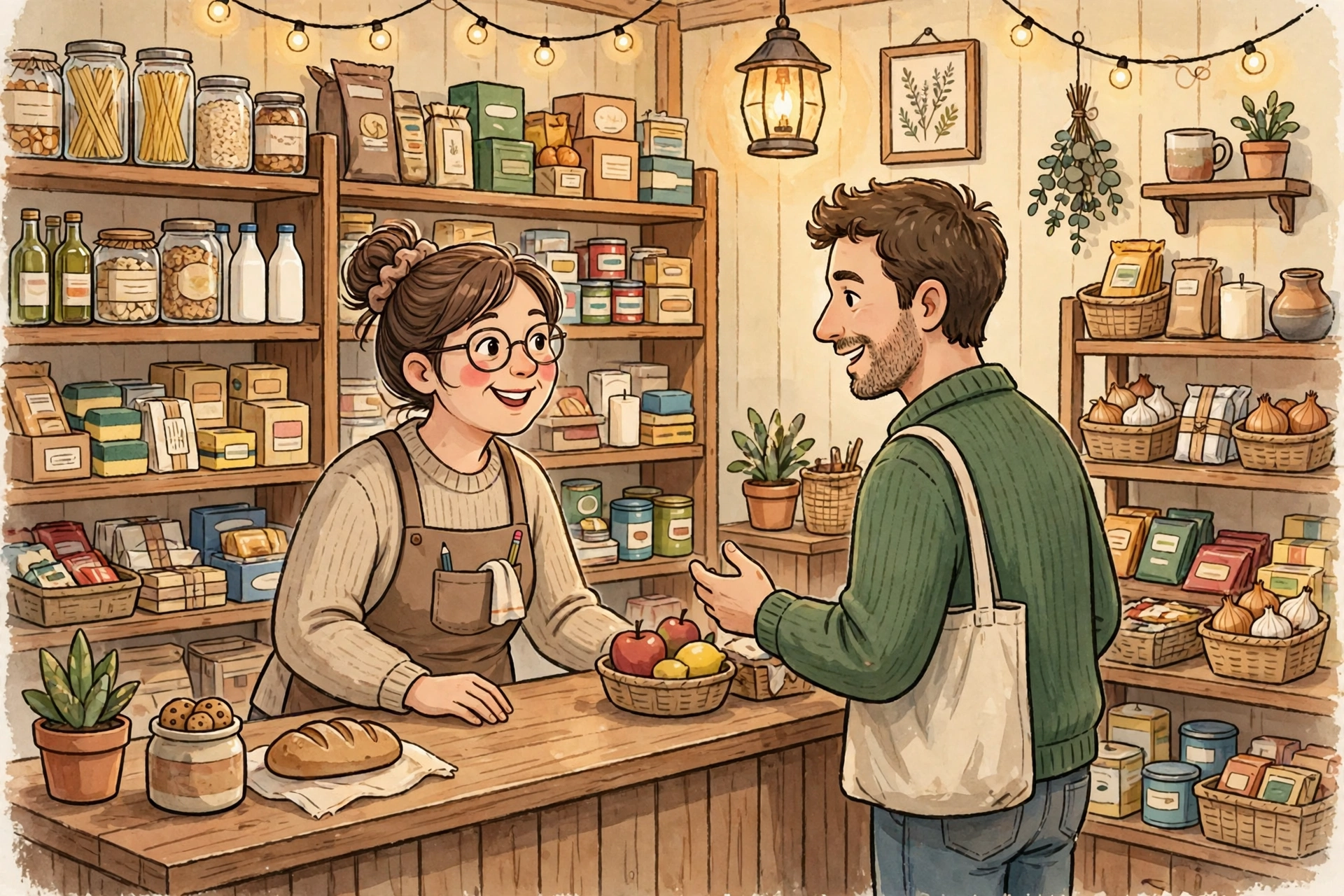
Think of a small shop near your home. The owner may greet you with a smile. She may ask about your children. He may remember that you like a certain kind of tea, or that you buy bread every morning. That small act makes you feel seen. You are not just a number. You are a neighbour.
In a big supermarket, you may shop for an hour and no one speaks to you at all. You scan your own goods, pay, and leave. That is fast, but it is not warm. Many people like fast shopping, but many people also like warm shopping, where they feel welcome.
A small shop can use this strength every day. It can learn the names of regular customers. A regular customer is a person who comes back again and again. It can ask what they need. It can keep a note of what sells well. It can say thank you in a real way, not just with a printed receipt.
Trust grows from these small acts. Trust means you believe a person or a shop will treat you fairly. When you trust a shop, you go back even if the price is a little higher. You go back because you know the shop will help you if something is wrong. You know you will not be ignored.
This is also why a shop owner should hire kind and patient staff. Staff are the people who work in the shop. One rude word can lose a customer for good. One kind word can keep a customer for years. Training here does not mean a long course. It means a simple rule: greet people, listen first, and help with a smile.
Be Close, Be Fast, Be Easy
A small shop has another gift: it is close. Many people live a short walk from a small shop, but a long drive from a big supermarket. For a quick need — milk in the morning, medicine at night, a snack for a child — a close shop wins.
Speed matters. In a small shop, you walk in, pick up what you need, pay, and walk out in a few minutes. In a big supermarket, you may walk a long way, wait in a long line, and spend much more time. For busy people, time is precious. Precious means very valuable.
A small shop can make life even easier. It can stay open at times when local people need it most, such as early in the morning or late at night. It can keep the most-needed goods near the front, so people do not have to search. It can help carry a heavy bag for an older person. It can take a phone order and keep goods ready for pick-up. These small acts of ease are a real reason to choose a small shop.
Sell Something Special, Not Everything
A small shop cannot sell everything. But it can sell something special very well. Special goods give people a reason to visit that shop and not just any shop.
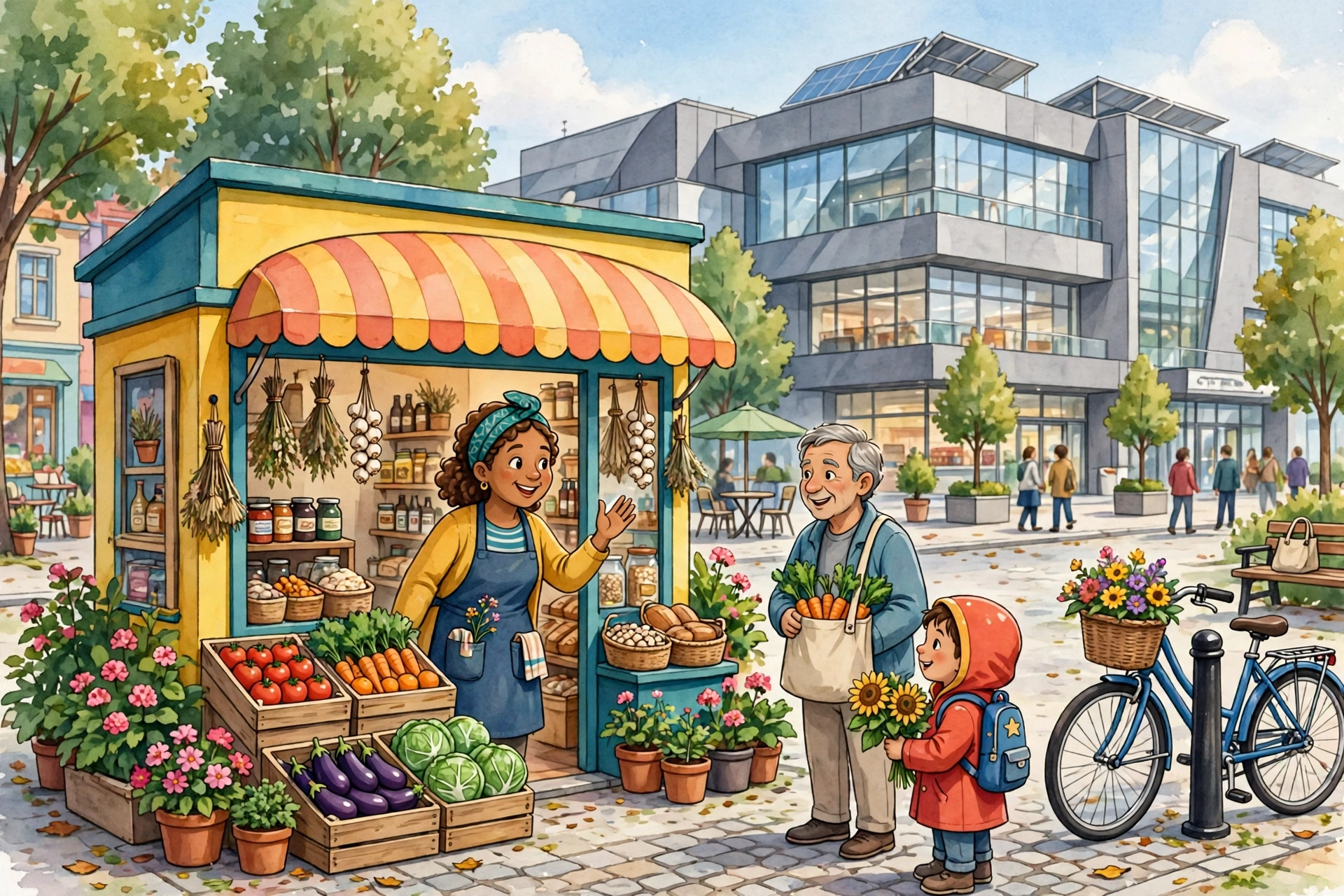
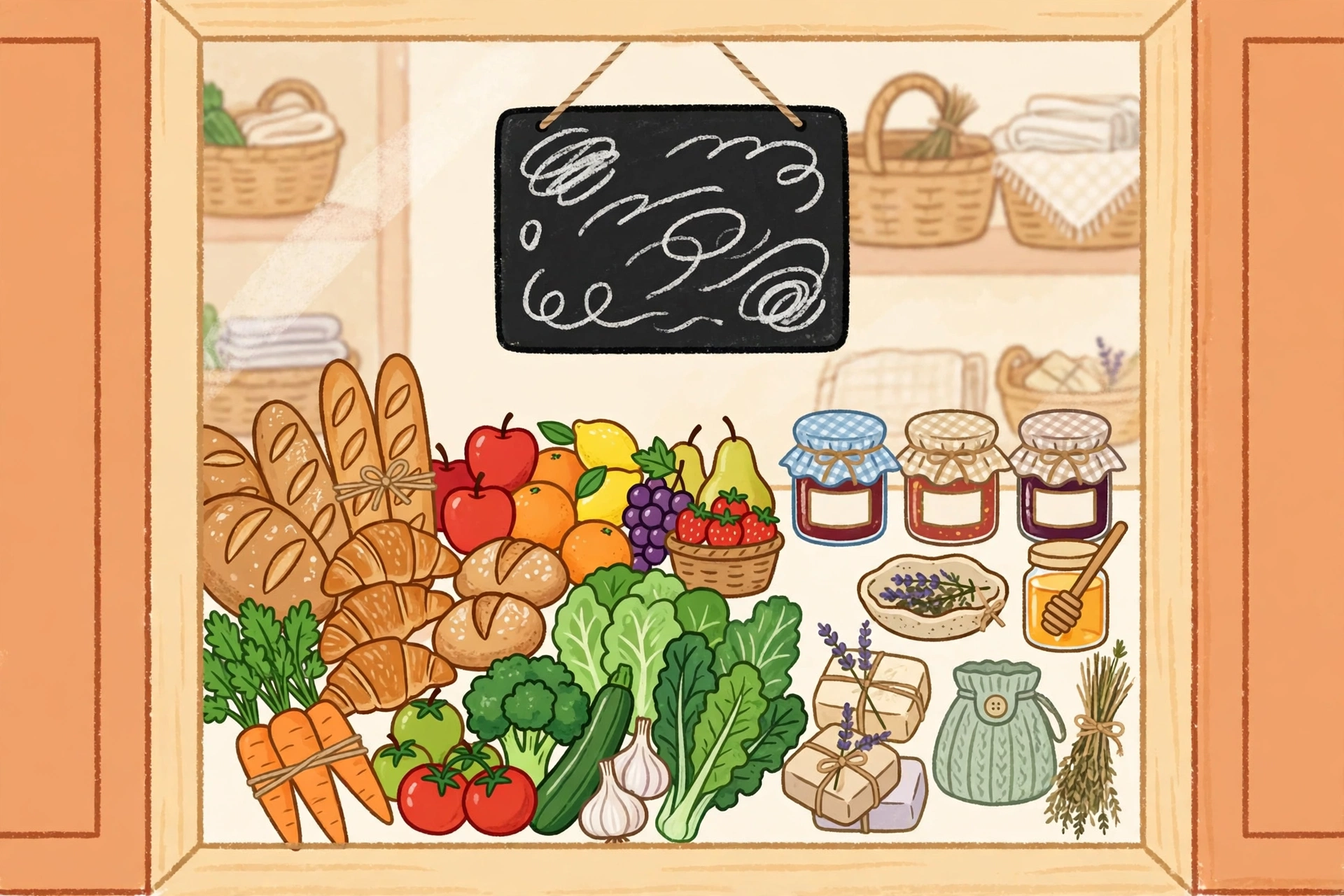
One kind of special good is local food. Local means made or grown near the shop. Fresh bread from a nearby baker, fresh fruit from a nearby farm, pickles made by a family in the area, or sweets made for a local festival — these goods feel fresh and real. A big supermarket may sell bread too, but it may come from far away and taste less fresh. A small shop can tell the story of where its food comes from. People like to know the story behind their food.
A second kind of special good is a rare good. Rare means hard to find. A small shop may sell a spice, a tea, a sauce, or a craft item that big stores do not keep. When people want that one special item, they will come to that shop on purpose. Over time, the shop becomes known as the place for that item. That is a strong place to be.
A small shop should also be careful not to copy the big store shelf by shelf. If it tries to sell the same long list of goods, it will lose on price. If it picks a smaller, smarter list — the goods its own customers love most — it can keep its shelves fresh and its stock moving. Stock means the goods a shop keeps ready to sell.
Price Smart, Not Just Low
Many small shop owners think they must be the cheapest. That is a trap. Trap here means a mistake that looks like a good idea but causes harm. If a small shop always sells at the lowest price, it may not make enough money to pay rent, pay staff, and buy new stock. Then it must close.
Instead, a small shop should price smart. Smart pricing means setting a fair price that customers accept and that still leaves the shop with some money. The money left after paying for goods and costs is called profit. Profit is what keeps a shop alive. Without profit, a shop cannot last.
How can a small shop price smart? First, it can keep prices fair on everyday goods, like milk, eggs, rice, and bread. People notice these prices. If these are fair, people feel the shop is honest. Second, it can charge a little more for special goods, because people are happy to pay more for something rare, fresh, or made with care. Third, it can offer small deals that do not hurt profit too much, such as buy two and get a small gift, or a lower price on one item each week.
Loyalty also helps with price. Loyalty means staying faithful to a shop and coming back again and again. A small shop can reward loyal customers with a small thank-you: a free small item after ten visits, a small discount on a birthday, or first news of a new product. A discount is a lower price for a short time or for a special reason. These small rewards cost little, but they make people feel valued.
Service That a Big Store Cannot Copy
Service means the help a shop gives its customers. Good service is the quiet power of a small shop.
Good service starts with listening. If a customer says, “I cannot find this item,” a good shop worker does not just point to a shelf. She walks with the customer, finds the item, or says honestly if it is not in stock. If it is not in stock, she can offer to order it, or suggest a close item that works just as well. That honest help builds trust.
A small shop can also give advice. Advice means helpful ideas about what to buy or how to use it. A shop that sells food can suggest a simple recipe. A shop that sells tools can show how to use a tool safely. A shop that sells plants can explain how much water a plant needs. This advice is free, but it is very valuable. It turns a shop into a helpful neighbour, not just a place to pay.
Keep the Shop Clean, Bright, and Easy to Use
People judge a shop in the first few seconds. If a shop looks clean, bright, and tidy, people feel safe to enter. If it looks dark, dusty, or messy, people may walk past, even if the goods inside are good.
A small shop does not need fancy decoration. It needs clean floors, clear shelves, good light, and easy-to-read price tags. Goods should be grouped in a simple way: food in one place, drinks in another, soap in another. The most popular goods should be easy to reach, not hidden at the back.
Use Simple Online Tools Without Losing the Human Touch
Today, even a small shop needs some online help. Online means on the internet. But a small shop does not need to become a big online store. It needs a few simple tools that help local people find it and order from it.
First, a shop can have a simple page on social media. Social media means websites and apps where people share news and photos. On that page, the shop can share photos of new goods, opening hours, and festival deals. It can answer questions from customers. This keeps the shop in people’s minds.
Second, a shop can take orders by phone or by message. A customer can send a short list, and the shop can keep the goods ready. This saves the customer time and helps the shop plan its stock.
Third, a shop can offer home delivery for nearby homes. Delivery means bringing goods to a customer’s home. For older people, sick people, or busy families, delivery is a great help. A small shop can start with delivery on foot or by bicycle in its own street, before it thinks about a wider area.
Online tools should support the human touch, not replace it. A message can take an order, but a warm greeting in the shop still matters most. The best small shops use both: simple online tools for ease, and real human care for trust.
Work With Neighbours, Not Against Them
A small shop is part of a street. When the street does well, the shop does well. Smart shop owners work with their neighbours.
A shop can buy from nearby farmers, bakers, and makers. This keeps money in the local area. It also gives the shop fresh goods and a good story to tell. A nearby farmer can bring fresh goods in the morning. A big supermarket truck may take days to arrive.
When people feel a shop cares about their street, they protect it. They choose it over a big store, even when the big store is a little cheaper. That choice is the heart of how a small shop competes.
Manage Money and Stock With Care
Behind a friendly shop front, there must be careful money work. Many small shops fail not because people dislike them, but because money and stock are not managed well.
First, the owner must know the numbers. How much money comes in each day? How much goes out for rent, goods, staff, and bills? What goods sell fast, and what goods sit on the shelf for weeks? A simple notebook or a simple app can track this. Track means to follow and record over time. Without these numbers, the owner is guessing. Guessing is a poor way to run a business.
None of this work is glamorous. Glamorous means exciting and showy. But it is the quiet work that keeps a friendly shop open year after year.
Change With the Times, But Keep Your Character
Shops that last for many years are not shops that never change. They are shops that change in smart ways while keeping what makes them special.
For example, a shop may start to sell a new kind of tea because young customers ask for it. It may add a small fridge for cold drinks in summer. It may start to accept card payments and phone payments, so customers do not need cash. Cash means paper money and coins. These changes are small, but they show the shop is listening.
A shop owner can also learn from other fields in simple ways. People found clever ways to count time long ago, as shown in the story of how ancient people measured an hour. A small shop must also shine in its own quiet way, much like how fireflies make light — clearly, and in its own special manner.
Mistakes Small Shops Should Avoid
Even a friendly shop can make mistakes. Knowing these mistakes helps a new shop owner avoid them.
One mistake is trying to be the cheapest. As we saw, a price war with a big supermarket is a war a small shop will usually lose. A price war means shops keep cutting prices to beat each other, until no one makes money. It is better to be fair, special, and helpful than to be the cheapest.
A third mistake is ignoring customers. If a customer asks for help and staff look at their phones, the customer feels unimportant. If a customer complains and no one listens, the customer will not return. Every complaint is a gift: it tells the shop what to fix before more customers leave.
Avoiding these mistakes does not need a lot of money. It needs attention, honesty, and a willingness to listen.
A Simple Plan for a Small Shop Owner
Here is a simple plan any small shop owner can follow, one step at a time.
Step one: Know your street. Who lives here? What do they buy most? When do they shop? Write down the answers. This is your guide.
Step two: Pick your special goods. Choose five to ten goods that make your shop different. Make sure they are fresh, well shown, and fairly priced.
Step three: Train your staff to be kind. Greet, listen, help, and thank. Repeat this every day until it becomes a habit. A habit is something you do again and again without thinking hard about it.
Step four: Keep prices fair and clear. Watch your money. Know what sells fast and what sells slow. Offer small rewards to loyal customers.
Step five: Use simple online tools. Share news, take phone orders, and offer delivery nearby. Ask happy customers for honest reviews.
Step six: Work with neighbours. Buy local when you can. Join local events. Help local causes in small ways.
Step seven: Review and adjust each month. What worked? What did not? What will you try next month? A short monthly review keeps a shop growing.
This plan will not make a small shop rich overnight. Overnight means in one night, very fast. But it can make a shop steady, trusted, and loved in its area. And a steady shop, year after year, is a real success.
Small shops also need to plan for the days of the week. Most people shop in a weekly rhythm, and the story of why we have seven days in a week shows how old and strong that rhythm is. A shop can plan its fresh goods, its deals, and its staff around the busy days of its own week, so it is ready when customers arrive.
Frequently Asked Questions
1. Can a small shop really beat a big supermarket on price?
Not usually, and it does not need to. A big supermarket buys in bulk and can sell at lower prices. A small shop wins in other ways: it is close, fast, friendly, and special. Many customers will pay a little more for fresh local goods, good advice, and a shop that knows them. The goal is fair prices, not the lowest prices.
2. What is the most important thing for a small shop?
Knowing and caring for customers is the most important thing. A shop that greets people by name, listens to what they need, solves problems fast, and says thank you will keep customers even when a big store opens nearby. Goods can be copied. Prices can be copied. Real care is much harder to copy.
3. How can a small shop attract new customers?
A small shop can attract new customers by looking clean and bright, by selling a few special local goods, by sharing simple news online, and by asking happy customers to tell friends. Small events, tasting days, and honest online reviews also help. The best ad is often a happy customer telling a neighbour, “Go to that shop, they are so helpful.”
4. Should a small shop sell online too?
Yes, in a simple way. A small shop does not need a huge online store. It can share photos and news on social media, take orders by phone or message, and deliver to nearby homes. This helps busy people and older people who cannot always visit in person. Online tools should add ease, not take away the warm human service in the shop.
5. What should a small shop do when a big supermarket opens nearby?
Do not panic. Panic means sudden fear that makes people act without thinking. First, check what the big store does well, and what it does poorly. Then focus on what your shop does best: personal service, local goods, speed, and trust. Talk to your regular customers. Ask what they love about your shop. Keep those strengths strong, improve one small thing each month, and work with other shops on your street. Many small shops survive and even grow after a big store opens, because they become even more special and personal.
Closing
Big supermarkets are strong, but they are not the only way to shop. People still want a shop that knows their name, a shop that is close and fast, a shop that sells fresh local goods, and a shop that treats them with respect.
A small shop competes not by being a smaller version of a big supermarket, but by being a better neighbour. It wins with care, speed, special goods, fair prices, good service, and a deep love for its own street.
If you run a small shop, start with one small change this week. Learn one more customer’s name. Add one fresh local good. Make one shelf brighter. Answer one message faster. Small changes, done with care week after week, build a shop that people choose again and again — not because it is the biggest, but because it is theirs.