Why Do We Say “Bless You” When Someone Sneezes?
SUMMARY OF THIS ARTICLE
- We say “Bless you” after a sneeze because it started long ago as a kind wish for good health.
- A sneeze is the body’s fast way to push dust, germs, and other small bits out of the nose.
- Your heart does NOT stop when you sneeze. That old idea is not true.
- One popular story links the phrase to Rome and a time of sickness, but historians see that story as tradition, not firm fact.
- Today, “Bless you” is a polite habit in many places, and other countries have their own kind words for a sneeze.
A Small Moment We All Know
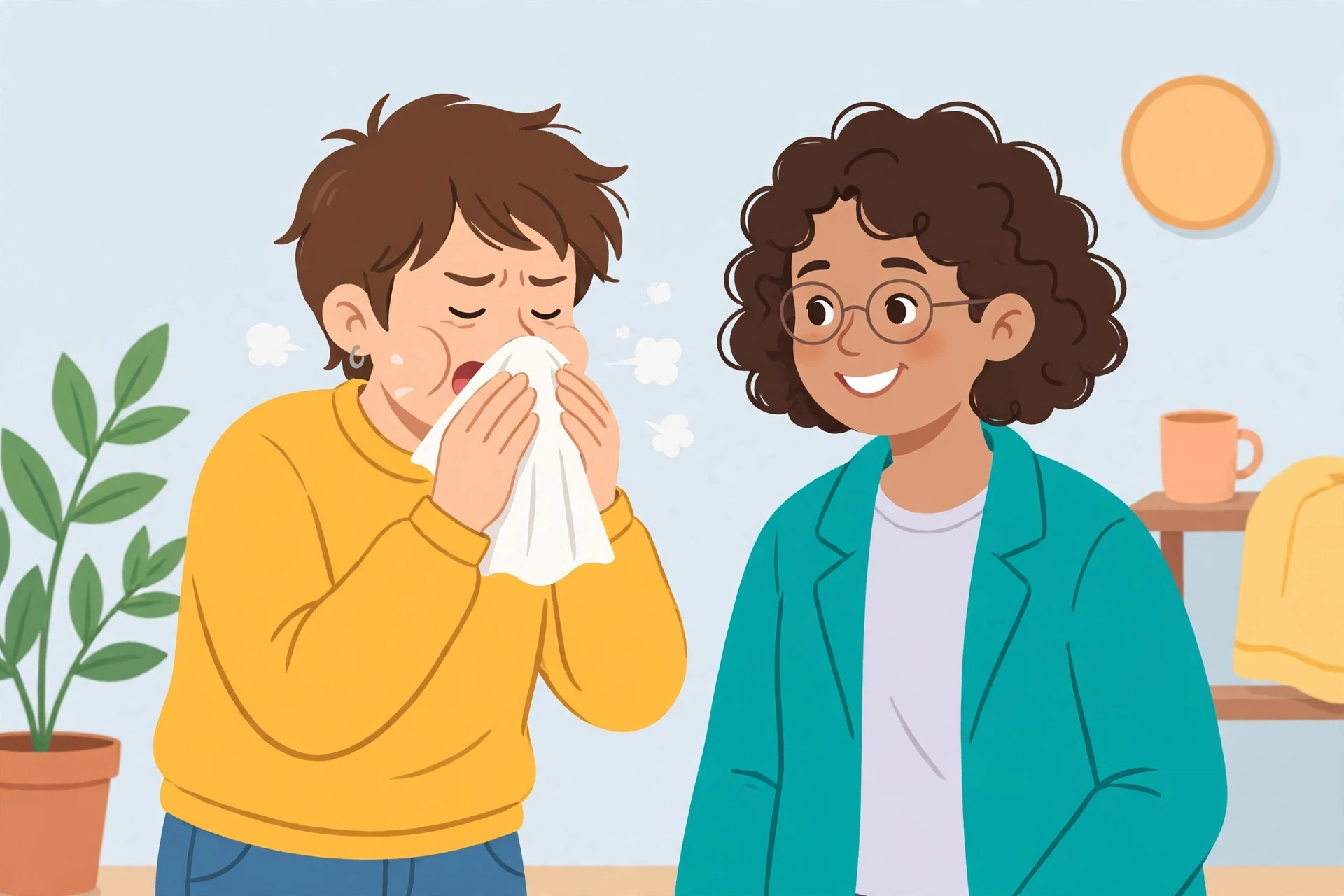
You are sitting with a friend. Your friend takes a deep breath. Then comes a loud “Achoo!” Before you even think, you say, “Bless you!” Your friend smiles and says, “Thank you.” The whole thing takes only a few seconds. It feels so normal that we almost never stop to ask why we do it.
But this small habit has a long story. It comes from old times, old fears, and old ideas about the body. People in many parts of the world have said kind words after a sneeze for hundreds of years. Some said a prayer. Some said a wish for health. Some said a short word that means “stay well.”
In this article, we will look at that story in simple words. We will learn what a sneeze really is. We will learn why some old people feared sneezes. We will learn about the famous Rome story, and why we must be honest about it. We will also learn what is true and what is not true about the heart and sneezing. By the end, you will know why a tiny word like “Bless you” has lived for so long.
What Is a Sneeze?
A sneeze is a strong, fast push of air out of your nose and mouth. It is not something you plan. It just happens. Your body does it to protect you.
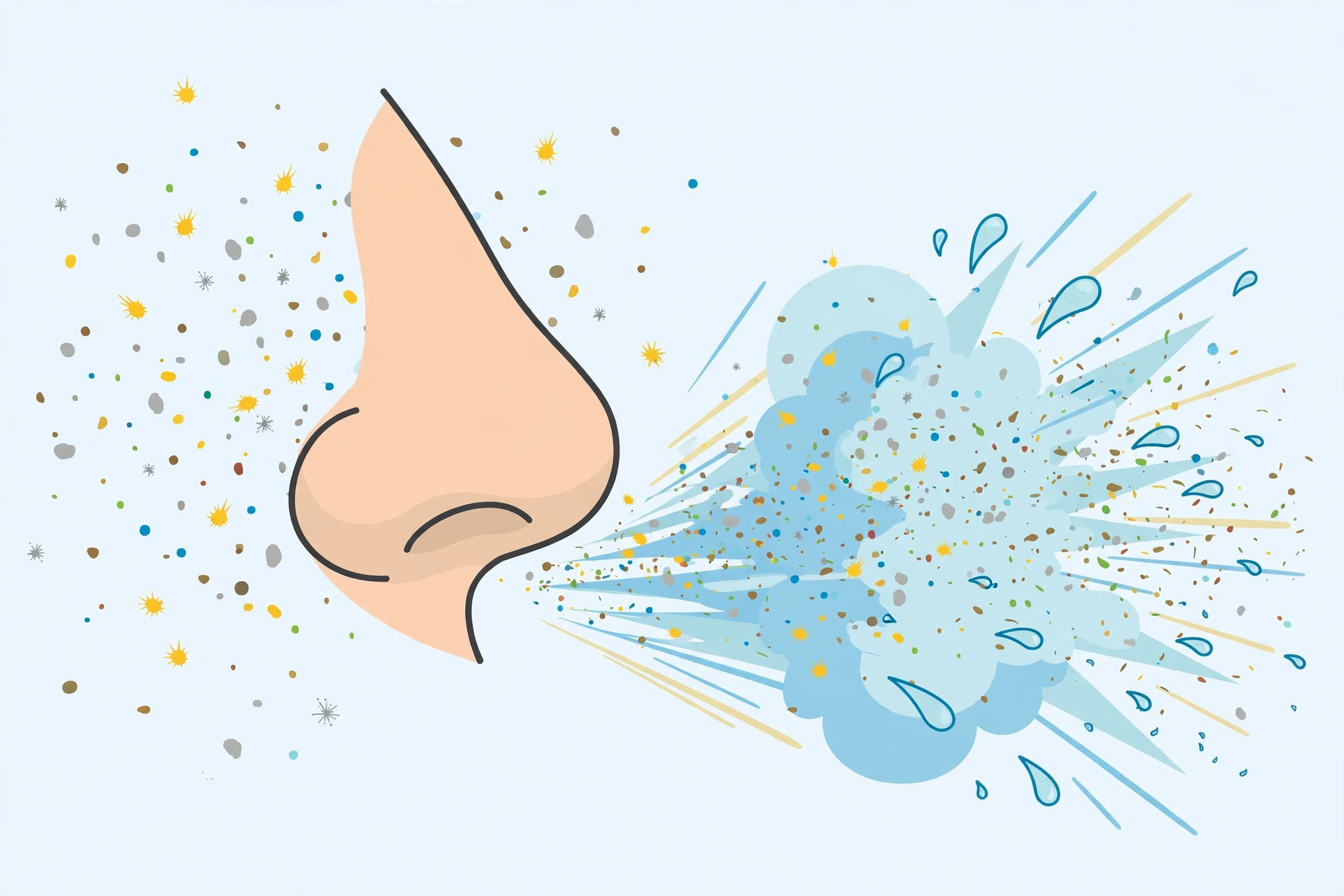
Inside your nose, there are tiny hairs and wet skin. They catch dust, pollen, smoke, and germs from the air you breathe. When something tickles that skin, your nose sends a fast message to your brain. Your brain says, “Get it out!” Then your chest, belly, and throat work together. You take a deep breath in. Then you push the air out very fast.
That fast air can travel far. It can carry tiny drops with it. That is why doctors tell us to cover a sneeze. If we do not cover it, those tiny drops can land on other people or on things they touch. A sneeze is the body’s cleaning tool, but it can also spread germs. So good manners and good health go together here.
Most sneezes are harmless. They happen when you have a cold, when you breathe dust, when you smell strong pepper, or when you step from a dark room into bright sun. Some people even sneeze when they look at bright light. Scientists call that the photic sneeze reflex, but in simple words, it means bright light can make some people sneeze. It is not dangerous. It is just how their body works.
A sneeze can feel funny, loud, or even a little scary if it comes again and again. But it is normal. Babies sneeze. Old people sneeze. Animals sneeze too. Dogs, cats, and even elephants sneeze. It is a part of life for many living things.
Your Heart Does NOT Stop When You Sneeze
Let us clear up one big myth right away. Your heart does NOT stop when you sneeze.
Many people have heard this idea. They think that when you sneeze, your heart stops for a second, and then starts again. That is why, some people say, we say “Bless you.” The idea is that we are wishing the person well after a tiny moment of danger. It sounds like a good story. But it is not true.
When you sneeze, your body changes pressure for a very short time. You breathe in deep, and then you push air out hard. That change can make your heart beat a little slower for a moment, or change its rhythm for a beat or two. But your heart does not stop. It keeps working. Doctors have checked this many times. The heart keeps beating through a sneeze, just as it keeps beating when you cough or laugh hard.
Why does this myth live on? Maybe because a sneeze feels so strong. Your eyes close. Your body shakes a little. You feel a rush. It can feel like everything stops for a second. But feeling is not the same as fact. Your heart is strong. It does not need to stop and start again for a sneeze.
So if someone tells you that “Bless you” comes from a stopped heart, you can smile and share the truth. The phrase has other, older roots. It is still a kind phrase. It just does not come from a stopped heart.

Old Fears About Sneezes
Long ago, people did not know about germs. They did not know about the brain and the nose in the way we do today. They saw a sneeze and tried to explain it with the ideas they had.
In many old cultures, people thought a sneeze meant something was leaving the body. Some thought the soul, the part of a person that makes them alive, could slip out during a strong sneeze. Others thought bad spirits could slip in during that same moment. A sneeze felt sudden and out of control. That made it feel strange and powerful.
Because of that fear, people said a blessing. A blessing is a kind wish, often with a prayer behind it. They hoped the blessing would protect the person who sneezed. They hoped it would keep bad things away. They hoped it would bring the person back to safety.
In some places, people said, “God bless you.” Over time, in everyday talk, that became shorter: “Bless you.” The short form is what most English speakers use today. It still carries the old wish: stay safe, stay well, stay alive.
This idea was not only in one country. Many cultures have a word for a sneeze. In Germany, people often say “Gesundheit.” That word means “health.” In Spanish, people may say “Salud,” which also means “health.” In French, people may say “À tes souhaits,” which means “to your wishes.” In each case, the idea is the same. Someone sneezes, and another person wishes them well. It is a small act of care.
These words show us something nice about people. Even when we do not know each other well, we can share a kind word in a second. A sneeze is a small moment, but it gives us a chance to be polite and warm.
The Rome Story: A Popular Tradition, Not Firm History
One of the most famous stories about “Bless you” comes from Rome. You may have heard it before. The story goes like this.
Long ago, in the city of Rome, a terrible sickness spread. Many people fell ill. Sneezing was one sign of the sickness. People were afraid. The story says that Pope Gregory, a leader of the church in Rome, told people to say a blessing when someone sneezed. He wanted people to pray for the sick person. He wanted to give hope in a dark time.
It is a moving story. It is easy to see why people like it. It links a small phrase to a big moment in history. It makes “Bless you” feel like a prayer from a hard time.
But we must be honest here. Historians regard the Pope Gregory story as popular tradition, not firmly documented history. That means the story has been told for a long time, but we do not have strong, clear proof that it happened in that exact way. Old books and records do not give us a firm link between Pope Gregory and the phrase “God bless you” for sneezes.
That does not mean the story is useless. Traditions can tell us what people believed and valued. The Rome story shows that people linked sneezing with sickness and danger. It shows that people used blessings to comfort each other. But we should not present the story as a proven fact. Good history means telling the difference between a well-loved story and a well-proved fact.
There may be other roots too. Blessings after sneezes appear in many old writings, not only in Rome. Some writers in ancient Greece and Rome wrote about sneezes as signs. Some saw a sneeze as a good sign. Some saw it as a bad sign. People argued about what a sneeze meant. That tells us the habit of noting a sneeze is very old, even if one single origin story is not firm.
So the honest answer is this: we do not know one exact day or one exact person who started “Bless you.” We know the habit grew over many years, in many places, from old ideas about health, spirits, and care. The Rome story is part of that tradition. It is not the whole proven truth.
How Old Customs Stay With Us
“Bless you” is not the only old habit we still carry. People keep many customs from long ago, even when the old reasons have changed. A good example is how we greet each other. When people meet, many still shake hands. That handshake also comes from old times. Long ago, it may have shown that a person held no weapon. Today, it shows respect and friendship. The old reason is gone, but the kind act stays.
Time gives us more examples. We still divide our week into seven days. That pattern comes from very old calendars and beliefs. We still add a leap day in some years to keep our calendar in line with the sun. Long ago, people watched the sky and measured time without clocks, using the sun, water, and shadows. Today, we have phones and watches, but we still live by those old patterns of days and hours.
Customs also differ from place to place. In some countries, people drive on the left side of the road. In others, they drive on the right. Neither way is right for all people. It is just a habit that grew in each place and stayed. “Bless you” is like that too. Some countries use it a lot. Some use other words. Some say nothing at all. All of these are normal in their own places.
When we see “Bless you” in this light, it feels less strange. It is one of many small bridges between the past and today. We may not share the old fears about spirits or souls. But we still share the old wish: be well.
The Body Has Many Surprise Reactions
A sneeze is one of many body actions we cannot fully control. Our bodies do many things on their own to protect us or to respond to the world.
Think of a yawn. Like a sneeze, a yawn just happens. You may yawn when you are tired, or when you see someone else yawn. Scientists still study why yawns spread from person to person. It is a reminder that the body has its own signals, and we do not always know all the answers yet.
Think of your eyes. When you cut an onion, your eyes water. That is also a protection move. The onion releases tiny bits into the air. Your eyes make tears to wash those bits away. A sneeze works in a similar way for the nose. The body sees something it does not want, and it tries to push it out fast.
Even outside the body, nature is full of surprise tricks. Fireflies make light without heat, a fact that still amazes children and adults alike. You can read more about that quiet wonder in our story about cold light. The point is simple: the world, and our bodies, are full of small wonders. A sneeze is one of them. It looks simple, but it involves the nose, the brain, the chest, and the throat all working together in less than a second.
That is why old people may have felt awe, and even fear, when they saw a sneeze. They did not have our science. They saw power and mystery. We now have better science, but we can still feel a little awe. A sneeze is fast, loud, and strong. It reminds us that our bodies are always working, even when we are not thinking about them.
Why Do We Still Say It Today?
If the old fears are gone, why do we still say “Bless you”? There are a few simple reasons.
First, it is polite. In many English-speaking homes and schools, children learn to say “Bless you” as good manners. It is like saying “please” and “thank you.” It shows you noticed the other person. It shows you care, even in a small way.
Second, it is a habit. We hear it from our parents, our teachers, and our friends. We say it without thinking. Habits can live for a very long time, even after their first reason fades. Language is full of such habits. We say “goodbye,” which once meant “God be with you.” We say “good morning” without thinking about old prayers. “Bless you” fits that pattern.
Third, it is kind. A sneeze can be a little embarrassing. A person may feel shy after a loud sneeze in a quiet room. A quick “Bless you” can make them feel better. It turns an awkward moment into a warm one. It says, “I see you, and I wish you well.” That kindness still matters, even in a modern world.
Fourth, it connects us. When a stranger on a bus says “Bless you,” it can feel nice. For a second, two people who do not know each other share a human moment. That small link is valuable. In a busy world, small links help us feel less alone.
Not everyone says “Bless you.” Some people say nothing. Some people say “Gesundheit” even in English. Some people joke and say “Bless you” three times if a person sneezes three times. All of this is fine. There is no law about sneezes. It is a social habit, not a rule. You can choose what feels right in your home, your school, or your workplace.
What matters most is not the exact word. What matters most is care. Cover your sneeze. Wash your hands. Stay home if you are sick. And if someone near you sneezes, a kind word never hurts.
Sneezing Manners for Today
Old customs can teach us, but modern health advice should guide our actions. Here are simple steps that help everyone.
Cover your sneeze with a tissue, or with the inside of your elbow if you have no tissue. Do not sneeze into your bare hands, because germs on your hands can spread to doors, phones, and other people. Throw a used tissue away right away. Then wash your hands with soap and water, or use hand sanitizer if soap is not near.
If you feel a sneeze coming, try to turn away from other people and from food. If you are sick, stay home when you can. Rest, drink water, and let your body heal. If sneezes come with a high fever, trouble breathing, or pain that does not go away, talk to a doctor or a health worker. Most sneezes are simple, but it is wise to get help when something feels seriously wrong.
Teach children the same steps in a kind way. Do not shame a child for sneezing. Sneezing is natural. Just show them how to cover it and wash their hands. Good habits learned young can last a lifetime.
At work or school, a little patience helps too. If someone sneezes again and again, they may have allergies or a cold. A kind word, a tissue, or a glass of water can help more than a stare. “Bless you” is a good start. Patience is even better.
What the Story Teaches Us About History
The story of “Bless you” teaches us a useful lesson about history itself. Not every famous story is a proven fact. Some stories are traditions. They are told and retold because they feel true, or because they teach a value. That does not make them lies. It makes them traditions. A careful reader learns to ask: do we have proof, or do we have a popular tale?
Historians ask that question a lot. They look for old letters, books, and records. They check dates. They compare different sources. When the proof is weak, they say so. That honesty makes history stronger, not weaker. It helps us trust the facts we do know.
For “Bless you,” the facts we do know are still rich. We know people in many cultures wished health after a sneeze. We know old writers noted sneezes as signs. We know blessings were a common way to show care. We know the phrase became shorter over time in English. We know it lives on today as good manners. Those facts are enough to make a good story, without needing to claim one unproven origin as certain.
This is also a good lesson for everyday life. When you hear a neat story that explains everything in one line, pause and ask: is this proven, or is it just popular? Sometimes the real story is longer and more interesting. The real story of “Bless you” is longer. It crosses many countries, many beliefs, and many years. That makes it more interesting, not less.
So next time you hear “Achoo!” and you answer “Bless you!”, you can enjoy the moment in a new way. You are taking part in an old human habit. You are wishing someone well. You are linking the past to the present with two small words. And you know the truth behind them: your heart did not stop, the Rome story is tradition rather than firm proof, and kindness is the real reason the phrase has lasted.
Frequently Asked Questions
Why do we say “Bless you” when someone sneezes?
We say it as a kind wish for health. Long ago, people thought a sneeze could be a sign of sickness or danger, so they said a blessing to wish the person well. Today, we mostly say it as good manners and a sign of care.
Does your heart stop when you sneeze?
No. Your heart does NOT stop when you sneeze. Your heart rate may change for a very short moment because of pressure changes in your body, but your heart keeps beating. The idea that it stops is a myth.
Did Pope Gregory start the phrase “God bless you”?
That is a popular tradition, not firmly documented history. The story says Pope Gregory told people in Rome to bless sneezers during a time of sickness. Historians do not have strong proof that this happened in that exact way, so we should call it tradition, not proven fact.
What do people say instead of “Bless you” in other countries?
Many countries have their own words. In Germany, people often say “Gesundheit,” which means “health.” In Spanish, people may say “Salud,” which also means “health.” In French, people may say “À tes souhaits,” which means “to your wishes.” The wish is the same in each place: stay well.
Why do we sneeze?
We sneeze to clear the nose. Dust, pollen, smoke, germs, or strong smells can tickle the inside of the nose. The brain then tells the body to push air out fast to remove those bits. It is a protection move by the body.
Is it rude not to say “Bless you”?
No, it is not rude in a strict sense. Saying “Bless you” is polite in many English-speaking places, but not saying it is not a crime or a serious fault. Some people and some cultures do not use the phrase at all. Kindness can be shown in many other ways too.
How can I sneeze in a polite and safe way?
Cover your sneeze with a tissue or the inside of your elbow. Throw the tissue away at once. Wash your hands with soap and water. Turn away from other people and food. Stay home and rest if you are sick.
More from Zorium Daily
If you enjoyed this look at an old everyday habit, you may also like our story about why we shake hands when we meet, and our look at why we yawn and whether yawns really spread. For more tales from the past, visit our history page, where you will find stories about seven days in a week, leap years, and how people measured time long before clocks. You can also explore why our eyes water when we cut onions, and how fireflies make cold light without heat.