Why Is the Ocean Salty?
By Zorium Daily News Desk
Have you ever gone swimming in the sea? A wave hits your face. Some water gets into your mouth. Then you taste it. It is salty. Very salty. You spit it out fast. You may wonder why. Why is sea water salty when rain water is not? Why is river water fresh when it flows into the sea? And where did all that salt come from in the first place?
These are simple questions. The answers are also simple. But they tell a very big story. The story starts with rain. It moves through rocks and rivers. It travels deep under the sea. And it has been going on for a very, very long time.
In this article, we will explain the whole story in very simple words. We will look at what salt is. We will see how rain picks up salt from rocks. We will follow rivers as they carry salt to the sea. We will look at what happens on the sea floor. We will learn why the sea does not get saltier and saltier each year. We will also learn why some seas are much saltier than others. And we will see why salt matters for fish, plants, and people.
SUMMARY OF THIS ARTICLE
- The ocean is salty because rain, rivers, and sea-floor vents carry tiny bits of salt from rocks into the sea, and the salt stays there.
- Most ocean salt is common salt, the same kind we put on food, made from two parts called sodium and chloride, but sea water also holds other salts in small amounts.
- Rain is not salty at first, but as it runs over land it slowly wears rocks down and picks up the salts inside them.
- Rivers carry those salts to the sea, and when sea water dries up in the sun, the water leaves as vapour but the salt stays behind.
- The ocean does not keep getting saltier forever because salt also leaves the sea in sea spray, in sea-floor mud, and in salt beds that form when shallow seas dry up.
A Taste You Can Feel
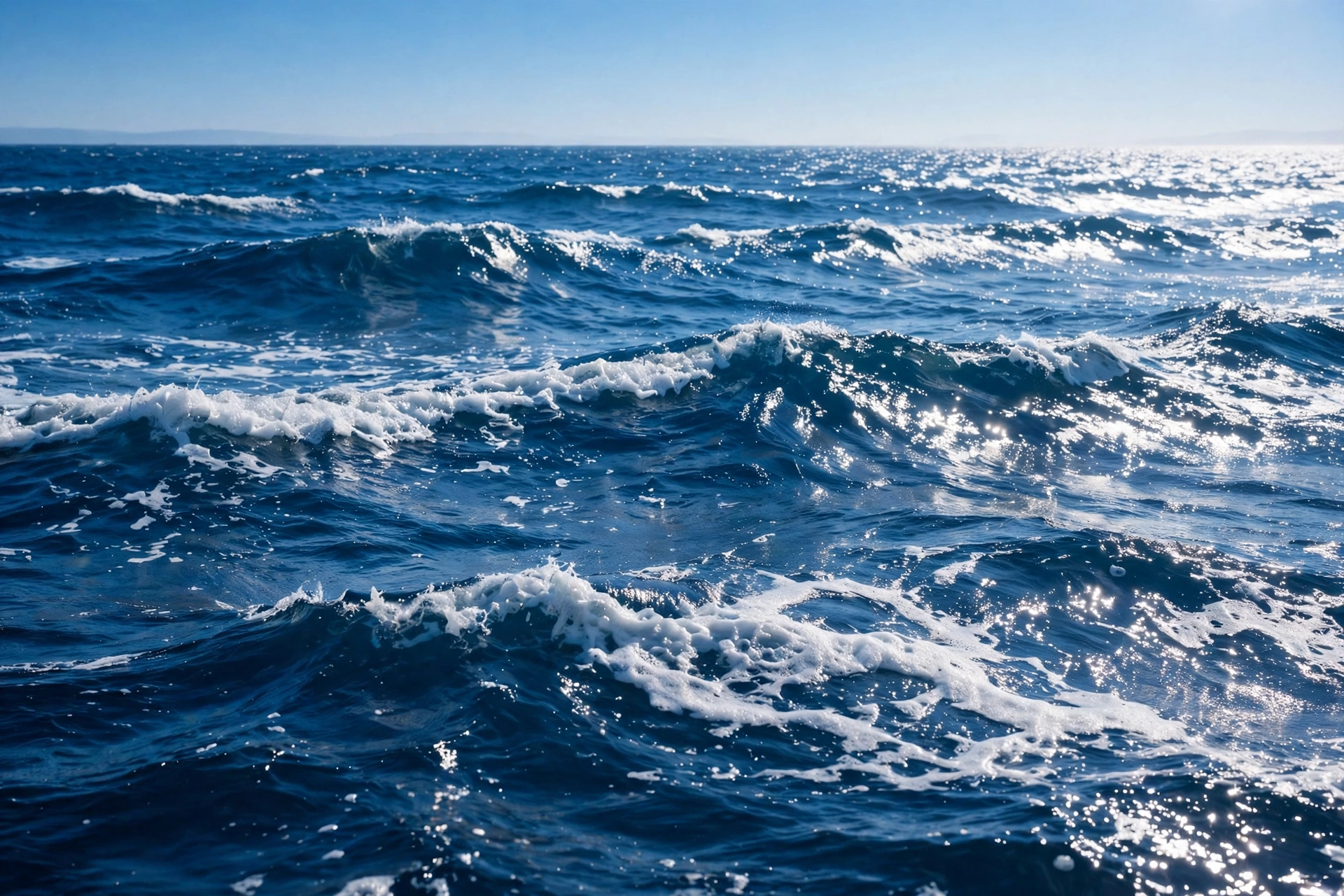
Close your eyes and think of the sea. You can hear the waves. You can feel the wind. You can smell the sea air. And if you taste the water, you can taste the salt.
Sea water is not just a little salty. It is clearly salty. If you drink a full glass of it, your mouth will feel dry. Your body will want fresh water at once. That is because sea water has much more salt than your body needs.
How much salt is in the sea? If you take a litre of sea water, about one litre of water from a big bottle, and you dry it all away in the sun, you will be left with about 35 grams of salt. That is about seven small spoonfuls of salt. That is a lot for one bottle of water.
For now, remember this simple fact. Sea water is salty because salt is always moving into the sea, and salt does not leave with the water when the water dries up. That is the short answer. The long answer is much more fun. Let us look at it step by step.
What Is Salt, Really?
When most people hear the word salt, they think of the white stuff in a small pot on the table. That is common salt. We put it on food. We use it in cooking. Its proper name is sodium chloride. That is a long name, but the idea is simple.
Common salt is made of two parts. One part is called sodium. The other part is called chloride. When they join together, they form tiny white crystals. Those crystals are the salt we know.
Sea water holds many salts. The biggest share is sodium chloride. After that come other salts, such as magnesium chloride, calcium salts, and potassium salts. They are in smaller amounts. But they are still important. They help sea animals build shells. They help sea plants grow. They also help keep the chemistry of the sea in balance.
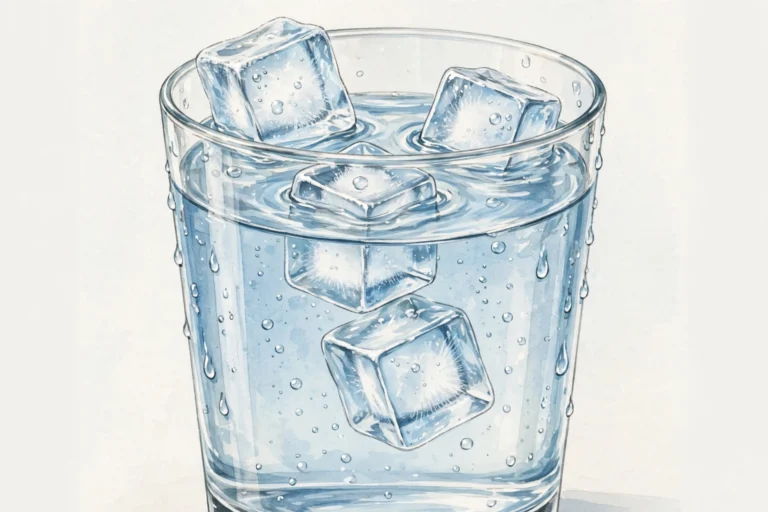
Salt can dissolve in water. That means it breaks into such tiny parts that you cannot see them. When you stir salt into a glass of water, the salt seems to vanish. It has not vanished. It is still there. It is just spread out in the water in tiny parts. You can taste it, even though you cannot see it. That is what happens in the sea, on a huge scale.
Where the Salt Came From: Rain and Rocks
The story of ocean salt starts in the sky, with rain. Rain water is fresh. It is not salty when it falls from a cloud. It is made of water that rose up from the sea, from lakes, and from wet land. The sun heated that water. The water turned into vapour. Vapour is water in the form of a gas. It is so light that it floats up into the air. When vapour rises, it leaves the salt behind. Salt is too heavy to rise with the vapour. So the cloud is made of fresh water.
Then the cloud cools. The vapour turns back into drops of water. Those drops fall as rain. The rain is fresh. It has almost no salt in it. But as soon as it lands, its journey changes.
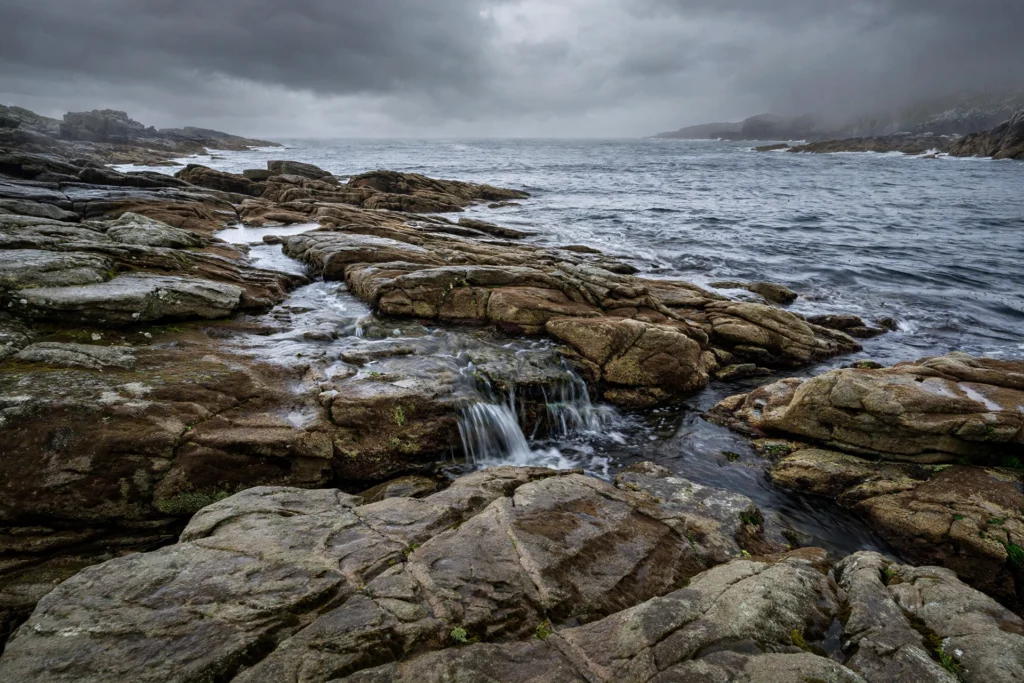
Rain does not just sit on the ground. It runs. It runs over rocks. It runs through soil. It flows into streams. As it moves, it does slow, quiet work. It wears rocks down.
Rocks may look hard and strong. But over a long time, water can break them. Rain water is a little bit sour. It picks up a gas from the air called carbon dioxide. That gas makes the water a little acidic. Acidic water can dissolve parts of a rock, just as it can dissolve salt in a glass.
This process is called weathering. Weathering means the slow breaking down of rocks by water, wind, ice, and heat. It is very slow. You will not see a rock change in one day. You will not see it change in one year. But over hundreds of years, and thousands of years, and millions of years, weathering can wear down whole mountains.
Rivers Carry Salt to the Sea
Rivers are like roads for salt. They start small. A small stream runs down a hill. It joins another stream. Then another. Soon it becomes a river. The river runs across the land. It runs for many miles. At last, it reaches the sea. All along the way, it is carrying salt.
The water in a river tastes fresh. You can drink it, if it is clean. It has only a tiny amount of salt in it. So how can a fresh river make a salty sea? The answer is time, and size.
A river carries only a little salt in each litre of water. But a river carries a huge amount of water. Day after day, year after year, it pours that water into the sea. The salt adds up. It is like putting one small spoon of salt into a big pot each day. At first, you will not taste it. After many years, the pot will be very salty.
The sun heats the top of the sea. Some of the water turns into vapour and rises into the air. That vapour forms clouds. Then it falls as rain on land or on the sea. The salt does not rise. It stays in the sea. So each time water leaves the sea, the salt that was in that water stays behind.
This is called the water cycle. Water moves in a circle. It goes from the sea to the air, to the land, to rivers, and back to the sea. Salt moves in the same circle, but it gets stuck at one point. It gets stuck in the sea. That is why the sea is salty and the rain is fresh.
The Sea Floor Adds More Salt
Rivers are not the only source of salt. The sea floor adds salt too. Deep under the sea, the Earth is hot. In some places, sea water seeps down into cracks in the sea floor. It goes down deep. There it gets very hot. Hot water can dissolve rocks even faster than cold water. It picks up salts from the rocks deep below.
Then the hot water rises again. It comes out through cracks in the sea floor. Scientists call these cracks hydrothermal vents. Hydrothermal is a long word, but the idea is simple. Hydro means water. Thermal means heat. So a hydrothermal vent is a hot water spring under the sea.
The water that comes out of these vents is very hot. It is full of salts and other minerals from deep rocks. It mixes with the cold sea water above. In this way, the sea floor adds more salt to the sea.
These deep sources are smaller than the rivers. Rivers bring most of the salt. But the sea floor still plays a part. It shows that salt does not come from only one place. It comes from the land, from the air, and from deep inside the Earth.
Why the Sea Does Not Get Saltier and Saltier
Now you may ask a smart question. If rivers keep bringing salt to the sea, and the sun keeps taking fresh water away, why does the sea not get saltier and saltier every year? Why is it not much saltier now than it was a long time ago?
That is a very good question. The answer is that salt also leaves the sea. It does not leave as fast as it comes in, but it does leave. The sea has three main ways to lose salt. These ways keep the salt level almost steady.
First, sea spray leaves the sea. When waves crash, they throw tiny drops of sea water into the air. The wind can carry those drops inland. When the drops dry, the salt stays on the land. Rain can wash some of it back, but some of it stays on land for a long time. In this way, a little salt leaves the sea each day.
Second, salt gets buried in sea-floor mud. Tiny sea animals and plants die and sink to the bottom. Their bodies, shells, and waste fall into the mud. Some salts get trapped in that mud. Over a long time, the mud turns into rock. The salt is locked inside that rock. It may stay there for millions of years.
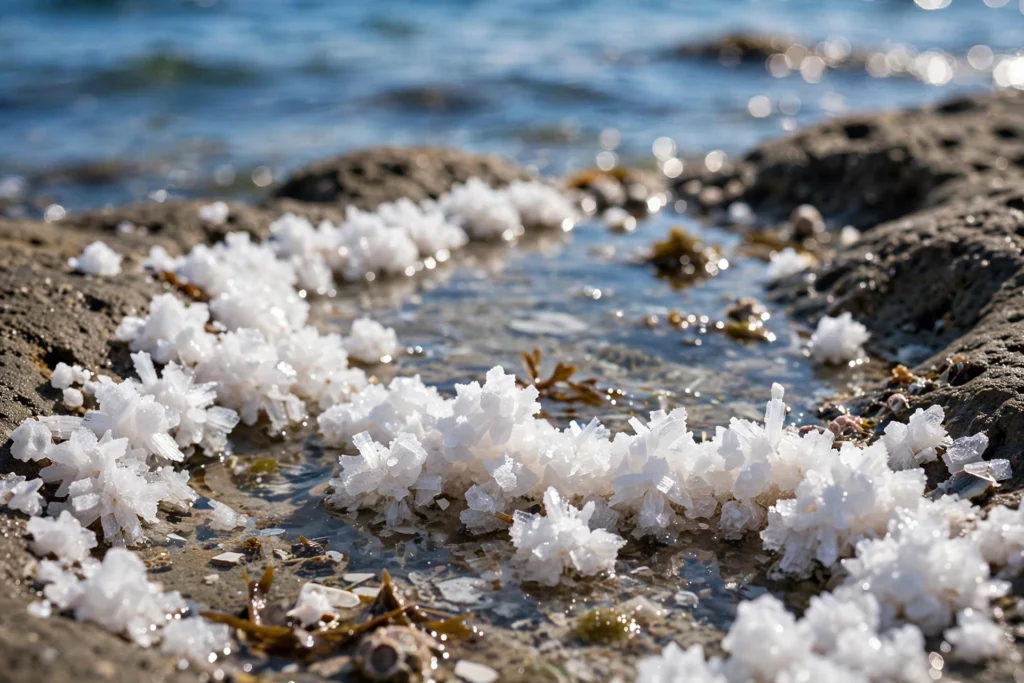
Third, shallow seas can dry up. Sometimes, a part of the sea gets cut off from the main ocean. It becomes a shallow lake of sea water. The sun dries it up. The water leaves. The salt stays behind as a thick layer. Over time, more mud and sand can cover that salt layer. It becomes buried deep under the ground. That salt may stay buried for a very long time.
Why Rivers and Lakes Taste Fresh
If rivers carry salt to the sea, why do rivers taste fresh? Why do most lakes taste fresh too? The answer is simple. Rivers and lakes are always moving. They do not keep their salt.
A river is like a fast road. Water runs through it and moves on. It does not stay in one place for long. The salt in the river water is always moving toward the sea. It does not have time to build up. So the river stays fresh.
Some lakes are different. They have no river flowing out. Water flows in, but it can only leave by drying up in the sun. Those lakes can become salty. The Dead Sea is a famous example. We will look at it in the next section. But most lakes have an outlet. They stay fresh.
The sea is different. The sea has no river flowing out to another place. It is the end of the road. Water can only leave by rising into the air. Salt cannot follow. So the salt builds up. That is the key difference between a river and the sea. One is a road. The other is a bowl.
Why the Sea Tastes Saltier in Some Places
Not all sea water is equally salty. The salt level changes from place to place. It also changes with the seasons. The differences are small, but they are real.
Near the equator, the sun is strong. It heats the sea. More water turns into vapour. More salt is left behind. So the sea near the equator can be a little saltier than the sea in cooler places.
Near the poles, the sea can be less salty. There is more rain and snow. Ice melts in summer and adds fresh water. That fresh water dilutes the salt. So polar seas are often a little less salty.
Near the mouth of a big river, the sea is also less salty. The river pours fresh water into the sea. That fresh water mixes with the sea water. Near the river mouth, the mix is less salty. As you move away from the river, the sea becomes saltier again.
In a hot, dry place with little rain, a sea can be saltier. The Red Sea is an example. It is in a hot, dry area. Very little rain falls there. Very few rivers flow into it. The sun dries a lot of water. So the Red Sea is saltier than most seas.
The Dead Sea: A Sea That Is Extra Salty
There is one sea that is famous for being extra salty. It is called the Dead Sea. It is not really a sea. It is a salt lake. It lies between Jordan and Israel. It is one of the saltiest bodies of water on Earth.
The Dead Sea is about ten times saltier than the open ocean. That is a huge difference. Why is it so salty? The answer is the same idea we have already learned, but pushed to the limit.
The Dead Sea has rivers flowing into it, but it has no river flowing out. Water can only leave by drying up in the sun. The area is hot and dry. The sun is strong. A lot of water dries up each day. The salt stays behind. Over a very long time, the salt has built up to a very high level.
Because the water is so salty, you can float in it very easily. The salt makes the water dense. Dense means heavy for its size. Dense water can hold you up. People can lie on their backs and read a book while they float. It is a strange and fun feeling.
You can read more about this strange place in our guide to Why Is the Dead Sea So Salty and Why Do You Float?
Salt, Water, and Life in the Sea
Salt is not just a taste. It is part of life in the sea. Sea animals and sea plants have learned to live with salt. They need it. But they also need to control it.
Fish that live in the sea drink sea water, but they cannot drink too much salt. Their bodies have ways to get rid of extra salt. Some fish push extra salt out through their gills. Gills are the parts fish use to breathe in water. Other sea animals have special glands that push salt out. In this way, they keep the salt inside their bodies at the right level.
Sea plants, such as seaweed, also live in salty water. They take in the salts they need. They use some salts to grow. They keep out the salts they do not need. It is a careful balance.
Salt also affects how water moves in the sea. Salt water is heavier than fresh water. So salty water sinks below fresh water. This helps drive ocean currents. Currents move warm water and cold water around the world. They help control the weather. They help move heat from the equator to the poles. Without salt, the currents would work in a different way.
Why This Simple Question Matters
Why is the ocean salty? It seems like a small question. A child might ask it at the beach. But the answer touches many parts of science. It touches the water cycle. It touches rocks and rivers. It touches the sea floor. It touches life in the sea. It touches the weather and the climate.
The answer also shows how Earth works as one system. The land, the sea, the air, and the sun are not separate. They are linked. Rain falls on land. Rivers carry salt to the sea. The sun lifts water back into the air. The wind moves clouds. The sea floor adds minerals. Sea animals use salts to live. All these parts work together.
The sea also links to the sky and the Moon. The sea looks blue, but the sky is blue for a different reason, as you can read in our guide to Why Is the Sky Blue? The Moon pulls sea water and makes tides, and you can read about how we can sometimes see it in the day in our guide to Why Can We Sometimes See the Moon During the Day?
The next time you go to the beach, taste the salt on your lips after a swim. Think about where that salt came from. It came from a rock on a hill. It travelled in rain. It rode down a river. It stayed in the sea while the water rose into the sky. It has been on that journey for a very long time. And now, for a moment, it is on your skin. That is the story of why the ocean is salty. It is a story of water, rock, sun, and time. It is simple. It is also wonderful. And it is happening all around us, every day, even when we do not notice it.
Frequently Asked Questions
Why is the ocean salty but rain is not?
Rain is fresh because it forms from water vapour that rose into the air, and salt is too heavy to rise with the vapour. As rain runs over land, it picks up salts from rocks and soil. Rivers carry those salts to the sea, where the water dries up in the sun but the salt stays behind.
How salty is the ocean?
Sea water is about 35 grams of salt in each litre of water. That is about seven small spoonfuls of salt in a one-litre bottle of water. Most of that salt is common salt, sodium chloride, but sea water also holds other salts in smaller amounts.
Where did the salt in the ocean come from?
Most of it came from rocks on land. Rain wore the rocks down slowly and freed the salts inside them. Rivers carried those salts to the sea. Hot water from cracks in the sea floor also added salts from deep rocks. The first salts came from volcanic rocks and gases when the oceans first formed.
Why do rivers taste fresh if they carry salt to the sea?
Rivers carry only a tiny amount of salt in each litre of water, and the water keeps moving to the sea. The salt does not have time to build up. Rain also adds fresh water all the time. The sea is different because it has no outlet. Water leaves only by rising into the air, and salt cannot follow.
Why does the ocean not get saltier every year?
Salt does leave the sea, even if it leaves slowly. Sea spray carries salt onto land. Some salt gets buried in sea-floor mud and turns into rock. Some salt is used by sea animals to build shells. Shallow seas that dry up also leave salt beds behind. These ways remove enough salt to keep the ocean level almost steady.
Can people drink sea water?
No, people should not drink sea water. It has far too much salt for our bodies. Drinking it can make you more thirsty and can make you ill. Our kidneys, the parts of the body that clean the blood, would need more fresh water than the sea water gives to get rid of the extra salt. Always drink fresh water.
More from Zorium Daily
- Why Is the Dead Sea So Salty and Why Do You Float?
- Why Is the Sky Blue?
- Why Can We Sometimes See the Moon During the Day?
- Why Do Leaves Change Colour in Autumn?
Explore more simple science stories in the Science category.