What Is the Water Cycle and How Does It Work? Explained Simply
Summary of This Article
- The water cycle is the journey water takes around our planet, over and over again, driven by heat from the Sun and pulled back down by gravity.
- Evaporation lifts water up from seas, lakes, rivers and puddles as invisible vapour, and plants add more water to the air through their leaves in a process called transpiration.
- High up in the sky, the vapour cools and turns into tiny droplets that gather together to make clouds, in a step called condensation.
- When the droplets in a cloud grow heavy enough, they fall back to Earth as rain or snow, which is called precipitation.
- The water then collects in rivers, lakes and seas, or soaks into the ground, ready to start the whole journey again, so the water in your glass is millions of years old.
The Puddle That Vanished
It had rained all morning. Big, fat drops hammered on the roof, ran down the windows in wiggly lines, and filled the little dip in the pavement outside the front gate with a muddy brown puddle. Sam, who was nine, pressed his nose against the cold glass and watched the rain fall. He loved rainy days. He loved the sound of it, and he loved the puddles most of all.
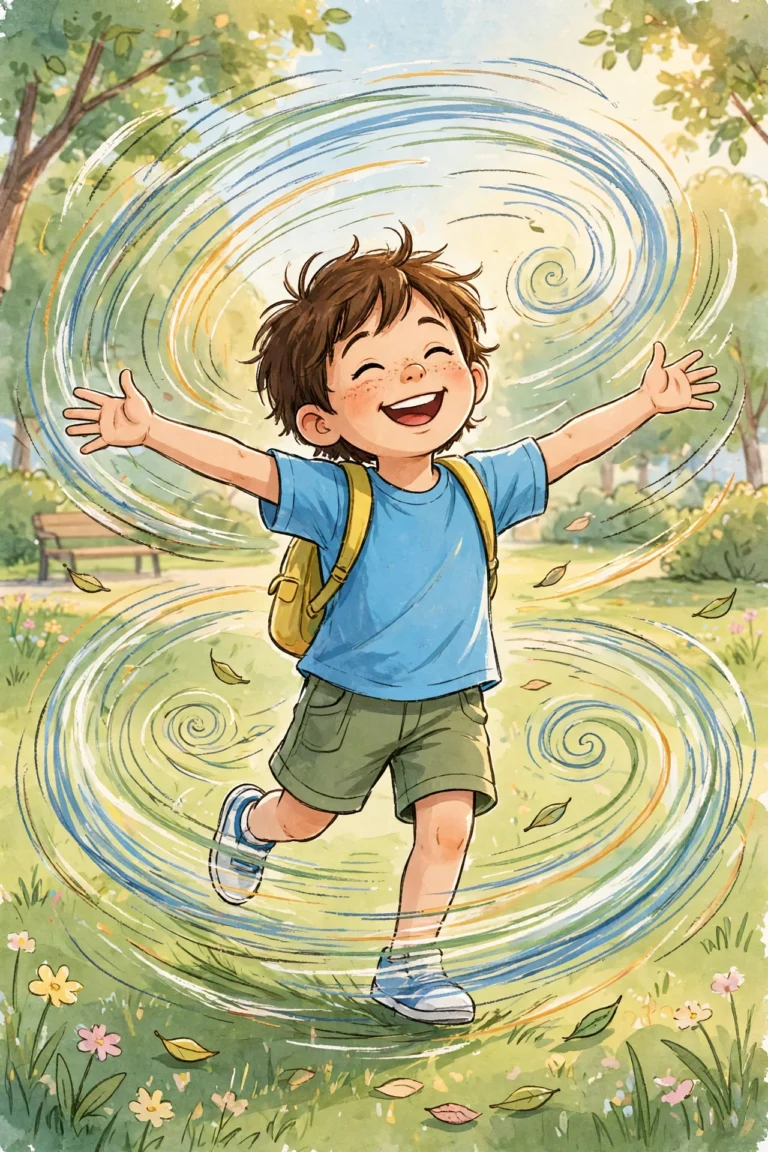
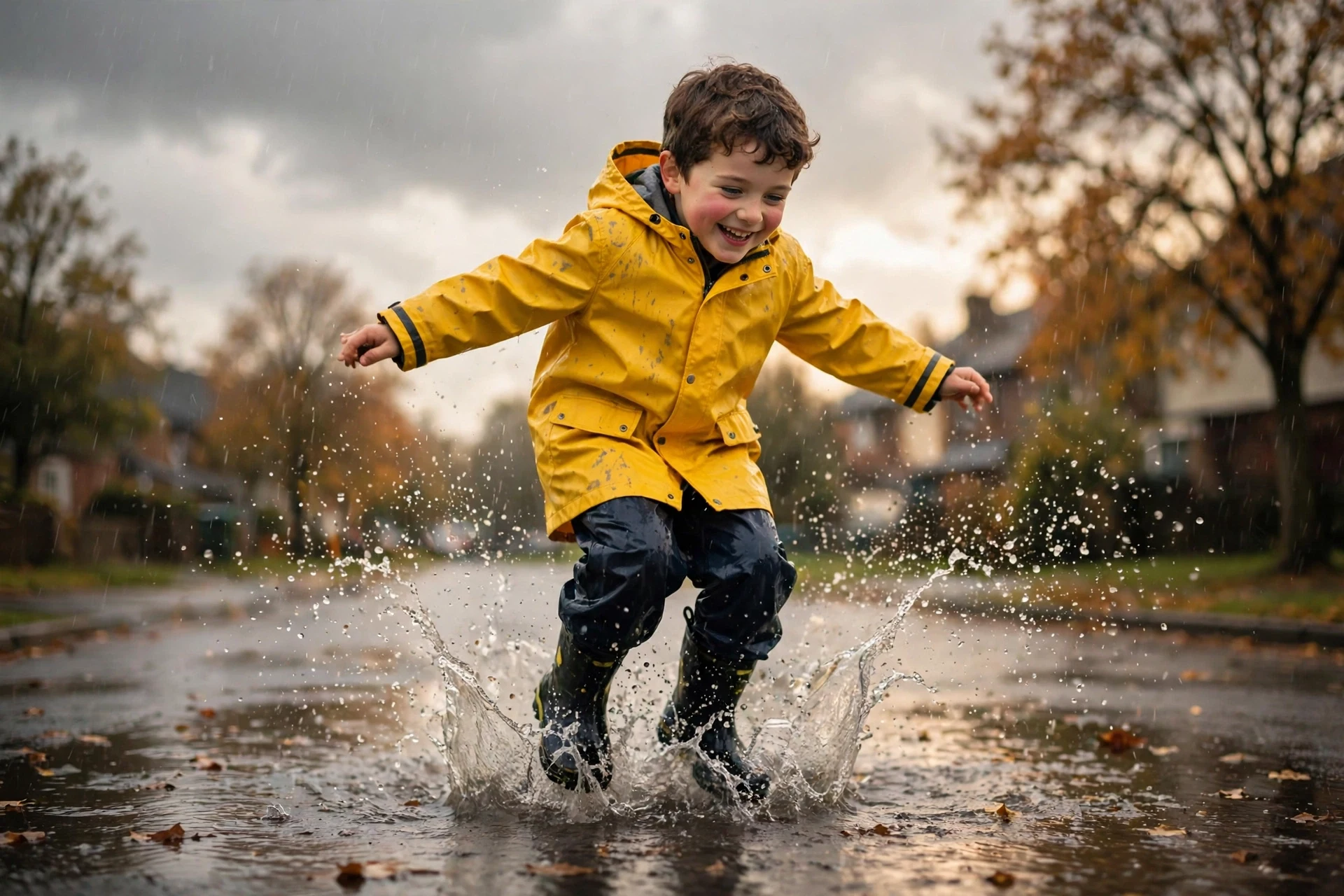
By lunchtime, the rain had stopped. The clouds pulled apart like curtains, and the sun came out, warm and bright. Sam pulled on his wellington boots and ran outside. He jumped in the puddle, and the water splashed up in a cold spray that made him laugh. He jumped again. And again. Then he went inside for lunch, and when he came back out an hour later, something strange had happened. The puddle was smaller. Much smaller. By tea time, it was gone altogether. All that was left was a damp dark patch on the pavement, and even that was drying in the last of the sunshine.
Sam stood and stared at the empty dip in the pavement. “Where did it go?” he asked his mum. “It was here this morning. Did it sink into the ground? Did somebody take it?”
His mum smiled. “Nobody took it,” she said. “And some of it did sink into the ground, but most of it went up. Up into the sky.”
Sam frowned. Water going up? Water always went down. It ran down the window. It dripped off the roof. It splashed down when he jumped in the puddle. How could water go up?
“It went up as vapour,” his mum said. “The sun warmed the puddle, and the water turned into tiny bits so small you cannot see them. They floated up into the air. And one day, that water will come back down as rain, maybe right here, maybe on the other side of the world.”
Sam looked up at the sky. It was blue and clear now, with just a few soft white clouds drifting slowly across it. He tried to imagine his puddle up there, hiding inside a cloud. It seemed impossible, and wonderful, all at the same time.
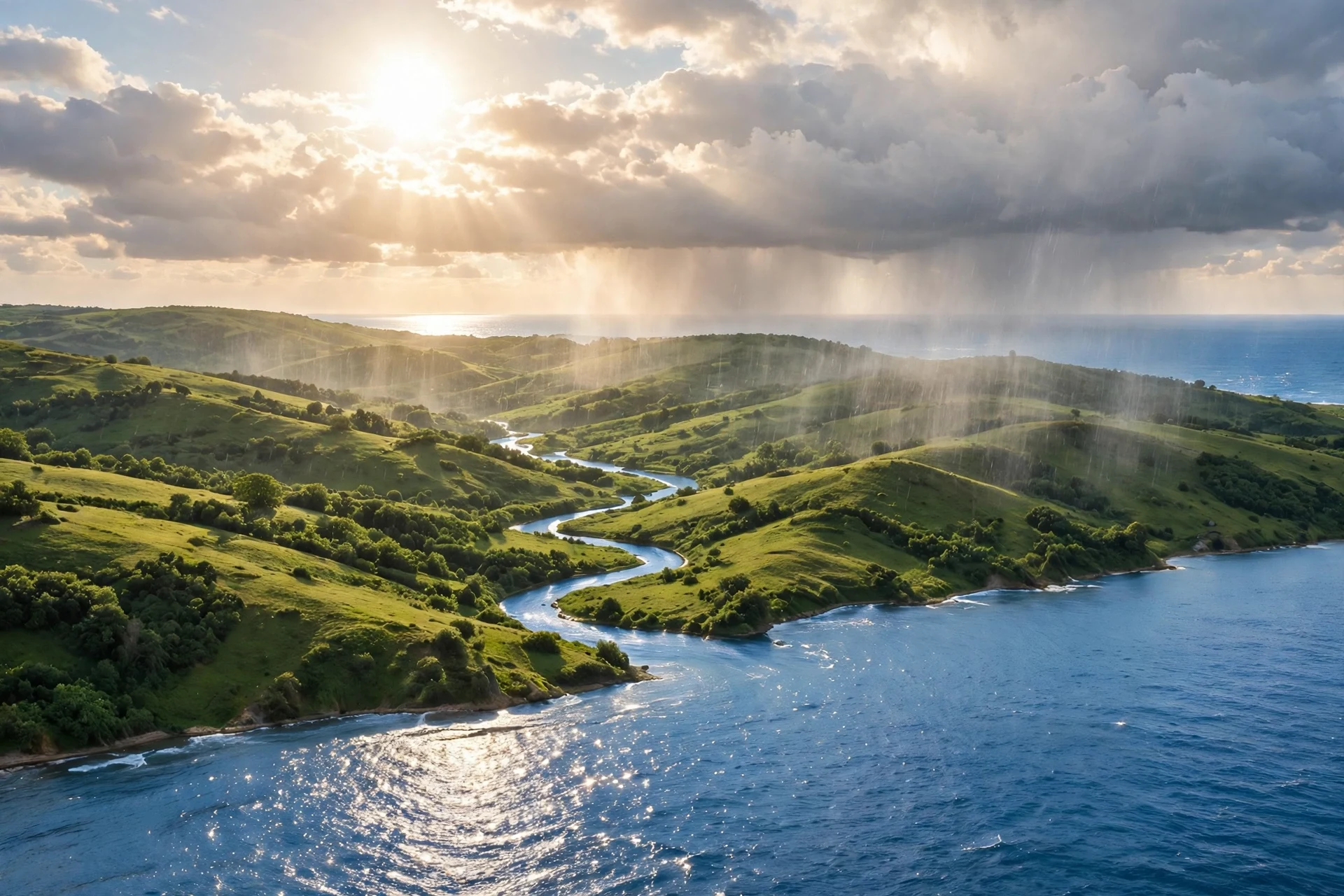
If you have ever watched a puddle dry up in the sunshine, or seen washing dry on a line, or watched steam rise from a hot cup of tea, then you have already seen the water cycle at work. It is happening all around you, every single day, quietly and without fuss. The water on our planet is always on the move. It rises into the sky, it travels on the wind, it falls back down as rain or snow, and then it starts all over again. This guide follows one little drop of water on that journey, from a puddle on a pavement all the way up into a cloud and back down to the sea, and it explains every step in plain words.
Follow One Drop of Water
Let us follow one drop of water. We will call her Didi, because every good journey needs a hero, and Didi is about to go on the biggest adventure there is.
Didi starts her day in the sea. She is one drop among more drops than anyone could ever count, in water that stretches further than the eye can see. The sun is shining. The sea is warm. And right now, Didi is sitting on the very top of a wave, sparkling in the sunlight.
But Didi will not stay in the sea. Not today. Today, the sun is going to lift her up into the sky, carry her across the land, drop her on a mountain, and send her rushing back down a river to the very sea she started from. It will take days, maybe weeks, and along the way she will change shape again and again. She will be invisible. She will be part of a cloud. She will fall as rain. And through it all, she will still be the same drop of water.
The journey Didi is about to take is called the water cycle. The word cycle means something that goes round and round, coming back to where it started, and that is exactly what water does. It never stops. It never gets used up. The same water keeps going round and round, today, tomorrow, and for millions of years. There are four main steps to the journey, and one extra helper, and we are going to walk through each one, nice and slowly, the way you would walk through a story.
The four steps are evaporation, condensation, precipitation and collection. The extra helper is transpiration, which is a long word for something plants do every day. Do not worry about the long words. They sound grand, but each one means something simple, and by the end of this guide, you will know them all, and you will be able to spot them happening in your own garden, your own kitchen, and your own street.
Evaporation: The Sun Lifts the Water Up
The first step of the journey is evaporation, and it starts with the Sun.
The Sun is the engine of the whole water cycle. Without it, nothing would move at all. Every morning, when the sun rises, it starts warming the Earth. It warms the seas, the lakes, the rivers, and every puddle on every pavement. And when water gets warm, something amazing happens. Some of the water at the very top turns into vapour, a gas so light and so fine that you cannot see it at all, and it floats up into the air.
That is what happened to the puddle outside Sam’s gate. The morning sun warmed the muddy water. Bit by bit, the water at the top turned into invisible vapour and drifted away into the sky. Nobody saw it happen, because vapour is invisible. The puddle just got smaller and smaller, and then it was gone. But the water was not gone. It had simply changed shape and gone up.
You have seen evaporation many times, even if you never knew its name. Think about the washing on the line. You hang out wet clothes in the morning, and by the afternoon they are dry. Where did the water go? It did not drip away, not all of it. Most of it turned into vapour and floated off into the air, carried away by the sun and the breeze. Think about a kettle. When the water inside gets hot, steam pours out of the spout in a white cloud. That steam is water vapour cooling down again as it meets the air. You can see it because it is cooling and turning back into tiny droplets, but the vapour itself, the moment it leaves the kettle, is invisible.
And think about a glass of cold water on a hot day. Little drops of water appear on the outside of the glass. That is not the water leaking through the glass. It is vapour from the air cooling against the cold glass and turning back into liquid. It is the water cycle in miniature, happening right there on your kitchen table.
Most of the water that evaporates comes from the sea. The sea covers most of our planet, so it gives up the most water. Lakes and rivers add their share, and so do puddles, ponds, wet soil, and even the damp leaves after rain. All of it rises, invisible, into the sky. Our little drop Didi is among it. The sun warmed her, she turned into vapour, and now she is floating up, up, up, so light she can barely feel herself at all.
Transpiration: The Plants Breathe Water Out
Didi is not alone up there. She has company, and some of it comes from an unexpected place: the leaves of plants.
Plants need water to live, just like we do. A tree drinks water from the soil through its roots, and that water travels all the way up the trunk and out along the branches to the leaves. But a tree does not keep all the water it drinks. Most of it, nearly all of it in fact, leaves again through tiny holes in the leaves, as vapour. This is called transpiration, and it is the quiet helper of the water cycle.
You can think of it as plants breathing water out. The tiny holes in a leaf are called stomata, and they open and close like little doors. When the sun is shining, the doors open, and water vapour drifts out into the air. A single big tree can breathe out hundreds of litres of water on a hot day, enough to fill a bath, all from its leaves, all invisible.
You can see a small version of this at home. Put a clear plastic bag over a leafy plant on a sunny windowsill and tie it loosely around the stem. Come back in a few hours and look inside the bag. You will find tiny drops of water on the inside of the plastic. The plant breathed the water out, and it collected on the bag. That is transpiration, and you can watch it happen with your own eyes.
So the air above the land is full of vapour from two sources: evaporation from water, and transpiration from plants. Together, they send an enormous amount of water up into the sky every single day. Didi, our little drop, is floating up with them, carried higher and higher by warm air, and she is about to meet the clouds.
Condensation: The Vapour Becomes a Cloud
As Didi floats higher, the air around her gets colder. The higher you go, the colder it gets, and Didi is now far above the warm ground, in air that is cold enough to make her shiver, if a drop of vapour could shiver.
And then something changes. The vapour starts to cool down, and as it cools, it turns back into liquid water, into tiny, tiny droplets, so small that they float in the air like dust. This step is called condensation, and it is how clouds are made.
That is all a cloud is, really: a crowd of tiny water droplets, or sometimes tiny ice crystals, floating in the air. When you look up and see a big white cloud, you are looking at a gathering of water that once sat in the sea, in a lake, in a puddle, or in the leaves of a tree. It is Didi and her friends, all together at last.
Clouds come in all shapes and sizes. Some are soft and puffy, like cotton wool, drifting slowly across a blue sky on a summer afternoon. Some are thin and wispy, like brush strokes high up in the sky. And some are dark and heavy, piled up like mountains, and those are the ones that bring rain.
Why are some clouds white and some grey? It is all about how many droplets they hold. A thin cloud lets sunlight pass through, so it looks white and bright. A thick cloud, full of droplets, blocks the light, so its underside looks dark grey. When you see the sky turn dark and the clouds grow heavy, you can be fairly sure that rain is on its way.
Didi is inside a cloud now, one droplet among millions. The wind is pushing the cloud along, over the sea, over the coast, and inland, over fields and forests and towns. From up here, the world below looks small and far away. The cloud drifts over a mountain, and the air gets colder still. And inside the cloud, the droplets are bumping into each other, joining together, growing bigger and heavier with every passing minute.
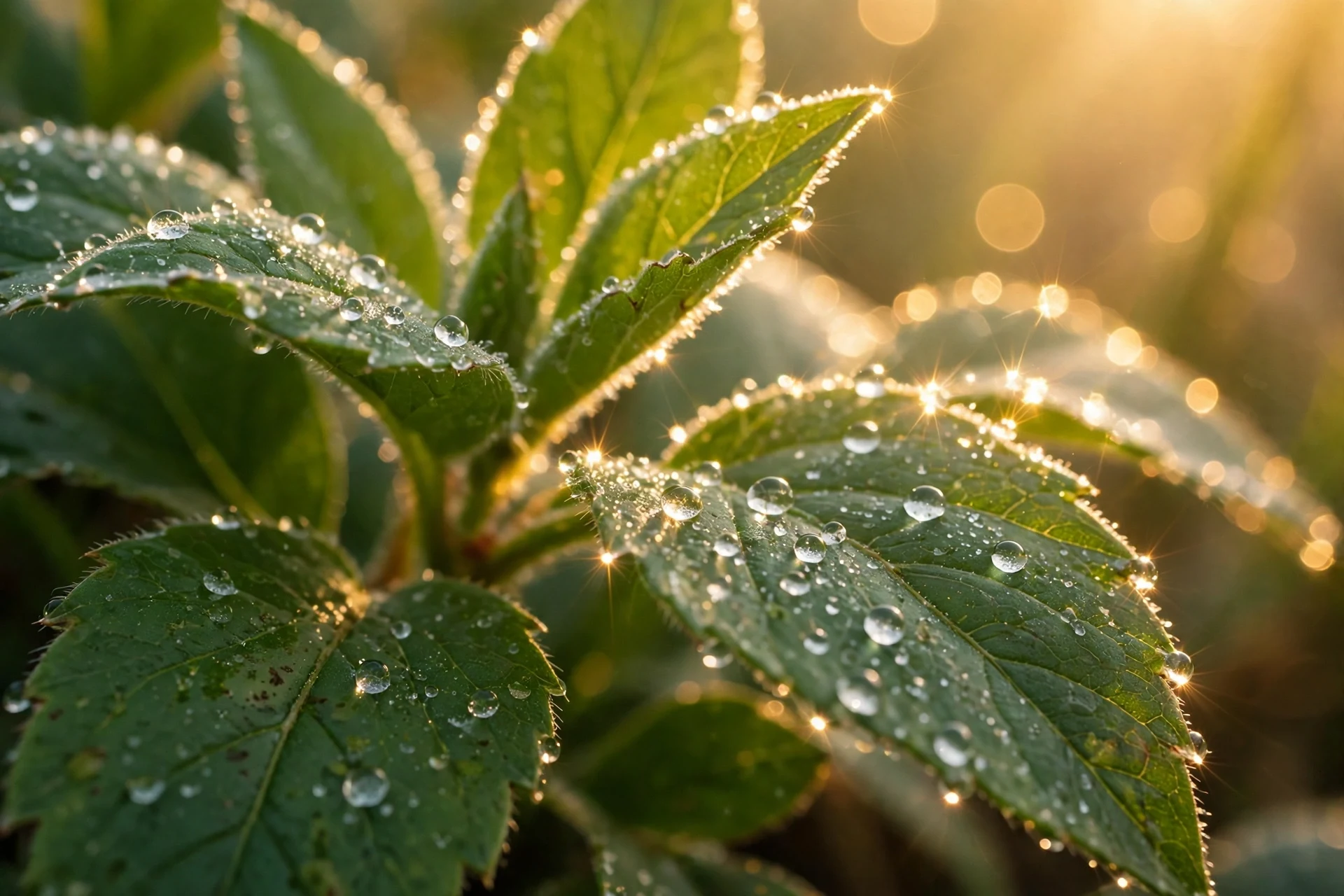
There is a simple way to see condensation at home, and you have probably seen it a hundred times without knowing its name. On a cold morning, breathe out slowly onto a window. The glass fogs up. That fog is condensation. The warm, damp air from your breath meets the cold glass, cools down, and turns into tiny droplets. The same thing happens in the sky, only on a scale so big it is hard to imagine.
Precipitation: The Water Falls Back Down
Sooner or later, the droplets in a cloud get too heavy to float any more. They grow big and fat, and gravity, the force that pulls everything down to the Earth, takes hold of them. And down they come, falling out of the sky as rain. This is called precipitation, and it is the third step of the journey.
Rain is the kind of precipitation we know best. It falls in drops, and it can be a gentle drizzle that barely wets your hair, or a heavy downpour that soaks you through in seconds. But rain is not the only kind of precipitation. If the air high up is cold enough, the droplets freeze into ice crystals, and they fall as snow, soft and white, settling on rooftops and fields like a blanket. Sometimes the drops freeze on their way down and fall as sleet, or as hail, little balls of ice that rattle on the roof.
Think of gravity as the Earth’s way of calling the water home. The sun lifts the water up, but gravity always pulls it back down again. Without gravity, the rain would never fall, and the water would just drift away into space. You can read about how gravity pulls everything down in our simple guide to what gravity is and why things fall down, and it is the same pull that brings every raindrop back to the ground.
Our drop Didi has grown heavy now. She has joined with other droplets until she is big and round and far too heavy to float. She tumbles out of the cloud and falls, down through the cold air, down past the top of the mountain, down towards the green hills below. The wind catches her and carries her sideways a little, but gravity is stronger, and down she comes, faster and faster, until, splash, she lands on a leaf on the side of a hill, and the journey changes again.
Where the rain falls depends on the wind. Sometimes it falls straight back into the sea it came from, and the journey is short. Sometimes the wind carries the cloud far inland, over mountains and plains, and the rain falls hundreds of miles from where it started. A drop of water that evaporated from the sea near Africa might fall as rain over a field in France. A drop that rose from a lake in Canada might fall as snow on a mountain in another country altogether. Water travels, and it does not need a passport.
Rain is not just water falling from the sky. It is the Earth being watered. It fills the rivers. It soaks the soil so that plants can grow. It tops up the lakes and the reservoirs that give us our drinking water. Every living thing on land depends on it, from the smallest blade of grass to the tallest tree, and from a tiny ant to you and me.
Collection and Runoff: The Long Way Home
Didi has landed on a leaf on a hillside. What happens to her next? She has a few choices, and each one is part of the last step of the cycle, called collection.
Some of the rain that falls soaks straight into the ground. It sinks down through the soil, drop by drop, until it reaches the rock below. There it collects in cracks and spaces underground, in a hidden store of water called groundwater. It can stay there for a long time, weeks or months or even years, slowly moving through the rock. Some of it bubbles back up later in springs, where water flows out of the ground on a hillside. Some of it is drawn up by the roots of plants, and the journey through a leaf begins again.
But Didi does not soak in. She rolls off the leaf and lands on the ground, and then she starts to move. She joins other drops, and together they form a tiny trickle, running downhill over the grass. The trickle joins a stream. The stream joins a bigger stream. And the bigger stream joins a river, wide and strong, winding its way through the valley towards the sea.
This downhill flow is called runoff, and it is one of the most powerful forces on Earth. Runoff carves valleys. It wears away rock. It carries soil and stones along with it. Over millions of years, runoff has shaped the land itself, cutting deep gorges and wide plains, all with nothing but water, flowing downhill, day after day.
Every river in the world is part of the water cycle, carrying rainwater back home, and every river ends in the same place: the sea, a lake, or sometimes, in dry places, it simply sinks into the sand and disappears underground, to start the journey again in another way.
Didi is in the river now, flowing along with millions of other drops. She passes under a bridge where a child is dropping sticks into the water and watching them race. She passes a field where a farmer is glad for the rain. She passes a town where people are filling their kettles and watering their gardens with water that once fell as rain. And at last, after days of travelling, the river widens, slows, and opens out into the sea. Didi is home. The journey is complete, and the cycle is ready to begin all over again.
The Water in Your Glass Is Very Old
Here is the most wonderful part of the whole story. The water on Earth is not new. No new water is being made, and no water is ever lost. The water in your glass today is the same water that fell as rain a thousand years ago, the same water that dinosaurs drank, and the same water that once floated in a cloud over an ocean nobody has ever named. It has been sea, cloud, rain, snow and ice, many times over, and it will go round again long after we are gone. The next time you hear the sound of rain on a window, think of Didi, still travelling, still going round, after all these millions of years.
Frequently Asked Questions
What is the water cycle in simple words?
It is the journey water takes around the Earth, over and over again. Water rises into the sky as vapour, forms clouds, falls back as rain or snow, and flows back to the sea.
Where does the water in a puddle go when it dries up?
Most of it turns into invisible vapour and floats up into the air, warmed by the sun. Some of it soaks into the ground, but none of it simply disappears.
How are clouds made?
Water vapour rises into the cold air high above the ground, cools down, and turns into billions of tiny droplets. All those droplets floating together are what we see as a cloud.
Why does it rain?
The droplets inside a cloud join together until they grow too heavy to float. Gravity then pulls them down, and they fall to the ground as rain.
Is the water we drink really old?
Yes, very old. The same water has been going round the water cycle for millions of years. The water in your glass has been rain, cloud, sea and ice many times before.
Does the water cycle ever stop?
No, it never stops. As long as the sun shines and gravity pulls water down, the cycle keeps going, day and night, all over the world.
More from Zorium Daily
- How Do Rainbows Form?
- Why Do Tides Go In and Out?
- Why Is the Ocean Salty?
- What Causes an Earthquake?
The next time a puddle vanishes in the sunshine, do not wonder where it went. You know now. It went up into the sky, it joined a cloud, and one day it will come back down as rain, ready to begin the journey all over again.