What Is a Donation and How Does It Work? Explained Simply
SUMMARY OF THIS ARTICLE
- A donation is a gift you give freely and expect nothing back for, and that is what makes it different from a payment or a purchase.
- You can donate money, food, clothes and toys, blood, or your own time, and every kind of gift follows the same path: from you, to a charity, to the people it helps.
- A charity is an organisation that exists to help others, not to make a profit, and a good charity can show you clearly where your gift went.
- One donation can be followed like a parcel on a journey: it is collected, sorted, checked, and then turned into food, shelter, medicine, or help for someone who needs it.
- In some countries the tax rules give a little money back when you donate, but that is only a small side rule, never the real reason to give.
The Red Tin on the Kitchen Shelf
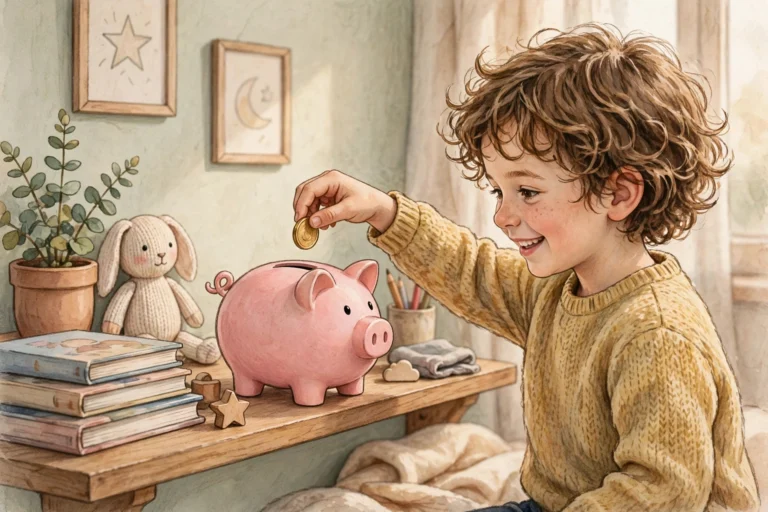
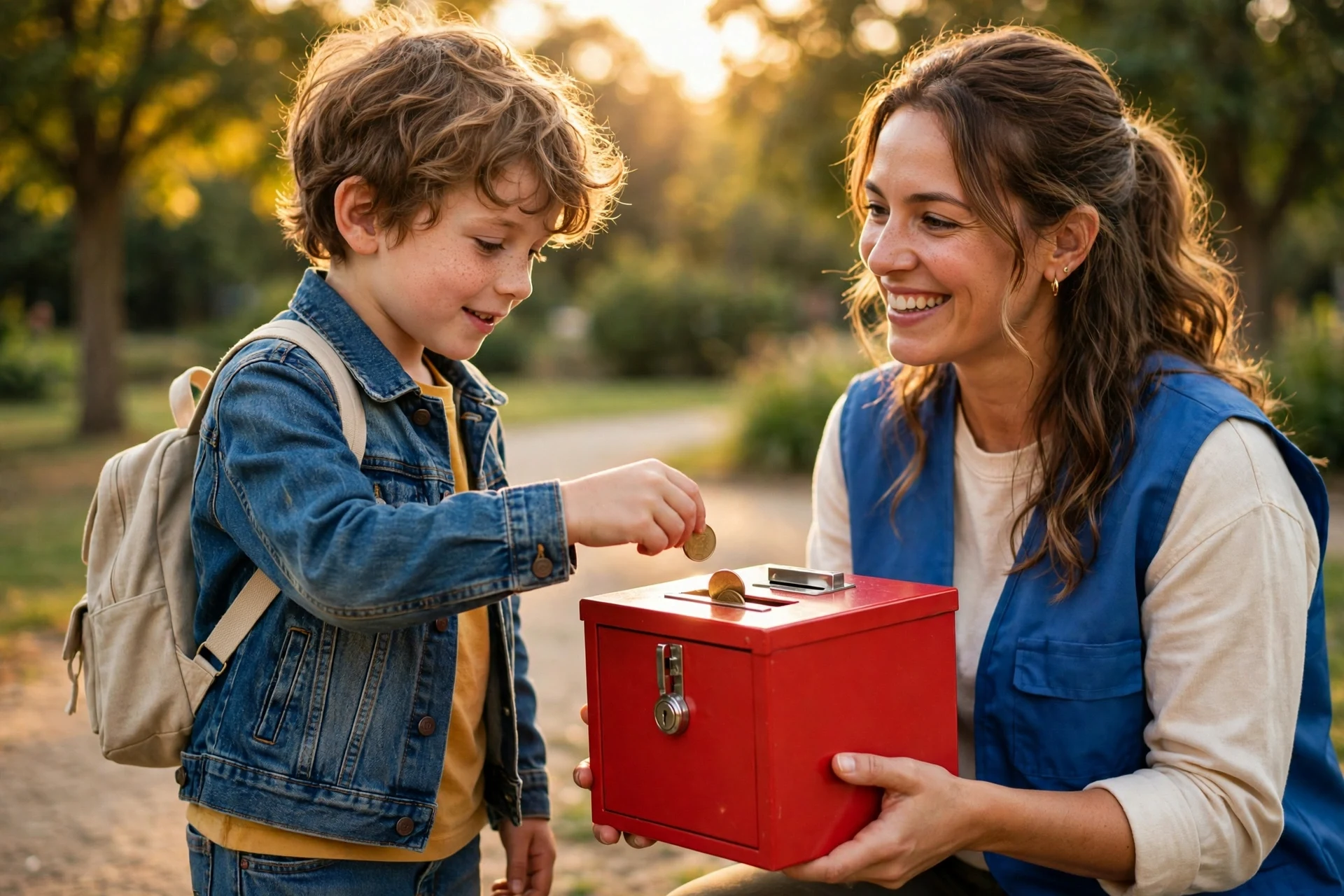
It was a cold Saturday in November, and twelve-year-old Maya was standing in her kitchen, staring at a red collection tin on the shelf. It had a slot on the top just wide enough for a coin. Her grandmother had left it there, and Maya had been dropping her spare change into it for weeks without really thinking about it.
“Gran, where does the money in the tin actually go?” Maya asked, tipping it gently so the coins rattled inside.
Her grandmother smiled and put the kettle on. “It goes to a charity,” she said. “They collect money from people like us and use it to help children who need food and warm clothes.”
Maya frowned. “But how do they know who needs it? And how do we know they really spend it on that?”
By the end of the afternoon, over a cup of tea, Maya understood something new. That little red tin was not just a place for spare coins. It was the start of a journey, and at the end of it, a child she would never meet was getting a warm meal because of it.
So What Is a Donation, Really?
A donation is a gift. You give something away, freely, because you want to help, and you expect nothing back in return. That is what makes a donation different from almost every other time money changes hands.
Think about it this way. When you buy a sandwich, you hand over money and you get a sandwich back. That is a payment. When you lend a friend ten dollars, you expect it back one day. That is a loan. When you give a birthday present to your brother, you do not expect him to pay you for it. A donation is a gift too, only the person who receives it is usually someone you have never met.
A donation does not have to be money. It can be a bag of rice for a food bank, a warm coat you have grown out of, a toy you no longer play with, a pint of blood at a hospital, or an afternoon of your time at a shelter. In every case the idea is the same: you have something someone else needs more, and you choose to give it away.
People sometimes wonder whether a small donation still counts. It does. Five dollars given freely is a real donation, just like five hundred dollars is. Most charity help is paid for by thousands of small gifts added together, not by one rich person writing one giant cheque.
What Is a Charity?
Most donations do not go straight from your hand to the person who needs help. They travel through a charity, an organisation set up to help people, animals, or the world around us.
A charity is different from a normal business. A shop exists to make money for its owner. A charity exists to spend the money it receives on its cause. It might run a food bank, build wells in dry villages, rescue injured animals, or run a shelter for people with nowhere to sleep. Nobody owns the charity and takes its money home as profit.
Charities come in all sizes, from a handful of neighbours collecting winter coats to huge organisations with offices in many countries. What they all share is a promise: the money and gifts they receive will be used for the cause they talk about, not for something else.
Before you give, it is worth checking that a charity is real. In most countries, real charities are registered with the government, so their name appears on an official list. A quick search online will usually tell you. If a charity cannot be found anywhere, or if someone pressures you to give right now, walk away and give to a charity you can check.
The Kinds of Donations
Not all donations look the same, because people need different kinds of help. Here are the five main kinds, and how each one works.
Money is the most common kind of donation, and also the most flexible. A charity can turn money into whatever is needed most. You can give money once, or a little every month, which charities love because it helps them plan ahead. Even a few dollars a month is worth a lot, because they can count on it.
Food is the next kind, and it goes to food banks, places that collect donated food and give it out in parcels to families who cannot afford enough to eat. The food is usually simple and long lasting: tins of beans, rice, pasta, cooking oil, tea, and breakfast cereal. If you ever clear out your kitchen cupboard, check the dates first. Food banks cannot use food that has already gone out of date.
Clothes and toys are the kind of donation many children know best, because it starts with a clear-out at home. A coat you have grown out of, shoes that still have wear left, a toy you have stopped playing with: these things still have life in them, and a charity shop can sell them cheaply to raise money, or pass them straight on to a family who needs them. The one rule is simple. Give things in a condition you would be happy to receive yourself. Broken toys and stained clothes are not a gift.
Blood is a donation that costs no money at all, and it saves lives in a way nothing else can. Hospitals need blood every single day for operations, for people who have had accidents, and for patients whose bodies cannot make enough blood on their own. One blood donation takes about ten minutes, and it can help up to three people. You must be a healthy adult to give blood, and it is one of the most generous gifts a person can give.
Time is the last kind, and it is easy to forget, but it is just as real as money. Volunteering means giving your hours instead of your coins. You might serve meals at a shelter, read to children at a library, walk dogs at an animal rescue, or pack food parcels at a food bank. Charities run on volunteers. Without them, many could not open their doors at all.
Follow One Donation on Its Journey
So what actually happens after you drop a coin in a tin, click donate on a website, or hand a bag of food to a volunteer? The gift does not just vanish. It goes on a journey with clear steps.
Step one is the giving. You choose a charity and a cause you care about, and you make your gift. If it is money, you put coins in a tin, tap your card at a charity shop, or fill in a form online. If it is food or clothes, you drop them at a collection point. If it is blood, you visit a donation centre. If it is time, you turn up and lend a hand.
Step two is the collecting and sorting. The charity gathers all the gifts together. Money from many donors is added up into one pot. Food is checked for dates and sorted into parcels. Clothes are checked and sorted by size. This quiet work is done mostly by staff and volunteers in warehouses and back rooms.
Step three is the checking. A good charity keeps careful records of what came in and where it went. It checks that the food is safe, that the money is counted correctly, and that nothing is lost or wasted. This boring step is also the most important one, because it lets the charity prove that your gift did what it promised.
Step four is the help itself, the part that matters most. The money becomes a food parcel for a family, a blanket for a shelter, or medicine for a clinic. The clothes reach a child who needs them. The blood reaches a patient in a hospital. The hours you gave become a hot meal for someone who had not eaten all day.
Step five is the reporting back. A good charity tells its donors what happened, in a letter, an email, or a short report with simple facts: how much was collected, how many meals were served, how many children were helped. You may never meet the person your gift helped, but a good charity will show you the difference it made, in plain numbers and real stories.
Why Do People Donate?
People donate for many reasons, and most of them are simple and human.
The most common reason is kindness. You see someone who is hungry, cold, or sick, and you want to help. A child who has lost her home in a flood needs a blanket, and you have a spare one. That is enough.
Some people donate because something has touched their own life. A man whose father was treated in a hospital donates to that hospital every year. Giving back is a way of saying thank you for help you once received.
Some people donate because of their faith. Many religions teach that giving to people in need is part of a good life.
Some people donate because they want the world to be fairer. They know they were lucky to be born somewhere safe, with food on the table, and they feel it is right to share a little of that luck. This is not guilt. It is a sense of fairness.
And some people donate because it feels good, and that is fine too. Helping someone else genuinely makes most people feel happier. Scientists have even found that spending money on others tends to make people happier than spending it on themselves. Whatever the reason, the gift only works if it is freely given. Nobody should be pressured into donating. A real donation is a choice, made with a clear head and a warm heart.
How a Good Charity Shows Where the Money Went
This is the question Maya asked her grandmother, and it is the right question. How do you know the money really went where it was supposed to go? A good charity makes this easy to check.
First, a good charity publishes a simple report every year, showing how much money came in, how much was spent on the cause, and how much was spent on running the charity, things like rent and wages. No charity spends every penny directly on its cause. A normal amount is often around 10 to 20 pennies in every dollar, and far more than that is a warning sign.
Second, a good charity tells stories with numbers. It does not just say “we helped children.” It says “we served 12,000 meals last year” or “we built 40 wells in 12 villages.” Numbers like these can be checked, and they say far more than warm words alone.
Third, a good charity is open about who runs it. You can find the names of its leaders, its address, and its registration number on its website. If a charity hides these details, be careful. Finally, a good charity never pressures you. It will ask for help and explain why it is needed, but it will not rush you or demand an answer on the spot.
One Short Note About Tax
In some countries, the government gives a little money back when you donate to a registered charity. The idea is simple: the government wants to encourage giving, so it lets you pay a little less tax. The exact rule is different in every country, and in some there is no tax benefit at all. It is a small side rule, not the point of giving. Nobody donates to save on tax. People donate to help.
A Donation Is Not a Payment, and Not a Loan
The words around money can sound alike, so it is worth drawing a clear line between a donation and two things it is mixed up with.
A donation is not a payment. When you pay for something, you hand over money and you get something back: a sandwich, a bus ticket, a new pair of shoes. With a donation, the deal is one-sided on purpose. You give, and you get nothing back except the knowledge that you helped. A guide to What Is a Discount and How Does It Work? shows the other side of paying: a discount makes a price smaller before you pay, while a donation has no price at all.
A donation is also not a loan. When you lend money, you expect it back one day. A donation is money you have said goodbye to. You do not expect it back, and you do not keep a note of who owes you what. A simple guide to What Is a Loan and How Does It Work? explains how borrowing and lending work: a loan comes back, a donation does not, and that is exactly how it should be.
This is also why a donation should never leave you short of money for the things you need. Give what you can spare, happily, and keep enough for your own rent, food, and bills. A gift that puts you in trouble is not a gift. The best donations come from money you can truly afford to let go of.
What Happens If a Charity Spends Badly?
Most charities do their best with the money they receive, but sometimes things go wrong. A charity might spend too much on fancy offices, or pay its leaders far more than the job is worth, or fail to keep good records. This does not mean all charities are bad. It means donors need to keep their eyes open.
If you hear worrying news about a charity, do not panic, and do not stop giving altogether. Check the facts first. Look at the charity’s own report, see what independent news sources say, and check whether the government regulator has said anything. One bad story about one charity is not a reason to give up on giving. In most countries, a government regulator watches charities and can close one down in serious cases.

A Worked Example: Maya and the Red Tin
Numbers make giving easier to understand, so here is one clear example. Imagine a made-up example: Maya puts 5 dollars of her pocket money into the red tin every month, and over a year she gives 60 dollars in total.
Let us follow that 60 dollars. Maya’s tin is collected by a local charity that helps families in her town. The charity adds her 60 dollars to the gifts of many other donors. In the same month, 200 people give 5 dollars each, so the charity collects 1,000 dollars in small gifts alone.
Now the charity spends that money. It uses 800 dollars to buy food parcels. Each parcel costs 20 dollars and holds enough rice, beans, pasta, and oil to feed a family for a week. So 800 dollars buys 40 parcels, which feed 40 families for a week. Maya’s 60 dollars paid for 3 of those parcels, all on its own.
The other 200 dollars covers running costs and a small reserve: the rent of the small warehouse, the petrol for the delivery van, a fair wage for the one worker who organises everything, and 50 dollars kept back for the next month.
At the end of the year, the charity writes a short report: “We collected 12,000 dollars this year. We spent 9,600 dollars on food parcels, 1,800 dollars on running costs, and we kept 600 dollars in reserve. We served 480 food parcels to 120 families.” Maya can read that report and see exactly where her 60 dollars went. It bought 3 parcels, and those parcels fed 3 families for a week. That is the whole journey, from a coin in a tin to a meal on a table.
Mistakes That Waste a Good Gift
Most donations do their job well, but a few common mistakes can waste a good gift.
The first mistake is giving to a charity you have never checked. Before you donate, spend two minutes looking it up. Is it registered? Does it have a real address and a real report? If you cannot find it anywhere, give somewhere else.
The second mistake is donating things nobody can use. Out-of-date food, broken toys, and stained clothes are not gifts. They cost the charity time and money to throw away. Give things in good condition, or give money instead.
The third mistake is giving more than you can afford. A donation should never mean missing rent or skipping meals. Give what you can spare, even if it is small. A small gift given happily is worth far more than a big gift given with regret.
The fourth mistake is giving because someone pressured you. A stranger on the street who will not take no for an answer, or a phone call that says you must decide right now: these are pressure tactics, and real charities do not use them. Walk away, think about it, and give when you are ready, to a charity you have chosen yourself.
Good Habits When You Donate
Giving is a habit, and like any habit it gets better with practice.
Start small and start regular. Five dollars a month, given every month without fail, is worth more to a charity than fifty dollars once and then nothing. Regular gifts let charities plan and promise help they know they can deliver.
Pick one or two causes you truly care about, and learn about them. When you know a little about how a food bank works, or what a shelter really needs, your gift becomes smarter. You might find that your chosen charity needs blankets more than money this winter.
Keep a simple note of what you give. Write down the charity, the date, and the amount. It takes thirty seconds, and it lets you look back at the end of the year and see, in plain numbers, how much good you did. Finally, talk about giving with your family. Children who see their parents donate grow up understanding that sharing is normal. Let them choose a toy to give away, or put coins in a tin, just as Maya did.

Frequently Asked Questions
What is a donation in simple words?
A donation is a gift you give freely to help someone, expecting nothing back in return. It can be money, food, clothes, toys, blood, or your time, and it usually goes through a charity.
What is the difference between a donation and a payment?
A payment is money you give in exchange for something, like a sandwich or a bus ticket. A donation is a gift you give freely with no expectation of getting anything back.
What kinds of things can I donate?
You can donate money, food, clothes, toys, blood, or your time. Money is the most flexible kind, and food, clothes, and toys should always be in good condition.
How do I know if a charity is real?
Check that it is registered with the government, that it has a real address and a simple yearly report showing what it spent. If you cannot find these, choose a different charity.
Does my small donation really make a difference?
Yes, it does. Most charity help is paid for by thousands of small gifts added together, not by one giant gift. Five dollars can buy a food parcel or a blanket, and when it joins all the other small gifts, the total becomes enough to change lives.
Do I get money back from tax when I donate?
In some countries, yes, the government lets you pay a little less tax on money you donated to a registered charity. The rule is different in every country, and in some there is no tax benefit at all. It is a small side rule, not the reason to give.
More from Zorium Daily
- What Is Pocket Money and How Does It Work? Explained Simply
- What Is a Gift Card and How Does It Work? Explained Simply
- What Is Cashback and How Does It Work? Explained Simply
- How Does a Piggy Bank Help Kids Save Money?
Maya still drops her spare coins into the red tin on the kitchen shelf, but now she knows where they go, and that small sound of coins rattling in the tin is the sound of a meal on its way to someone who needs it.