How to Save Money on Groceries Without Eating Less
SUMMARY OF THIS ARTICLE
- Make a simple food plan and a shopping list before you go to the store.
- Shop with a full stomach, compare prices, and buy seasonal food and store brands.
- Buy in bulk only for food you will truly use before it goes bad.
- Cook more at home, use leftovers well, and store food the right way.
- Track what you spend each week, and make small changes that last.
How to Save Money on Groceries Without Eating Less
Food costs money every week. For many families, food is one of the biggest bills after rent and home bills. When prices go up, it can feel hard. You may think the only way to save is to eat less. That is not true. You can eat well and still spend less. You just need a better plan.
Saving on groceries does not mean buying bad food or skipping meals. It means shopping with care, wasting less food, buying what you need, and using what you buy. Small steps add up over time.
This guide gives simple, honest tips. No tip here promises a fixed amount of savings. Every home is different. Try a few ideas first. Keep the ones that help you. Drop the ones that do not fit your life.
Think of your food budget as a plan, not a punishment. A plan helps you choose. It helps you say yes to good food and no to waste. When you know how much you can spend, shopping feels calmer. You do not need to guess at the till. You can shop with a clear mind.
Many people shop without a plan. They walk into a store hungry. They see bright packs and sweet smells. They pick up extra snacks, drinks, and treats they did not plan to buy. At home, they find food they already had. Some food goes bad in the fridge. That is money lost. A plan stops much of that waste.
Start by looking at what you already have. Open your fridge, freezer, and cupboards. Rice, beans, pasta, oats, and canned food last a long time. Fresh food must be used soon. When you know what you have, you buy less twice and waste less.
A good weekly plan can be very simple. Pick seven dinners, one for each day. Pick simple breakfasts and lunches you like. Repeat meals you enjoy. Simple food can be tasty and cheap.
Plan around food you already have. If you have chicken in the freezer, plan a chicken meal. If you have lots of potatoes, plan meals with potatoes. This habit cuts waste fast and makes your list smaller.
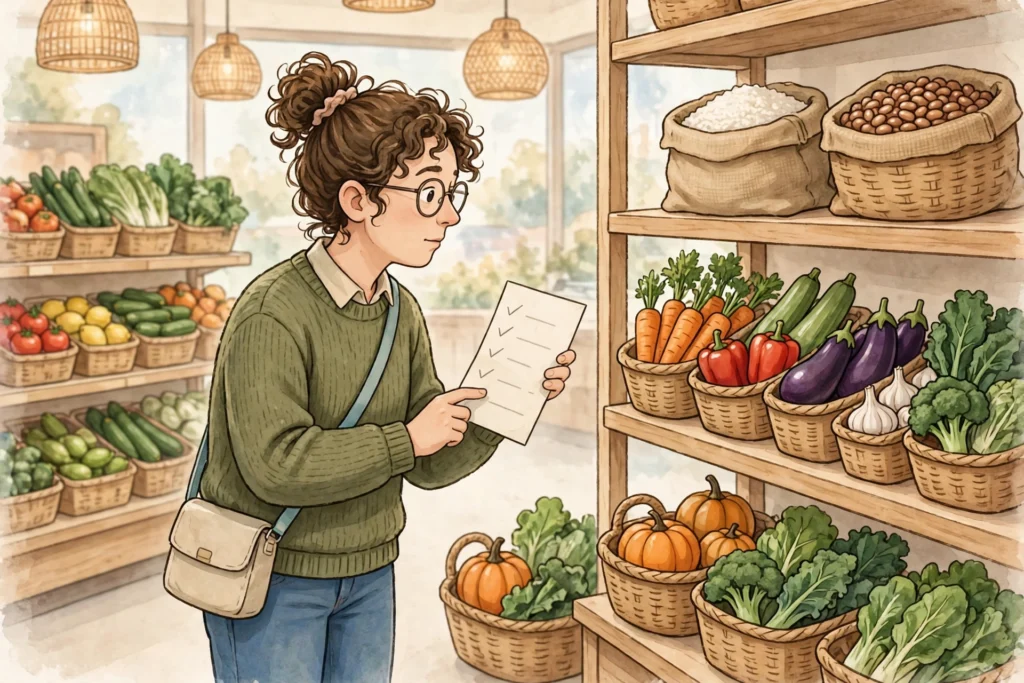
Write your shopping list from your plan. Put only what you need on it. Group it by store area, such as fruit, bread, milk, and meat. Take the list with you and try to stick to it. If you see something new, ask: do I need this this week? If not, leave it on the shelf.
Do not shop when you are hungry. When you are hungry, all food looks good. You buy more snacks than you planned. Eat a small meal before you shop. A calm shopper spends less than a hungry shopper.
A short trip with a clear list is often better than a long, slow trip. A long trip gives you more time to add extra items. Go in, buy your list, and go out.
Buy Seasonal Food and Store Brands
Fresh fruit and vegetables cost less when they are in season. In season means they grow well at that time of year near you. They taste better too. In summer, berries and tomatoes may be cheap. In winter, carrots and potatoes may be cheap. Ask your store what is in season now. You will soon learn the pattern.
When a fruit or vegetable is not in season, it may come from far away and cost more. Frozen fruit and vegetables are a good choice here. They are picked ripe and frozen fast. They last longer in your freezer, so you waste less. Frozen peas and beans work well in soups, rice, and pasta.
Store brands often cost less than big name brands. In many cases, the food inside is very much the same. Try one store brand at a time, such as rice, oats, or canned tomatoes. If you like it, keep buying it. If not, go back to your old brand for that item.
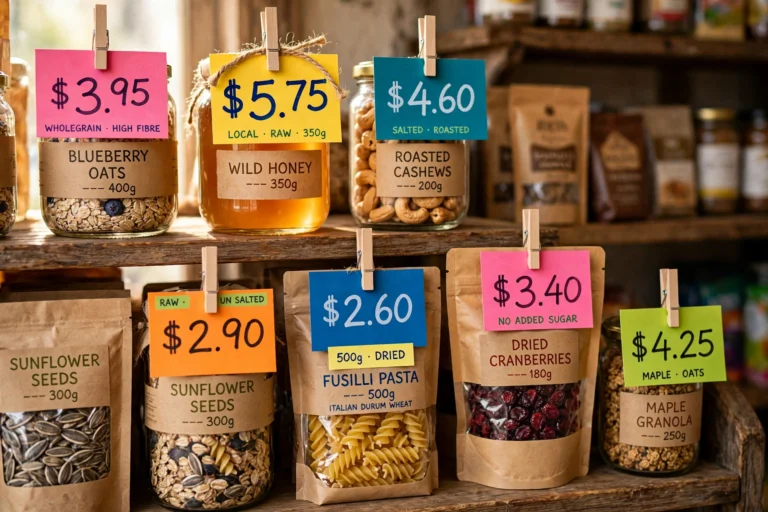
Compare the price per weight, not just the pack price. A big pack may look cheap but cost more per kilogram. Look at the small shelf label. It often shows the price for 100 grams or one kilogram. Use that number to compare. This skill can save you money on almost every item.
Be careful with deals that push you to buy more. “Buy two, get one free” is only good if you will use all three before they go bad. For rice or soap, a deal can be good. For fresh milk or soft fruit, extra items may go bad. Then the deal is waste. Always ask: will I use this in time?
Meat, Fish, and Cheaper Protein
Meat and fish often cost the most in a food shop. You do not need to stop eating them. Eat a little less meat and add other protein foods. Beans, lentils, eggs, and tofu cost less in most places. A bean stew, lentil soup, or egg fried rice can be filling and tasty.
When you do buy meat, buy cuts that cost less and cook them slowly. Slow cooking makes tough meat soft and tasty. A stew can feed many people from a small amount of meat. Add lots of vegetables, beans, or rice to the pot. The meal grows bigger, but the cost stays low.
Buy a whole chicken if it costs less per kilogram than chicken parts. Cook it once and use the leftovers for sandwiches, soup, or fried rice the next day. One chicken can give you two or three meals. Cook once, eat more than once.
Freeze meat and fish if you will not cook them soon. Put them in freezer bags. Write the date on the bag. Use the oldest meat first. A freezer stops food from going bad and lets you buy at a good price.
Cheese and dairy can also cost a lot. Grate cheese fine, so a small amount covers a large dish. Buy milk in a size you will use before it goes sour. If you often throw away half a bottle, buy a smaller bottle next time.
Cook More at Home
Ready meals and takeaway food cost much more than home-cooked food. A ready meal may cost three or four times more than the same meal cooked at home. Cooking at home does not need to be hard. Rice, pasta, soup, and stir-fry are easy to learn. You can cook a good meal in 20 or 30 minutes.
Cook in larger amounts when you have time. Make a big pot of soup or stew. Eat one part now. Put the rest in boxes for later in the week. This is called batch cooking. On busy nights, heat up a home-cooked meal instead of ordering takeaway.
Leftovers are not waste. They are food you already paid for. Leftover rice can become fried rice. Leftover vegetables can go into soup. Leftover chicken can fill a sandwich. Keep leftovers in clear boxes in the fridge. Eat them within two or three days, or freeze them.
Learn a few base meals you can change each week. A simple tomato sauce can go with pasta, rice, or beans. When you know a few base meals well, cooking feels easy. You do not need a new recipe every night.
Pack lunch from home when you can. A lunch bought each workday costs a lot over a week. A sandwich, fruit, and water from home costs far less.
Snacks also add up. Small packs of crisps and sweets cost a lot for a small amount of food. Choose simple snacks like fruit, popcorn you make at home, or bread with peanut butter.
Drink water at home when you can. Fizzy drinks and juices cost money and add sugar. Water from the tap is much cheaper in most places. Making coffee at home costs far less than buying it each day from a cafe.
Waste Less Food
Wasted food is wasted money. Bread goes stale. Fruit goes soft. Leftovers sit in the fridge until they must be thrown away. Each item thrown away is money in the bin. Cutting waste is one of the fastest ways to save.
Store food the right way. Keep bread in a cool, dry place, or freeze half a loaf if you will not eat it fast. Do not wash berries until you eat them, as water can make them go soft fast. Keep onions and potatoes in a cool, dark place. Salt lasts a long time, and it is fun to learn why some water is very salty, like the Dead Sea.
Learn the difference between “use by” and “best before” dates, where your country uses them. “Use by” is about safety, and you should follow it for meat, fish, and milk. “Best before” is often about taste, not safety. When in doubt, throw it away. Safety comes first.
Use soft fruit and vegetables before they go bad. A soft banana is great for a smoothie. Soft tomatoes are great for soup or sauce. Wilted greens can go into soup or stir-fry. You do not need perfect-looking food for cooked meals.
Put new food at the back of the fridge or cupboard. Put old food at the front. This rule is called “first in, first out.” It helps you use old food first. Check your fridge once a week, and plan a “use it up” meal with food that must be eaten soon.
Shop Smart in the Store
Stores are built to make you buy more. Costly items are often at eye level. Cheaper items may be on low or high shelves. Look up and down. You may find a better price just above or below the item you first saw.
End displays can tempt you. They look like deals, but they are not always deals. Check the price against the normal shelf price. Do not trust a bright sign alone. Trust the price label.
Buy only what is on your list, plus one planned treat if your budget allows. A planned treat feels good. An unplanned pile of treats at the till feels less good when you see the bill.
Use your phone in a smart way. A list app can help you remember your list. Delete old lists you no longer need, just as you would delete a file you no longer need. Keep photos of good prices safe, and learn where photos go when you upload them to the cloud. Keep your trip short and focused, and charge your phone before you go, so a phone battery that drains too soon does not slow you down.
Loyalty cards and coupons can help, but only if they fit your plan. A coupon for food you already buy is a real saving. A coupon for food you do not need is not a saving. Do not buy extra food just to use a coupon.
Compare stores if you have more than one near you. One store may be cheaper for fruit. Another may be cheaper for rice. You do not need to visit five stores each week. That wastes time and fuel. Learn which store is best for your main shop.
Farmers’ markets can be good for fresh food in season. Prices can be lower, and food can be fresher. But check prices first. Markets are not always cheaper.
Think about how small shops set prices. A small shop may charge more because it buys less stock and pays rent and staff. A big store may buy in bulk and charge less. Small shops are handy for a quick item, but a larger store may cost less for a big weekly shop.
Bulk Buying, Done Right
Buying in bulk means buying a large amount at once. It can save money, but only for the right foods. Good bulk foods last a long time and you use them often: rice, pasta, oats, flour, beans, lentils, and canned tomatoes. If you use them every week, a large pack can be good value.
Bad bulk buys are fresh foods you will not use in time. A huge bag of salad or many loaves of bread may go bad. Then you lose money. Buy fresh food in amounts you will eat in a few days. Buy long-life food in bulk.
Check your storage space before you buy in bulk. Rice needs a dry container. Flour needs a sealed box. Start small. Buy one bulk item and see how it works.
Split bulk buys with family or friends if you can. Two families can share a large bag of rice. Each family pays less, and no food goes bad. Agree on the split before you buy.
Track Your Spending
You cannot improve what you do not see. For one month, write down what you spend on food each week. Use a notebook or a phone note. Write the total from each shop. At the end of the month, look at the numbers. Small shops during the week, plus a big shop, can add up fast.
Set a weekly food budget that fits your income. Do not set a number so low that you cannot eat well. A budget that is too strict will fail. If you spent $100 a week before, try $90 first. Small cuts are easier to keep than big cuts.
Put any money you save in a safe place. Even a small amount each week can help in hard times. Learning how to save for emergencies is a good next step once your food spending feels steady. A little each week grows over time.
Review your budget once a month. Prices change. Seasons change. If food prices rise in your town, your budget may need to rise too. That is not failure. That is honest planning. You can follow world news to understand why prices move, but base your budget on your own shop totals, not on fear.
Keep your food notes simple. Track the weekly total. Note what you threw away each week. If you often throw away bread, buy less bread. Your waste notes will teach you more than any tip list.
Simple Meals That Cost Less
Here are a few cheap, simple, filling meals. Change them with what you have at home.
Rice and beans: Cook rice and beans with onion, garlic, and tomato. Add a fried egg on top if you want more protein.
Vegetable soup: Chop carrots, potatoes, and onions. Cook them in water or stock with a little oil and salt. Serve with bread. Soup uses up vegetables before they go bad.
Pasta with tomato sauce: Cook pasta. Heat canned tomatoes with garlic and oil. Add beans or vegetables if you have them.
Oats for breakfast: Cook oats with water or milk. Add banana or apple. Oats cost far less than many boxed cereals and keep you full.
Stir-fry: Cook chopped vegetables fast in a hot pan with oil. Add rice or noodles, and egg or tofu if you have them. Stir-fry is a great “use it up” meal.
Habits That Help All Year
Saving on groceries is a habit, not a one-week challenge. The families who save the most do small things every week, all year. They plan. They list. They cook. They waste less. They try to be steady, not perfect.
Teach children simple food skills when they are old enough. Let them help make the list and cook a simple meal. Children who help cook are often more willing to eat the meal. They also learn how food costs money.
Keep your kitchen tidy. When you can see what you have, you buy less twice. Spend ten minutes once a week to tidy one shelf. Put like foods together. A tidy kitchen saves money.
Plan for busy days. Busy days are when takeaway tempts us most. Keep fast home meals ready: frozen vegetables, rice, eggs, and canned beans can make a meal in 15 minutes.
Rest matters too. When you are tired, you may shop badly. A good sleep habit helps you think clearly. Shop when you feel fresh, with your list in hand.
Be kind to yourself. Some weeks will cost more. A birthday or a sick child can change your food bill. That is normal life. Look at the month as a whole, not one hard week. Steady progress beats perfect weeks.
Learn about food and science in simple ways. Knowing why onions make your eyes water can help you cut them with care. A few simple facts can improve your cooking.
Old habits can teach us too. Learning history shows how families saved food before fridges existed. They dried, salted, and stored food. The old idea is the same today: plan, store well, and waste little. Even a great water project like the Libya river project shows how good planning solves big problems.
New tools can help, but they are not magic. Use a shopping app only if it helps you stick to your list. If it does not help, delete it. Simple paper lists work very well.
If you store lists on your phone, keep it tidy. Learning how to free up space can help you keep your lists safe. Keep what you need, and delete what you do not need.
Think about your whole week, not just food. A calendar plan helps you see busy days and free days. On free days, cook a big meal. On busy days, use leftovers.
Food habits differ by place, just as driving habits differ. You can read about left-side driving as a fun example. Copy ideas that fit your place and family. Leave the rest.
A Simple Weekly Routine
Here is a simple routine you can try.
On Sunday, or any day that fits you, look in your fridge, freezer, and cupboards. Plan seven dinners. Write your shopping list. This takes about 20 minutes.
On shopping day, eat first. Take your list. Buy your list. Check prices per weight. Buy seasonal food and store brands where you like them. At home, put old food at the front and new food at the back.
During the week, cook simple meals. Use leftovers. Make a “use it up” meal once a week. Freeze extra food before it goes bad. Pack lunches from home most days.
At the end of the week, write down what you spent. Note what you wasted. Adjust next week’s plan. Buy less of what you wasted. This loop gets easier each week.
You can check business news to learn how shops and prices work, but your own weekly totals matter most. Do not let news scare you into panic buying. Steady buying is safer.
If you want new tools, read about technology in simple terms. Some new tools use AI. You can read in simple words about how AI dreams and how AI forgets. Test one tool at a time. Keep it only if it truly saves you time or money.
Frequently Asked Questions
Can I save money on groceries without eating less food?
Yes. Most savings come from planning, wasting less, and choosing cheaper foods that still fill you up. You do not need to skip meals. Eat enough food. Just buy with care, cook at home more, and use leftovers well.
What is the best first step for a beginner?
Make a shopping list and stick to it. Look at what you already have before you shop. Plan a few simple meals for the week. This one habit alone can cut extra spending fast. It costs nothing to start.
Are store brands as good as name brands?
Often, yes. Many store brands taste very much the same as name brands. Try one item at a time. If you like it, keep it. If you do not like it, use your old brand for that item. You do not need to change everything at once.
Is buying in bulk always cheaper?
No. Bulk buying is cheaper only for food you will use before it goes bad. Rice, pasta, oats, and canned food are good bulk buys. Fresh salad, berries, and bread are often bad bulk buys, because they go bad fast. Check the price per weight, and check your storage space.
How can I stop wasting food?
Plan meals around food you already have. Store food well. Put old food at the front. Make a “use it up” meal each week. Freeze food before it goes bad. Use soft fruit and vegetables in soups, smoothies, and sauces. Small steps cut waste a lot.
Should I shop at more than one store?
You can, but keep it simple. One main store for most food is often best. If a market near you is cheaper for fresh food, buy fresh food there. Do not visit many stores each week if it wastes time and fuel. Time and fuel also cost money.
How much can I save?
There is no fixed promise. Savings depend on your family size, your town, and your old habits. Many families save a little each week by wasting less and cooking more. Over a year, those small weekly savings can add up. Focus on steady habits, not on a magic number.
More from Zorium Daily
- How to build an emergency fund — a simple guide for small incomes.
- How a small business makes money — learn how shops set prices.
- Money news and tips — more simple money guides from Zorium Daily.
- Why we have seven days in a week — a simple look at our weekly calendar.
- How ancient people measured an hour — time, plans, and old habits.